Turn Your Pup Into a Genius: How to Teach Your Puppy to Find Your Lost Keys!
The Magic of the Canine Nose
We have all been there: you are running ten minutes late for a crucial meeting, you have your coffee in hand, your shoes are on, but your keys have seemingly vanished into another dimension. You check the counter, the pockets of yesterday’s jeans, and even the refrigerator (hey, it happens!). But what if the solution to this daily frustration was currently napping on your rug? Your puppy is not just a bundle of fluff and energy; they are a biological marvel equipped with a sensory superpower. Teaching your puppy to find your lost keys is more than just a party trick; it is a profound way to engage their brain, build an unbreakable bond, and—let’s be honest—save your sanity on busy mornings.
In this guide, we are going to dive deep into the world of canine scent work. We will explore why your puppy is uniquely qualified for this job and how you can harness their natural instincts to turn them into a domestic detective. This isn’t about rigid, boring drills; it’s about play, communication, and unlocking the genius that already exists within your four-legged friend. By the end of this journey, your puppy won’t just be finding keys; they will be more confident, more focused, and more connected to you than ever before. Let’s get started on turning that cute pup into a genuine genius!
The Science of the Snout: Why Your Puppy is a Natural
Understanding the Olfactory Powerhouse
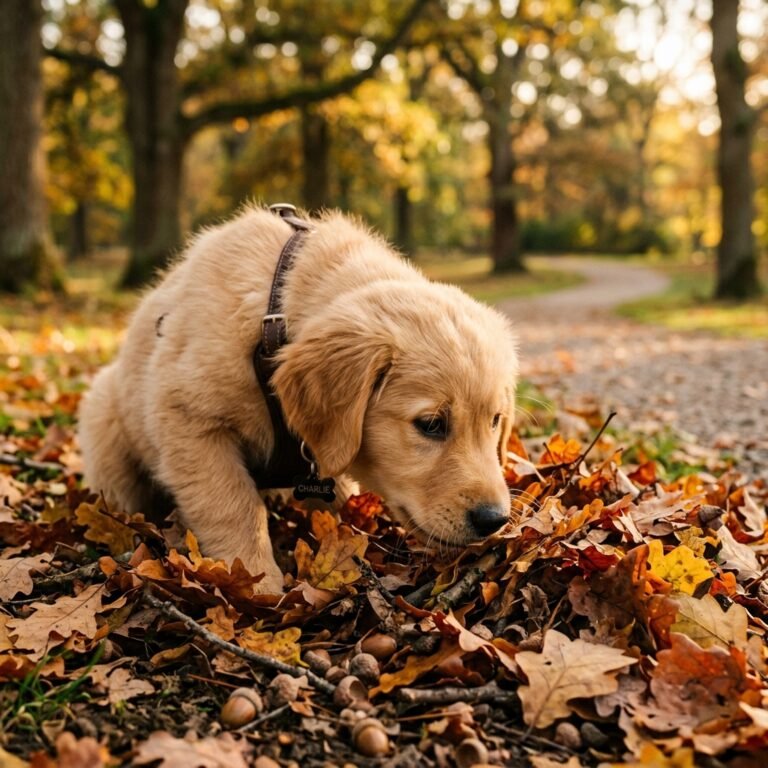
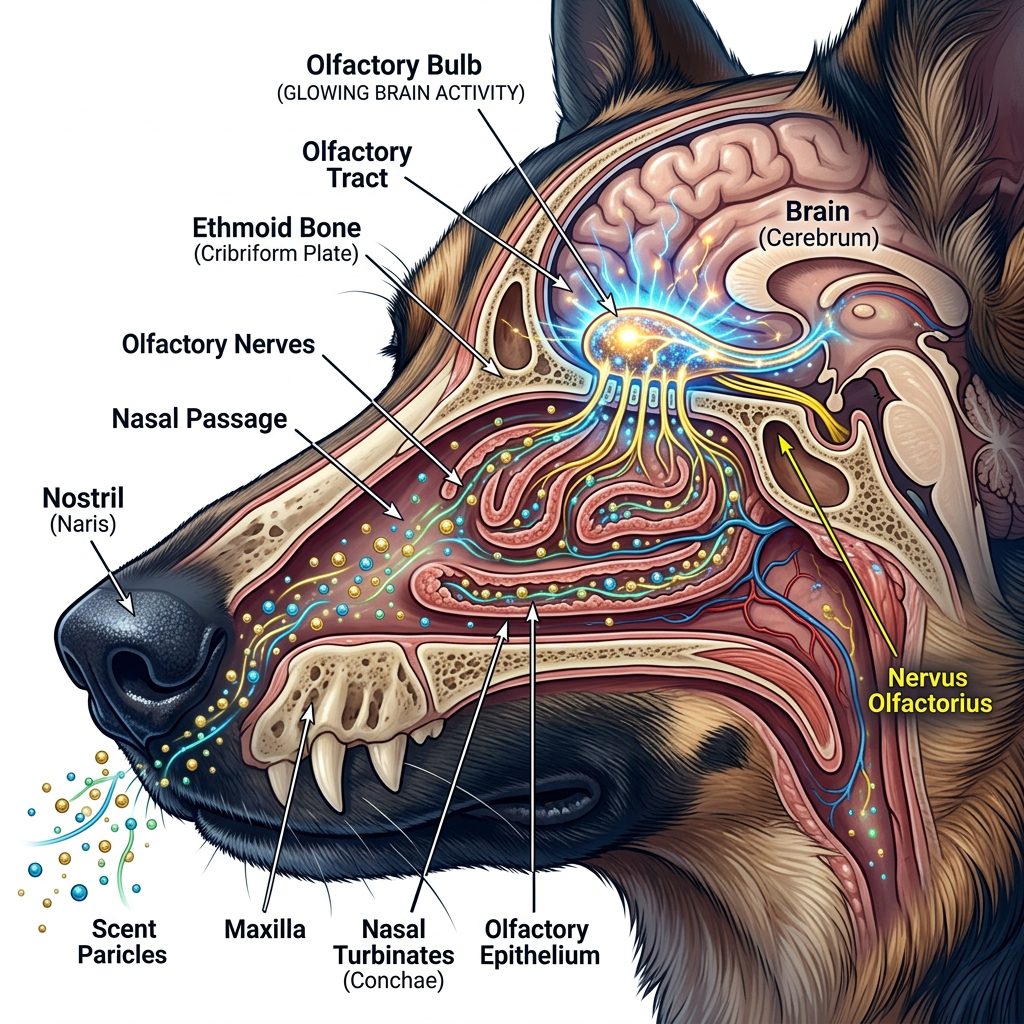
To truly appreciate what you are asking your puppy to do, we need to look at the incredible science behind their nose. While humans experience the world primarily through sight, dogs experience it through scent. A human has roughly 6 million olfactory receptors in their nose. That sounds like a lot until you compare it to a dog, who possesses up to 300 million. Furthermore, the part of a dog’s brain dedicated to analyzing smells is, proportionally, 40 times larger than ours. This allows them to detect odors in concentrations as low as one part per trillion. To put that in perspective, a dog could detect a single drop of liquid in twenty Olympic-sized swimming pools!
The Benefits of Scent Work
Engaging your puppy in scent-based games like ‘find the keys’ provides immense mental stimulation. For a puppy, fifteen minutes of intense sniffing is often more exhausting than an hour-long walk. This is because scent work requires high levels of concentration and problem-solving. It helps reduce anxiety, prevents boredom-based destructive behaviors, and builds confidence in shy dogs. When a puppy successfully locates a target scent, they receive a massive dopamine hit, making this one of the most rewarding activities you can share.
| Feature | Human Capability | Canine Capability |
|---|---|---|
| Olfactory Receptors | 6 Million | Up to 300 Million |
| Brain Focus | Primary Visual | Primary Olfactory |
| Detection Threshold | Parts per thousand | Parts per trillion |
| Vomeronasal Organ | Non-functional/Minimal | Highly Developed (detects pheromones) |
Gathering Your Gear: The Scent Work Toolkit
Preparation is Key
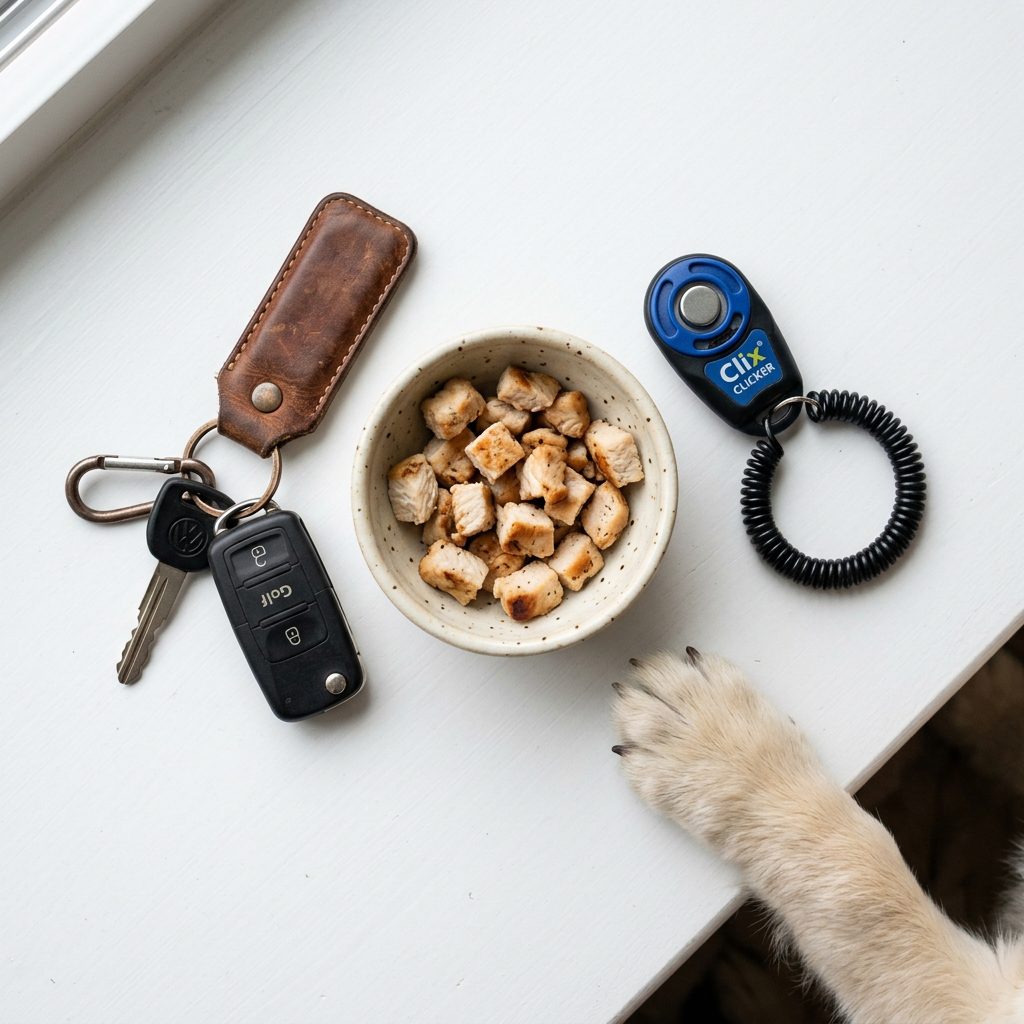
Before we begin the training process, you need to gather a few essential items. Since we are working with puppies, safety and high motivation are our top priorities. You want to make the ‘find’ so rewarding that your puppy would rather look for keys than chew on your favorite sneakers.
The Essential Checklist
- The Keys: Use a spare set of keys. It is best if they are on a leather or fabric keychain, as these materials hold your scent and the ‘metal’ scent better than bare metal alone.
- High-Value Treats: We aren’t talking about standard kibble here. We need the ‘steak’ of dog treats—freeze-dried liver, small pieces of boiled chicken, or tiny bits of cheese.
- A Clicker (Optional): If you use clicker training, have it ready. If not, a consistent verbal marker like ‘YES!’ works perfectly.
- A Quiet Space: Start in a room with minimal distractions. No TV, no other pets, and no squeaky toys.
| Treat Value | Food Type | Best For… |
|---|---|---|
| Low Value | Standard Kibble | Basic commands in a familiar room. |
| Medium Value | Store-bought biscuits | Training with mild distractions. |
| High Value | Freeze-dried Liver/Chicken | New scent introduction and difficult finds. |
Phase 1: Scent Imprinting – The Foundation
Teaching the Association
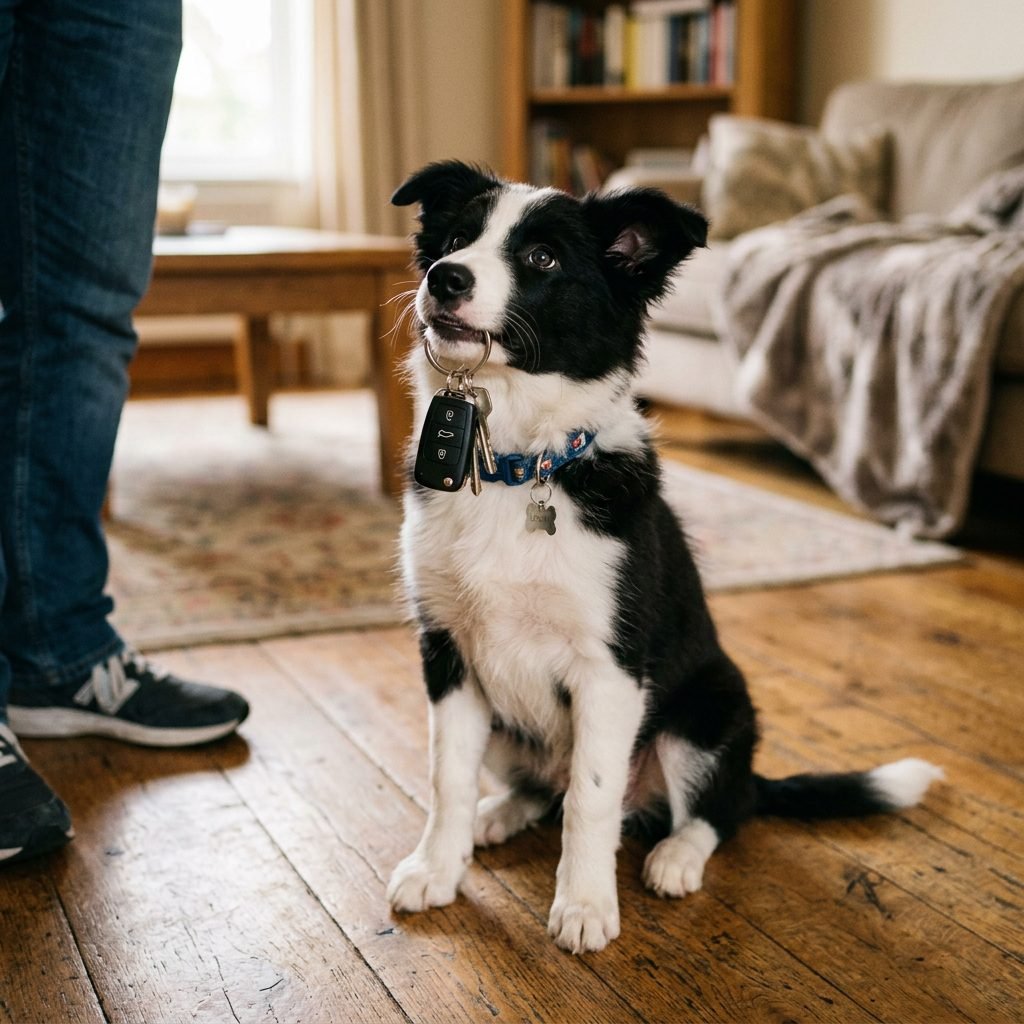
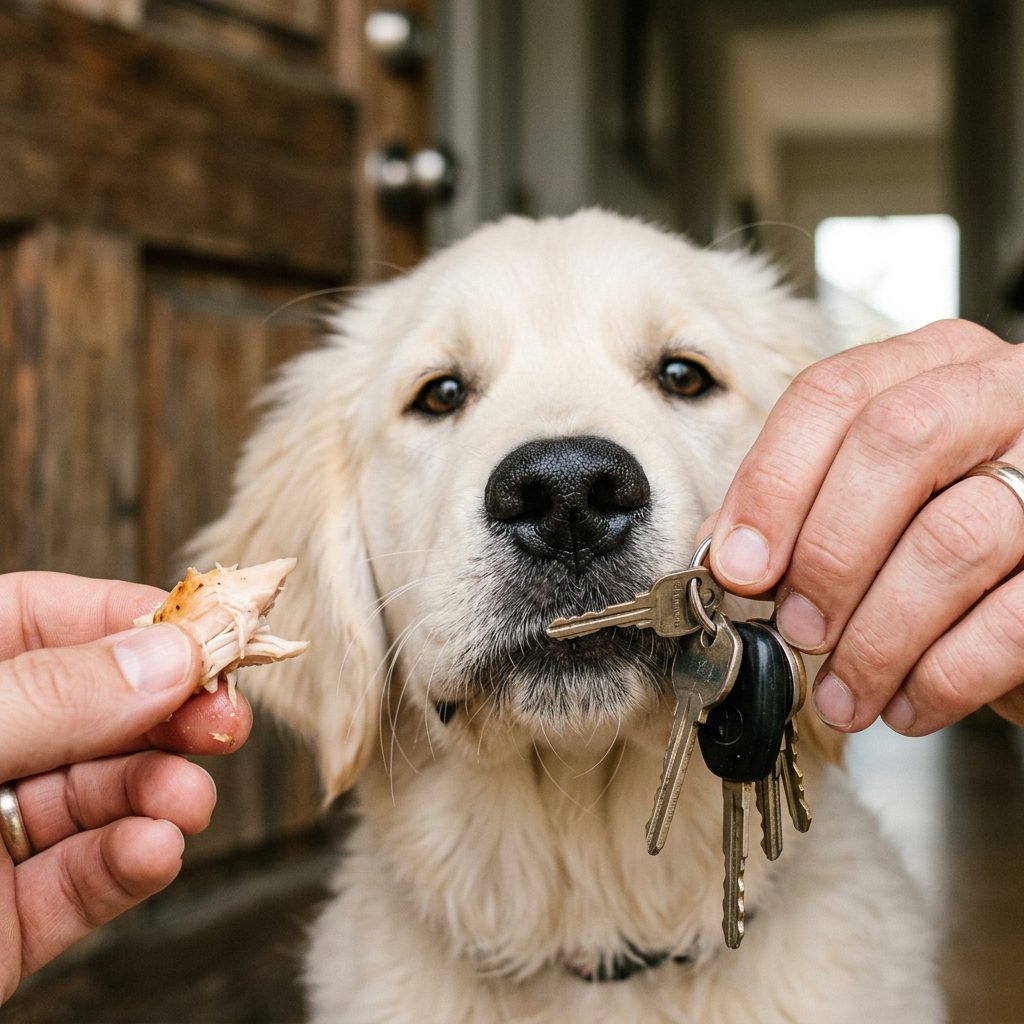
The first step in turning your pup into a genius is ‘imprinting’ the scent of the keys. We want the puppy to understand that the smell of these keys equals a delicious reward. This phase uses classical conditioning to create a positive emotional response to the object.
Step-by-Step Imprinting
- The Presentation: Hold the keys in one hand and a treat in the other (hidden behind your back). Present the keys to your puppy about 2-3 inches from their nose.
- The Sniff: Naturally, your puppy will lean in to sniff this new object. The moment their nose touches the keys, click your clicker or say ‘YES!’ in a high-pitched, happy tone.
- The Reward: Immediately deliver the treat. Repeat this 10 to 15 times until the puppy is eagerly poking the keys with their nose the moment you show them.
- Adding the Command: Once the puppy is consistently touching the keys, start saying your chosen command—such as ‘Find!’ or ‘Search!’—just as they lean in to sniff.
Expert Tip: Do not let your puppy grab or chew the keys at this stage. We want them to identify the scent with their nose, not treat the keys as a chew toy. If they try to bite, gently pull the keys away and wait for a calm sniff instead.
Phase 2: Increasing the Challenge – Hide and Seek
Moving Beyond the Hand
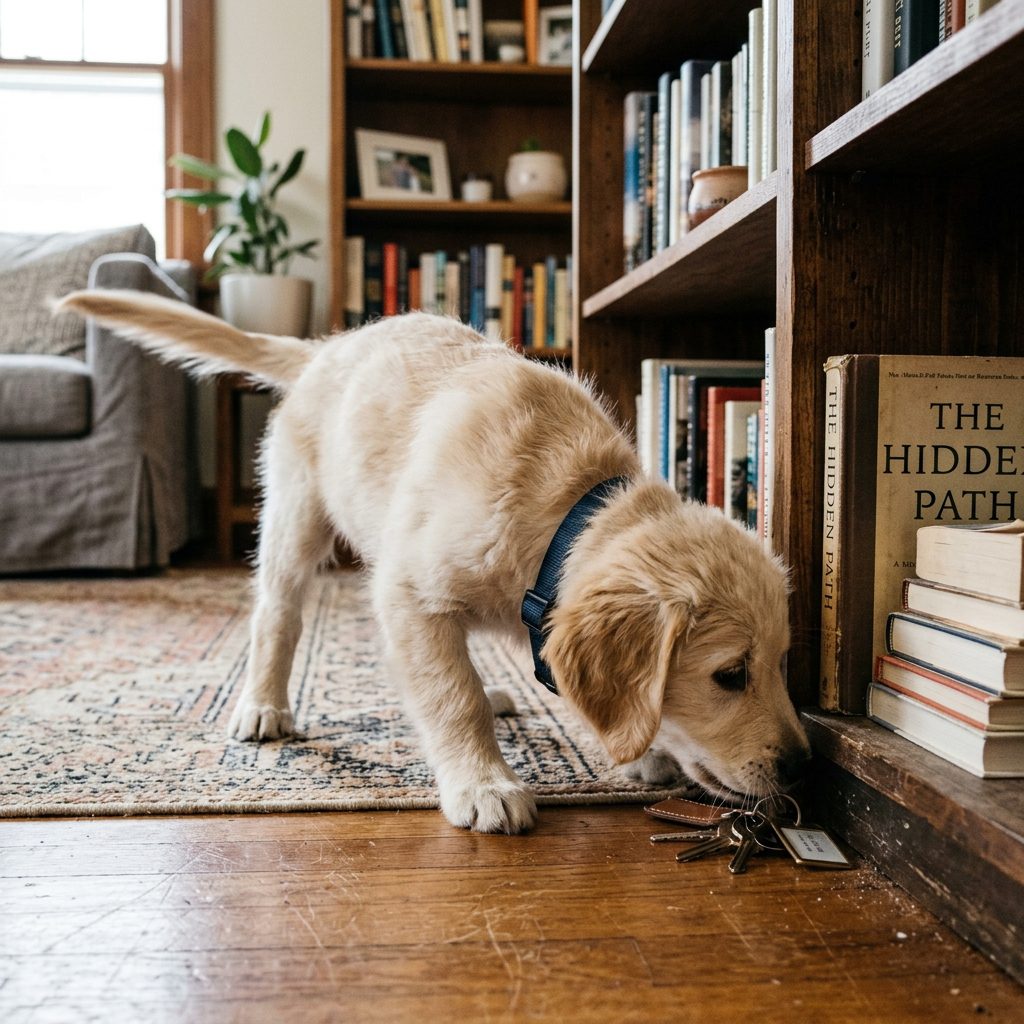
Once your puppy understands that the keys are the target, it is time to make the game more interesting. We are going to move from ‘seeing’ the keys to ‘finding’ the keys. This transition teaches the puppy to use their nose to solve a puzzle rather than just reacting to what is in front of them.
The Progression of Difficulty
Start by placing the keys on the floor in plain sight. Point to them and say ‘Find!’ When the puppy touches them, reward heavily. Next, place the keys behind a chair leg or slightly under the edge of a rug. The goal is to make the puppy work for it, but not so hard that they get frustrated. If they struggle, go back a step. We want them to win every single time in the beginning.
Environmental Factors
As you progress, consider ‘scent pools.’ Scent doesn’t just stay on the object; it falls like water and pools on the floor or drifts with air currents. If you hide the keys in a corner, the scent might actually be strongest a foot away due to the way air moves in your home. Watching your puppy navigate these invisible clouds of aroma is where the real ‘genius’ behavior begins to show.
- Level 1: Keys on the floor, 2 feet away.
- Level 2: Keys behind an object, 5 feet away.
- Level 3: Keys in another room, out of sight.
Phase 3: The Alert – How Your Puppy Tells You
Communication is Everything
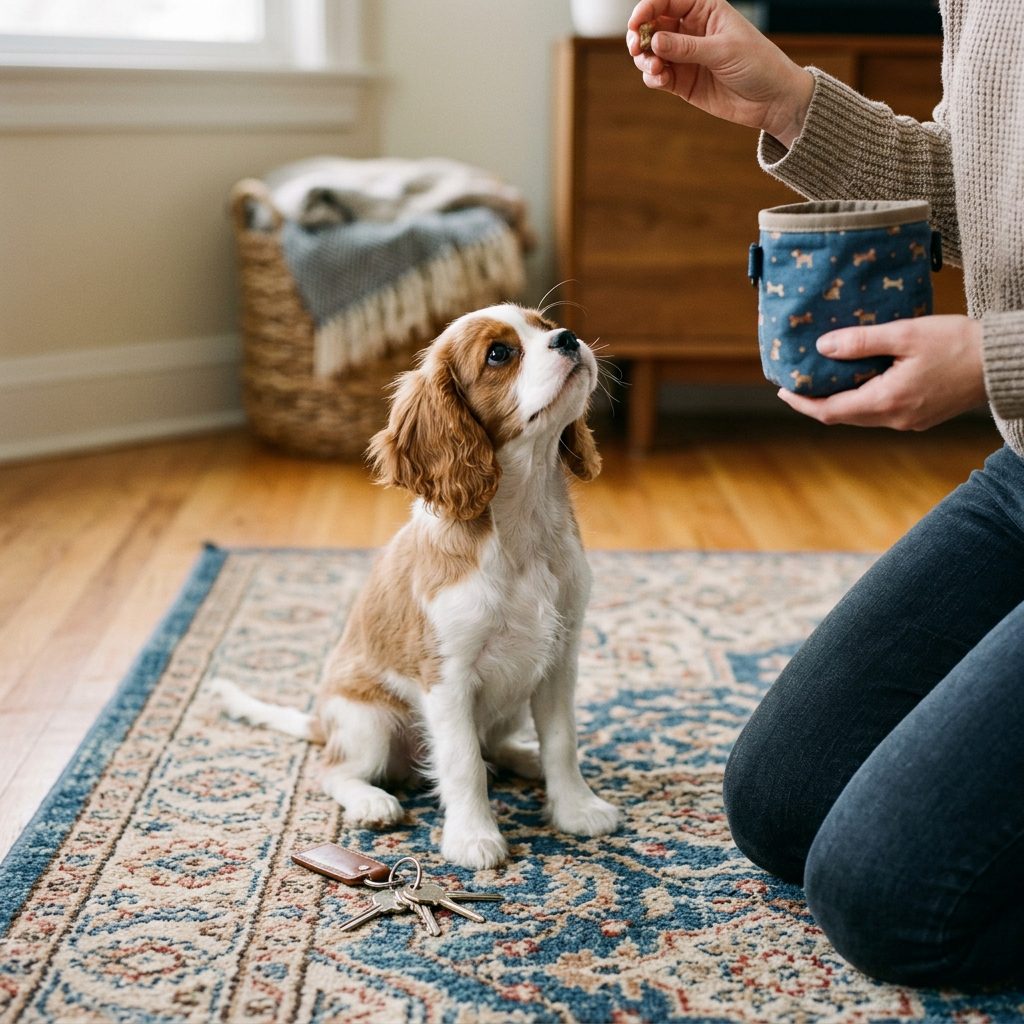
Finding the keys is only half the battle; your puppy needs to tell you where they are! In professional scent work, this is called an ‘indication’ or ‘alert.’ There are two main types: passive and active.
Passive vs. Active Alerts
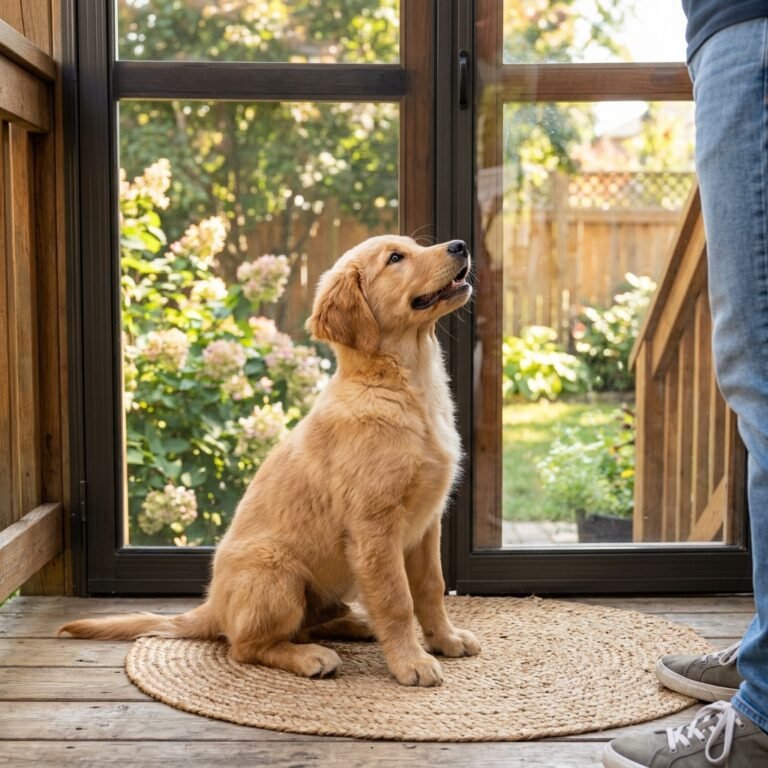
A passive alert is when the dog sits or lies down next to the object. This is often preferred for keys because it prevents the dog from picking them up and potentially swallowing small parts or scratching the keys. An active alert is when the dog barks, paws, or retrieves the object. For puppies, a ‘sit’ alert is usually the easiest and safest to train.
Training the ‘Sit’ Alert
- When your puppy finds the keys, wait a split second before rewarding.
- If they naturally sit in excitement, click and reward instantly!
- If they don’t sit, give your ‘Sit’ command the moment they find the keys.
- After a few repetitions, the puppy will realize: ‘If I find the keys AND sit, I get the super-special liver treat!’
| Alert Type | Action | Pros | Cons |
|---|---|---|---|
| Passive | Sitting or Lying down | Safe, clear, no damage to keys. | Requires more impulse control. |
| Active | Barking or Pawing | Very obvious to the owner. | Can be noisy or scratch surfaces. |
| Retrieval | Bringing keys to you | Very convenient. | Risk of choking or key damage. |
Troubleshooting and Advanced Tips
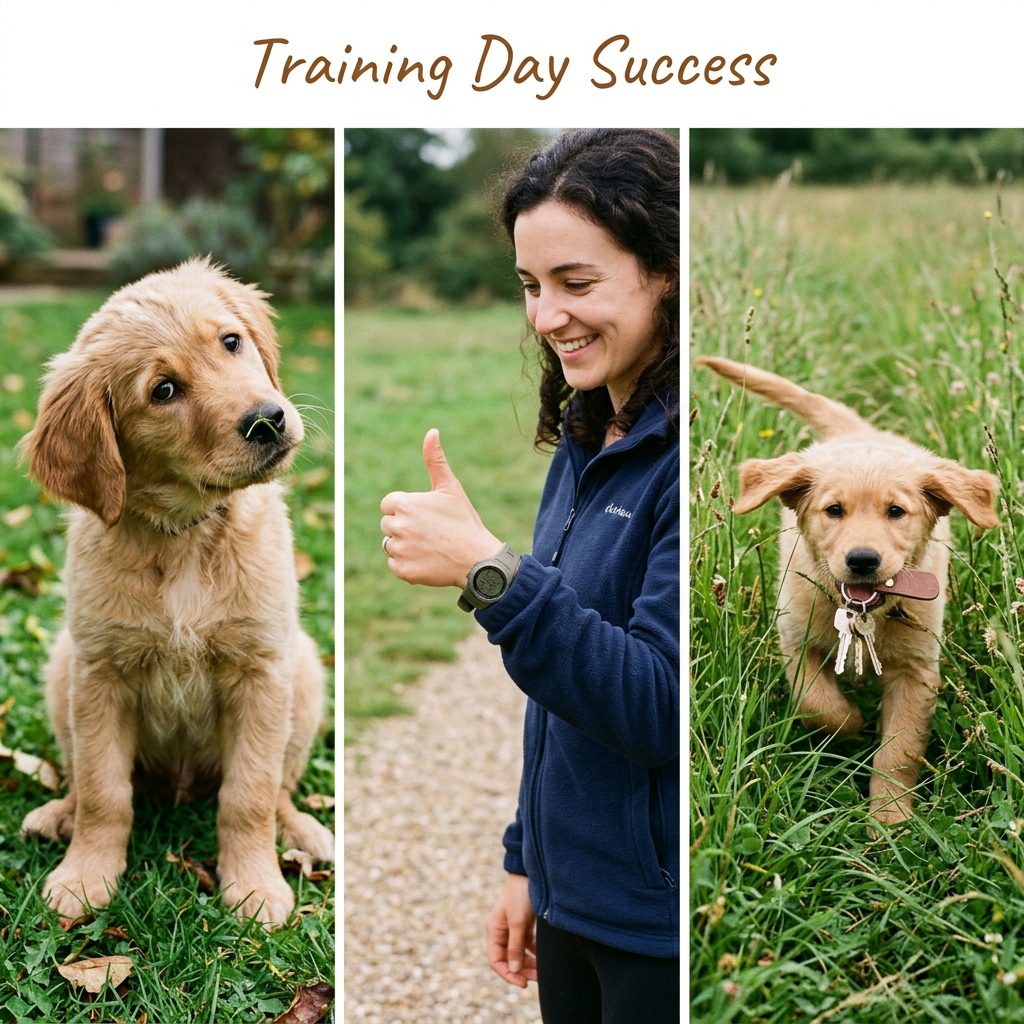
Overcoming Common Hurdles
Not every training session will be perfect. Puppies have short attention spans and can get easily distracted by a passing butterfly or a stray piece of lint. The key to success is patience and consistency. If your puppy seems to be losing interest, it might be because the rewards aren’t high-value enough, or the session has gone on too long.
Common Mistakes to Avoid
- Training for too long: Keep sessions to 5 minutes or less. Always end on a successful find so the puppy stays motivated for next time.
- Helping too much: It is tempting to point at the keys, but let the puppy use their nose. The ‘aha!’ moment of discovery is where the learning happens.
- Inconsistency: Use the same keys and the same command words every time until the behavior is rock solid.
Taking it to the Next Level
Once your puppy is a pro at finding keys in the living room, take the show on the road! Try hiding the keys in the grass in your backyard, or in a different house entirely. This ‘generalizes’ the behavior, teaching the puppy that ‘Find!’ means ‘Find the keys anywhere, under any conditions.’
| Problem | Possible Cause | The Solution |
|---|---|---|
| Puppy wanders off | Distractions are too high | Move to a smaller, quieter room. |
| Puppy chews the keys | High play drive | Increase treat value and reward the ‘sniff’ faster. |
| Puppy can’t find them | Scent is too cold/old | Rub the keys in your hands to warm them up and add your scent. |
Conclusion
The Journey to Genius Status
Teaching your puppy to find your lost keys is a rewarding journey that goes far beyond the practical benefit of never losing your car keys again. It is an exercise in trust, communication, and mutual respect. You are learning to listen to your dog’s body language just as much as they are learning to listen to your commands. This type of cognitive enrichment creates a ‘thinking dog’—a pet that is eager to work with you and solve problems rather than creating trouble out of boredom.
Remember, every puppy learns at their own pace. Some might pick it up in an afternoon, while others might take weeks of gentle practice. Celebrate the small wins, keep the energy positive, and always remember that to your puppy, this is the best game in the world. You aren’t just training a dog; you are nurturing a genius. So the next time you can’t find your keys, don’t panic. Just look at your brilliant companion and say, ‘Find!’