Gross Habits! How to Train Your Puppy to Stay Out of the Cat’s Litter Box for Good
Let’s be honest: we love our puppies more than anything, but they have some truly disgusting habits. If you’ve ever gone to give your furry friend a big, sloppy kiss only to realize they’ve just finished a ‘snack’ from the cat’s litter box, you know exactly what I’m talking about. It’s a common, albeit stomach-turning, behavior known as coprophagia. While it makes us want to reach for the nearest bottle of mouthwash, to a puppy, those little ‘tootsie rolls’ are actually high-protein treats that are just sitting there, unprotected, in a box of sand.
As a canine specialist, I’ve seen countless savvy dog owners struggle with this. It’s frustrating because it’s not just a hygiene issue; it’s a potential health risk for both your puppy and your cat. But don’t worry! You aren’t destined to live with a ‘poop-breath’ pup forever. This guide will walk you through the biological reasons behind this behavior, the health risks involved, and a comprehensive, step-by-step training plan to reclaim your home from this gross habit. We’re going to combine environmental management with positive reinforcement training to ensure your puppy learns that the litter box is strictly off-limits.
Understanding the ‘Why’: Why Puppies Love the Litter Box
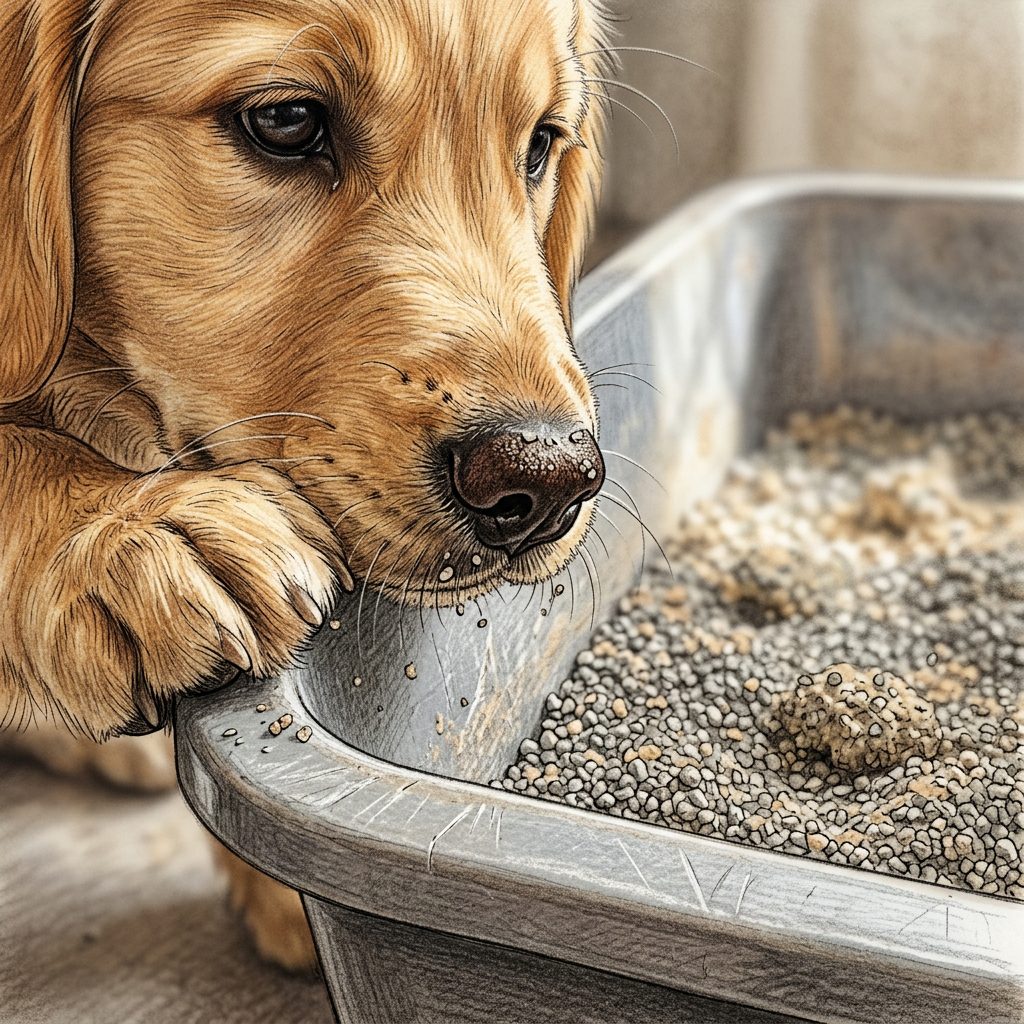
Before we can fix the behavior, we have to understand the motivation. Puppies aren’t being ‘bad’ or ‘gross’ on purpose; they are simply following their instincts. For a young dog, the world is a giant sensory playground. Their sense of smell is thousands of times more powerful than ours, and cat food is incredibly high in protein and fat. Because a cat’s digestive system is relatively short, their waste often still smells strongly of the high-quality food they just ate. To a puppy, that litter box is essentially a vending machine filled with free snacks.
There are several reasons why your puppy might be gravitating toward the litter box:
- Instinctual Foraging: In the wild, canines are scavengers. They don’t pass up free calories, even if those calories have already been processed once.
- Boredom: If a puppy is under-stimulated, they will find their own ‘hobbies.’ Investigating the litter box is an interactive (and rewarding) activity for a bored brain.
- Nutritional Deficiencies: In some cases, a dog may seek out feces if they aren’t absorbing enough nutrients from their own diet, though this is less common in puppies on high-quality commercial food.
- Curiosity: Puppies explore the world with their mouths. The texture of the litter and the ‘treasures’ inside are simply interesting to a curious mind.
| Reason | Description | Solution Path |
|---|---|---|
| Dietary Appeal | Cat poop contains high protein/fat residues. | Management & Training |
| Exploration | Puppies use their mouths to learn about objects. | Redirection |
| Boredom | Lack of mental or physical exercise. | Enrichment |
| Anxiety | Stress-induced behaviors. | Behavior Modification |
The Health Risks: Why You Must Intervene
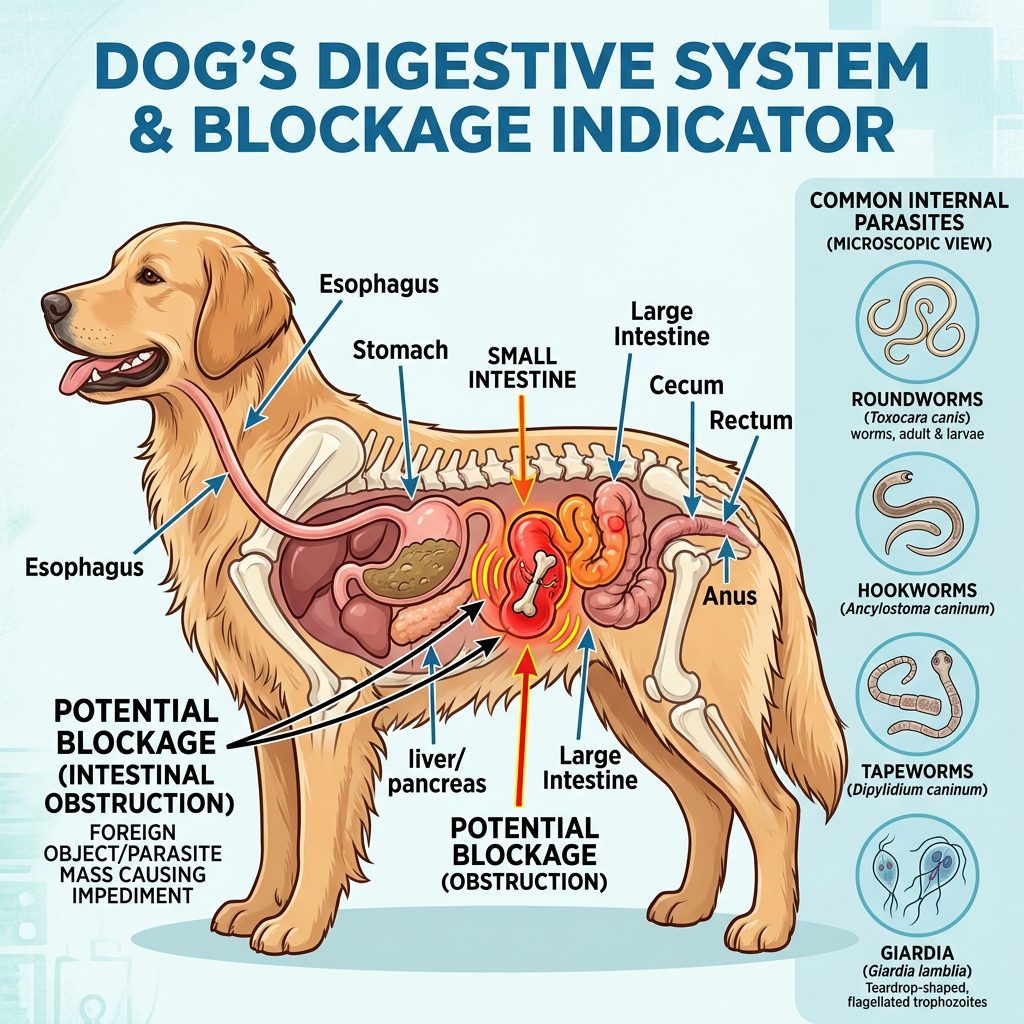
While the ‘yuck’ factor is enough for most owners, there are genuine medical concerns associated with this habit. It’s not just about bad breath; it’s about internal health. When a puppy raids the litter box, they aren’t just consuming waste; they are consuming whatever the cat might be carrying, as well as the litter itself.
Parasites and Bacteria
Cats can carry a variety of parasites that are transmissible to dogs. Toxoplasmosis is a major concern, as is Giardia and Coccidia. Even if your cat stays indoors, they can carry these organisms. Additionally, the bacteria found in feline waste can lead to upset stomachs, vomiting, and diarrhea in puppies whose immune systems are still developing.
The Danger of Clumping Litter
Perhaps the most dangerous part of the litter box isn’t the poop—it’s the litter. Most modern cat owners use clumping clay litter. This material is designed to expand and harden when it touches moisture. If a puppy ingests a significant amount of clumping litter, it can create a hard mass in their digestive tract, leading to a life-threatening intestinal blockage. This often requires emergency surgery to correct.
Expert Tip: If your puppy has ingested a large amount of clumping litter, monitor them closely for signs of lethargy, vomiting, or a hard, painful abdomen. Contact your vet immediately if these symptoms appear.
The Essential Toolkit for Success
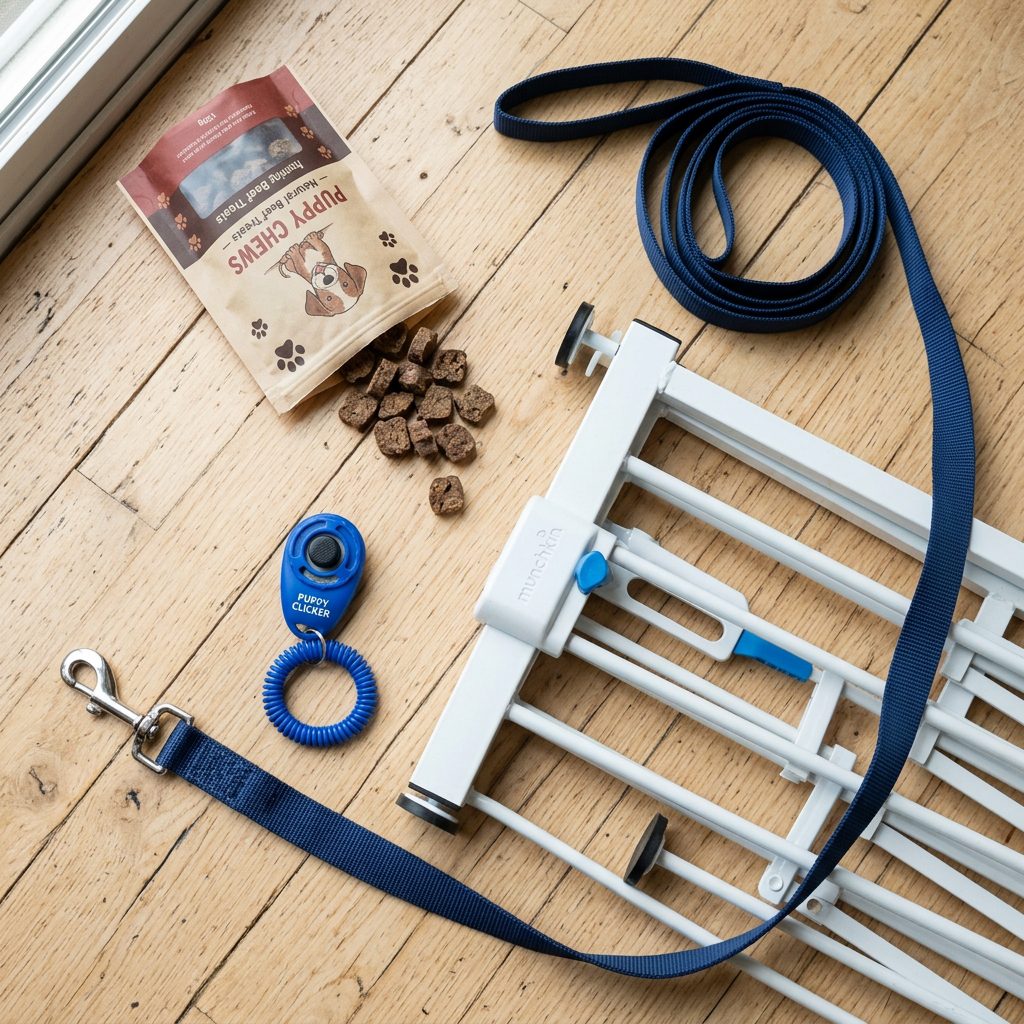
You wouldn’t try to build a house without a hammer, and you shouldn’t try to stop a deeply ingrained habit without the right tools. To win the battle of the litter box, you need a combination of physical barriers and training aids.
Management Tools
Management is 90% of the battle in the beginning. If the puppy can’t get to the box, they can’t practice the behavior. Consider the following:
- Baby Gates with ‘Cat Doors’: These allow the cat to pass through a small opening while keeping the puppy out.
- Top-Entry Litter Boxes: These require the cat to jump on top and drop in, making it much harder for a puppy to reach the ‘goods.’
- Door Straps: These keep the door to the litter box room cracked just wide enough for a cat, but too narrow for a dog.
Training Tools
For the behavior modification part of the plan, you will need:
- High-Value Treats: We’re talking boiled chicken, string cheese, or freeze-dried liver. The reward for not eating poop must be better than the poop itself!
- A Clicker: To mark the exact moment your puppy makes the right choice.
- A Long Leash: For supervised indoor training.
| Tool | Purpose | Effectiveness |
|---|---|---|
| Baby Gate | Physical Exclusion | High |
| Top-Entry Box | Difficulty Increase | Medium |
| High-Value Treats | Behavior Reinforcement | Essential |
| Microchip Cat Door | Selective Access | Very High |
The Step-by-Step Training Plan
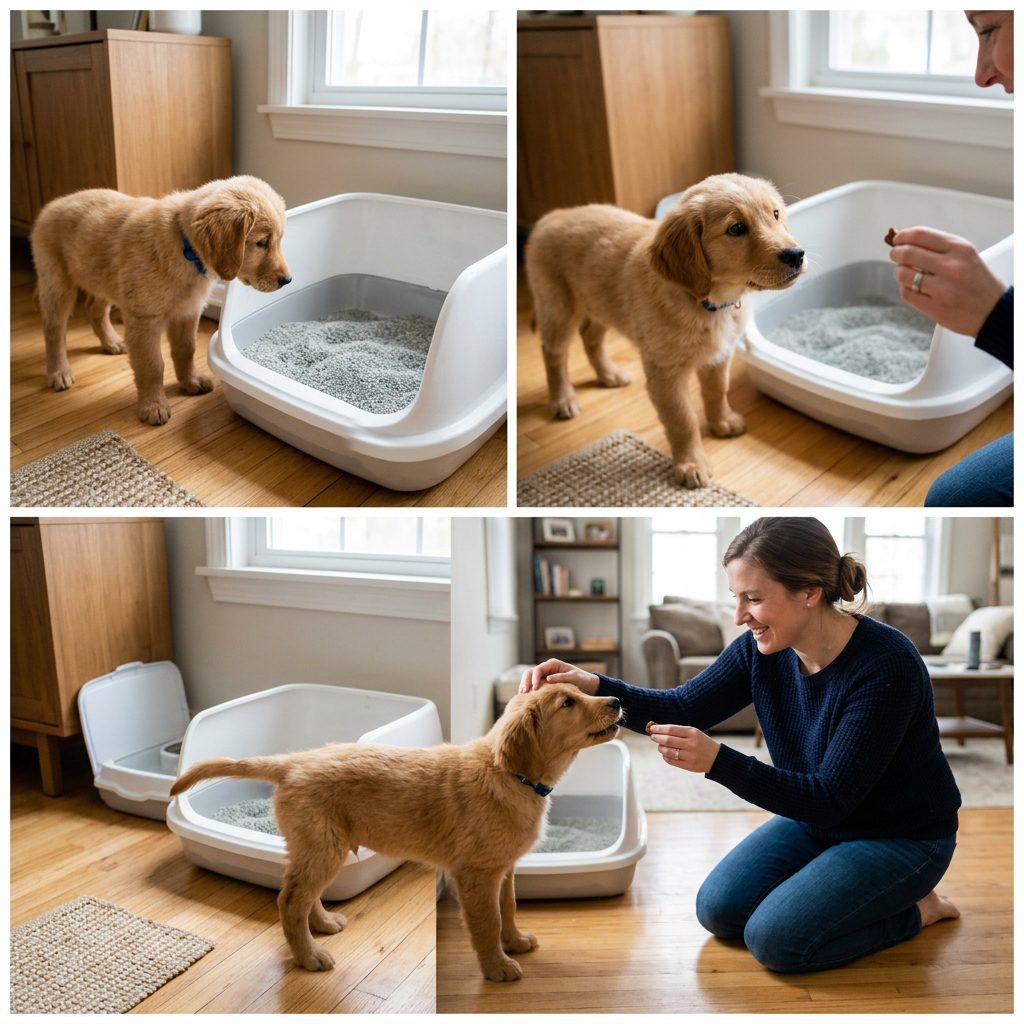
Now we get into the heart of the matter. Training your puppy to stay away from the litter box involves teaching them that ignoring the box is more rewarding than investigating it. We will use a three-pronged approach: ‘Leave It,’ ‘Check-In,’ and ‘Environmental Management.’
Step 1: Master the ‘Leave It’ Command
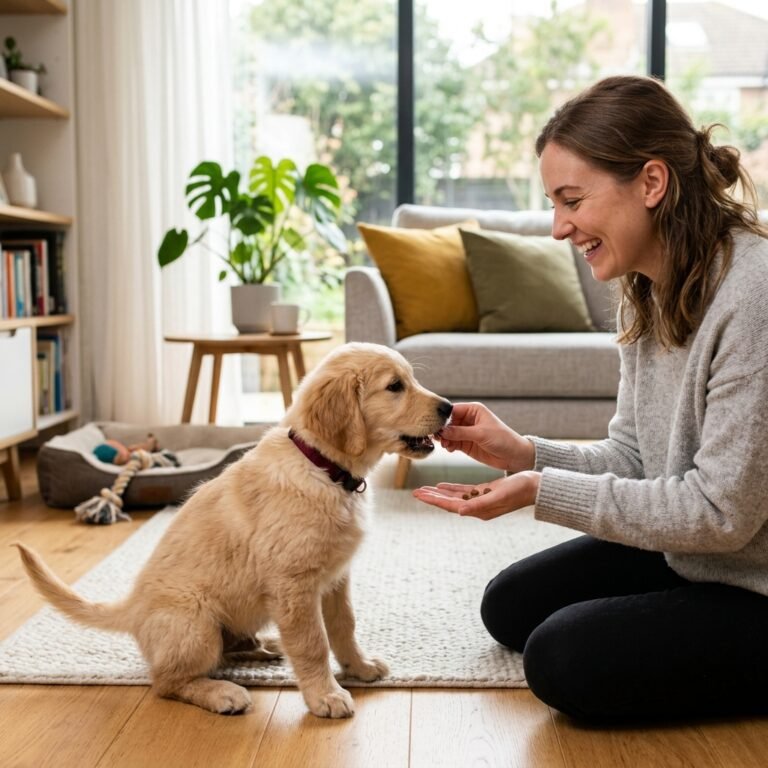
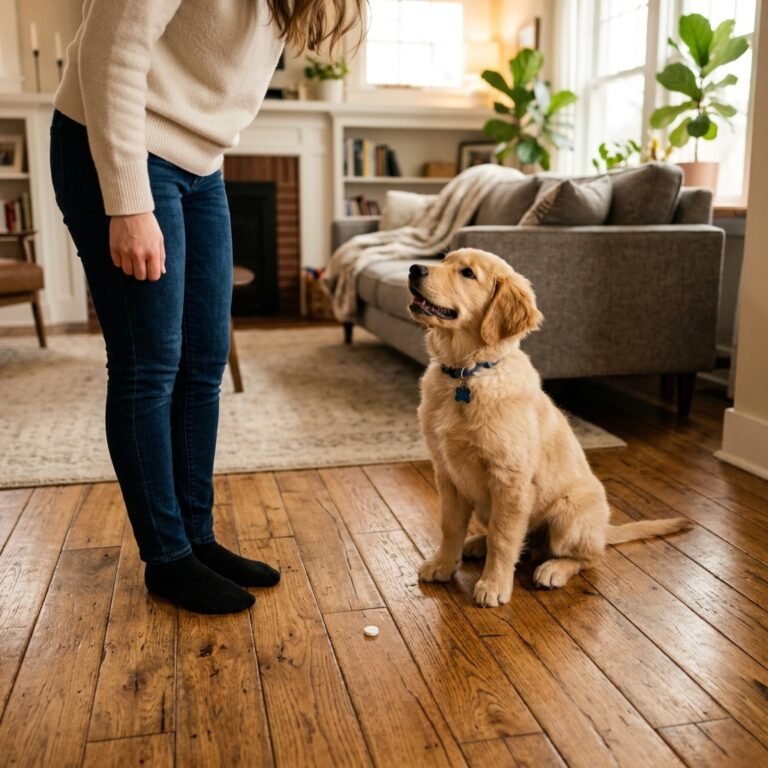
The ‘Leave It’ command is a life-saver. Start in a low-distraction environment (not the bathroom). Place a boring piece of kibble on the floor and cover it with your hand. When the puppy stops sniffing your hand, click and reward them with a high-value treat from your other hand. Gradually progress until you can drop the kibble and they won’t touch it until given the ‘OK.’
Step 2: The ‘Check-In’ Game
Once they understand ‘Leave It,’ move the training to the vicinity of the litter box. Have your puppy on a leash. Walk toward the box. The moment your puppy looks at the box, say their name. When they turn their head to look at you (checking in), click and give them a jackpot of treats. You are teaching them that looking at you is better than looking at the box.
Step 3: Reward the ‘Choice’
Eventually, you want the puppy to see the litter box and automatically turn away to find you. When you see your puppy approach the box, wait for a split second. If they sniff and then turn away on their own, throw a party! Praise them heavily and offer their favorite toy or treat. This builds the ‘muscle memory’ of avoidance.
Step 4: Controlled Exposure
Slowly increase the difficulty. Try training while the cat is actually using the box (a high-distraction moment). Keep the puppy on a leash to ensure they cannot fail. If they lung toward the box, simply move them further away and restart at a distance where they can succeed.
Environmental Modifications and High-Tech Solutions
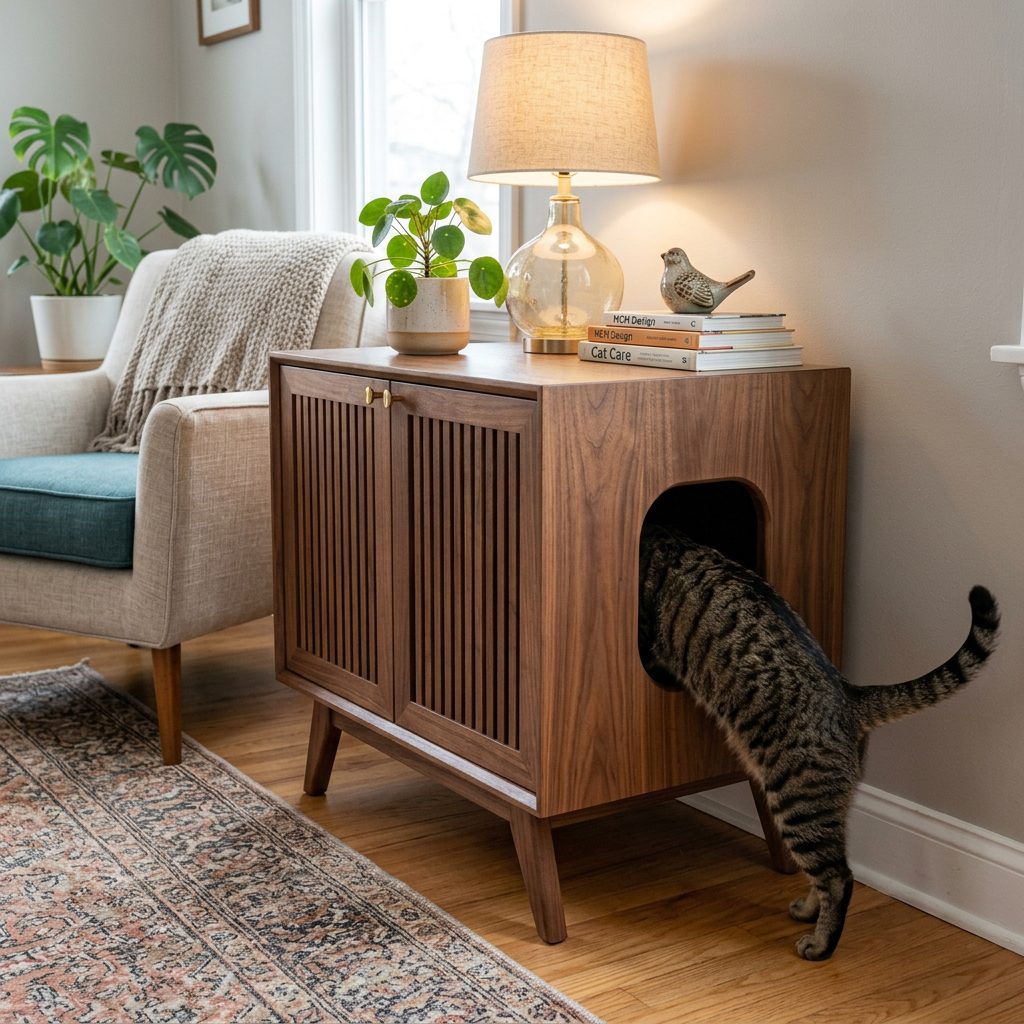
Sometimes, training alone isn’t enough, especially if you have a particularly stubborn or high-drive puppy. This is where environmental modifications come in. You want to make the litter box as inaccessible as possible without stressing out your cat.
The ‘Cat-Only’ Zone
The most effective method is to place the litter box in a room that the dog simply cannot enter. A microchip-activated cat door is a fantastic investment. It only opens for the cat wearing the corresponding chip or collar tag. This ensures your cat has total privacy and your puppy stays out.
Furniture Solutions
Litter box ‘enclosures’ that look like end tables or benches can also help. These usually have a small entry hole that is easy for a cat to navigate but difficult for a puppy to stick their head into. Just ensure the enclosure is well-ventilated so your cat doesn’t feel trapped or overwhelmed by odors.
Cleaning Habits
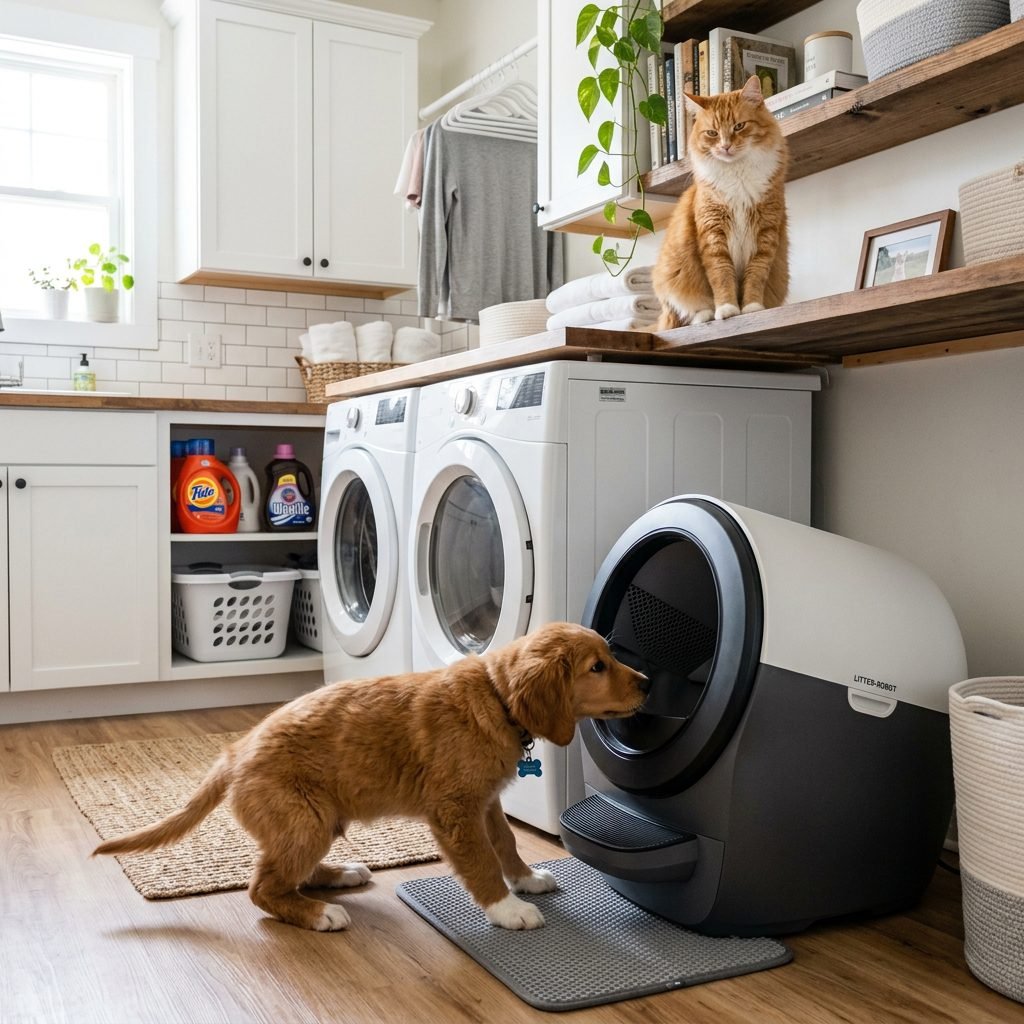
Don’t underestimate the power of cleanliness. A self-cleaning litter box can be a game-changer. These devices rake the waste into a sealed compartment immediately after the cat leaves. If there’s no ‘snack’ available, the puppy will eventually lose interest in the box altogether.
Expert Tip: Always ensure your cat is comfortable with any changes. If the cat stops using the box because of a new gate or enclosure, you’ll have a much bigger problem on your hands!
Troubleshooting and Common Pitfalls
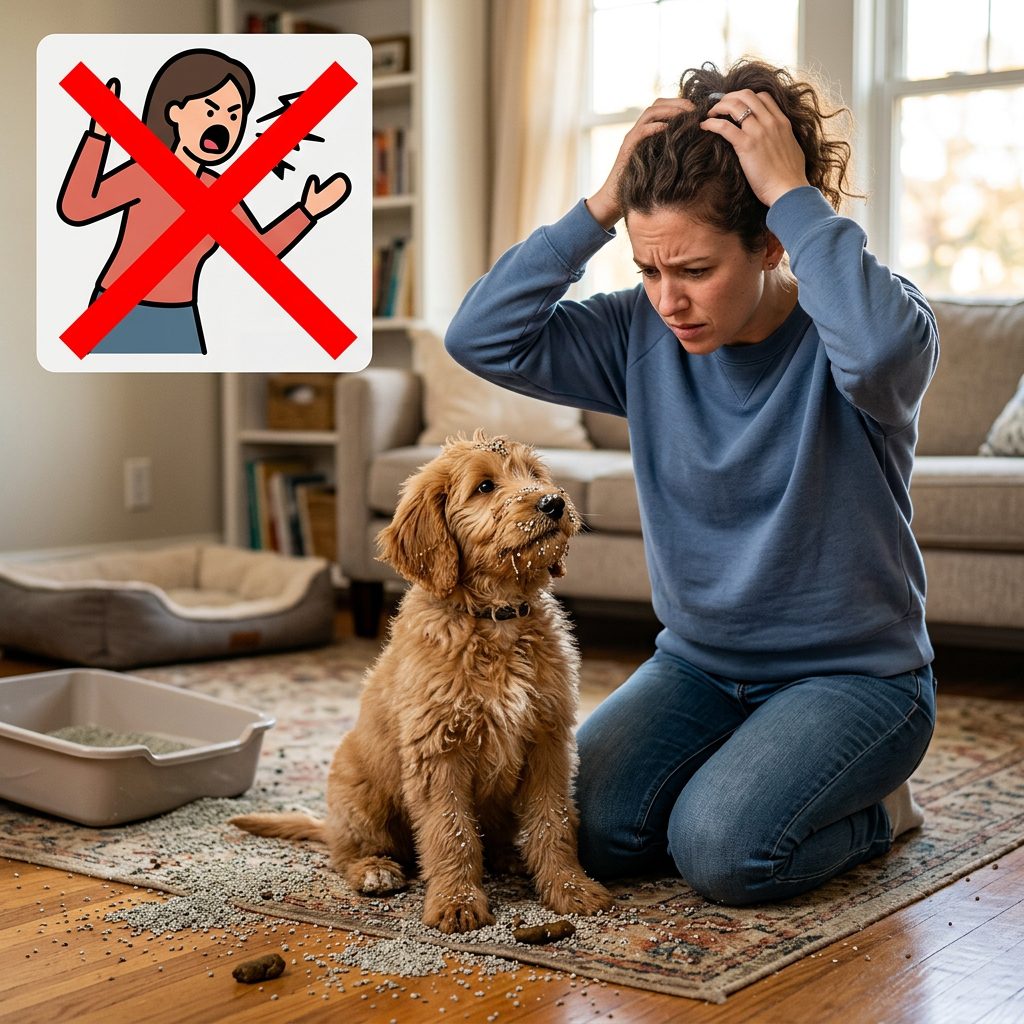
Training isn’t always a straight line. You might experience relapses or hurdles. Here’s how to handle common issues:
What if my puppy gets into the box when I’m not looking?
This is a management failure, not a training failure. If you can’t supervise, the puppy must be crated, in a playpen, or the litter box room must be locked. Every time the puppy successfully raids the box, the behavior is reinforced, making it harder to break.
My puppy is obsessed even when the box is empty!
This suggests the behavior has become a habit or a way to seek attention. Increase the puppy’s mental stimulation. Use puzzle feeders, long walks, and training sessions to tire out their brain. A tired puppy is a well-behaved puppy.
The ‘Forbidden Fruit’ Effect
If you scold your puppy or chase them away from the box, you might accidentally make it more exciting. It becomes a game of ‘keep away.’ Instead of yelling, calmly use your leash to lead them away and reward them for focusing on a different task.
| Problem | Likely Cause | Correction |
|---|---|---|
| Relapse | Lack of supervision | Restrict access strictly |
| Obsession | Boredom/Lack of exercise | Increase daily enrichment |
| Fear of the Box | Negative reinforcement | Use positive methods only |
| Cat Stress | Puppy hovering near box | Create a ‘safe path’ for cat |
Conclusion
Stopping your puppy from raiding the cat’s litter box requires patience, consistency, and a multi-faceted approach. By combining strict environmental management (making the box inaccessible) with positive reinforcement training (teaching ‘Leave It’ and ‘Check-In’), you can break this gross habit for good. Remember, your puppy isn’t doing this to be spiteful; they’re just being dogs! Stay calm, keep your treats handy, and celebrate the small wins. Before you know it, you’ll be able to enjoy those puppy kisses again without any hesitation. You’ve got this!