Stop Puppy Biting Pants Legs: 6 Simple Steps To Save Your Wardrobe Today!
The Struggle is Real: Why Your Puppy Loves Your Pants
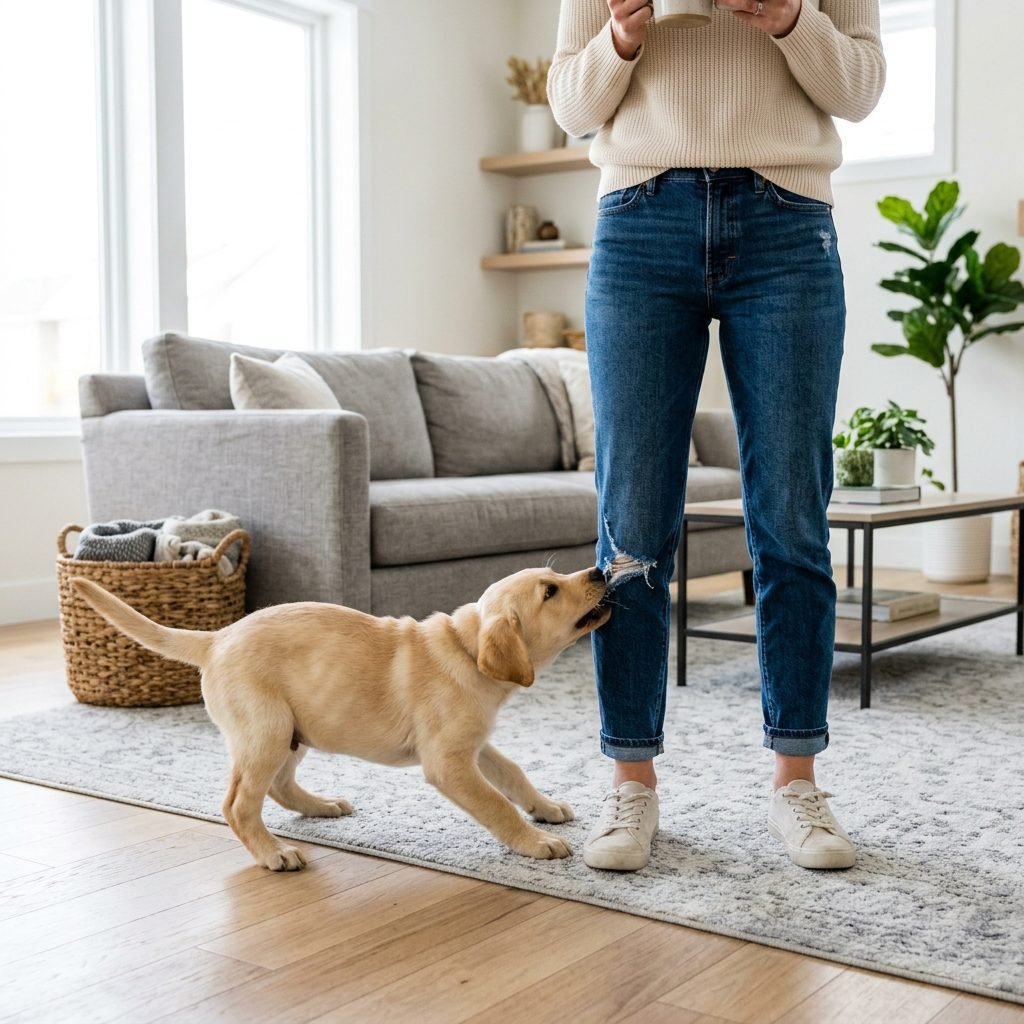
If you have recently welcomed a furry bundle of joy into your home, you likely expected cuddles, puppy breath, and perhaps a few accidents on the rug. What you might not have expected was the relentless assault on your wardrobe. One moment you are walking across the kitchen to grab a coffee, and the next, a tiny, sharp-toothed predator is latched onto your favorite pair of leggings or the hem of your expensive slacks. It is frustrating, it is painful, and if we are being honest, it can make you feel a little bit like a human chew toy.
First, take a deep breath and know that you are not alone. This behavior is incredibly common among puppies, particularly those between the ages of 8 and 20 weeks. At this stage, puppies are like little scientists, using their mouths to explore every texture and movement in their environment. Your moving pant legs? To a puppy, that looks like the ultimate interactive toy. It moves, it flutters, and best of all, it usually gets a big reaction out of you!
In this comprehensive guide, we are going to dive deep into the canine psychology behind this behavior. We will explore why your puppy thinks your jeans are a gourmet snack and, more importantly, provide a proven 6-step strategy to reclaim your clothes and teach your puppy better ways to interact. Whether you are dealing with a herding breed that loves to nip at heels or a mouthy retriever, these steps will help you navigate this phase with patience and professional precision.
Pro Tip: Puppies do not bite out of malice; they bite because they lack impulse control and are driven by natural instincts. Our job is to guide those instincts toward appropriate outlets.
Understanding the ‘Why’: The Science of the Snag
Before we can fix the behavior, we have to understand what is driving it. For a savvy dog owner, knowing the ‘why’ is half the battle. Puppy biting at clothes is rarely about aggression; instead, it is usually a combination of three main factors: Herding Instincts, Play Motivation, and Teething Relief.
The Predatory Motor Pattern
Many dog breeds, especially those in the Herding Group like Border Collies, Australian Shepherds, and Corgis, have a naturally high ‘prey drive.’ In the wild, or when working livestock, this involves a sequence of behaviors: Search, Stalk, Chase, Grab-Bite, and Kill-Bite. When you walk away from your puppy, your moving feet and flapping fabric trigger the ‘Chase’ and ‘Grab-Bite’ parts of this sequence. To your puppy, you are not just their owner; you are a very exciting sheep that needs to be rounded up!
The Teething Timeline
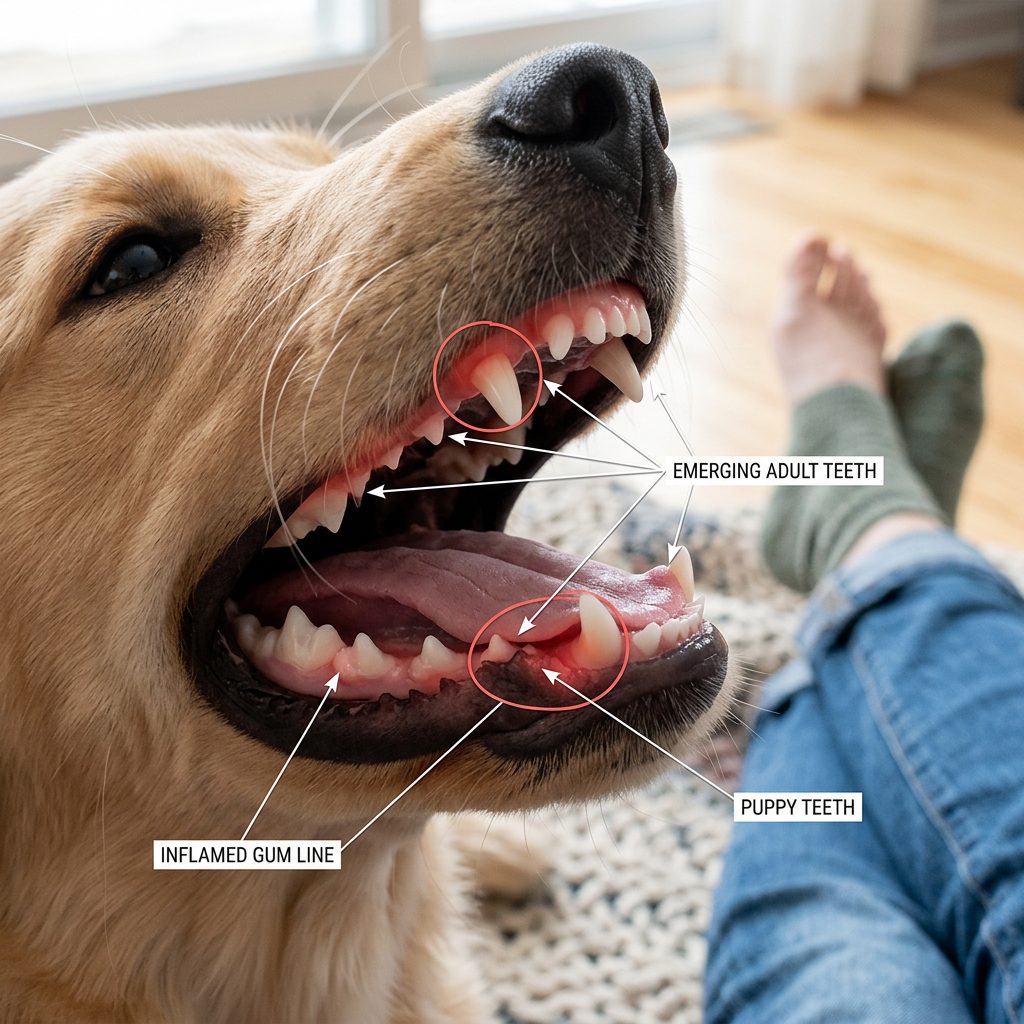
Just like human babies, puppies go through a painful teething process. Between 4 and 6 months of age, their deciduous (baby) teeth fall out to make room for 42 adult teeth. This causes significant gum discomfort. Biting down on different textures—like the rough denim of jeans or the soft cotton of sweatpants—provides a massaging sensation that temporarily relieves that ache.
Table: Common Biting Motivations
| Motivation | Behavioral Signs | Primary Goal |
|---|---|---|
| Herding Instinct | Nipping at heels and ankles while you move. | To control your movement. |
| Play/Boredom | Growling, pouncing, and tugging on fabric. | To get you to engage in a game. |
| Overstimulation | Hectic, ‘zoomie’ behavior followed by frantic biting. | An outlet for excess energy or lack of sleep. |
Step 1: Become the ‘World’s Most Boring Tree’

The most common mistake owners make when a puppy bites their pants is reacting. We yelp, we push them away, or we try to run. To a puppy, this is fantastic. You are making noise and moving—you have essentially become a giant squeaky toy! The first and most vital step in stopping this behavior is to remove the reward of movement.
How to ‘Be a Tree’
The moment you feel those teeth hit your clothes, stop dead in your tracks. Fold your arms across your chest and look away. Do not speak to the puppy, do not look at them, and do not push them. By becoming completely still and boring, you are signaling to the puppy that the ‘game’ has ended because the toy (you) has broken. Most puppies will let go after a few seconds of no movement. Once they let go and offer a second of calm, you can move again. If they bite again, freeze again. This consistency teaches them that biting equals the end of the fun.
Step 2: Master the Art of the Redirect
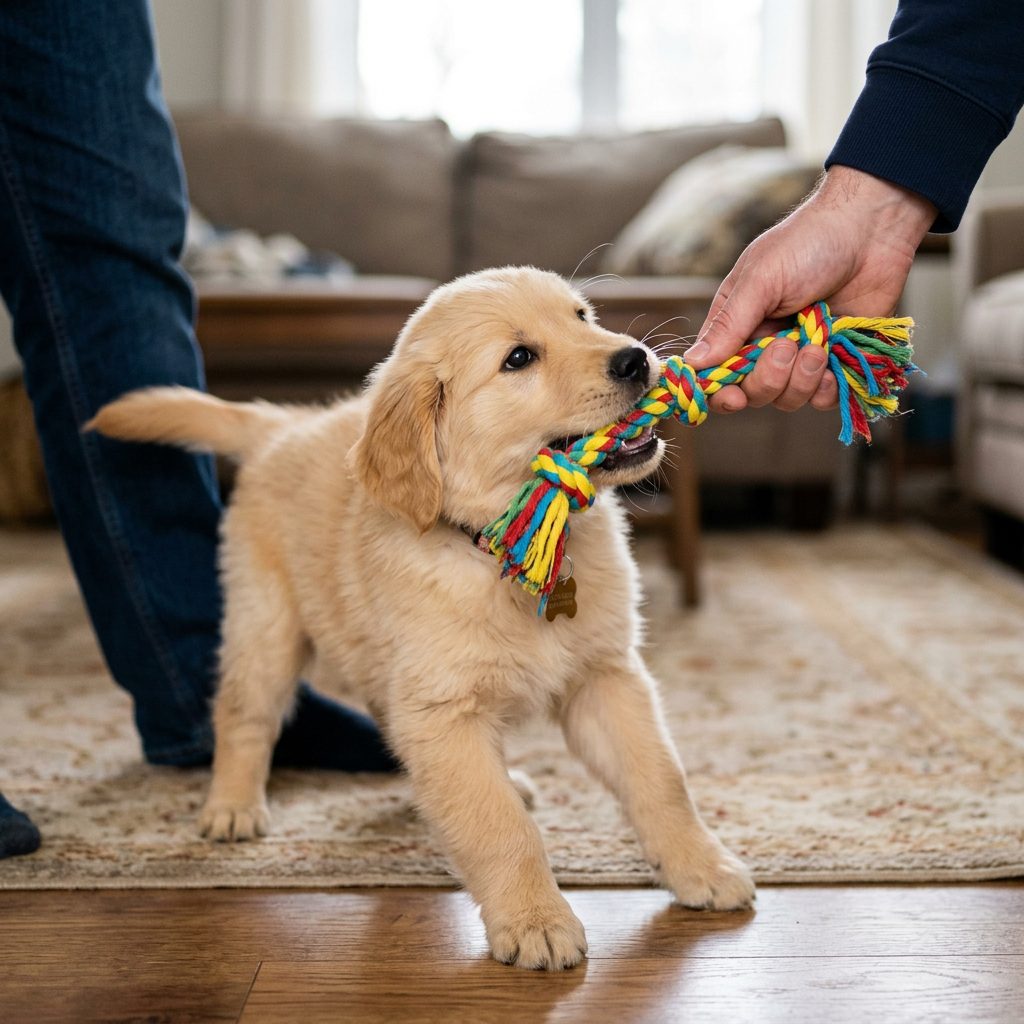
While ‘Being a Tree’ stops the immediate behavior, it doesn’t give the puppy an alternative. Puppies need to bite something, so your job is to provide the right something. This is where redirection comes in. You should always have a ‘legal’ biting option within arm’s reach.
The Toy Switcheroo
If you know your puppy tends to attack your pants when you walk through the hallway, carry a long tug toy or a plushie with you. Before the puppy can latch onto your leg, present the toy and wiggle it to make it more exciting than your jeans. When the puppy grabs the toy, praise them! You are reinforcing the idea that ‘biting this toy gets me praise and play, but biting the pants gets me nothing.’
Table: Best Redirection Toys
| Toy Type | Why It Works | Best For |
|---|---|---|
| Rope Tugs | Provides resistance and distance from hands. | Herding breeds and high-drive puppies. |
| Soft Plushies | Mimics the feel of fabric/clothing. | Puppies who love soft textures. |
| Rubber Chew Toys | Great for gnawing and teething relief. | Puppies currently losing baby teeth. |
Step 3: The ‘Reverse Timeout’ Technique
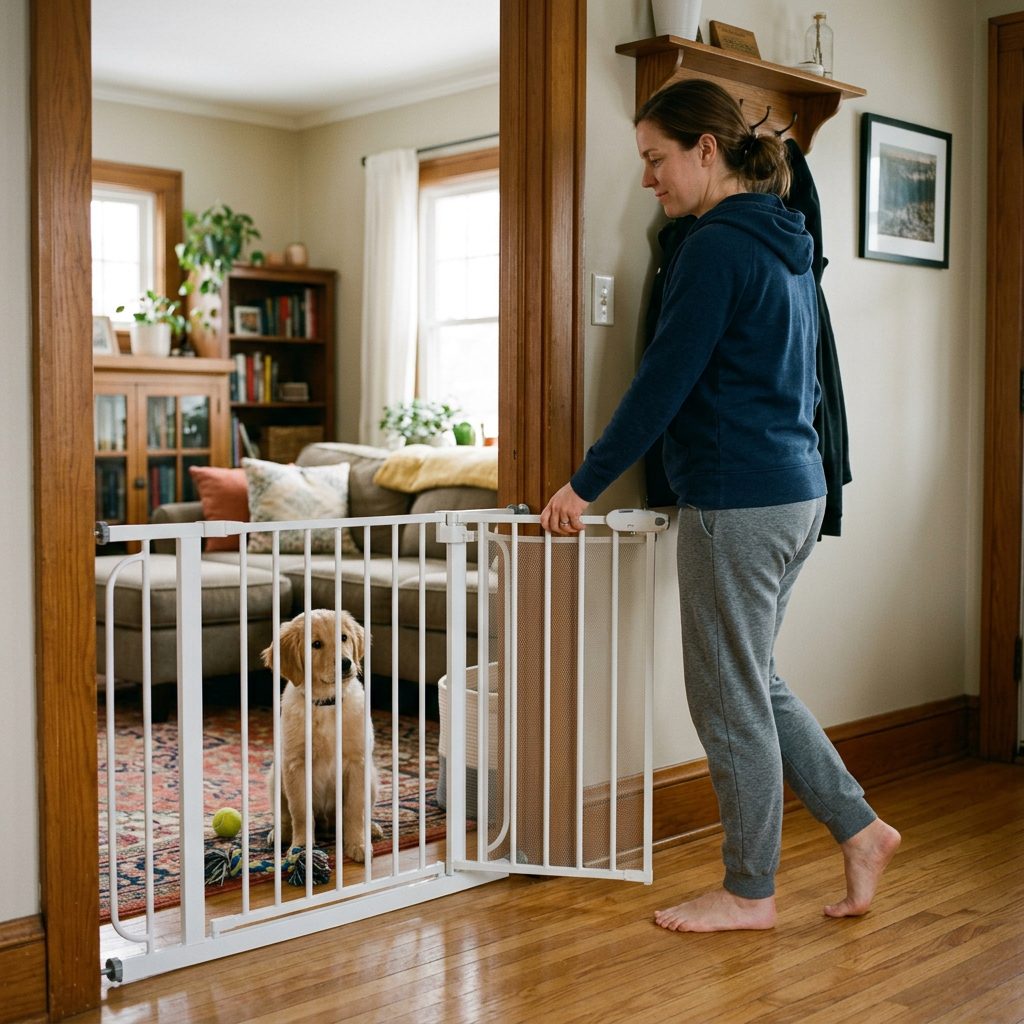
Sometimes, a puppy is so overstimulated that ‘Being a Tree’ or redirecting just doesn’t work. They might just keep biting your legs even if you are still. In these cases, you need to use a Reverse Timeout. Instead of putting the puppy in ‘jail,’ you remove yourself from the environment.
Execution of the Timeout
If the puppy continues to bite your clothes after you have frozen and tried to redirect, calmly step over a baby gate or go behind a door where the puppy cannot reach you. Stay there for only 30 to 60 seconds. This is a short, sharp lesson in social consequences. You are telling the puppy: ‘If you bite my clothes, I disappear.’ Puppies are highly social creatures, and losing access to their favorite person is a powerful deterrent. When you return, keep things calm. If they bite again, you leave again.
Step 4: Capture Calm and Reward the ‘Check-In’
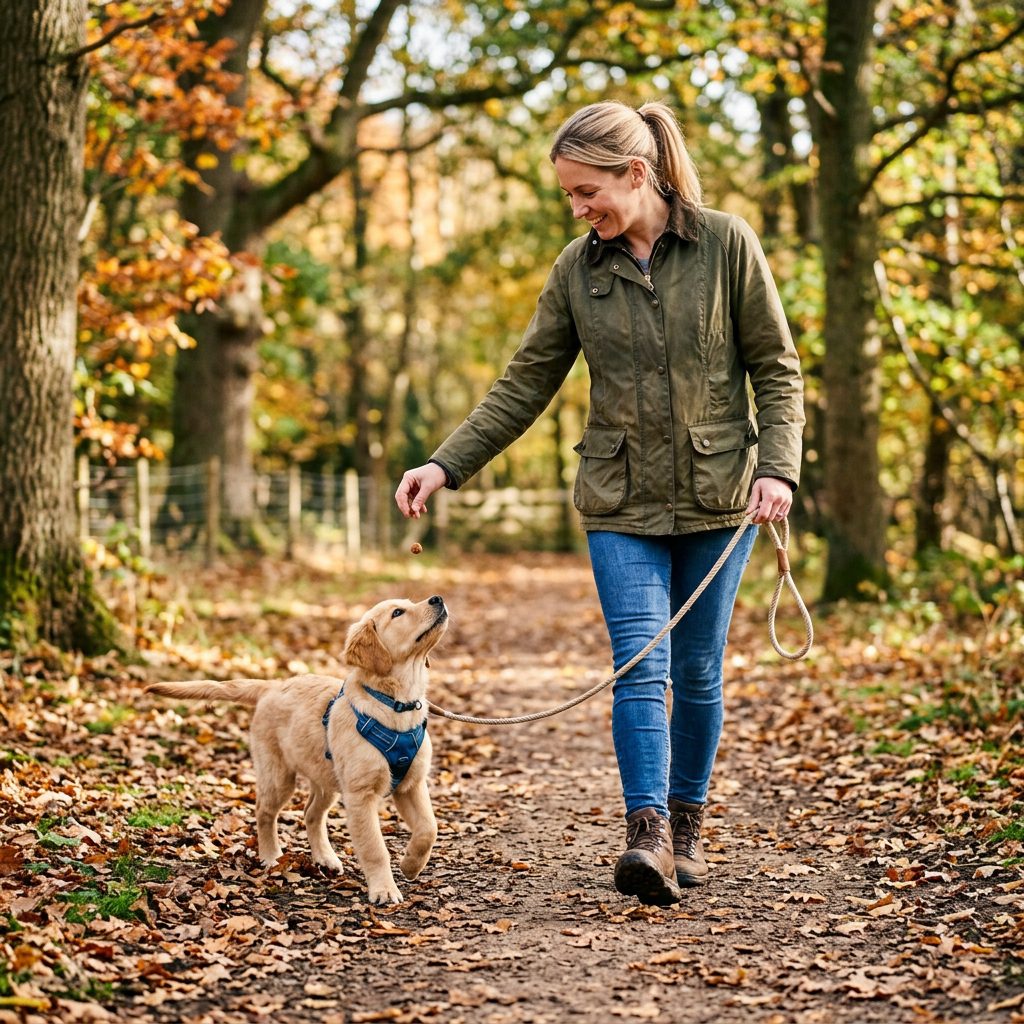
We often spend so much time correcting bad behavior that we forget to reward the good behavior. To truly stop puppy biting, you must teach your dog that calmness is profitable. This involves ‘capturing’ moments where your puppy chooses not to bite.
The Power of the Reward
Keep a pouch of small, low-calorie treats on you throughout the day. When you are walking and your puppy is walking nicely beside you without lunging for your pants, drop a treat! This is called ‘capturing.’ You are rewarding the puppy for making the right choice before they even think about making the wrong one. Over time, the puppy will start to ‘check-in’ by looking up at you as you walk, hoping for a treat, rather than looking down at your ankles for a snack.
Trainer Tip: Use a ‘Marker Word’ like ‘Yes!’ or a clicker the exact moment your puppy looks at you instead of your pants. Timing is everything in canine communication!
Step 5: Environmental Management and the ‘Puppy Zone’
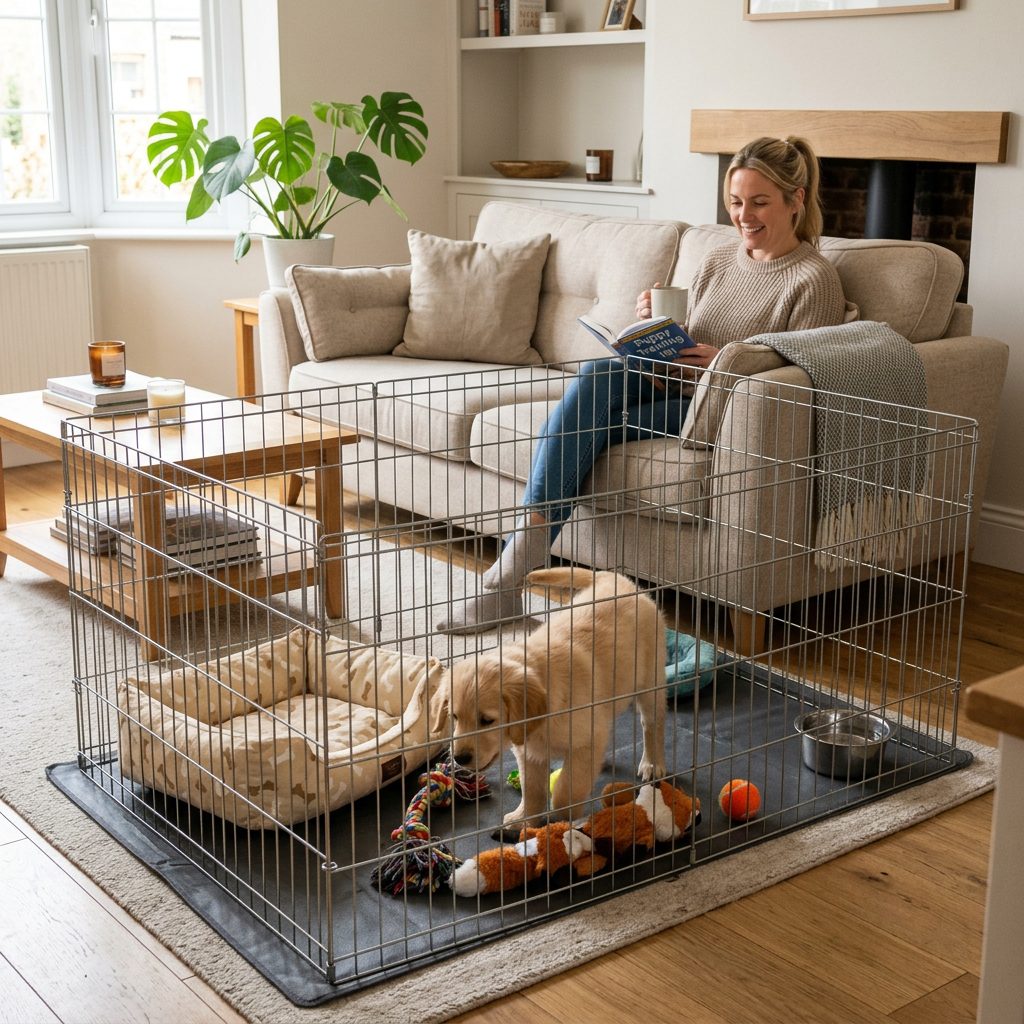
You wouldn’t leave a bowl of chocolate on the coffee table with a toddler around, so don’t leave your most ‘biteable’ clothes as an easy target for your puppy. Management is a crucial part of training. If you are wearing flowy pajamas or long skirts, you are essentially setting your puppy up for failure.
Setting the Stage for Success
While you are in the thick of the training phase, consider wearing ‘puppy-proof’ clothing like leggings or fitted jeans that don’t flap around. Additionally, use exercise pens (X-pens) and baby gates to create a ‘Puppy Zone.’ This allows the puppy to be in the same room as you without having full access to your legs. This is especially helpful during high-arousal times, like when you are busy cooking or cleaning and cannot focus 100% on training.
Table: Daily Management Schedule
| Time of Day | Activity | Prevention Strategy |
|---|---|---|
| Morning | High energy/Breakfast | Use X-pen during meal prep; redirect with a frozen Kong. |
| Mid-Day | Training/Play | Active engagement with tug toys; practice ‘Be a Tree.’ |
| Evening | ‘Witching Hour’ (Zoomies) | Leash the puppy indoors to maintain control; encourage a nap. |
Step 6: Address the Root Causes (Sleep and Enrichment)
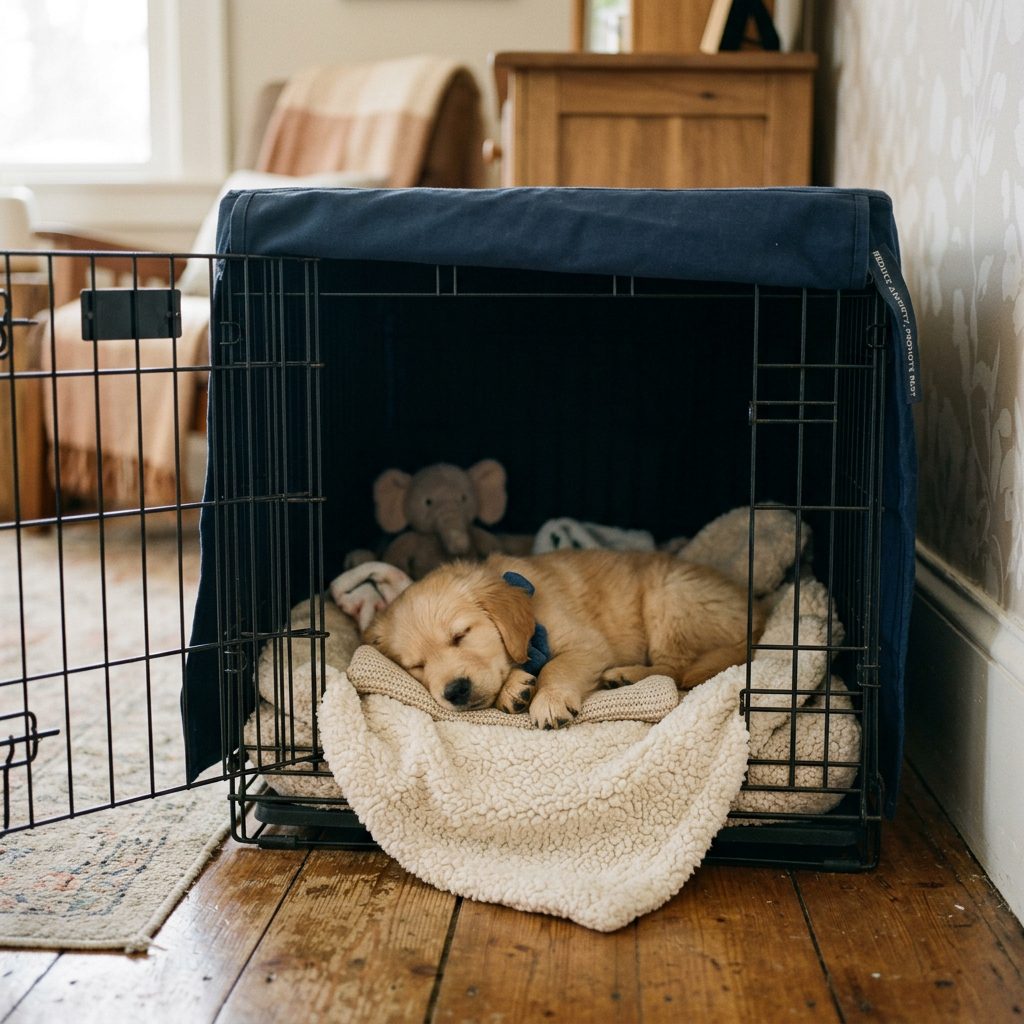
Often, excessive biting is a symptom of a deeper issue: the puppy is either overtired or under-stimulated. A puppy who hasn’t had enough sleep is like a cranky toddler—they lose their ability to regulate their emotions and resort to ‘mouthy’ behavior as an outlet for frustration.
The Importance of Enforced Naps
Puppies need between 18 and 20 hours of sleep per day. Most owners are surprised by this! If your puppy has been awake for more than an hour and starts biting your pants legs frantically, they likely need a nap. Gently lead them to their crate or quiet area for some shut-eye. Conversely, if they are biting out of boredom, they need mental enrichment. Try ‘sniffari’ walks, lick mats, or puzzle feeders to burn off mental energy. A tired brain is a quiet mouth!
Common Mistakes to Avoid
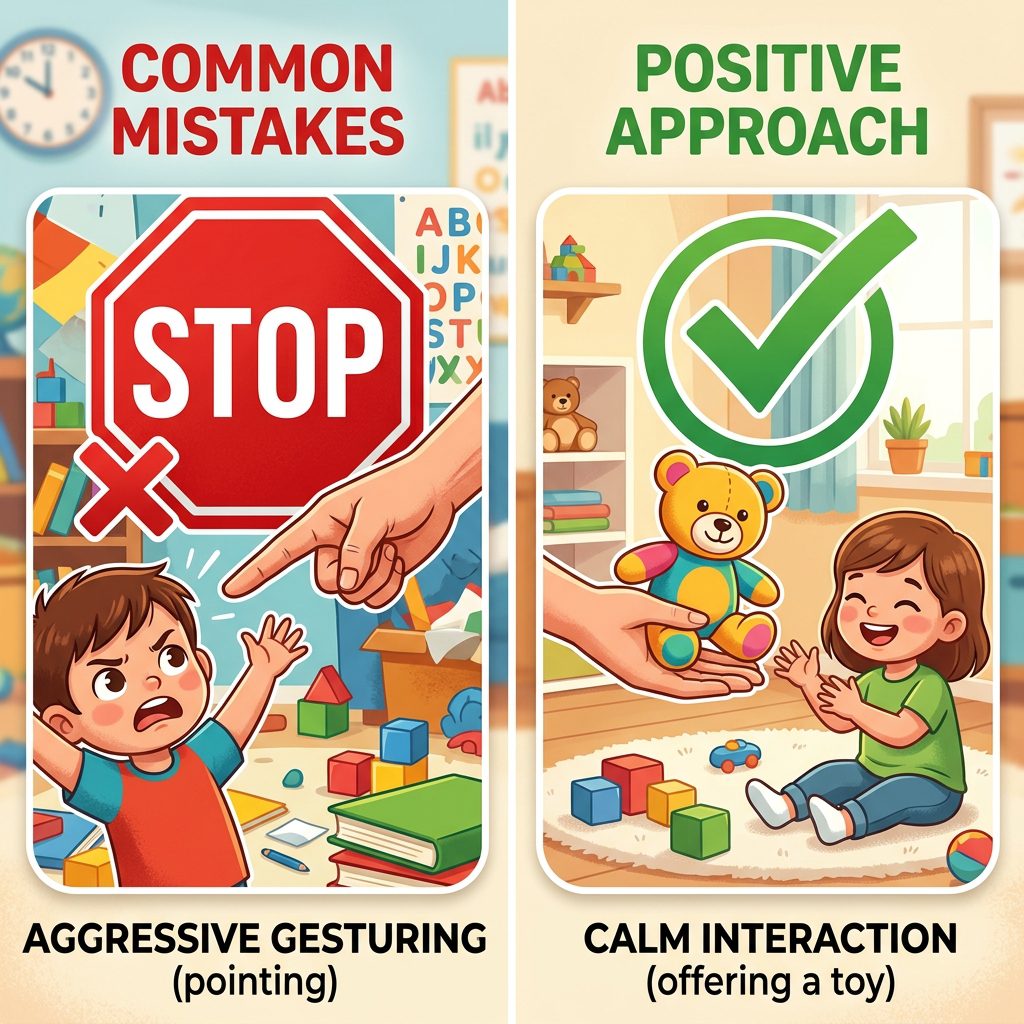
Even the most well-meaning owners can accidentally reinforce the very behavior they are trying to stop. Avoid these common pitfalls to ensure your training stays on track:
- Yelling or Scolding: This often adds more ‘energy’ to the situation, making the puppy even more excited and likely to bite harder.
- Physical Punishment: Tapping the nose or holding the muzzle shut can cause fear and lead to defensive aggression later in life. It also damages the bond of trust.
- Playing ‘Keep Away’: If you lift your legs up or run away, the puppy thinks it is a game of tag. Keep your feet on the ground!
- Inconsistency: If you let the puppy bite your old ‘yard work’ pants but get mad when they bite your ‘work’ pants, the puppy will be confused. The rule must be: No teeth on clothes, ever.
Conclusion
Patience is Your Best Tool
Teaching a puppy to stop biting your pants legs is not an overnight process. It requires consistency, patience, and a lot of laundry-safe resolve. Remember that your puppy is learning a completely new language and set of social rules. Every time you ‘Become a Tree’ or successfully redirect them to a toy, you are building a foundation of communication that will last a lifetime.
Stay the course, keep your sense of humor (even when your favorite socks are at stake), and celebrate the small victories. One day soon, you will realize you’ve walked across the room without a single snag, and you’ll know all that hard work paid off. You’ve got this, and your wardrobe will thank you!