Is Your Puppy Ready? How to Safely Transition From Crate to Bed
For many new dog owners, the crate is a lifesaver. It provides a safe haven for your puppy, aids in potty training, and prevents the midnight destruction of your favorite pair of shoes. However, there comes a point in every puppy’s life when they outgrow the literal and figurative confines of the crate. Transitioning your puppy from a crate to a bed is a major milestone in their development, signaling that they have earned your trust and mastered basic house manners. But how do you know if they are truly ready? Rushing the process can lead to regressive accidents, chewed furniture, or sleepless nights for both of you. In this comprehensive guide, we will explore the developmental markers of readiness, the essential gear you will need, and a proven step-by-step method to ensure a smooth, stress-free transition for your canine companion.
The Readiness Checklist: Is Your Puppy Truly Prepared?
Before you pack away the crate, you must objectively evaluate your puppy’s current behavior. Transitioning too early is one of the most common mistakes savvy dog owners make. It is not just about age; it is about maturity and reliability. Most puppies are not ready for full overnight freedom until they are at least 6 to 12 months old, depending on the breed and individual temperament.
Key Indicators of Readiness
Use the following table to assess whether your puppy has met the necessary milestones for sleeping outside of their crate.
| Developmental Area | Ready Indicator | Not Ready Indicator |
|---|---|---|
| Bladder Control | Consistently sleeps through the night (7-8 hours) without needing a potty break. | Still wakes up whining to go outside or has occasional accidents in the crate. |
| Destructive Habits | Can be trusted with soft toys and bedding without shredding them. | Systematically destroys plush toys or chews on crate bars and bedding. |
| Settling Ability | Can relax and fall asleep on their own in various parts of the house during the day. | Becomes hyperactive or ‘zoomie’ when not confined; needs the crate to ‘turn off.’ |
| House Training | Has gone 4+ weeks without an indoor accident. | Still has the occasional ‘mistake’ in less-frequented rooms. |
If your puppy still views your baseboards as chew toys or thinks 3:00 AM is the perfect time for a game of fetch, they likely need more time in the crate. There is no shame in waiting; every dog develops at their own pace.
Phase 1: Choosing the Right Bed and Training the ‘Place’ Command
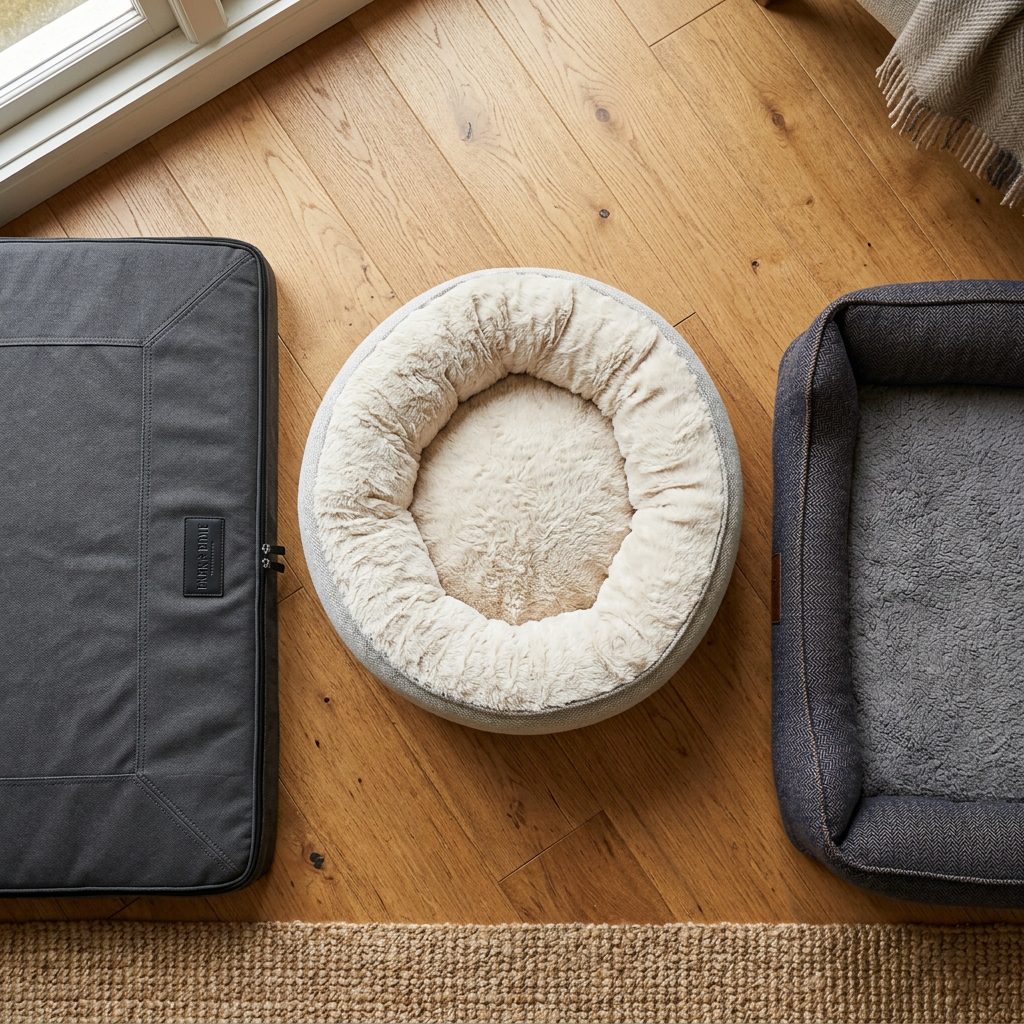
The transition does not start with the puppy sleeping on the bed overnight; it starts with the bed becoming a high-value destination. You want your puppy to love their new bed as much as, if not more than, their crate. Choosing the right bed is crucial for their comfort and joint health.
Selecting the Perfect Bed
- Bolster Beds: These have raised edges that provide a sense of security similar to the walls of a crate. They are excellent for ‘nesters.’
- Orthopedic Foam: Essential for larger breeds or puppies prone to joint issues, providing support for growing bones.
- Washable Covers: Non-negotiable. Even a potty-trained puppy will bring in dirt or have the occasional upset stomach.
The ‘Place’ Command Strategy
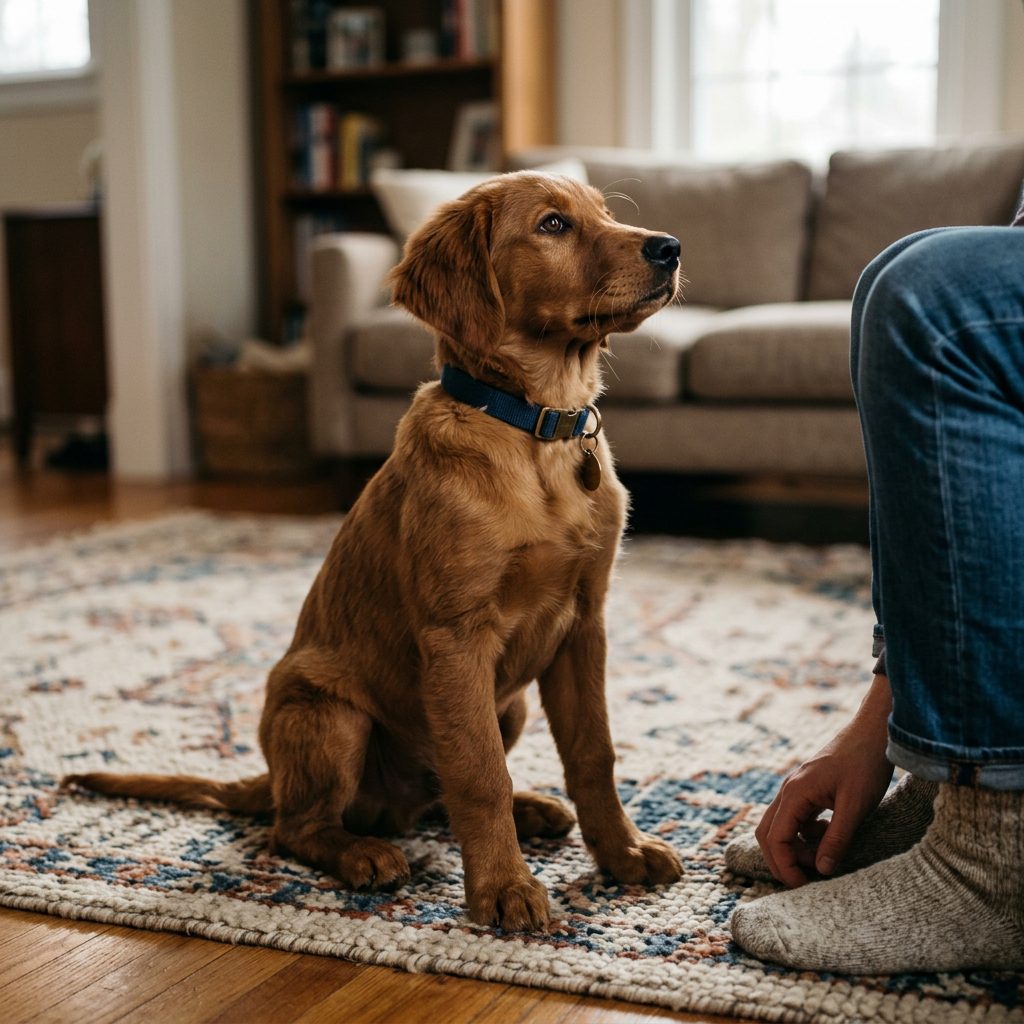
Before the first night, spend a week training your puppy to go to their bed on cue. Use high-value treats to reward them for stepping onto the bed, then for sitting, and finally for lying down.
Expert Tip: Use a specific word like ‘Bed’ or ‘Chill’ and always reward with a treat that takes a few minutes to consume, such as a stuffed KONG, to encourage them to stay there.
During this phase, the bed should be placed in a quiet corner of the room where they will eventually sleep. Encourage daytime naps on this bed while you are present to supervise.
Phase 2: The Gradual Overnight Transition Plan
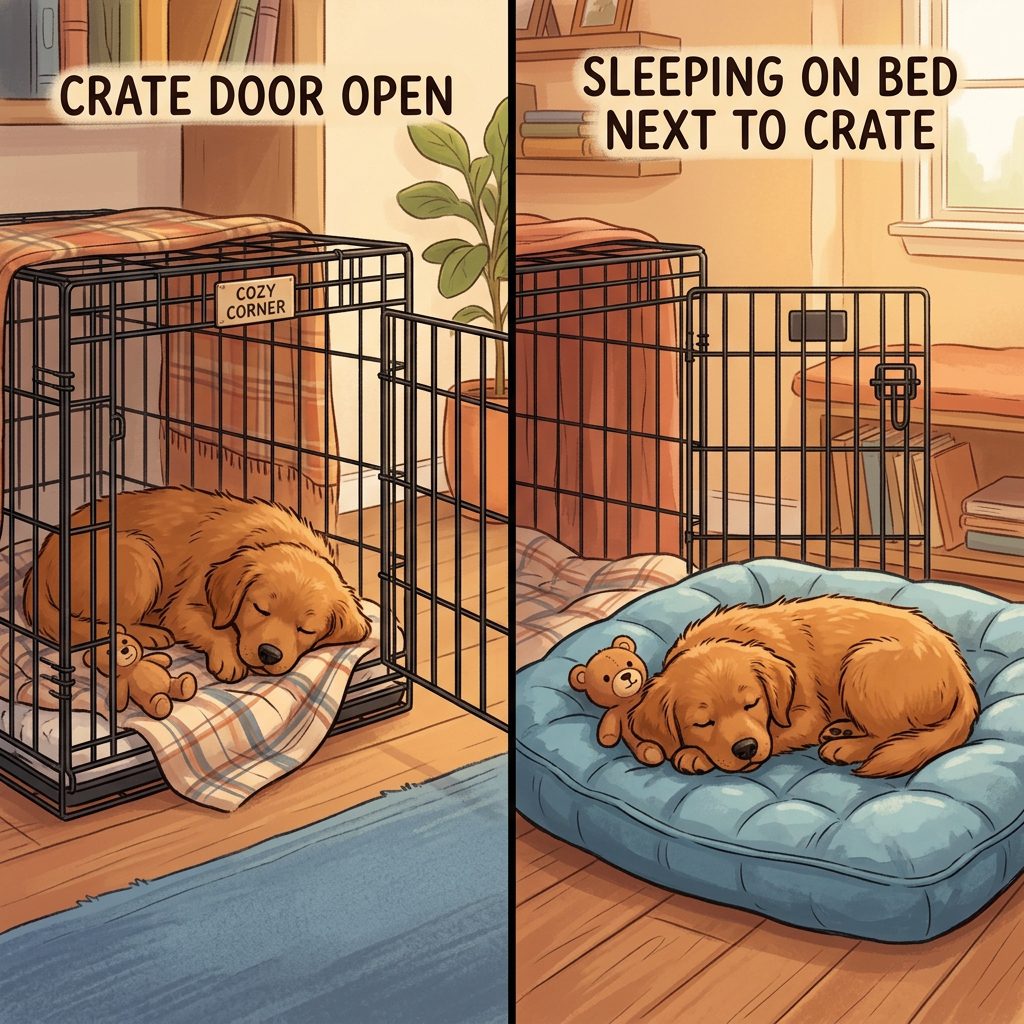
Consistency is your best friend during the transition. You should not go from a locked crate to total house freedom in one night. Instead, follow this graduated approach to minimize anxiety and maximize success.
Step 1: The Open-Door Policy
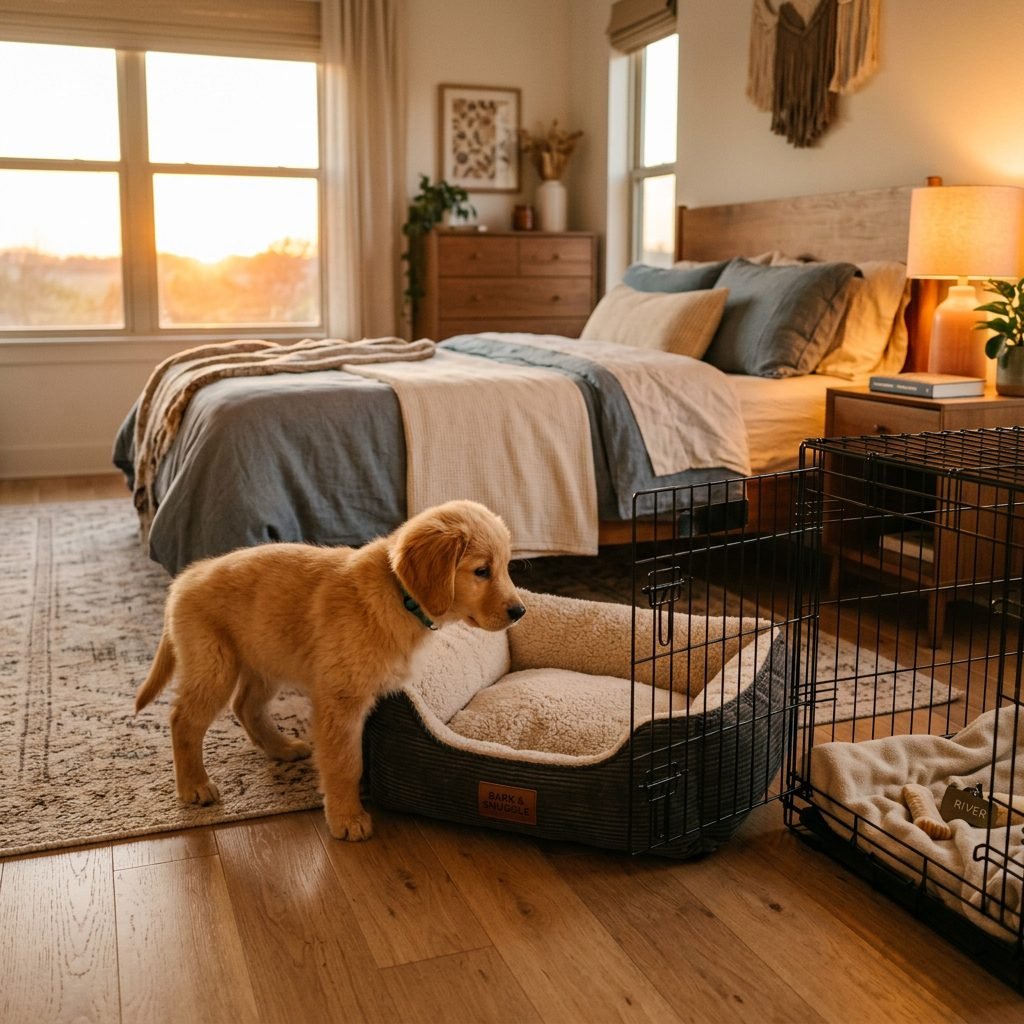
Start by placing the new bed inside the crate if it fits, or right next to it. For the first few nights, leave the crate door open but encourage the puppy to sleep inside. This gives them the option to explore but maintains the familiar ‘den’ feeling. If they wander out and settle on the floor or the new bed, let them stay there.
Step 2: The Crate-to-Bed Shift
Once they are comfortable with the door open, move the crate out of the room (or to a different corner) and place the bed in the exact spot where the crate used to be. Familiarity with the location helps them feel secure.
Trainer’s Secret: Place an unwashed t-shirt of yours on the bed. Your scent acts as a natural sedative for a transitioning puppy.
Step 3: Supervised Freedom
For the first week of sleeping on the bed, keep your bedroom door closed. This limits their ‘territory’ and prevents them from wandering into the kitchen or living room to find trouble while you are asleep. If you hear them get up and move around, resist the urge to interact unless you suspect they need a potty break.
Safety and Puppy-Proofing the Sleeping Area
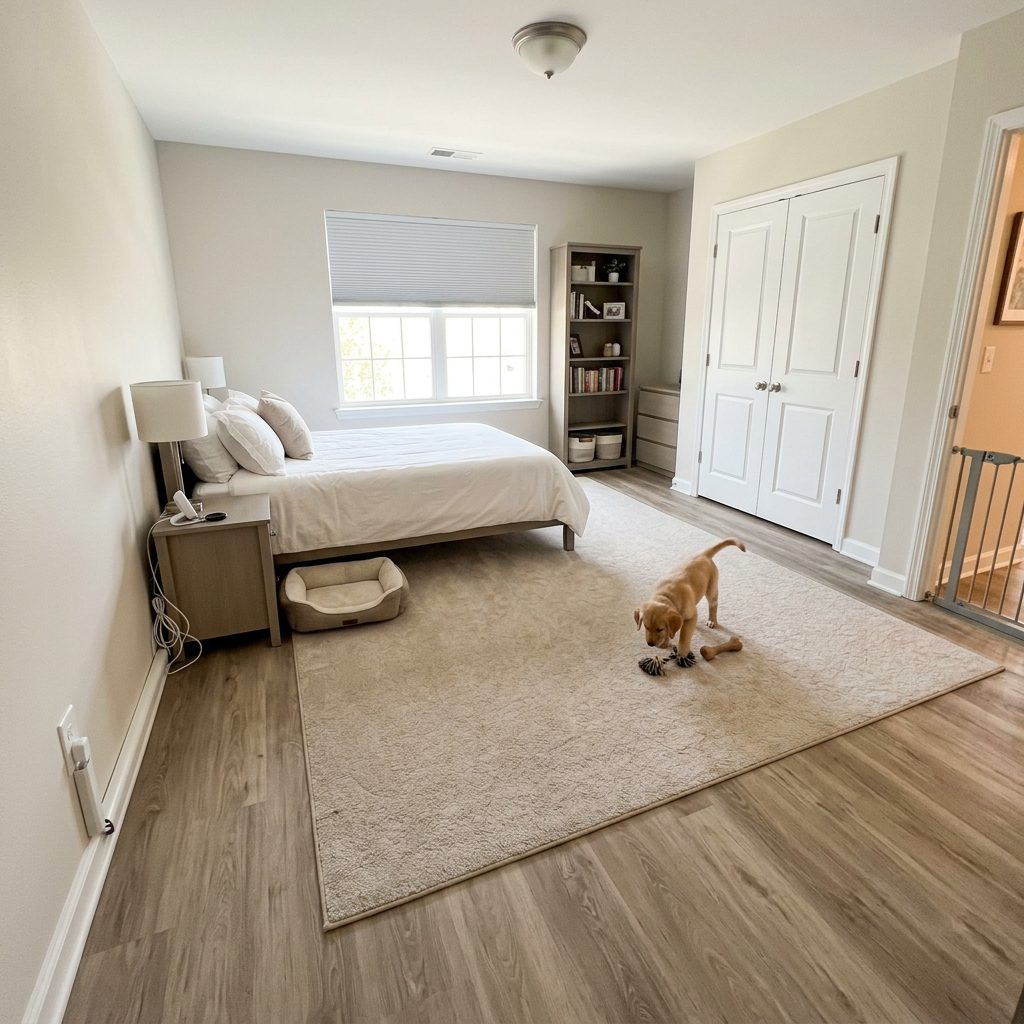
When your puppy is in a crate, they are safe from the environment, and the environment is safe from them. Once they are on a bed, you must treat your bedroom like a giant crate. Puppy-proofing is essential to prevent emergency vet visits.
The Bedroom Safety Audit
| Hazard Type | Specific Item | Action Required |
|---|---|---|
| Electrical | Phone chargers, lamp cords. | Use cord protectors or tuck them behind heavy furniture. |
| Toxic Items | Nightstand medications, essential oils. | Move all pills and diffusers to high shelves or drawers. |
| Choking Hazards | Socks, slippers, hair ties. | Keep a ‘clutter-free’ floor policy; use a lidded hamper for laundry. |
| Escape Routes | Low windows, heavy doors. | Ensure windows are locked and doors are securely latched. |
Think like a puppy. Get down on your hands and knees and look at the world from their perspective. Are there dangling curtain cords? Is there a trash can that looks like a buffet? Secure these items before the first night of freedom.
Troubleshooting Common Transition Challenges
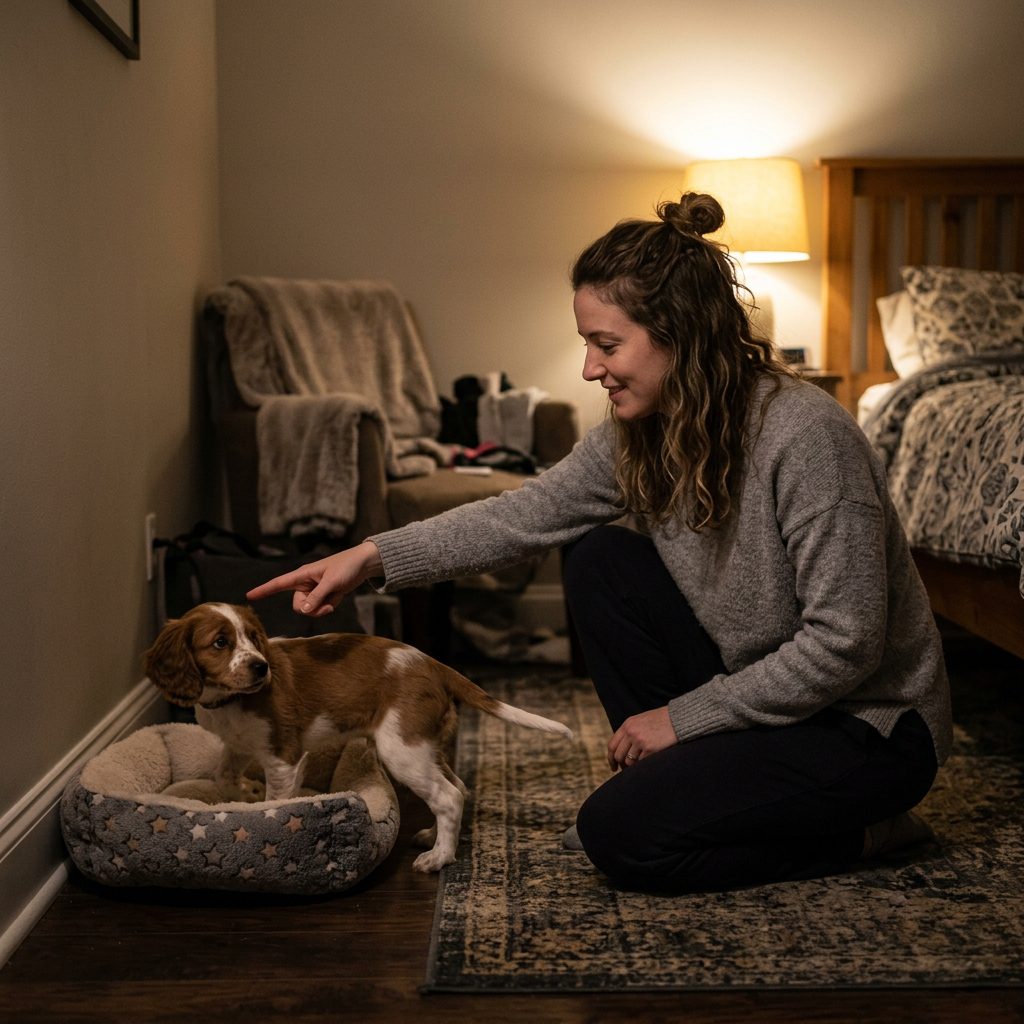
Even with the best preparation, setbacks can happen. Don’t be discouraged if the first night isn’t perfect. Here is how to handle the most common issues.
The Midnight Wanderer
If your puppy gets off the bed and starts pacing or whining, they might be confused by the new freedom. Calmly and silently lead them back to the bed, give the ‘Place’ command, and offer a single kibble or a pat once they lie down. Avoid turning on bright lights or engaging in play, as this rewards the waking behavior.
Regression in Potty Training
If an accident occurs, it is a sign that the puppy had too much freedom too soon. Clean the area with an enzymatic cleaner to remove all odors. You may need to go back to ‘Step 1’ of the transition plan for another week. Never punish a puppy for an accident; simply tighten the routine.
Chewing the Bed
Some puppies find the texture of a new bed irresistible to chew. If you catch them in the act, redirect them to a chew toy. If the behavior persists, you may need to use a more durable, ‘chew-proof’ ballistic nylon bed specifically designed for power chewers until they pass the chewing phase.
Mistakes to Avoid During the Transition
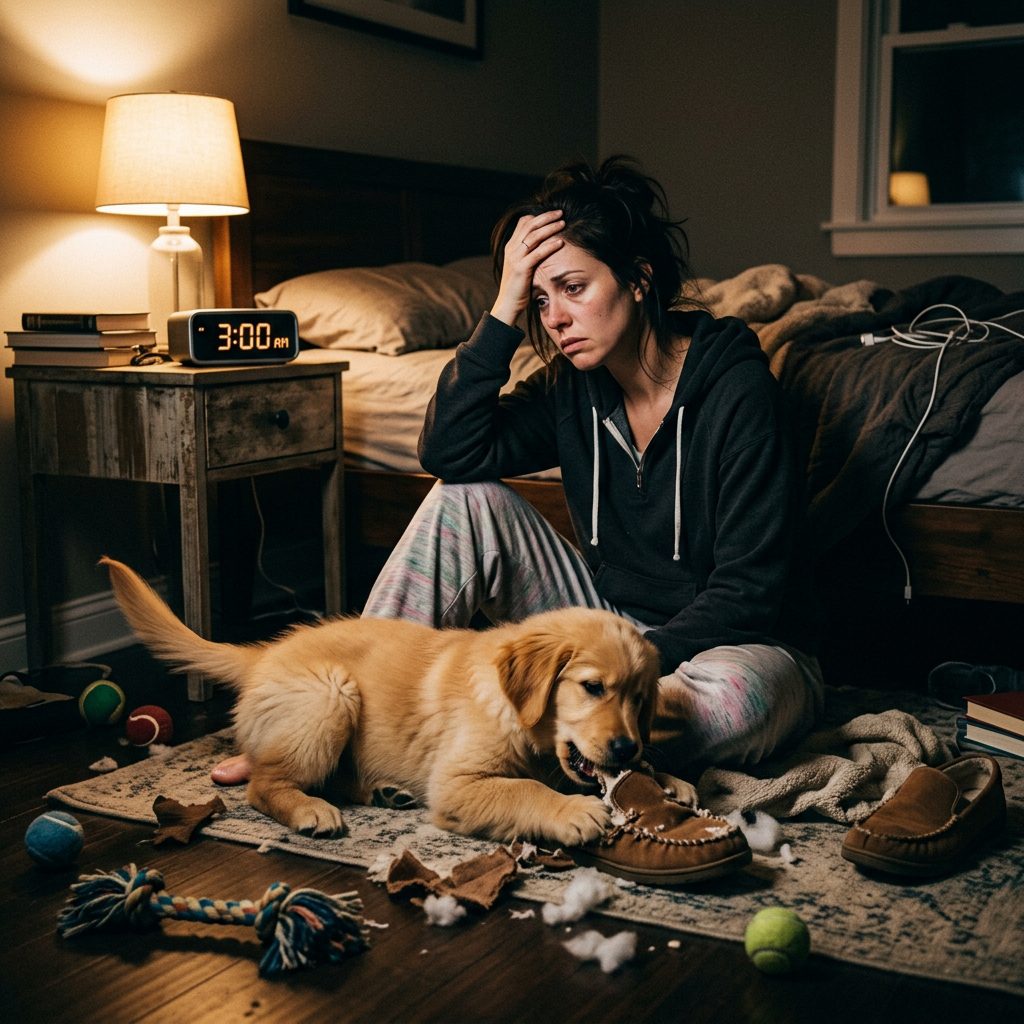
To ensure this transition is permanent and positive, avoid these common pitfalls that can confuse your dog and ruin your sleep quality.
- Rushing the Timeline: Don’t force the transition because you think they ‘should’ be ready. Let their behavior guide you.
- Inconsistency: If you let them sleep on the bed one night and then lock them in the crate the next because you’re tired, it creates anxiety. Once you commit to the transition, try to stick with it unless there is a major regression.
- Lack of Exercise: A tired puppy is a well-behaved puppy. Ensure they have had plenty of physical and mental stimulation during the day so they are ready to sink into a deep sleep at night.
- Skipping the Bedtime Routine: Dogs thrive on ritual. Keep your ‘last out’ potty break and ‘lights out’ time consistent to signal to their internal clock that it is time for rest.
Conclusion
Transitioning your puppy from a crate to a bed is more than just a change in sleeping arrangements; it is a testament to the bond of trust you have built through consistent training and care. By following a gradual, phase-based approach and ensuring their environment is safe, you set your puppy up for a lifetime of good sleeping habits. Remember that every dog is an individual. Some may take to their new bed in a single night, while others may need weeks of gentle encouragement. Stay patient, stay consistent, and soon enough, you will both be enjoying a peaceful, crate-free night of sleep. Congratulations on reaching this wonderful milestone with your furry best friend!