No More Begging Eyes! The 4-Step Strategy To Stop Your Puppy Begging At The Dinner Table
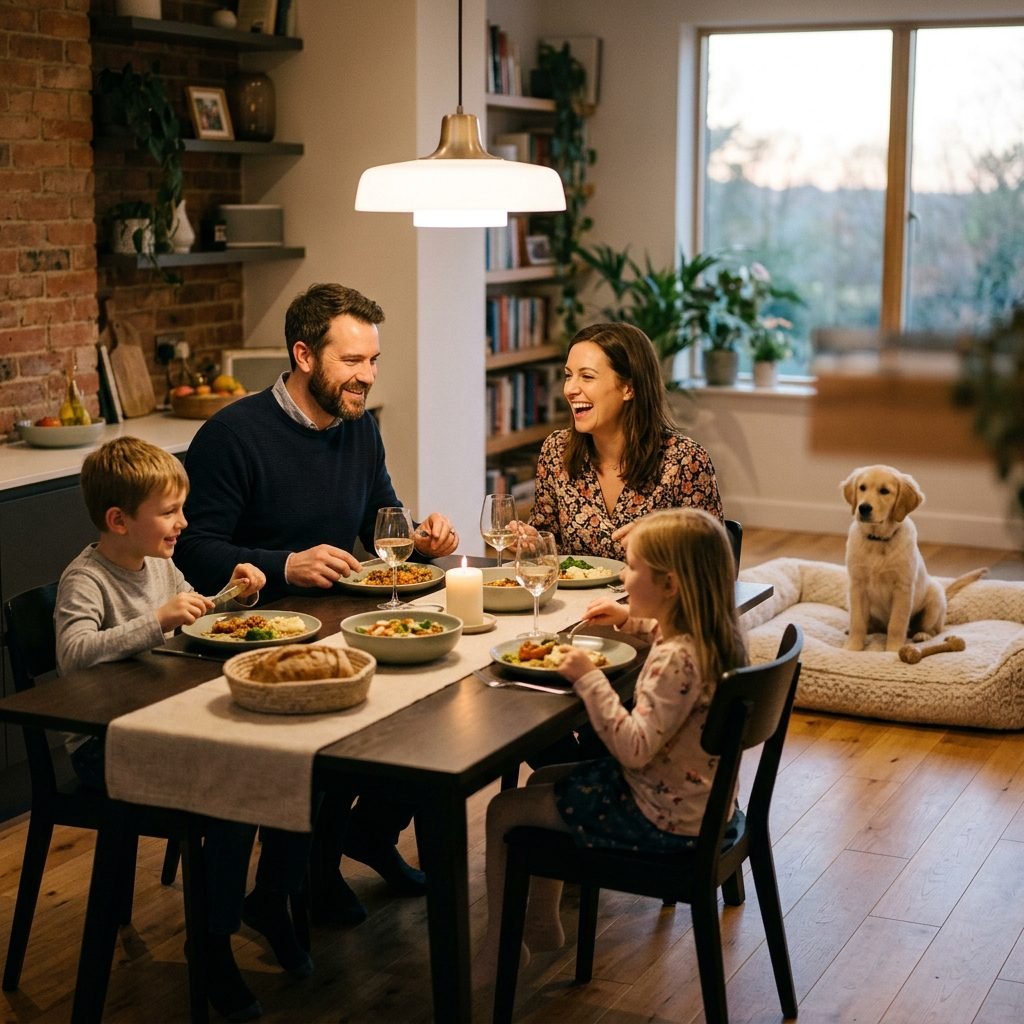
If there is one universal experience every dog owner shares, it is the feeling of being watched while eating. You sit down to a delicious, hot meal after a long day, and suddenly, you feel a presence. You look down, and there they are: those wide, soulful, tragic puppy dog eyes staring back at you, practically screaming that they haven’t eaten in years (despite having just finished their dinner five minutes ago). We have all been there, and let us be honest—it is incredibly hard to resist.
However, as savvy dog owners, we know that giving in to that adorable face is a slippery slope. What starts as a tiny piece of crust slipped under the table quickly escalates into relentless pawing, whining, drooling on your lap, and a complete disruption of your family mealtime. Beyond the annoyance factor, feeding from the table can lead to canine obesity, digestive issues, and accidental ingestion of toxic human foods like onions or garlic.
“A fed dog at the table is a begging dog for life. Consistency is the magic ingredient to peaceful mealtimes.”
Do not worry! You do not have to banish your furry best friend to the backyard every time you want to eat a slice of pizza. You can teach your dog to be a polite, calm companion during your meals. In this comprehensive guide, we are going to walk through a foolproof, positive-reinforcement-based 4-step strategy to stop your puppy from begging at the dinner table. Grab your training treats, pack your patience, and let us reclaim your dinner time!
Understanding The Begging Trap & Tools You Will Need
Before we dive into the steps, we need to understand why dogs beg in the first place. Dogs are incredible opportunists. They do what works. If staring at you intently resulted in a piece of chicken dropping from the sky even just once three months ago, your dog will remember it forever. This is known in psychology as intermittent reinforcement, and it is the exact same psychological mechanism that makes slot machines so addictive for humans. Your dog is essentially playing the table-scrap lottery.
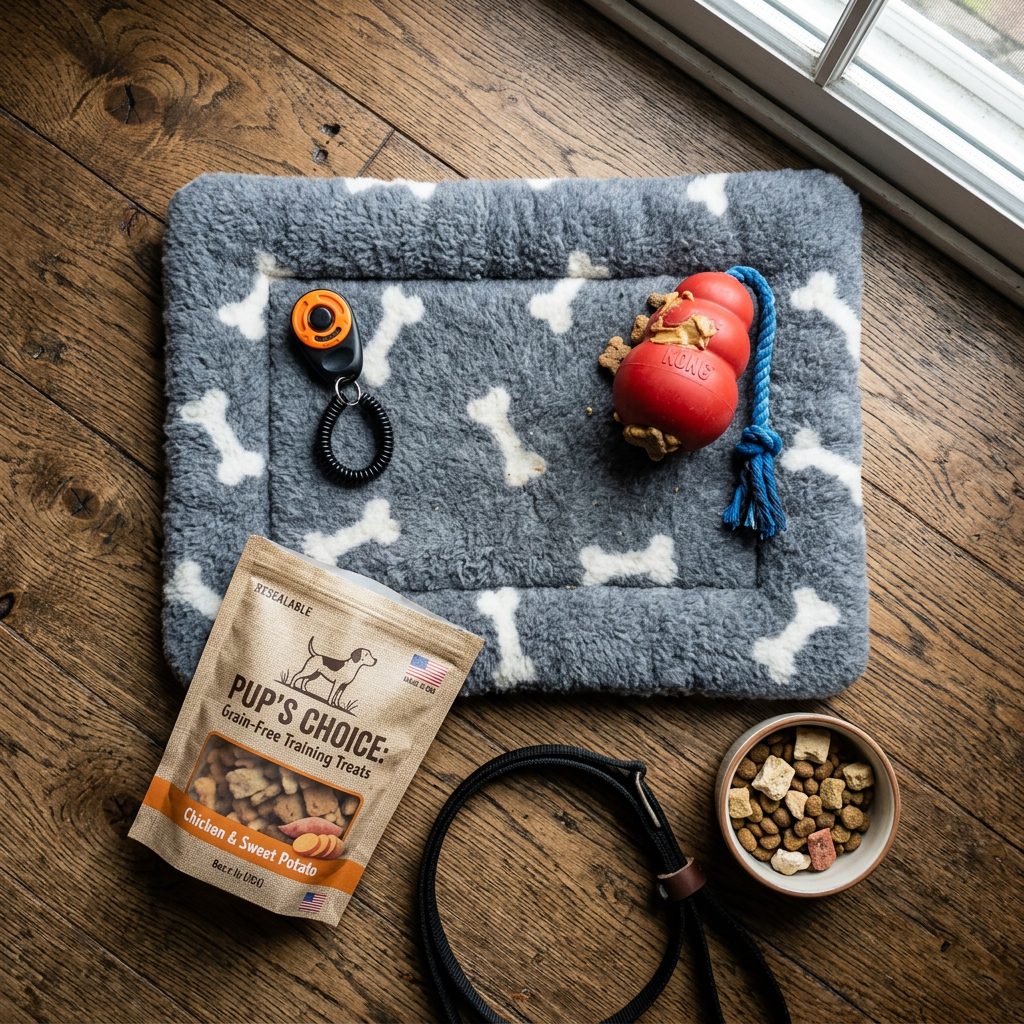
To break this habit, we have to change the environment and provide clear, consistent boundaries. You are going to need a few specific tools to set your puppy up for success. Having these ready before you sit down to eat is crucial.
Your Anti-Begging Toolkit
| Tool | Purpose in Training | Why It Is Essential |
|---|---|---|
| A Designated Mat or Bed | Gives your dog a specific physical boundary to stay on during meals. | Provides clarity. Dogs understand “go to your bed” much better than “stop doing what you are doing.” |
| High-Value Training Treats | Used to reward the dog for staying on their mat away from the table. | Must be better than their regular kibble to compete with the smell of your dinner. |
| Interactive Puzzle Toys | Keeps their brain and mouth occupied while you eat. | Prevents boredom-induced whining and redirects their focus away from your food. |
| Baby Gate or Tether (Optional) | Prevents the dog from physically accessing the dining area if they break their stay. | Crucial for management during the early stages of training before the habit is formed. |
Once you have your toolkit assembled, it is time to start the active training process. Remember, this is about teaching your dog what you want them to do, rather than just punishing them for what you do not want them to do.
Step 1: Teach and Enforce the ‘Place’ Command
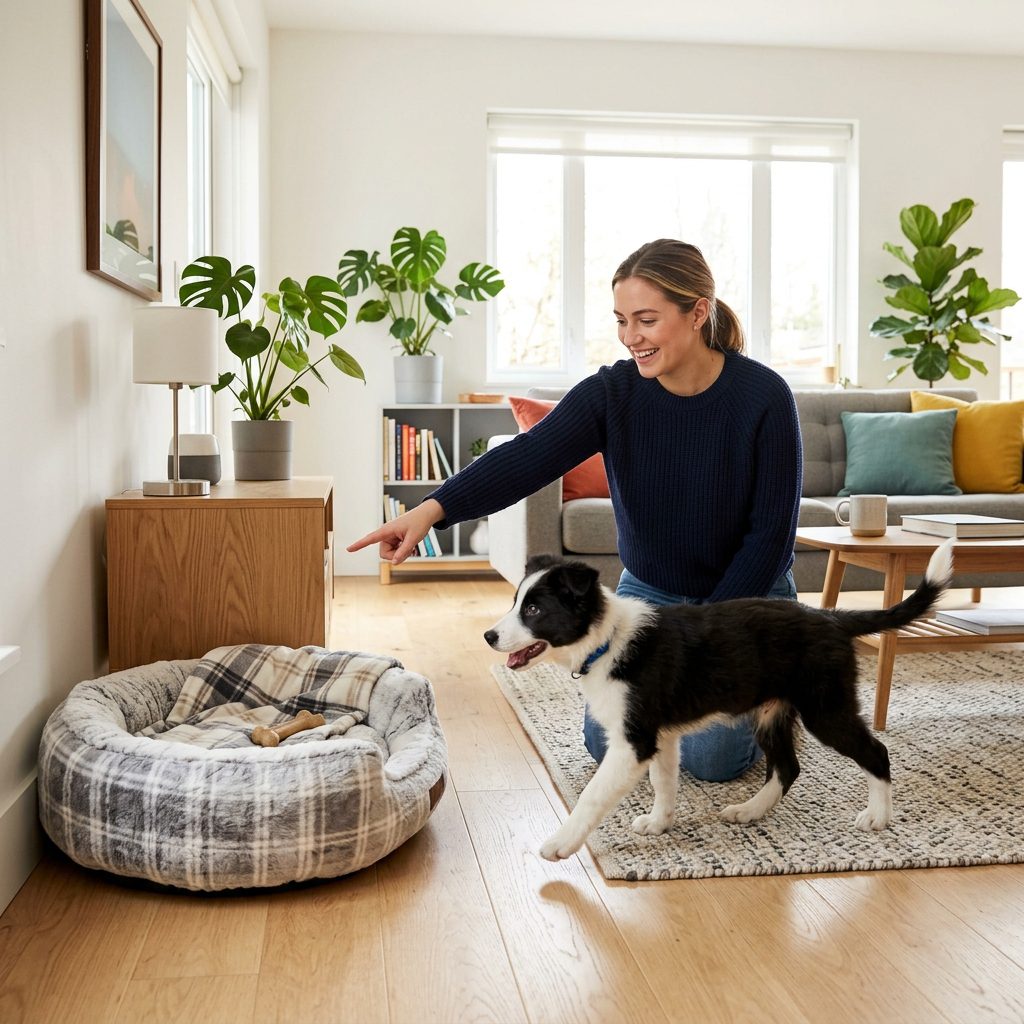
The foundation of stopping table begging is giving your dog an alternative job. For a dog, “doing nothing” is actually really hard. Instead of telling them “no beg,” we are going to tell them “go to your place.” This gives them a clear, actionable task.
Phase 1: Introducing the Mat
Start this training outside of your actual meal times. You want your dog to learn the concept without the intense distraction of a roasted chicken sitting on the table.
- Lure and Reward: Toss a treat onto their designated bed or mat. As they step onto it, say “Place” (or “Settle,” or “Bed”). When all four paws are on the mat, give them another treat.
- Add the Down: Once they are reliably going to the mat, ask for a “Down.” A dog lying down is much more likely to relax than a dog sitting at attention. Reward the down generously.
- Build Duration: Start adding time. Ask them to stay on the place, wait three seconds, then reward. Gradually increase this to five seconds, ten seconds, and eventually a few minutes.
Phase 2: Transitioning to Mealtime
Once your dog understands “Place” during practice sessions, it is time to use it during a real meal. Before you sit down with your food, send your dog to their place. If they get up and approach the table, calmly stand up, gently guide them back to their place (or use a leash if necessary), and sit back down. Do not scold them; just firmly and calmly reset them. Consistency here is your biggest ally.
Step 2: The Art of Ignoring (No Exceptions!)
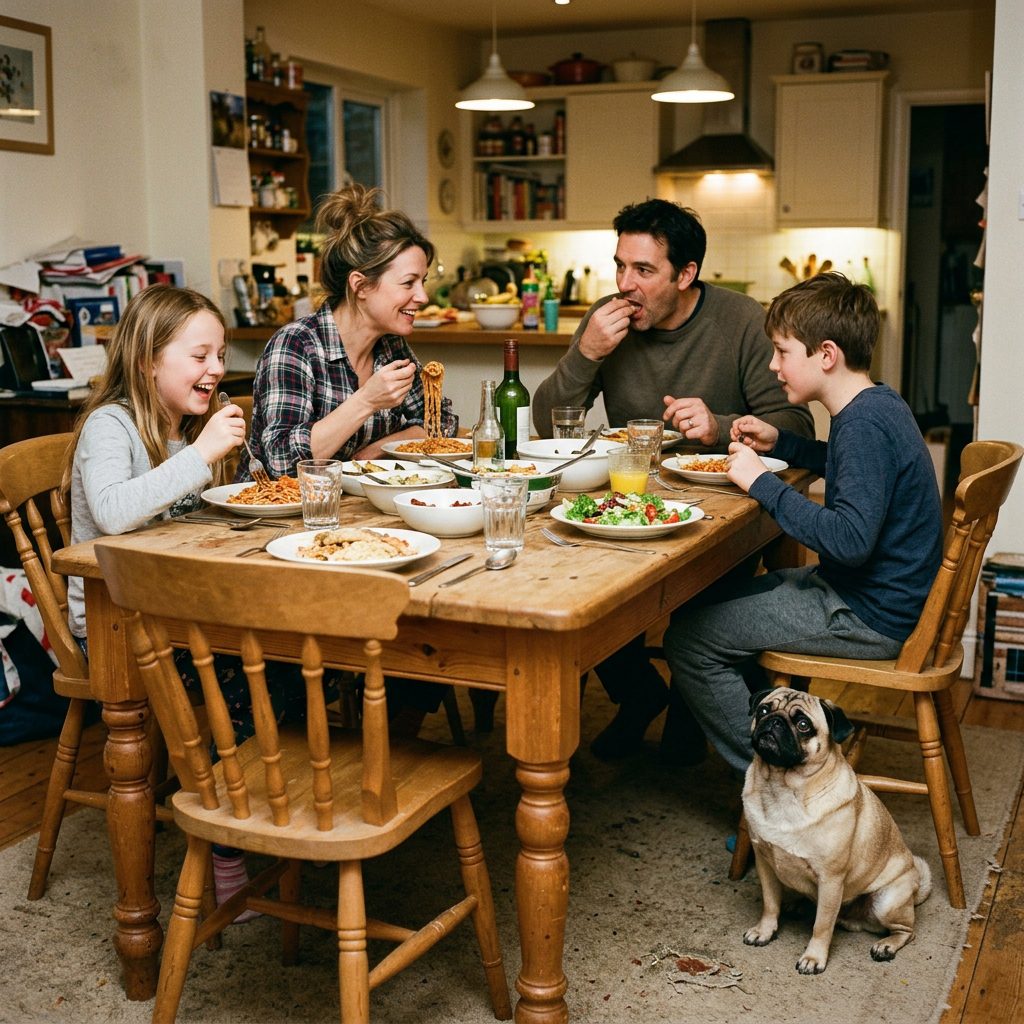
This is arguably the hardest step for humans, but it is the most critical for the dog. When your dog inevitably tests the boundary and approaches the table, you must ignore them completely. That means no eye contact, no talking to them, and absolutely no touching them. Any attention—even negative attention like saying “No, go away!”—is still attention, and for a desperate dog, it validates their begging effort.
Beware the Extinction Burst
When you stop rewarding a behavior that used to work, the behavior will almost always get worse before it gets better. This is called an extinction burst. Your dog is thinking, “Wait, staring usually works. Maybe I need to stare harder. Maybe I need to whine. Maybe I should put my paw on their knee!”
- Stay Strong: If you give in during an extinction burst, you have just taught your dog that they need to escalate their behavior to get what they want. You are essentially training them to be more obnoxious.
- The Invisible Dog: Pretend your dog does not exist when they are at the table. If they become physically intrusive (jumping up), calmly stand up and use your body to block them, or silently guide them out of the room or behind a baby gate.
Remember the golden rule of this step: Every single member of the household must be on board. If you hold out, but your partner slips the dog a piece of cheese, the training is ruined. Dogs are brilliant at figuring out who the “weak link” is at the dinner table!
Step 3: Provide High-Value Alternatives
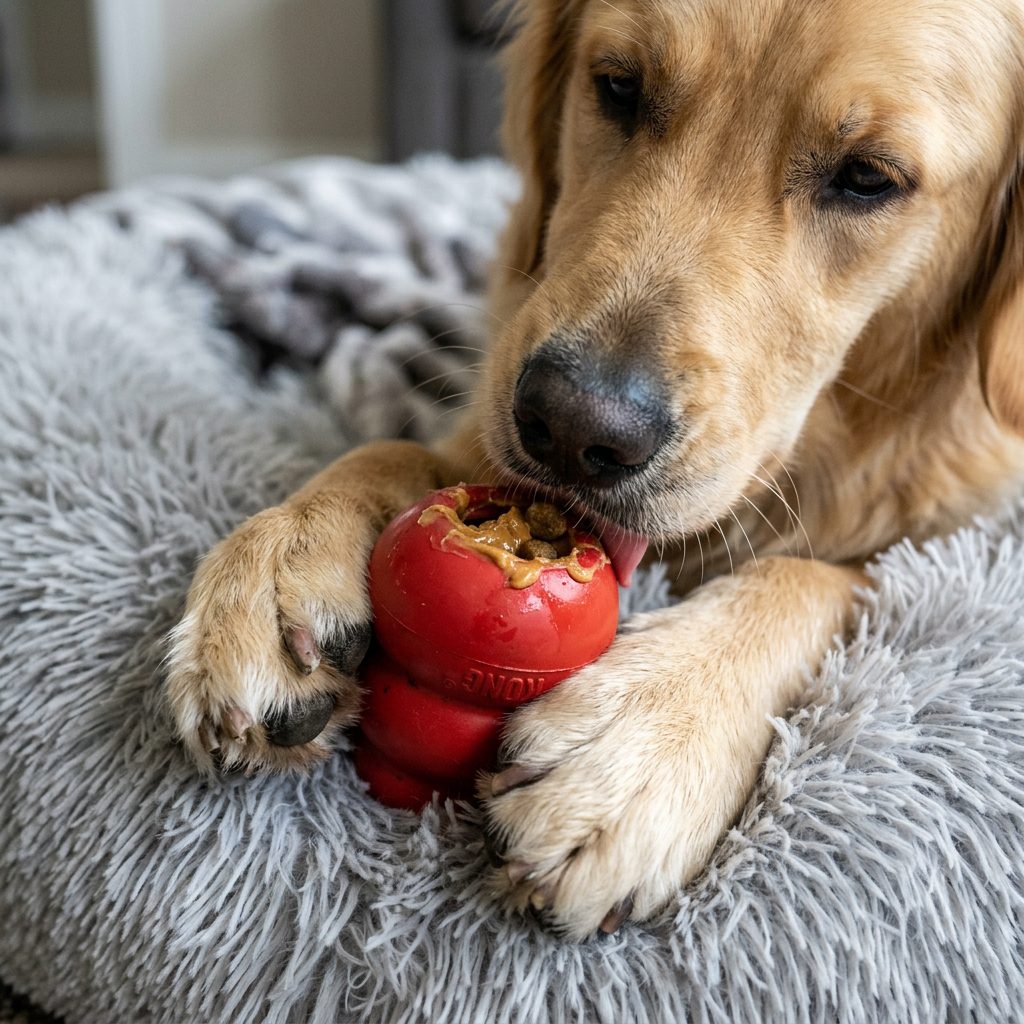
While you are enjoying your delicious meal, it is only fair that your dog gets to enjoy something too—just not your food, and not right next to you. Providing an engaging alternative accomplishes two things: it rewards them for staying away from the table, and it mentally tires them out so they are more likely to fall asleep on their mat.
Choosing the Right Distraction
You want something that takes time to consume. A single biscuit will be gone in two seconds, and then they will be right back at the table. Here are some of the best long-lasting options:
| Alternative Option | Preparation Method | Best For |
|---|---|---|
| Stuffed Kong | Fill with wet dog food, plain yogurt, or peanut butter and freeze it overnight. | Heavy chewers and dogs who need 20-30 minutes of distraction. |
| LickiMat | Spread with dog-safe bone broth, mashed banana, or pumpkin puree. | Anxious dogs; licking releases calming endorphins. |
| Snuffle Mat | Hide their regular kibble or small smelly treats deep in the fabric strips. | Food-motivated dogs who love using their nose to forage. |
| Safe Chews | Bully sticks, yak cheese chews, or raw marrow bones (always supervise). | Puppies who are teething or dogs who love to gnaw. |
Pro Tip: Give them their special item after they have settled on their “Place” mat, right as you are sitting down to eat. This creates a positive association: “When the humans eat at the table, I get to go to my bed and eat my favorite frozen treat!” Over time, the sound of plates clinking will become a cue for them to run to their bed, rather than swarm the table.
Step 4: Reward the Calm, Not the Chaos
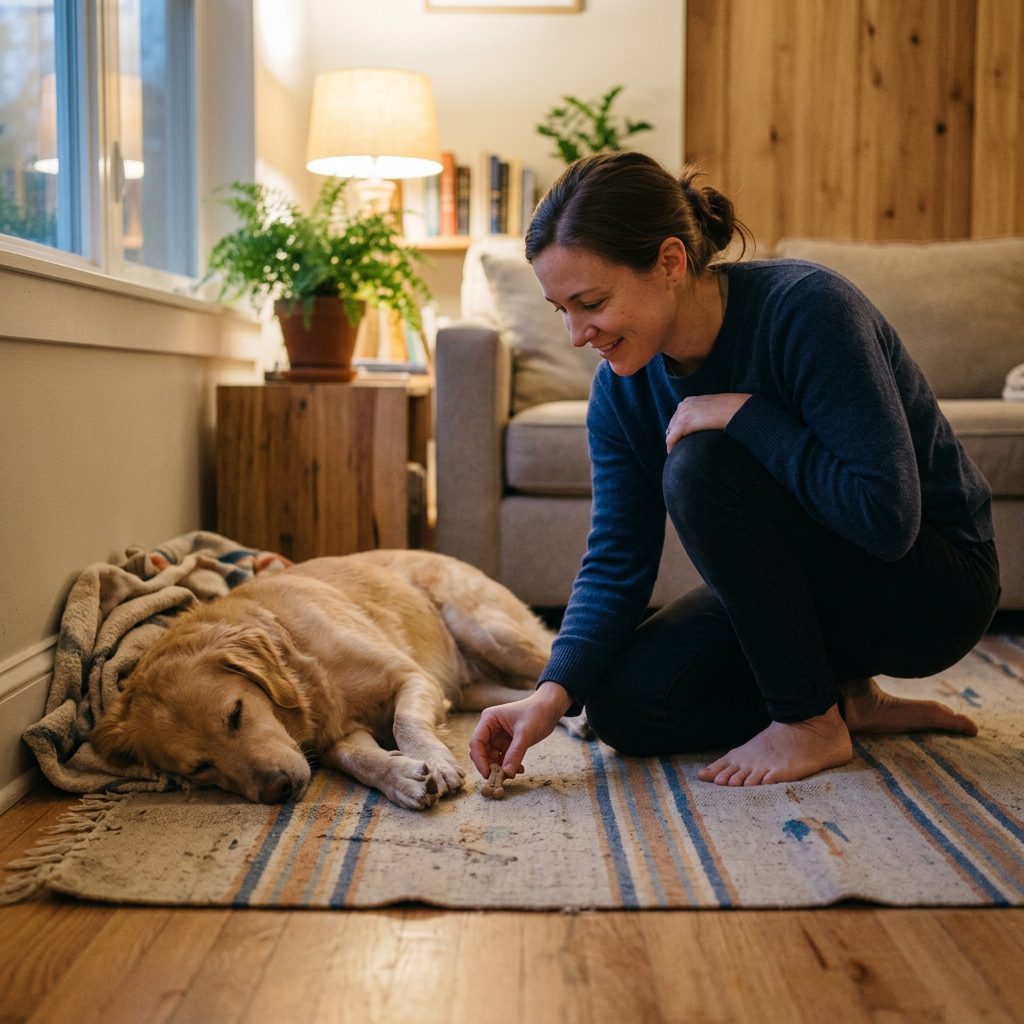
Training is not just about stopping bad behavior; it is about heavily reinforcing good behavior. When your dog is successfully lying on their mat while you eat, you need to let them know they are doing a great job. However, you have to do it carefully so you do not accidentally break their relaxed state.
The “Room Service” Delivery Method
If you call your dog over to the table to give them a treat for being good on their mat, you have just ruined the training. You invited them back to the table! Instead, you must bring the reward to them.
- Wait for Calm: Wait until your dog is lying down on their mat, looking relaxed. If their head is down, even better.
- Get Up and Walk Over: Calmly stand up from the table, walk over to their mat, and gently place a high-value treat between their paws.
- Keep it Low-Key: Do not use an excited, high-pitched voice. A soft “good place” is enough. You want them to stay sleepy and relaxed.
- Return to the Table: Walk back to your meal. Repeat this every few minutes initially, gradually increasing the time between rewards as they get better at holding the stay.
By delivering the treats to their bed, you are teaching them that the dining table is a dead zone where nothing good ever happens, but their bed is a magical place where treats occasionally appear out of nowhere. It completely shifts their focus away from your plate and onto their designated spot.
Troubleshooting Common Mistakes
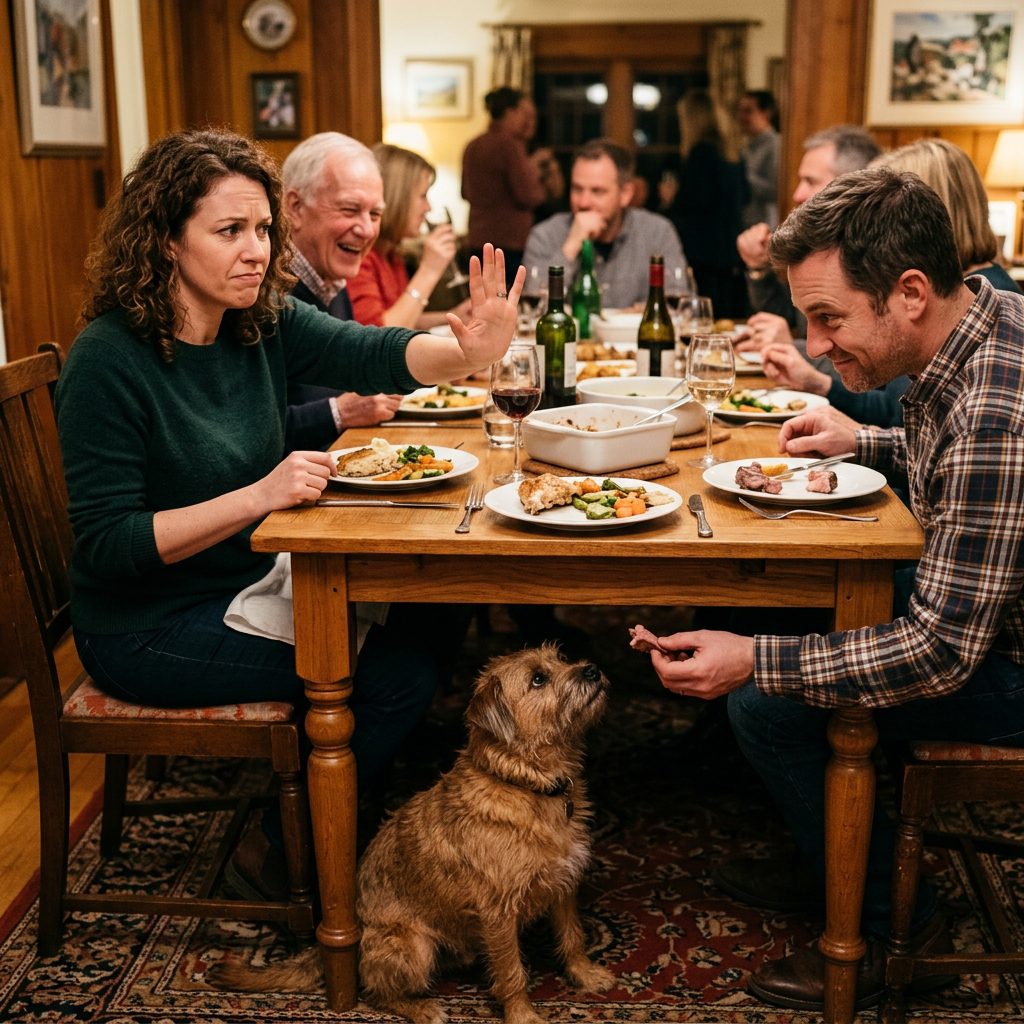
Even with the best intentions, training a dog to stop begging can hit a few speed bumps. Dogs are smart, and they will try to find loopholes in your new rules. Here are a few common issues you might encounter and how to handle them like a pro.
What If They Bark or Whine?
Vocalizing is a classic symptom of the extinction burst we talked about earlier. If your dog starts whining or demand-barking from their mat, do not look at them and do not tell them to be quiet. Any reaction is a reward. If the barking becomes unbearable or disruptive to your family meal, calmly stand up, take their leash (which you can leave attached for training purposes), and silently lead them to a brief time-out in another room or behind a baby gate. Let them out after 30 seconds of quiet, and guide them back to their mat.
Dealing with Messy Kids
If you have toddlers or young children who frequently drop food, your dog views them as a walking vending machine. It is incredibly unfair to ask a dog to ignore a shower of Cheerios falling from a high chair. In this scenario, management is key. Use a baby gate to keep the dog out of the dining room entirely while the children eat, or crate the dog during meal times. Once the meal is over and the floor is swept, the dog can rejoin the family.
The “Guest” Problem
You have trained your dog perfectly, but then Aunt Martha comes over for dinner and secretly slips them a piece of roast beef. Just like that, the begging is back. You must be an advocate for your dog. Before guests sit down, politely but firmly explain the rules: “We are training Buster to be polite during meals, so please do not feed him from the table or pet him if he begs.” If guests cannot follow the rules, put the dog in another room with a stuffed Kong for their own peace of mind.
Conclusion
Stopping your puppy from begging at the dinner table is not about being mean or depriving them of joy; it is about establishing healthy boundaries, preventing obesity, and creating a peaceful household environment. By utilizing this 4-step strategy—setting up a designated place, completely ignoring the begging behavior, providing high-value alternatives, and rewarding calm relaxation—you are communicating with your dog in a way they can easily understand.
Remember that dog training is a marathon, not a sprint. There will be days when your dog tests your patience, and there will be meals where you have to stand up five times to reset them on their mat. Take a deep breath and stay consistent. The effort you put in now will pay off with years of peaceful, drool-free family dinners. Stay strong, keep those training treats handy, and enjoy your meals in peace!