Keep Your Puppy Entertained For Hours: How To Make A DIY Snuffle Mat For Under $10
Unlock Your Puppy’s Natural Instincts Without Breaking the Bank
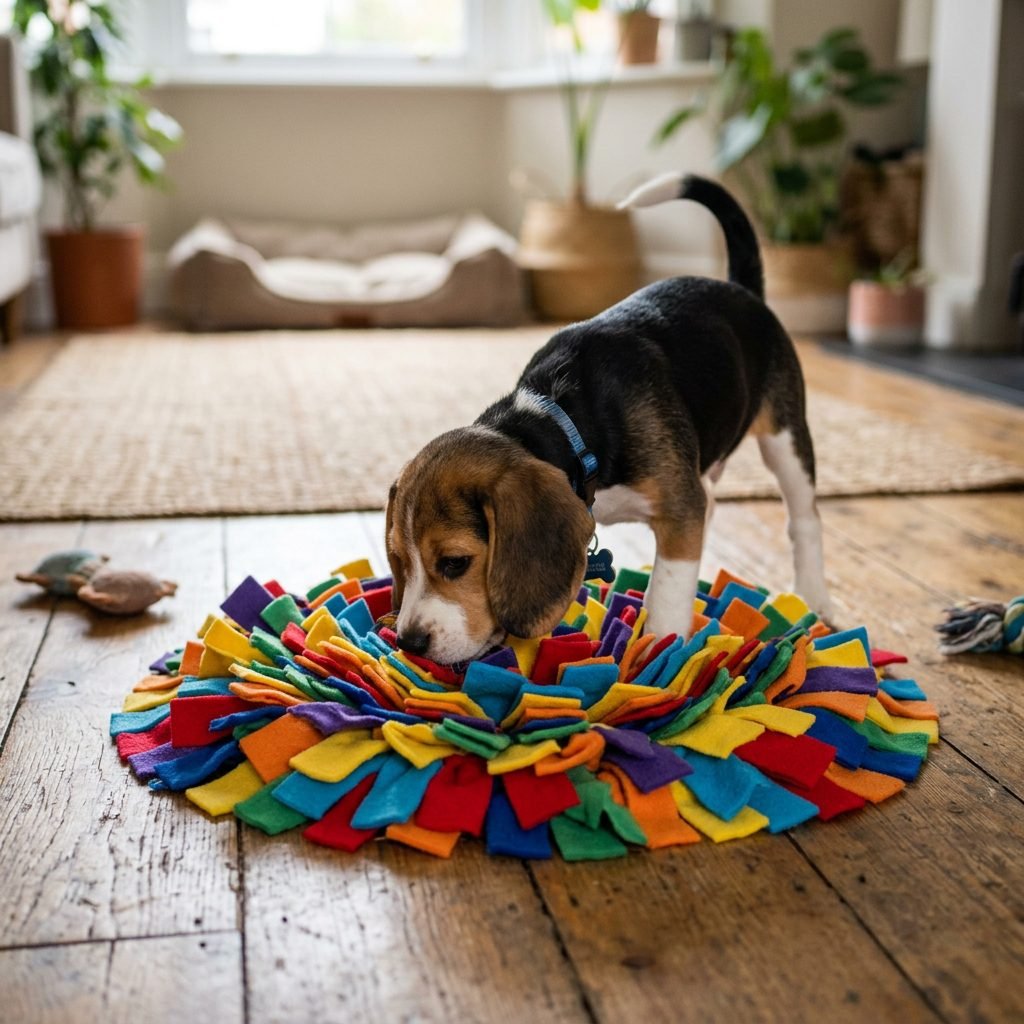
If you have a puppy, you know the struggle: you’ve gone for a long walk, played three rounds of fetch, and yet, your furry friend is still zooming around the living room or, worse, eyeing your favorite pair of sneakers as their next chew toy. As a canine specialist, I often tell my clients that mental stimulation is just as exhausting—if not more so—than physical exercise. Enter the snuffle mat. This simple yet ingenious enrichment tool taps into your dog’s most powerful sense: their nose.
While high-end pet boutiques might charge $40 or even $60 for a designer snuffle mat, I’m here to tell you that you can build one that is just as effective for under $10. In this comprehensive guide, we are going to dive deep into why your puppy needs this tool, the science behind ‘nose work,’ and a step-by-step walkthrough to crafting your own durable, washable, and highly engaging snuffle mat. Get ready to transform your puppy’s boredom into productive, brain-building fun!
The Science of the Sniff: Why Enrichment Matters
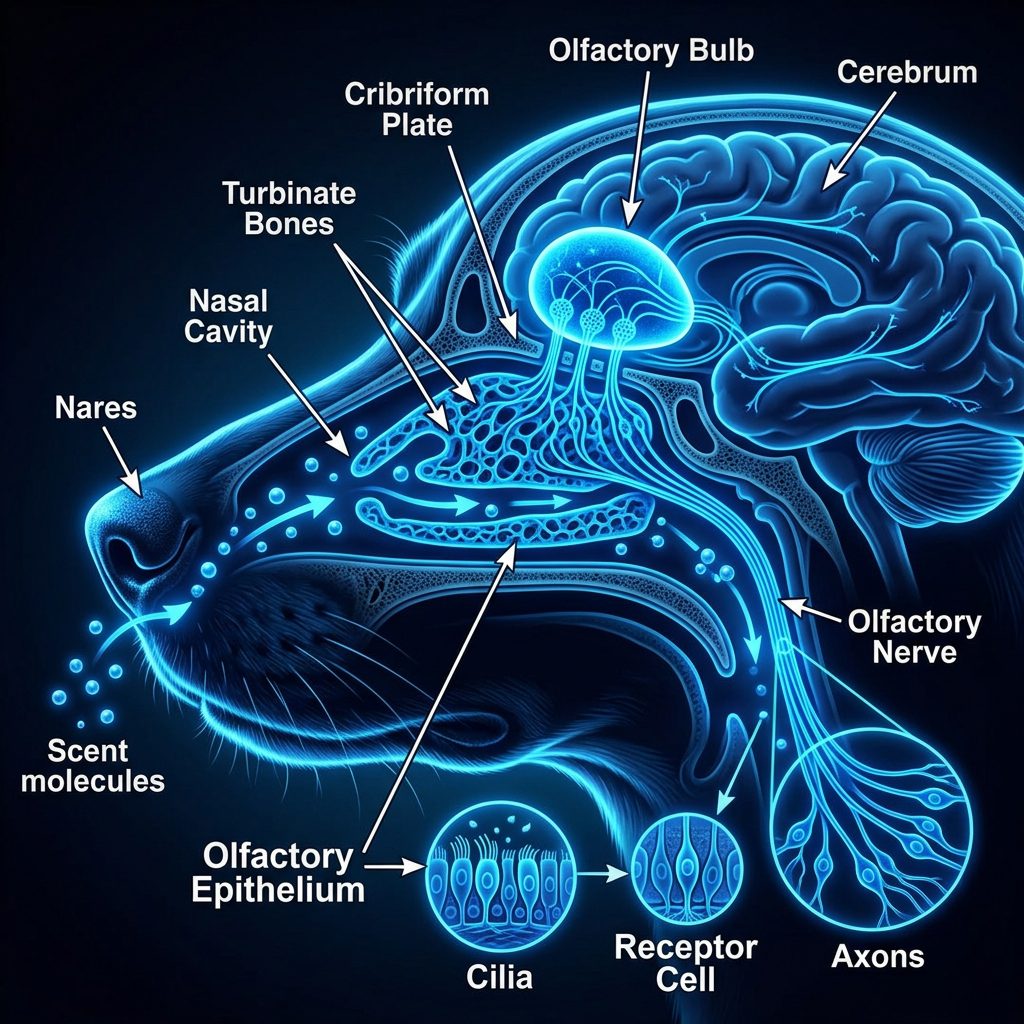
To understand why a snuffle mat is so effective, we have to look at the biology of your puppy. A dog’s brain is specialized for scent. They have up to 300 million olfactory receptors in their noses, compared to our measly six million. Furthermore, the part of their brain dedicated to analyzing smells is, proportionally speaking, 40 times greater than ours.
The Dopamine Hit of Foraging
When a puppy uses their nose to find food—a behavior known as foraging—their brain releases dopamine. This is the ‘feel-good’ neurotransmitter associated with reward and motivation. Using a snuffle mat isn’t just about getting a treat; it’s about the process of the hunt. This mental engagement helps to:
- Lower Cortisol: Sniffing has been scientifically proven to lower a dog’s heart rate and reduce stress.
- Prevent Destructive Behavior: A tired brain is a well-behaved brain. By redirecting their energy into a mat, they are less likely to seek out your furniture.
- Slow Down Fast Eaters: If your puppy inhales their kibble, a snuffle mat forces them to eat one piece at a time, preventing bloat and indigestion.
Expert Tip: Fifteen minutes of intense sniffing is roughly equivalent to an hour of physical walking in terms of mental fatigue!
Materials and Budget Breakdown
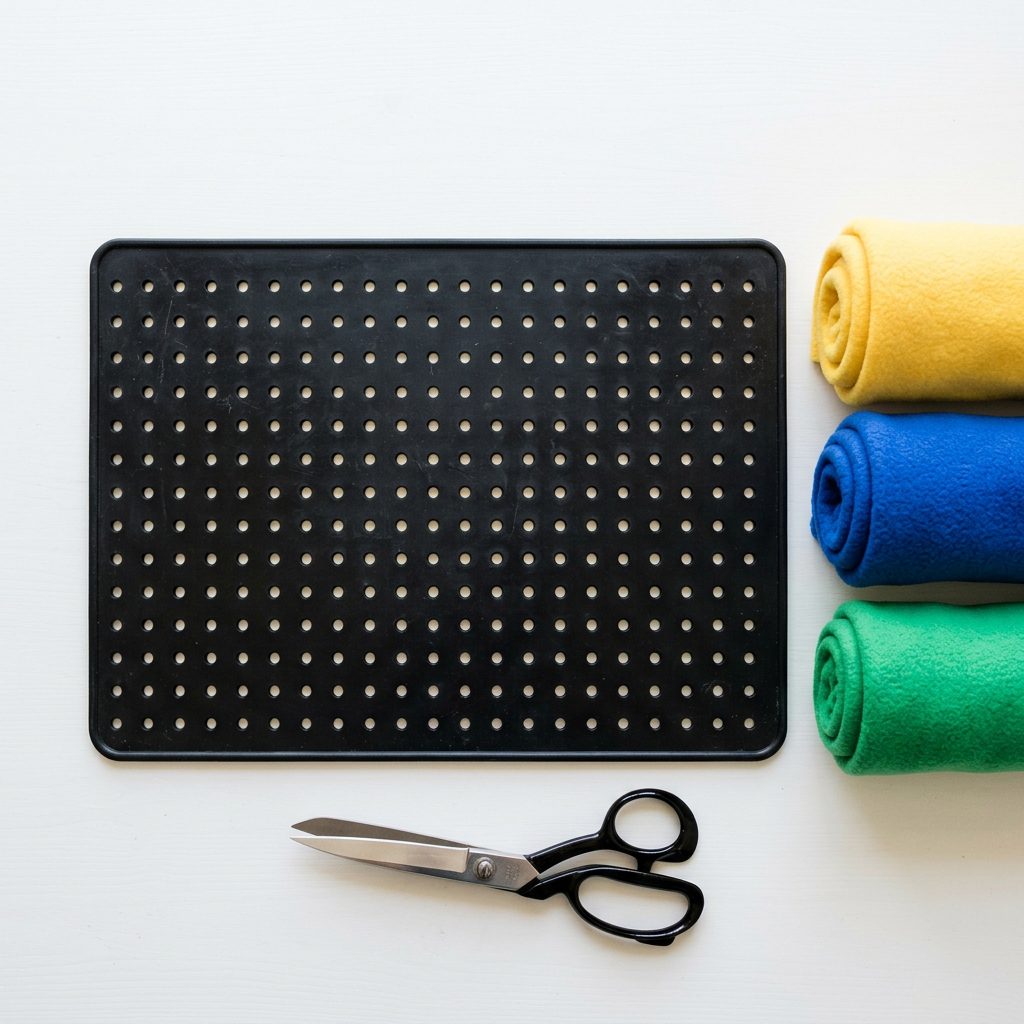
The beauty of this DIY project is its simplicity. You don’t need a sewing machine or advanced crafting skills. Most of these items can be found at a local dollar store or a discount fabric shop. Here is exactly what you need to keep this project under the $10 mark.
| Item | Purpose | Estimated Cost |
|---|---|---|
| Rubber Sink Mat or Anti-Fatigue Mat | The sturdy base for the strips | $3.00 – $5.00 |
| 1/2 to 1 Yard of Fleece Fabric | The ‘grass’ for hiding treats | $4.00 – $5.00 |
| Fabric Scissors | To cut strips accurately | Already Owned / $1.00 |
| Total | A complete enrichment toy | $8.00 – $10.00 |
Choosing the Right Fabric
I highly recommend fleece for two reasons: it doesn’t fray when cut, and it is soft on your puppy’s delicate nose. Look for ‘anti-pill’ fleece if possible, as it holds up better to repeated washings. You can even upcycle old fleece blankets or hoodies to bring the cost down to nearly zero!
Step-by-Step Construction Guide
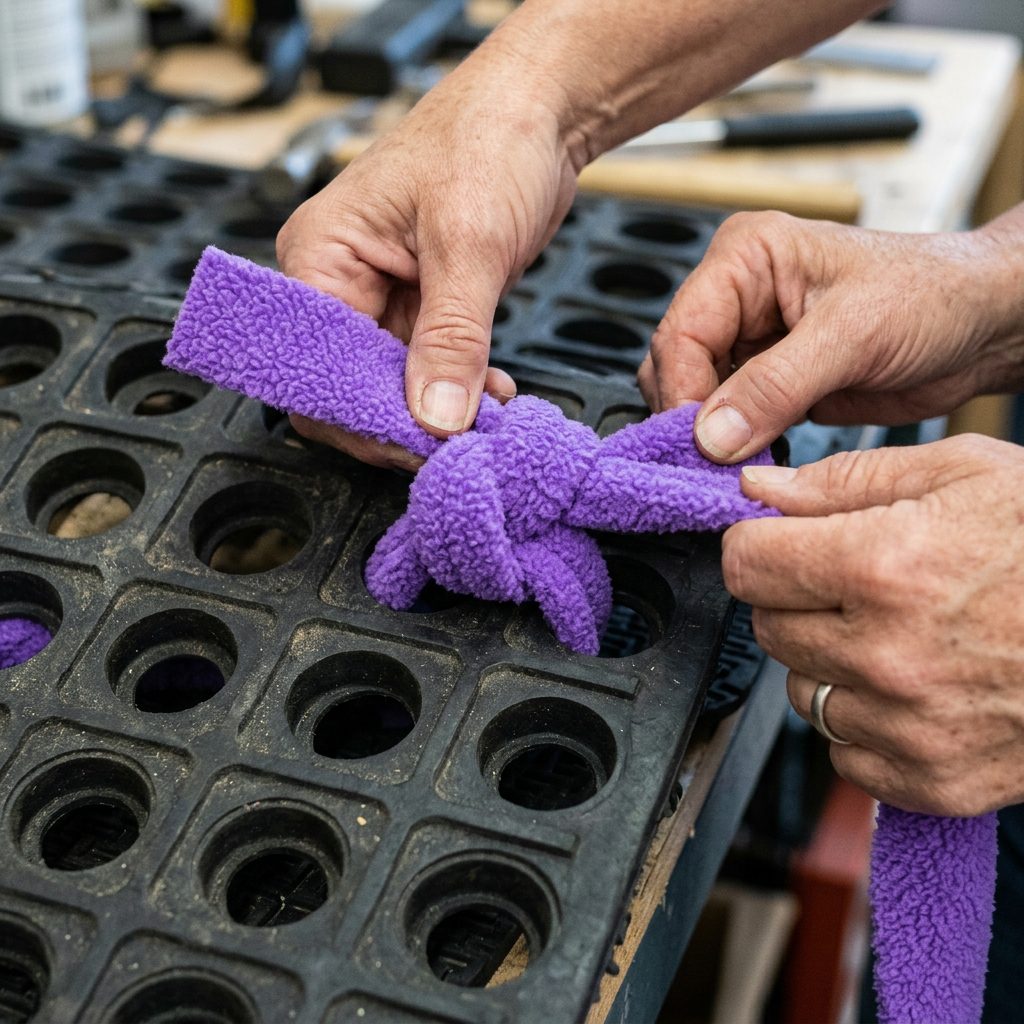
Ready to get started? Follow these steps to assemble your mat. This is a great activity to do while watching a movie, as the repetitive nature of the tying is quite relaxing.
Step 1: Prep Your Fabric
Cut your fleece into strips. You will need a lot of them! Aim for strips that are approximately 1 to 1.5 inches wide and 6 to 8 inches long. Don’t worry about being perfectly precise; the variation in length actually makes the mat more challenging for the puppy.
Step 2: The First Row
Take a strip of fleece and thread one end through a hole in the rubber mat and the other end through the adjacent hole. Pull them through so the ends are even on the top side of the mat, and tie a simple double knot. Repeat this for the entire first row.
Step 3: Filling the Gaps
Once you have finished the horizontal rows, go back and do the same thing vertically and diagonally. The goal is to make the mat so dense with fleece that you can no longer see the rubber base. A dense mat ensures the treats fall deep into the fabric, making your puppy work harder.
Step 4: The Shake Test
Once you think you’re finished, give the mat a good shake. If you see any large gaps where the rubber is visible, add a few more strips. A ‘savvy’ owner knows that the more layers there are, the longer the puppy stays entertained.
How to Introduce the Mat to Your Puppy
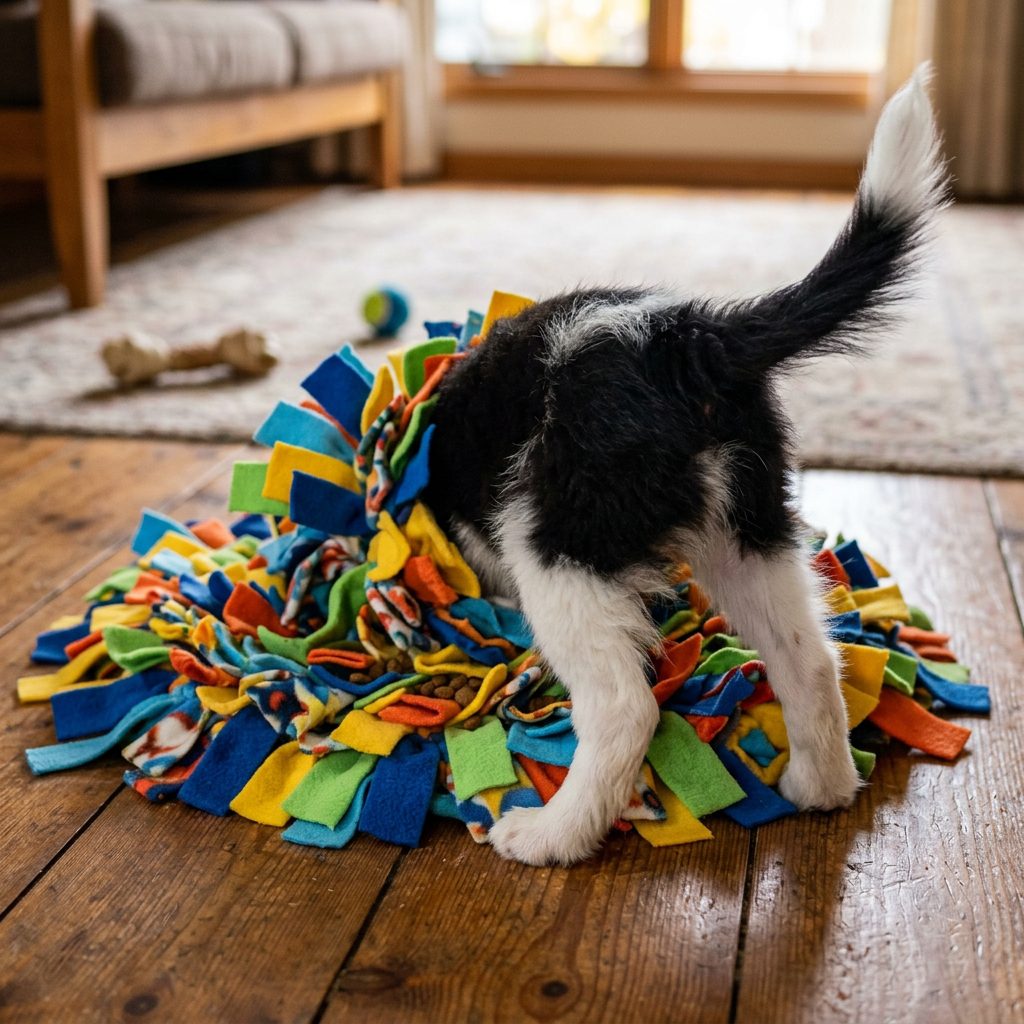
You can’t just throw a fully loaded mat at a puppy and expect them to know what to do. Some puppies might get frustrated, while others might try to chew the mat itself. Follow this introductory schedule to ensure success.
| Phase | Technique | Goal |
|---|---|---|
| Level 1: Beginner | Place treats right on top of the fleece. | Associate the mat with rewards. |
| Level 2: Intermediate | Push treats slightly into the top layer. | Encourage light sniffing. |
| Level 3: Advanced | Bury treats at the very bottom of the knots. | Maximum mental effort. |
Safety First: The ‘No-Chew’ Rule
While fleece is durable, it is not indestructible. Always supervise your puppy during snuffle mat sessions. If you see them start to tug on the fabric or try to chew the rubber base, use a redirection command like ‘Leave it’ and temporarily remove the mat. The mat should be a ‘working tool,’ not a chew toy. When the treats are gone, pick the mat up and put it away to maintain its high value.
Maintenance and Troubleshooting
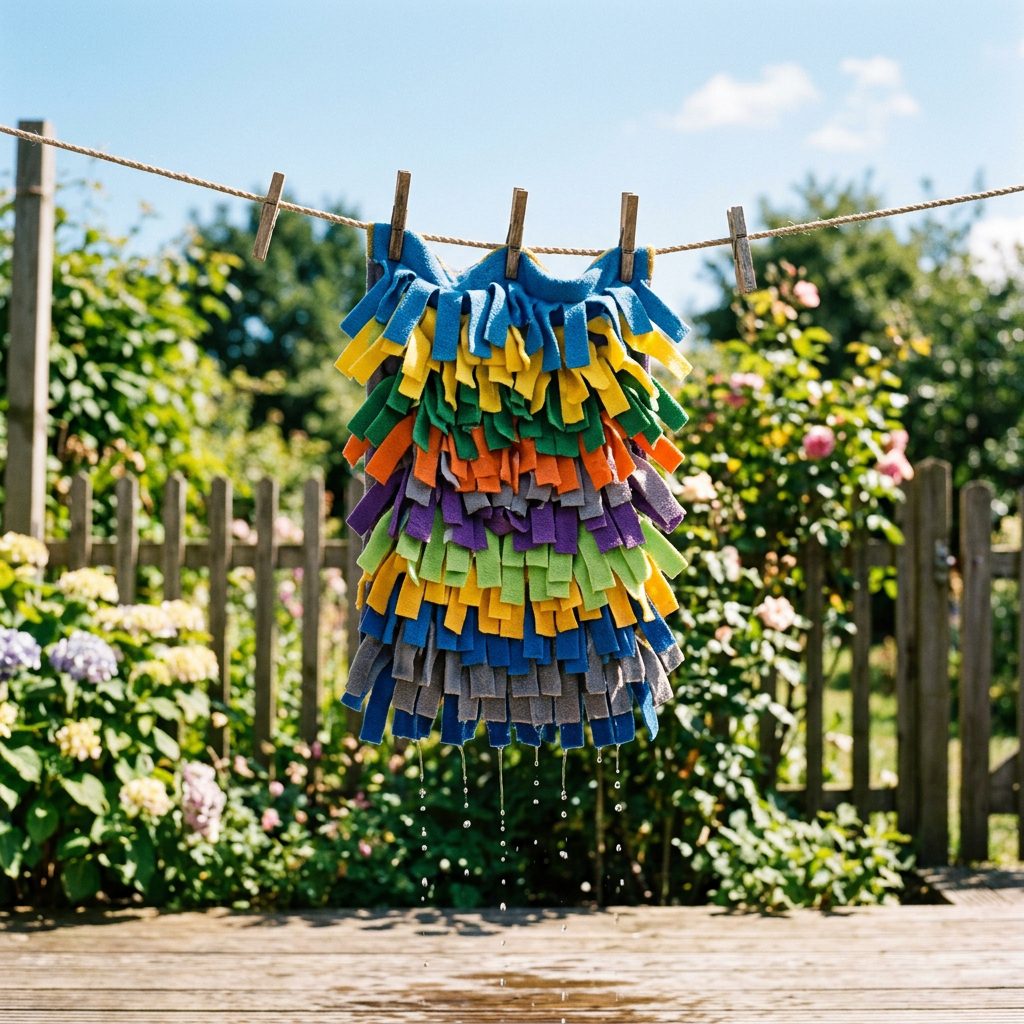
Because your puppy will be getting saliva all over the mat, and small bits of food may get trapped, hygiene is critical. Fortunately, your DIY snuffle mat is easy to clean.
Washing Instructions
- Machine Wash: Place the mat inside a pillowcase or a mesh laundry bag to prevent the strips from getting tangled in the agitator. Use a gentle cycle with cold water.
- Detergent: Use a pet-safe, scent-free detergent. Strong perfumes can be overwhelming for a dog’s sensitive nose and might discourage them from using the mat.
- Drying: Air dry the mat. High heat in the dryer can melt the rubber base or damage the fleece fibers.
What if my puppy loses interest?
If your pup stops engaging, try changing the ‘value’ of the treats. If you usually use dry kibble, try small pieces of dehydrated liver or broken-up high-quality biscuits. Sometimes, simply putting the mat away for a few days and then bringing it back out is enough to reignite that ‘new toy’ excitement.
Conclusion
The Gift of a Calm, Happy Puppy
Creating a DIY snuffle mat is one of the best investments you can make in your puppy’s behavioral health. For less than $10 and an hour of your time, you are providing a tool that reduces anxiety, builds confidence, and tires out your pup in a healthy, natural way. Remember, a puppy that spends their morning ‘hunting’ for their breakfast is a puppy that spends their afternoon napping peacefully at your feet.
So, grab some fleece, find a comfortable spot on the couch, and start tying those knots. Your puppy (and your shoes) will thank you! Happy sniffing!