Coexistence Goals: How to Train Your Puppy to Safely Ignore Your Backyard Chickens
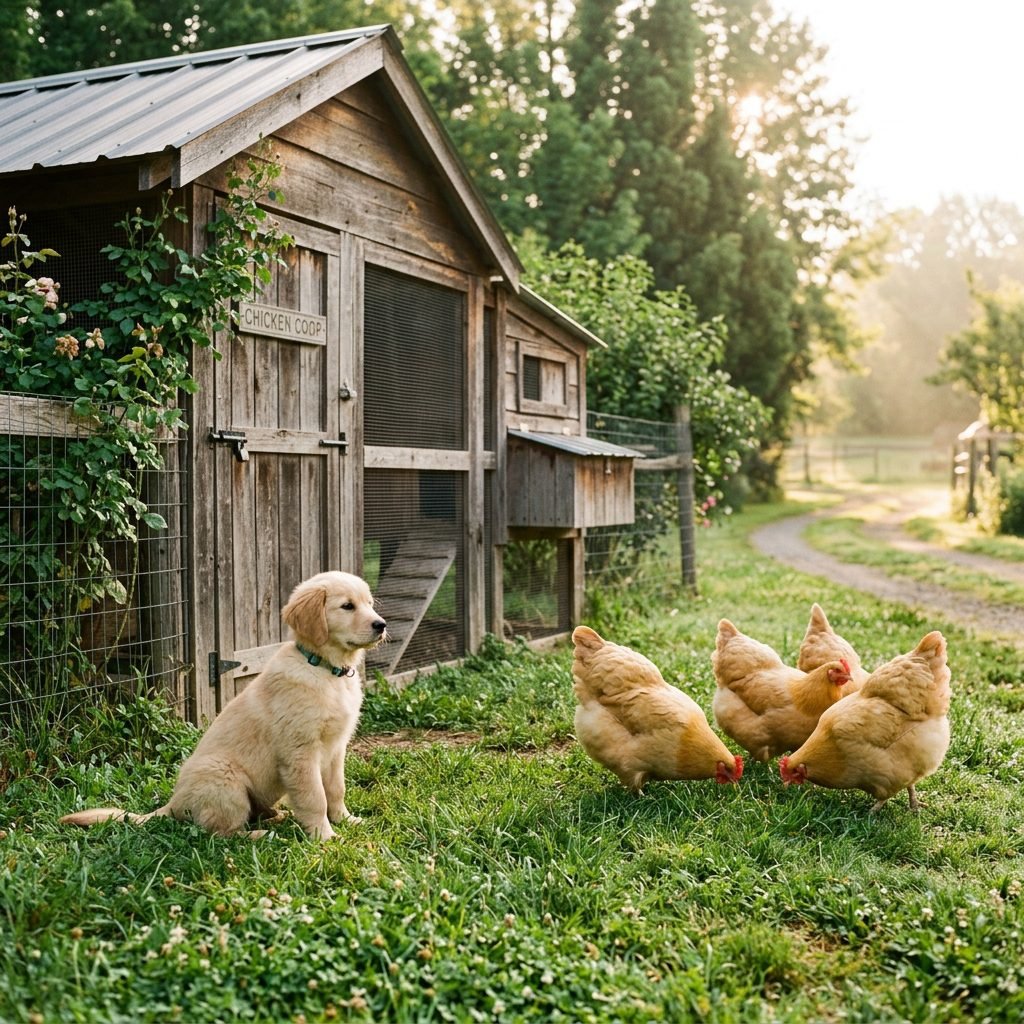
Welcome to the dream of the modern homestead! There is something incredibly peaceful about watching your backyard chickens scratch through the grass while your puppy lounges nearby in the sun. However, for many savvy dog owners, the reality can feel more like a high-stakes chase scene from an action movie. If your puppy sees your feathered friends as squeaky toys with wings, don’t panic. You aren’t alone, and this behavior is perfectly natural.
Training a puppy to safely ignore chickens is about more than just obedience; it is about managing biological instincts and building a foundation of mutual respect. Whether you have a high-drive herding breed or a curious companion dog, the goal is coexistence. In this comprehensive guide, we will walk through the psychology of the prey drive, the essential tools you need, and a foolproof step-by-step training plan to ensure your backyard remains a sanctuary for all its inhabitants.
Understanding the Drive: Why Your Puppy Wants to Chase
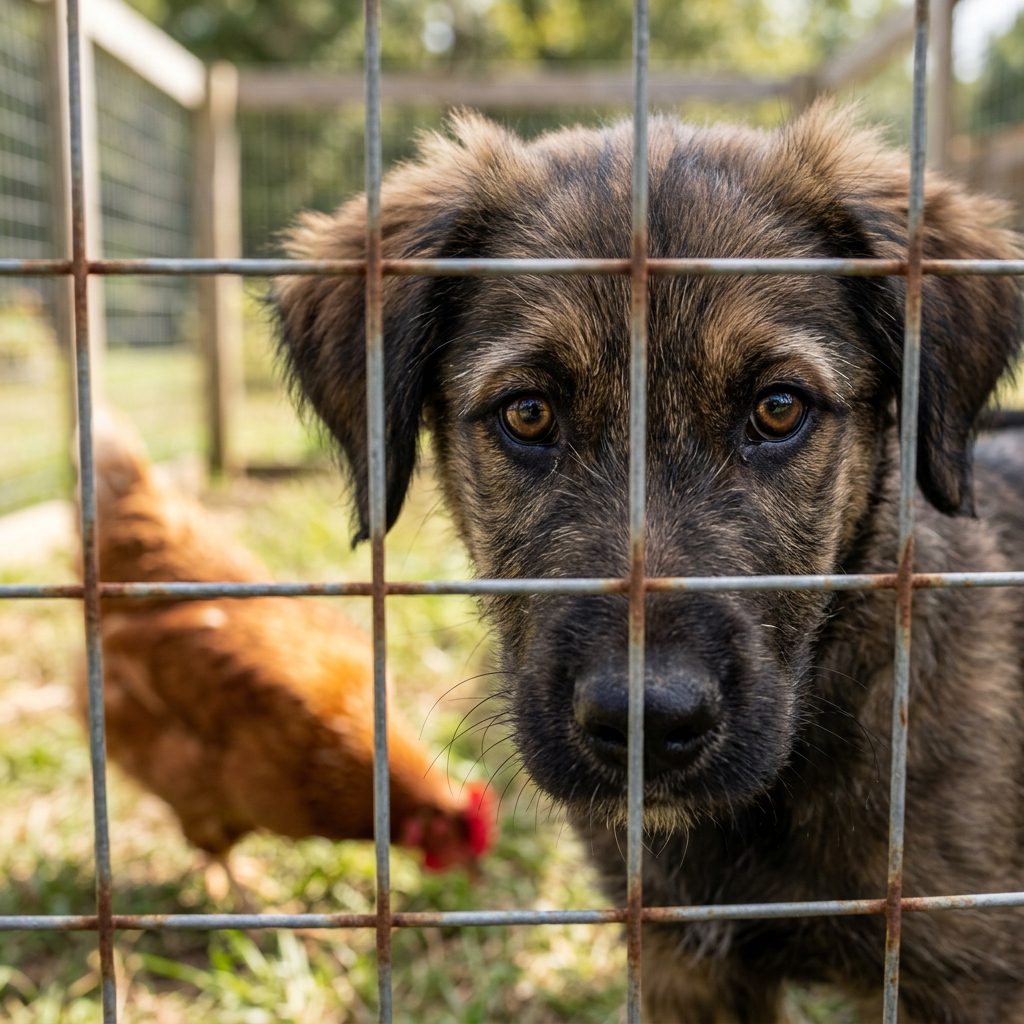
Before we pick up a leash or a bag of treats, we have to understand what is happening inside your puppy’s brain. Most dogs possess some level of prey drive, which is the instinctive inclination to find, pursue, and capture prey. For a puppy, a flapping, squawking chicken is the ultimate stimulus.
The Spectrum of Prey Drive
Not all puppies are created equal when it comes to their interest in chickens. Some breeds were specifically developed to hunt, while others were bred to guard or herd. Understanding where your dog falls on this spectrum helps you set realistic expectations.
| Breed Group | Typical Reaction to Chickens | Difficulty Level |
|---|---|---|
| Sighthounds (Greyhounds, Whippets) | High intensity, visual triggers cause immediate chase. | Advanced |
| Terriers (Jack Russells, Rat Terriers) | Tenacious and focused on ‘the catch’. | Advanced |
| Herding Breeds (Border Collies, Aussies) | May try to ‘circle’ or ‘nip’ to control movement. | Moderate |
| Livestock Guardians (Great Pyrenees, Maremma) | Naturally protective, often lower prey drive toward ‘their’ flock. | Beginner/Natural |
| Companion Breeds (Pugs, Bichons) | General curiosity, usually easily redirected. | Beginner |
Expert Tip: Never assume a breed’s history guarantees behavior. Every puppy is an individual. Always prioritize safety over assumptions.
The Essential Toolkit for Chicken-Safe Training
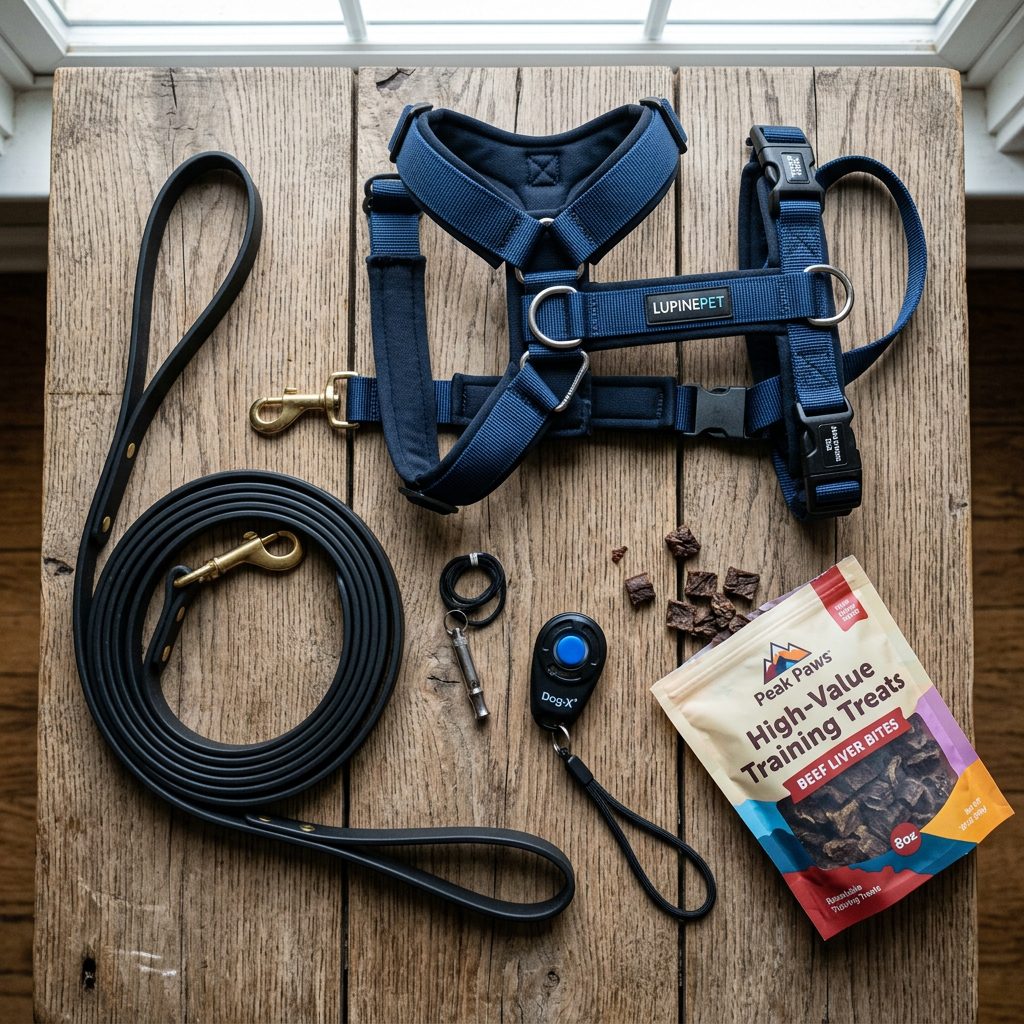
Success in training is often determined by the tools you have at your disposal. You cannot rely on verbal commands alone, especially in the early stages when the distraction of a chicken is far more rewarding than a ‘good boy’.
Must-Have Training Gear
- High-Value Treats: We aren’t talking about standard kibble. You need boiled chicken (ironic, we know), cheese, or freeze-dried liver. The reward must be better than the chase.
- A Sturdy 6-foot Leash: For close-up control and safety.
- A 20-30 foot Long Line: This allows you to simulate ‘off-leash’ freedom while maintaining a safety net.
- Clicker (Optional): Excellent for marking the exact moment your puppy chooses to look away from a chicken.
- Visual Barriers: Temporary fencing or cardboard to limit the puppy’s view during the initial ‘calming’ phase.
| Tool | Primary Purpose | Why It Is Essential |
|---|---|---|
| Long Line Leash | Distance Control | Prevents the puppy from successfully completing a chase. |
| Front-Clip Harness | Management | Gives you better physical leverage without hurting the puppy’s neck. |
| Treat Pouch | Efficiency | Ensures you can reward the ‘choice to ignore’ instantly. |
Step-by-Step Guide to Peaceful Coexistence
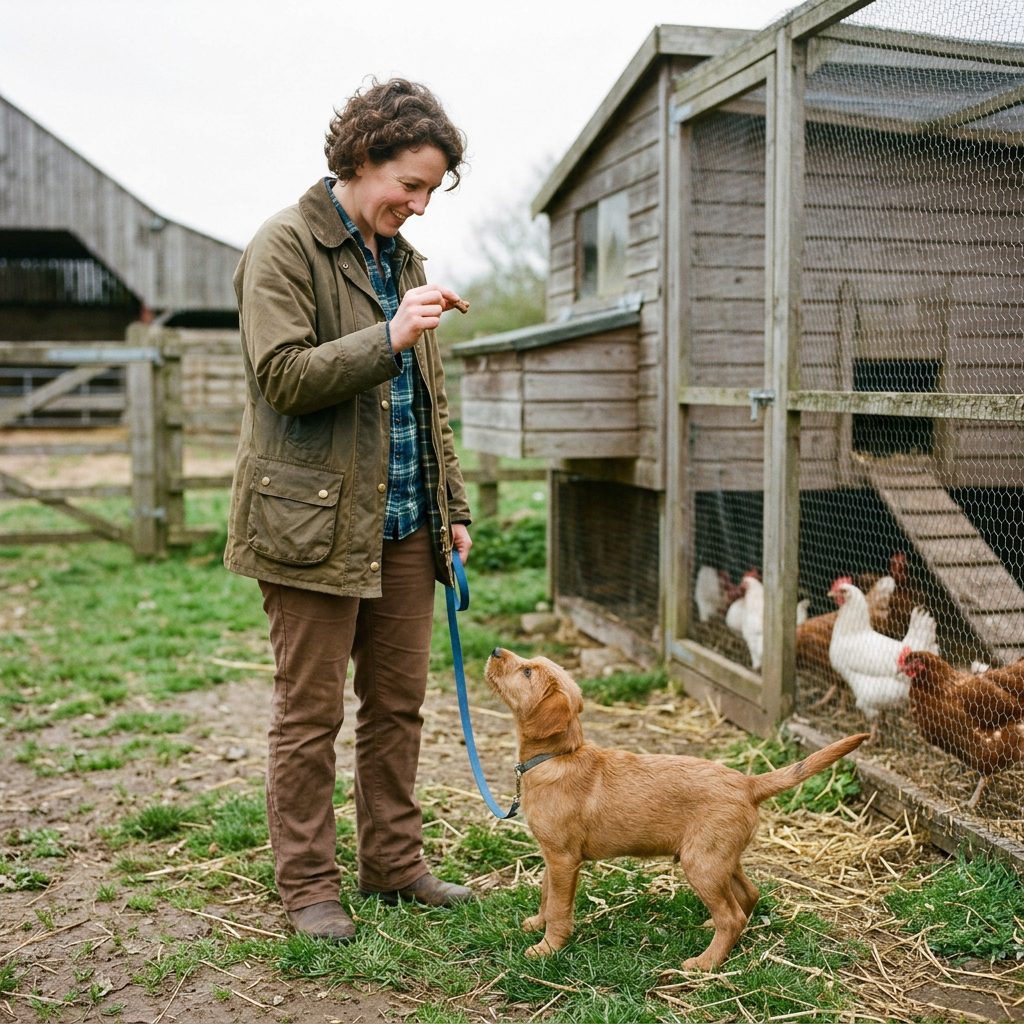
Training your puppy to ignore chickens is a marathon, not a sprint. We use a method called Desensitization and Counter-Conditioning. This means we decrease the puppy’s sensitivity to the chickens while changing their emotional response from ‘must chase’ to ‘must look at owner for a treat’.
Step 1: The ‘Look at Me’ Foundation
Before you even go near the coop, your puppy must have a rock-solid ‘Look at Me’ or ‘Watch Me’ command. Practice this in your living room, then your driveway, until your puppy snaps their eyes to yours the moment you ask.
Step 2: Observation from a Distance
Take your puppy on a leash to a spot where they can see the chickens but are not ‘over threshold’. If your puppy is lunging or barking, you are too close. Find the distance where they can look at the chickens and then look back at you.
Step 3: Marking the Choice
Every time your puppy looks at a chicken and then voluntarily looks away, Click or say ‘Yes!’ and provide a high-value treat. You are teaching them that ignoring the birds is the most profitable job they have ever had.
Step 4: Closing the Gap
Over several days (or weeks), gradually move closer to the coop. If the puppy’s intensity increases, take five steps back. The goal is a puppy that can stand three feet from a chicken and remain completely relaxed.
Step 5: The ‘Leave It’ Mastery
Incorporate a strong ‘Leave It’ command. If a chicken suddenly flaps its wings or squawks—a major trigger—your puppy needs to know that ‘Leave It’ means ‘stop whatever you are doing and return to me’.
Troubleshooting Common Training Hurdles
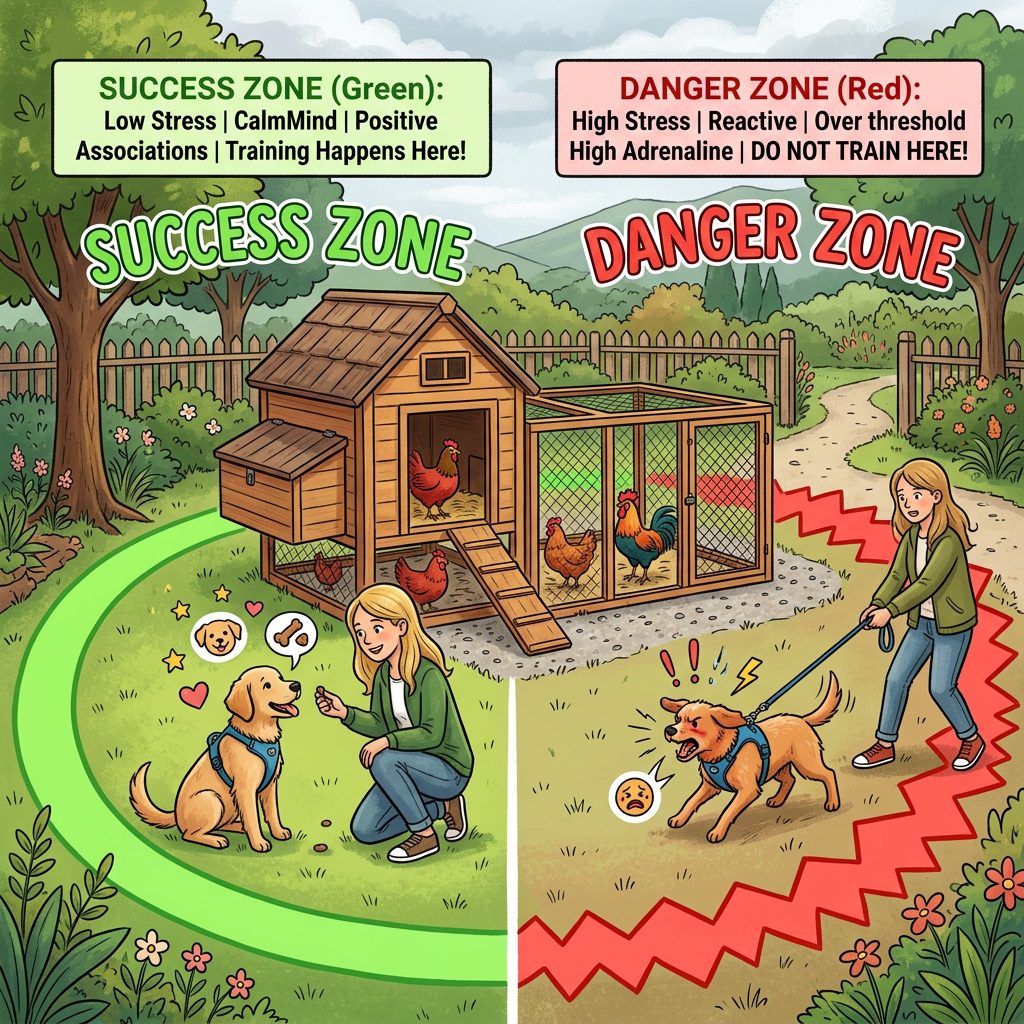
Even with the best plan, you will likely encounter setbacks. Puppies are impulsive, and chickens are unpredictable. Understanding how to handle these moments is crucial to maintaining progress.
What if my puppy lunges?
If your puppy lunges, do not scold them. Simply use the leash to calmly move them further away. The lunging is a sign that the environment is too stimulating. Increase the distance and work on basic focus exercises before trying again.
The ‘Flap’ Factor
Chickens are most tempting when they are airborne. If your chickens fly or flap frequently, you may need to practice ‘Leave It’ using a flirt pole (a toy on a string) to simulate that fast movement in a controlled environment before applying it to live birds.
| Problem | Root Cause | Solution |
|---|---|---|
| Constant Barking | Frustration or Excitement | Increase distance; use a ‘quiet’ command paired with treats. |
| Hyper-Focus (Staring) | Prey Drive Loading | Break the stare immediately with a touch or a ‘Look’ command. |
| Anxious Chickens | Puppy’s Energy is too High | Exercise the puppy vigorously *before* training near the coop. |
Safety and Long-Term Management
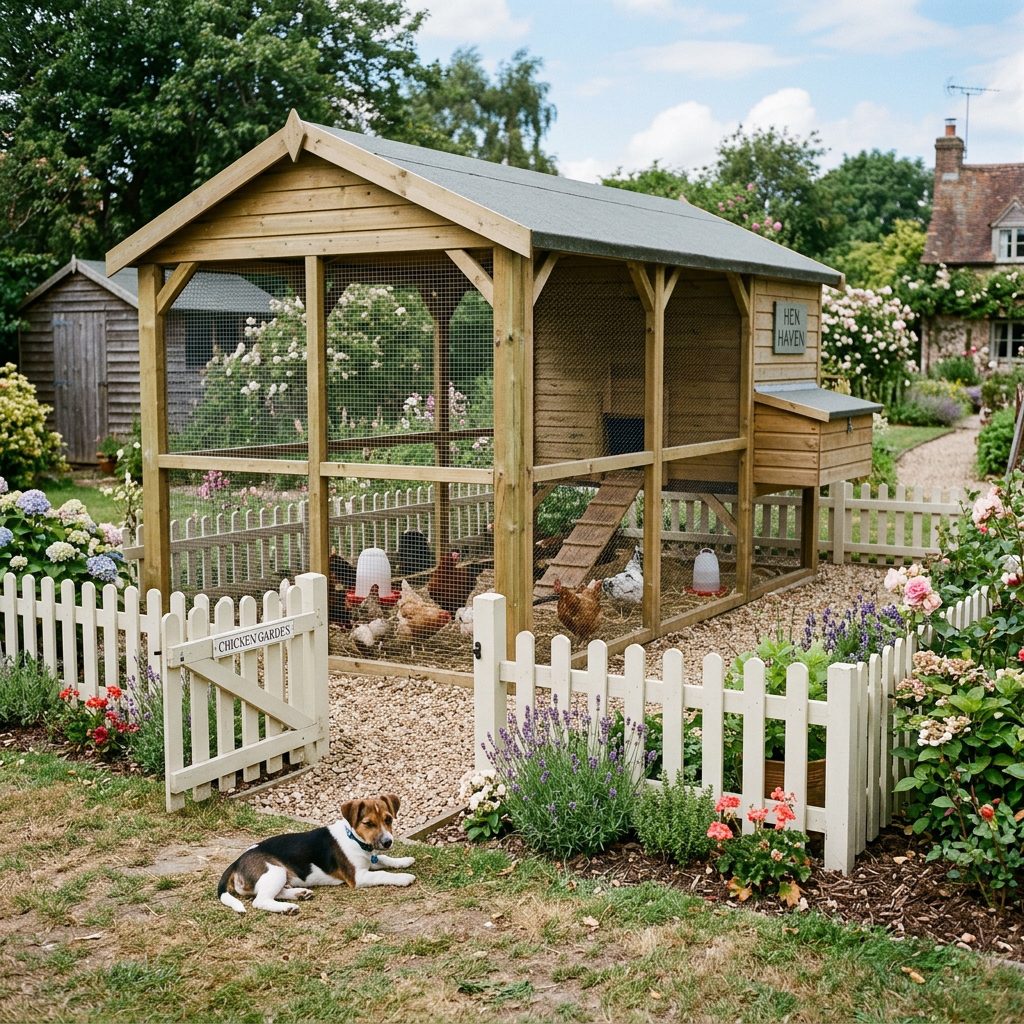
Even the best-trained puppy can have a bad day. For the safety of your flock, long-term management is just as important as training. You should never leave a puppy unsupervised with chickens until they are well into adulthood and have proven their reliability over a long period.
Secure Infrastructure
Invest in hardware cloth instead of chicken wire for your coop; it keeps the chickens in and prevents a curious puppy from poking a nose through and getting pecked—or worse, breaking through. A ‘double barrier’ system is often best, where the chickens have their run, and a secondary fence keeps the dog at least a foot away from the mesh.
The Role of Exercise
A tired puppy is a well-behaved puppy. If your dog has pent-up energy, their impulse control will be significantly lower. Ensure they have had a long walk, a game of fetch, or a mental stimulation session before you ask them to be calm around the chickens.
“Management is the key to preventing the rehearsal of bad behaviors. If they can’t chase, they can’t learn that chasing is fun.” — Professional Canine Behaviorist Tip
Conclusion
Training your puppy to safely ignore your backyard chickens is one of the most rewarding challenges you can take on as a dog owner. It requires patience, consistency, and a deep understanding of your dog’s natural instincts. By focusing on positive reinforcement and gradual desensitization, you aren’t just protecting your chickens; you are teaching your puppy valuable impulse control that will serve them in every aspect of their life.
Remember, there is no shortcut to safety. Keep your puppy on a leash, keep your treats high-value, and always end your training sessions on a positive note. Before you know it, those ‘Coexistence Goals’ will be your daily reality, and you’ll enjoy the peace of a harmonious backyard with all your favorite animals.