Clicker Training 101: The Beginner’s Trick to Communicating with Your Puppy Instantly
Welcome to the World of Clear Communication
Have you ever wished you could just talk to your puppy? Not just talk at them, but actually have them understand exactly what you want the moment you want it? Welcome to the magic of clicker training. As a canine specialist, I’ve seen countless owners struggle with the ‘language barrier’ between human and hound. We say ‘Sit,’ and they look at us with those big, beautiful, confused eyes. We say ‘Good boy,’ but by the time the words leave our mouths, the puppy has already moved on to sniffing the rug or chasing a dust bunny.
Clicker training is the ‘beginner’s trick’ that isn’t really a trick at all—it is a sophisticated, science-based method of instant communication. By using a distinct, consistent sound to mark the exact moment your puppy does something right, you remove the guesswork. In this comprehensive guide, we are going to explore everything from the biological ‘why’ to the step-by-step ‘how,’ ensuring you and your puppy are speaking the same language by the end of the day. Whether you’re a first-time owner or a seasoned pro looking to sharpen your skills, this 101 guide is designed for the savvy dog owner who wants results rooted in kindness and clarity.
The clicker isn’t a remote control for your dog; it’s a bridge that connects your two worlds through the power of a single, precise sound.
The Science of the Click: Why It Beats Your Voice Every Time
Understanding the ‘Marker’ Concept
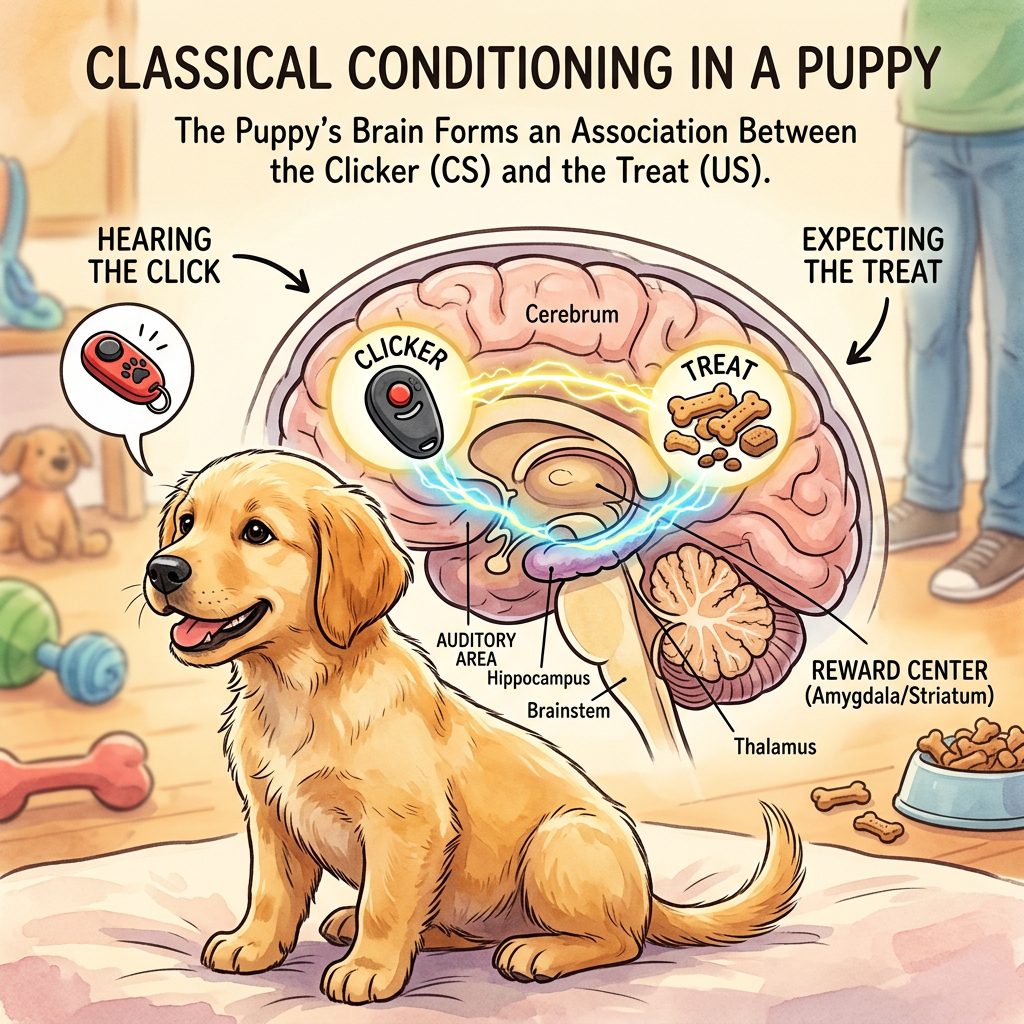
To understand why a plastic box that goes ‘click’ is more effective than a hearty ‘Good job!’, we have to look at how a puppy’s brain processes information. In behavioral science, a clicker is known as a secondary reinforcer. Your puppy isn’t born loving the sound of a clicker, but they are born loving food (a primary reinforcer). Through a process called classical conditioning—think Pavlov’s dogs—we teach the puppy that the click always predicts a treat.
Why Not Just Use My Voice?
While you can certainly train a dog using only your voice, the clicker offers three distinct advantages that vocal praise lacks:
- Consistency: Your voice changes based on your mood, your health, or how much coffee you’ve had. A clicker sounds exactly the same every single time.
- Precision: It is much faster to press a button than it is to say ‘That is exactly what I wanted you to do!’ The click captures the micro-second the puppy’s bottom hits the floor.
- Neutrality: The clicker is a ‘clean’ signal. It doesn’t carry the emotional baggage of a frustrated owner or the excitement of a high-pitched squeal, which can sometimes distract or over-stimulate a sensitive pup.
When you click, you are essentially taking a mental snapshot of the behavior. You are telling the puppy, ‘That thing you were doing the millisecond you heard this sound? That is what earned you this treat.’ This clarity reduces puppy frustration and accelerates learning by up to 50%.
Gear Up: Choosing Your Tools and Treats
The Essential Clicker Toolkit
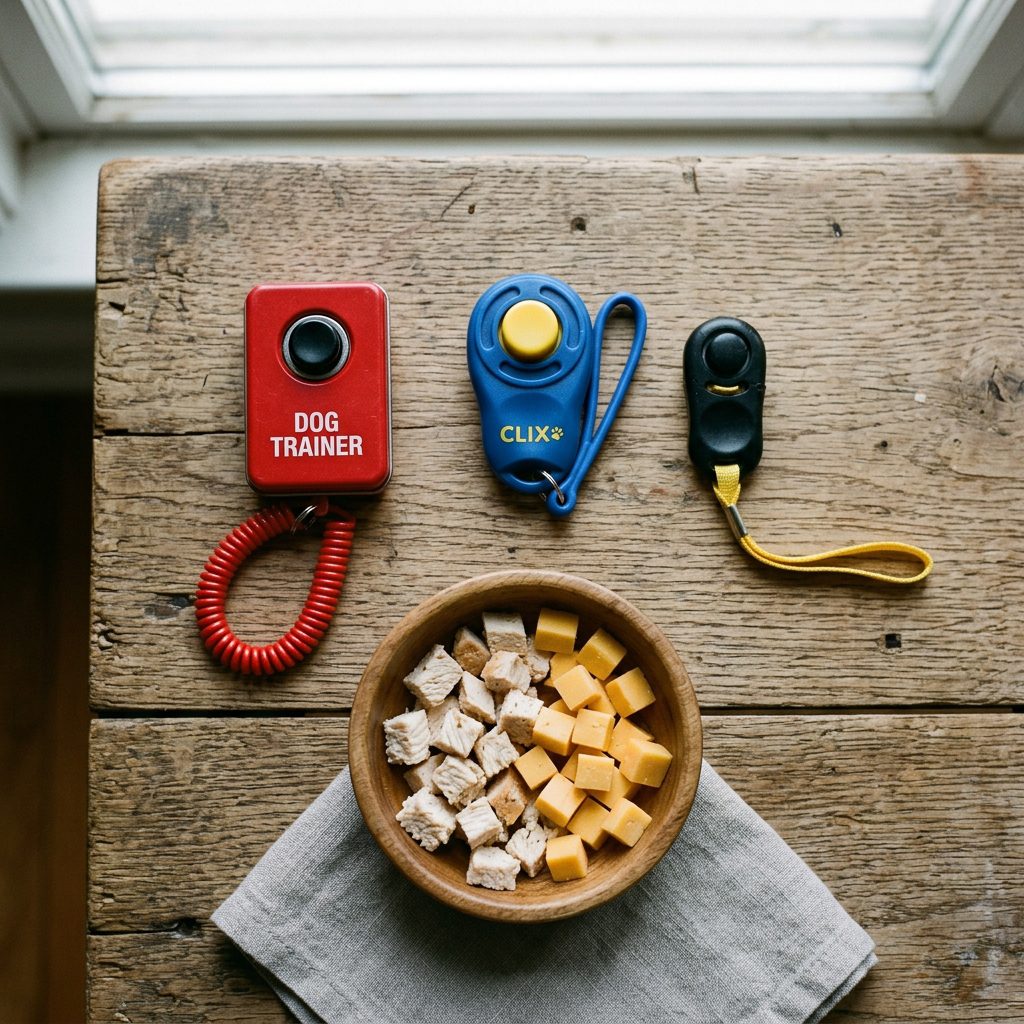
Before we start clicking, we need the right gear. Not all clickers are created equal, and the ‘paycheck’ (the treats) you use will determine how motivated your puppy stays during the session. For a savvy owner, quality matters over quantity.
Selecting the Right Clicker
There are several types of clickers on the market. Choosing one depends on your puppy’s personality and your own hand comfort.
| Clicker Type | Best For… | Pros/Cons |
|---|---|---|
| Box Clicker | Outdoor training/Distracting areas | Very loud and distinct; can be too loud for shy puppies. |
| Button/Soft Clicker | Indoor/Sensitive puppies | Easier to press; quieter sound that won’t startle fearful dogs. |
| Finger Clicker | Active training/Athletic owners | Straps to your finger; keeps your hands free for treats and leashes. |
The ‘Paycheck’: High-Value vs. Low-Value Treats
Imagine if your boss paid you in crackers versus paying you in steak. You’d probably work harder for the steak! For clicker training, we use high-value treats. These should be small (pea-sized), soft, and smelly. Think boiled chicken, tiny bits of cheese, or freeze-dried liver. Save the crunchy biscuits for casual snacking; for the ‘classroom,’ we want the good stuff.
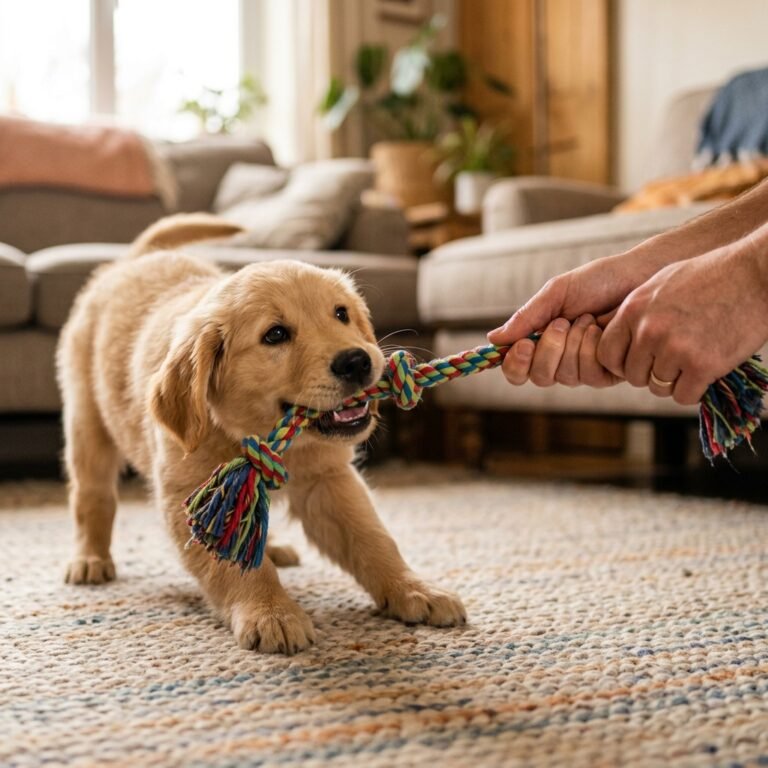
Pro Tip: If your puppy is ‘toy-motivated’ rather than ‘food-motivated,’ you can use a quick tug on a rope or a ball toss as the reward, though food is generally faster for repetitive repetitions.
Step 1: ‘Charging’ the Clicker
Teaching the Meaning of the Sound
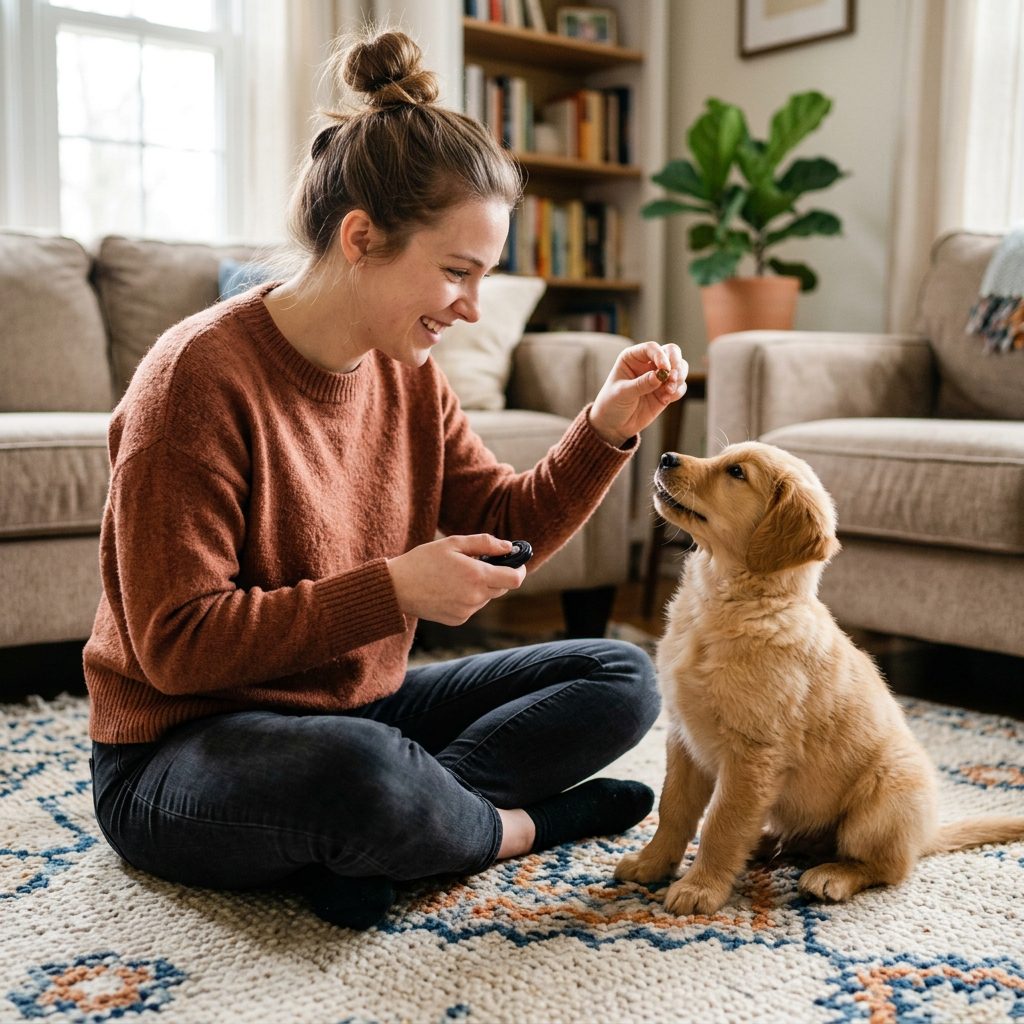
The very first thing you must do is ‘charge’ the clicker. This is the process of teaching your puppy that Click = Food. Without this step, the clicker is just a noisy toy. Here is how you do it:
- Find a quiet room with zero distractions.
- Prepare about 15-20 tiny treats in your hand or a pouch.
- Click the clicker once.
- Immediately give the puppy a treat. Don’t wait for them to do anything! Even if they are just standing there, click and treat.
- Repeat this 10 to 15 times in a row.
You will know the clicker is ‘charged’ when you click while the puppy is looking away, and they immediately whip their head around toward you looking for their snack. You have now established the bridge of communication. You are ready to start training actual behaviors!
The Golden Rule of the Clicker
There is one unbreakable law in clicker training: If you click, you MUST treat. Even if you clicked by accident, or the puppy did something you didn’t like right after the click, you must deliver the reward. This maintains the integrity of the signal. If you stop treating after clicks, the sound loses its value, and the ‘bridge’ collapses.
Mastering the Art of Timing and Technique
The Snapshot Principle
The most common mistake beginners make is poor timing. If you click too early or too late, you are ‘photographing’ the wrong behavior. For example, if you are teaching ‘Sit’ and you click as the puppy is already standing back up, you have just rewarded the act of standing up, not the sit.
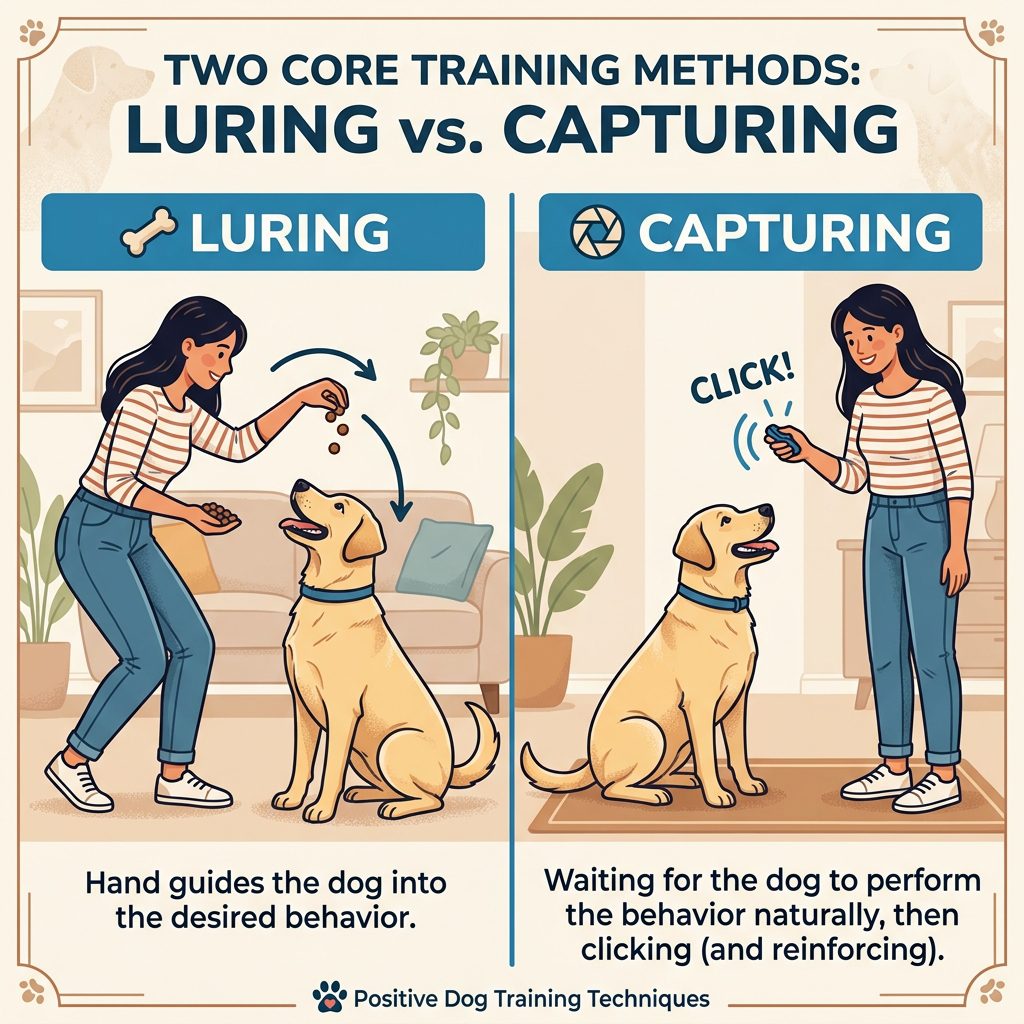
Capturing vs. Luring
There are two primary ways to get a behavior so you can click it:
- Luring: Using a treat like a magnet in front of the puppy’s nose to guide them into a position (like moving the treat over their head to encourage a sit). You click the moment they hit the position.
- Capturing: This is the ‘ninja’ method. You simply wait for the puppy to do something naturally—like a stretch or a sit—and you ‘capture’ it with a click the moment it happens.
Capturing is often more powerful because the puppy has to ‘think’ their way into the reward, rather than just following a piece of food blindly. It builds a smarter, more engaged dog.
Keep Sessions Short
Puppies have the attention span of a caffeinated squirrel. Aim for 2 to 5 minutes per session. It is much better to do five 2-minute sessions throughout the day than one 10-minute session that leaves you both frustrated. Always end on a successful note so your puppy looks forward to the next ‘game.’
Your First Mission: Teaching ‘Touch’ (Targeting)
The Foundation of All Advanced Tricks
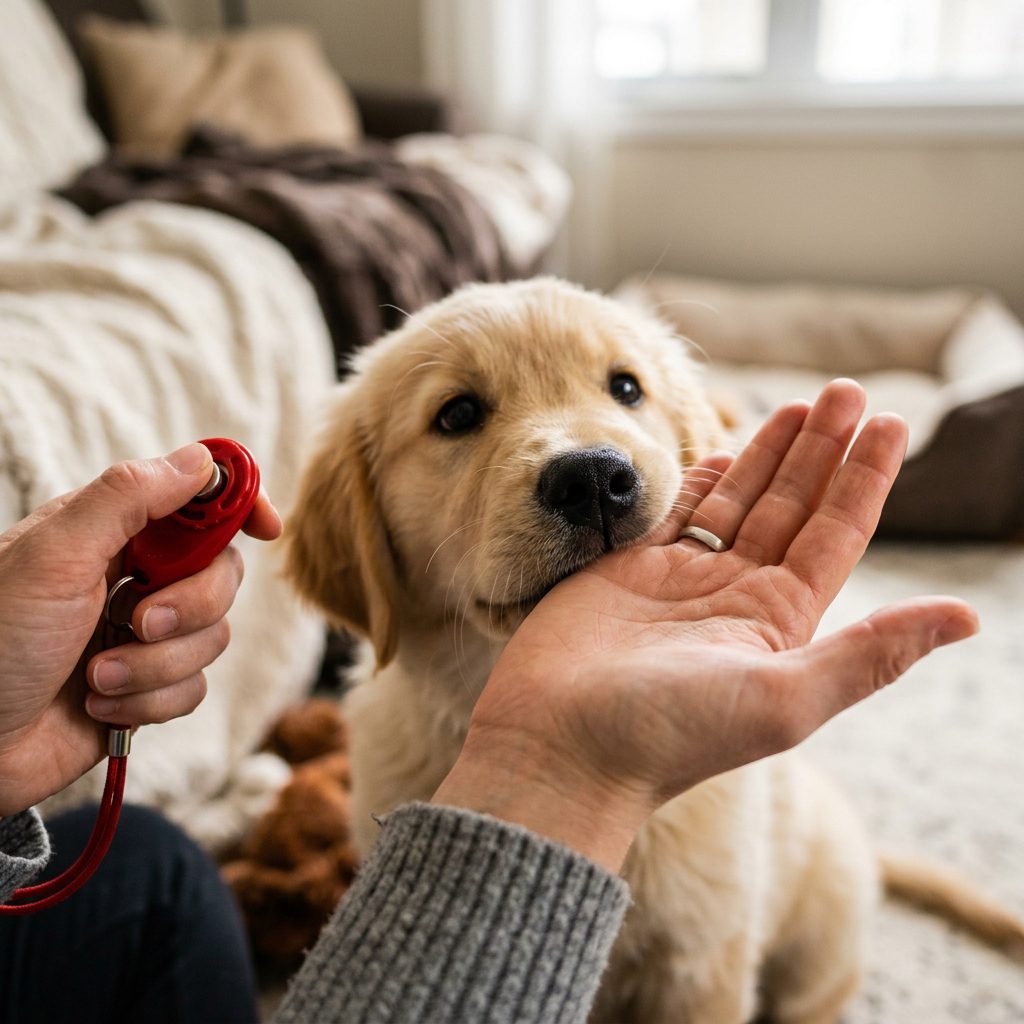
Instead of starting with ‘Sit,’ many professionals prefer to start with ‘Touch.’ This teaches the puppy to touch their nose to the palm of your hand. It’s a great way to move your dog around without pulling on their collar.
Step-by-Step ‘Touch’ Guide
- Offer your empty palm about 2 inches away from your puppy’s nose.
- Naturally, the puppy will lean forward to sniff your hand to see if you have food.
- The instant their wet nose touches your skin—CLICK!
- Deliver a treat from your other hand.
- Pull your hand away, then offer it again. Click and treat for every nose-to-palm contact.
Once they are doing this reliably, you can start moving your hand to different positions—higher, lower, or to the side. Eventually, you can add the verbal cue ‘Touch’ right as they are about to make contact. You’ve just used the clicker to teach a specific, intentional action!
Expert Tip: Use ‘Touch’ to redirect a puppy who is about to chew on furniture. It’s a positive way to say ‘come here and do this instead’ without using a ‘No’ or a ‘Stop.’
Troubleshooting Common Clicker Hurdles
When Things Don’t Go According to Plan
Even with the best intentions, you might hit a few bumps in the road. Don’t worry; even the best trainers face these challenges. Here is how to handle the most common issues.
| The Problem | The Likely Cause | The Solution |
|---|---|---|
| Puppy is scared of the click | Sound is too sharp/loud | Muffle the clicker in your pocket or use a ‘ballpoint pen’ click. |
| Puppy is too excited for treats | High-value treats are too ‘hot’ | Switch to lower-value kibble for a while to lower the energy. |
| Puppy stops listening | Session is too long | Take a break! Go play for 10 minutes and try again later. |
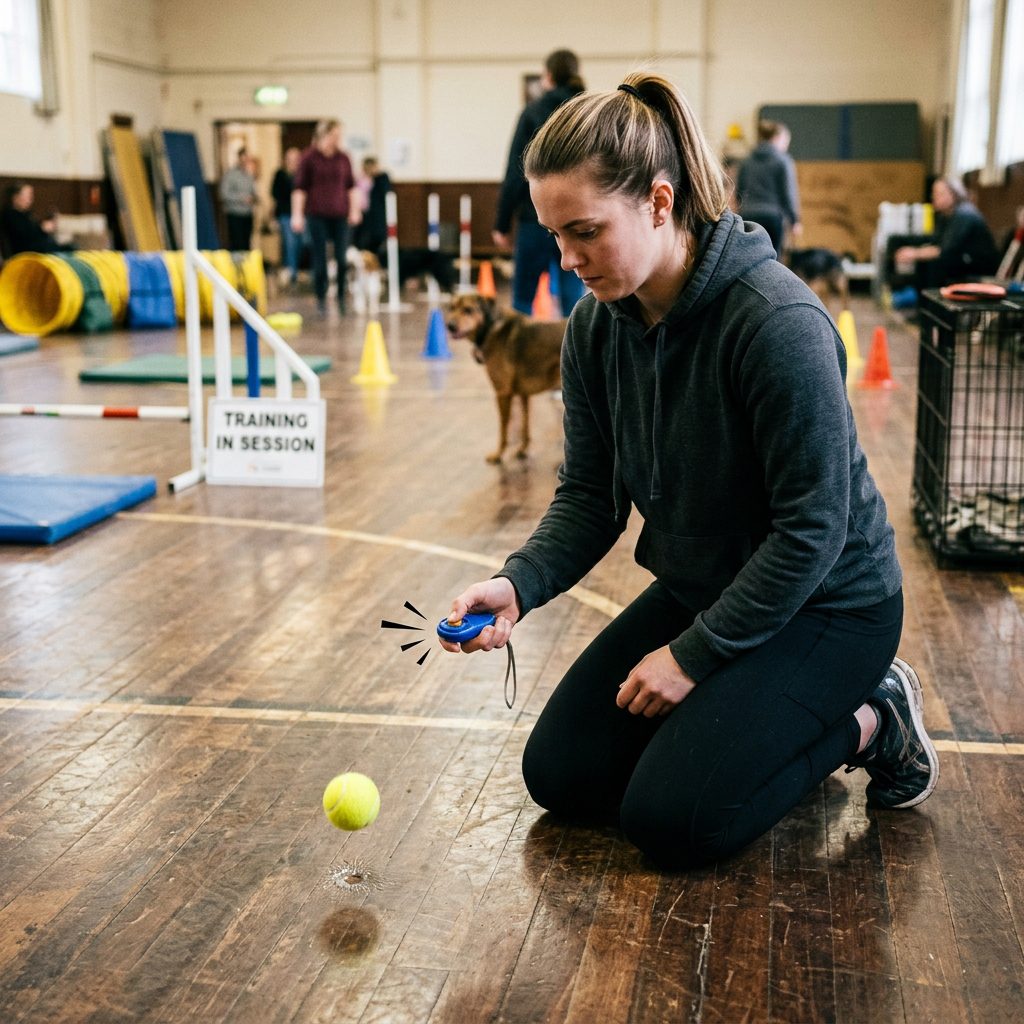
| Owner’s timing is off | Lack of coordination | Practice clicking when a ball hits the floor (without the dog present). |
The ‘Clicker-Happy’ Puppy
Sometimes, a puppy will start offering every behavior they know—sitting, lying down, spinning—just to get you to click. While this can be annoying, it’s actually a great sign! It means your puppy is offering behaviors and trying to figure out the puzzle. Simply wait for the specific behavior you want, click that, and ignore the rest. They will quickly learn that only the ‘target’ behavior pays out.
Conclusion
The Beginning of a Lifelong Bond
Clicker training is far more than a simple trick to get your puppy to sit or stay. It is a philosophy of mutual respect and clear expectations. By using the clicker, you are telling your puppy that you are a fair, consistent, and fun teacher. You are building a foundation where your dog wants to work with you because the ‘game’ is rewarding and the rules are clear.
As you move forward, remember to be patient with yourself and your pup. Some days they will be little geniuses, and other days they will act like they’ve never heard a clicker in their lives. That is all part of the journey. Keep your sessions short, your treats tasty, and your timing sharp. Before you know it, that little plastic box will have helped you develop a level of communication you never thought possible. Happy clicking!