No More Snapping! How to Brush Your Puppy’s Sensitive Tail Without Getting Nipped
Why Is Your Puppy’s Tail So Sensitive?
Understanding the Anatomy and Psychology of the Tail
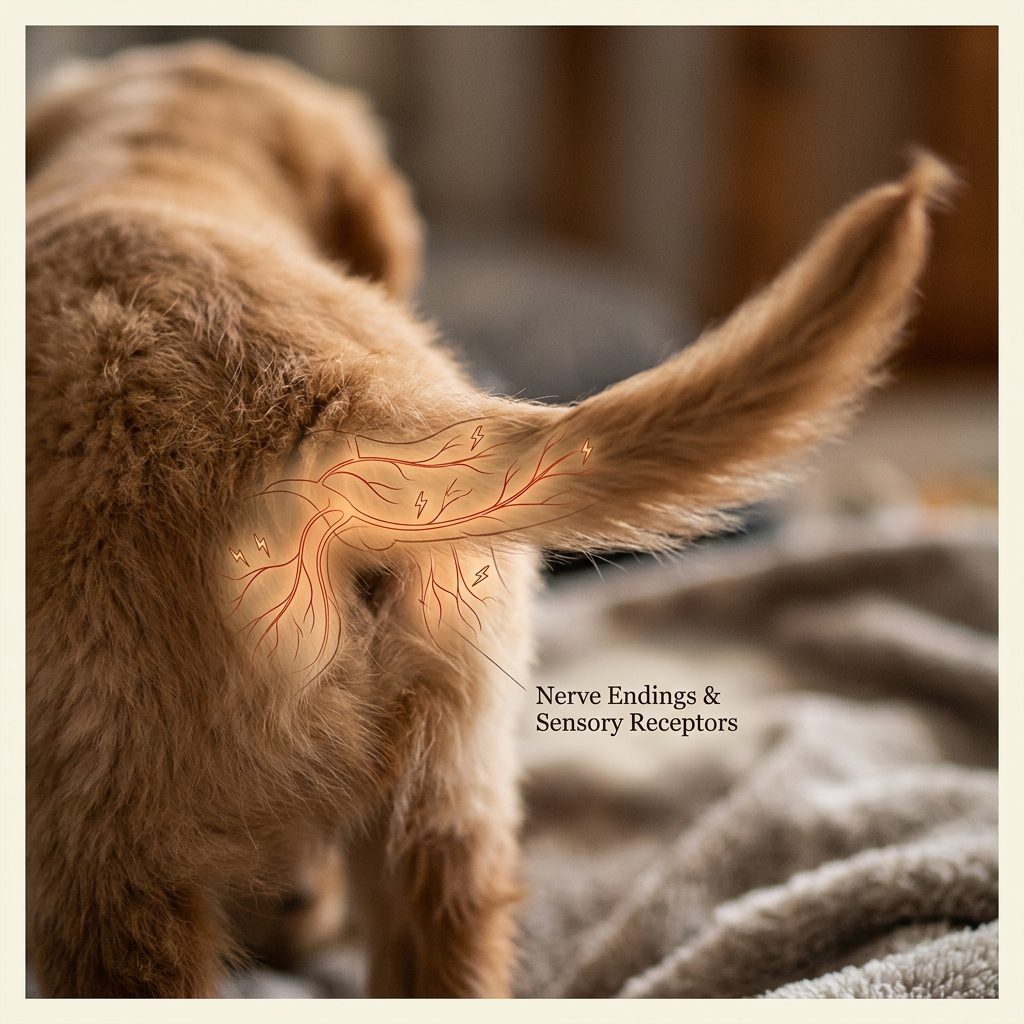
Before we can fix the snapping, we need to understand exactly why your puppy is reacting this way. The tail is not just a cute appendage that wags when they are happy; it is a complex and highly sensitive part of their anatomy. Physiologically, a dog’s tail is a direct extension of their spine. It is packed with nerve endings, muscles, and bones (vertebrae). Because it is so rich in sensory receptors, any pulling on tangles or mats feels significantly more painful than it would on their back or sides. Furthermore, the base of the tail is a highly vulnerable area, and a dog’s natural survival instinct tells them to protect their hindquarters from perceived threats.
The Communication Hub
Beyond anatomy, the tail is your puppy’s primary tool for communication. They use it to express joy, fear, insecurity, and aggression. When you grab their tail to brush it, you are essentially restricting their ability to communicate. This loss of autonomy can cause immediate anxiety, leading to the defensive snapping you are experiencing.
“A puppy’s nip during grooming is rarely an act of aggression; it is almost always a plea for space and a reaction to discomfort or fear.”
By understanding this, we can shift our mindset from being frustrated with our puppies to empathizing with their vulnerability. Our goal is to teach them that our touch is safe, predictable, and highly rewarding.
The Right Tools for the Job
Gathering Your Grooming Arsenal
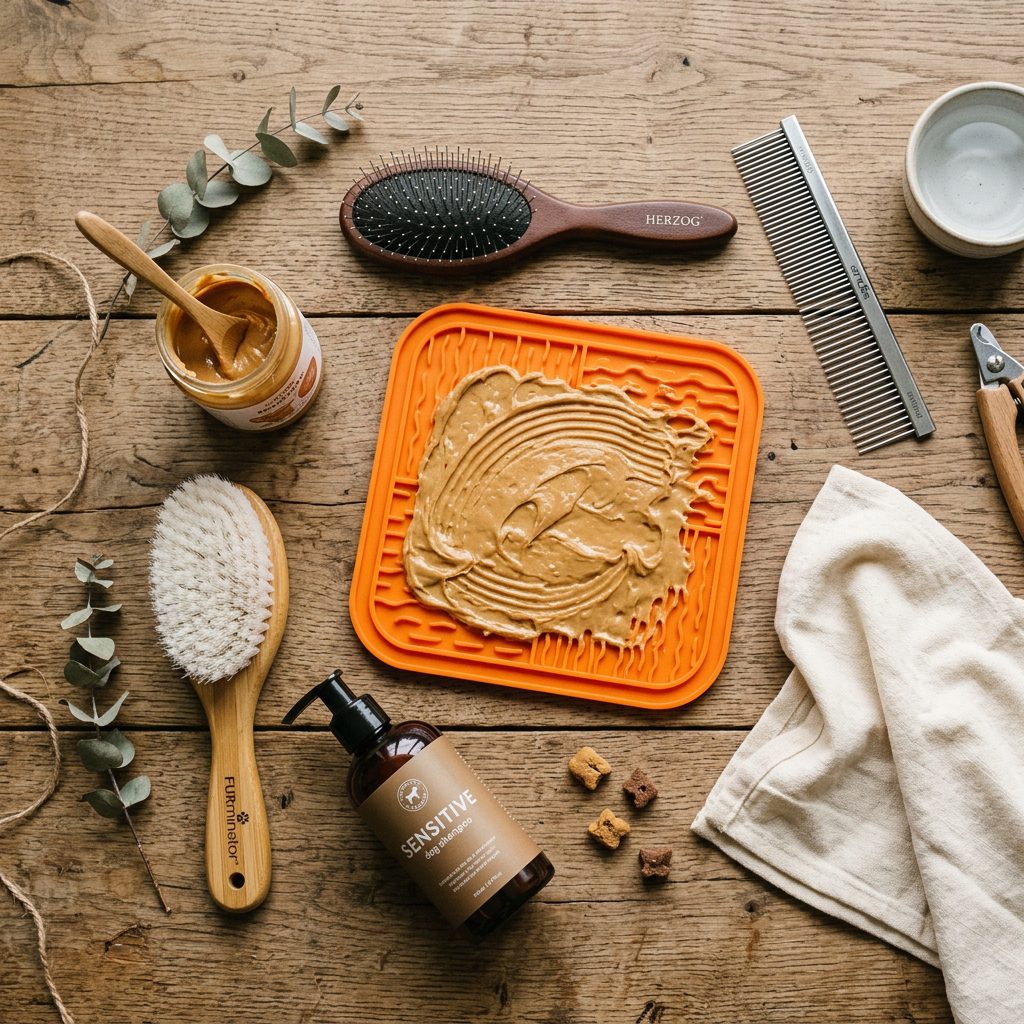
Using the wrong brush on a sensitive tail is a guaranteed recipe for nips and snaps. If you use a tool that pulls the hair or scratches the skin, your puppy will quickly learn to hate grooming time. To set yourself up for success, you need tools that are specifically designed for gentle detangling and positive reinforcement. Let’s break down the best tools to keep in your grooming kit.
Essential Brushes and Rewards
First and foremost, you need high-value treats. We are talking about boiled chicken, tiny pieces of cheese, or a lick mat smeared with dog-safe peanut butter. Regular kibble usually will not cut it when you are competing with the stress of grooming. Next, select the right brush based on your puppy’s coat type. An inappropriate brush can cause micro-abrasions on their delicate skin.
| Tool Type | Best For | Why It Works |
|---|---|---|
| Soft Bristle Brush | Short coats, introducing grooming | Extremely gentle on the skin, feels like a massage. Does not pull hair. |
| Pin Brush with Coated Tips | Medium to long coats, daily maintenance | The coated tips prevent scratching the skin while gently separating the fur. |
| Metal Greyhound Comb | Checking for mats, fluffy coats | Allows you to gently isolate tangles without ripping through them. |
| Lick Mat with Suction Cups | Distraction and positive association | Keeps the puppy’s mouth busy and releases endorphins through licking. |
Always inspect your brushes before use. If the pins are bent or the protective tips have worn off, it is time to replace them. Your puppy’s comfort must be the absolute priority.
Step-by-Step Guide to Desensitizing the Tail
The Touch, Treat, and Brush Protocol
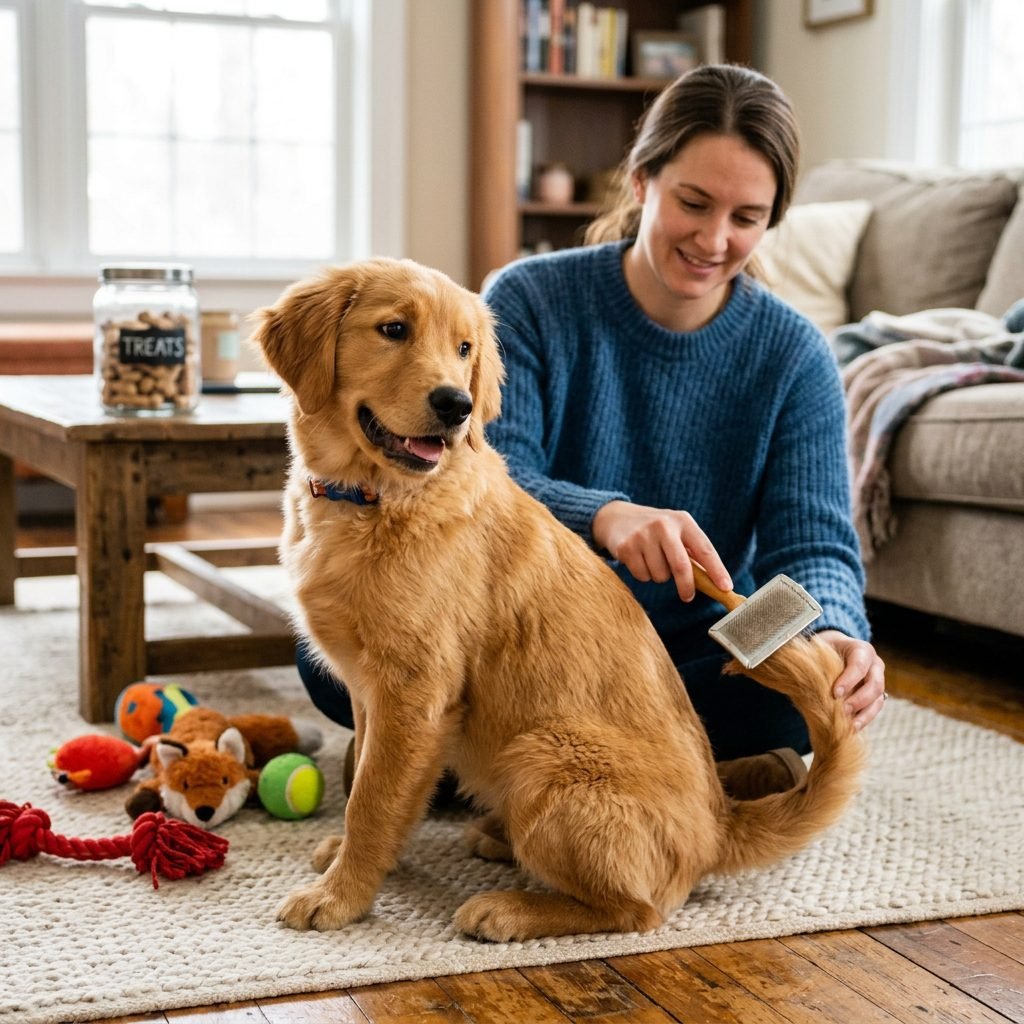
Now that we understand the ‘why’ and have our tools ready, it is time for the ‘how.’ This is a systematic desensitization process. The key here is to move at your puppy’s pace. If they snap or pull away, you have moved too fast. You must break the process down into tiny, manageable steps, rewarding them heavily for tolerance.
Step 1: The Magic of the Lick Mat
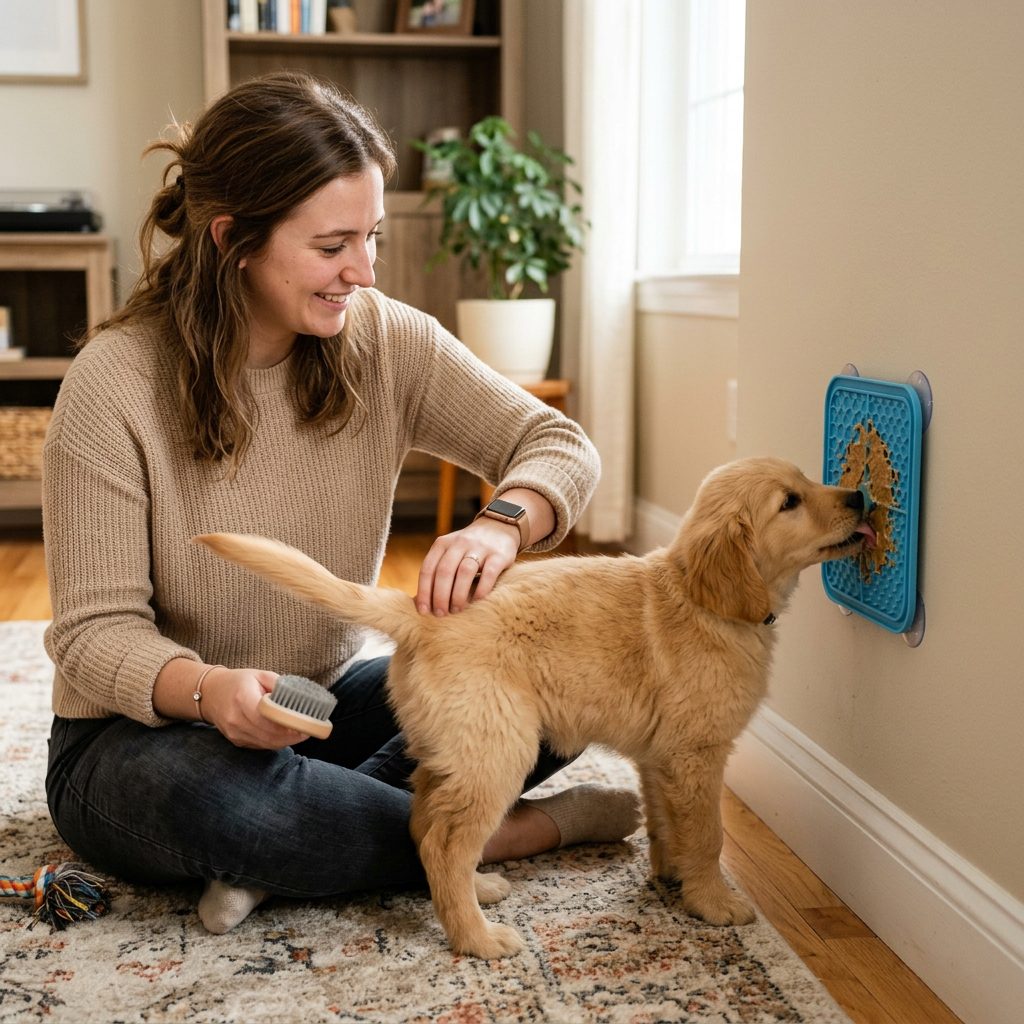
Start by sticking a lick mat loaded with peanut butter or plain yogurt to the floor or a wall. Let your puppy start licking. The act of licking is naturally soothing for dogs and lowers their heart rate. While they are distracted, sit beside them. Do not bring the brush out yet.
Step 2: Touch and Treat
- While they are licking, gently stroke their back, moving slowly toward the base of the tail.
- If they remain calm, gently touch the base of the tail for one second, then immediately offer a high-value treat from your hand (in addition to the lick mat).
- Repeat this until your puppy anticipates a treat when you touch their tail.
- Gradually slide your hand down the length of the tail. If they look back or tense up, stop, remove your hand, and go back to a less sensitive area.
Step 3: Introducing the Brush
Once your puppy allows you to hold their tail loosely without reacting, introduce the brush. Let them sniff it first, rewarding them for interacting with it. Then, gently tap the brush against their back, rewarding them. Move the tapping down to the tail. Finally, attempt one single, gentle stroke on the tail. Treat immediately. Do not try to brush the whole tail in one sitting. One stroke is a massive victory. Over several days or weeks, gradually increase the number of strokes, always pairing the action with enthusiastic praise and premium treats.
Troubleshooting Common Grooming Mistakes
What to Do When the Puppy Snaps
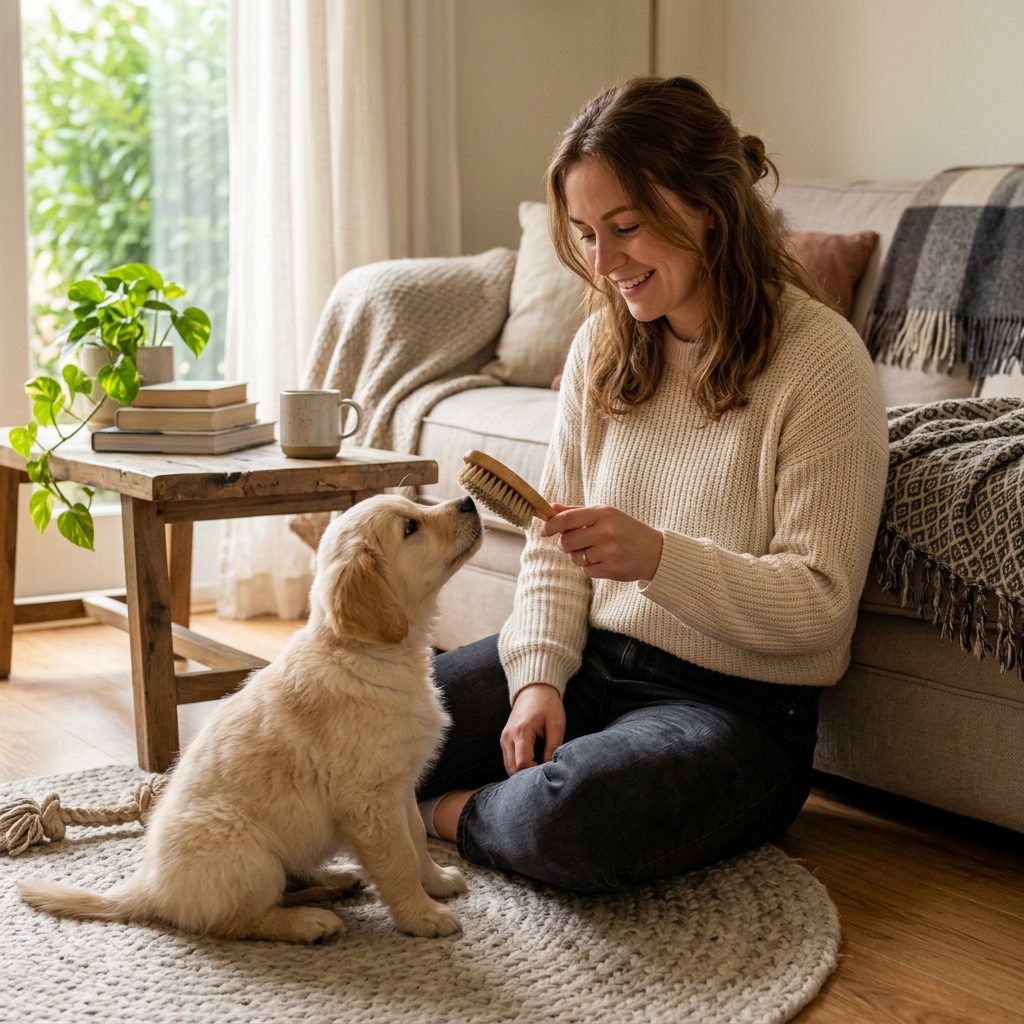
Even with the best preparation, setbacks happen. Puppies have short attention spans and can get overwhelmed quickly. If your puppy snaps at the brush or your hand, it is critical not to scold them. Yelling or physically punishing a puppy for snapping during grooming will only validate their fear, teaching them that grooming is indeed a terrifying event that results in punishment.
Mistake 1: Forcing the Issue
The most common mistake owners make is holding the puppy down to ‘just get it over with.’ This is known as flooding, and it destroys trust. If your puppy nips, immediately stop what you are doing. Take a deep breath. You pushed them past their threshold. End the session on a positive note by asking them to do a simple trick they know (like ‘sit’) and rewarding them, then try again later, taking two steps back in your training protocol.
Mistake 2: Pulling Through Mats
Never try to rip a brush through a tangle on a puppy’s tail. If you encounter a mat, hold the fur closest to the skin with your fingers so that when you gently pick at the mat with a comb, the pulling tension goes into your fingers, not their sensitive skin. If the mat is too tight, use blunt-nosed grooming scissors to carefully snip it out, or consult a professional groomer.
Mistake 3: Wrong Timing
Do not try to brush your puppy’s tail when they have the ‘zoomies’ or are overly tired and cranky. The best time for a grooming session is after a long walk or play session when they are naturally relaxed and ready for a nap.
Building a Long-Term Grooming Routine
Consistency is the Key to Success
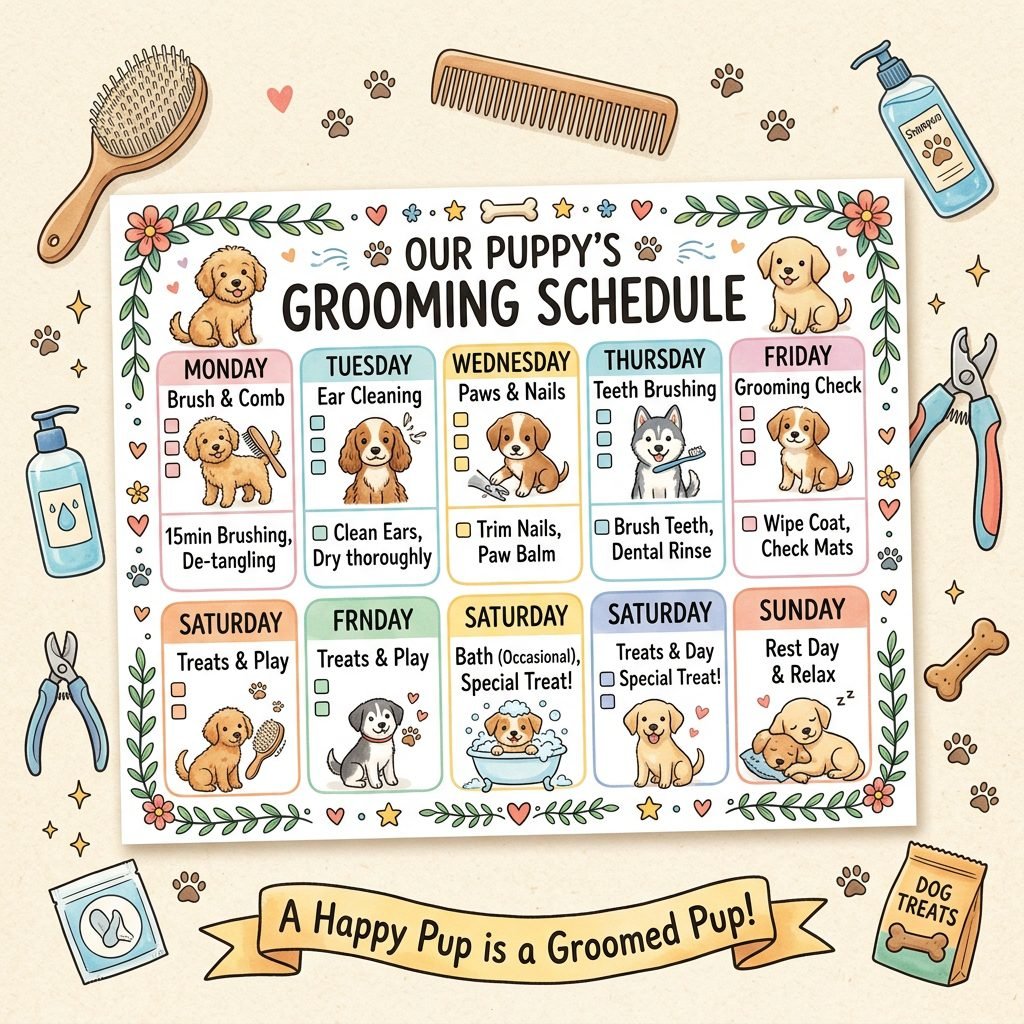
Desensitizing your puppy to tail brushing is not a one-and-done event; it is an ongoing process of building trust. To ensure your puppy grows into an adult dog that loves (or at least tolerates) grooming, you need to establish a consistent, predictable routine. Dogs thrive on routine because it removes the anxiety of the unknown.
Creating a Schedule
Depending on your puppy’s breed and coat type, their grooming needs will vary. However, when they are young, you should practice handling their tail daily, even if you do not actually brush it every day. Here is a general guideline for establishing a brushing routine based on coat type once they are fully desensitized:
| Coat Type | Brushing Frequency | Focus Areas |
|---|---|---|
| Short & Smooth (e.g., Pugs, Beagles) | 1-2 times a week | Removing loose hair, distributing natural skin oils. |
| Double Coated (e.g., Golden Retrievers, Huskies) | 3-4 times a week | Preventing undercoat compaction, detangling the ‘feathers’ on the tail. |
| Curly/Wavy (e.g., Poodles, Doodles) | Daily | Preventing severe matting, combing down to the skin to ensure no hidden tangles. |
Remember to keep sessions incredibly short in the beginning—just two to three minutes. As your puppy matures and learns that grooming time equals treat time, you can gradually extend the duration. Always end the session before the puppy gets fussy, ensuring that their last memory of the experience is a positive one.
Conclusion