
How to Stop a Puppy Chewing on Your TV Remote: 5 Lifesaving Hacks!
We’ve all been there. You settle into your favorite spot on the couch, ready to binge-watch that new series everyone is talking about, only to reach for the remote and find it… well, slightly different. It’s damp, the buttons are missing, and there are distinct tooth marks where the volume rocker used to be. Your adorable new puppy looks up at you with those big, innocent eyes, tail wagging, completely unaware that they’ve just committed a high-tech crime.
As a canine specialist, I can tell you that the TV remote is one of the most common household items puppies target. It’s not because they want to change the channel to Animal Planet; it’s because it’s the perfect storm of scent, texture, and accessibility. However, beyond the frustration of a $50 replacement fee, chewing on a remote is a serious safety hazard. From sharp plastic shards to the extreme danger of lithium batteries, this is a habit we need to break immediately.
In this guide, we aren’t just going to look at how to save your electronics; we are going to dive deep into the psychology of puppy chewing and provide you with five lifesaving hacks that will protect your home and your furry friend. Let’s get started!
The Psychology of the Remote: Why Your Puppy Loves It

Before we fix the behavior, we have to understand the ‘why.’ Puppies don’t chew to be spiteful. In fact, their attraction to your remote is actually a compliment to you! Here are the primary reasons your remote is a target:
- The Scent of You: Your hands are constantly touching the remote. It is saturated with your unique scent. To a puppy, chewing on something that smells like their favorite human is comforting.
- The ‘Button’ Texture: Those rubbery buttons provide a unique tactile feedback that feels great on sore, teething gums.
- The Crunch Factor: The hard plastic shell provides a satisfying resistance that helps relieve the pressure of new teeth coming in.
- Attention Seeking: If your puppy picks up a remote and you immediately jump up and chase them, they’ve just won! You’ve turned a boring plastic stick into a fun game of ‘keep away.’
Understanding that chewing is a biological necessity for puppies helps us approach training with patience rather than frustration.
The Hidden Dangers: Why This Habit is a ‘Lifesaver’ Issue
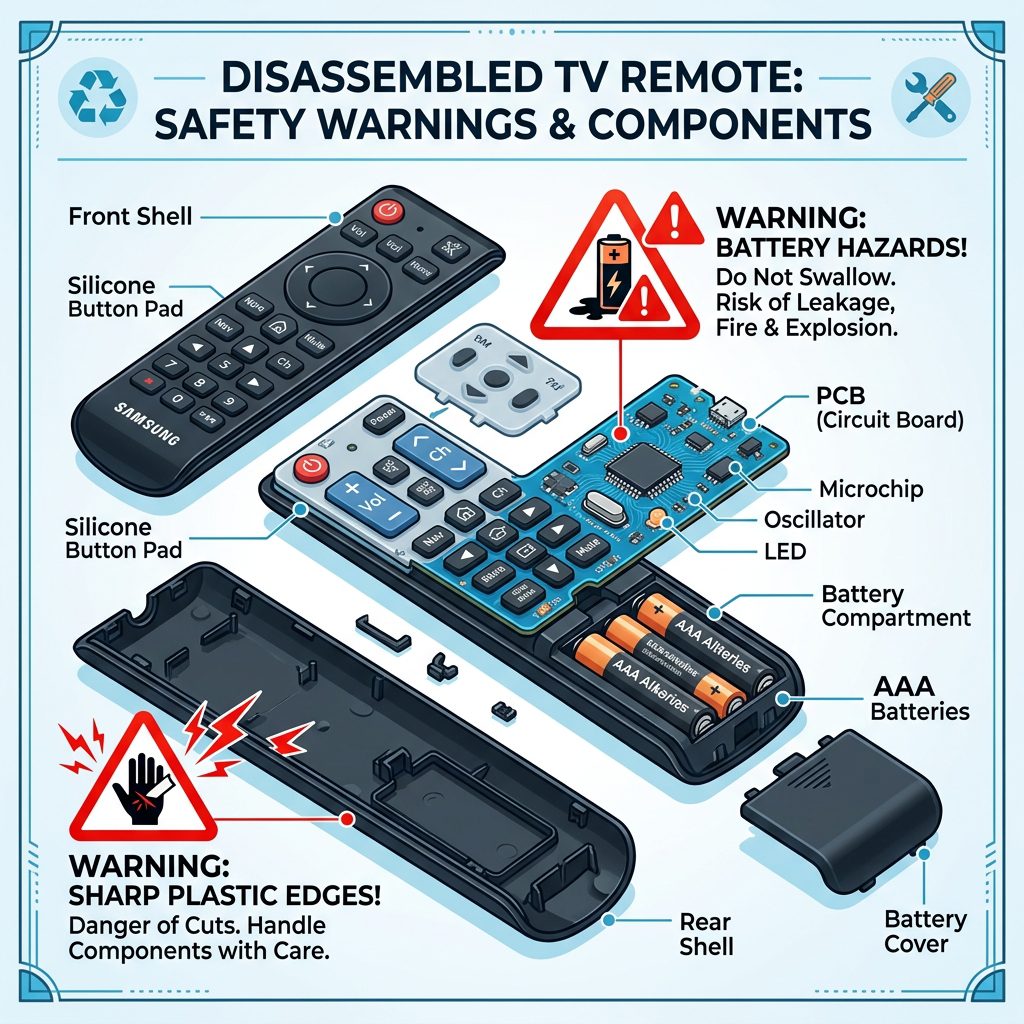
While a broken remote is an inconvenience, the internal components are a literal minefield for a puppy’s digestive tract. As a specialist, this is the part I want every savvy dog owner to take seriously.
The Battery Hazard
Most remotes use AAA or AA batteries, and some modern ones use button cells. If a puppy punctures a battery, the alkaline or acidic material can cause severe chemical burns to the mouth, esophagus, and stomach. Furthermore, button batteries can create an electrical current that erodes tissue in a matter of hours.
Plastic Shards
The hard plastic used in remotes often splinters into sharp, jagged pieces. If swallowed, these can cause perforations in the intestines or lead to a dangerous bowel obstruction that requires emergency surgery.
| Component | Risk Level | Potential Consequence |
|---|---|---|
| Batteries | Critical | Chemical burns, heavy metal poisoning |
| Circuit Board | High | Choking hazard, mouth lacerations |
| Rubber Buttons | Medium | Intestinal blockage |
| Plastic Casing | High | Internal perforation, sharp shards |
Hack #1: Management and The ‘Out of Sight’ Rule
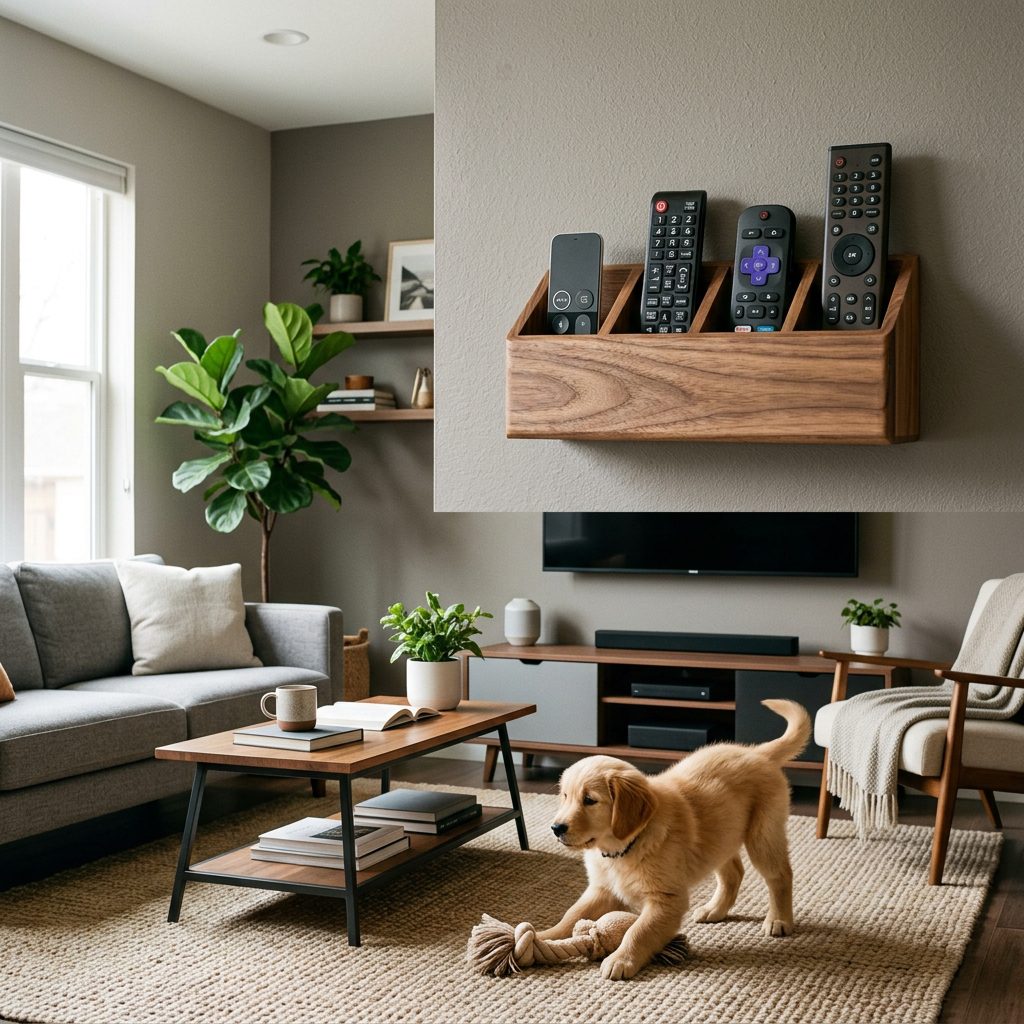
The simplest way to stop a behavior is to prevent it from happening in the first place. This is called environmental management. If your puppy cannot reach the remote, they cannot chew it. It sounds obvious, but it is the foundation of all puppy training.
Vertical Storage
Stop leaving the remote on the coffee table or the couch cushion. These are ‘puppy eye level’ surfaces. Instead, use wall-mounted remote holders or high shelves. If you have a coffee table with a drawer, use it!
The ‘Basket’ Method
Designate a specific basket on a high mantle or shelf for all electronics. Make it a household rule: if you aren’t using the remote, it goes in the basket. This creates a habit for the humans in the house, which is often harder than training the dog!
Hack #2: The ‘High-Value’ Swap Strategy
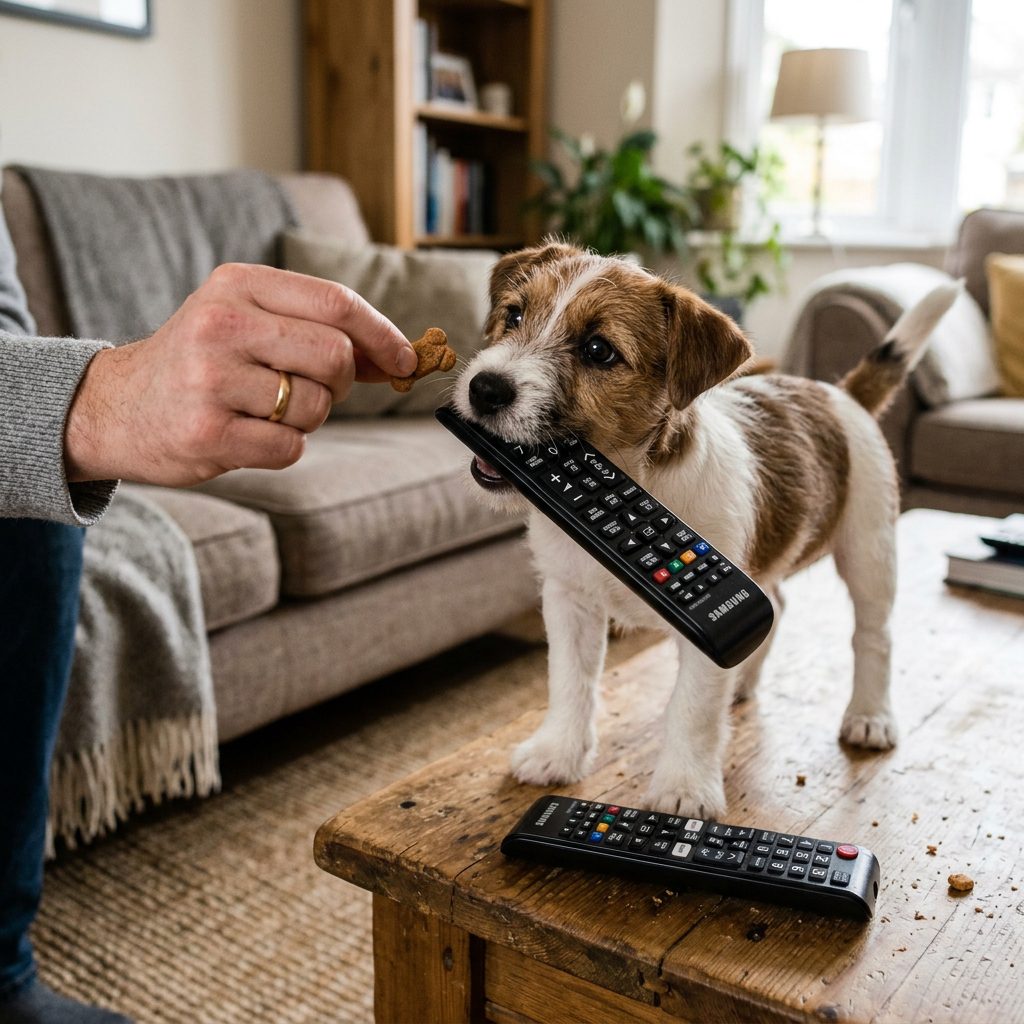
When you catch your puppy with the remote, your instinct is to yell ‘No!’ and grab it. This often triggers a chase or makes the puppy guard the object. Instead, use the High-Value Swap.
- Keep a stash of ’emergency’ treats or a favorite toy nearby.
- When you see the remote in their mouth, calmly present the treat or toy.
- As they drop the remote to take the better item, say ‘Thank you!’ or ‘Good swap!’
- Pick up the remote and put it in a safe place.
By doing this, you are teaching the puppy that giving up the remote leads to something better, rather than creating a conflict.
Choosing the Right Alternatives
| Remote Feature | Recommended Alternative |
|---|---|
| Chewy Buttons | Textured Rubber KONG or Nylabone |
| Hard Plastic Shell | Hard Nylon Chews or Benebones |
| Your Scent | An old t-shirt tied in a knot (supervised) |
Hack #3: Safe Taste Deterrents
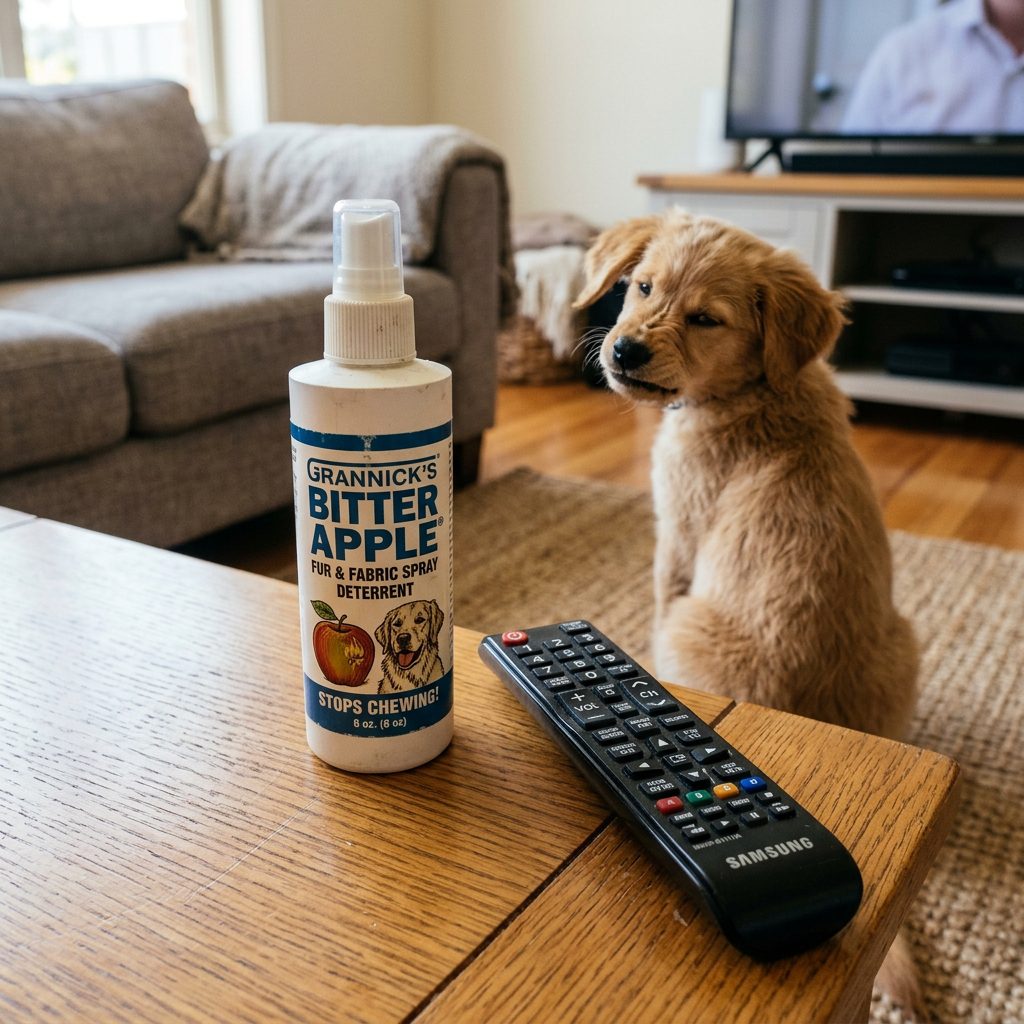
Sometimes, we need to make the remote taste as bad as it smells good. This is where anti-chew sprays come in. Look for sprays containing bitter apple or cherry. These are non-toxic but incredibly unpleasant for dogs.
How to Apply Correctly
Don’t just spray the remote and walk away. You need to ensure your puppy associates the taste with the object. Lightly mist a paper towel and wipe the exterior of the remote (avoiding the internal electronics). Pro Tip: Let the puppy taste a tiny bit of the spray on a tissue first so they know how bad it is. When they see the remote, they will remember that foul taste and choose to stay away.
Always check that the spray is alcohol-free to prevent damage to the remote’s plastic and buttons.
Hack #4: Mental Stimulation to Cure Boredom
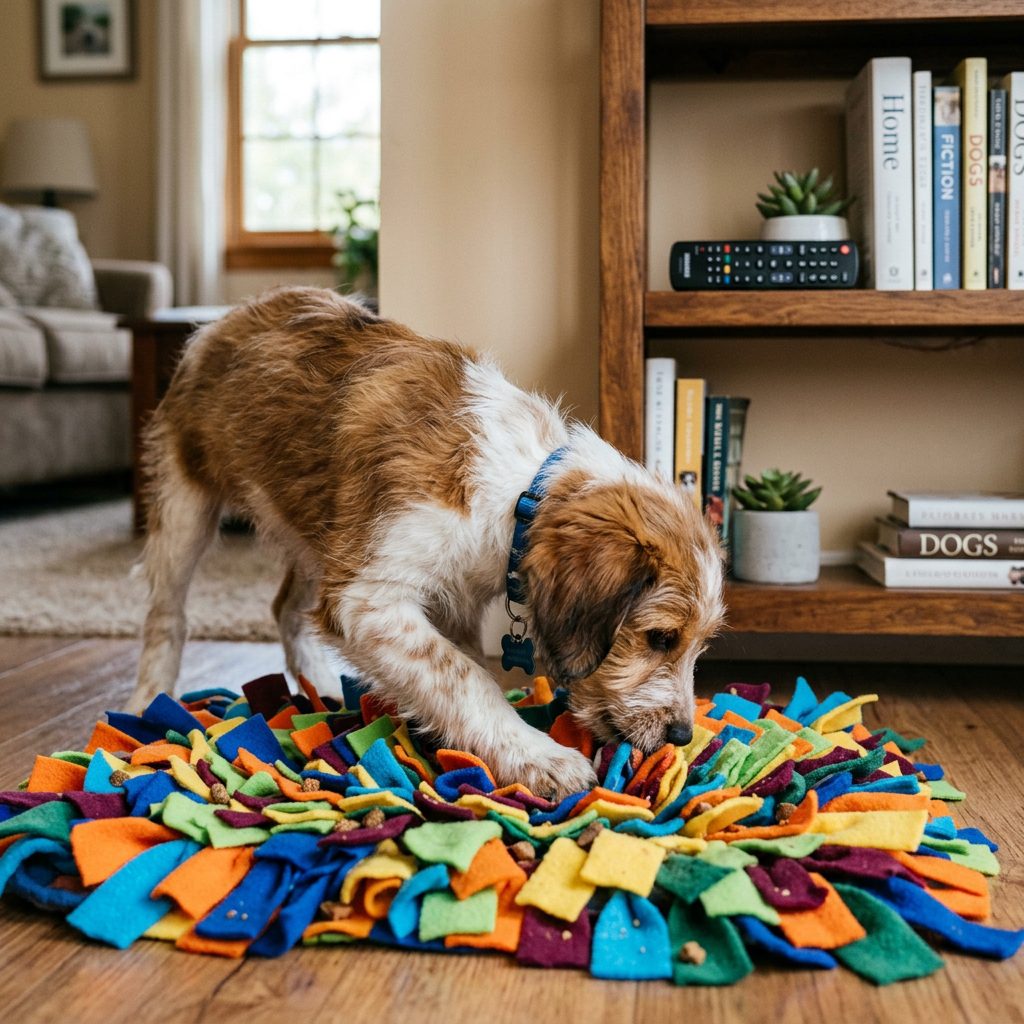
A tired puppy is a well-behaved puppy. Often, a remote becomes a chew toy because the puppy is bored and looking for a way to burn off energy. If you provide enough mental enrichment, the remote loses its appeal.
Interactive Feeders
Instead of feeding your puppy from a bowl, use puzzle toys or snuffle mats. This forces them to use their brain and nose, which is much more exhausting than a walk. Spending 15 minutes on a puzzle toy can be equivalent to a 45-minute walk in terms of energy expenditure.
The ‘Find It’ Game
Hide treats around the room and encourage your puppy to find them. This redirects their focus from your belongings to a productive, rewarding task.
Hack #5: Mastering the ‘Leave It’ Command

This is the ultimate ‘lifesaving’ skill. ‘Leave It’ tells your dog to ignore an object before they even touch it. It is essential for remotes, dropped chocolate, or trash on the street.
Steps to Train ‘Leave It’
- Place a low-value treat in your closed fist. Let the puppy sniff and lick.
- The moment they stop trying to get it, say ‘Yes!’ and give them a better treat from your other hand.
- Repeat until they back away the moment they see your fist.
- Gradually move to an open hand, then a treat on the floor, always rewarding with a different, better treat.
- Once they understand the concept, apply it to the remote. If they look at the remote, say ‘Leave it!’ and reward them for looking at you instead.
Troubleshooting: What if They Already Swallowed Something?

If you find your remote destroyed and suspect your puppy has ingested parts, especially batteries, do not wait for symptoms. This is a medical emergency.
- Step 1: Identify what is missing. Is it just the buttons? Is the battery door gone? Are the batteries accounted for?
- Step 2: Call your veterinarian or a Pet Poison Helpline immediately.
- Step 3: Do not induce vomiting unless specifically instructed by a vet, as sharp plastic or battery acid can cause more damage coming back up.
Symptoms of battery ingestion include drooling, oral sores, difficulty swallowing, and abdominal pain. Early intervention is key to a full recovery.
Conclusion
Stopping a puppy from chewing on your TV remote is a journey that requires a mix of environmental management, consistent training, and proper outlets for their natural chewing instincts. By following these five hacks, you aren’t just saving your tech budget; you’re ensuring your puppy stays safe and healthy during their most curious developmental stages.
Remember, your puppy isn’t trying to be ‘bad.’ They are simply exploring their world with their mouth. With patience, plenty of appropriate chew toys, and a little bit of ‘puppy-proofing,’ you can enjoy your favorite shows without the fear of a soggy, broken remote. Stay consistent, stay positive, and happy training!