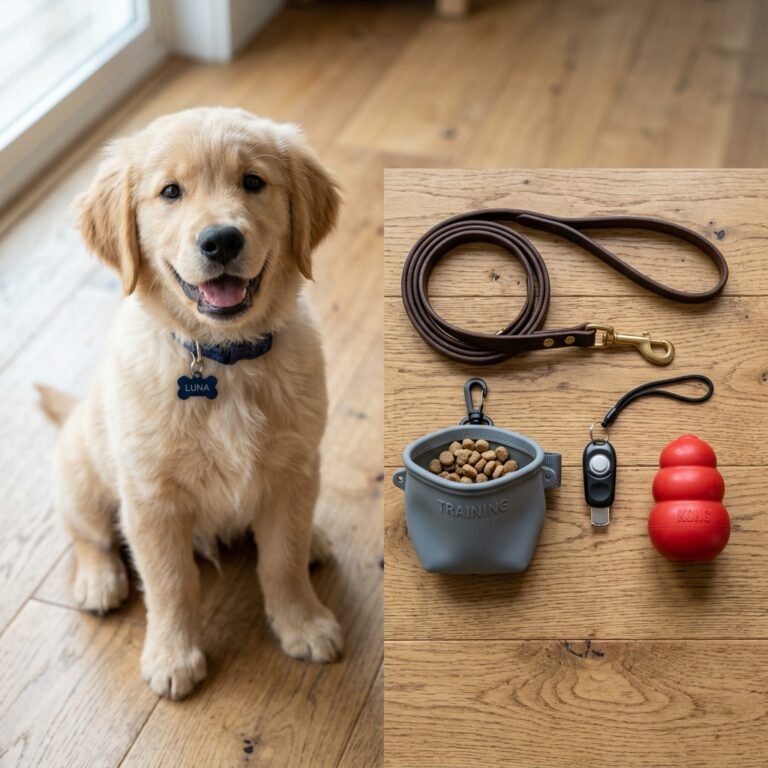
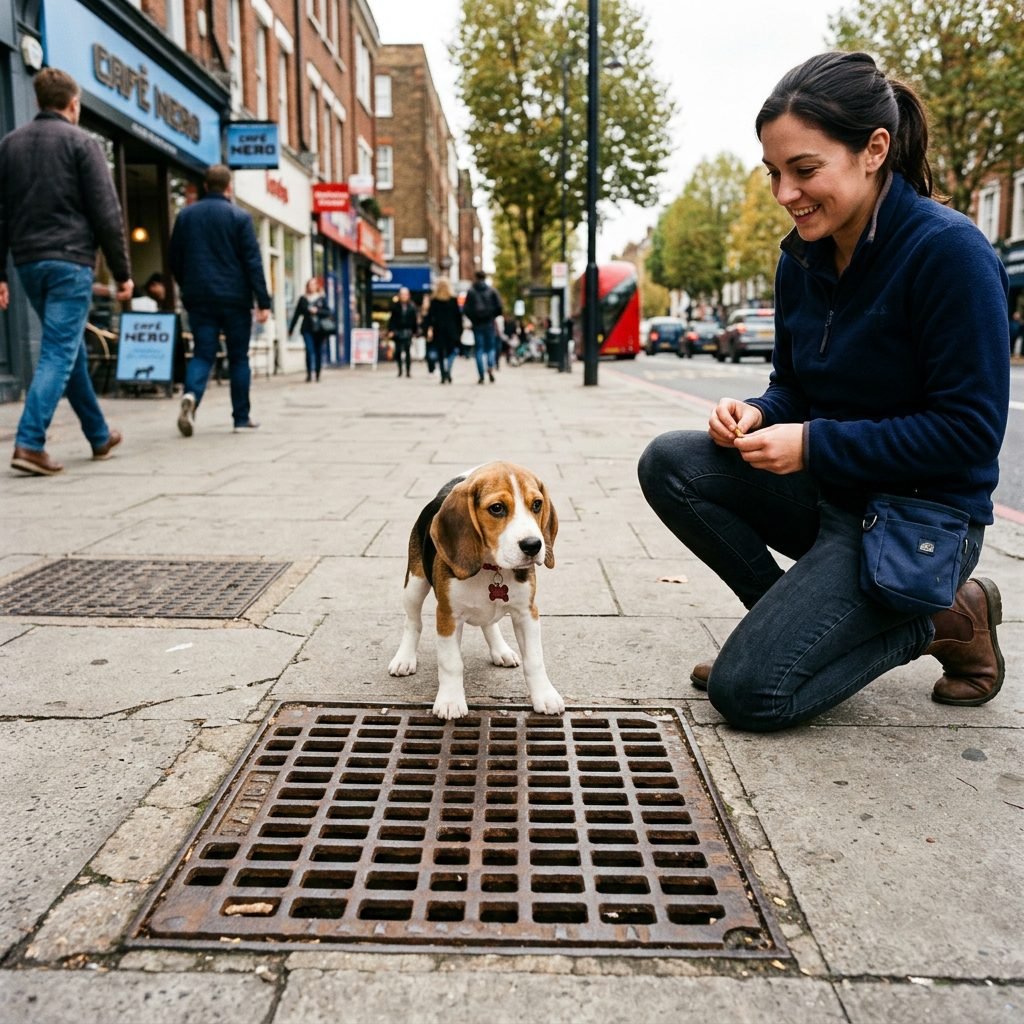
Why Your Puppy Panics on Metal Grates (And the 3-Step Trick to Fix It!)
The Great Grate Debate: Why Your Walks Stop Cold
Imagine this: you are enjoying a beautiful morning stroll with your new puppy. The sun is shining, the birds are chirping, and your furry friend is trotting along happily. Then, it happens. You reach a city sidewalk grate or a metal bridge span, and suddenly, your puppy transforms into a furry anchor. Their legs lock, their tail tucks, and no amount of gentle tugging seems to move them. If you have ever felt the frustration of a puppy who refuses to cross a metal surface, you are certainly not alone. This is one of the most common hurdles for urban and suburban dog owners alike.
As a canine specialist, I see this behavior daily. To us, a metal grate is just a functional part of the sidewalk. To a puppy whose world is still small and full of mysteries, that grate is a loud, vibrating, see-through abyss that feels weird under their paws. Understanding why your puppy reacts this way is the first step toward solving the problem. In this guide, we are going to dive deep into the canine psyche, explore the sensory overload that metal surfaces cause, and most importantly, I will teach you my signature 3-Step Trick to turn that panic into a confident power-walk. By the end of this article, you will have the tools to help your puppy conquer any surface with ease.
The Science of Fear: Why Metal Grates Are Puppy Kryptonite
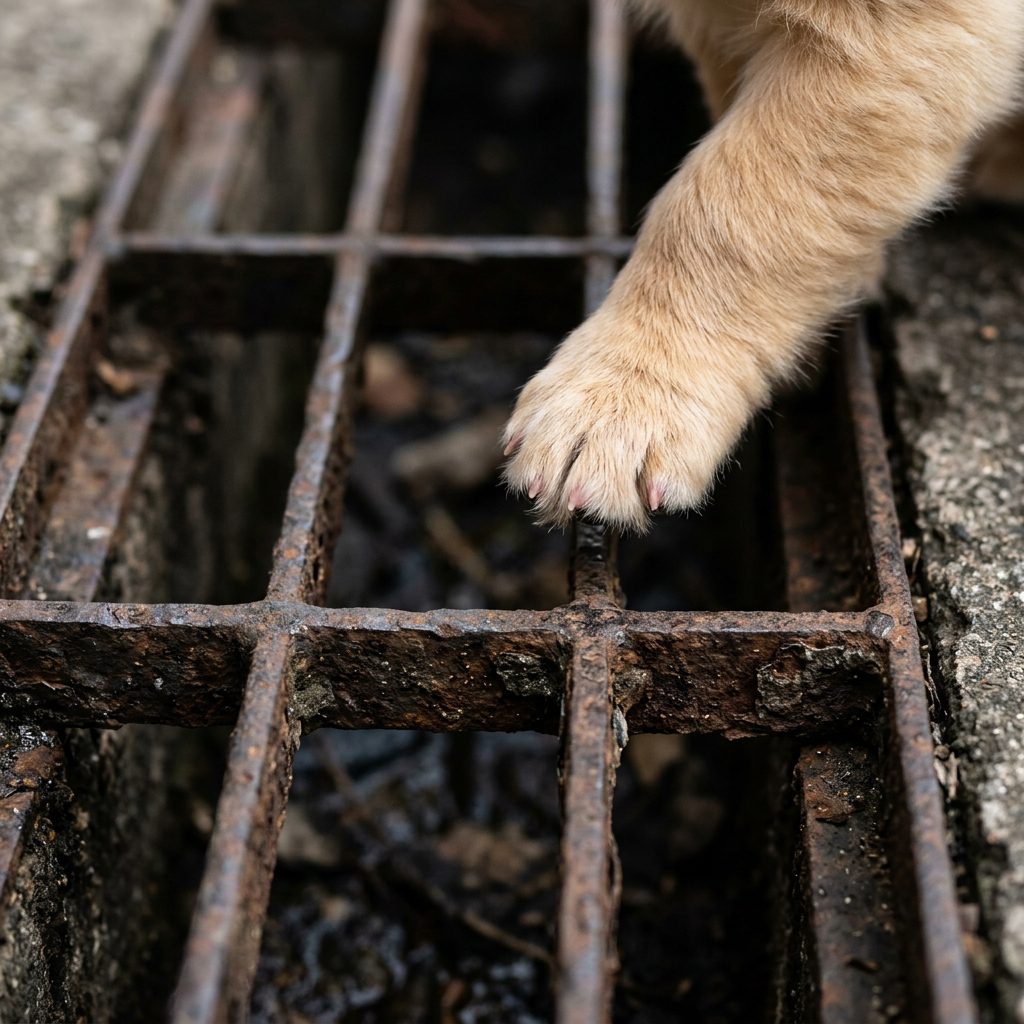
Before we can fix the behavior, we have to understand the source of the fear. Puppies are not just being stubborn; they are reacting to a complex cocktail of sensory inputs that their brains aren’t yet equipped to process. For a savvy dog owner, recognizing these triggers is crucial for an empathetic training approach.
1. The Visual Cliff Effect
Dogs have different depth perception than humans. When a puppy looks at a metal grate with holes, they don’t necessarily see a solid surface with gaps; they see a void. This is known as the ‘visual cliff’ effect. Their instincts tell them that if they step forward, they might fall into a bottomless pit. This is a survival mechanism that has kept canines safe in the wild for millennia.
2. Sensory Overload: Texture and Temperature
A puppy’s paw pads are incredibly sensitive. Unlike the soft grass or predictable concrete they are used to, metal grates are cold, hard, and uneven. The sensation of metal pressing into their pads can be jarring. Furthermore, metal conducts temperature efficiently; it can be freezing in the winter or burning hot in the summer, adding a layer of physical discomfort to the psychological fear.
3. The Auditory Component
Metal grates are rarely silent. When a dog steps on them, they often rattle or produce a high-pitched ‘clack.’ For a sound-sensitive puppy, this unexpected noise right under their feet can be terrifying. If there is air rushing up from a subway vent or a basement below, the sound and the feeling of moving air add even more stress to the situation.
| Surface Type | Sensory Challenge | Fear Level (1-10) |
|---|---|---|
| Lush Grass | Soft, predictable, natural | 1 |
| Smooth Concrete | Solid, stable, neutral | 2 |
| Wood Decking | Slight gaps, different sound | 4 |
| Metal Grates | See-through, cold, noisy, vibrating | 9 |
“A puppy’s refusal to walk on a grate is a sign of a lack of confidence in their environment, not a sign of disobedience. Patience is your most valuable training tool.”
Preparation: Your Grate-Conquering Toolkit
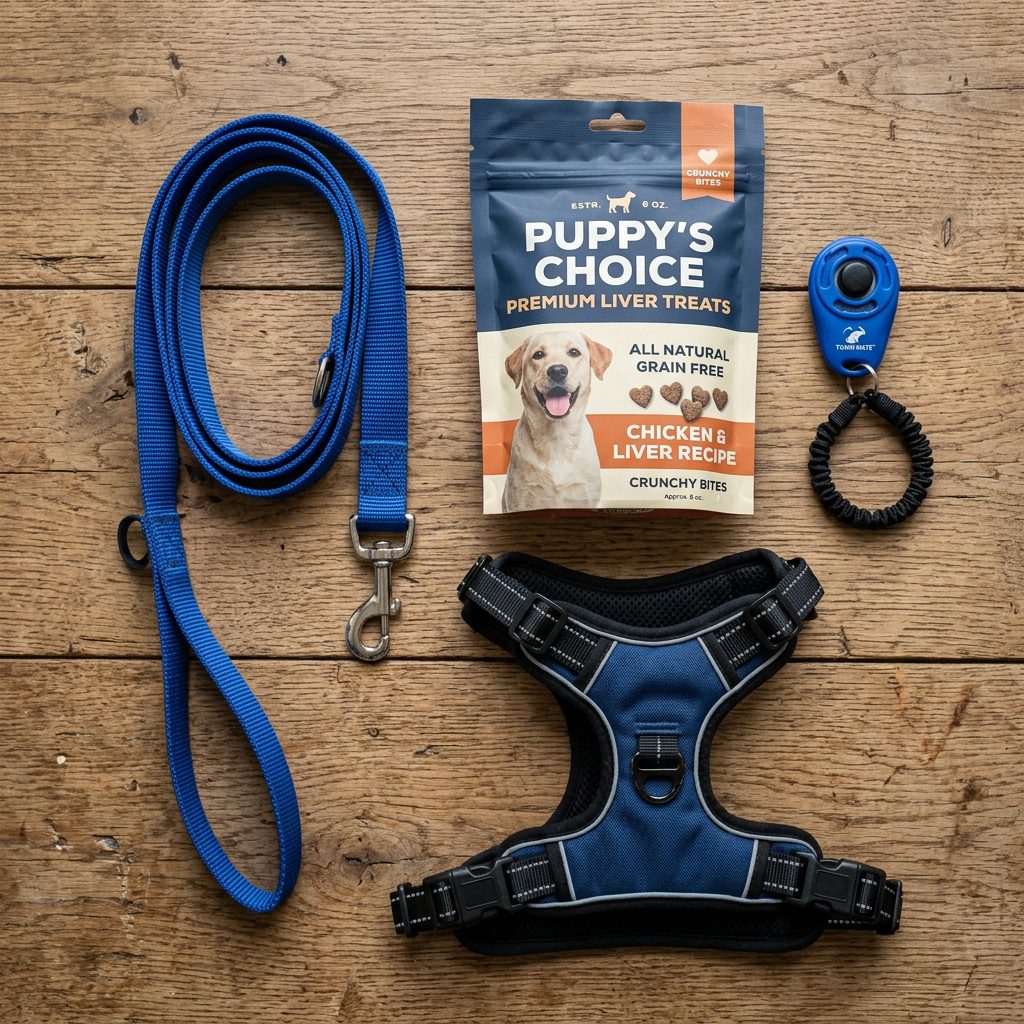
You wouldn’t go into a battle without the right gear, and training your puppy is no different. To successfully implement the 3-Step Trick, you need to set the stage for success. This means having the right rewards and the right environment.
High-Value Rewards
This is not the time for standard kibble. You need what trainers call ‘High-Value Treats.’ Think small pieces of boiled chicken, freeze-dried liver, or string cheese. The reward must be so enticing that it outweighs the puppy’s fear of the grate. If the treat is ‘meh,’ the fear will win every time.
The Right Gear
- A Fixed-Length Leash: Avoid retractable leashes during this training. You need the precision and control that a standard 6-foot leash provides.
- A Well-Fitted Harness: A harness is safer than a collar for a fearful dog, as it prevents them from slipping out if they try to bolt backward in a panic.
- A Clicker (Optional): If you use clicker training, have it ready. The ‘click’ provides an instant marker for the exact moment your dog shows courage.
Finding the ‘Starter’ Grate
Don’t start with a massive, vibrating subway grate. Find a small, solid metal utility cover or a low-traffic drain in a quiet park. We want to build confidence in a low-stakes environment before moving to the ‘boss level’ city grates.
The 3-Step Trick: From Panic to Power-Walk
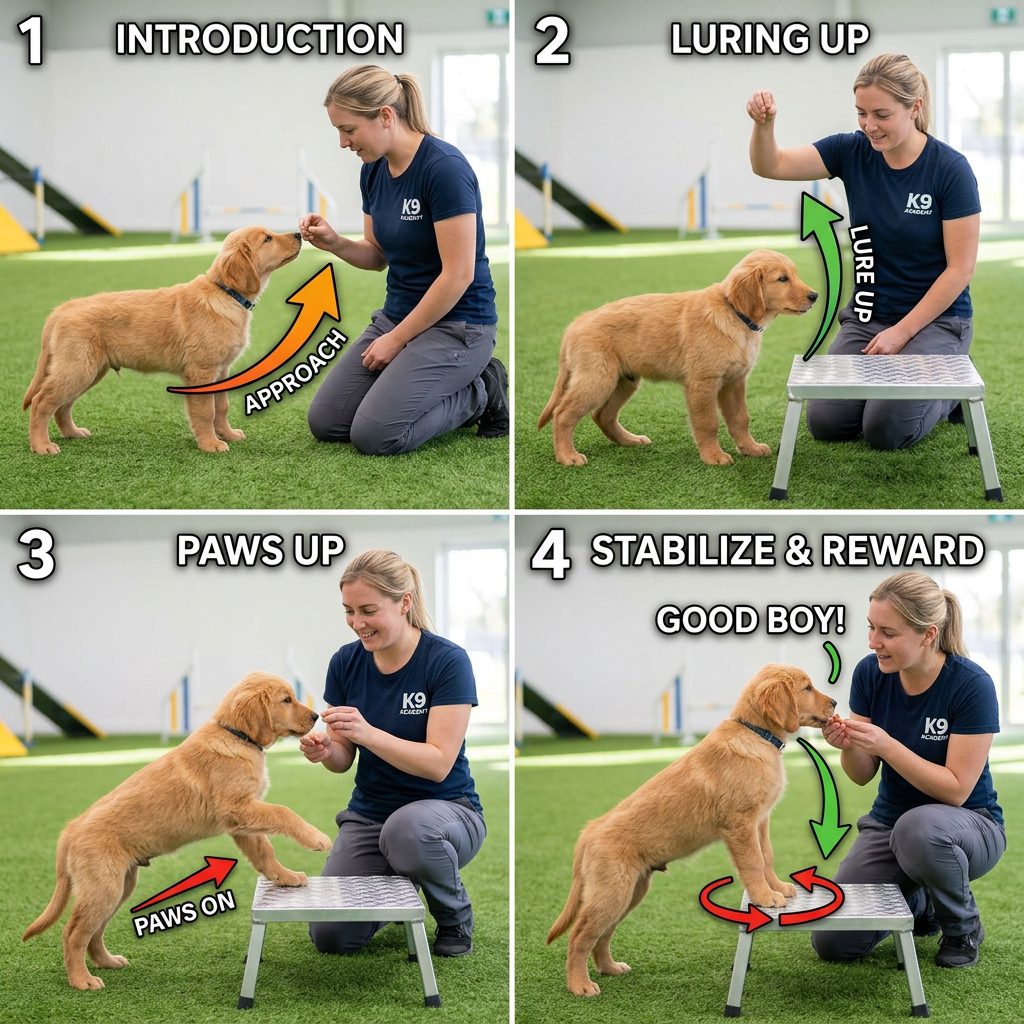
Now, let’s get into the heart of the solution. This 3-step process uses Counter-Conditioning and Desensitization. We are changing the puppy’s emotional response to the grate from ‘Scary Void’ to ‘Cookie Machine.’
Step 1: The ‘Look at That’ Game (Distance Work)
Start at a distance where your puppy can see the grate but isn’t yet panicking. This is called the ‘threshold.’ If they freeze, you are too close. Back up until they are relaxed. Every time your puppy looks at the grate, say ‘Yes!’ or click, and give them a high-value treat. We are teaching them that looking at the ‘scary thing’ results in something wonderful.
Step 2: The ‘One-Paw’ Challenge
Slowly move closer. Encourage your puppy to approach the edge of the grate. Do not pull them. Use a lure (a treat in your hand) to guide their nose toward the grate. The goal is to get just one front paw to touch the metal. The moment that paw touches the metal, shower them with praise and multiple treats. This is the ‘jackpot’ moment. Repeat this until they are comfortably putting one or two paws on the edge without hesitation.
Step 3: The ‘Touch and Go’ (The Crossing)
Once they are comfortable with partial contact, it’s time for the full crossing. Instead of asking for a slow walk, which gives them too much time to overthink, we use the ‘Touch and Go’ method. Toss a treat to the other side of the grate. Most puppies will be so focused on the flying treat that they will skip or hop across the metal to get it. Once they reach the other side, celebrate like they just won the Olympics! We want the act of crossing to be a high-energy, positive experience.
The Progression Schedule
| Phase | Goal | Duration |
|---|---|---|
| Phase 1 | Looking at the grate calmly from 10 feet away | 2-3 days |
| Phase 2 | Sniffing and touching the grate with front paws | 3-5 days |
| Phase 3 | Walking across small, quiet grates | 1 week |
| Phase 4 | Walking across large, noisy city grates | Ongoing |
Common Mistakes: What NOT to Do
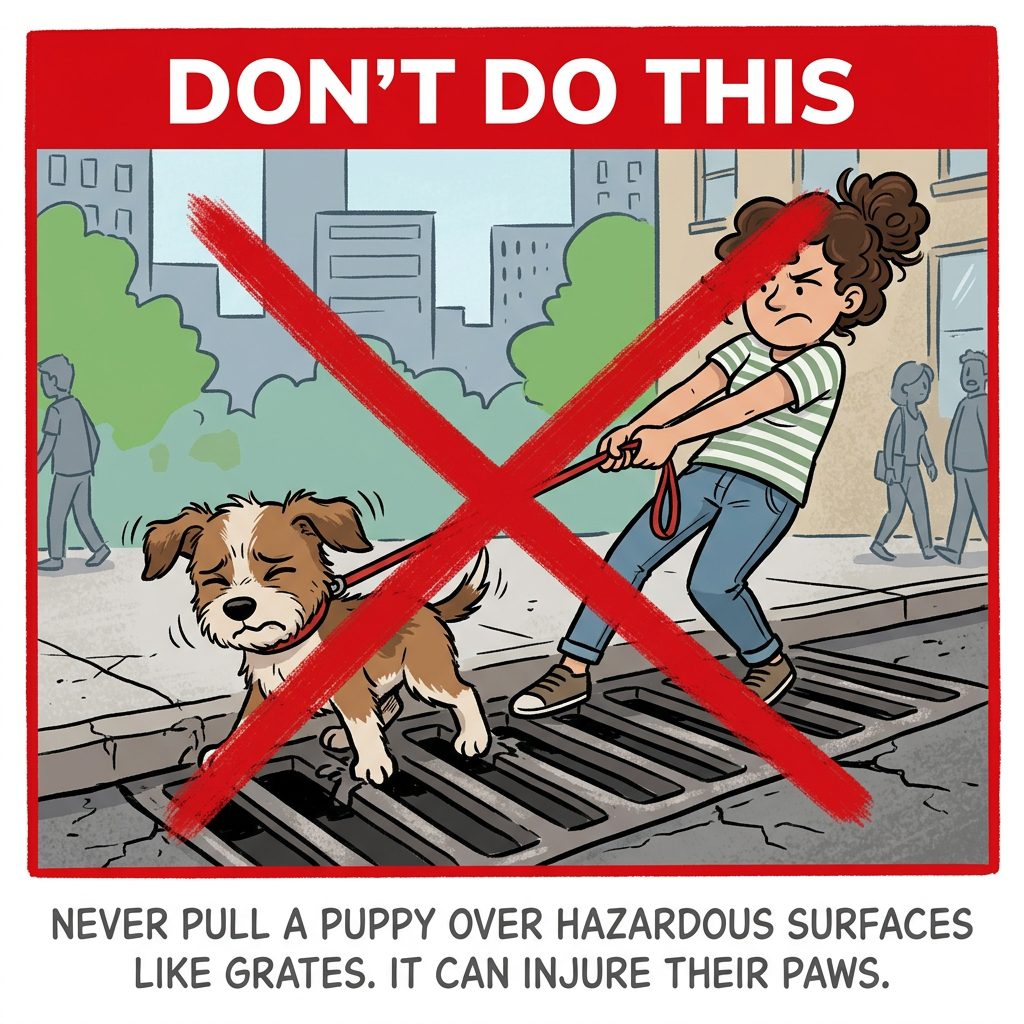
Even the best-intentioned owners can accidentally make the fear worse. Avoid these common pitfalls to ensure your puppy stays on the right track.
1. The ‘Flooding’ Mistake
Flooding is the practice of forcing a dog to face their fear head-on by dragging them onto the grate and making them stay there until they ‘calm down.’ This rarely works and usually results in Sensitization, making the fear even deeper. It can also destroy the trust your puppy has in you.
2. Tensing Up on the Leash
Puppies are masters at reading human body language. If you see a grate and immediately shorten the leash and hold your breath, you are sending a signal that there is something to worry about. Keep the leash loose and your shoulders relaxed. Act like the grate is the most boring thing in the world.
3. Rewarding the Panic
There is a fine line between comforting a dog and reinforcing fear. If your dog is screaming and thrashing and you pick them up and shower them with ‘Poor baby, it’s okay’ and treats, you might be accidentally rewarding the fearful behavior. Instead, remain calm and neutral, move away from the trigger, and only reward when they show a moment of curiosity or bravery.
4. Moving Too Fast
Training isn’t a race. If your puppy was doing great on Step 2 but suddenly regresses, go back to Step 1. Every dog learns at a different pace, and pushing them too hard will only cause a setback.
Troubleshooting: What if the 3-Step Trick Isn’t Working?
Sometimes, a puppy’s fear is particularly deeply rooted. If you have been working for weeks and aren’t seeing progress, consider these troubleshooting tips.
Check for Physical Pain
Does your puppy have a cracked paw pad or a long nail that might be catching on the grate? Sometimes a behavioral issue is actually a physical one. Ensure your puppy’s paws are healthy and their nails are trimmed short. Long nails on metal can be very uncomfortable and slippery.
Try ‘Grate Mimicry’ at Home
You can desensitize your puppy to the feeling of metal in the safety of your home. Buy a small piece of wire shelving or a metal baking rack and lay it on the kitchen floor. Practice the 3-Step Trick in a familiar, safe environment where there are no cars, strange people, or loud noises to distract them.
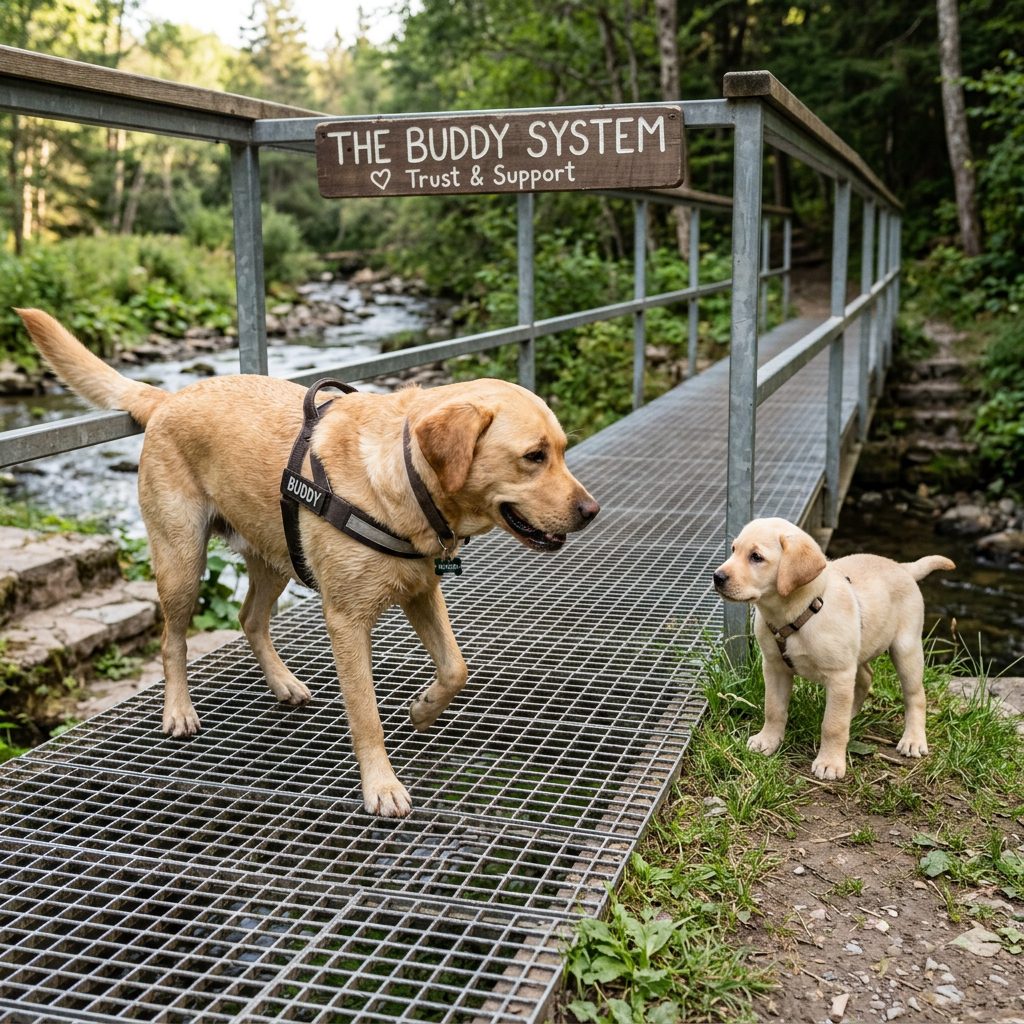
The ‘Buddy System’
Dogs learn a lot from their peers. If you have a friend with a confident, older dog who doesn’t mind grates, go for a walk together. Seeing another dog trot across the metal without a care in the world can provide a huge boost of ‘social proof’ for your puppy. They will often think, ‘Hey, if Buster can do it, maybe I can too!’
When to Call a Professional
If your puppy’s fear of surfaces is part of a larger pattern of extreme anxiety (generalized anxiety), it might be time to consult a certified professional dog trainer or a veterinary behaviorist. They can help determine if there are underlying neurological issues or if a more specialized desensitization plan is needed.
Conclusion
Walking with Confidence
Conquering the fear of metal grates is more than just a convenience for your daily walks; it is a vital part of your puppy’s overall socialization. Every time you help your puppy overcome a fear through positive reinforcement and patience, you are strengthening the bond between you and building a more resilient, confident adult dog.
Remember, the world is a big, loud, and sometimes scary place for a young dog. Your job as a savvy owner is to be their guide and their protector, showing them that they have the skills to navigate any obstacle. Don’t get discouraged by setbacks. Some days will be better than others. Keep your sessions short, keep your treats high-value, and always end on a positive note. Before you know it, those metal grates will be nothing more than a minor bump in the road—or rather, a minor clack on the sidewalk. Happy training!