Tired of 5 AM Wake-Up Calls? Use This Genius Routine To Make Your Puppy Sleep In!
The Struggle of the Early Bird Puppy
If you are reading this, chances are you haven’t seen a full eight hours of sleep since you brought your new bundle of fur home. We have all been there: it is 4:52 AM, the sun hasn’t even thought about rising, and yet, there is a insistent whining, scratching, or a cold nose nudging your hand. You love your puppy, but you also love your sanity—and sanity requires sleep. Many new owners assume that puppies are simply programmed to be early risers, but the truth is much more manageable. Most 5 AM wake-up calls are the result of biological needs, environmental triggers, or accidentally reinforced behaviors.
As a canine specialist, I have spent years helping exhausted owners reclaim their mornings. The secret isn’t magic; it is a combination of circadian rhythm management, strategic depletion of energy, and environmental optimization. In this guide, we are going to break down the exact ‘Genius Routine’ that shifts your puppy’s internal clock. We aren’t just looking for a quick fix; we are building a lifestyle that teaches your dog that the world doesn’t start until you say it does. Grab a cup of coffee (hopefully the last one you’ll need at this hour), and let’s dive into the science and strategy of the puppy sleep-in.
The Biology of the Early Riser: Why Puppies Wake Up Early
The Bladder Factor
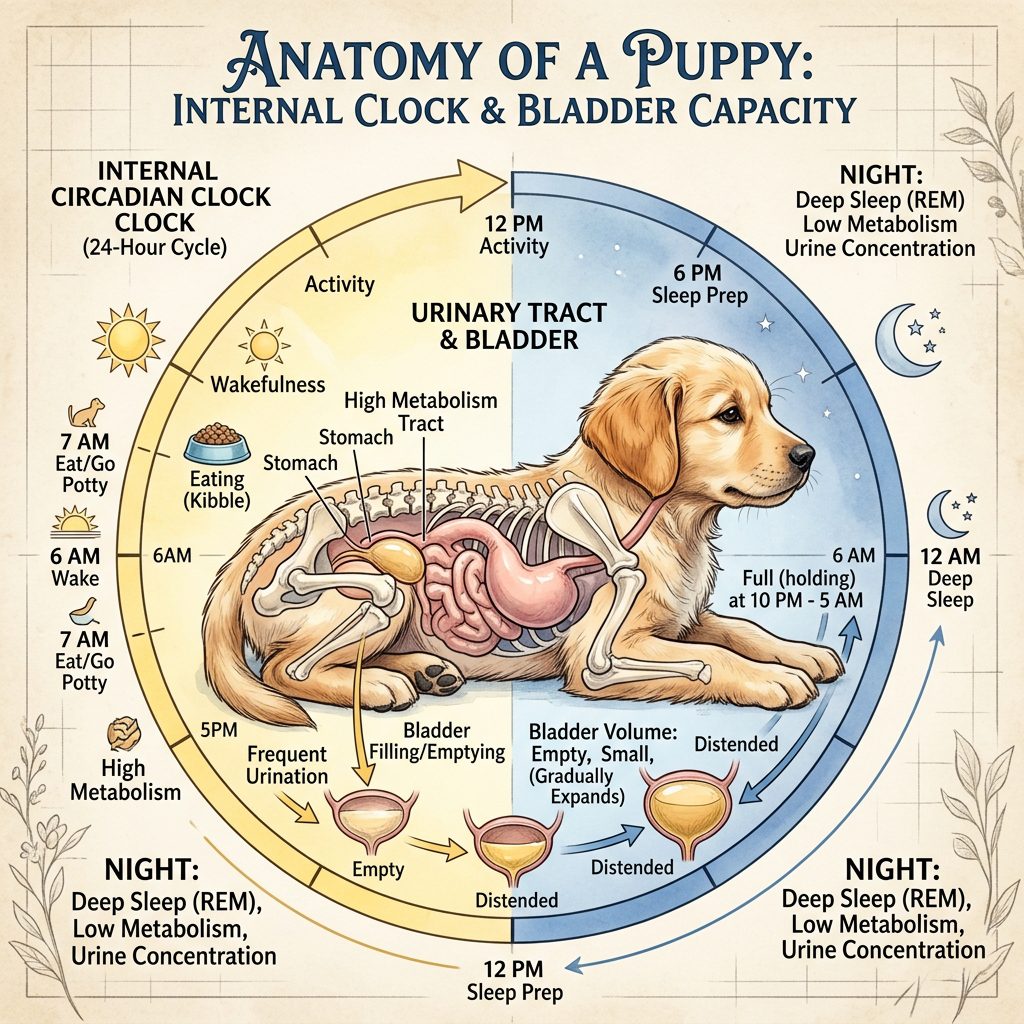
The most common reason for a crack-of-dawn wake-up is a physical one. Puppies have tiny bladders. A general rule of thumb is that a puppy can hold their bladder for one hour for every month of age, plus one. However, this rule applies to daytime activity. During sleep, their metabolism slows down, but at 5:00 AM, that bladder is likely reaching its limit. If they wake up because they need to go, and then receive breakfast or play as a reward, you have just conditioned them to wake up early every single day.
Crepuscular Instincts
Dogs are naturally crepuscular, meaning they are most active during dawn and dusk. In the wild, these are the prime hunting hours when the light is low but visibility is sufficient. Your puppy is simply following an evolutionary blueprint. When the first rays of light hit the room or the local birds start their morning chorus, your puppy’s brain triggers an ‘awake’ signal. To combat this, we have to artificially extend the ‘night’ using environmental controls.
The Reinforcement Loop
Often, we are our own worst enemies. When your puppy whines at 5 AM, do you get up, let them out, and then give them a small scoop of kibble to keep them quiet while you try to snooze? Or perhaps you bring them into bed for a cuddle? While these actions seem like solutions, they are actually high-value rewards. You are teaching your puppy that 5 AM is the most exciting time of the day because it results in food and attention.
The Sleep-In Toolkit: Essential Gear for Restful Mornings
Setting the Stage for Success
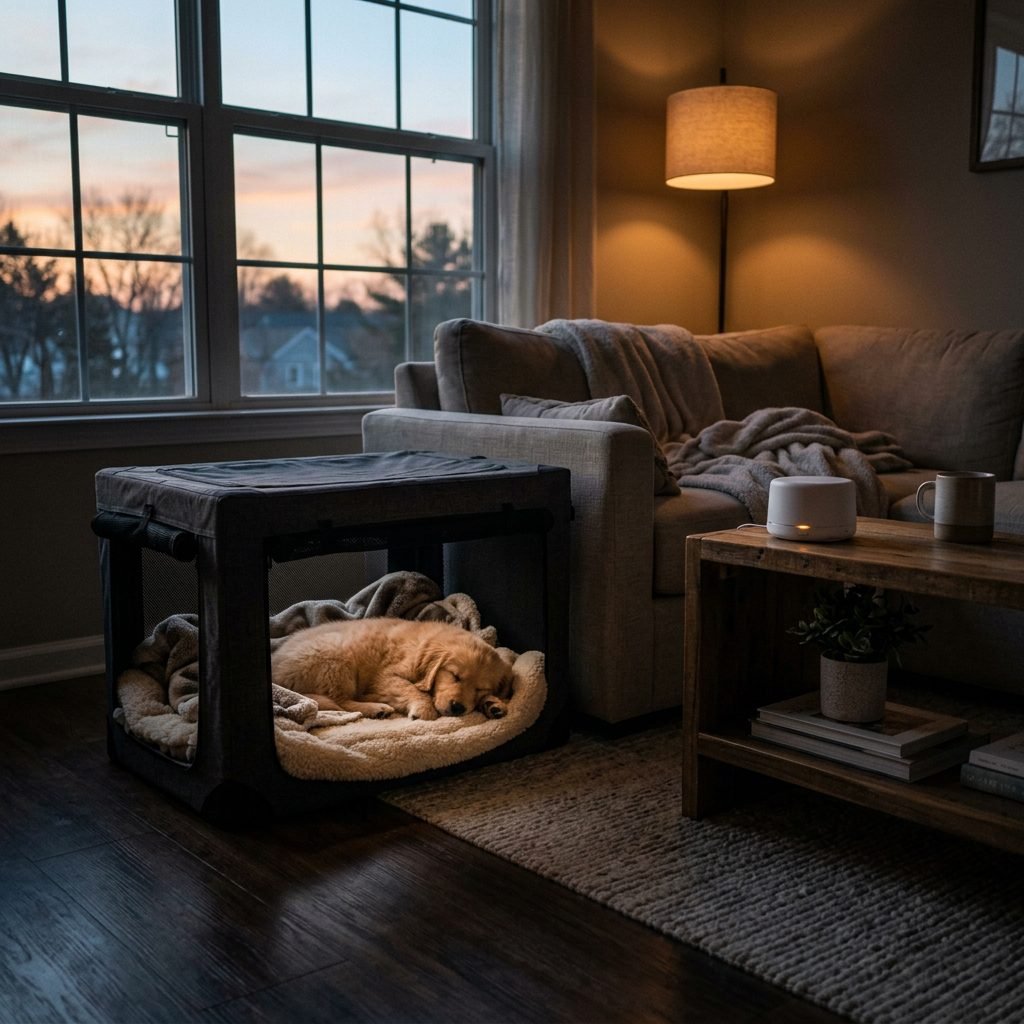
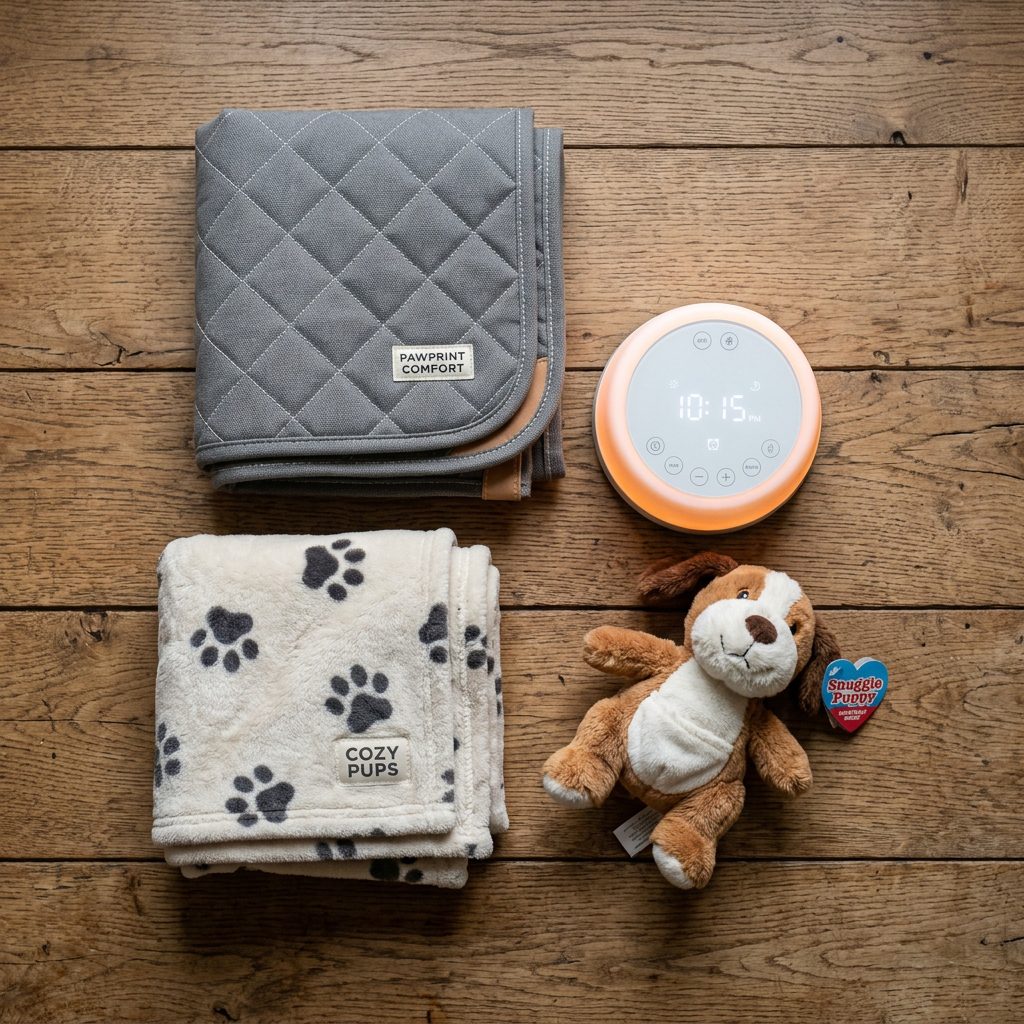
Before we implement the routine, we need the right tools. Think of this as ‘sleep hygiene’ for dogs. If the environment isn’t conducive to sleep, even the best routine will fail. You want to create a ‘den’ environment that feels safe, dark, and quiet. This minimizes the external stimuli that tell the puppy’s brain it is time to wake up.
| Tool | Purpose | Why It Works |
|---|---|---|
| Blackout Crate Cover | Light Blocking | Prevents the sun and morning movement from triggering the puppy’s wake response. |
| White Noise Machine | Sound Masking | Drowns out early morning birds, garbage trucks, or neighbors’ cars. |
| Snuggle Puppy | Comfort/Anxiety | A plush toy with a ‘heartbeat’ that mimics a littermate, reducing nighttime anxiety. |
| Calming Pheromone Diffuser | Relaxation | Uses synthetic maternal pheromones to signal that the area is safe for resting. |
Managing Temperature
Puppies can be sensitive to temperature fluctuations. Often, houses are coldest between 3:00 AM and 5:00 AM. If your puppy is shivering or even just slightly chilled, they won’t stay in a deep sleep. Ensure the crate is not directly under an AC vent or in a drafty hallway. A well-placed, safe pet heating pad or a cozy fleece blanket can make a world of difference in keeping them tucked in longer.
The Genius Evening Routine: A Step-by-Step Guide
Step 1: The ‘Last Call’ for Water and Food
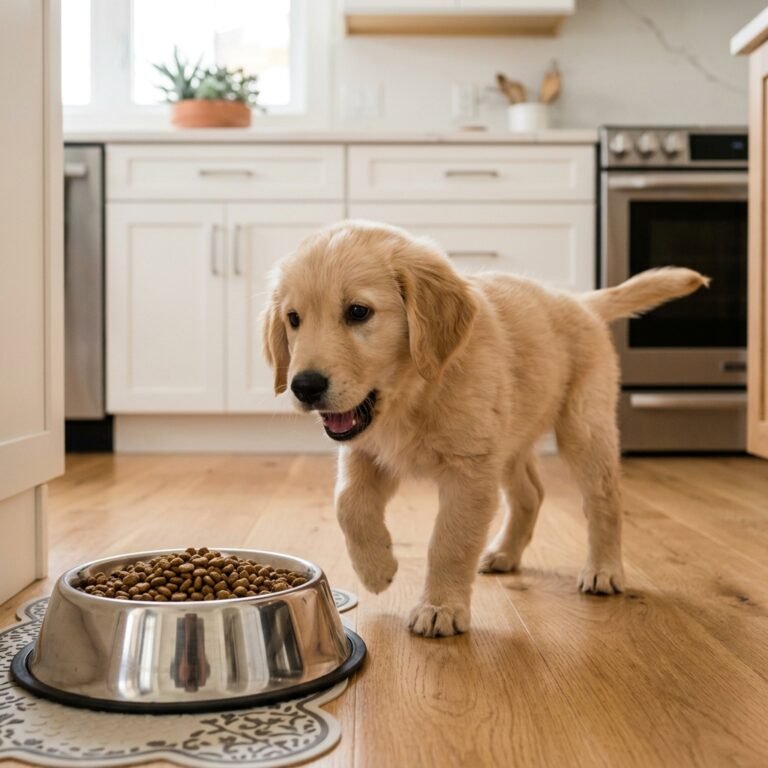
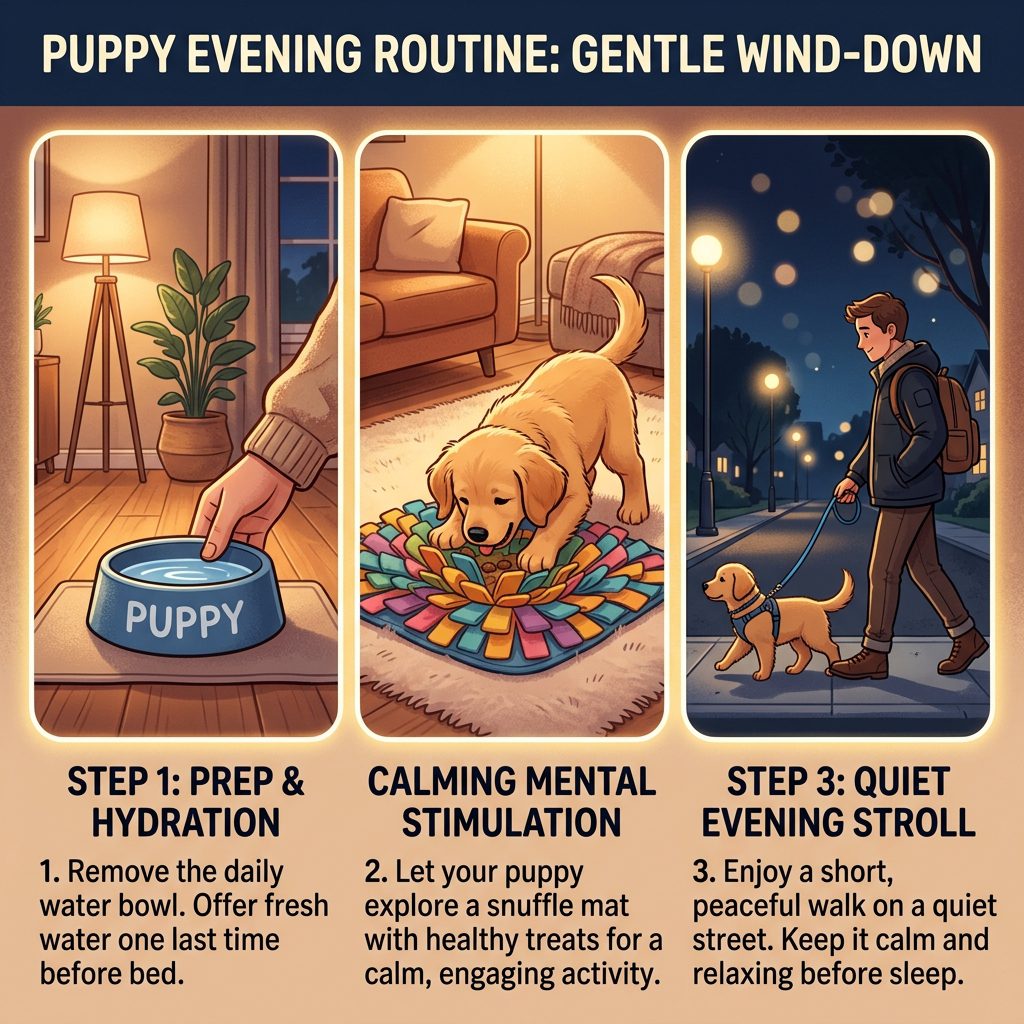
To prevent the bladder from being the alarm clock, you must manage intake. Stop all food at least 3 hours before bed. Water should be picked up about 2 hours before the final tuck-in. Note: Always consult your vet, especially for very small breeds prone to hypoglycemia, before restricting water.
Step 2: The Mental and Physical Burn
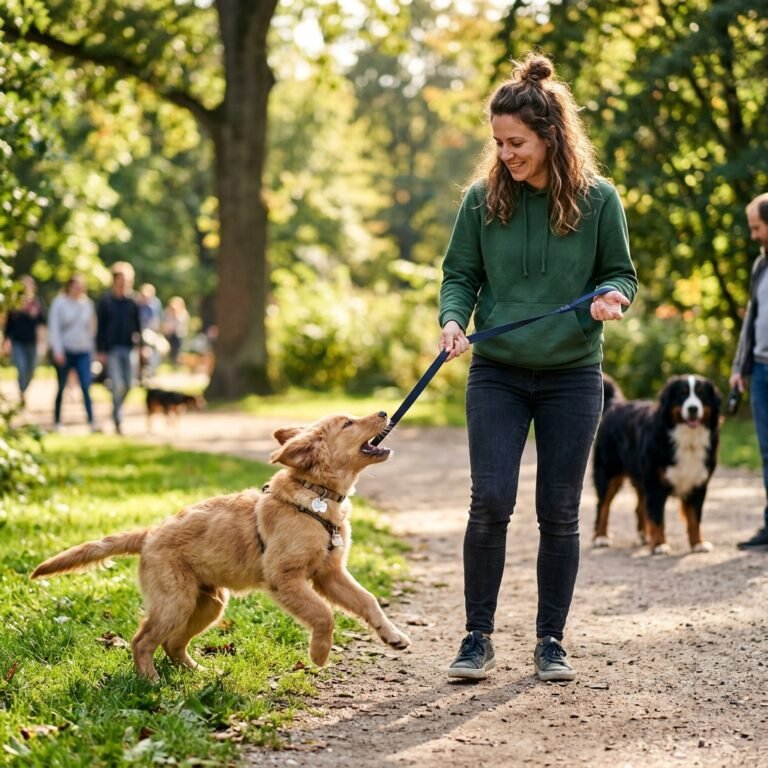
A common mistake is trying to ‘tire out’ a puppy with intense physical play right before bed. This actually spikes their cortisol and adrenaline, making it harder for them to settle. Instead, focus on calm enrichment an hour before sleep. Use a snuffle mat, a slow-release treat dispenser, or a gentle training session focusing on ‘stay’ or ‘place’. Mental exhaustion is far more effective for long-term sleep than physical exhaustion.
Step 3: The Final Boring Potty Break
Right before you go to bed, take the puppy out for one last bathroom break. This should be a ‘business only’ trip. No talking, no playing, and no treats. Keep the lights low. You want them to understand that this is a functional moment, not a social one.
Step 4: The Crate Entrance Ritual
Place your puppy in the crate with a very low-value chew, like a Nylabone. Turn on the white noise and drop the blackout cover. This ritual signals to the puppy that the ‘den’ is now closed for business. By being consistent with these steps, you are Pavlovian-conditioning your dog to expect sleep when these environmental cues occur.
The 5 AM ‘Boring’ Protocol: Handling the Early Wake-Up
When the Whining Starts
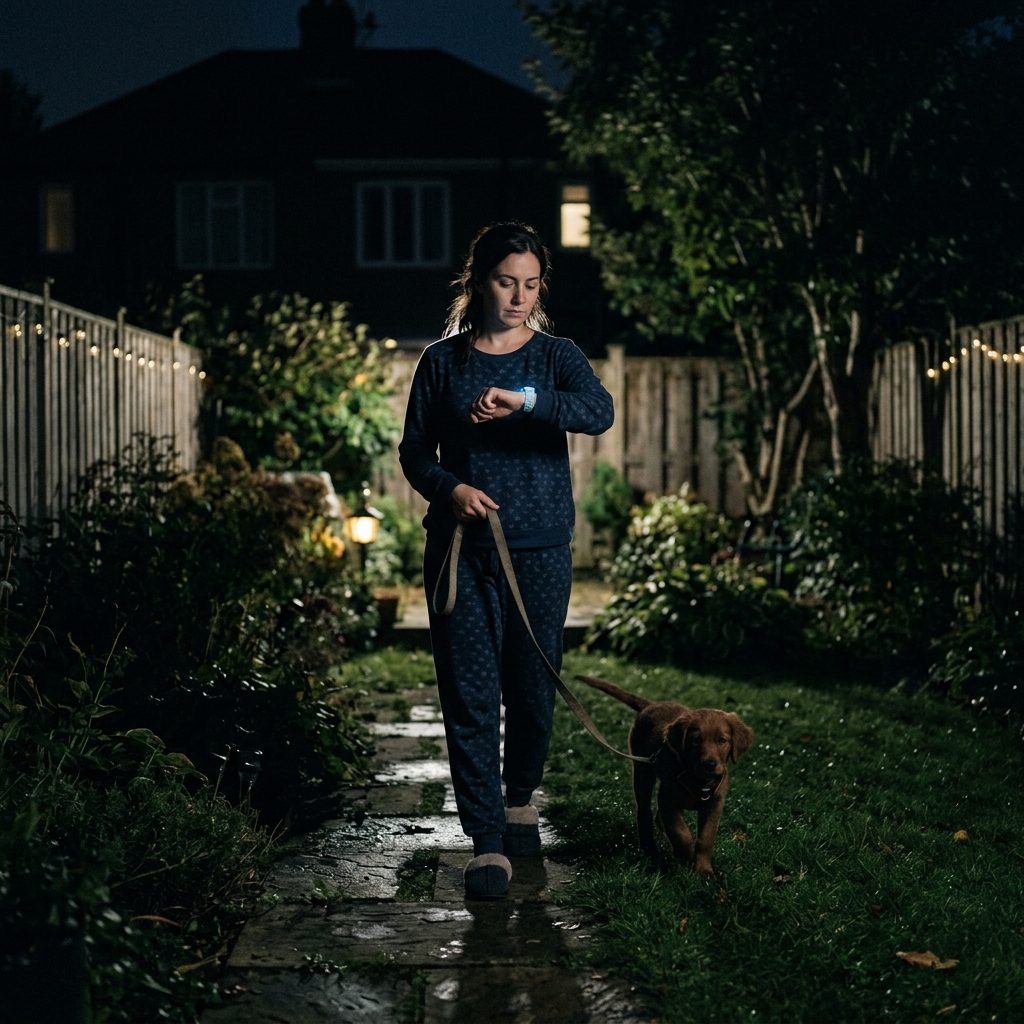
If your puppy wakes up at 5:00 AM despite your best efforts, you have to handle it with surgical precision. If you ignore a puppy that truly needs to go to the bathroom, you risk an accident in the crate, which ruins crate training. However, if you make the wake-up fun, they will keep doing it. Enter the ‘Boring Potty Protocol’.
- Wait for a Gap: Never open the crate while the puppy is actively barking or whining. Wait for even 3 seconds of silence to reward the quiet, not the noise.
- No Interaction: Do not say ‘Good morning!’ or ‘Are you a hungry boy?’. Keep your face neutral. Do not pet them.
- Leash Up: Put them on a leash and walk them to their designated potty spot.
- The Command: Give your potty command (e.g., ‘Go potty’). Give them 5 minutes. If they go, give a very calm ‘good’. If they don’t, they go straight back into the crate.
- Back to Bed: Return them to the crate immediately. No breakfast. No play. No couch time.
Expert Tip: By refusing to provide breakfast or social interaction until your desired wake-up time (e.g., 7:00 AM), you are decoupling the act of waking up from the reward of starting the day.
Troubleshooting: Why the Routine Might Not Be Working
Overtiredness and the ‘Zoomies’
Sometimes, a puppy wakes up early because they didn’t get enough sleep during the day. It sounds counterintuitive, but an overtired puppy has a harder time staying asleep. Ensure your puppy is getting 18-20 hours of sleep in a 24-hour period. If they are ‘cranky’ or hyperactive in the evening, they likely need more naps throughout the afternoon.
External Triggers
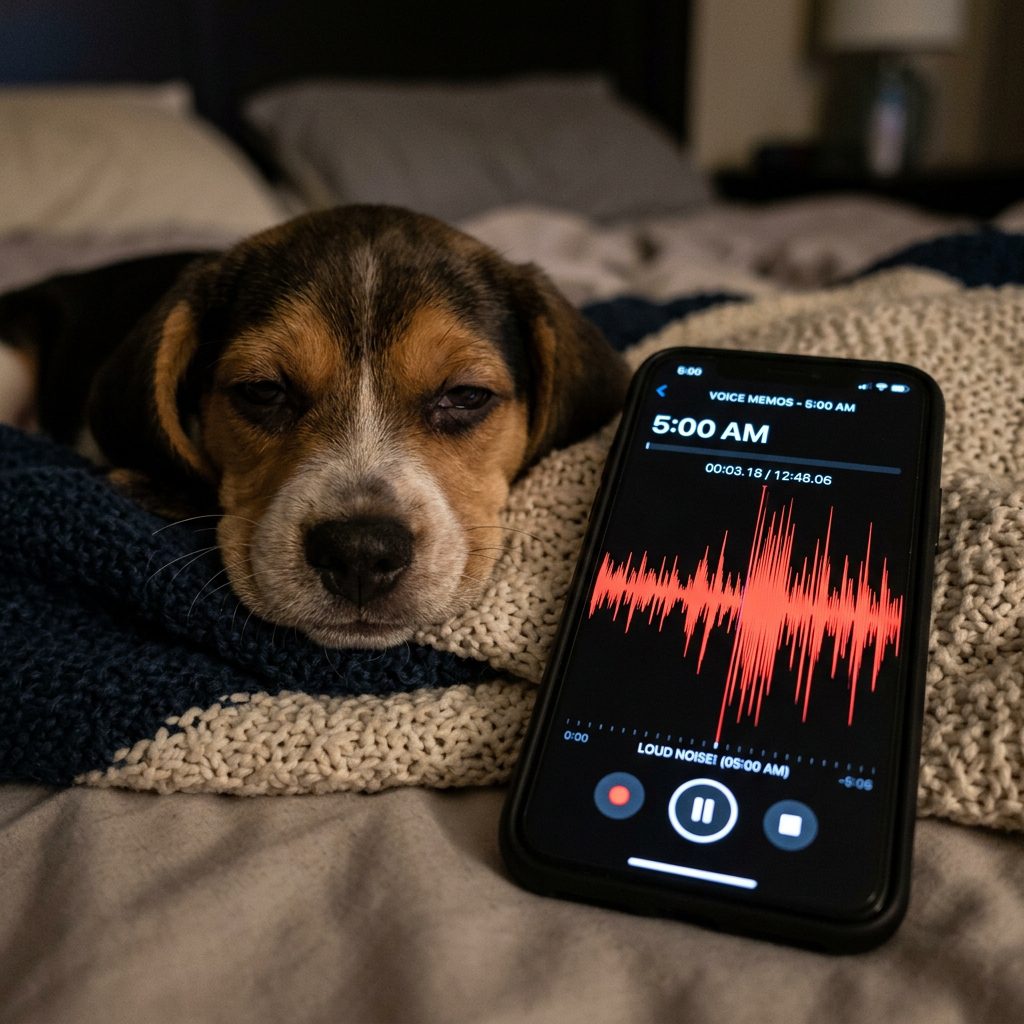
Check for things you might be missing. Is the neighbor’s sprinkler system turning on at 5:00 AM? Does the heater kick on with a loud ‘clunk’? Sometimes, the puppy isn’t the problem—the house is. Use your phone to record audio in the room where the puppy sleeps to see if a specific sound is acting as an unwanted alarm clock.
Health Issues
If your puppy was previously sleeping until 7 AM and suddenly starts waking up at 4 AM crying, check for medical issues. Urinary tract infections (UTIs) are common in puppies and make it impossible for them to hold their bladder. If the behavior change is sudden and accompanied by frequent small accidents, a trip to the vet is mandatory.
The Ultimate Puppy Sleep Schedule
A Template for Success
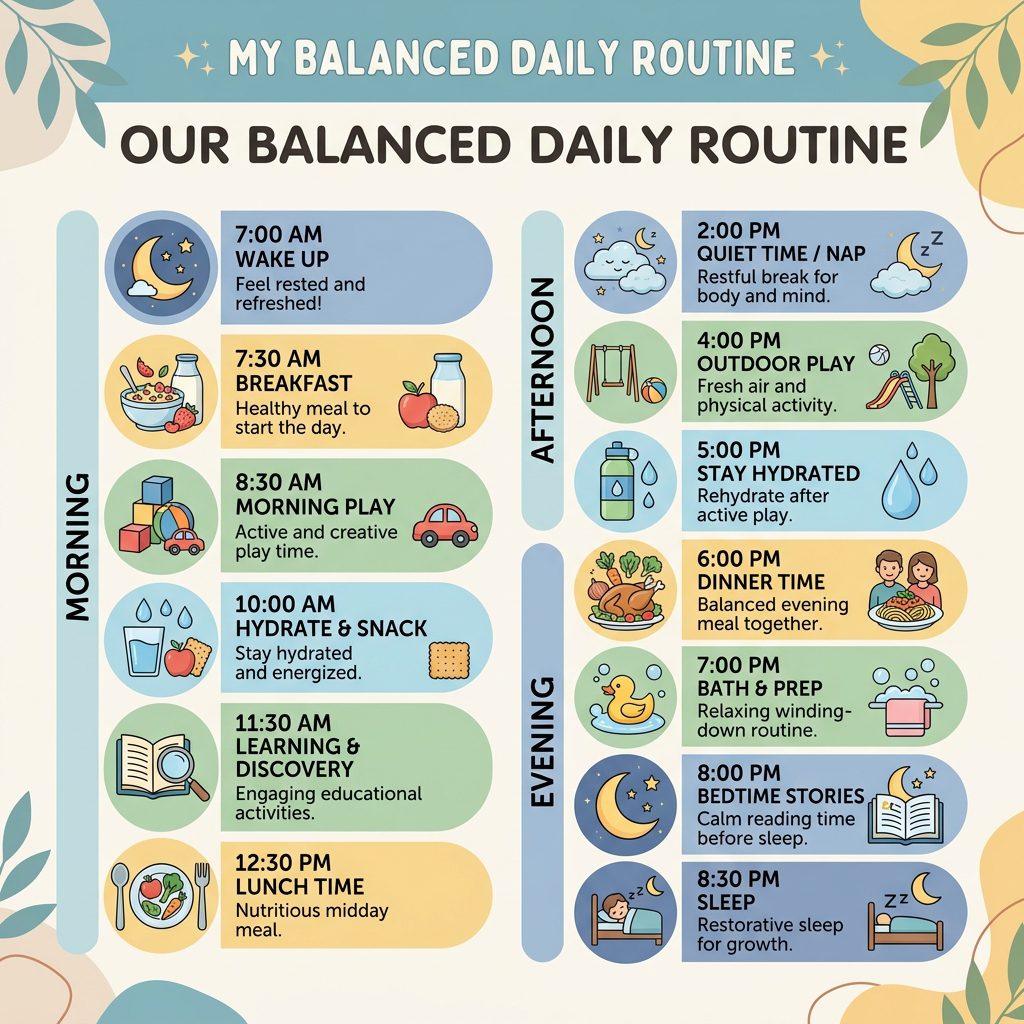
Consistency is the glue that holds this routine together. Puppies thrive on predictability. If their schedule changes every day, their internal clock will never stabilize. Use the following table as a template to structure your evenings for maximum morning sleep.
| Time | Activity | Goal |
|---|---|---|
| 6:00 PM | Dinner Time | Final large meal of the day. |
| 7:00 PM | Active Play | Physical exercise (fetch, tug). |
| 8:00 PM | Water Bowl Up | Limit fluid intake. |
| 8:30 PM | Mental Enrichment | Snuffle mats, licking mats, or light training. |
| 9:30 PM | Wind Down | Dim lights, quiet environment, calm petting. |
| 10:30 PM | Final Potty Trip | The ‘Business Only’ break. |
| 10:45 PM | Crate Time | Blackout cover on, white noise on. |
| 7:00 AM | Official Wake Up | Breakfast and high-energy interaction. |
Remember, the goal is to slowly push the ‘Official Wake Up’ time back. If your puppy currently wakes at 5:00 AM, don’t expect 8:00 AM tomorrow. Aim for 5:15 AM for a few days, then 5:30 AM, gradually stretching their capacity and expectations.
Conclusion
Reclaiming Your Mornings
Teaching a puppy to sleep in is one of the most challenging but rewarding parts of early dog ownership. It requires patience, a thick skin (to ignore those initial whines), and a commitment to a strict schedule. By managing their environment with blackout covers and white noise, ensuring their bladder isn’t at capacity, and refusing to reward early-morning demands, you are setting your puppy up for a lifetime of healthy sleep habits.
Don’t be discouraged by setbacks. Some nights will be better than others, and growth spurts or teething can occasionally disrupt the routine. However, if you stick to the Genius Routine, you will eventually find yourself waking up to the sound of your own alarm clock rather than a barking puppy. Hang in there—sleep is on the horizon!