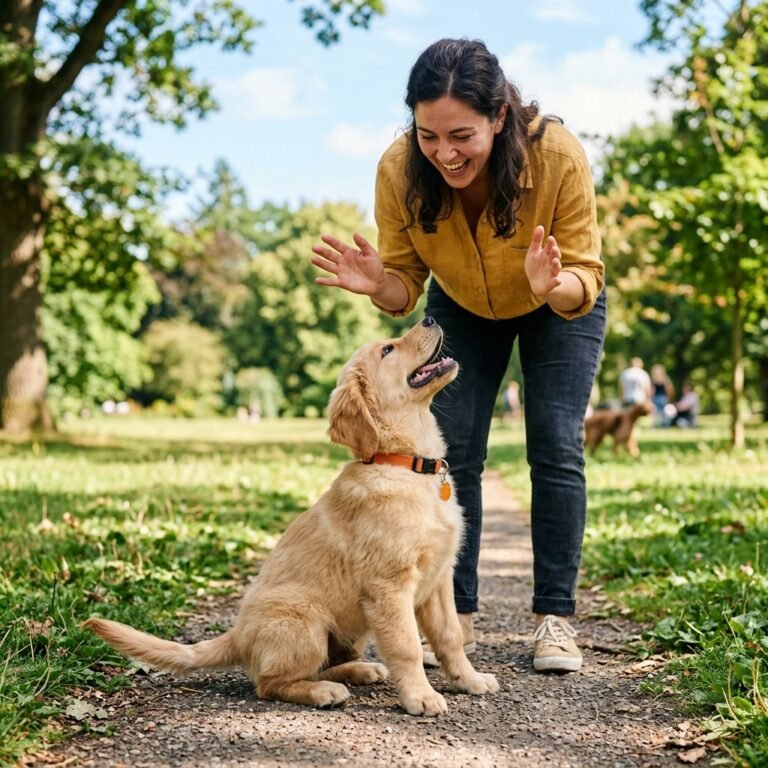
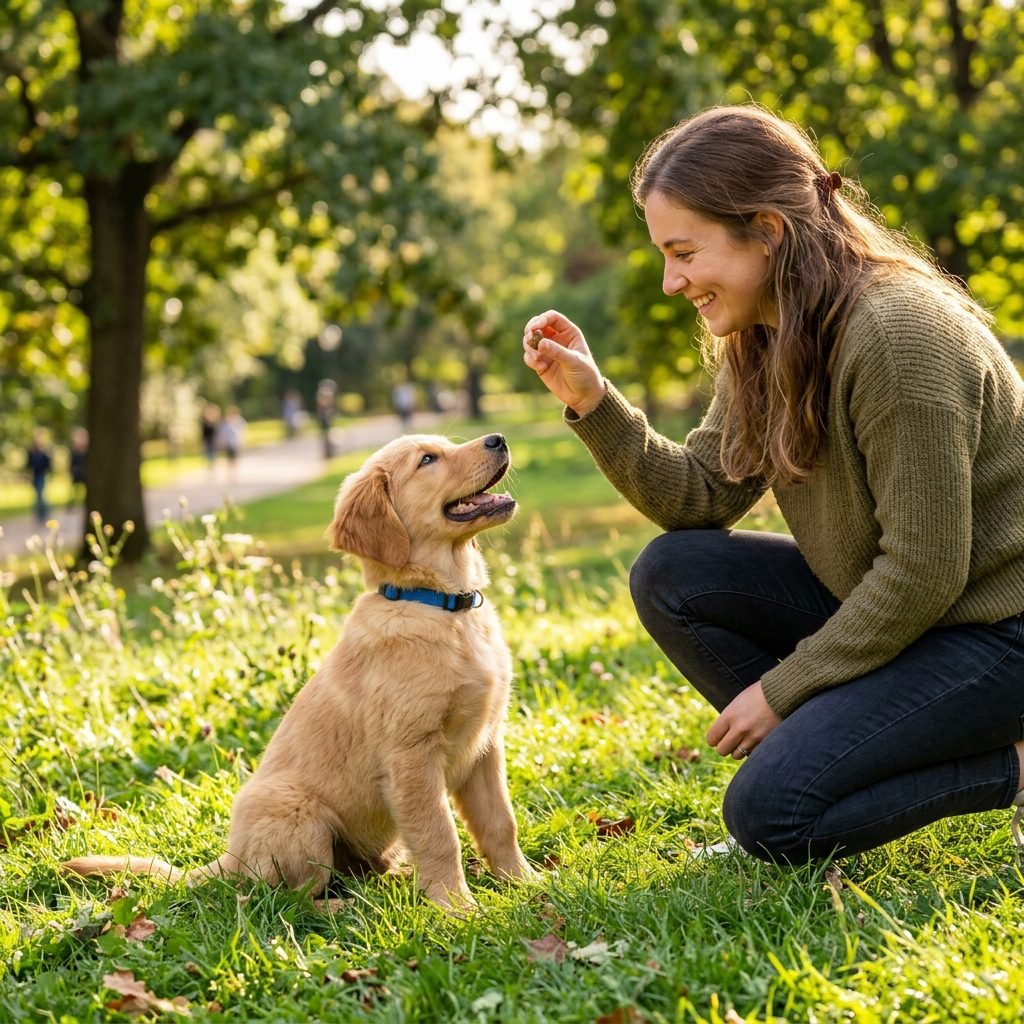
Why Punishment Fails: 7 Positive Reinforcement Puppy Training Methods That Work Miracles
Welcome, savvy dog parents! If you have recently brought a bouncy, fluffy, and mildly chaotic puppy into your life, you already know the incredible joys and the unique challenges that come with puppyhood. From the puppy breath to the needle-sharp teeth, it is a whirlwind of an experience. But perhaps the most daunting task of all is training.
For decades, traditional dog training relied heavily on dominance theory, physical corrections, and punishment. We were told we had to be the ‘alpha’ and that dogs needed a heavy hand to learn respect. But as our understanding of canine cognition and psychology has evolved, the scientific consensus is crystal clear: punishment fails. It damages the bond between you and your dog, creates deep-seated fear, and often leads to much worse behavioral issues down the line.
“Training should be a two-way conversation, not a dictatorship. Positive reinforcement opens the lines of communication and builds a relationship based on trust.”
In this comprehensive, step-by-step guide, we are going to dive deep into exactly why those old-school aversive methods fall spectacularly short and, more importantly, what you should do instead. We will walk through the essential tools you need and explore seven miracle-working positive reinforcement methods that will help you raise a confident, well-adjusted, and eager-to-please canine companion. Let us set your pup up for absolute success!
The Science: Why Punishment Fails & Positive Reinforcement Wins
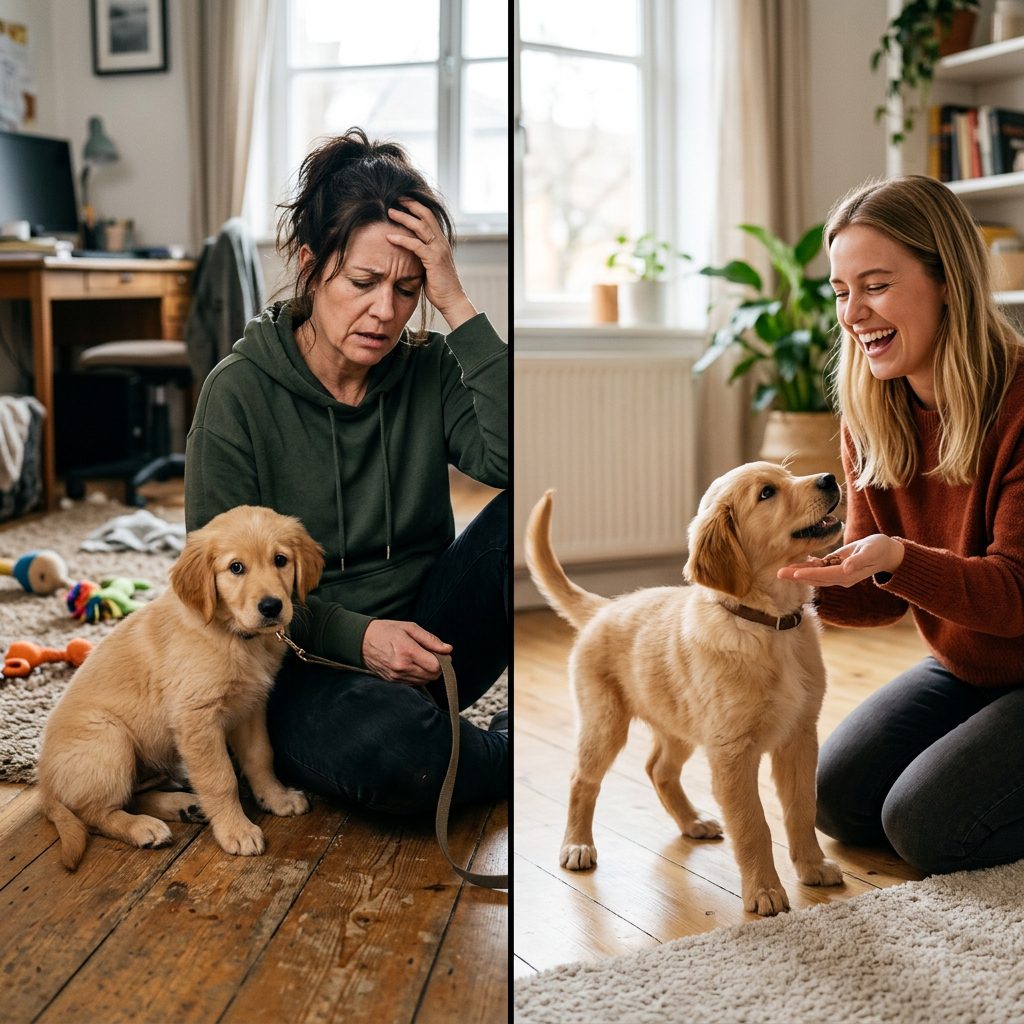
Before we jump into the hands-on methods, we need to understand the ‘why’ behind the training. Dogs learn through associations and consequences. When an action is followed by a desirable consequence, the behavior increases. When it is followed by an unpleasant one, the behavior decreases. It sounds simple, so why does punishment ultimately fail?
The Fallout of Fear and Punishment
Punishment—whether it is yelling, leash popping, using aversive collars, or rubbing a dog’s nose in a potty accident—focuses entirely on telling the dog what not to do. Imagine trying to learn a complex new language, but your teacher only screams at you when you make a mistake, without ever telling you the correct word. You would feel anxious, confused, and eventually, you would just shut down and stop trying. That is exactly what happens to a puppy’s brain under stress.
Furthermore, punishment often creates what trainers call ‘behavioral fallout.’ A puppy might stop chewing on your favorite shoes because you yelled at them, but they might start hiding under the bed to chew, or worse, become defensive and snap when you approach them while they have an item. You have not taught them what is appropriate to chew on; you have only taught them that your presence is unpredictable and scary.
The Power of Positive Reinforcement
Positive reinforcement (often abbreviated as R+) completely flips the script. Instead of waiting for the dog to make a mistake and punishing the bad, we proactively and heavily reward the good. By giving your puppy something they intrinsically love (like high-value treats, enthusiastic praise, or a game of tug) immediately after they perform a desired behavior, you make that specific behavior highly likely to happen again.
| Punishment-Based Training | Positive Reinforcement (R+) |
|---|---|
| Focuses on stopping unwanted behaviors through fear | Focuses on teaching desired behaviors through rewards |
| Increases stress, cortisol levels, and anxiety | Builds confidence, enthusiasm, and a love for learning |
| Damages the human-animal bond and trust | Strengthens the partnership and communication |
| High risk of aggressive fallout and reactivity | Safe, humane, and scientifically backed by behaviorists |
When you use positive reinforcement, your dog becomes an active, willing participant in their own learning process. They are not just obeying out of fear of a correction; they are eagerly cooperating because working with you is the most fun and rewarding part of their day.
Your Positive Reinforcement Toolkit
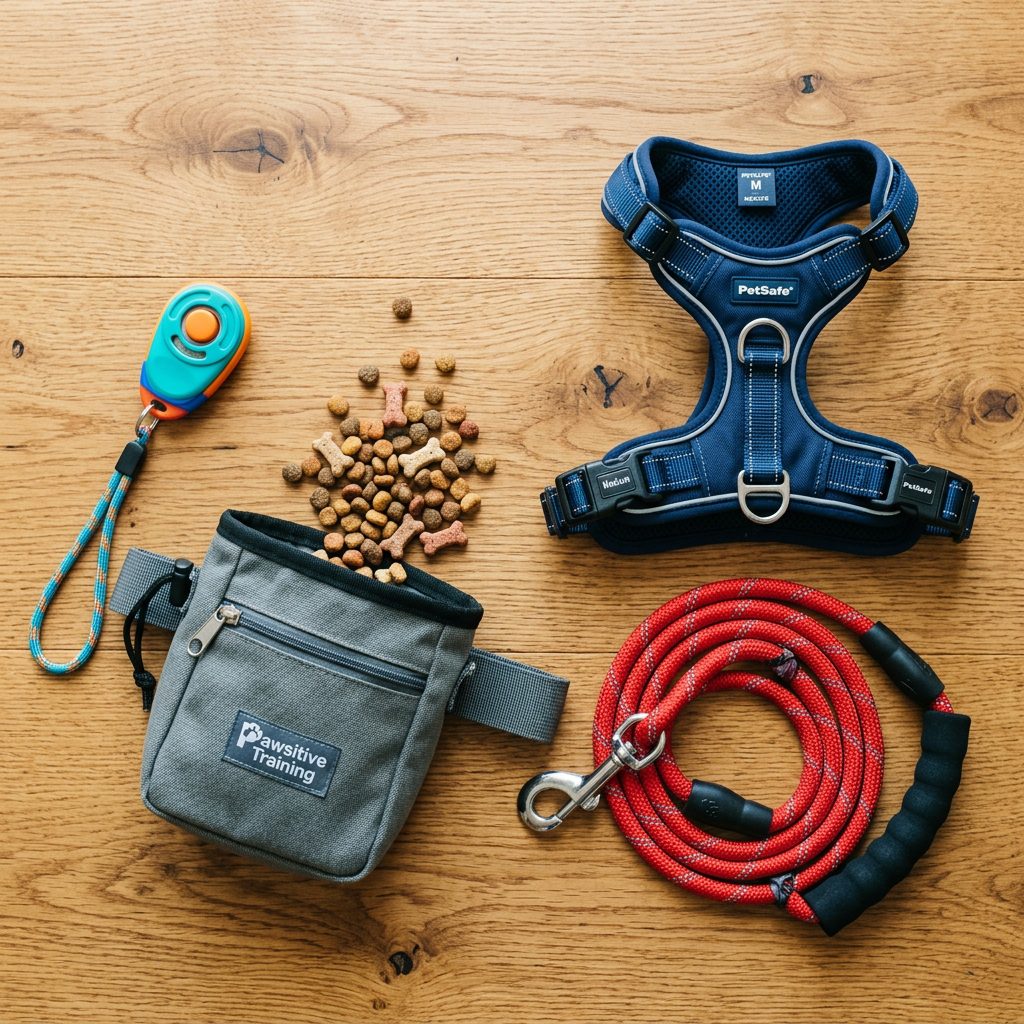
To set yourself up for training success, you need the right toolkit. Just like a professional chef needs sharp knives, a savvy dog owner needs the right gear to make training smooth, efficient, and enjoyable.
- High-Value Treats: Dry kibble might work indoors when there are no distractions, but when you are competing with the sights and smells of the outside world, you need the good stuff. Think boiled chicken breast, plain hot dogs, string cheese, or freeze-dried liver. Cut them into tiny, pea-sized pieces so you can reward frequently without causing an upset stomach or weight gain.
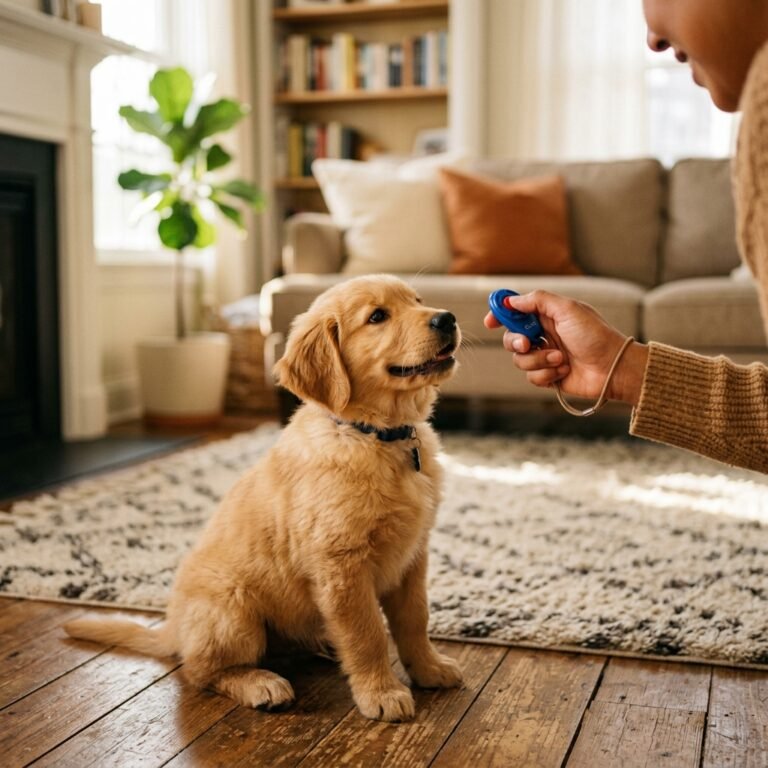
- A Clicker: A clicker is a small, inexpensive mechanical device that makes a sharp, distinct ‘click’ sound when pressed. It acts as a marker signal, telling your puppy, ‘That exact thing you just did in this millisecond is what earned you the treat!’ It is much faster and more precise than verbal praise.
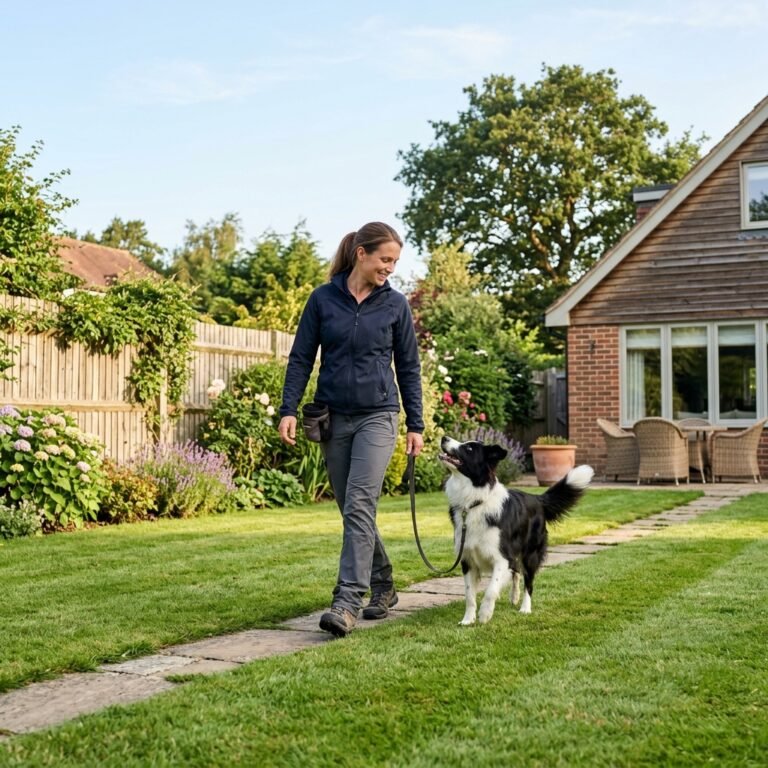
- A Well-Fitted Harness and Long Line: For outdoor training, a comfortable, Y-shaped harness prevents neck and trachea injury. Pairing this with a 15-to-30-foot long line gives your puppy the illusion of freedom while keeping them safely tethered to you. This combination is absolutely crucial for practicing reliable recall safely.
- A Wearable Treat Pouch: Timing is everything in positive reinforcement. A wearable treat pouch clipped to your waist ensures you have instant, hands-free access to rewards the second your puppy makes a brilliant choice.
- Patience and a Sense of Humor: Puppies are essentially toddlers. They have incredibly short attention spans, zero impulse control, and they explore the world with their mouths. Keeping things lighthearted will prevent you from getting frustrated when things do not go perfectly according to plan.
Once you have your gear ready and your mindset adjusted, you are fully equipped to start implementing the seven miracle methods.
7 Positive Reinforcement Puppy Training Methods That Work Miracles
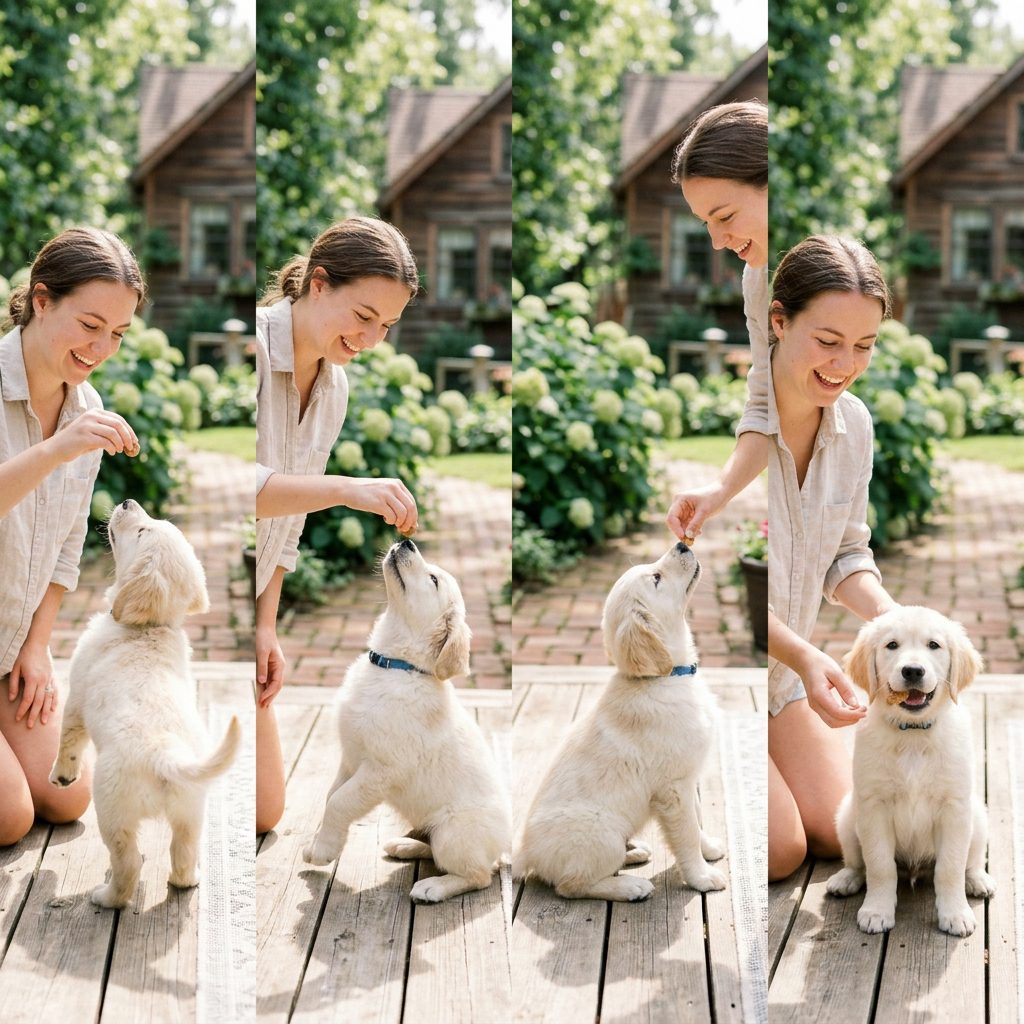
Now for the main event. Here are the seven core positive reinforcement strategies that professional dog trainers use to mold perfect puppies. By mastering these foundational concepts, you can teach your dog virtually anything, from basic obedience to complex service dog tasks.
1. The Lure and Reward Method
Luring is the absolute easiest way to teach a brand-new behavior. You use a piece of food right in front of your puppy’s nose to physically guide them into a specific position without ever pushing or pulling them. Here is how to use it for the ‘Sit’ command:
- Hold a high-value treat right at your puppy’s nose so they can smell it.
- Slowly move the treat upwards and backwards over their head, toward their tail.
- As their nose follows the treat up, their hindquarters will naturally lower to the ground.
- The microsecond their bottom hits the floor, click your clicker (or say ‘Yes!’) and release the treat into their mouth.
Pro Tip: Fade the food lure as quickly as possible! After 3 to 5 successful repetitions, use an empty hand to do the exact same luring motion, click when they sit, and then reward them from your treat pouch. This prevents the dog from only obeying when they visibly see food in your hand.
2. Capturing Natural Behaviors
Capturing is like being a wildlife photographer—you wait patiently for the perfect moment and snap the picture. In training, you wait for your puppy to naturally do something desirable, and you heavily reward it. If your puppy walks into the living room and decides to lie down quietly on their dog bed instead of chewing the rug, immediately praise them calmly and toss a treat between their paws. You are ‘capturing’ the calm behavior. Over time, the puppy realizes, ‘Wow, lying on this mat is highly profitable! I should do this more often.’
3. Shaping for Complex Tricks
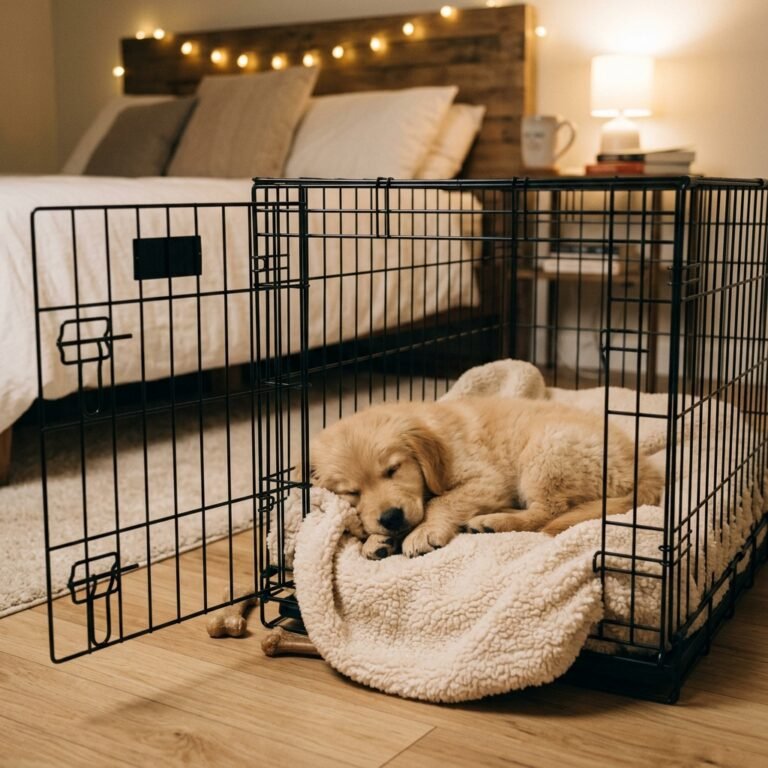
Shaping is a beautiful, brain-tiring game used for complex behaviors that a dog is unlikely to do all at once. It involves rewarding ‘successive approximations’—tiny, incremental baby steps toward the final goal. If you want your puppy to go into their crate on command, you do not wait for them to go all the way in to reward them. First, you click and reward them just for looking at the crate. Then, for taking one single step toward it. Then, for touching the crate with their nose. Then, for putting one single paw inside. By breaking the final behavior down into microscopic, highly rewardable steps, you build the puppy’s confidence and turn learning into a fun puzzle.
4. Targeting (The Touch Command)
Targeting teaches your puppy to intentionally touch a specific object with their nose or their paw. The most common and useful form is ‘Hand Targeting,’ where you teach the puppy to boop their nose against your flat, open palm.
- Present your flat hand a few inches from the puppy’s face.
- When they inevitably lean forward to sniff it out of natural curiosity, click and treat.
- Repeat this until the puppy is enthusiastically booping your hand every time you present it.
- Add the verbal cue ‘Touch’ right before you present your hand.
Hand targeting is a miracle tool. You can use it to smoothly guide your dog onto a scale at the vet’s office, move them off the couch without physically pushing them, or recall them away from a dangerous distraction without ever having to grab their collar.
5. The Premack Principle (Grandma’s Law)
The Premack Principle is a psychological concept stating that a highly probable behavior can be used to reinforce a less probable behavior. Think of it as Grandma’s Law: ‘You have to eat your broccoli before you can have your ice cream.’ If your puppy desperately wants to go out the back door to chase leaves (high probability behavior), ask them to ‘Sit’ first (low probability behavior). The primary reward for sitting isn’t a piece of food; it is the door opening. This teaches your dog that offering calm obedience is the magic key that unlocks all the wonderful things they want in the environment.
6. Environmental Management
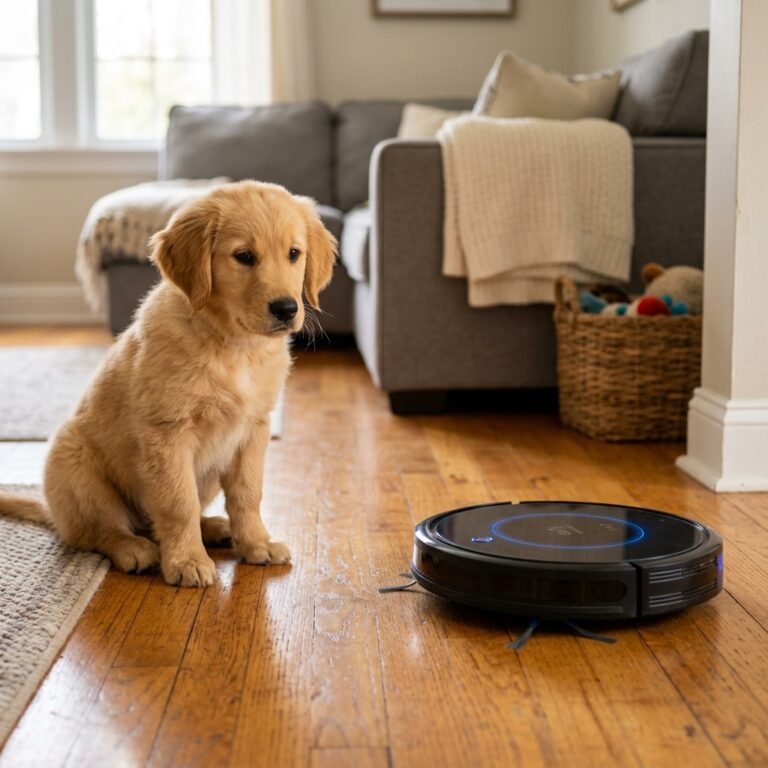
While not a ‘trick’ in the traditional sense, environmental management is a core, non-negotiable pillar of positive reinforcement training. You cannot reward good behavior if the environment is constantly setting your puppy up to fail. If your puppy loves chewing your expensive shoes, put the shoes in a closed closet. Use sturdy baby gates to keep them out of the kitchen while you are cooking to prevent counter-surfing. By proactively managing the environment, you completely prevent the rehearsal of bad habits, allowing you to focus purely on reinforcing the good ones.
7. Redirection and Incompatible Behaviors
So, what exactly do you do when your puppy is doing something wrong? Instead of resorting to punishment, you interrupt and redirect them to an incompatible behavior. If your overly excited puppy jumps up on guests when they enter the house, they cannot physically jump if they are holding a ‘Sit’ or a ‘Down.’ So, you train a rock-solid, highly rewarded ‘Sit’ when the doorbell rings. If they are chewing on the wooden furniture, you interrupt with a happy, high-pitched voice to get their attention, and immediately redirect them to a frozen, peanut-butter-stuffed Kong toy. You are clearly communicating, ‘Do not do that, do THIS instead, because THIS is much more rewarding.’
Troubleshooting Common Puppy Training Challenges
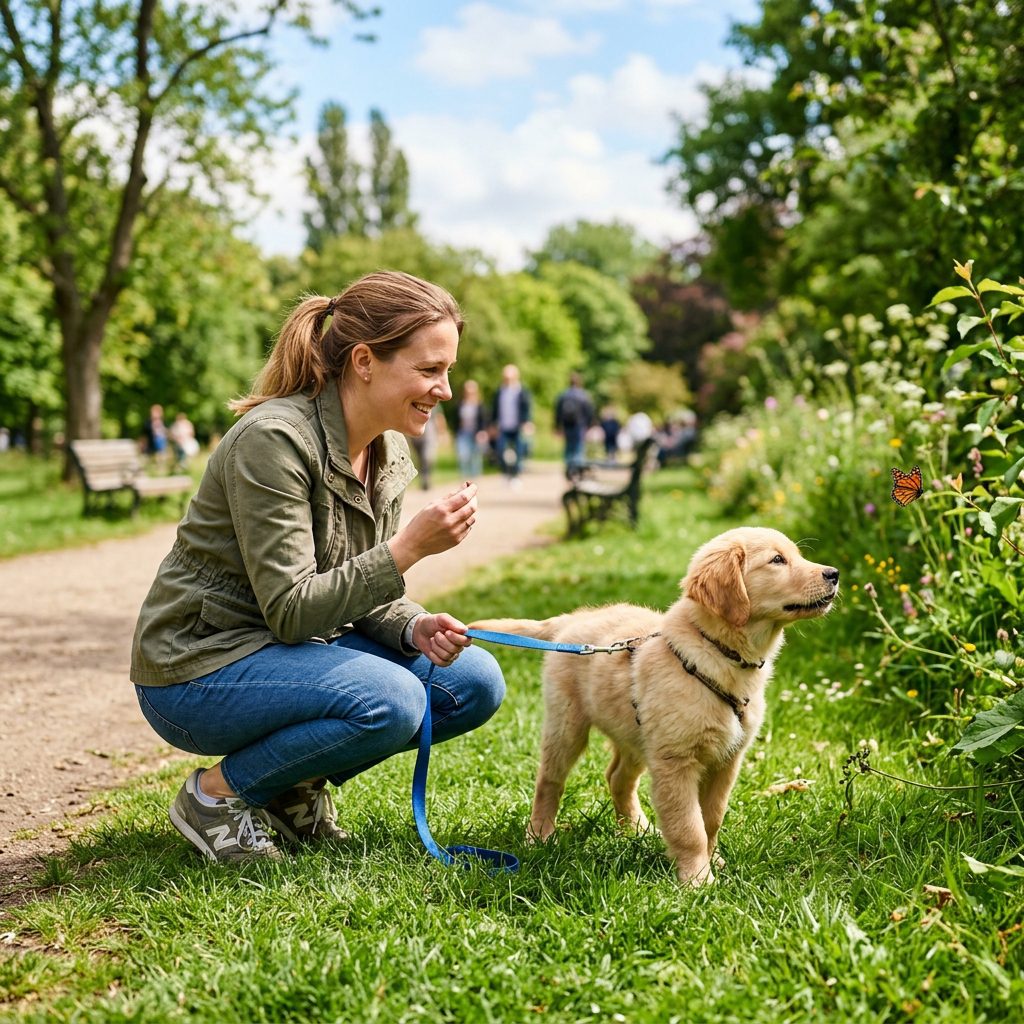
Even with the absolute best methods and intentions, puppy training is rarely a perfectly straight, upward line. You will inevitably hit roadblocks, plateaus, and frustrating days, and that is completely normal. Here is how savvy dog owners troubleshoot common positive reinforcement challenges like pros.
Challenge: My Puppy Gets Distracted Easily and Ignores Me
Puppies are naturally curious, and the outside world is highly stimulating. If your puppy perfectly executes commands in the living room but ignores you entirely outside, the environment is simply more reinforcing than you are at that moment. To fix this, you must decrease your criteria. Move further away from the distraction, use a significantly higher-value treat (like real roasted meat), and practice in a slightly quieter outdoor environment (like a boring driveway) before trying again in a busy, dog-filled park.
Challenge: They Only Listen When I Have Food in My Hand
This is arguably the most common complaint about positive reinforcement, but it is usually a result of poor handler mechanics. If you always show the dog the food before asking for the behavior, the food becomes a bribe, not a reward. To fix this, ensure the food is completely hidden in your pouch or behind your back. Give the verbal cue, wait patiently for the behavior, mark it with a click or ‘Yes,’ and then reach for the treat. The dog must learn that the behavior produces the treat, not the other way around.
Challenge: My Puppy is Biting Me Relentlessly!
Puppy biting (often called ‘land shark’ phase) is completely normal, instinctual developmental behavior, but those needle teeth hurt! Do not yell, squeal, or smack their nose—this often makes them bite harder out of heightened arousal or defensive fear. Instead, use swift redirection. Always have a long toy handy to place in their mouth. If the biting continues and they are aiming for skin, use a ‘reverse time-out.’ Simply stand up, cross your arms, turn your back, and completely ignore them for 10 to 15 seconds. You are teaching them the powerful lesson that biting makes their favorite playmate (you) instantly disappear.
Challenge: Demand Barking for Treats
If your puppy sits in front of you and barks incessantly because they know you have treats in your pouch, they are demand barking. They are trying to train you! The solution is strict, unwavering ignorance. Do not look at them, do not speak to them, and certainly do not give them a treat to quiet them down (which would reinforce the barking). Wait for three seconds of total silence, then mark and reward the quiet.
The Biggest Mistakes Savvy Owners Make (And How to Fix Them)

Even the most dedicated and well-meaning dog owners can slip up from time to time. Training is a mechanical skill, and it takes practice to perfect your timing and delivery. Let us look at some of the most common pitfalls and how to course-correct to ensure your positive reinforcement training remains highly effective.
| Common Training Mistake | Why It Happens | The Positive Reinforcement Solution |
|---|---|---|
| Repeating the Command | We assume the dog didn’t hear us or is being stubborn, so we say ‘Sit, sit, SIT!’ | Say the cue exactly once and wait. Repeating it teaches the dog to ignore you until the 4th or 5th repetition. |
| Poor Marker Timing | Rewarding seconds too late, causing the dog to associate the treat with the wrong action. | Use a marker word (‘Yes!’) or a clicker the exact millisecond the good behavior happens to take a ‘snapshot’ of the action. |
| Training Sessions are Too Long | Trying to force a 30-minute obedience session leaves the puppy exhausted, bored, and frustrated. | Keep sessions incredibly short: 3 to 5 minutes, 3 times a day. Always end the session on a successful, happy note! |
| Phasing Out Treats Too Fast | Believing the dog ‘should just know it by now’ and abruptly stopping all food rewards. | Think of treats as a paycheck. You wouldn’t work for free! Use a variable reward schedule to keep them guessing and motivated. |
| Punishing the Recall | Calling the dog to you to do something unpleasant, like clipping nails or leaving the park. | Never punish a dog for coming to you! Make the ‘Come’ command the best thing in the world, every single time. |
By keeping a watchful eye out for these common mistakes, you can continuously refine your technique. Remember, if your dog is consistently struggling to understand a concept, it is almost always a communication issue on our end, not stubbornness or spite on theirs. Take a deep breath, adjust your approach, check your timing, and make sure your rewards are actually rewarding to your specific dog.
Conclusion
Transitioning away from outdated, punishment-based training is truly the greatest gift you can give your new puppy. By embracing these seven miracle-working positive reinforcement methods, you are doing so much more than just teaching your dog how to sit, stay, or walk nicely on a leash. You are building an unbreakable foundation of mutual trust, deep respect, and crystal-clear communication that will last a lifetime.
Remember, savvy dog owners know that training is a marathon, not a sprint. There will absolutely be days when your puppy seems to forget everything they have ever learned, and there will be days when they amaze you with their brilliance and eagerness to please. Stay incredibly patient, keep your treat pouch full of high-value goodies, and make sure to celebrate all the small victories along the way.
Your puppy is trying their absolute best to understand the confusing rules of our human world. With positive reinforcement, you are showing them that learning is safe, fun, and incredibly rewarding. Happy training, stay positive, and here is to a long, joyful lifetime of adventures with your furry best friend!