Is Your Puppy Allergic? The Real Reason for Constant Collar Scratching
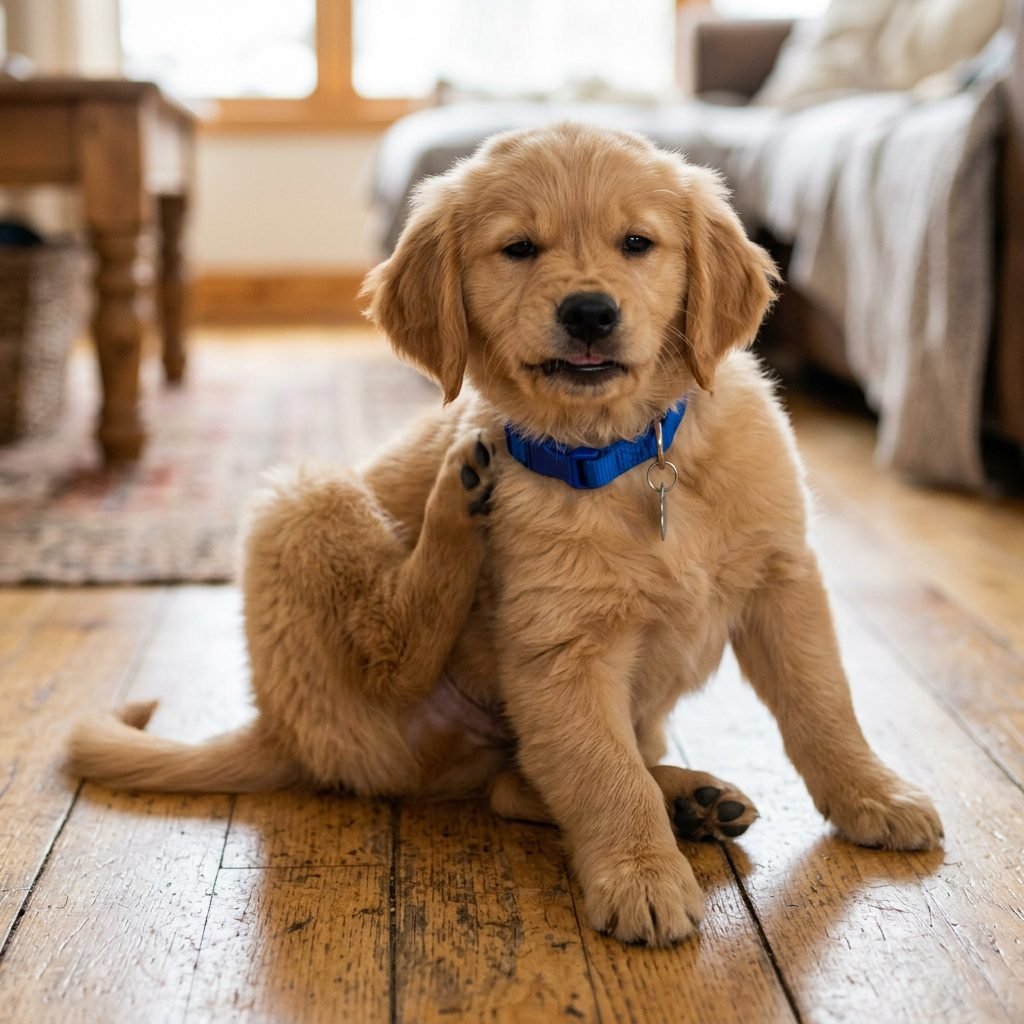
There is a specific sound every new puppy owner knows all too well: the rhythmic jingle-jingle-jingle of metal tags hitting a collar, accompanied by the frantic thump-thump-thump of a hind leg hitting the floor. At first, it’s cute. You think, ‘Oh, they’re just getting used to their new jewelry!’ But when the scratching becomes a constant obsession, and you notice your puppy’s neck looks a bit pinker than usual, the worry starts to set in.
As a canine specialist, I see this daily. Owners come in convinced their puppy has fleas, but the truth is often much more complex. Persistent scratching at the collar area is a ‘red flag’ that your puppy’s skin is under siege. Whether it is a reaction to the material of the collar itself, an underlying food allergy, or environmental triggers, understanding the ‘why’ behind the itch is the first step to relief. In this guide, we are going to dive deep into the world of canine dermatology to uncover the real reason your puppy can’t stop scratching and, more importantly, how you can help them find peace.
Recognizing the Signs: Is It a Normal Itch or an Allergy?
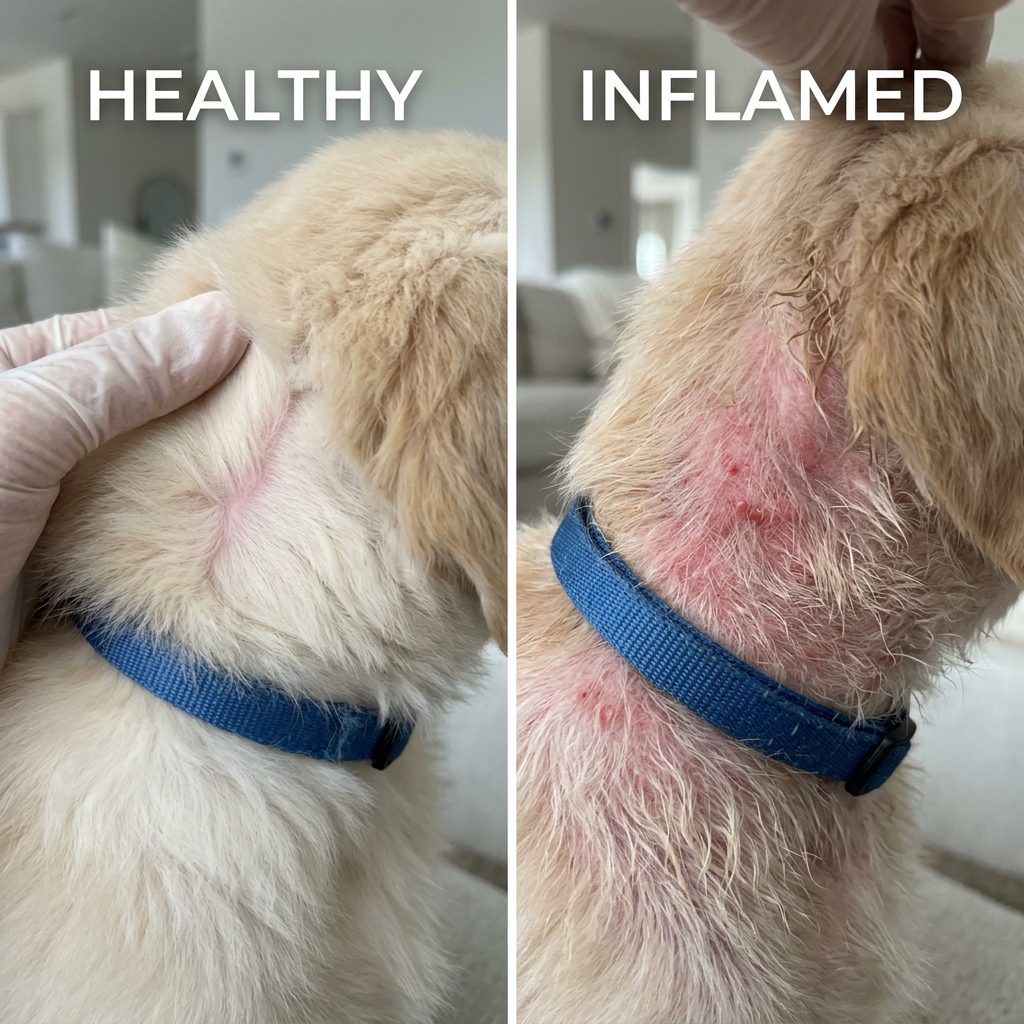
Before we can fix the problem, we have to identify it. All puppies scratch occasionally—it’s how they process a stray hair or a tickle. However, allergic scratching has distinct hallmarks. If your puppy is scratching so hard they are whimpering, or if they are losing hair around the neck line, you are likely dealing with an allergic reaction or severe irritation.
The Checklist of Symptoms
- Redness (Erythema): The skin under the collar looks angry, pink, or bright red.
- Heat: The affected area feels noticeably warmer than the rest of the body.
- Papules: Small, red bumps that look like a rash.
- Odor: A ‘yeasty’ or musty smell coming from the neck area, often indicating a secondary infection.
- Excoriation: Scratches or open sores caused by the puppy’s own claws.
To help you distinguish between a simple adjustment period and a medical issue, refer to the table below:
| Behavior/Sign | Normal Adjustment | Allergic Reaction |
|---|---|---|
| Frequency | Occasional (3-5 times a day) | Constant/Obsessive |
| Skin Color | Normal Pigment/Pale Pink | Bright Red/Inflamed |
| Hair Condition | Full and Shiny | Thinning or Bald Patches |
| Mood | Happy and Playful | Restless or Irritable |
| Response to Distraction | Stops scratching when called | Cannot stop scratching to play |
The Culprit in the Closet: Contact Dermatitis from Collars
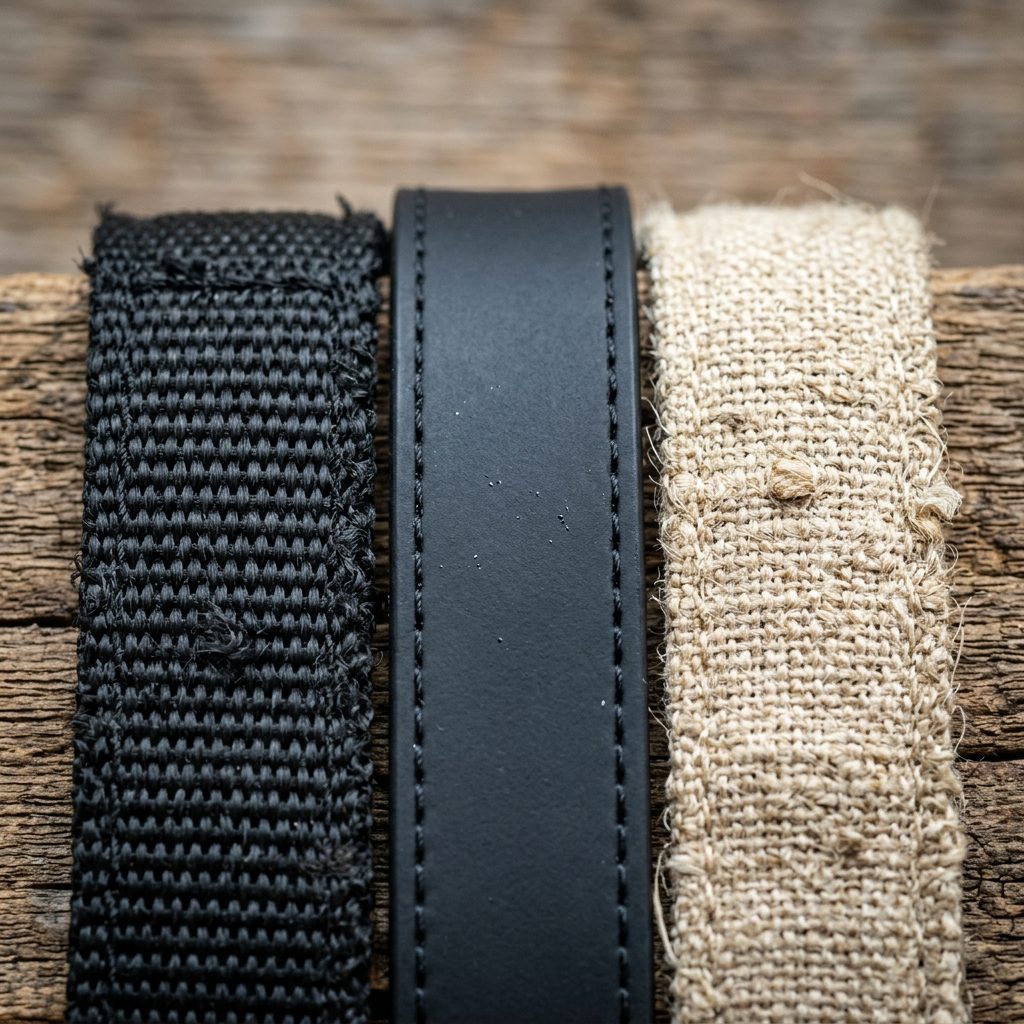
The most direct cause of neck scratching is Contact Dermatitis. This occurs when your puppy’s skin reacts negatively to the physical materials touching it. Most ‘starter’ collars are made of cheap nylon or synthetic blends that use harsh chemical dyes. For a puppy with sensitive skin, this is like wearing a wool sweater lined with sandpaper.
Common Irritants in Dog Collars
- Nickel: Many D-rings and buckles are made of nickel alloys, which is a common allergen for both humans and dogs.
- Disperse Dyes: The bright neon colors in cheap collars often leach out when wet (from rain or water bowls), soaking directly into the puppy’s pores.
- Tanning Chemicals: Even leather collars can be a problem if they were tanned using harsh chromium salts.
- Bacterial Buildup: Nylon is porous. It traps sweat, oils, and moisture, creating a breeding ground for bacteria that irritates the skin.
Expert Tip: If the scratching stops the moment you take the collar off, but the skin remains red for hours, you are likely dealing with a material allergy rather than just a fit issue.
When choosing a new collar, look for hypoallergenic materials. Biothane (a coated webbing), hemp, or vegetable-tanned leather are excellent alternatives for sensitive pups.
Beyond the Neck: Food and Environmental Triggers
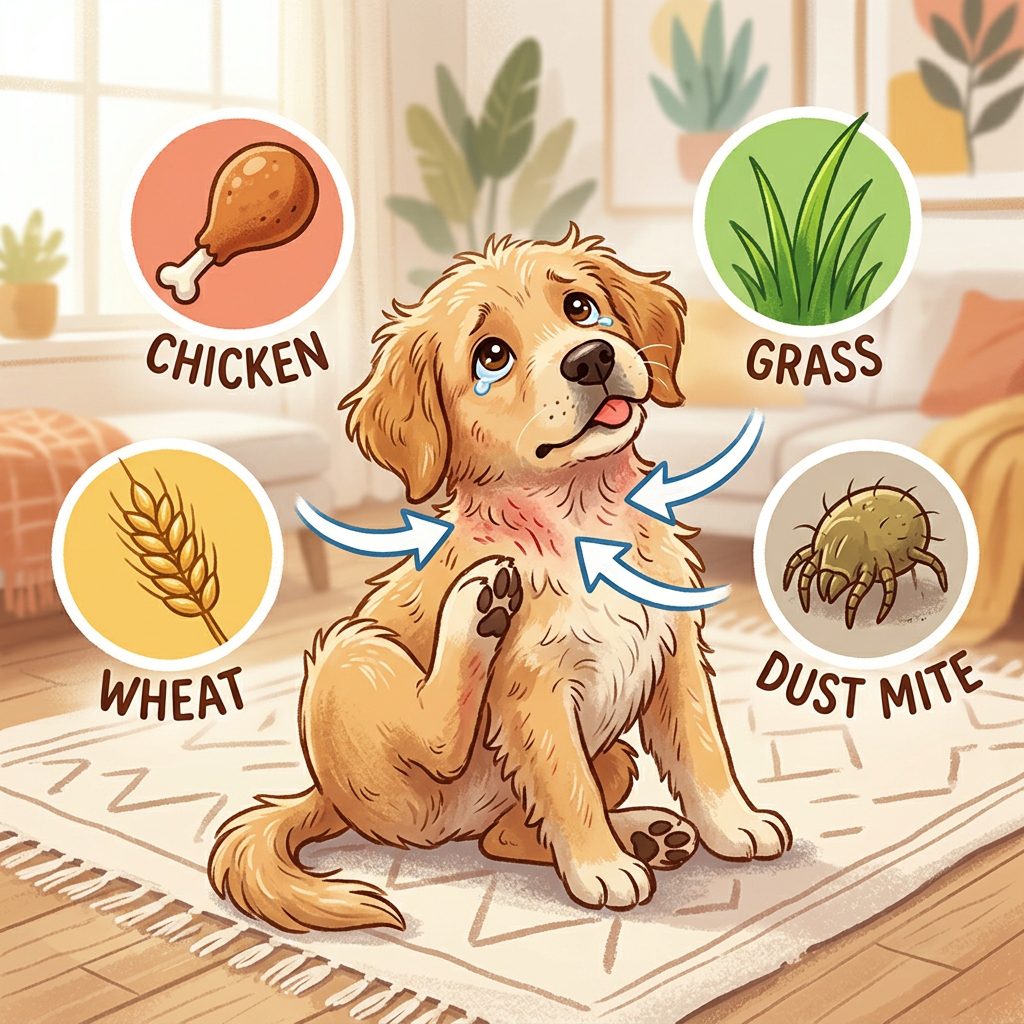
Sometimes, the collar isn’t the cause—it’s just the ‘scratching post.’ Puppies often scratch their necks when they have a systemic allergy because the neck is an easy-to-reach area with high visibility. If you see scratching accompanied by paw licking or ear infections, the problem is likely internal.
Food Sensitivities
Puppies have developing immune systems. A sensitivity to a specific protein or filler in their kibble can manifest as ‘Atopic Dermatitis.’ While true food allergies are rarer than sensitivities, they can cause intense itching. Common culprits include:
- Beef and Dairy products
- Chicken (a very common allergen)
- Wheat and Soy fillers
- Artificial preservatives (BHA/BHT)
Environmental Allergens
Just like humans, puppies can suffer from hay fever. Dust mites, pollen, and mold spores can settle into the fur around the neck. Because the collar holds these particles against the skin, the irritation is localized there. This is why many owners see an increase in scratching after a walk through tall grass.
The ‘Two-Finger Rule’ and Hygiene Protocols
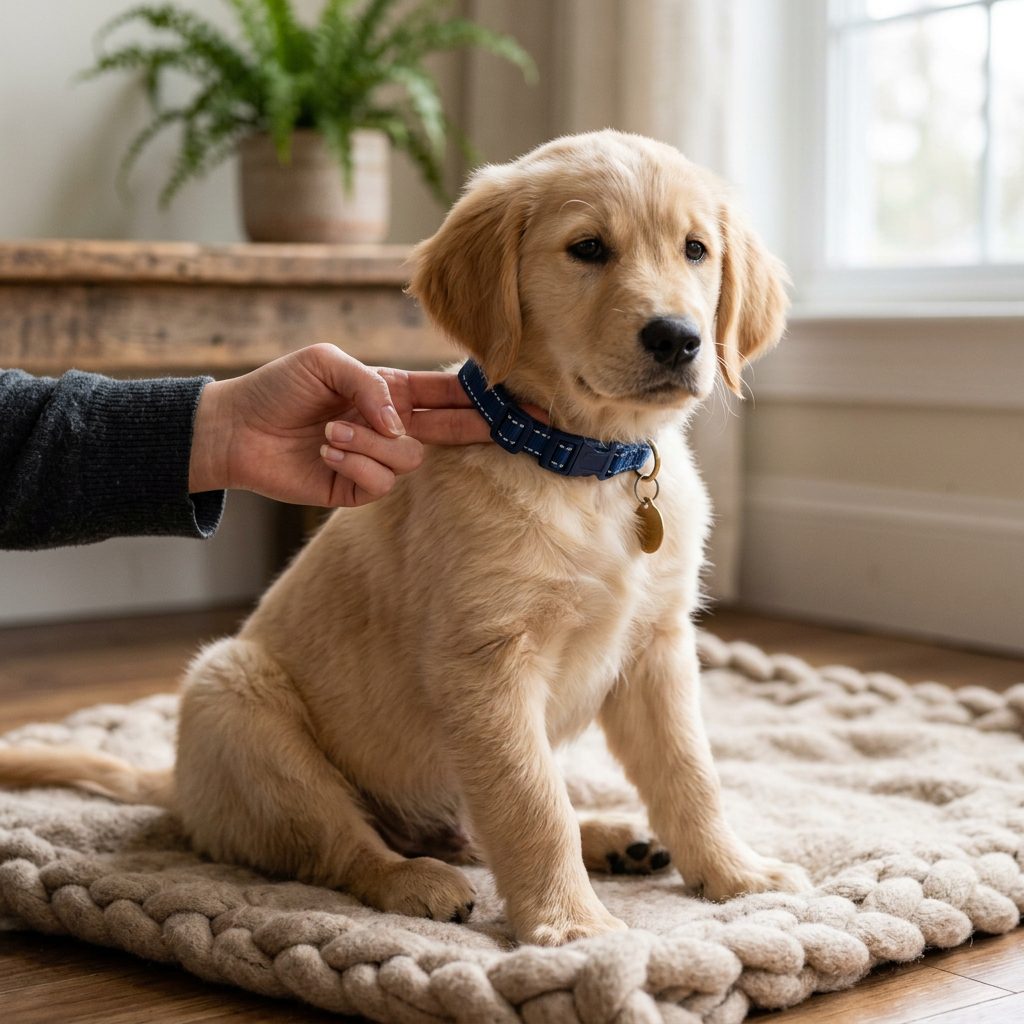
Is it an allergy, or is it just uncomfortable? Sometimes the ‘real reason’ is mechanical irritation. A collar that is too tight creates friction, while a collar that is too loose rubs back and forth, causing ‘collar sores.’
Mastering the Fit
You should always be able to fit two fingers comfortably between the collar and your puppy’s neck. For growing puppies, you must check this fit every single week. They grow faster than you think!
The Cleaning Schedule
If you aren’t washing your puppy’s collar, you’re essentially making them wear the same dirty socks for months. Follow this hygiene protocol to reduce itching:
- Weekly Wash: Soak nylon or fabric collars in warm water with a drop of hypoallergenic dog shampoo.
- Daily Wipe-Down: If your puppy plays outside, wipe the inside of the collar with a damp cloth to remove pollen and dirt.
- The ‘Naked’ Time: Let your puppy spend time indoors without a collar (under supervision) to allow the skin to breathe.
Home Remedies and Immediate Relief
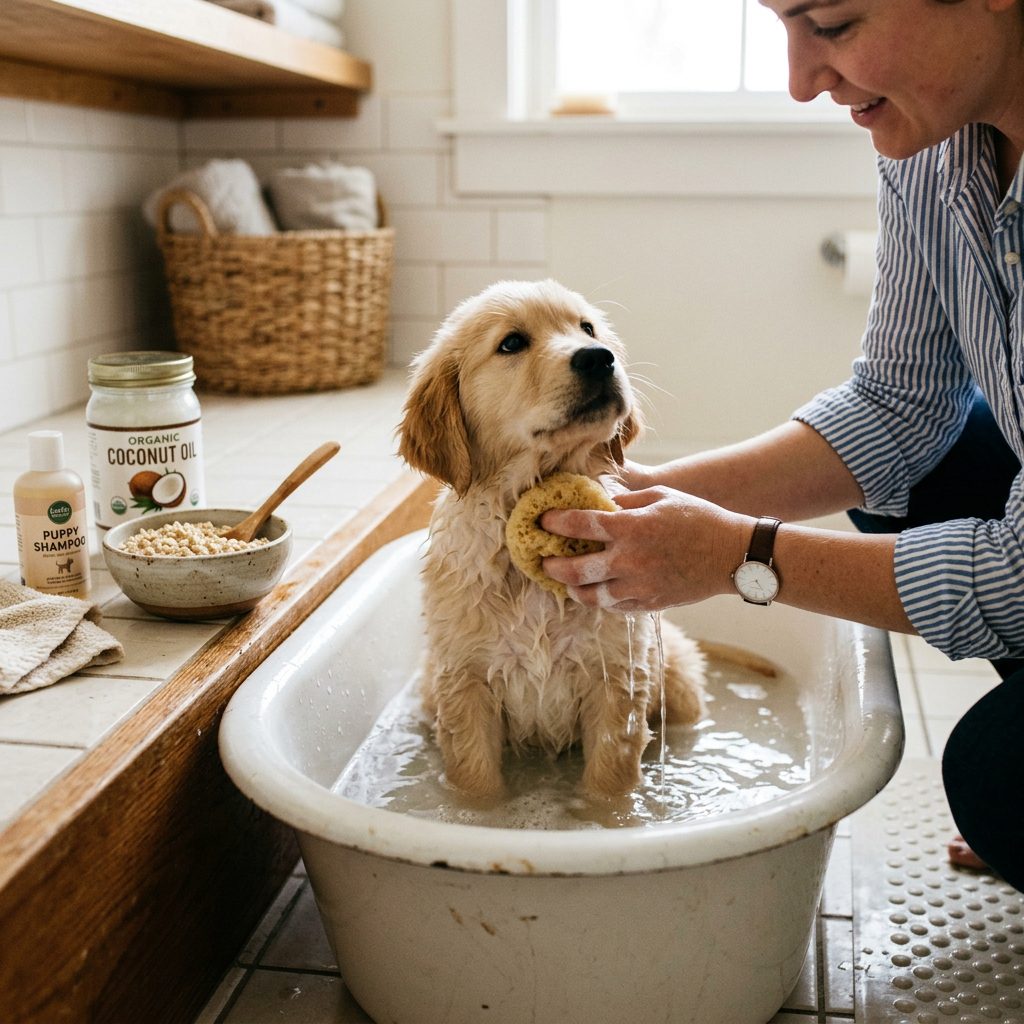
While you investigate the root cause, your puppy needs relief now. You can use several safe, home-based methods to soothe the ‘fire’ on their neck. However, always consult your vet before applying new topical treatments to a young puppy.
Soothing Solutions
- Oatmeal Baths: Colloidal oatmeal is a natural anti-inflammatory. Create a paste with water and apply it to the neck for 10 minutes.
- Coconut Oil: Organic, cold-pressed coconut oil has antibacterial properties. Rub a tiny amount into the dry, itchy skin. Warning: They will try to lick it off!
- Apple Cider Vinegar Rinse: Mix 50/50 with water. This helps restore the skin’s pH and kills yeast, but never use it on open sores or broken skin.
| Remedy | Best For | Frequency |
|---|---|---|
| Oatmeal | Redness and Inflammation | 1-2 times weekly |
| Coconut Oil | Dryness and Scaling | Daily as needed |
| Cool Compress | Immediate Heat/Itch relief | Multiple times daily |
When to See the Vet: Diagnostics and Treatments

If home remedies and collar changes don’t work within 7-10 days, it is time for a professional evaluation. Chronic scratching can lead to Lichenification (thickening and darkening of the skin) or systemic infections that require antibiotics.
What to Expect at the Clinic
Your vet will likely perform a few standard tests to rule out parasites and infections:
- Skin Scraping: To look for microscopic mites (mange).
- Cytology: Taking a ‘tape prep’ of the skin to check for yeast or bacteria under a microscope.
- Elimination Diet: Switching to a ‘Hydrolyzed Protein’ diet for 8-12 weeks to rule out food allergies.
- Blood Tests: To check for specific environmental triggers like ragweed or dust mites.
In severe cases, the vet may prescribe Apoquel (for dogs over 12 months) or Cytopoint injections, which help block the itch signal to the brain, allowing the skin time to heal without being constantly traumatized by scratching.
Conclusion
Constant collar scratching is more than just a nuisance; it is your puppy’s way of communicating discomfort. Whether the ‘real reason’ is a reaction to a nickel buckle, a sensitivity to chicken in their kibble, or simply a collar that needs a good scrub, you have the power to fix it.
By monitoring the symptoms, switching to hypoallergenic materials, and maintaining strict hygiene, most owners can resolve the itch within a few weeks. Remember, a happy puppy is a comfortable puppy. Keep a close eye on that ‘two-finger’ fit, give them some ‘collar-free’ time every evening, and don’t hesitate to call the vet if the redness persists. Your puppy’s skin—and your ears—will thank you for the silence!