Zero Stress Car Rides: How To Get Your Puppy Hooked On Their Car Safety Harness
Hey there, fellow dog lover! We’ve all been there—the excitement of a new puppy, the dreams of weekend hikes and beach trips, and then… the reality of a crying, pacing, or car-sick pup the moment you hit the driveway. It’s heartbreaking to see your little companion stressed out in the car, and let’s be honest, it’s incredibly distracting for you as a driver. But what if I told you that the car could become your puppy’s favorite place in the world? The secret isn’t just in the destination; it’s in the safety harness.
As a canine specialist, I’ve seen thousands of owners struggle with car anxiety. The mistake most make is rushing the process. We assume that because we’re excited for the park, the puppy will be too. However, to a puppy, a car is a giant, vibrating, noisy metal box that moves at terrifying speeds. By using a car safety harness correctly, you aren’t just preventing your pup from becoming a projectile in an accident; you are providing them with a physical sense of security. In this guide, we’re going to walk through the exact steps to turn that harness from a ‘scary restraint’ into a ‘ticket to adventure.’ Let’s dive into how we can make every car ride a zero-stress experience for both ends of the leash.
Why a Harness is Your Puppy’s Best Travel Buddy
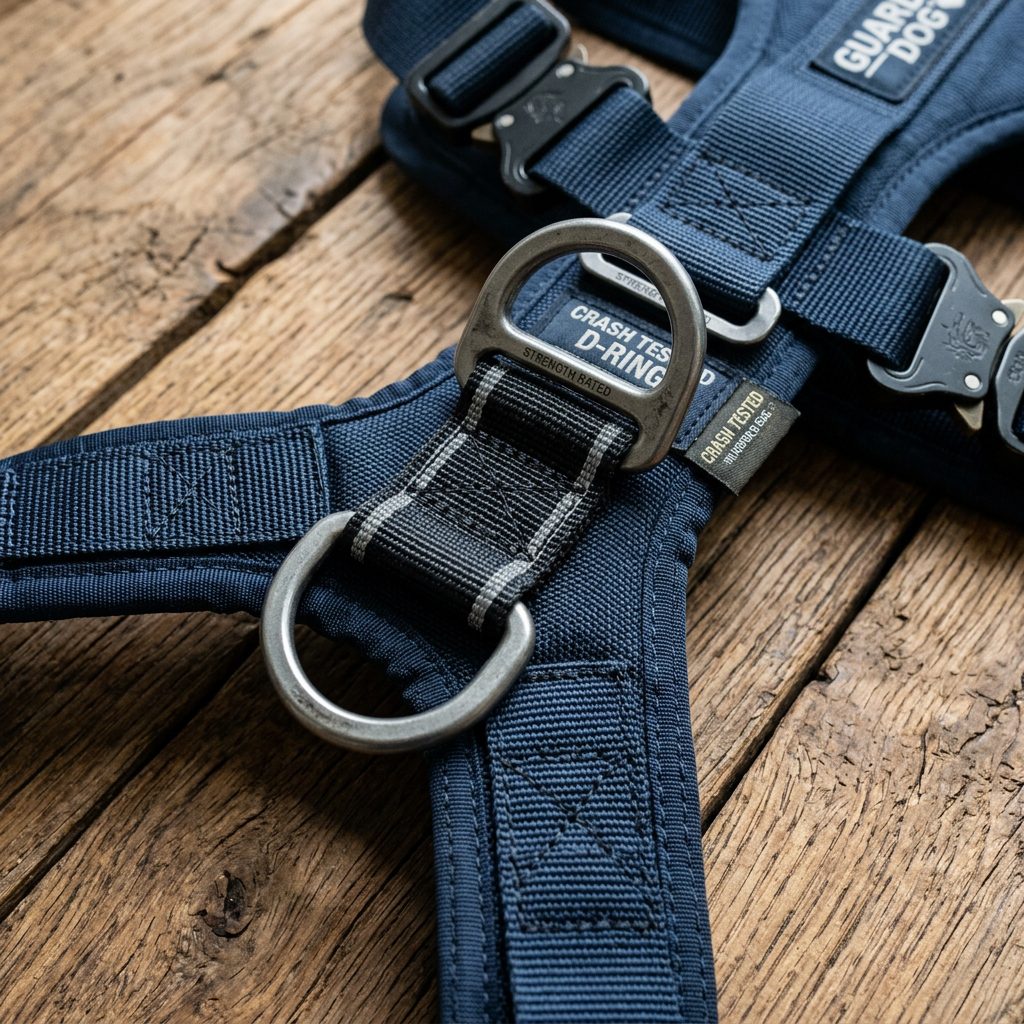
Before we get into the ‘how,’ we need to understand the ‘why.’ Many owners rely on crates or, worse, let their puppies roam free in the cabin. While crates are safe if secured, a harness offers a unique blend of safety and comfort that helps puppies feel grounded. A free-roaming puppy is a danger to themselves and you. In the event of a sudden stop at just 30 mph, an unrestrained 10-pound puppy can exert 300 pounds of force—enough to seriously injure the dog and the passengers.
Comparing Your Options
Not all car restraints are created equal. When choosing a harness, you want something specifically designed for vehicular travel, not just a standard walking harness. Here is a quick breakdown of what you should look for:
| Harness Type | Primary Benefit | Safety Rating |
|---|---|---|
| Standard Walking Harness | Easy to put on; dual-purpose for walks. | Low (often snaps under high force). |
| Padded Vest Harness | Distributes pressure evenly; reduces anxiety. | Moderate (look for reinforced stitching). |
| Crash-Tested Safety Harness | Engineered to withstand high-impact forces. | High (The Gold Standard). |
Pro Tip: Look for harnesses that have been certified by the Center for Pet Safety (CPS). These have undergone rigorous testing similar to child car seats.
Beyond safety, a harness helps with proprioception—the puppy’s sense of where their body is in space. The gentle pressure of a well-fitted vest can act like a ‘ThunderShirt,’ lowering cortisol levels and helping the puppy stay calm even when the car takes a sharp turn.
The Essential Toolkit: Gathering Your Gear
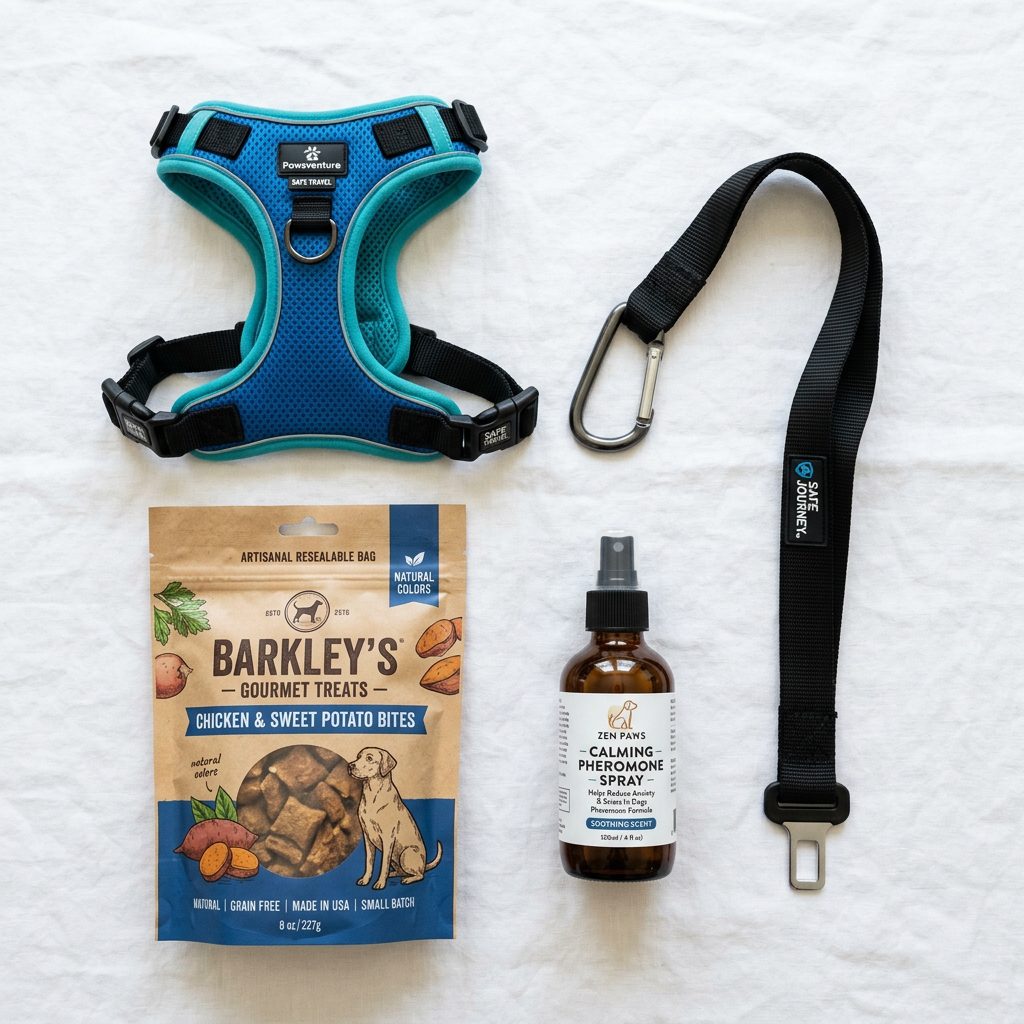
Training is 10% technique and 90% preparation. To get your puppy hooked on their harness, you need more than just the harness itself. You need a toolkit designed to create positive associations. Puppies are essentially tiny, furry slot machines; they repeat behaviors that pay out in high-value rewards.
What You’ll Need:
- The Right Harness: Ensure it is adjustable. Puppies grow fast, and a harness that is too tight will cause immediate negative associations.
- High-Value Treats: We’re talking ‘the good stuff.’ Think boiled chicken, small pieces of string cheese, or freeze-dried liver. These should be reserved only for car training.
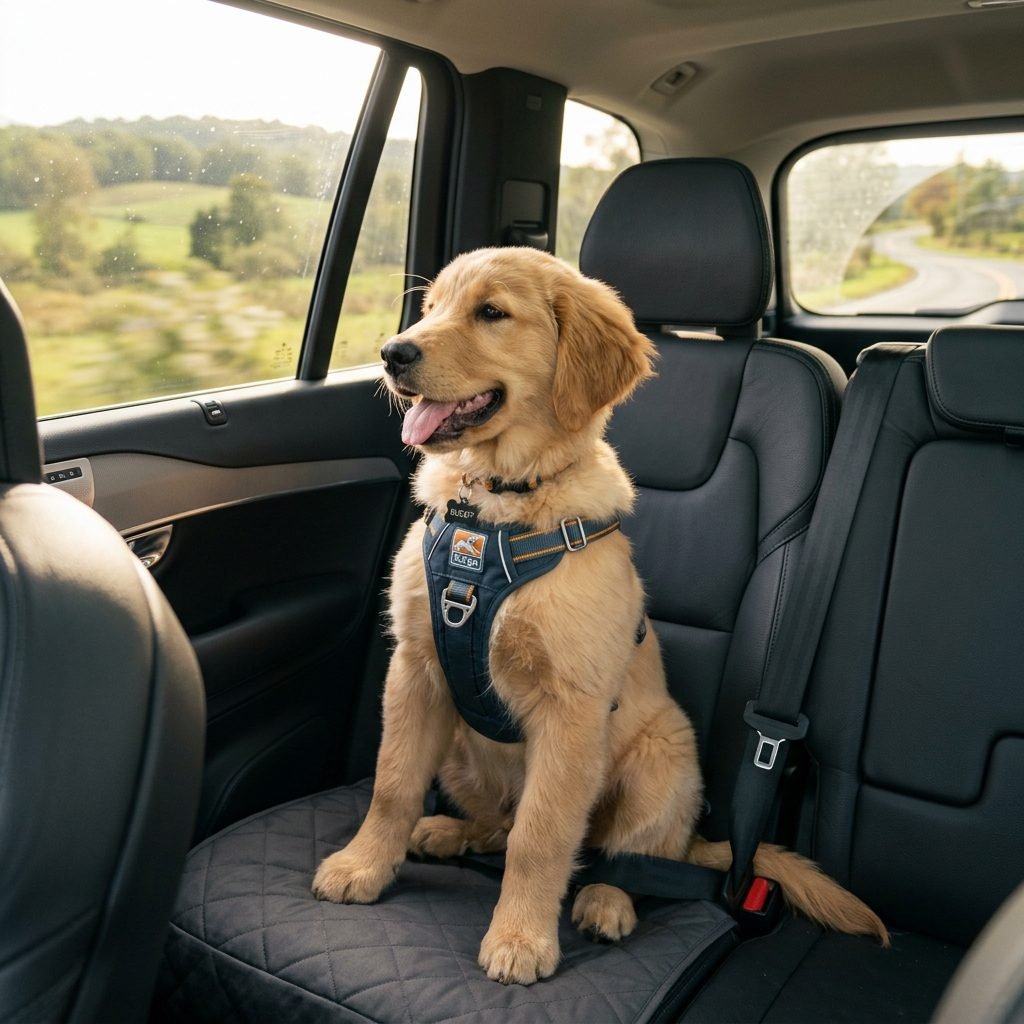
- A Tether System: This connects the harness to the car’s seatbelt buckle. Ensure it is adjustable so the puppy can sit or lie down but cannot jump into the front seat.
- Calming Aids: Consider using an Adaptil (pheromone) spray on the harness 15 minutes before training to help soothe their nervous system.
Once you have your gear, check the fit. You should be able to fit two fingers comfortably between the harness and your puppy’s body. If it’s too loose, they might wiggle out; if it’s too tight, they’ll associate the car with physical discomfort.
Phase 1: The ‘Harness Means Treats’ Introduction
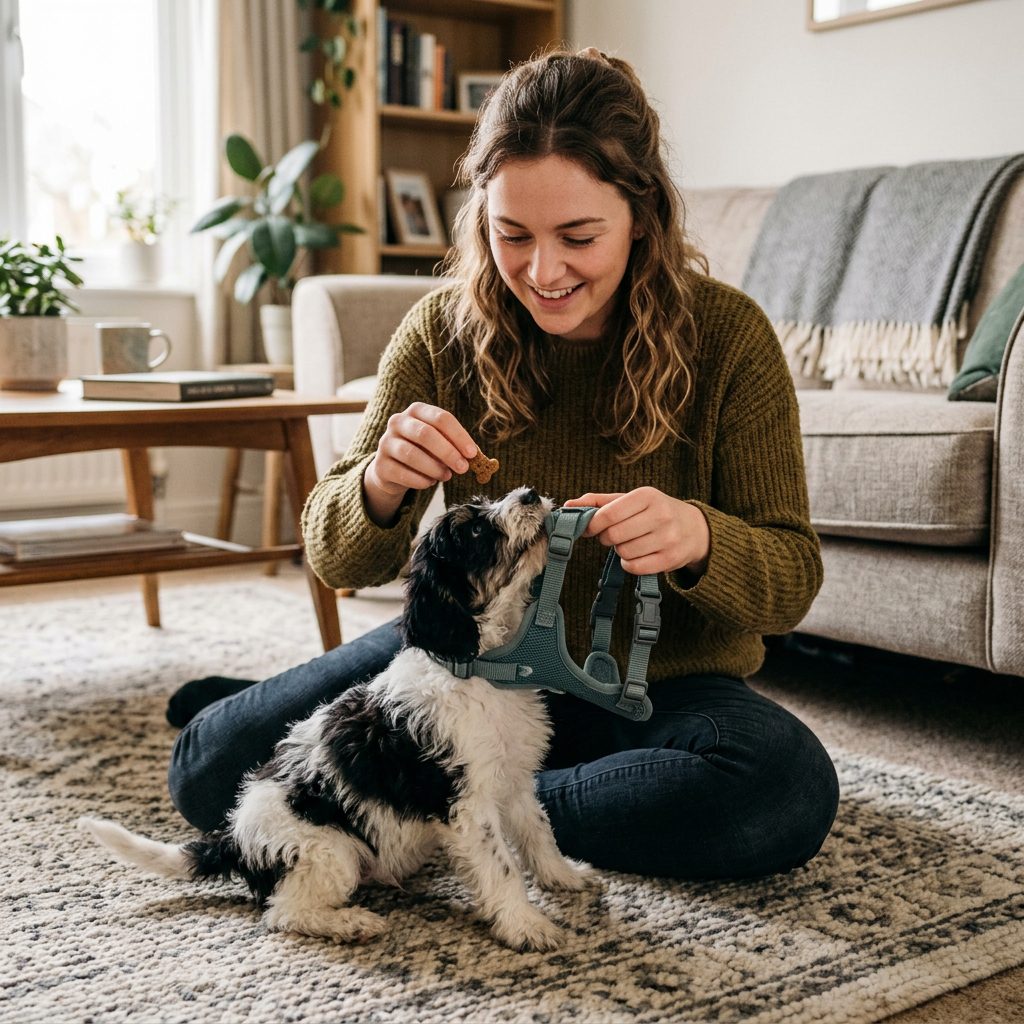
We start the training inside the house, far away from the car. The goal here is to make the harness a predictor of wonderful things. This is called Classical Conditioning. We want the puppy’s brain to go: Harness = Chicken = Happiness.
Step-by-Step Desensitization:
- The Sight: Place the harness on the floor. Every time your puppy looks at it or sniffs it, drop a treat. Do this for 2 minutes, then put the harness away.
- The Touch: Pick up the harness. Hold a treat through the neck hole. Let the puppy voluntarily put their head through the hole to get the treat. Do not force it over their head. Withdraw the harness and repeat.
- The Click: Once they are comfortable with the head-hole, buckle the side straps. The sound of the ‘click’ can be scary for some pups. Click the buckle, give a treat, unbuckle, and repeat.
- The Wear: Let your puppy wear the harness around the house during meal times or play sessions. This helps them realize that the harness doesn’t restrict their ability to have fun.
Be patient! Some puppies master this in ten minutes; others take three days. Never rush this phase, as it is the foundation of everything that follows.
Phase 2: From the Living Room to the Driveway
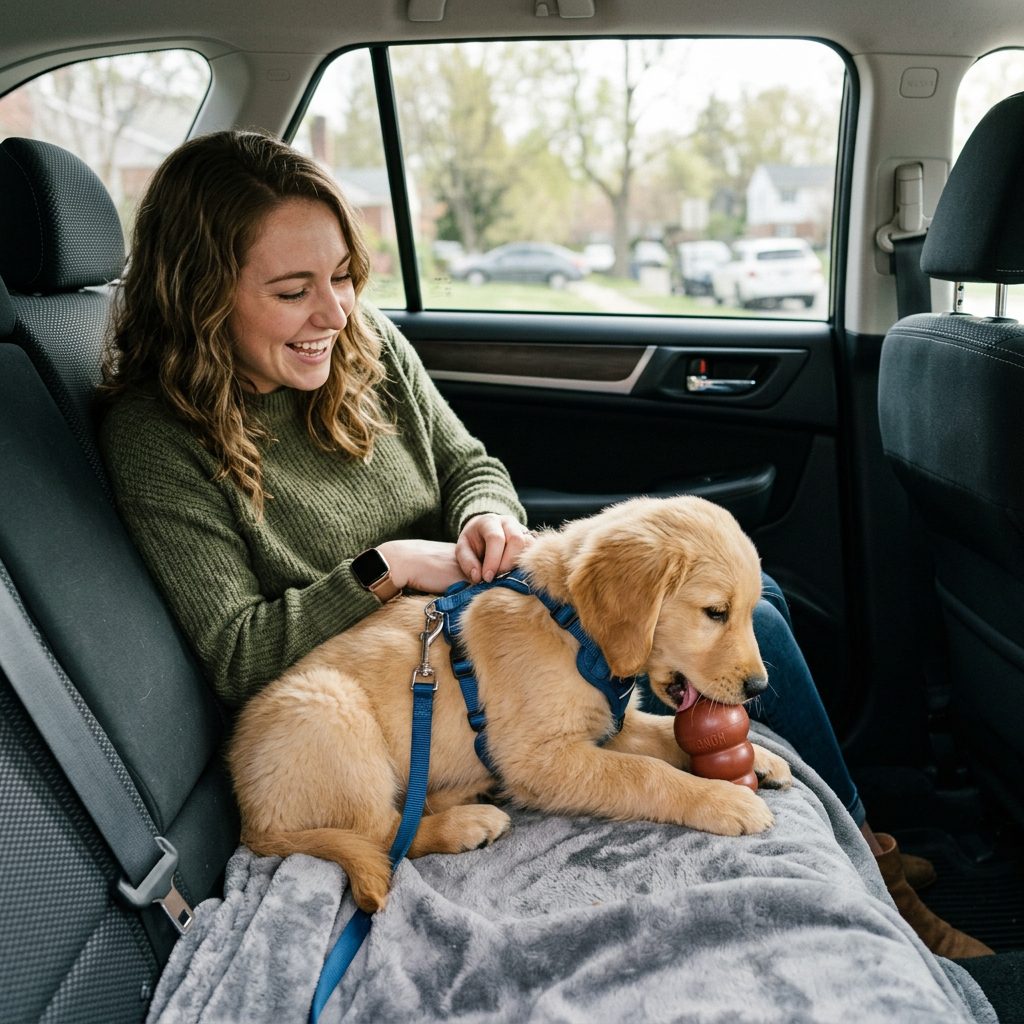
Now that your puppy loves wearing the harness, it’s time to introduce the car—but we aren’t going anywhere yet! This is the ‘Static Training’ phase. We want the car to be a stationary lounge where great things happen.
The Driveway Routine:
- The Approach: Walk your puppy to the car in their harness. If they show any signs of hesitation, stop, give a treat, and wait for them to relax before moving closer.
- The Entry: Open the door and invite them in. Use a ramp or lift them if they are small. Once inside, shower them with praise and treats.
- The Tether: Clip the harness to the seatbelt tether. Give them a long-lasting chew (like a stuffed Kong) and sit in the back seat with them for 5-10 minutes with the engine off.
- The Sound: Once they are relaxed, start the engine. Don’t move the car. Just let them get used to the vibration while they continue to enjoy their treats.
Expert Tip: Keep these sessions short—no more than 5 minutes at first. We want to end the session while the puppy is still having a great time, leaving them wanting more.
Phase 3: Short Trips and Success Milestones
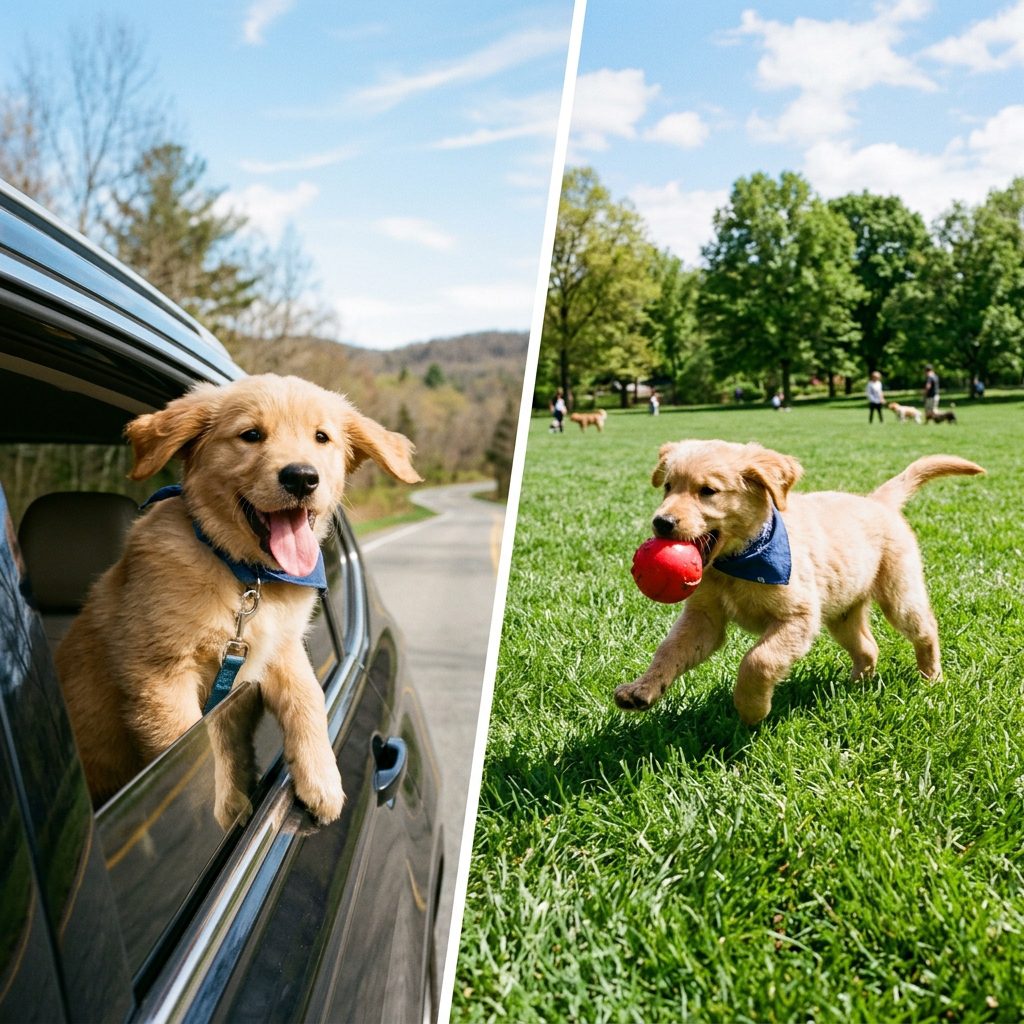
It’s time for the maiden voyage! The first few trips should be incredibly short and end somewhere fun. If the only time your puppy goes in the car is to go to the vet, they will quickly learn to hate the harness. We need to balance the ‘scary’ trips with ‘awesome’ trips.
The Progression Schedule:
| Week | Duration | Destination |
|---|---|---|
| Week 1 | 2-5 Minutes | Around the block and back home for a game of fetch. |
| Week 2 | 10 Minutes | A nearby park or a friend’s house. |
| Week 3 | 20 Minutes | A pet-friendly store or a drive-thru for a ‘Puppuccino.’ |
During these drives, pay close attention to body language. If your puppy starts panting excessively, drooling, or whining, you’ve gone too far too fast. Go back to the previous step. We are building confidence, not just tolerance. Remember to keep the car cool; puppies overheat easily, and heat can exacerbate feelings of nausea and anxiety.
Troubleshooting Common Roadblocks
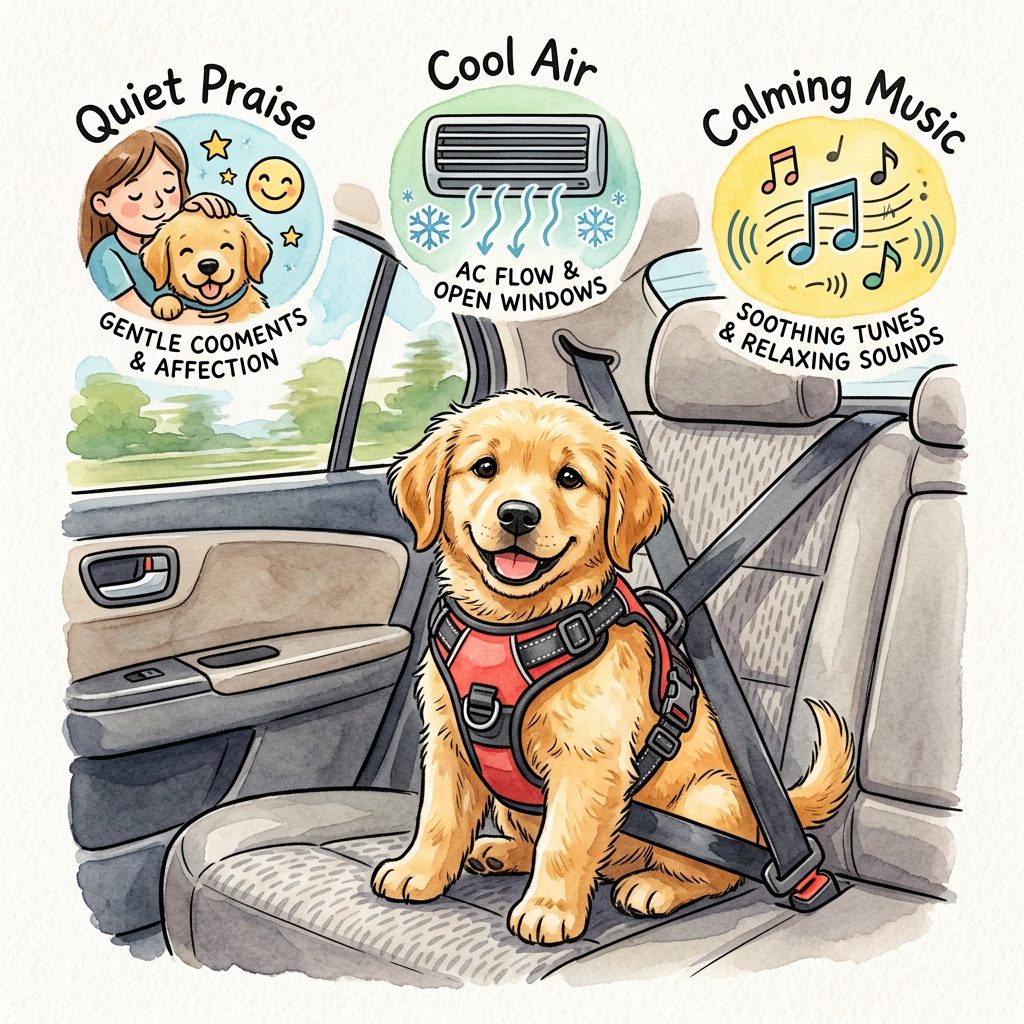
Even with the best training, you might hit a few bumps in the road. Here is how to handle the most common issues savvy owners face.
1. Motion Sickness
Sometimes the stress isn’t psychological—it’s physiological. If your puppy vomits every time, they will learn to fear the car. Consult your vet about over-the-counter or prescription anti-nausea medications. Often, once the puppy gets their ‘sea legs,’ the sickness subsides, but medication can prevent the fear from setting in during the interim.
2. The ‘Harness Chewer’
Puppies explore with their mouths. If your pup is trying to chew through the harness or tether, they might be bored or anxious. Provide a specific ‘car-only’ chew toy. You can also apply a pet-safe bitter spray to the straps of the harness (away from the puppy’s face) to discourage gnawing.
3. Excessive Whining
If the puppy whines, avoid the urge to constantly soothe them with ‘It’s okay, baby.’ This can sometimes reinforce the anxious behavior. Instead, reward moments of silence. Use a ‘white noise’ machine or calming music (studies show dogs love reggae and soft rock!) to drown out the road noise.
Takeaway: Consistency is key. If you only use the harness ‘sometimes,’ the puppy will never fully habituate to it. Make it a non-negotiable rule: No harness, no car ride.
Conclusion
Getting your puppy hooked on their car safety harness is one of the greatest gifts you can give them. It’s more than just a safety measure; it’s the key to a lifetime of shared adventures. By following this slow-and-steady approach, you are teaching your puppy that the world is a safe place and that you are a leader they can trust.
Remember, every puppy is an individual. Some will take to the harness like ducks to water, while others might need a few weeks of patient encouragement. Stay positive, keep the treats flowing, and soon enough, the sound of your car keys will have your pup running for their harness with a wagging tail. Happy travels, and enjoy those zero-stress rides!