How To Teach Puppy To Go Potty On Command Word Fast (Save Hours Outside!)
The Dream of the Quick Potty Break
We have all been there. It is 3:00 AM, the wind is howling, or perhaps it is a torrential downpour, and you are standing on your porch in your pajamas. Your puppy, however, thinks this is the perfect time to investigate every single blade of grass, sniff a distant neighbor’s trash can, and perhaps chase a phantom leaf. You are shivering, exhausted, and desperately wishing for a magic button that would make your puppy just go potty already. Well, as a canine specialist with years of experience, I am here to tell you that while there is no physical magic button, there is a psychological one. It is called the potty command.
Teaching your puppy to go potty on command is one of the most underrated yet life-changing skills you can instill. It is not just about convenience; it is about communication. Imagine being able to tell your dog, “Hey, we have a long car ride coming up, please empty your bladder now,” and having them actually do it. This guide is designed for the savvy dog owner who values their time and wants to build a deeper bond with their furry friend through clear, consistent training. We are going to dive deep into the science of canine association, the mechanics of the ‘capture’ method, and the troubleshooting steps you need to ensure success even when the squirrels are being particularly distracting. By the end of this article, you will have a comprehensive roadmap to saving hours of your life every single week. Let’s get started on turning those long, aimless wanders into efficient, successful potty breaks!
The Science of Association: Why Command Words Work
Building the Pavlovian Response
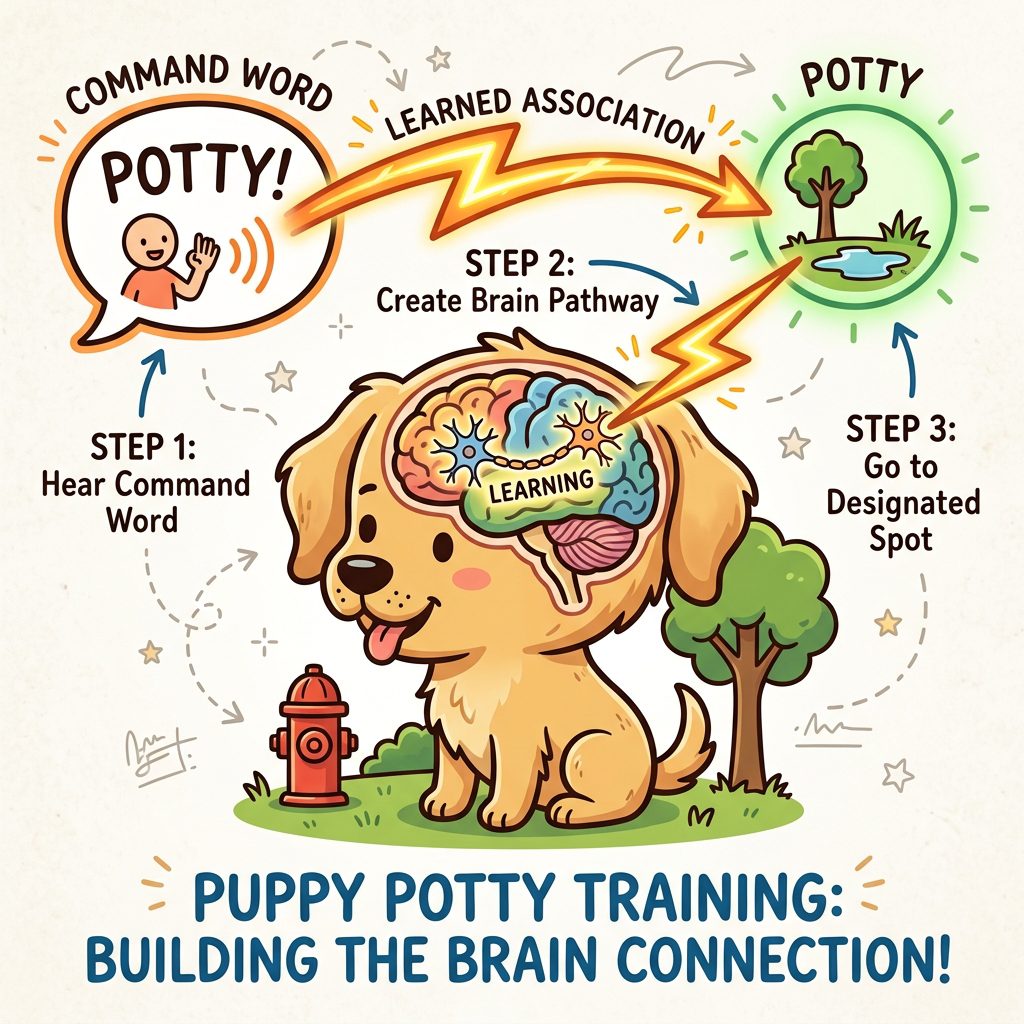
At its core, teaching a potty command relies on classical conditioning. You are essentially creating a bridge between a specific sound (your command word) and a physical sensation (the act of eliminating). Puppies are biological machines of habit. When they are young, their bladders are small, and their ability to hold it is limited, but their brains are like sponges. By consistently pairing a word with the exact moment of relief, you are hardwiring their brain to associate that sound with the physical urge to go.
It is important to understand that puppies do not naturally understand English. To them, “Hurry Up” or “Go Potty” is just a sequence of noises. The magic happens when that noise is followed by the physical act and then an immediate, high-value reward. This creates a dopamine hit in the puppy’s brain. Over time, the sound of the command itself can actually stimulate the physical urge to eliminate because the puppy’s body is anticipating the reward and the relief that follows. This is why timing is so critical. If you say the word while the puppy is busy sniffing a flower, you are associating the word with sniffing flowers, not going potty. We want to ‘capture’ the behavior as it happens.
Pro Tip: Choose a command word that you are comfortable saying in public. While ‘Do your business’ is classic, ‘Hurry up’ is great for busy mornings. Avoid words you use in everyday conversation to prevent confusion!
The Essential Toolkit for Fast Success
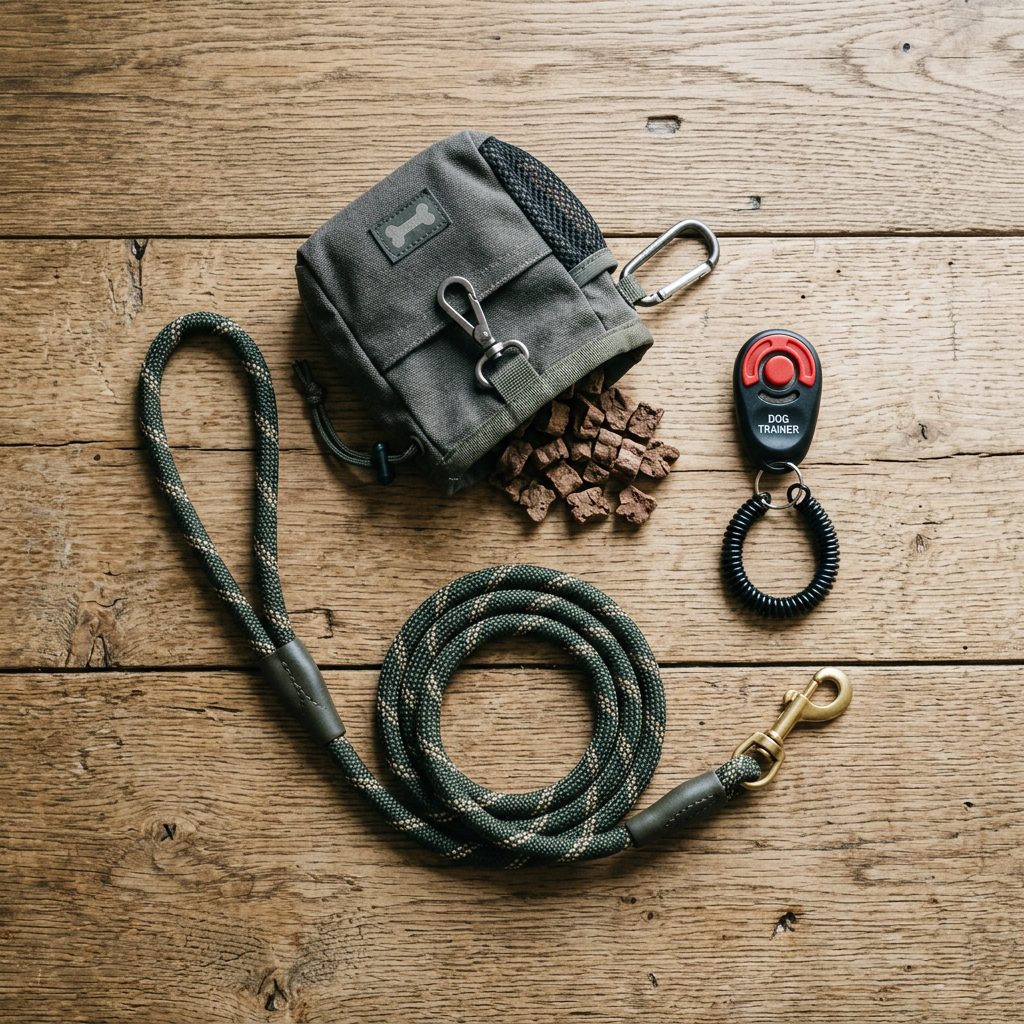
Gear Up for Training Efficiency
Before you head outside, you need to have your tools ready. You cannot teach a command effectively if you are fumbling for treats or if your puppy is off-leash and distracted. A savvy owner knows that preparation is half the battle. You need a dedicated ‘training leash’—usually a standard 6-foot lead. This prevents the puppy from wandering too far and keeps them focused on the task at hand. You also need ‘jackpot’ treats. These are not your everyday kibble; these are high-value, smelly, and delicious morsels that your puppy only gets for successful potty command execution.
| Tool | Purpose | Expert Recommendation |
|---|---|---|
| 6-Foot Fixed Leash | Prevents wandering and maintains focus. | Nylon or leather (avoid retractable leashes). |
| High-Value Treats | Immediate positive reinforcement. | Freeze-dried liver, small cheese cubes, or boiled chicken. |
| Treat Pouch | Quick access to rewards. | A clip-on pouch for hands-free movement. |
| Clicker (Optional) | Precise marking of the behavior. | A standard box clicker or a consistent ‘Yes!’ verbal marker. |
| Consistent Potty Spot | Reduces environmental distractions. | A quiet patch of grass or a specific mulch area. |
The reason we avoid retractable leashes during this phase is that they provide inconsistent tension. We want the puppy to feel a gentle boundary. If they have 20 feet of line, they are on an adventure. If they have 6 feet, they are in a ‘work zone.’ Similarly, the potty spot should be boring. If you take them to a park with other dogs and kids, their brain will be too stimulated to listen to a new command. Stick to the same dull corner of your yard until the command is mastered.
The 5-Step ‘Go Now’ Protocol
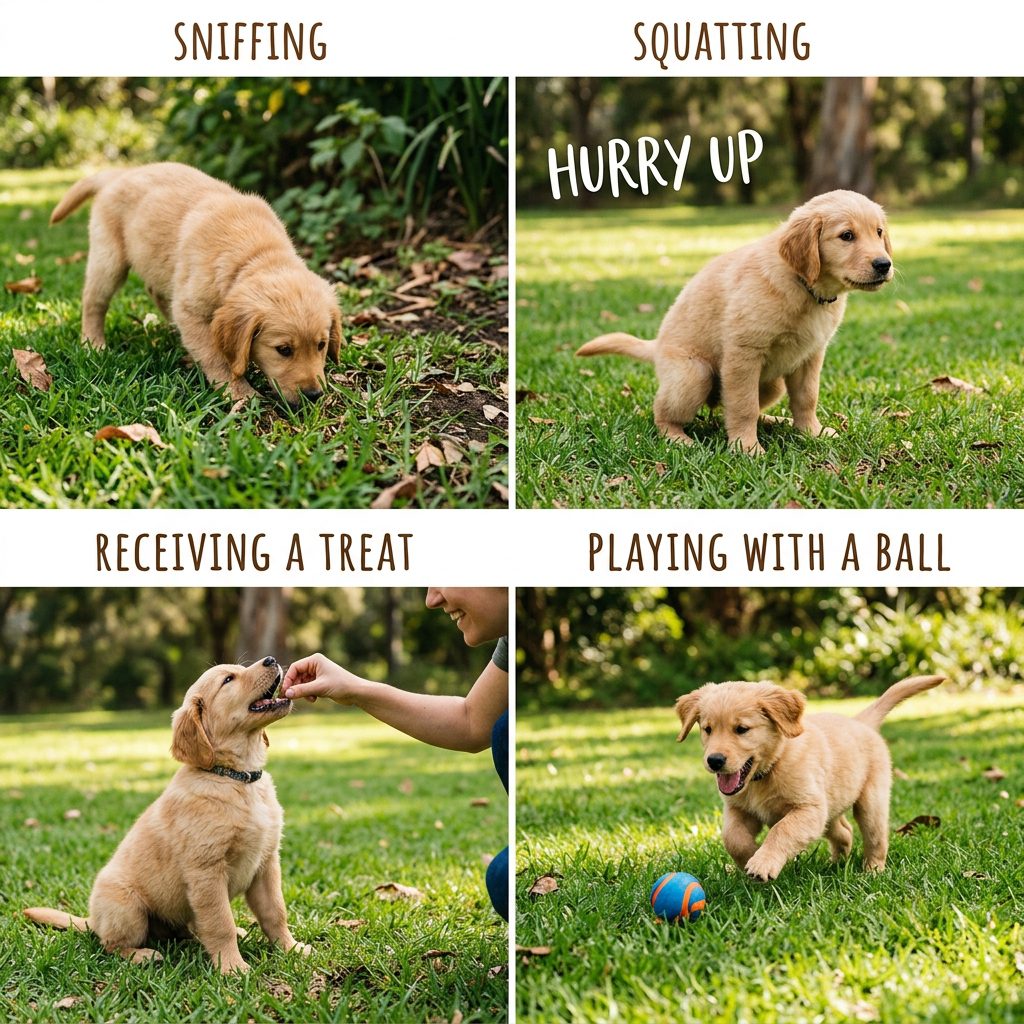
Step 1: The Golden Timing
You must set your puppy up for success by taking them out when you know they have to go. This is usually immediately after waking up, 15 minutes after eating or drinking, or after a vigorous play session. If you try to teach the command when their bladder is empty, you are just talking to the wind.
Step 2: The Boring Walk
Lead your puppy to the designated spot on their leash. Do not play with them. Do not talk to them yet. Stand relatively still and let them sniff. This is the ‘pre-flight check.’ They are looking for the right scent cues to stimulate their system.
Step 3: The Command (The Capture)
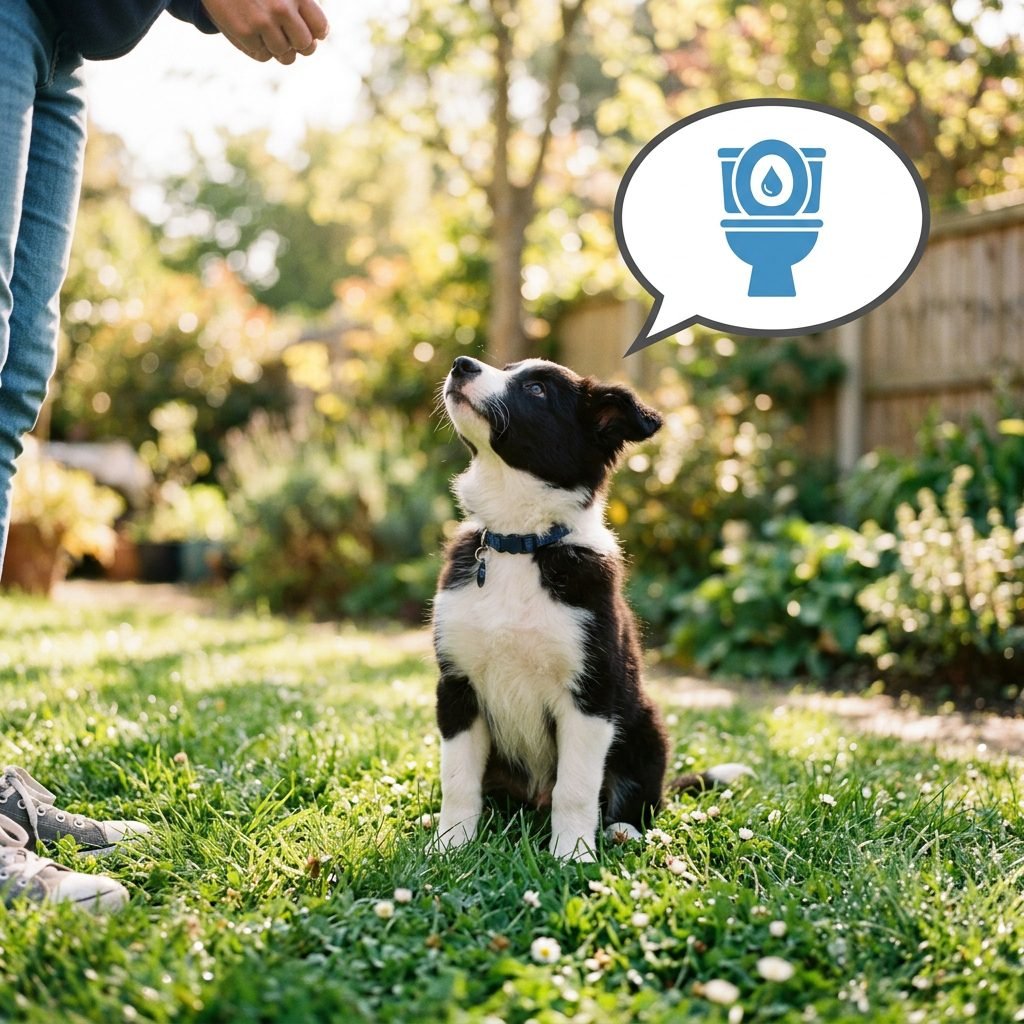
This is the most critical step. Wait until the puppy actually begins to circle or squat. The moment they start to go, say your command word clearly and calmly once. ‘Hurry up.’ You are ‘capturing’ the behavior. Do not repeat it like a broken record; saying ‘Hurry up, hurry up, hurry up’ just becomes background noise.
Step 4: The Mark and Reward
As soon as they finish, immediately mark the behavior with a ‘Yes!’ or a click, and deliver a jackpot of treats. You want to throw a mini-party! This reinforces that the act of going potty on that specific cue is the best thing they have ever done. Timing is everything; if you wait until you get back inside to give the treat, the puppy thinks they are being rewarded for walking through the door.
Step 5: The Release
Once they have finished and been rewarded, give them a release command like ‘Okay!’ or ‘Free dog!’ and allow them a few minutes of sniffing or play. This teaches them that going potty quickly actually leads to more fun, rather than the end of the outdoor time. Many puppies hold their potty because they know as soon as they go, they have to go back inside!
Troubleshooting Distractions and Weather
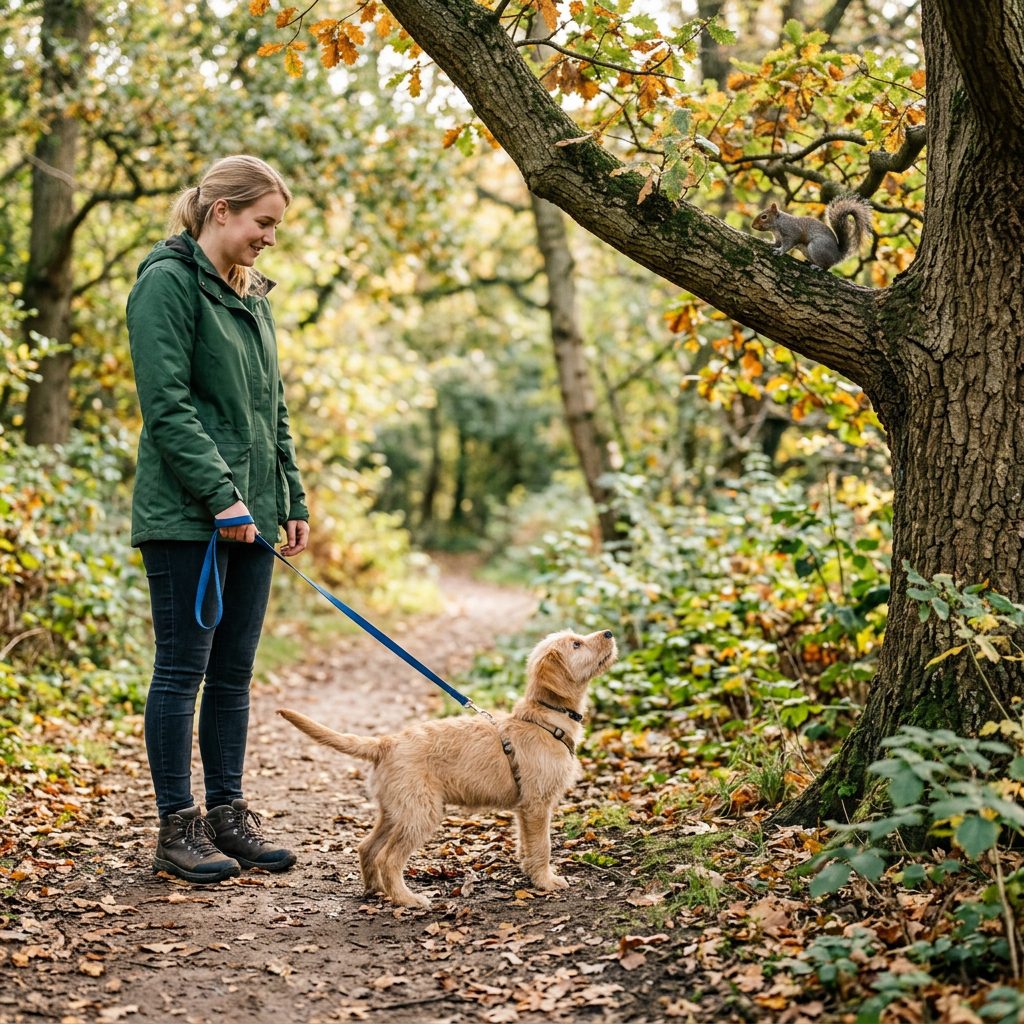
When Things Don’t Go to Plan
Even the smartest puppy will have off days. Maybe there is a squirrel in the tree, or maybe it is snowing. Savvy owners know how to pivot. If your puppy is too distracted to go within 5 to 10 minutes, do not just stay out there for an hour. This teaches the puppy that they can dawdle indefinitely. Instead, use the ‘Inside-Outside’ Reset.
Take the puppy back inside, but keep them on the leash or put them in their crate for 10-15 minutes. Supervise them closely. Then, try again. Because they had a full bladder and were denied the chance to go, their physical urge will be stronger the second time, making them more likely to focus on the task. When they finally go, double the reward! For weather issues, like rain, you may need to be a bit more patient, but the principle remains: keep it boring, wait for the squat, capture the word, and reward heavily. Eventually, the command word will become so strong it will override their dislike of wet paws.
Expert Tip: If your puppy is consistently distracted by the same thing (like a neighbor’s dog), change your training time or slightly move the potty spot to a more shielded area. Control the environment to control the outcome.
Common Mistakes That Slow Down Progress
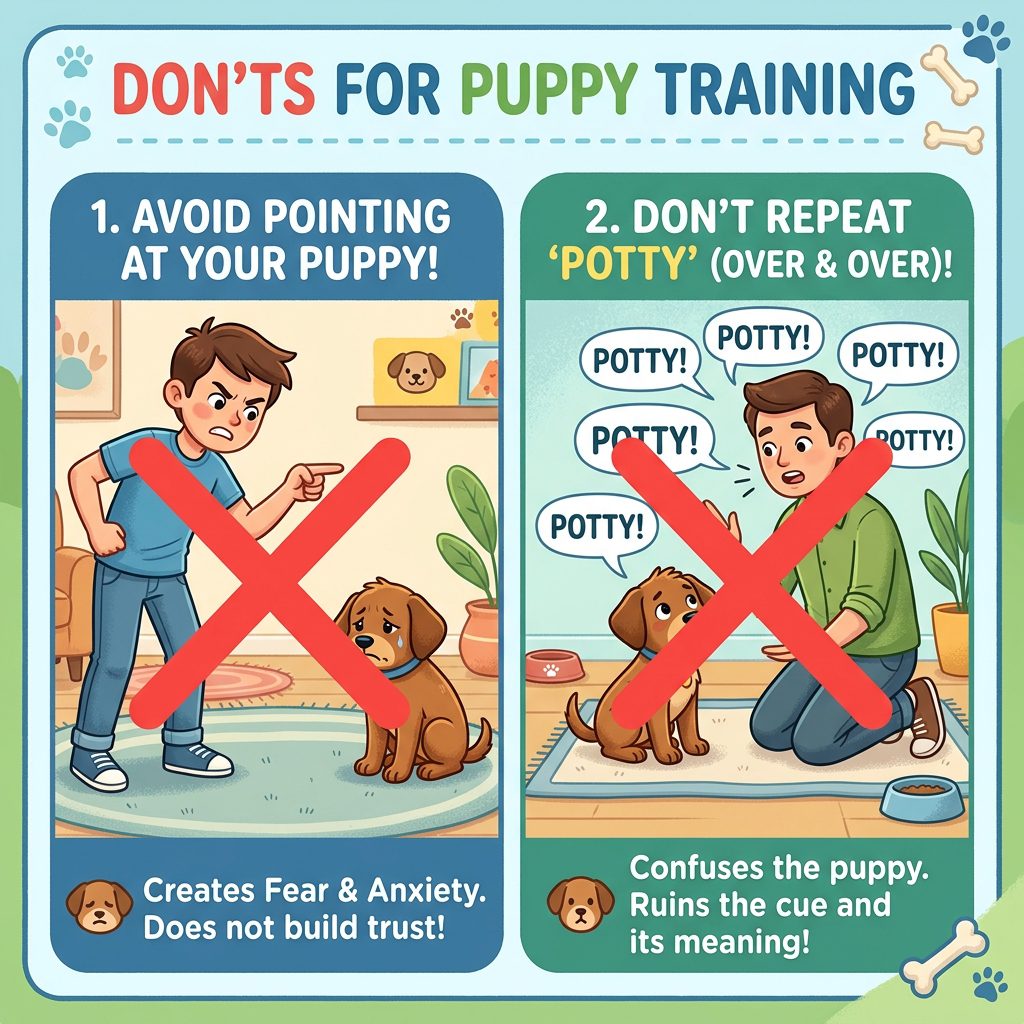
Avoiding the ‘Nagging’ Trap
One of the biggest mistakes owners make is ‘nagging’ the dog. If you stand outside and say ‘Go potty’ every ten seconds, the words lose all meaning. It becomes ‘white noise.’ The puppy learns that they don’t have to respond to the first, second, or tenth command. Only say the word when you are 90% sure they are about to go. Once the association is strong (after about 2-3 weeks of consistent capturing), you can start saying the word as you arrive at the spot to prompt the behavior.
Another mistake is punishing accidents. If your puppy goes inside, it is a failure of supervision, not a failure of the command. Punishing them will only make them afraid to go in front of you, which will actually make them less likely to go on command outside because they are trying to ‘hide’ the act from you. Stay positive, stay consistent, and focus on rewarding the wins rather than dwelling on the losses.
Transitioning to Off-Leash
Do not rush to take the leash off. The leash is your communication line. Only once your puppy is responding to the command 9 times out of 10 should you try it without the physical tether. Even then, stay close and keep the rewards coming. Potty training is a marathon, not a sprint, but with the command word, you are running at a much faster pace!
Maintaining the Habit for Life
Consistency is the Key to Longevity
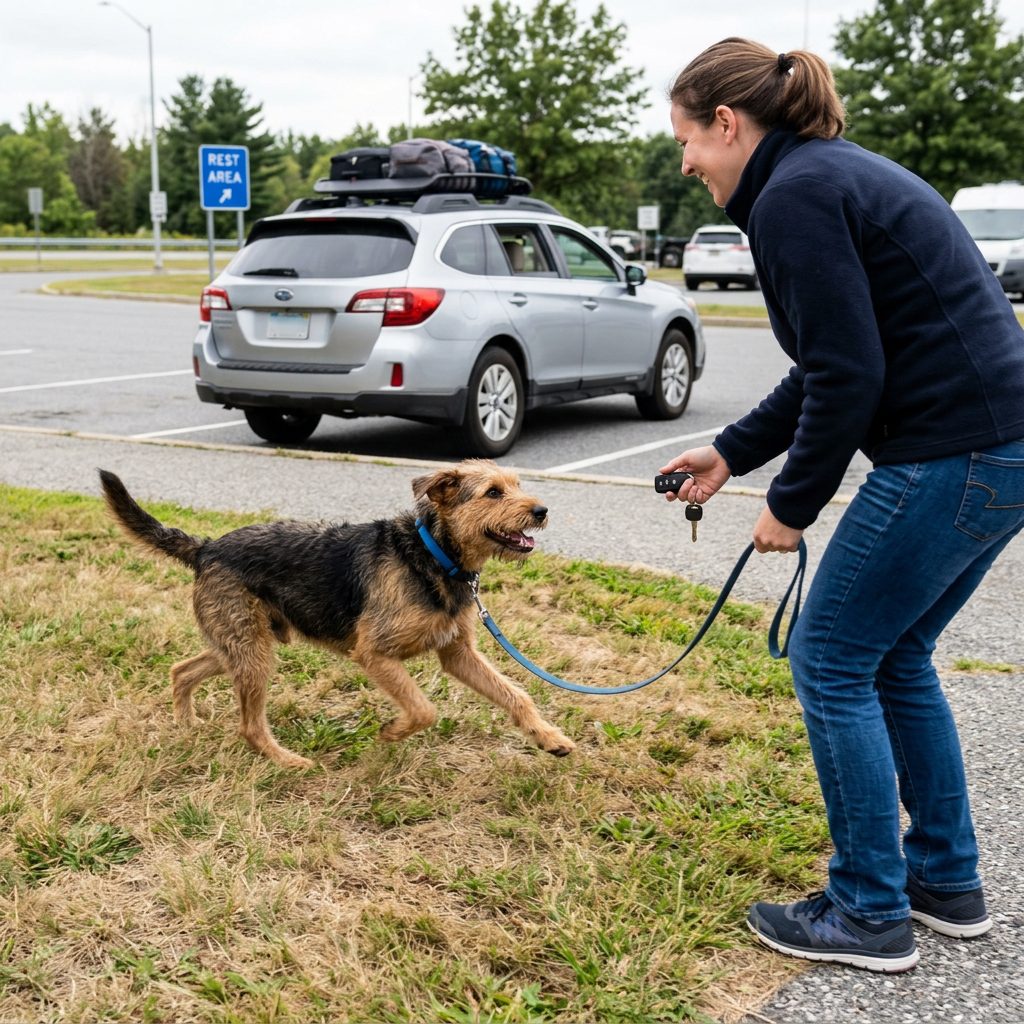
Once your puppy has mastered the potty command, don’t stop using it! It is a ‘use it or lose it’ skill. Continue to use the cue whenever you are in a rush or in a new environment, like a rest stop during a road trip. Always carry a few treats in your pocket or offer plenty of verbal praise. You want the puppy to feel that responding to your cue is always a winning move.
As your puppy matures into an adult dog, their bladder control will improve, and their focus will sharpen. The ‘Hurry Up’ command will become a reliable tool in your parenting arsenal. You will be the envy of the neighborhood, standing calmly while your dog efficiently handles their business, while others are stuck circling the block for the twentieth time. Remember, the goal is a happy, confident dog and a stress-free owner. You’ve got this!
Conclusion
Your New Life Starts Now
Teaching your puppy to go potty on command is more than just a party trick; it is a fundamental part of responsible and savvy dog ownership. By following the steps outlined in this guide—understanding the science, using the right tools, capturing the behavior, and troubleshooting like a pro—you are reclaiming hours of your time and reducing the stress of puppyhood. No more shivering in the rain, no more late-night frustrations, and no more guessing games. You and your puppy are now a team, communicating through a shared language that makes life easier for both of you. So, grab those high-value treats, head outside, and start ‘capturing’ those wins. Happy training!