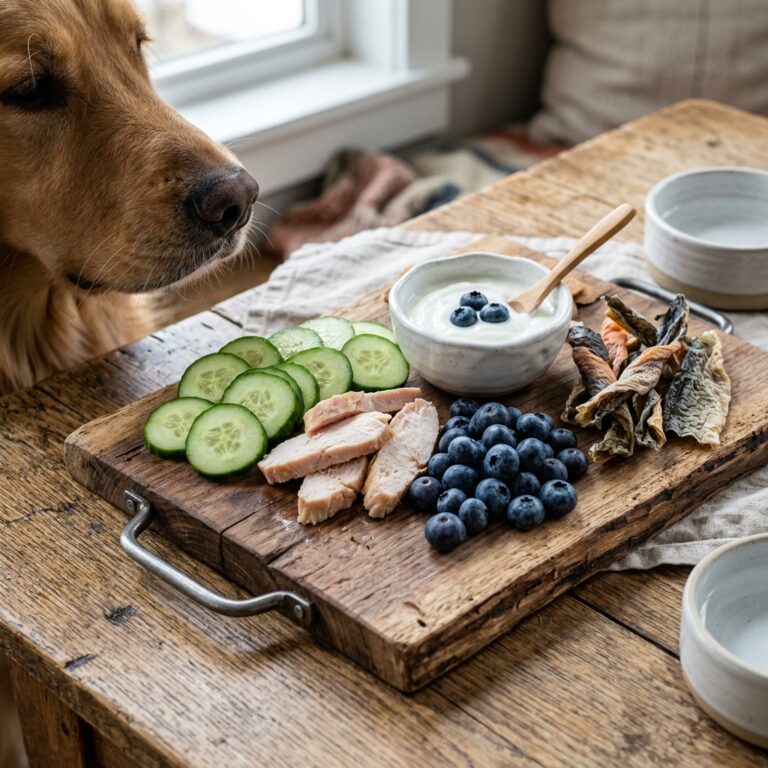
Stop Buying Expensive Jerky! Make These Dehydrated Pork Loin Dog Treats for Pennies
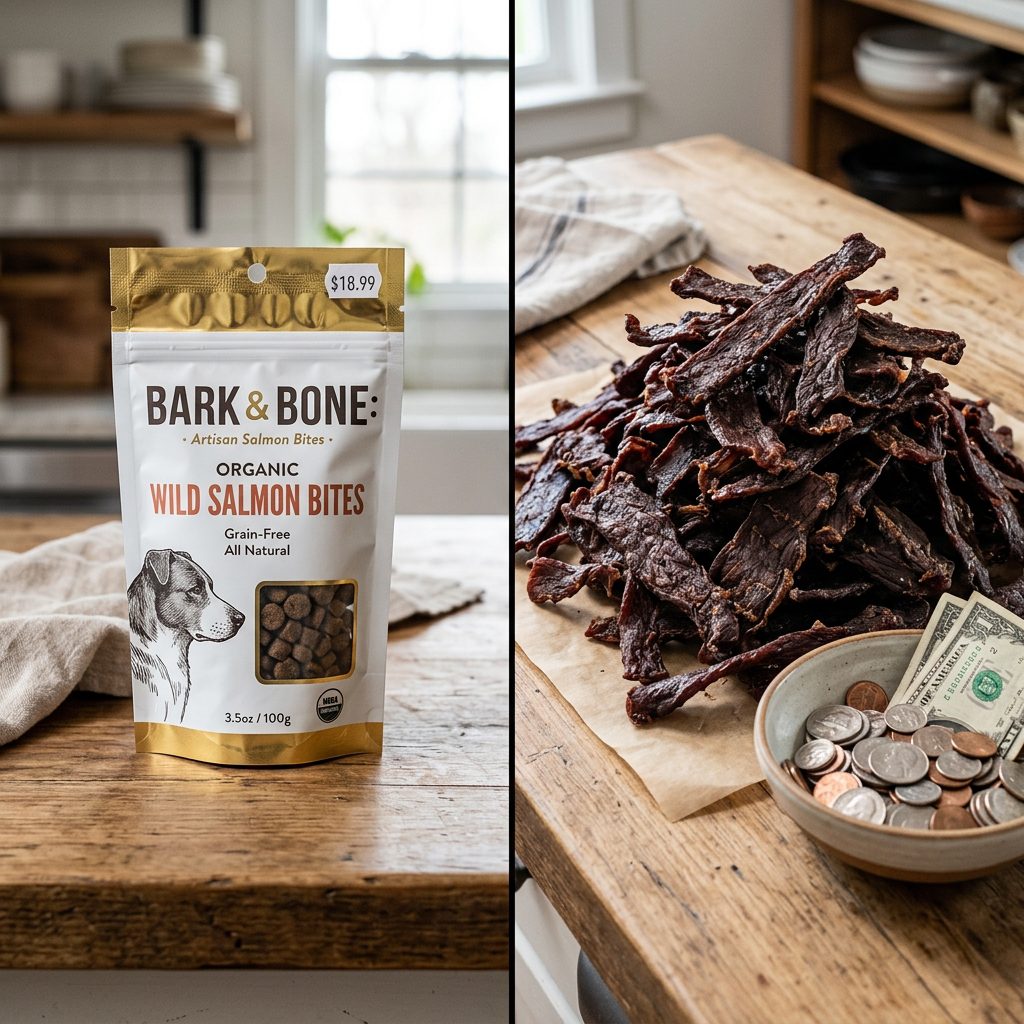
Let’s have a heart-to-heart about the “Jerky Tax.” You know what I’m talking about—those small, 4-ounce bags of “artisanal” dog jerky that retail for $15.99. You look at the back of the bag, and what do you see? A list of ingredients that includes glycerin, sugar, salt, and potassium sorbate. Why are we paying premium steak prices for processed meat scraps and chemical binders? As the Canine Nutrition Hacker, I’m here to tell you that you are being overcharged for convenience that actually compromises your dog’s health.
Today, we are reclaiming our kitchen and our wallets. I’m going to show you how to take a standard pork loin—one of the most underrated, lean proteins in the grocery store—and turn it into high-value, shelf-stable jerky that will have your dog doing backflips. We aren’t just saving money; we are eliminating the fillers that cause inflammation and weight gain. We are talking about 100% pure protein for pennies on the dollar. Grab your apron; it’s time to hack the system.
The Safe Chef Guide: Safety and Transparency First
A Necessary Word of Caution
Before we dive into the meat of the matter (pun intended), let’s get the legalities out of the way. I am a dedicated dog owner and a nutrition enthusiast, but I am not a veterinarian or a board-certified veterinary nutritionist. These treats are intended as supplemental snacks, not a complete and balanced meal replacement. While pork loin is a fantastic protein source, your dog still needs their primary diet to meet AAFCO standards for essential vitamins and minerals.
Why Pork Loin?
There is a common myth that pork is “too fatty” for dogs. This stems from people feeding their dogs bacon or ham. Pork Loin (not to be confused with pork tenderloin, though both are lean) is actually incredibly low in fat when trimmed properly. It is rich in Thiamine (Vitamin B1), which is essential for cell function, and Phosphorus, which supports bone health. By dehydrating it yourself, you control the fat content and eliminate the risk of pancreatitis associated with high-fat scraps.
Insider Secret: Always source your pork from reputable suppliers to ensure it is trichinella-free. Most modern commercial pork in the US is safe, but the dehydration process at 160°F provides an extra layer of safety.
The Real Cost Breakdown: DIY vs. Store-Bought
Exposing the Jerky Markup
If you walk into a boutique pet store, you’ll find dehydrated pork or beef jerky selling for roughly $3.00 to $5.00 per ounce. When you calculate that per pound, you’re paying upwards of $80/lb. That is more expensive than a Prime Filet Mignon at a 5-star steakhouse! Here is the cold, hard truth of what you’re actually paying for versus what it costs to do it yourself.
| Feature | Premium Store Brand Jerky | DIY Dehydrated Pork Loin |
|---|---|---|
| Price Per Pound (Finished) | $48.00 – $80.00 | $8.00 – $12.00 |
| Primary Ingredient | Meat + Glycerin + Sugar | 100% Lean Pork Loin |
| Preservatives | Chemical (Potassium Sorbate) | Natural (Heat & Air) |
| Origin of Meat | Often Sourced Globally | Locally Sourced Human-Grade |
The Savings Analysis
When you buy a 5lb pork loin on sale for $2.49/lb, you spend roughly $12.45. After trimming and dehydration (where the meat loses about 60-70% of its weight in water), you are left with approximately 1.5 to 2 lbs of pure, high-density jerky. Your total cost is about $0.50 per ounce. You are saving over 80% compared to the “big box” brands. Over a year, if you use treats for training, this hack can save you over $500.
The Nutrition Hacker’s Actionable Recipe
The 100% Pork Jerky Protocol
This recipe requires no fancy marinades, no salt, and definitely no sugar. We are letting the natural umami of the pork do the heavy lifting. This makes it safe for dogs with heart issues or those on low-sodium diets.
Ingredients & Tools
- 1 Whole Pork Loin (3-5 lbs, trimmed of all visible fat).
- A Sharp Knife (or a meat slicer for those who want professional consistency).
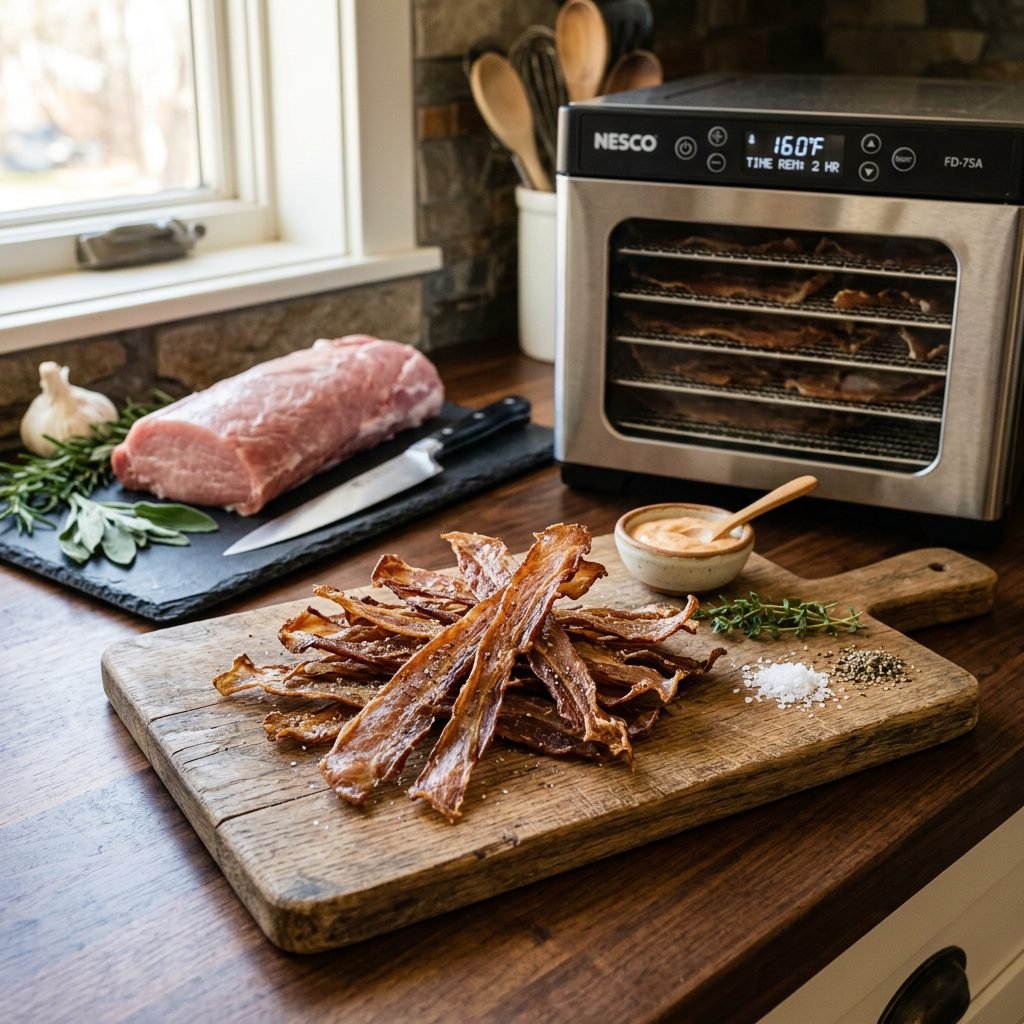
- A Food Dehydrator (or an oven with a low-temperature setting).
Step-by-Step Instructions
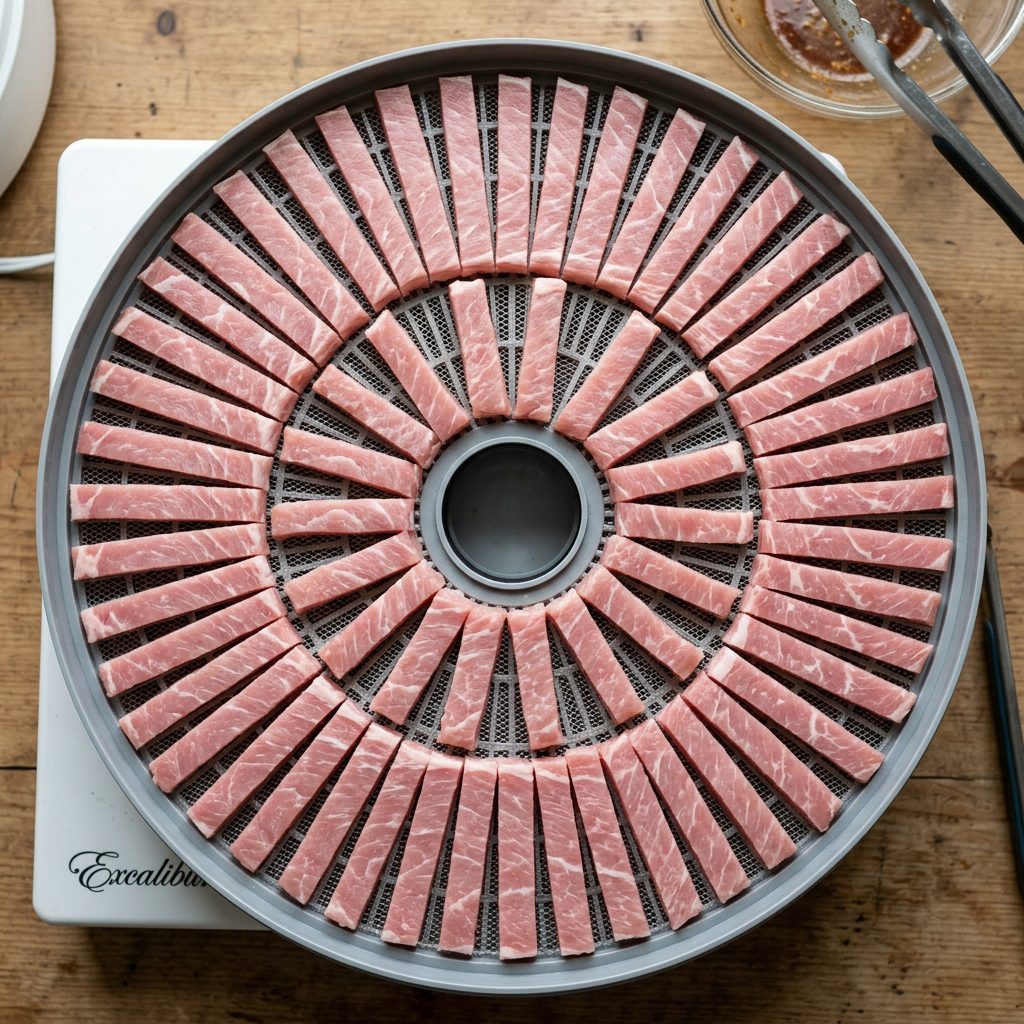
- The Firm-Up Hack: Place your pork loin in the freezer for about 60-90 minutes before slicing. You don’t want it frozen solid, just firm. This allows you to cut consistent, paper-thin strips which dehydrate evenly.
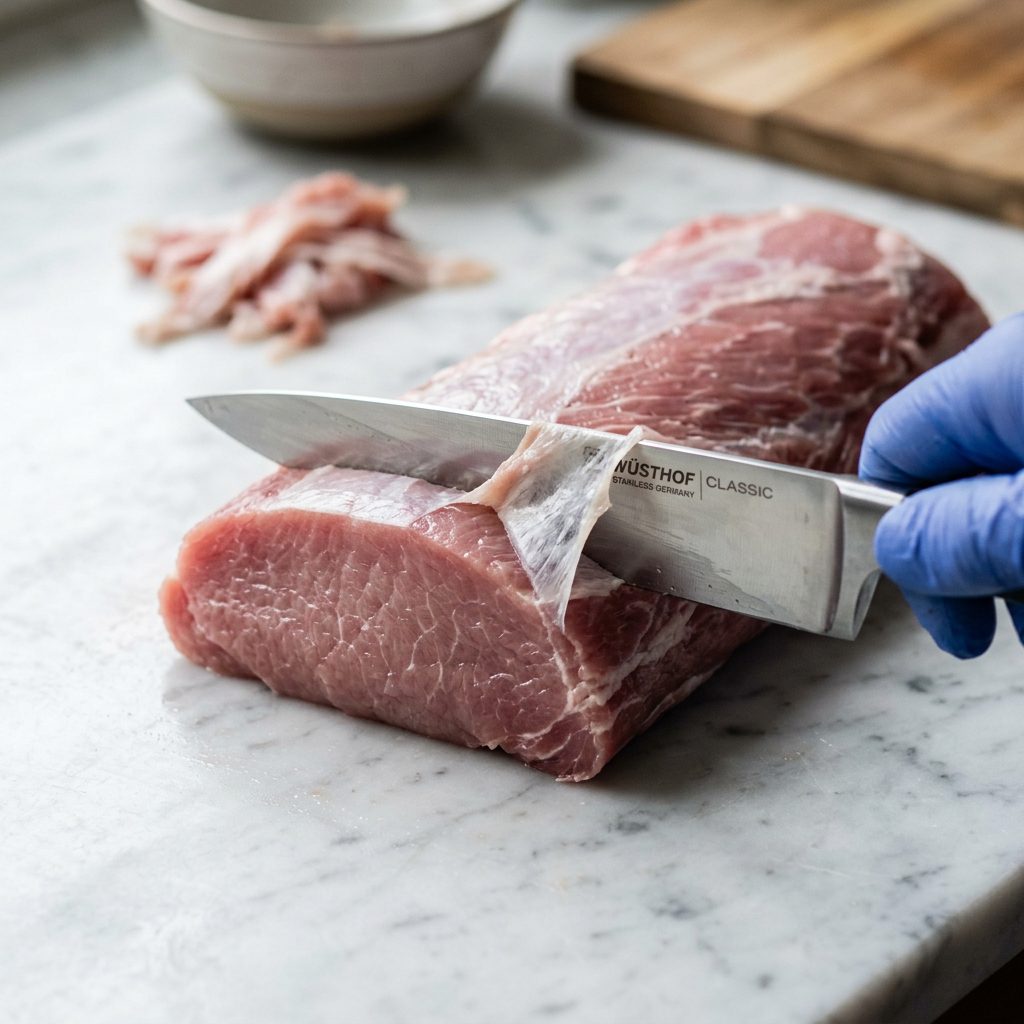
- The Trim: Remove the “fat cap” and any silver skin. Fat does not dehydrate; it turns rancid. For a shelf-stable treat, lean is king.
- The Slice: Cut the pork into strips approximately 1/8 to 1/4 inch thick. Remember, the meat will shrink by half, so don’t go too thin or they will become brittle shards.
- The Load: Arrange the strips on your dehydrator trays. Ensure they are not touching to allow for maximum airflow.
- The Blast: Set your dehydrator to 160°F (71°C). This temperature is crucial for food safety to kill any potential bacteria or parasites.
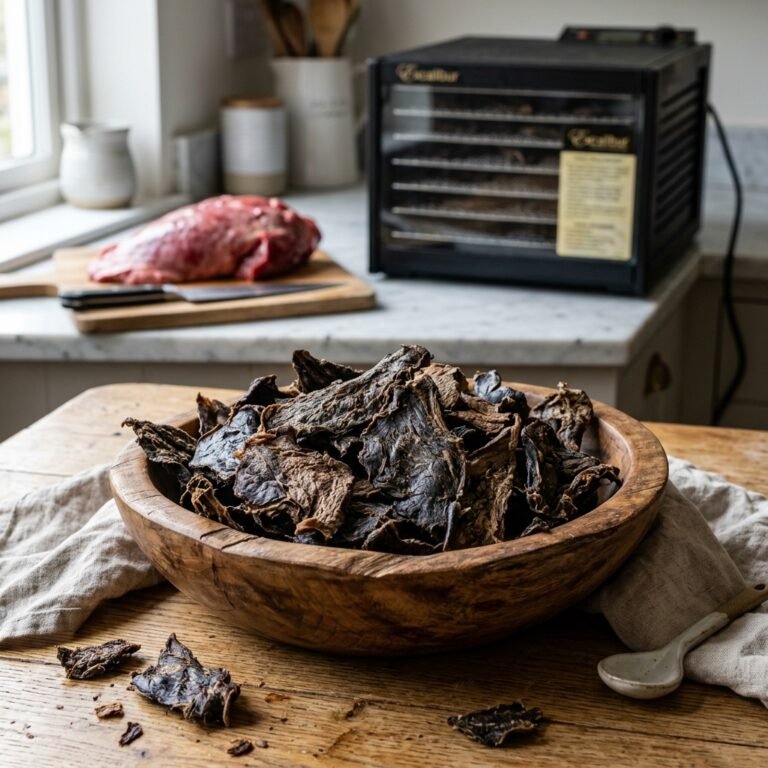
- The Wait: Dehydrate for 6 to 10 hours. The jerky is done when it “snaps” rather than bends, and no moisture is visible when you tear a piece open.
Equipment Mastery: Dehydrator vs. Oven
Which Tool is Right for You?
You don’t need to go out and buy a $500 stainless steel dehydrator to start saving money today. However, there are pros and cons to each method that every savvy owner should know.
The Oven Method
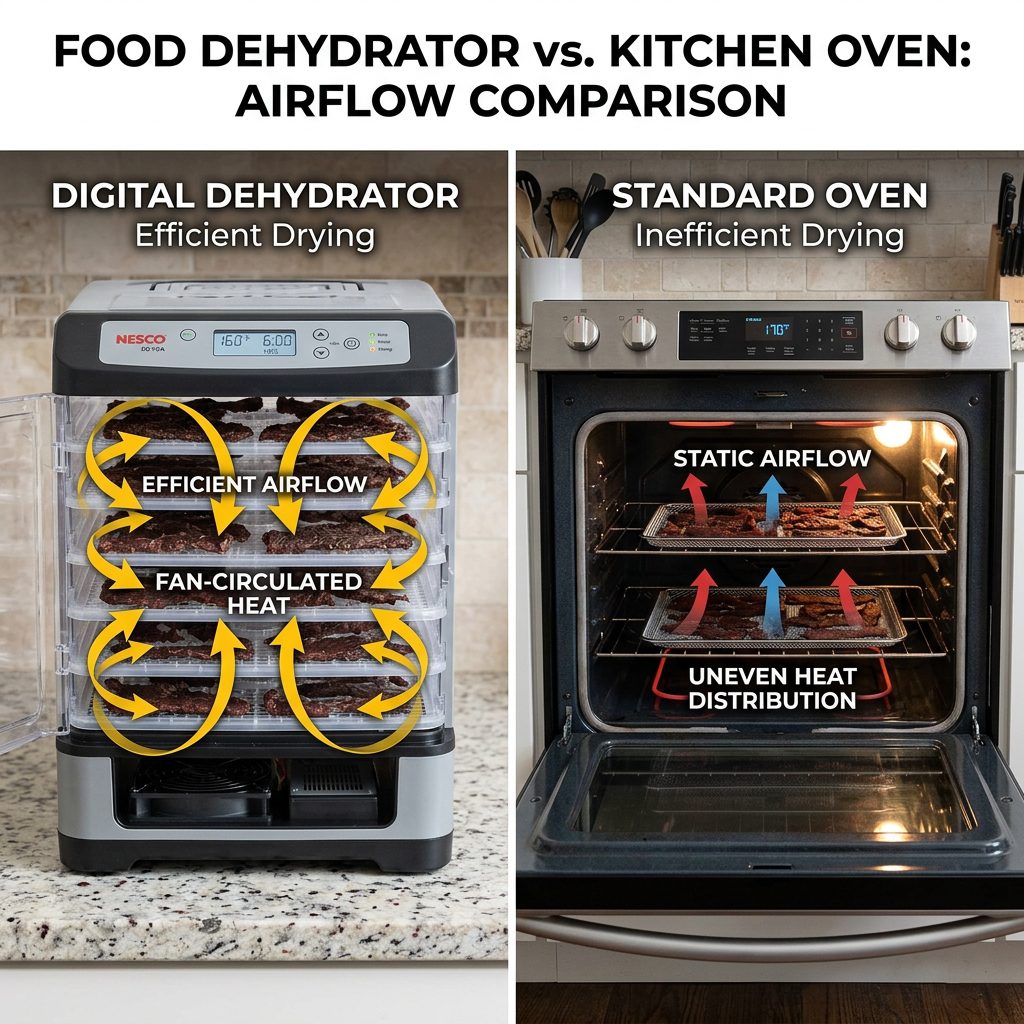
Most modern ovens only go down to 170°F. If you use your oven, use the lowest setting and prop the door open slightly with a wooden spoon to allow moisture to escape. Place the meat on wire cooling racks over baking sheets to ensure airflow reaches the bottom of the strips. Warning: This method is less energy-efficient and requires closer monitoring to prevent scorching.
The Dehydrator Advantage
A dedicated dehydrator (even a budget-friendly circular one) is a game-changer. It uses a fraction of the electricity of an oven and features a fan specifically designed to pull moisture out of the meat. If you plan on making treats once a month, a $50 dehydrator will pay for itself in just two batches.
Hacker Tip: Look for a dehydrator with a rear-mounted fan (like an Excalibur or a Cosori). These provide much more even heat distribution than bottom-mounted fans, meaning you don’t have to rotate trays halfway through.
Storage and Shelf-Life Secrets
Keeping the Crunch
Because we aren’t using chemical preservatives or massive amounts of salt, we have to be smart about storage. Moisture is the enemy of your hard work. If your jerky isn’t fully dried, it will mold within days.
The “Snap” Test
Before storing, take a piece and let it cool to room temperature. If it bends like leather, it still has moisture. If it snaps like a cracker, it’s ready. Never bag warm jerky; the residual heat will create condensation inside the bag, leading to immediate spoilage.
Storage Tiers
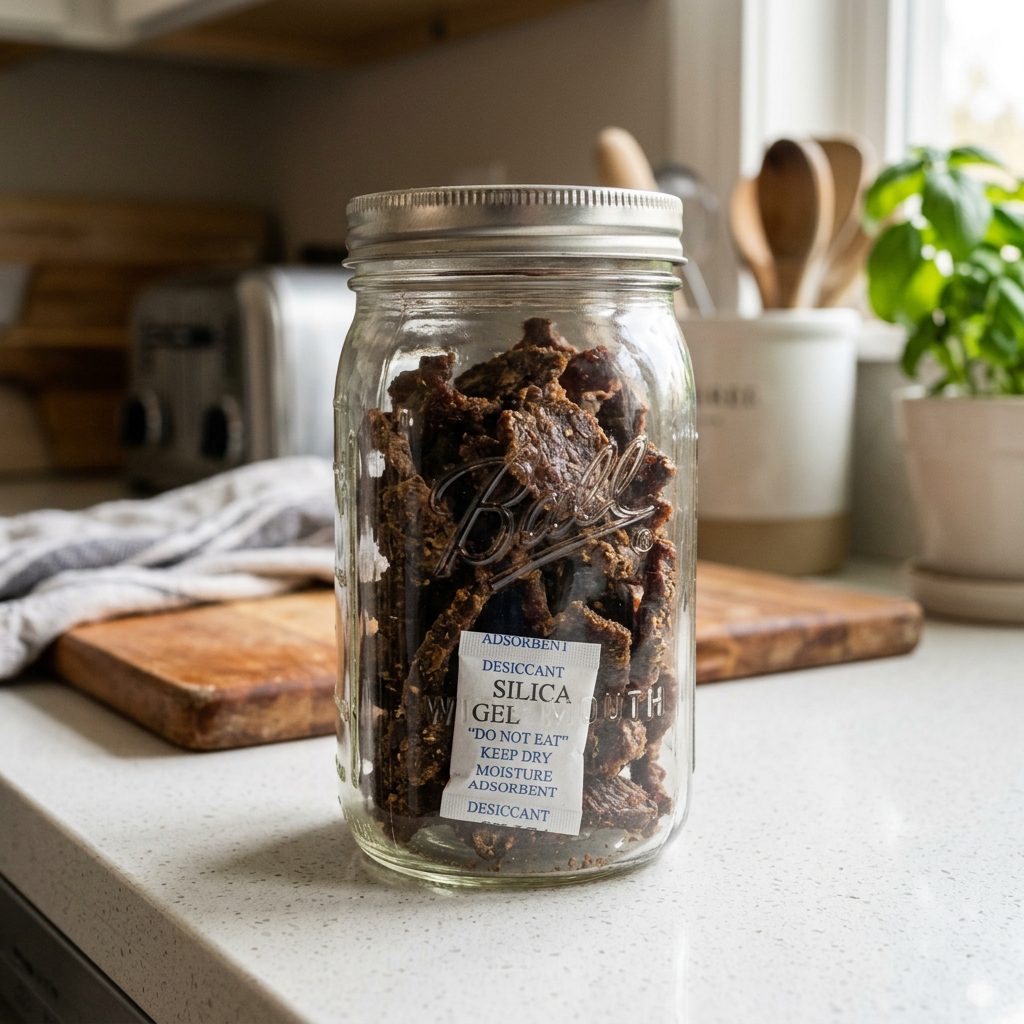
- Countertop: In an airtight glass jar for 5-7 days (only if perfectly dehydrated).
- Refrigerator: In a sealed bag for up to 3 weeks.
- Freezer: The ultimate hack. These treats freeze beautifully. I keep a small jar in the fridge and the “bulk” of the batch in the freezer for up to 6 months.
Pro Tip: Toss a food-grade oxygen absorber or a silica gel packet (the kind you find in shoe boxes, but buy them fresh/clean online) into your storage container to significantly extend shelf life.
Troubleshooting and Flavor Hacks
What to Do If Things Go Wrong
Is your jerky too tough? Your dog won’t care, but you might have sliced it against the grain. Slicing against the grain makes the jerky easier to break into smaller pieces for training. Slicing with the grain creates a long-lasting chew that is harder to tear.
Safe Flavor Boosters
If you want to get fancy without the chemicals, try these “hacker” additions before dehydrating:
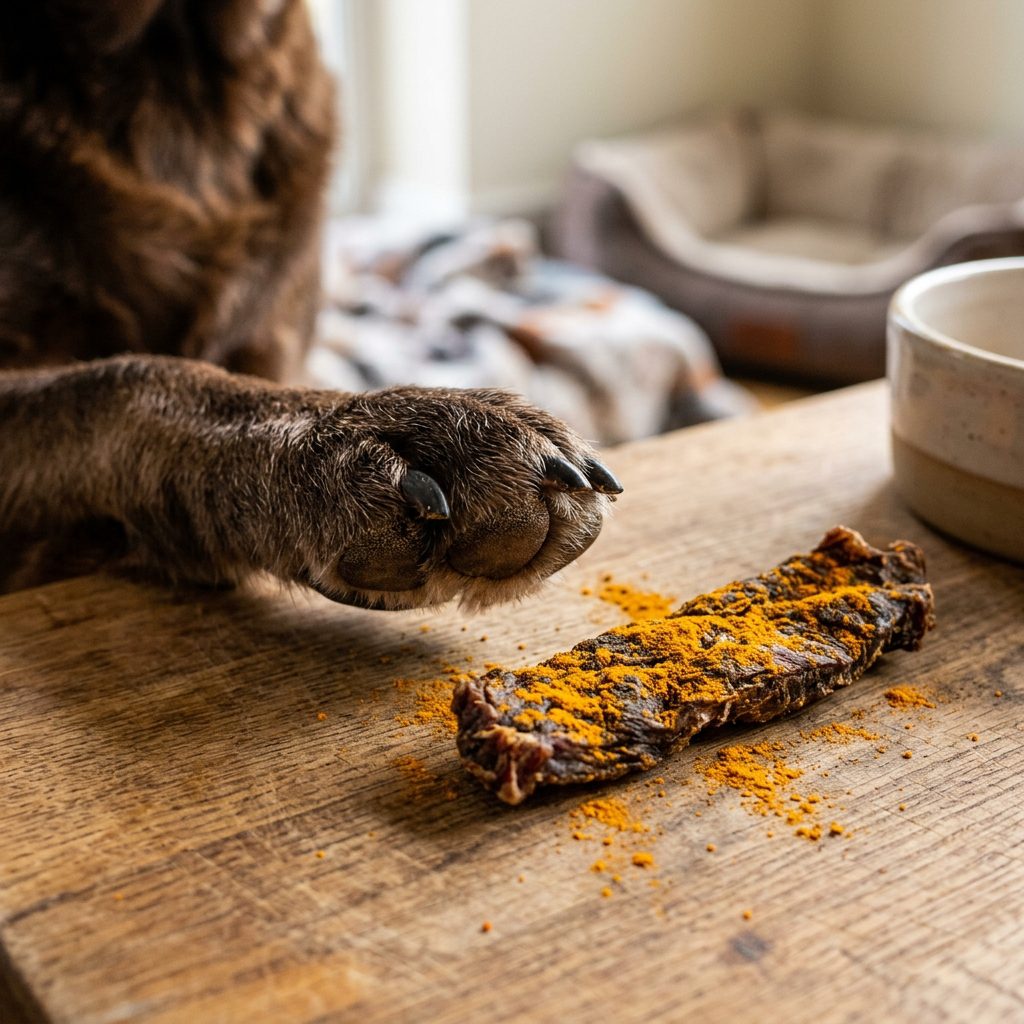
- Turmeric Dusting: Great for inflammation.
- Parsley Flakes: Helps with doggy breath.
- Ginger Powder: Excellent for dogs with sensitive stomachs or motion sickness.
Simply toss your raw slices in a bowl with a teaspoon of these spices (no salt!) before laying them on the trays. Avoid garlic powder and onion powder at all costs, as these are toxic to dogs.
Conclusion
Making your own dehydrated pork loin dog treats is more than just a DIY project; it’s a statement against the overpriced, low-quality pet food industry. By spending twenty minutes prepping a pork loin once a month, you are providing your dog with a single-ingredient, high-protein snack that supports their health and rewards their loyalty. You’ve cut out the glycerin, the hidden sugars, and the “jerky tax.” Your dog gets the best, and you keep the change. That’s how you win the nutrition game. Happy hacking!