
Fire Truck Terror? How to Desensitize Your Puppy to Loud Sirens in 5 Easy Steps
The Piercing Sound of Panic
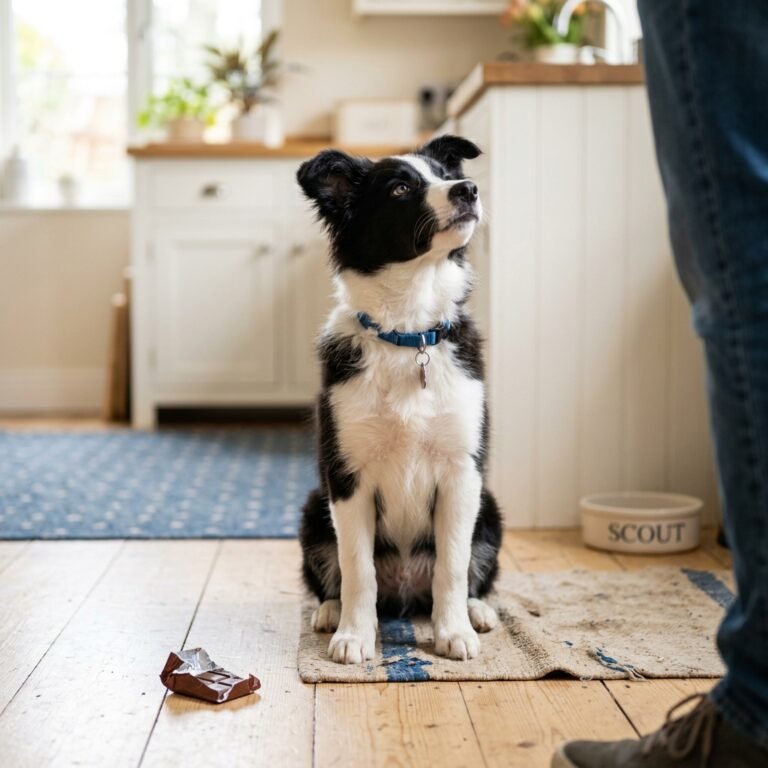
We’ve all been there: you’re enjoying a peaceful walk with your new puppy when suddenly, the air is split by the bone-chilling wail of a fire truck or ambulance. Your puppy’s reaction is immediate—perhaps they scramble to hide behind your legs, let out a frantic series of barks, or simply freeze in place, trembling with fear. This isn’t just a minor inconvenience; it’s a moment of sensory overload for a young dog whose ears are significantly more sensitive than our own.
As savvy dog owners, we know that early socialization is the key to a well-adjusted adult dog. However, loud sirens present a unique challenge. Unlike a vacuum cleaner or a doorbell, sirens are unpredictable, incredibly loud, and often accompanied by high-speed movement and flashing lights. If left unaddressed, this ‘fire truck terror’ can blossom into generalized noise phobia, making urban walks a stressful ordeal for both ends of the leash.
The good news? You can transform those sirens from a signal of fear into a cue for calm. By using the principles of desensitization and counter-conditioning, you can teach your puppy that the big, loud, red truck is actually a harbinger of delicious treats and praise. In this comprehensive guide, we will break down the science of canine hearing and walk you through a proven 5-step process to reclaim your peaceful walks.
Understanding the ‘Why’ Behind the Wails
Why Do Puppies Fear Sirens?
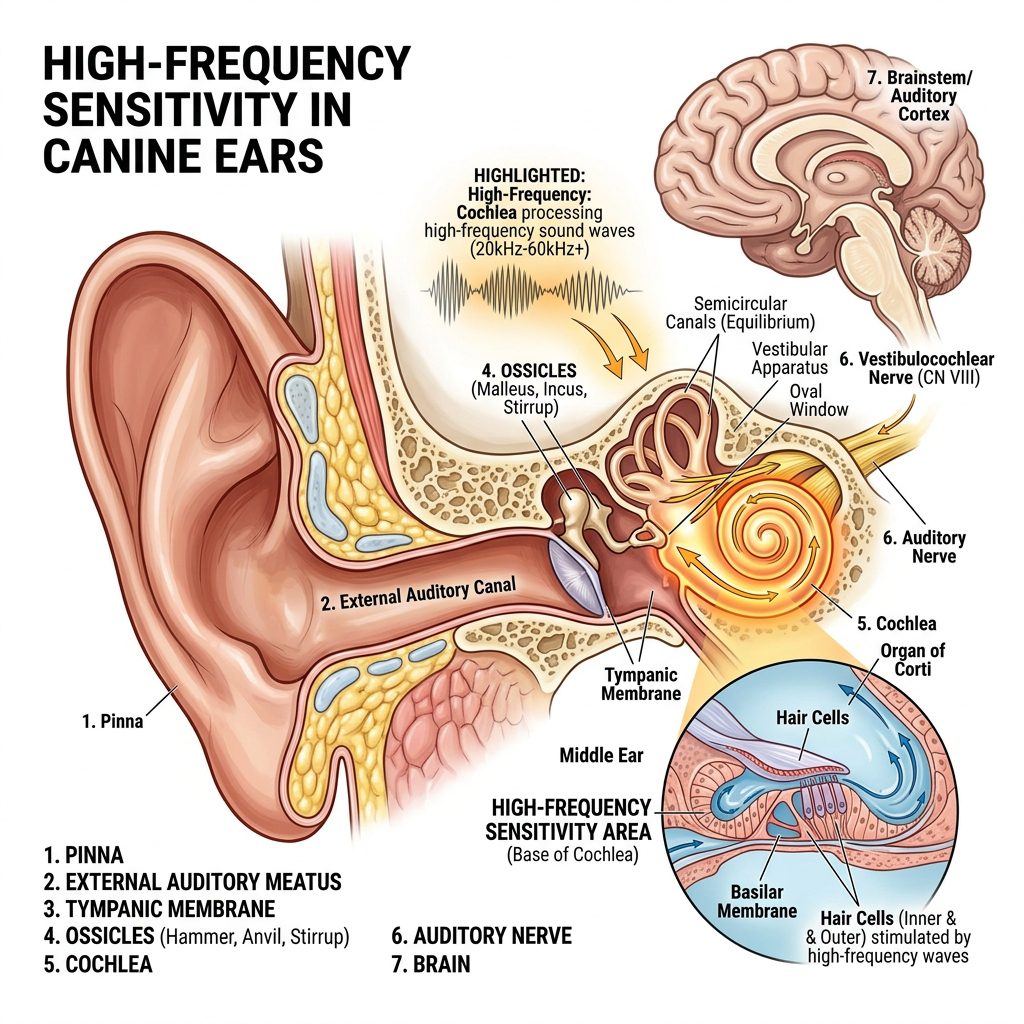
To solve the problem, we first have to understand the puppy’s perspective. A dog’s sense of hearing is roughly four times more acute than a human’s. They can hear frequencies that are completely silent to us. When a siren blares, it isn’t just loud; it can actually be physically uncomfortable or even painful for a young, developing ear.
The Evolutionary Response
From an evolutionary standpoint, a sudden, high-pitched, fluctuating sound is a massive red flag. In the wild, such sounds often indicate distress or a predator. Your puppy’s brain is hardwired to trigger the amygdala, the part of the brain responsible for the ‘fight, flight, or freeze’ response. When that fire truck roars past, your puppy isn’t being ‘dramatic’—their biology is telling them they are in immediate danger.
The Howling Phenomenon
Interestingly, not all puppies react with fear. Some react by howling. This is often a ‘contact call.’ Because sirens mimic the frequency of a wolf’s howl, some dogs believe a distant ‘pack member’ is calling out, and they feel the need to respond. While less stressful than fear, howling can still be problematic in quiet neighborhoods. Our goal is to move the puppy from a state of high arousal (fear or howling) to a state of neutrality.
Pro Tip: Never punish a puppy for being afraid of a siren. Punishment only confirms their suspicion that the siren is a ‘bad’ thing, creating a negative feedback loop that is much harder to break.
The Toolkit: Preparing for Success
What You Need Before You Start
Desensitization is a marathon, not a sprint. To succeed, you need the right environment and the right rewards. You cannot start this training while a real fire truck is screaming past your house; that is far too much ‘stimulus’ for a beginner.
High-Value Rewards
During noise training, kibble usually won’t cut it. You need ‘jackpot’ treats—things your puppy rarely gets and absolutely loves. This creates a powerful positive association.
| Reward Type | Value Level | Best Use Case |
|---|---|---|
| Standard Kibble | Low | Daily manners training |
| Store-bought Biscuits | Medium | Distraction in low-noise areas |
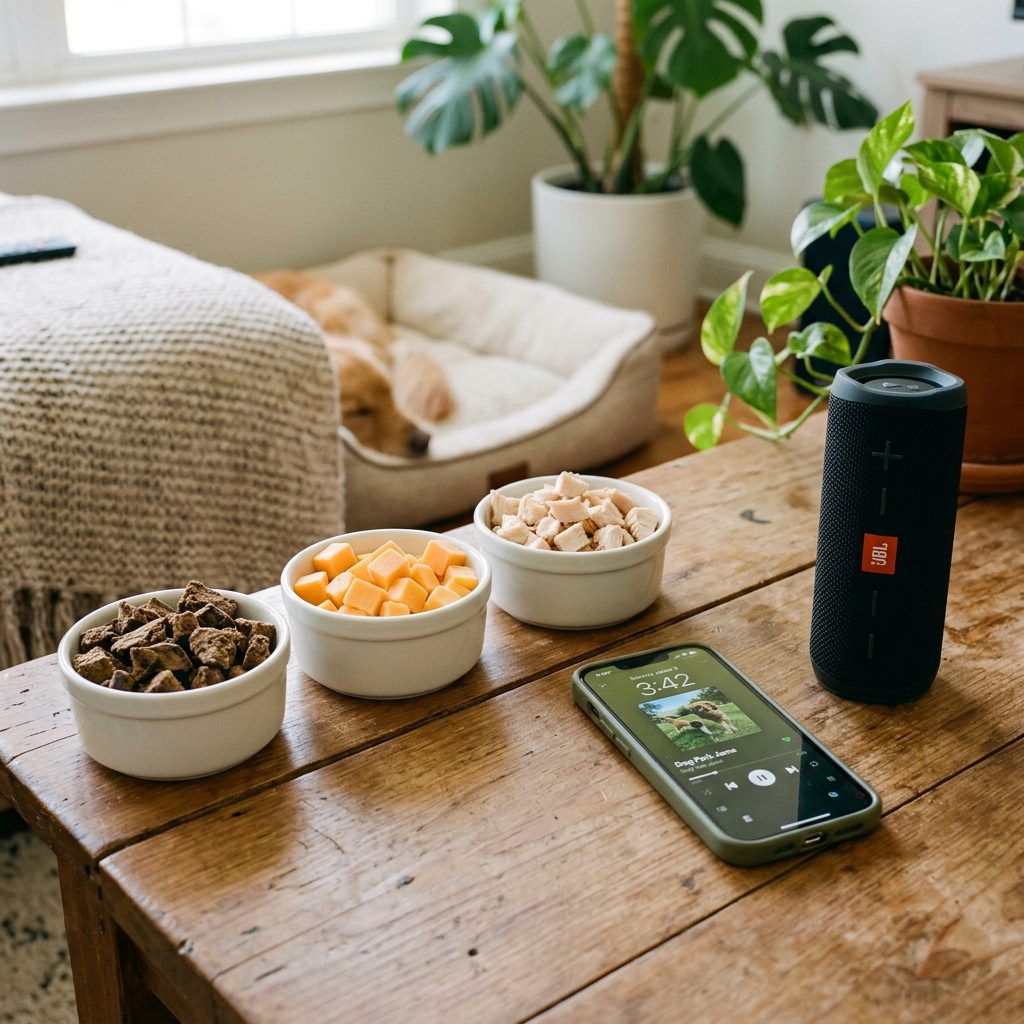
| Boiled Chicken / String Cheese | High | Initial siren sound recordings |
| Freeze-dried Liver / Salmon | Ultra-High | Real-world fire truck encounters |
The Sound Source
You will need a way to play siren sounds at a controlled volume. A smartphone paired with a high-quality Bluetooth speaker is ideal. There are many ‘Dog Desensitization’ playlists available on platforms like YouTube or Spotify that include various emergency vehicle sounds.
The 5-Step Desensitization Process
Step 1: The ‘Whisper’ Phase (Low Volume)
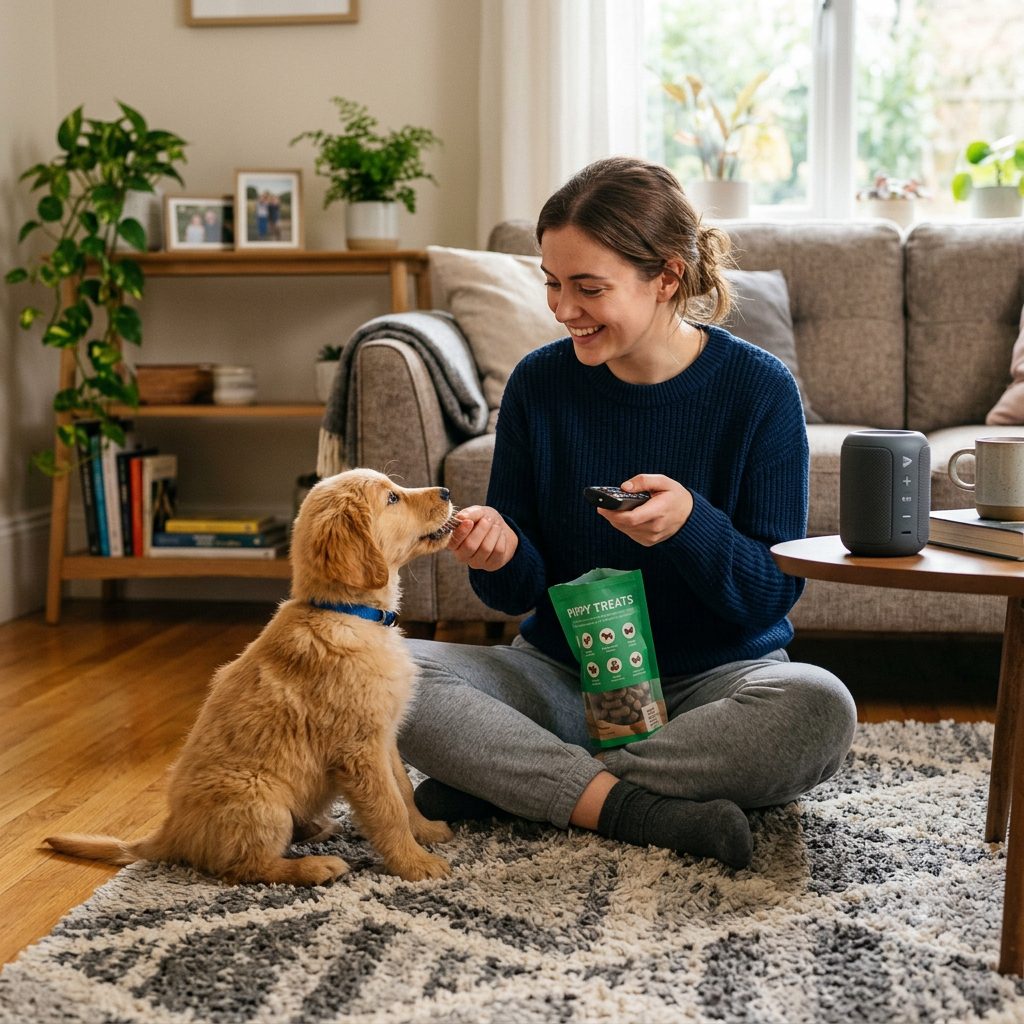
Start in a quiet, familiar room where your puppy feels safe. Play the siren sound at the lowest possible volume—so low that your puppy notices it (ears might twitch) but doesn’t show signs of fear. While the sound is playing, scatter high-value treats on the floor. Stop the sound, stop the treats. You are teaching them: Siren = Party Starts. Silence = Party Ends.
Step 2: Incremental Volume Increases
Over several sessions, slowly turn up the volume. If at any point your puppy stops eating, tucks their tail, or looks worried, you’ve moved too fast. Go back to the previous volume level where they were comfortable. This is called staying ‘under threshold.’ Success in this phase means your puppy looks at you with excitement when they hear the faint sound of a siren, expecting a treat.
Step 3: Introducing Movement and Play
Sirens in the real world aren’t static. Once your puppy is comfortable with a moderate volume, start playing the sound while engaging them in a game of tug or fetch. We want to layer the sound over a state of happy arousal. This helps the brain categorize the sound as ‘background noise’ rather than a ‘threat.’
Step 4: The ‘Window’ Test (Distance Training)
Now, move the training near a window or an open door where real-world sounds filter in. If a real siren happens to go off in the distance, immediately ‘open the jackpot’ and feed high-value treats continuously until the sound fades. You are leveraging a real-world event in a controlled way. By keeping distance between you and the road, you are using distance as a buffer for their fear.
Step 5: Controlled Outdoor Exposure
Take your training to the sidewalk, but choose a time when it’s unlikely for emergency vehicles to pass. Practice your ‘look at me’ cues and basic sits. If a siren does appear, move as far away from the road as possible (up a driveway or behind a parked car) and feed, feed, feed! The goal is for the puppy to see the truck and immediately look at you for their reward.
Troubleshooting Common Setbacks
What to Do When Things Go Wrong
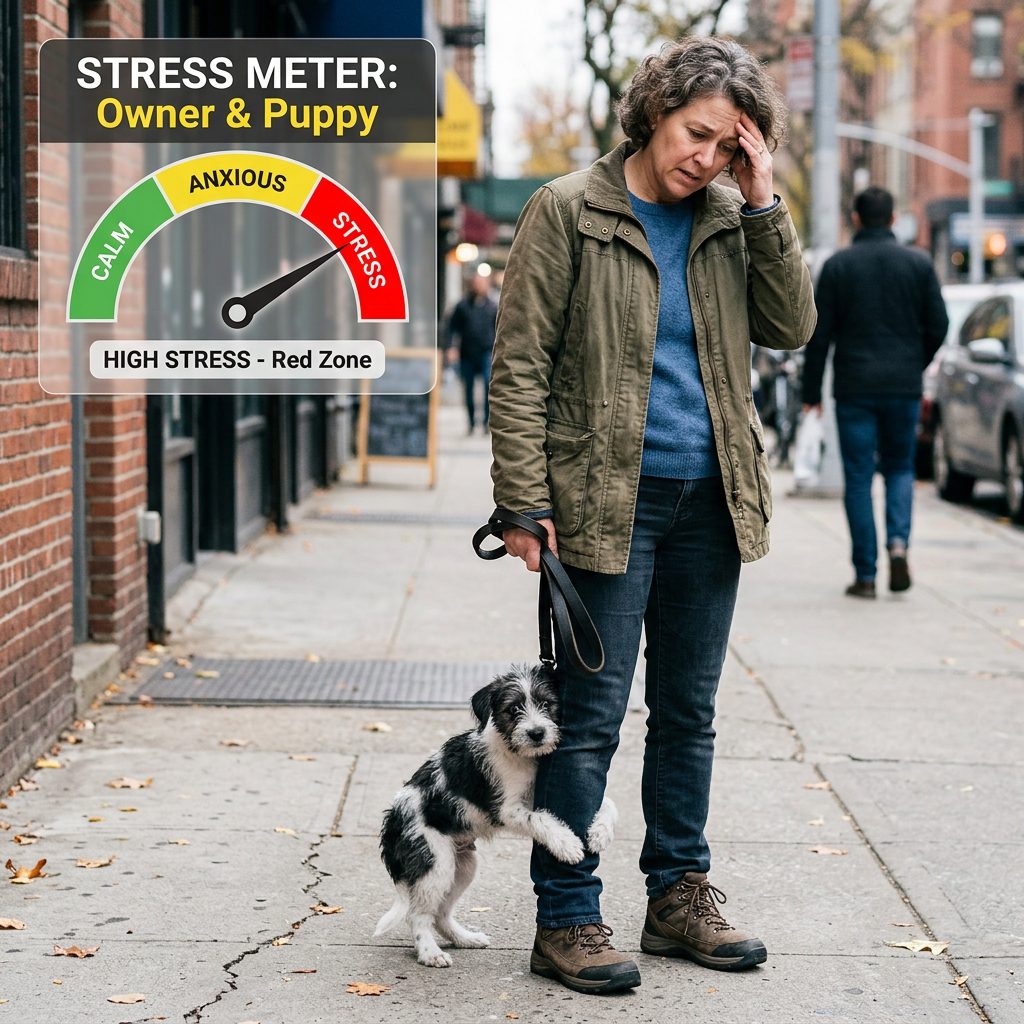
Training isn’t always a straight line. You might have three great days followed by a day where your puppy seems terrified again. This is normal behavior regression.
Managing ‘The Overshoot’
If a fire truck surprises you and your puppy hits a ‘meltdown’ state (barking, lunging, or shutting down), don’t try to ‘train’ in that moment. Their brain is offline. Instead:
- Increase Distance: Move away as quickly and calmly as possible.
- Be a Calm Anchor: Don’t yell or get frantic. Use a soothing voice.
- The ‘Treat Scatter’: Toss a handful of treats on the ground. The act of sniffing and searching for food is naturally calming for a dog’s nervous system.
Is it Pain or Fear?
If your puppy consistently paws at their ears or shakes their head during loud noises, it’s worth a trip to the vet. While most siren reactions are behavioral, ear infections or physical sensitivities can make loud noises genuinely painful, and no amount of training will fix a medical issue.
Advanced Generalization: Mastering the City
Generalizing the Calm
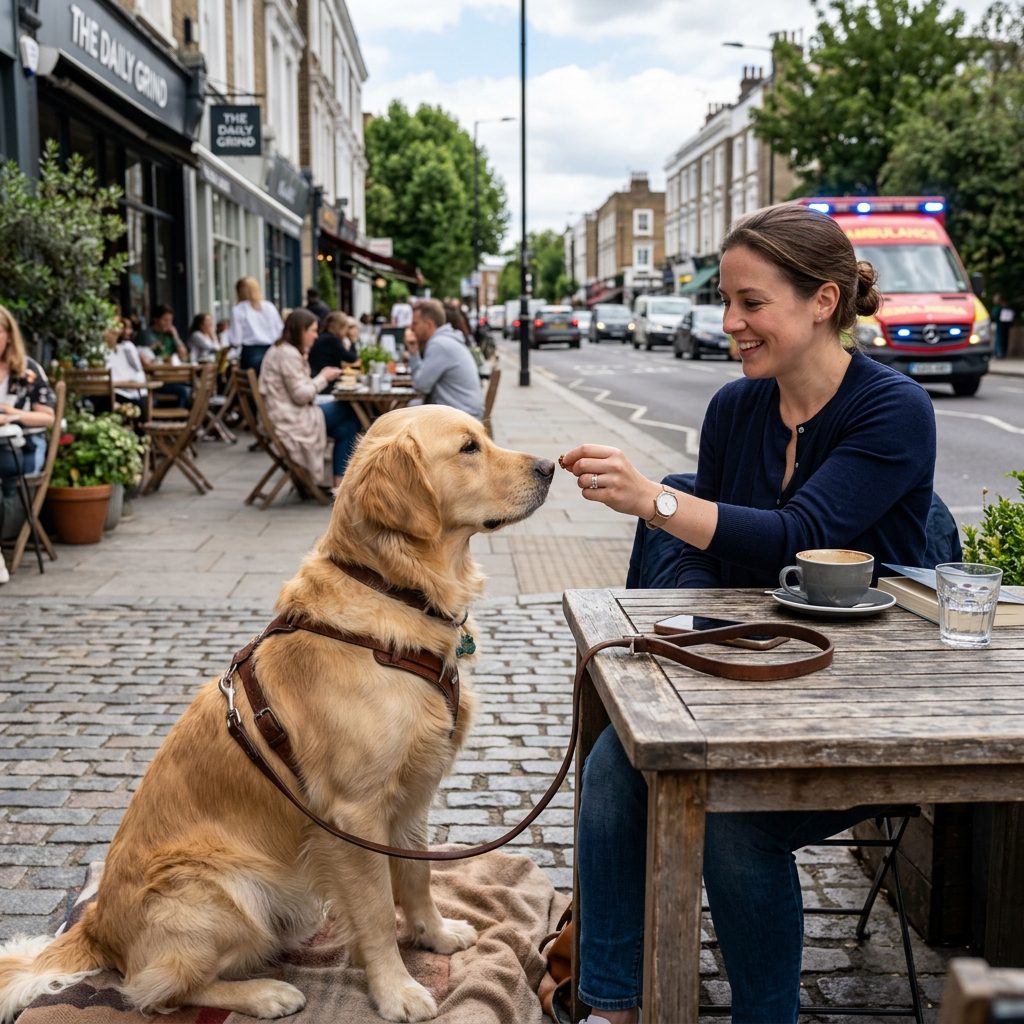
Dogs are ‘context-specific’ learners. Just because your puppy is brave in the living room doesn’t mean they’ll be brave at the outdoor cafe. To truly desensitize them, you must practice in various locations.
Varying the Environments
Once the basic steps are mastered, take your ‘siren sessions’ to different spots:
- Local parks
- Pet-friendly hardware stores
- Busy downtown corners (at a distance)
- The vet’s parking lot
By practicing in multiple locations, you are teaching the puppy that the ‘Siren = Treats’ rule applies everywhere, not just at home.
The Power of ‘Watch That’
A great advanced technique is the ‘Watch That’ game. Every time your puppy notices a loud vehicle—even if it’s just a loud bus or a motorcycle—mark the behavior with a ‘Yes!’ or a clicker and reward. You are turning their ‘alert’ behavior into an ‘engagement’ behavior with you.
Conclusion
From Terror to Triumph
Desensitizing your puppy to the ‘fire truck terror’ is one of the most rewarding challenges you’ll face as a dog owner. It requires patience, consistency, and a whole lot of high-quality liver, but the payoff is a dog that can navigate the world with confidence and poise. Remember, every time you successfully manage a siren encounter, you are building a stronger bond of trust with your puppy. They are learning that you are their protector and that even the scariest sounds can’t hurt them when you’re around. Keep your sessions short, keep the rewards high, and soon enough, those sirens will be nothing more than background music to your adventures together. Happy training!