The Secret To Getting Your Puppy’s Full Attention In A Busy Park (Even Around Other Dogs!)
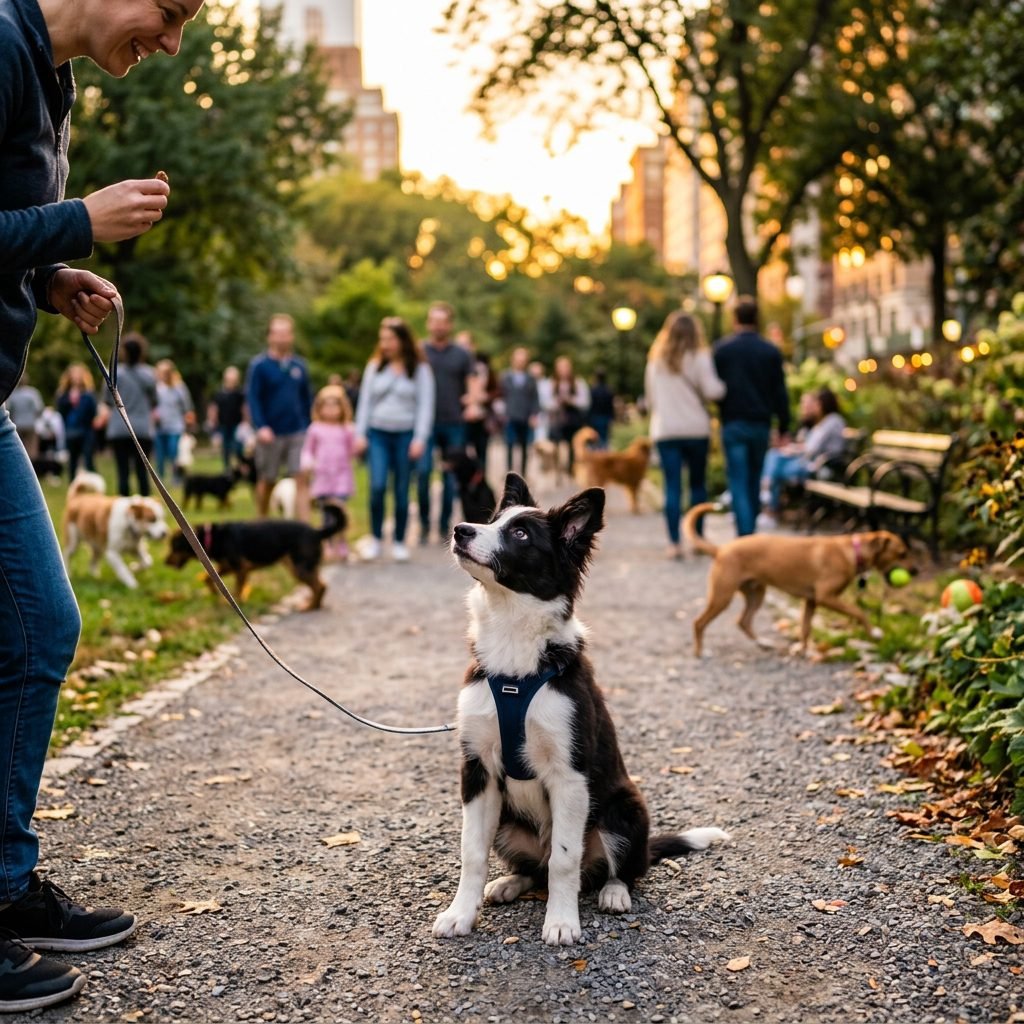
We have all been there. You arrive at the park with the best intentions, a pocket full of treats, and a puppy you thought was well-trained in your living room. Then, it happens. A squirrel darting across a tree, a frisbee flying through the air, or—the ultimate distraction—another dog. Suddenly, your puppy develops ‘selective hearing,’ and you find yourself standing there, whistling and calling a name that seems to have lost all meaning. It is frustrating, slightly embarrassing, and, quite frankly, exhausting. But what if I told you that the secret to unshakeable focus isn’t about being louder or more demanding? It is about understanding the Engagement Gap. To a puppy, the world is a giant, high-definition television, and you are currently a black-and-white radio broadcast. Our goal today is to flip that script. As a canine specialist, I have helped thousands of owners transform their distracted pups into focused partners. In this guide, we are going to dive deep into the psychology of distraction and provide you with a step-by-step roadmap to becoming the most interesting thing in the park.
Understanding the Distraction Hierarchy: Why Your Puppy Ignores You
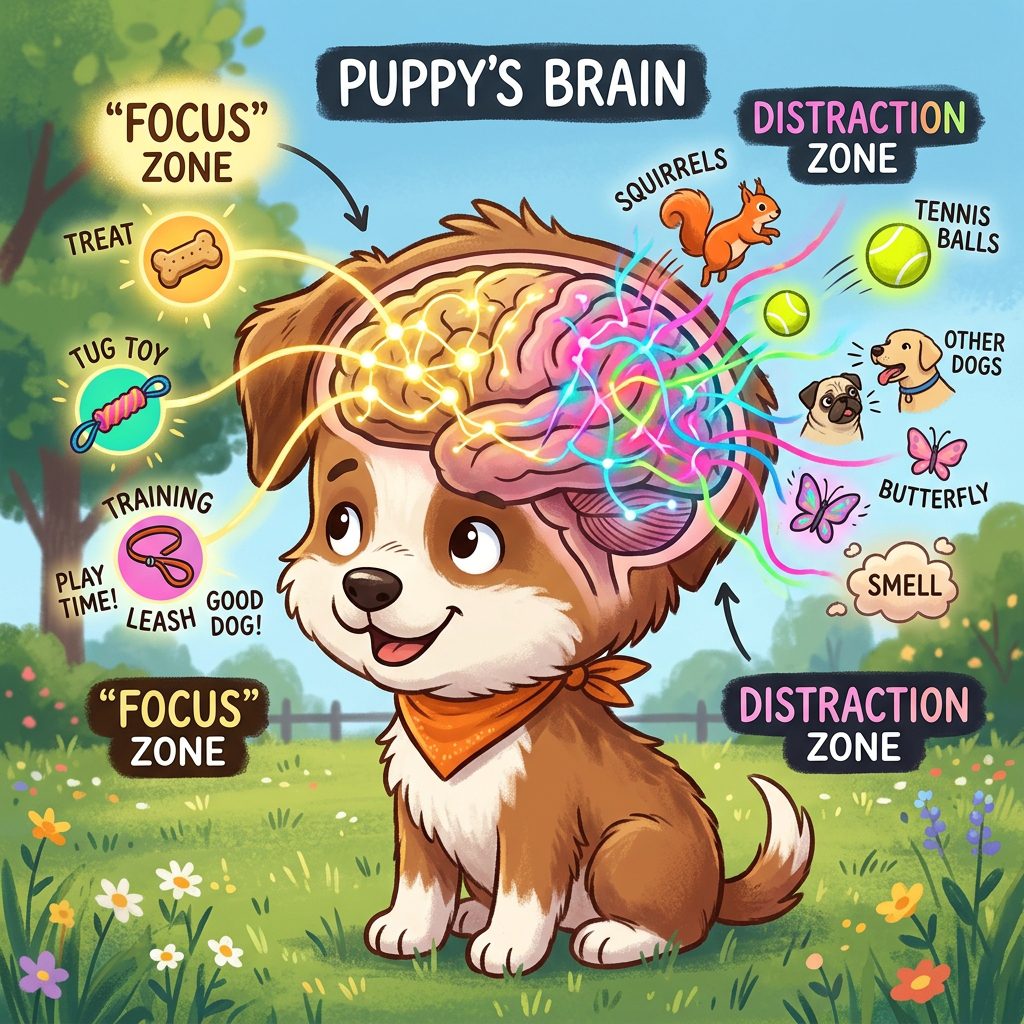
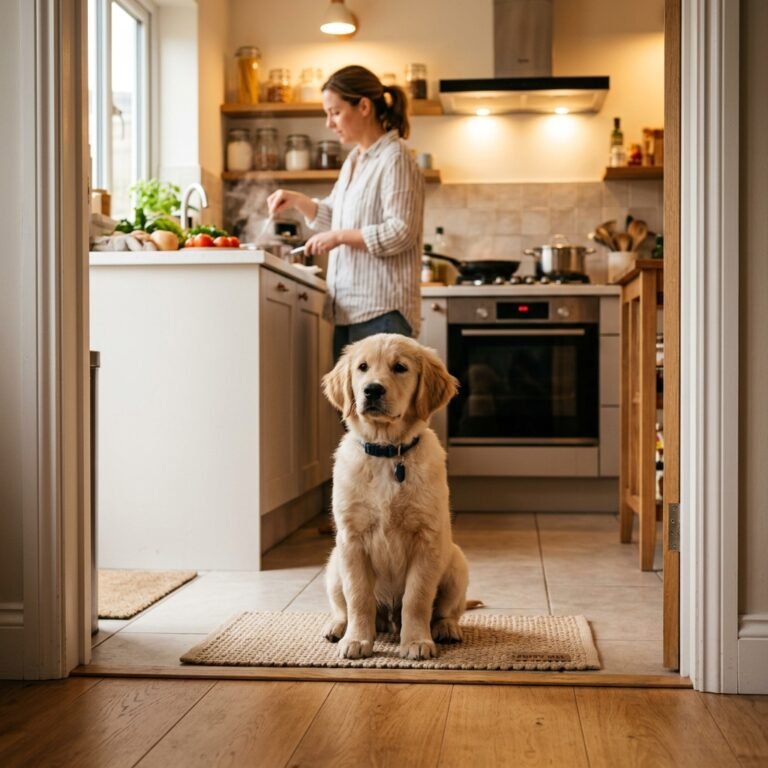
Before we can fix the behavior, we have to understand the biology. Puppies are evolutionarily wired to scan their environment for novelty. In the safety of your kitchen, you are the only source of entertainment. In a busy park, you are competing with a sensory explosion of smells, sights, and social opportunities. This is what trainers call the Distraction Hierarchy.
The Threshold Concept
Every dog has a ‘threshold’—the distance at which a distraction becomes so intense that the dog can no longer process commands. If your puppy is lunging toward another dog, they are ‘over threshold.’ At this point, their brain has shifted from the thinking cortex to the reactive amygdala. No amount of shouting will reach them because the ‘learning’ part of their brain has effectively shut down.
The Value of Reinforcement
Dogs are ultimate opportunists. They do what works. If pulling toward another dog results in a fun greeting, they have been rewarded for ignoring you. To win their attention, we must ensure that focusing on us yields a higher value than the distraction itself. We need to move from ‘low-value’ rewards to ‘high-value’ jackpots when the environment gets tough.
The Essential Gear: Tools for Success
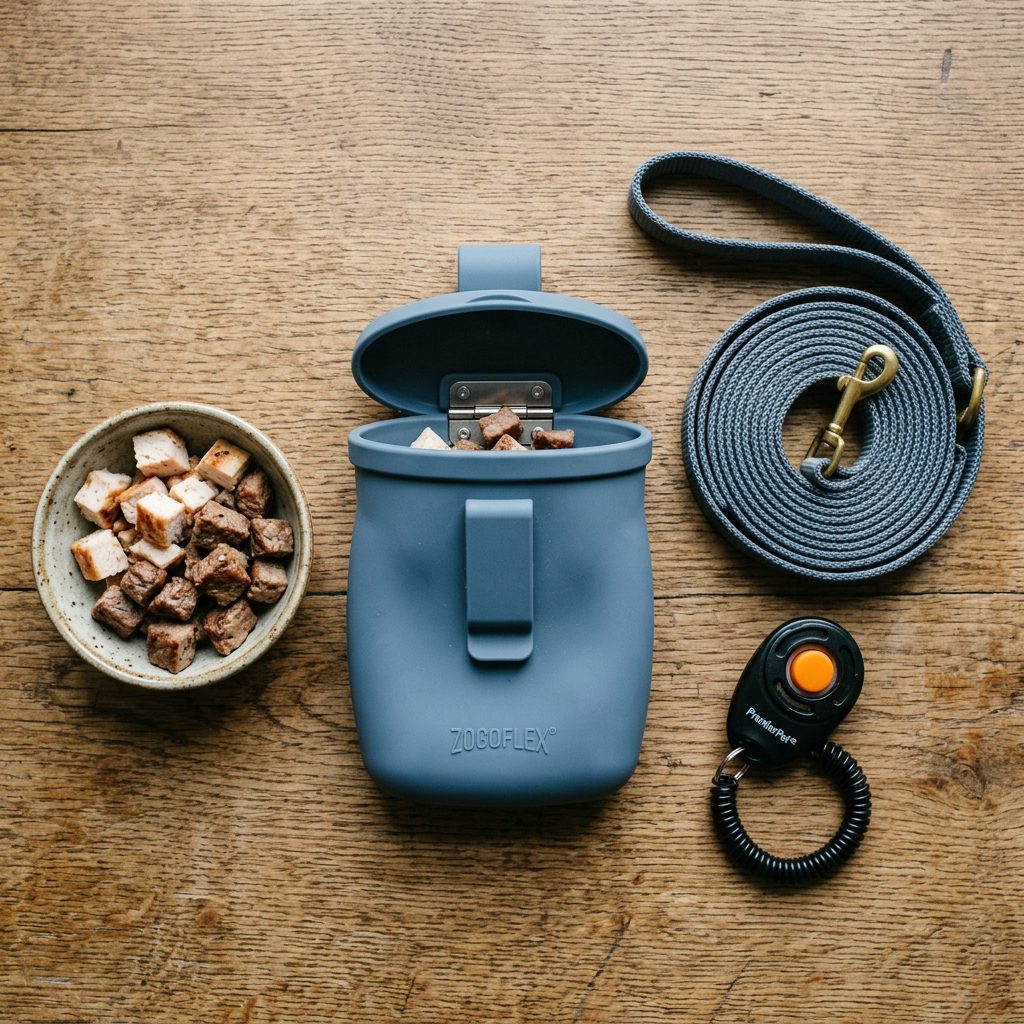
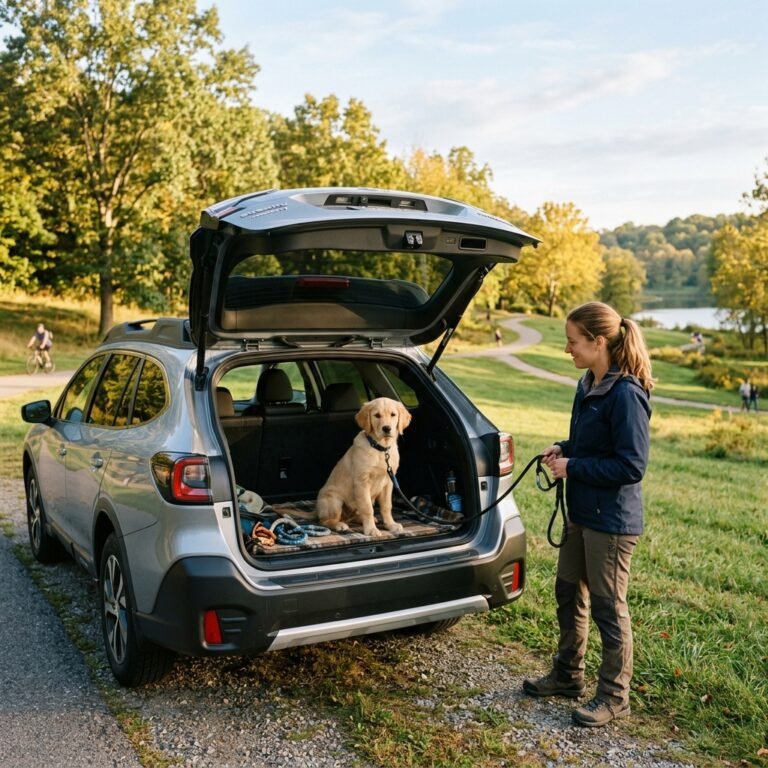
Success in a busy park requires more than just willpower; it requires the right equipment. You wouldn’t go to a construction site without a hard hat, and you shouldn’t go to a busy park with a distracted puppy without these essentials.
| Tool | Purpose | Why It Matters |
|---|---|---|
| High-Value Treats | Motivation | Standard kibble won’t cut it in a park. Think boiled chicken, liver, or cheese. |
| 15-Foot Long Line | Safety & Freedom | Allows the puppy to explore while you maintain a physical connection for safety. |
| Treat Pouch | Efficiency | Speed of delivery is key. You need to reward within 1.5 seconds of the behavior. |
| Clicker or Marker Word | Communication | Precisely marks the exact moment the puppy chooses to look at you. |
Why the Long Line is Your Best Friend
A common mistake is training off-leash too early. A long line (not a retractable leash!) provides the illusion of freedom while preventing the puppy from ‘self-rewarding’ by running off to another dog. It keeps the puppy in your ‘influence zone’ without the tension of a short city leash, which often triggers frustration and pulling.
Step-by-Step Focus Protocol: Building the ‘Check-In’
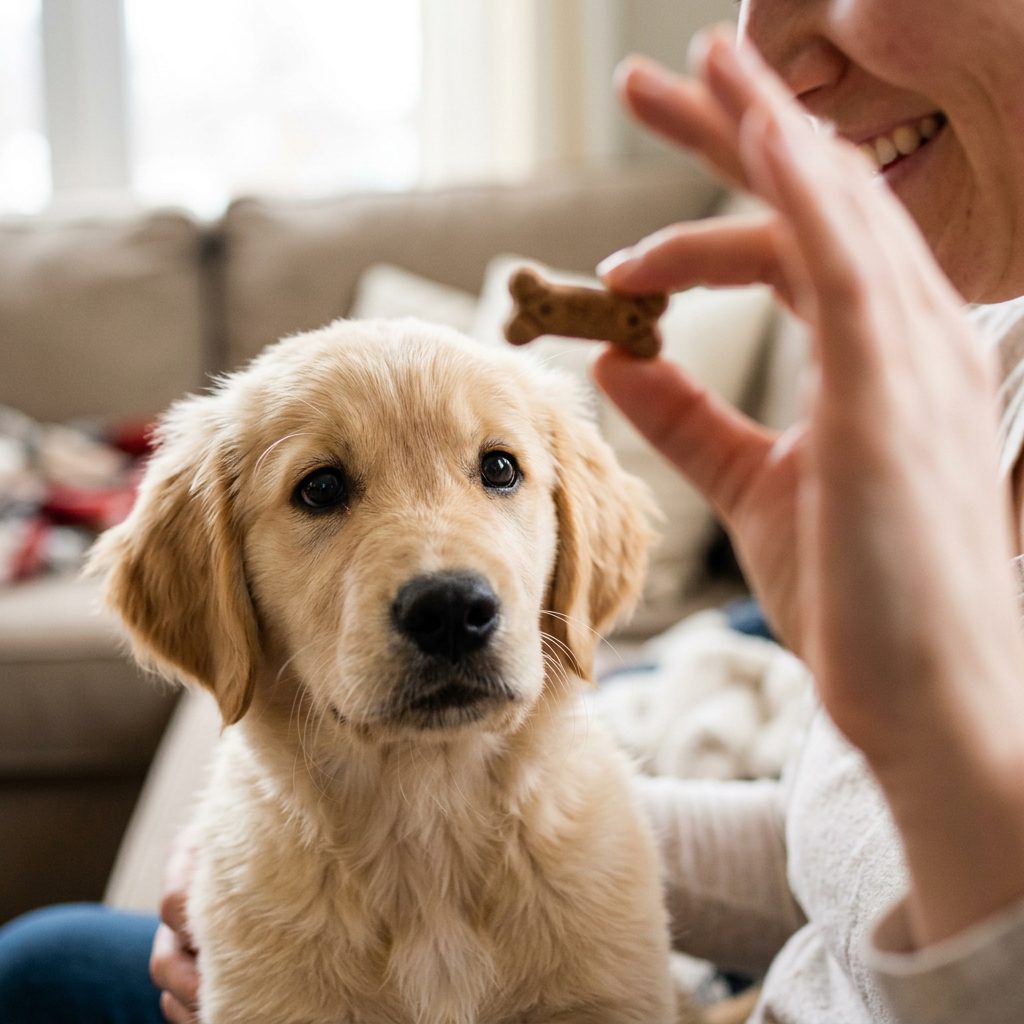
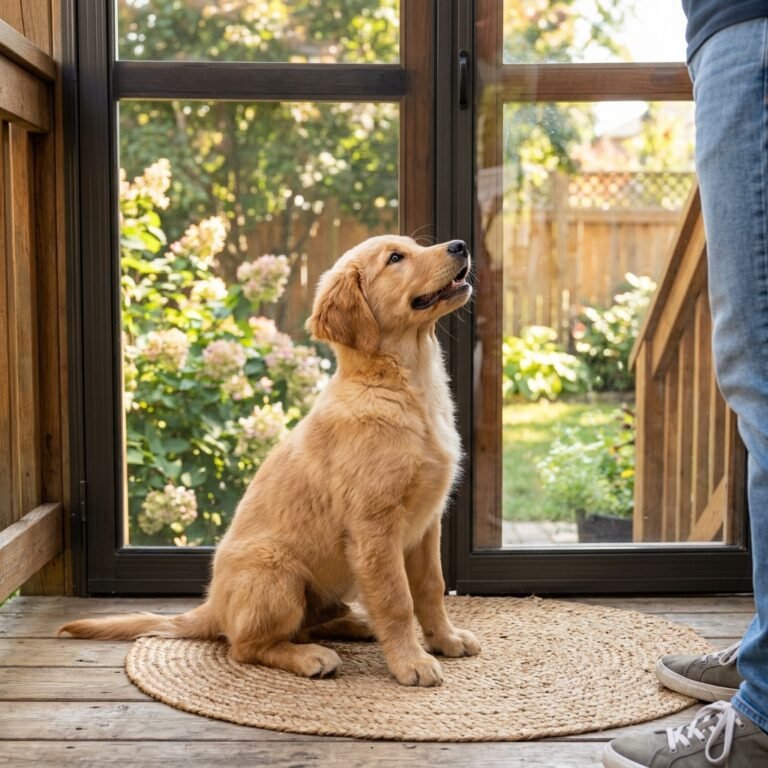
The ‘Secret’ isn’t a single command; it is a series of layers. We call this building the Automatic Check-In. Here is how you build it from the ground up.
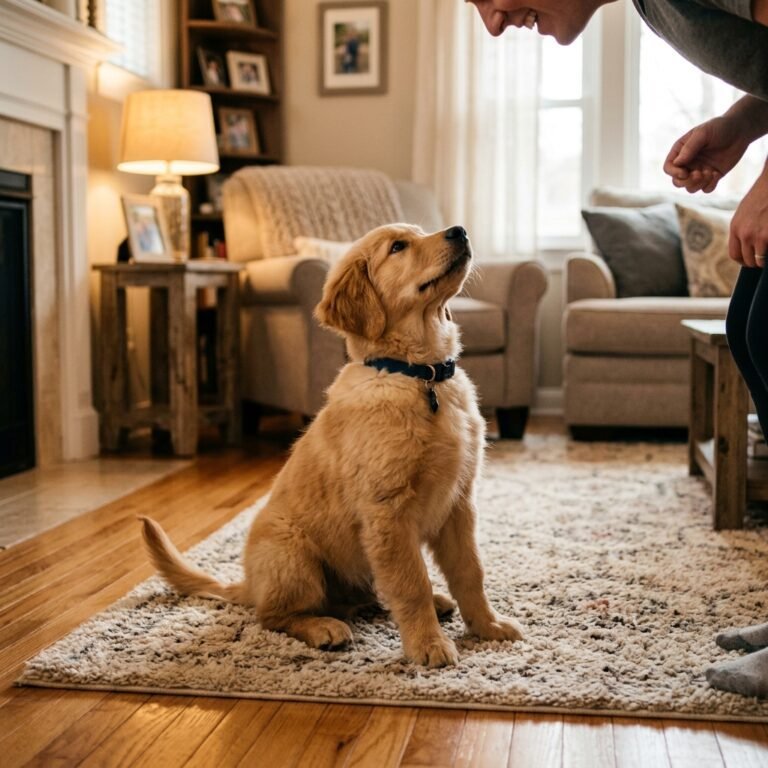
Step 1: The Name Game (In Low Distraction)
- Say your puppy’s name in a happy tone.
- The moment they look at you, click or say ‘Yes!’
- Deliver a high-value treat.
- Repeat this 10 times until they whip their head around the moment they hear their name.
Step 2: The ‘Look’ Command
This is a formal request for eye contact. Hold a treat between your eyes and say ‘Look.’ When the puppy meets your gaze, reward. Gradually move the treat away from your face so they learn to look at your eyes, not just the food.
Step 3: The 1-2-3 Game
This is a rhythmic game that creates a ‘prediction’ of a reward. Count out loud: ‘One… two… three.’ On ‘three,’ deliver a treat. Start this at home. In the park, the rhythm of your voice will cut through the noise, and the puppy will instinctively look to you on ‘three’ because they know exactly what is coming.
Pro Tip: Never use your puppy’s name for something negative (like a bath or a scolding). You want their name to be the most positive word in their vocabulary.
Managing the ‘Other Dog’ Factor: The LAT Method
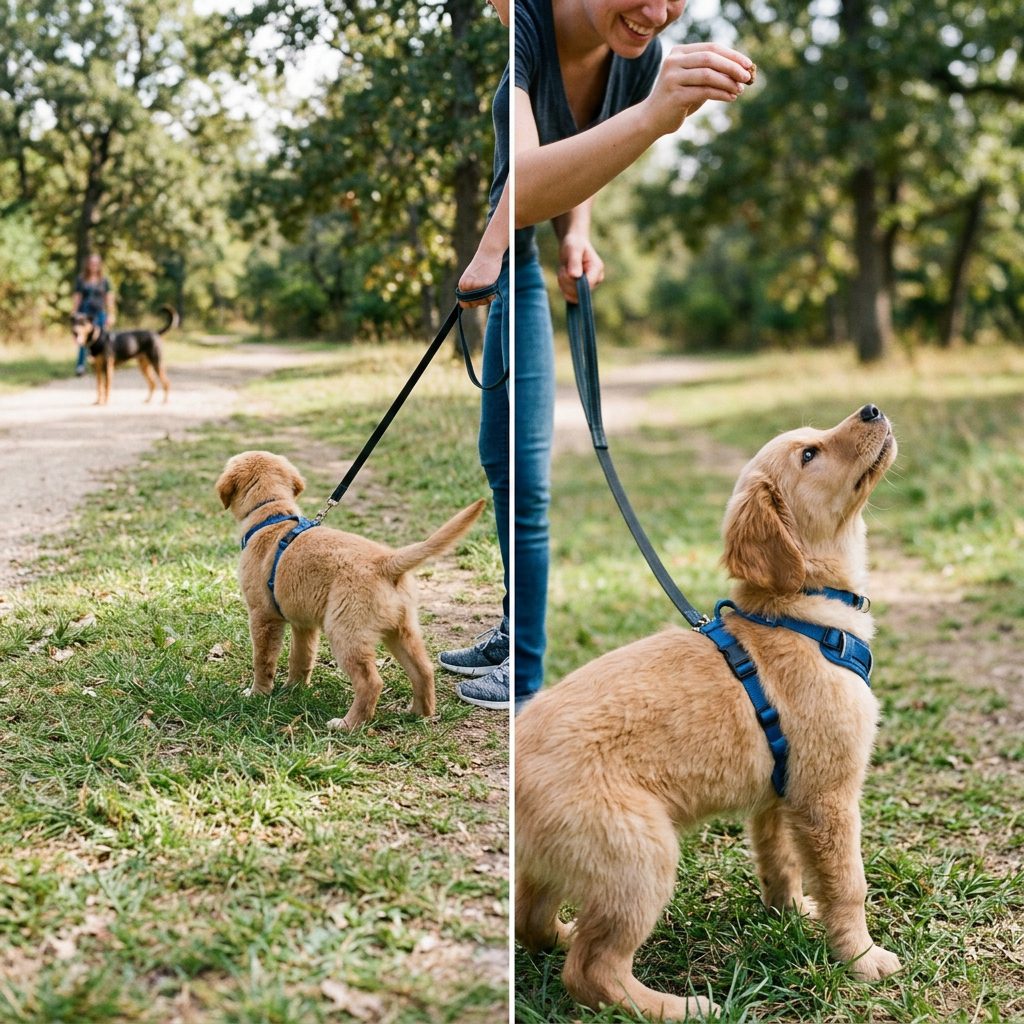
Other dogs are the ‘Final Boss’ of puppy training. To handle this, we use the LAT (Look At That) method, popularized by trainer Leslie McDevitt. This changes the puppy’s emotional response from ‘I must go play’ to ‘I see a dog, I should tell my owner.’
How to Execute LAT:
- Identify the Distance: Find the distance where your puppy sees another dog but isn’t lunging yet (the ‘Green Zone’).
- Mark the Sight: The moment your puppy looks at the other dog, click or say ‘Yes!’
- Redirect the Reward: When the puppy turns back to you for their treat, deliver it.
- Repeat: You are rewarding the puppy for noticing the distraction and then disengaging.
Over time, the puppy will see another dog and immediately look at you for their reward. You have successfully turned a distraction into a cue for attention!
Common Mistakes That Kill Progress
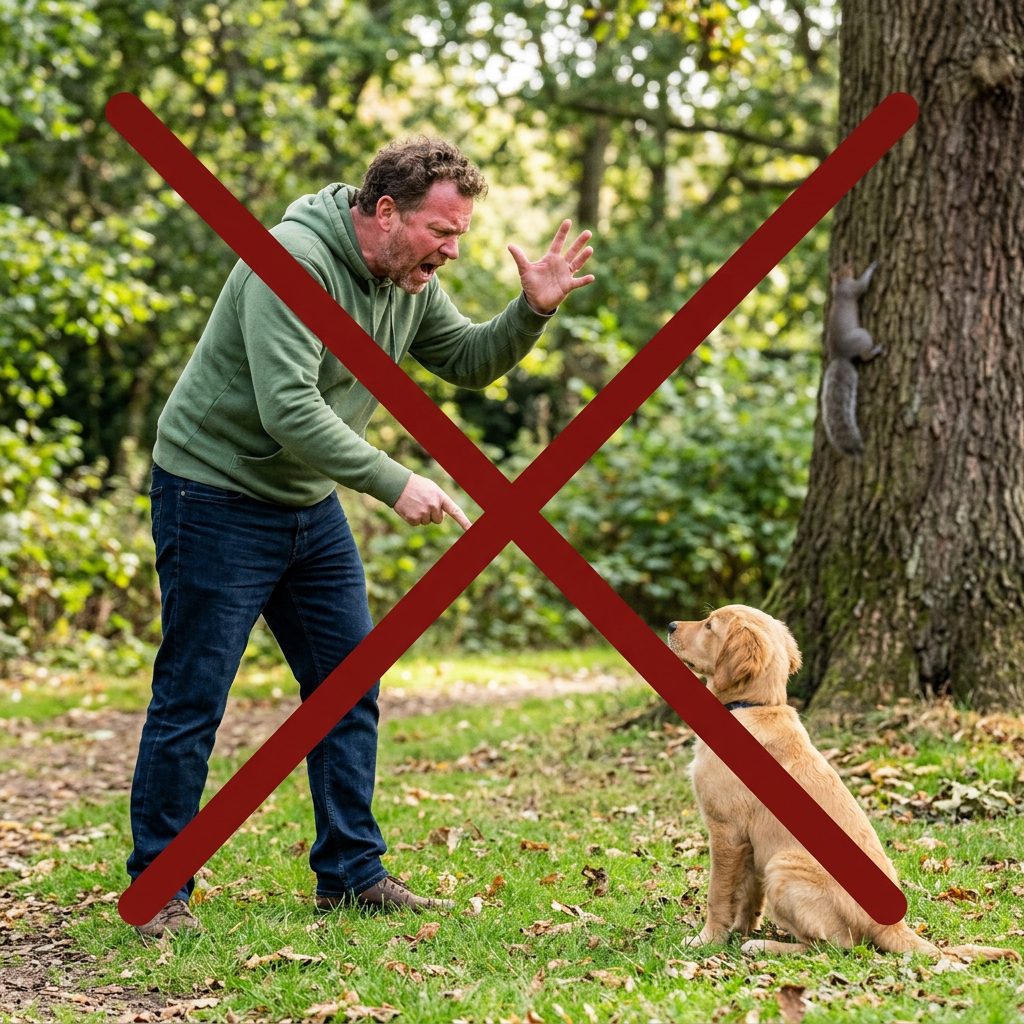
Even the best owners fall into these traps. Being aware of them is half the battle in maintaining park focus.
1. Repeating the Command
If you say ‘Fido, come’ five times and he only comes on the fifth, you have taught him that the first four are optional. Say it once. If he doesn’t respond, use the long line to gently guide him or move closer to him to reduce the distraction level.
2. Being ‘The Fun Killer’
If the only time you call your puppy is to put the leash on and leave the park, they will learn that ‘Come’ means ‘The fun is over.’ Practice calling them, giving a jackpot of treats, and then releasing them back to play (using the ‘Go Play’ command).
3. Using Low-Quality Rewards
Expectations must match the environment. You wouldn’t work for $1 an hour in a high-stress job; don’t ask your puppy to work for dry kibble in a high-stress park. Value is relative to the environment.
The 4-Week Park Focus Schedule
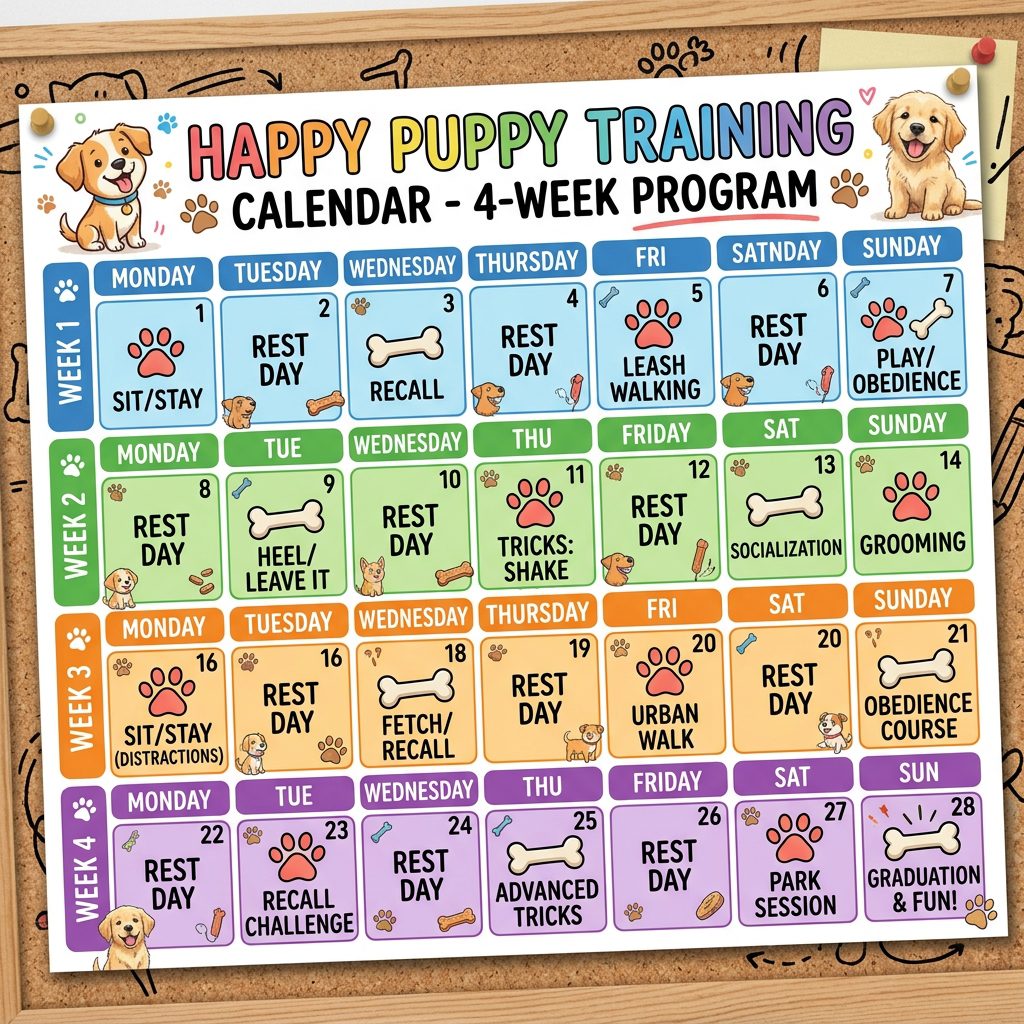
Consistency is the glue that holds training together. Use this schedule to gradually increase the difficulty of your park outings.
| Week | Environment | Goal | Session Length |
|---|---|---|---|
| Week 1 | Empty Park / Quiet Corner | 100% Focus on Name Game | 5 Mins, 3x Daily |
| Week 2 | Edge of the Park | Look Command with distant dogs | 10 Mins, 2x Daily |
| Week 3 | Active Park (On Long Line) | LAT Method and 1-2-3 Game | 15 Mins, 1x Daily |
| Week 4 | Busy Areas / Near Play Zones | Automatic Check-ins while moving | 20 Mins, 1x Daily |
The ‘Go Play’ Reward
One of the most powerful rewards for a social puppy is access to the distraction. If your puppy focuses on you while another dog is nearby, use the command ‘Go Play’ and allow them to interact (if safe). This teaches them that the fastest way to get what they want is to listen to you first.
Conclusion
Getting your puppy’s attention in a busy park isn’t about magic; it is about building a relationship based on value, trust, and clear communication. Remember that puppies are basically toddlers with fur; they will have ‘off’ days where their brain seems to have stayed home on the couch. That is okay! When things get tough, simply increase your distance from the distraction and go back to basics. By implementing the Look At That method, using high-value rewards, and maintaining a consistent training schedule, you will soon find that you are no longer the ‘ignored owner’ at the park. Instead, you will be the one with the puppy who ignores the chaos to look up at you with wagging tails and bright eyes. You’ve got this, and your puppy is lucky to have a savvy owner like you. Now, grab those treats and go be the most interesting thing in the park!