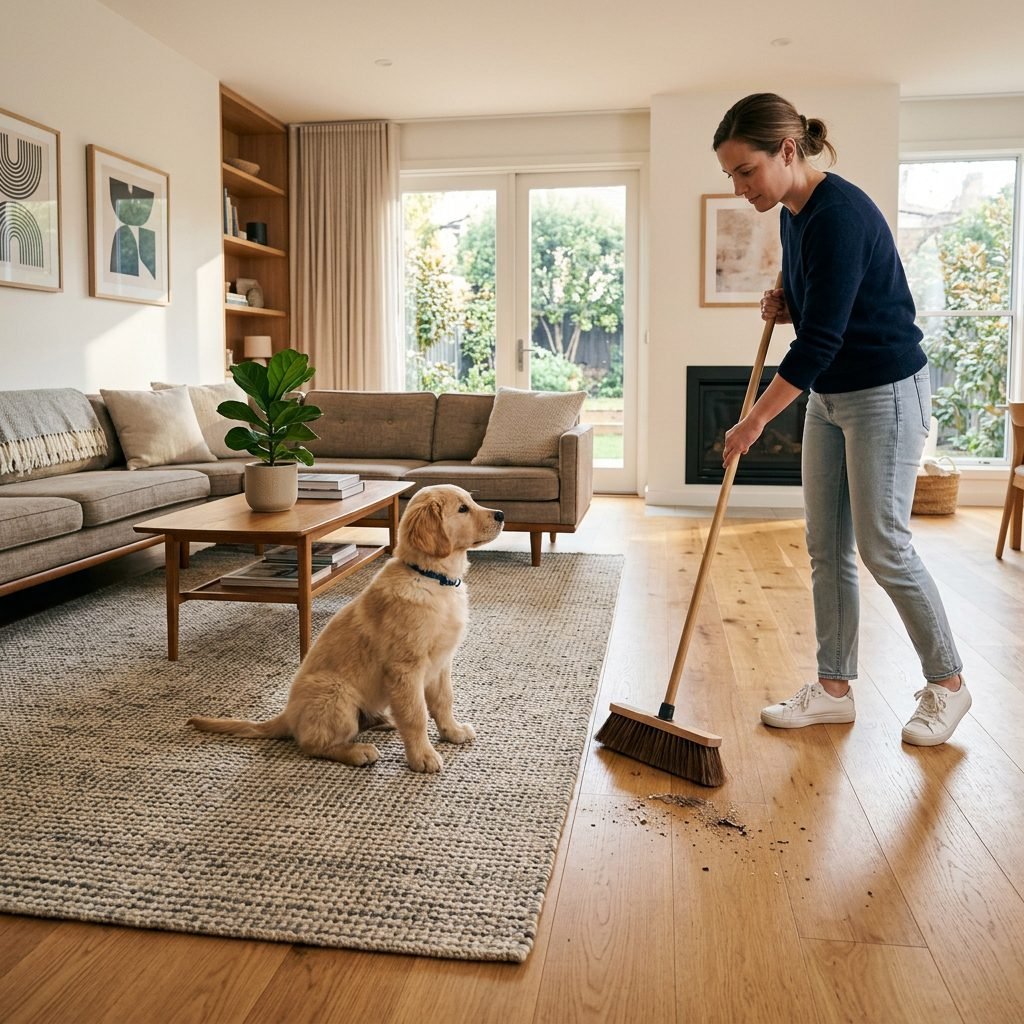
Sweeping Drives Your Puppy Crazy? Stop Broom Biting Fast With This Simple Game!
The Broom Battle: Why Your Puppy Can’t Resist the Bristles
If you have ever tried to sweep your kitchen floor only to find a set of sharp puppy teeth latched onto the bristles, you are not alone. To a young dog, a broom is not a cleaning tool; it is a fast-moving, unpredictable, and incredibly exciting prey-like object. This behavior, while frustrating for us, is a perfectly natural manifestation of a puppy’s predatory drive. When those bristles dance across the floor, they mimic the movement of a small animal, triggering the ‘chase and capture’ sequence in your dog’s brain.
As a canine specialist, I have seen countless owners struggle with this exact issue. The mistake most people make is turning the broom into a toy by pushing the puppy away or making high-pitched ‘no’ sounds, which the puppy interprets as play. Instead of fighting the behavior, we are going to use a structured game to teach your puppy that the broom is actually a signal to remain calm and focused. In this guide, we will dive deep into the psychology of broom-chasing and provide a comprehensive, step-by-step training protocol to reclaim your cleaning time.
Understanding the ‘Broom Monster’ Psychology
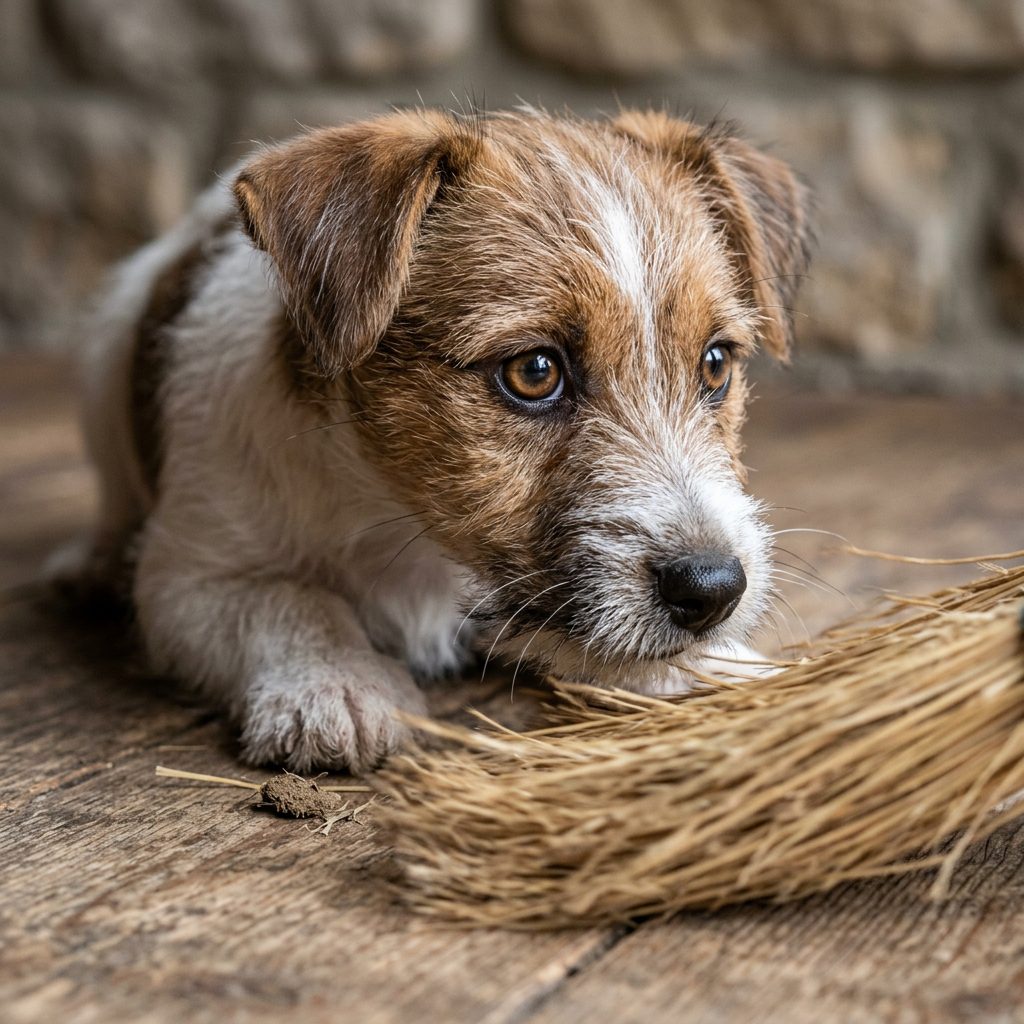
Before we pick up the broom, we need to understand what is happening inside your puppy’s mind. Dogs are hardwired with a predatory motor sequence: Orient, Eye, Stalk, Chase, Grab-Bite, and Kill-Bite. A moving broom skips straight to the ‘Chase’ and ‘Grab-Bite’ phases.
The Movement Trigger
The erratic movement of a broom is the primary culprit. Unlike a steady-moving object, a broom stops, starts, and changes direction quickly. This ‘stop-start’ motion is highly stimulating to a puppy’s visual system. Furthermore, the sound of bristles scratching against the floor adds an auditory layer of excitement.
Is it Play or Aggression?
In 99% of puppies, this is purely play-based or drive-based behavior. However, it is important to distinguish between the two. Playful broom biting usually involves a ‘play bow,’ a wagging tail, and a bouncy posture. True fear-based reactivity involves a tucked tail, pinned ears, and potentially growling that sounds more guttural. This guide focuses on the high-drive, playful puppy who just wants to ‘kill’ the broom.
Pro Tip: If your puppy seems genuinely terrified of the broom, you should start with much slower desensitization at a greater distance before attempting the games listed below.
The Essential Toolkit: Preparing for the Training Game
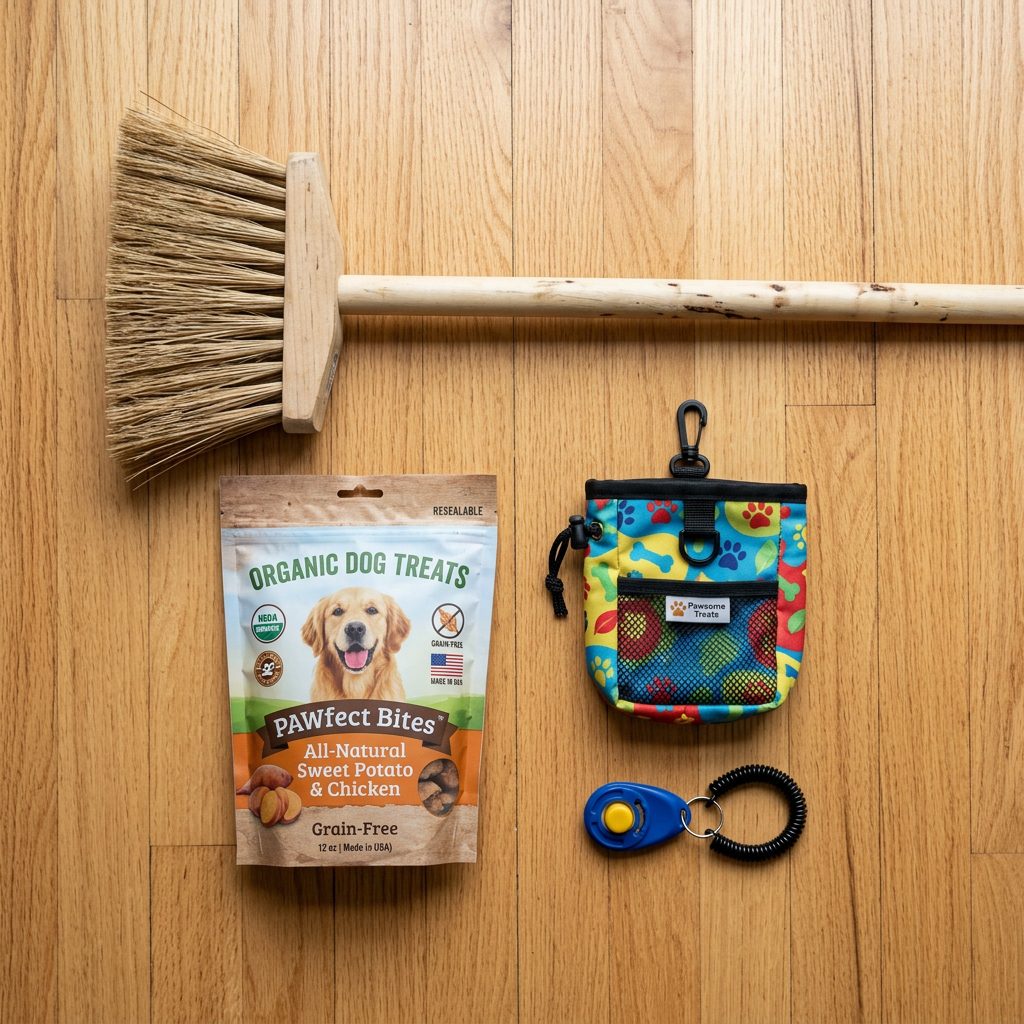
To stop the broom biting, you need more than just a broom. You need a strategy and the right rewards. We are using Counter-Conditioning and Desensitization. This means we are changing the puppy’s emotional response to the broom (from ‘Excitement/Chase’ to ‘Calm/Reward’) and gradually exposing them to more movement.
What You Will Need
Prepare the following items before starting your first session:
- High-Value Treats: Think small pieces of boiled chicken, cheese, or freeze-dried liver. These need to be better than the ‘reward’ of biting the broom.
- A Standard Broom: Use the one your puppy usually attacks.
- A Clicker (Optional): If you use clicker training, this is a great time for it.
- A Tether or Crate: For the initial stages to prevent the puppy from practicing the bad behavior.
| Tool | Purpose | Requirement |
|---|---|---|
| High-Value Treats | Reward calm behavior | Essential |
| Treat Pouch | Hands-free access to rewards | Recommended |
| Short Leash | Preventing the ‘lunge’ | Essential for beginners |
| Alternative Toy | Redirecting energy | Optional |
The Step-by-Step Guide to the ‘Broom Statue’ Game
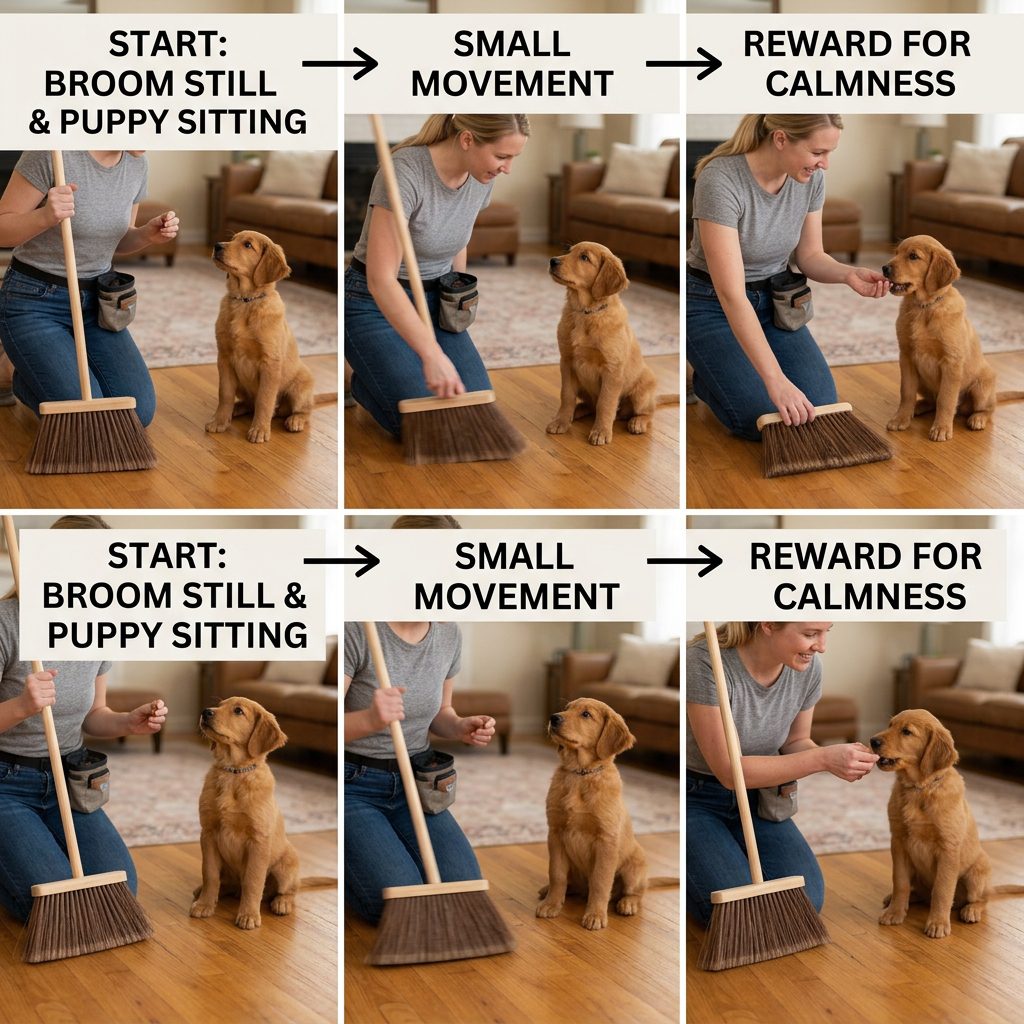
The ‘Broom Statue’ game is designed to teach your puppy that the presence of the broom means ‘sit and look at me for treats.’ We are going to break this down into four progressive levels.
Level 1: The Broom at Rest
- Place the broom on the floor, completely still.
- Bring your puppy into the room on a leash.
- As soon as your puppy looks at the broom and doesn’t bark or lunge, Mark (say ‘Yes!’ or click) and Reward with a treat.
- Repeat until the puppy looks at the broom and then immediately looks at you for a treat.
Level 2: Micro-Movements
- Stand next to the broom while your puppy is sitting a few feet away.
- Gently nudge the broom just an inch or two.
- If the puppy stays still, Mark and Reward heavily.
- If the puppy lunges, you moved the broom too much. Go back to Level 1.
Level 3: Short Strokes
- Perform one single, slow sweep of the broom.
- Immediately toss a treat away from the broom to reset the puppy.
- Repeat, gradually increasing the speed of the sweep while maintaining the puppy’s focus on you.
Level 4: Full Sweeping
- Begin sweeping normally in a small area.
- Periodically stop and reward the puppy for staying in a ‘Settle’ or ‘Sit’ position.
- If the puppy gets over-excited, end the session and try again later.
Expert Insight: The goal is for the puppy to realize that the broom moving is the ‘cue’ for them to sit and wait for a treat from you.
A 7-Day Training Schedule for Success
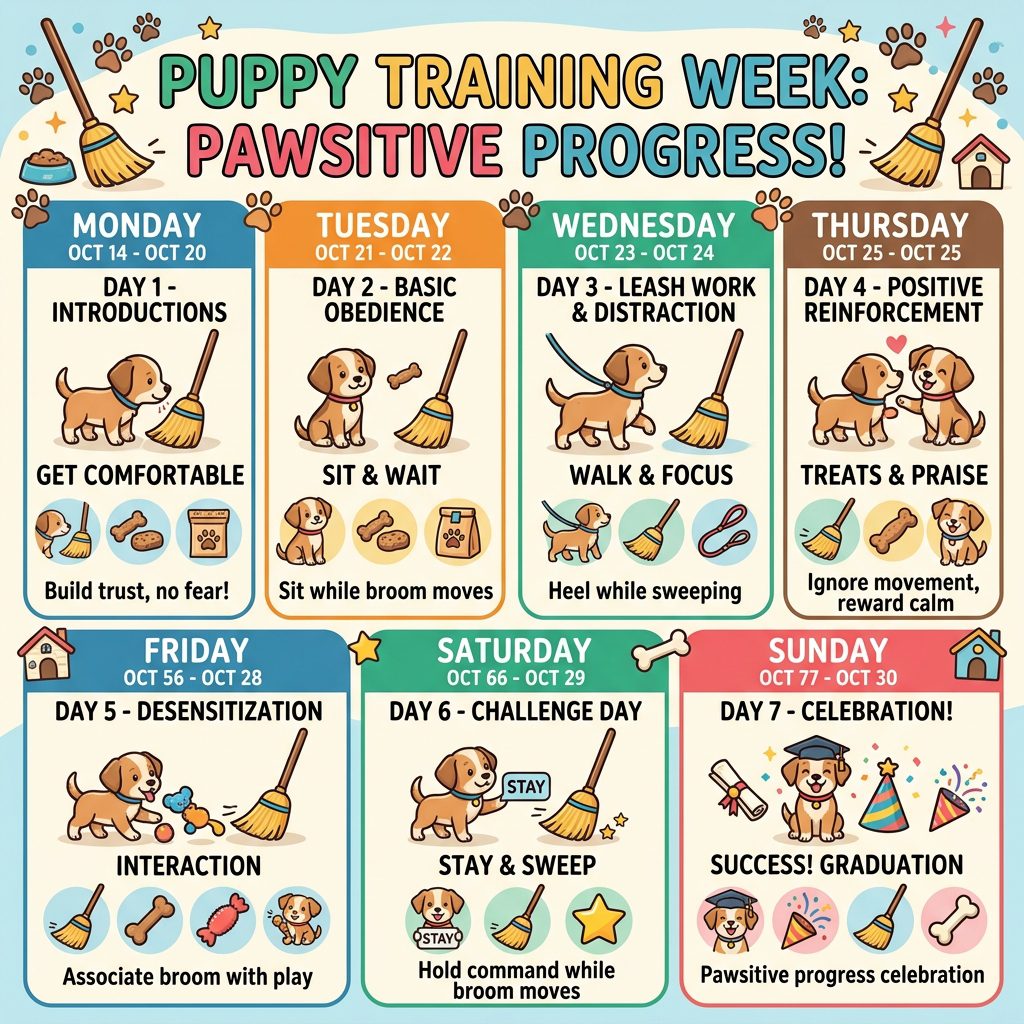
Consistency is the key to behavior modification. You cannot expect the puppy to learn this in one five-minute session. Follow this structured 7-day plan to see real results.
| Day | Focus Area | Duration |
|---|---|---|
| Day 1 | Introduction to the ‘Static’ broom | 3 sessions of 5 mins |
| Day 2 | Nudging the broom (Level 2) | 3 sessions of 5 mins |
| Day 3 | Single sweeps with heavy rewards | 4 sessions of 3 mins |
| Day 4 | Increasing distance from the broom | 3 sessions of 5 mins |
| Day 5 | Sweeping while the puppy is ‘Off-Leash’ | 2 sessions of 10 mins |
| Day 6 | Adding distractions (TV on, etc.) | 3 sessions of 5 mins |
| Day 7 | Real-world sweeping simulation | 1 session of 15 mins |
During this week, try to avoid sweeping ‘for real’ when the puppy is around and untrained. If you must sweep, put the puppy in another room or behind a baby gate so they don’t have the opportunity to practice the biting behavior.
Troubleshooting: What to Do When Your Puppy Relapses
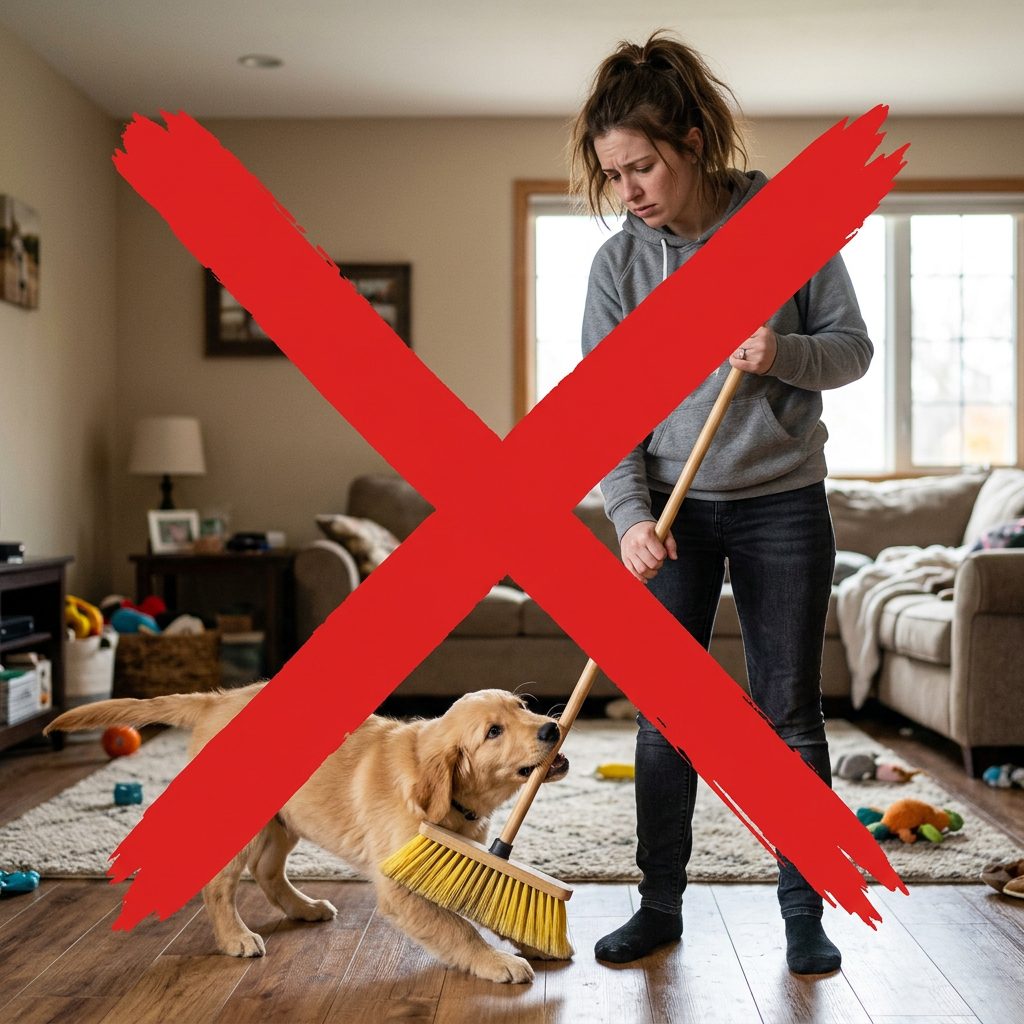
Even the best-trained puppies will have ‘off’ days. If your puppy suddenly starts attacking the broom again after a few successful sessions, don’t panic. This is often called a Spontaneous Recovery of the old behavior.
Common Pitfalls to Avoid
- Don’t Scold: Yelling ‘NO’ often sounds like a bark to a puppy and can increase their arousal levels.
- Don’t Play Tug: If they grab the broom, do not pull back. Drop the broom if safe, or simply become ‘boring’ and still until they let go.
- Watch Your Timing: Ensure you are rewarding the *calmness* before the lunge happens, not after they have already started barking.
When to Go Back a Step
If your puppy is consistently failing at Level 3, it means their ‘threshold’ is lower than you thought. Move back to Level 2 for another day. Training is not a straight line; it is a series of loops. Success comes from patience and recognizing when your dog is overwhelmed.
Generalizing the Calm: Mops, Vacuums, and Beyond
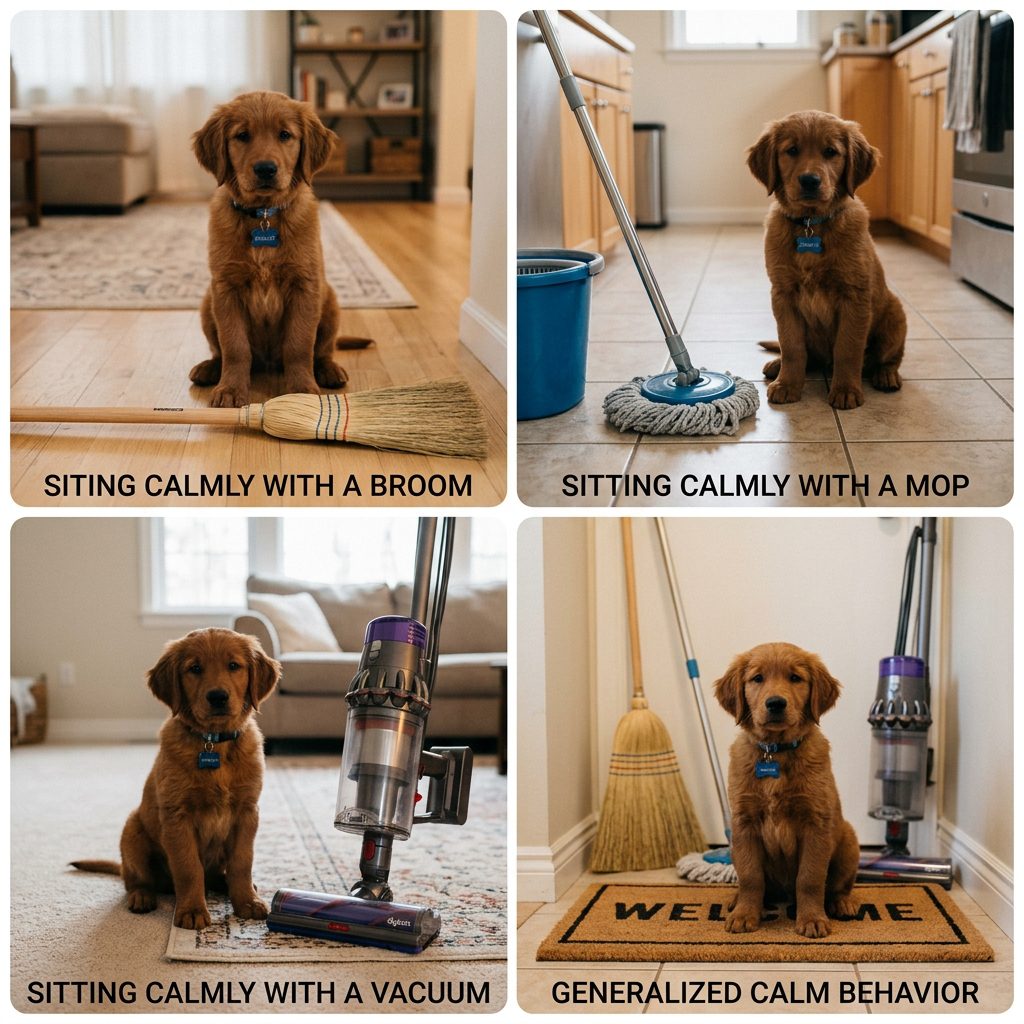
Once your puppy is a ‘Broom Master,’ you might notice they still struggle with the vacuum cleaner or the mop. This is because dogs do not generalize well. To them, a broom and a vacuum are entirely different monsters.
The Mop Challenge
Mops are often more enticing than brooms because they are wet and have long, stringy ‘tentacles.’ Use the same ‘Broom Statue’ game, but start even slower. The scent of cleaning chemicals can also be a distraction, so ensure you are using pet-safe cleaners and rewarding for focus.
The Vacuum Transition
The vacuum adds a new element: Loud Noise. Before moving the vacuum, just turn it on and reward your puppy for being in the same room. Then, follow the same progressive steps we used for the broom. Eventually, your puppy will learn that all cleaning tools are actually just ‘treat dispensers’ in disguise.
| Tool | Primary Trigger | Difficulty Level |
|---|---|---|
| Broom | Visual/Movement | Medium |
| Mop | Visual/Scent | Medium-High |
| Vacuum | Sound/Vibration | High |
Conclusion
From Chaos to Clean: Your New Reality
Stopping broom biting is about more than just a clean floor; it is about building a language of communication between you and your puppy. By using the ‘Broom Statue’ game, you have taught your dog how to manage their impulses, how to look to you for guidance, and that calm behavior is the most rewarding choice they can make.
Remember that every puppy develops at their own pace. Some might master the broom in three days, while others might take three weeks. Stay consistent, keep your sessions short and fun, and always end on a high note. Before you know it, you will be able to sweep your entire home with your furry companion napping peacefully nearby. Happy training!