Get Your Puppy to Come Every Single Time (Even with Major Distractions!)
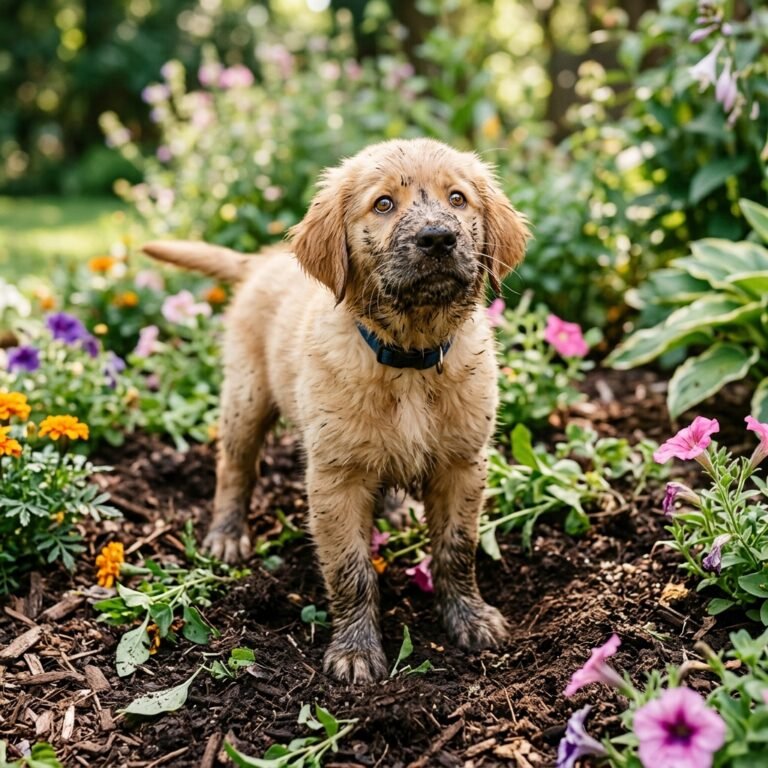
It is the nightmare of every dog owner: your puppy catches a scent or spots a squirrel and bolts. You yell their name, you scream “Come!”, but they don’t even twitch an ear. In that moment, your heart sinks. Having a reliable recall isn’t just about convenience or showing off at the park; it is a critical safety skill that can literally save your puppy’s life. Whether you are navigating a busy city sidewalk or enjoying an off-leash hike, knowing your dog will return to you every single time is the ultimate peace of mind.
As a canine specialist, I have seen thousands of owners struggle with the “selective hearing” phase. The good news? Your puppy isn’t being stubborn or spiteful. They are simply operating on a system of value. To get a puppy to come when called, even with major distractions, you have to become more interesting than the rest of the world. In this comprehensive guide, we are going to break down the science of the recall, build a rock-solid foundation, and then proof that behavior against the toughest distractions nature can throw at you.
Understanding the Psychology: Why Puppies Ignore the Recall
Before we pick up a leash or a treat bag, we have to understand why puppies fail to come when called. Most owners inadvertently “poison” their recall cue. If you only call your puppy to put them in their crate, give them a bath, or leave the dog park, you are teaching them that “Come” means “The fun is over.” In their mind, the word becomes a warning rather than an invitation.
The Bank Account Analogy
Think of your relationship with your puppy like a bank account. Every time you give a treat, a belly rub, or play a game, you are making a deposit. Every time you ask them to do something difficult or boring, you are making a withdrawal. A reliable recall is a very expensive purchase. If your account is empty because you only ever ask for things without giving back, your puppy will “decline” the transaction when a squirrel (a high-value distraction) appears.
Pro Tip: Never call your puppy to do something they dislike. If you need to give them a bath or trim their nails, simply go and get them calmly rather than using your recall cue.
We also have to consider the “Competing Motivator.” To a six-month-old puppy, a blowing leaf or a friendly stranger is often more rewarding than a piece of dry kibble. Our goal is to raise the value of the recall so high that it outcompetes everything else.
The Recall Toolkit: Essential Gear and High-Value Rewards
To set your puppy up for success, you need the right tools. You wouldn’t try to build a house without a hammer, and you shouldn’t try to train a life-saving recall without the proper equipment. The most important part of your toolkit isn’t the leash—it is the reward.
The Reward Hierarchy
Not all treats are created equal. For a reliable recall, you need “Level 10” rewards. These are things your dog rarely gets and absolutely loves. Use the table below to categorize your rewards:
| Reward Level | Type of Food/Activity | When to Use |
|---|---|---|
| Low Value | Standard Kibble / Crunchy Biscuits | Indoor training with zero distractions. |
| Medium Value | Commercial Training Treats / Jerky | Backyard training with mild distractions. |
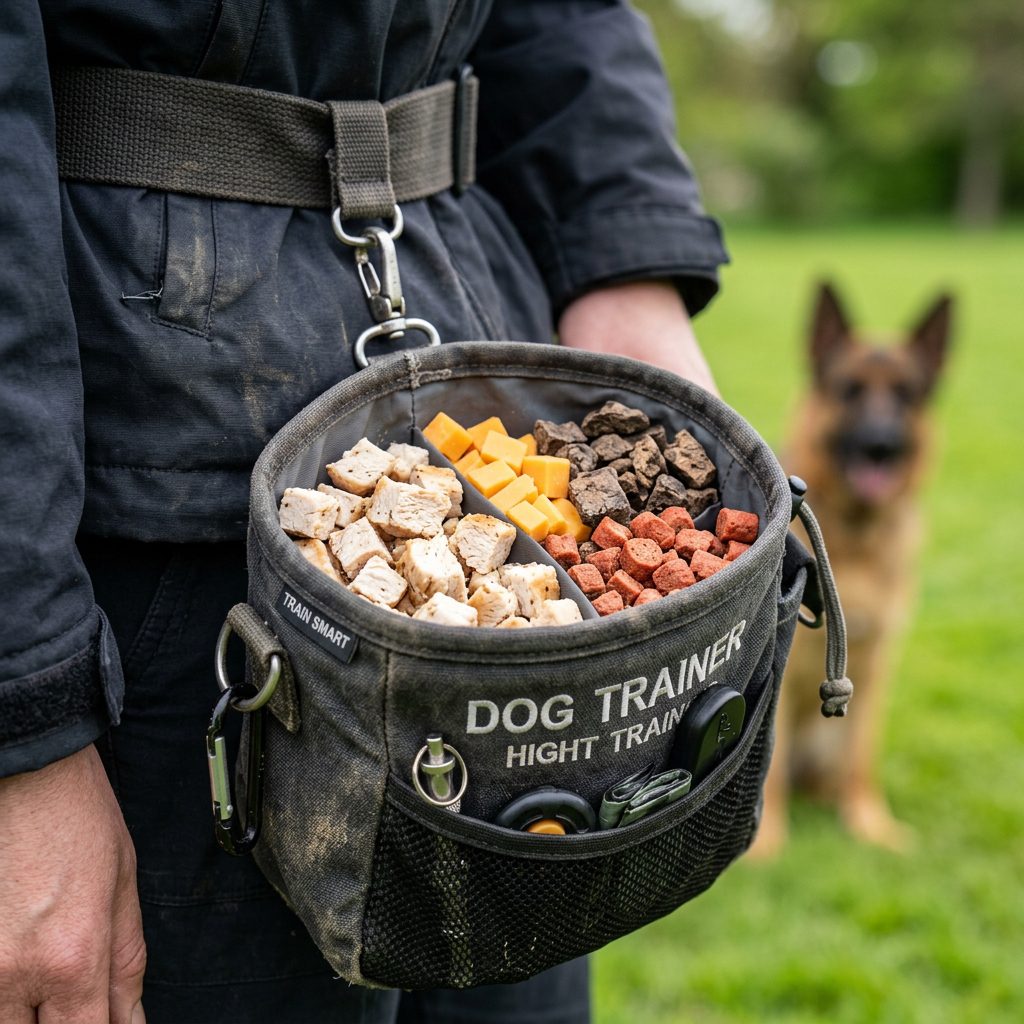
| High Value | Boiled Chicken / String Cheese / Freeze-dried Liver | Public parks, near other dogs, or new environments. |
| Jackpot Value | Satin Balls / Fresh Steak / Real Salmon | When the puppy chooses you over a major distraction. |
Essential Training Gear
- A 15-30 Foot Long Line: This is non-negotiable. A long line allows your puppy to feel free while ensuring they cannot “self-reward” by running away. It is your safety net.
- A High-Quality Training Pouch: You need quick access to treats. Fumbling with a plastic bag in your pocket will ruin your timing.
- A Distinctive Whistle (Optional): Sometimes a whistle is easier for a dog to hear over long distances or wind than a human voice.
Phase 1: Building the Magnetic Recall Indoors
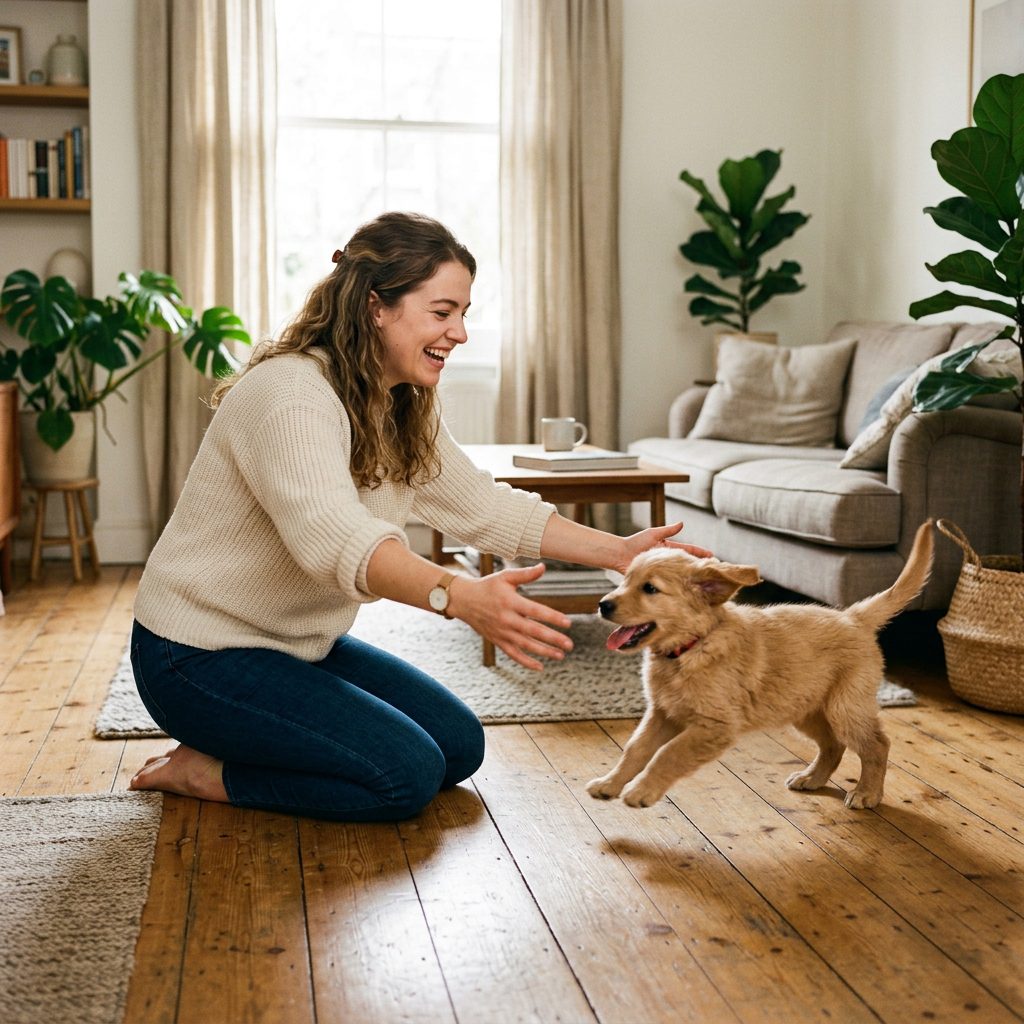
We start in the “boring” environment of your living room. The goal here is to create an automatic, whiplash response to the cue. We aren’t asking the puppy to come from a mile away yet; we are just building the association that Word = Amazing Prize.
Step-by-Step Foundation
- The Name Game: Say your puppy’s name. The moment they look at you, mark it with a “Yes!” or a clicker and give a treat. Repeat this until they snap their head toward you every time they hear their name.
- The Intro to the Cue: Choose your word. “Come” and “Here” are standard. While your puppy is standing right in front of you, say the word and immediately give a high-value treat. Do this 10 times. We are “charging” the word.
- The Backwards Hustle: Say the cue, then quickly take several fast steps backward. This triggers the puppy’s natural prey drive to follow movement. When they catch up to you, throw a party! Use multiple treats in a row (a “jackpot”) to make the experience memorable.
- The Restrained Recall: Have a family member gently hold the puppy. You move 10 feet away, get excited, and call the puppy. The person releases them, and the puppy “slingshots” toward you. This builds enthusiasm and speed.
Remember: At this stage, never say the cue if you aren’t 100% sure the puppy will come. If they are busy sniffing a rug, don’t waste the word. Wait until they are looking at you, then call.
Phase 2: Proofing Against Distractions (The 3 D’s)
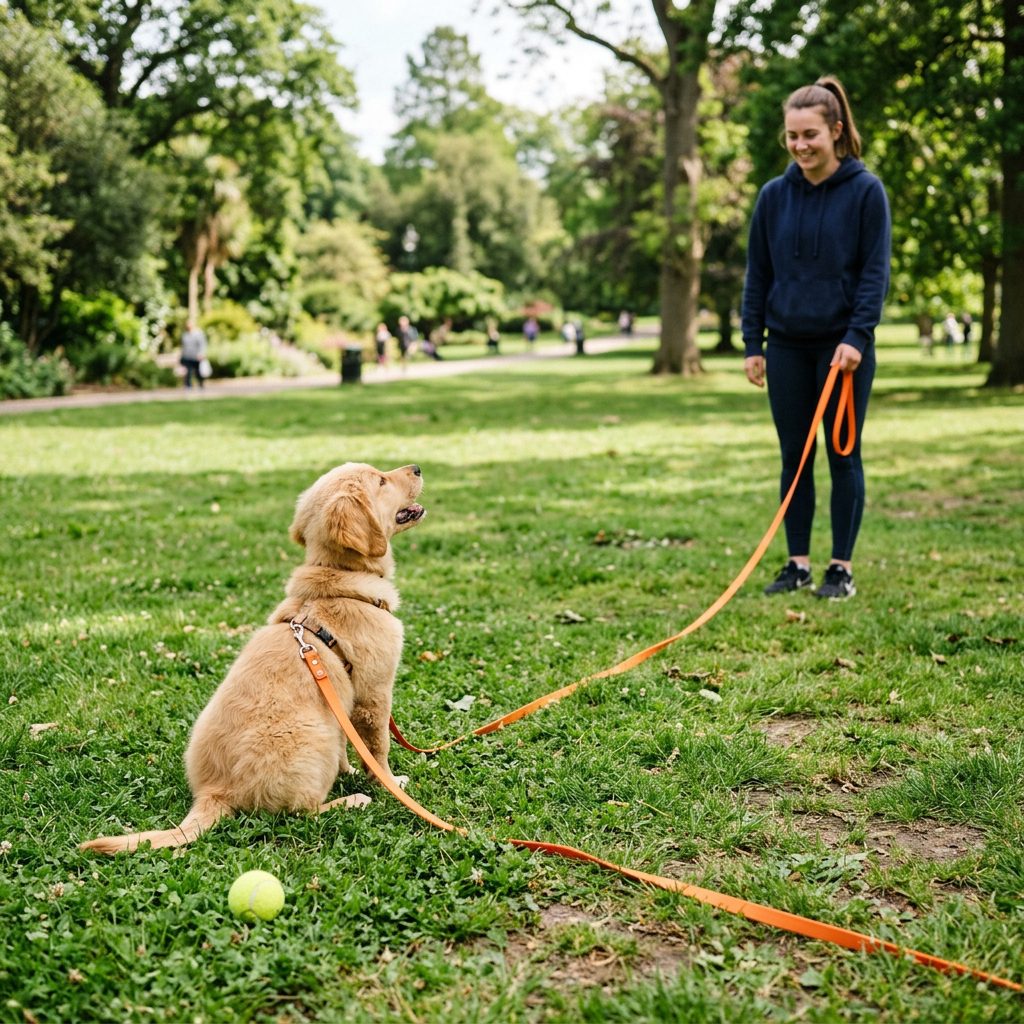
Once your puppy is a superstar in the living room, it’s time to take the show on the road. This is where most owners fail because they jump from the living room straight to the off-leash dog park. That is like asking a first-grader to solve calculus. We must use the Three D’s of Dog Training to gradually increase difficulty.
1. Distance
Slowly increase how far away you are when you call. Start with 5 feet, then 10, then 20 using your long line. If the puppy fails at 20 feet, go back to 15.
2. Duration
In recall, duration refers to how long the puppy stays with you after they arrive. Don’t just give a treat and let them bolt away. Give one treat, then another, then a chin scratch. Teach them that staying with you is just as rewarding as coming to you.
3. Distraction
This is the big one. We introduce distractions systematically:
- Level 1: A toy sitting on the ground 5 feet away.
- Level 2: A family member walking past.
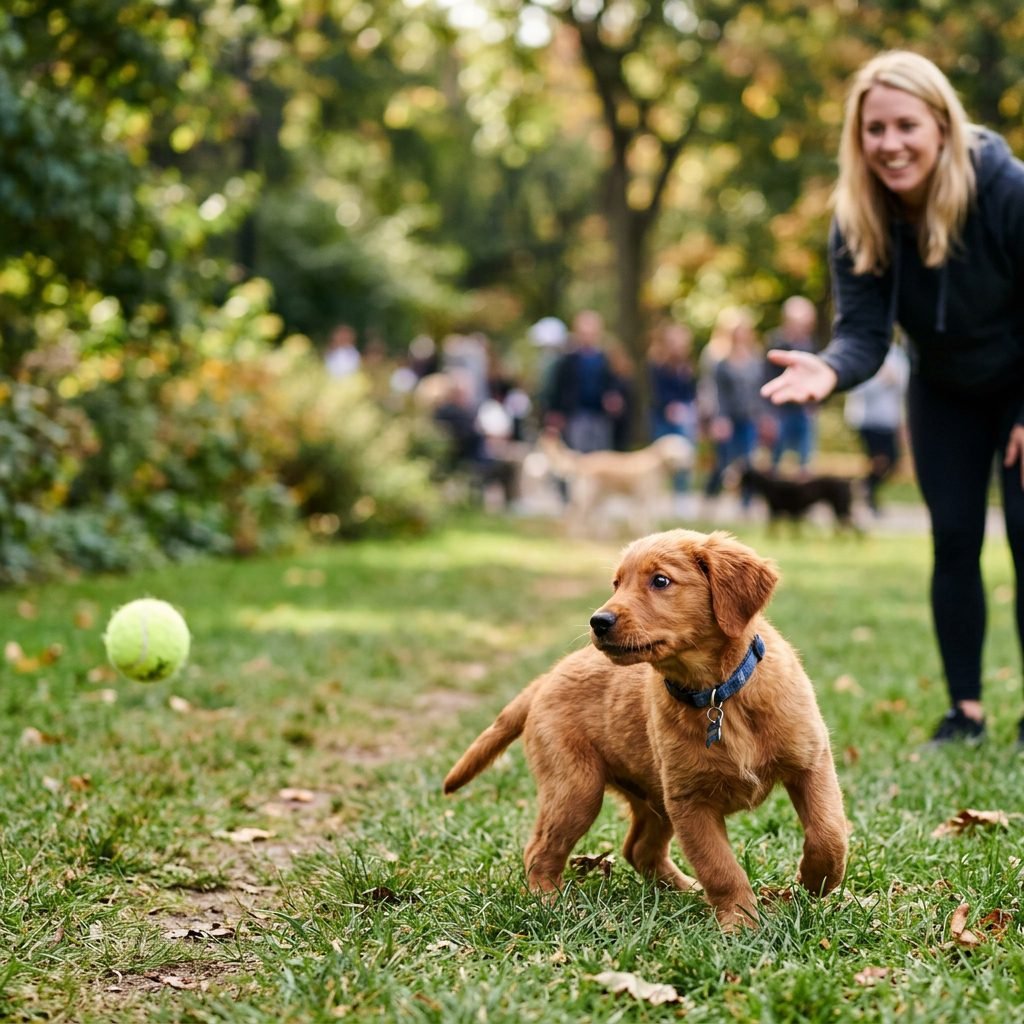
- Level 3: A bouncing ball or a bowl of food.
- Level 4: Other dogs barking or people playing nearby.
The Golden Rule of Distractions: If your puppy ignores you, you are too close to the distraction or the distraction is too high-level. Move further away until they can succeed, then slowly move closer over several sessions.
Advanced Techniques: Games That Build Reliable Recall
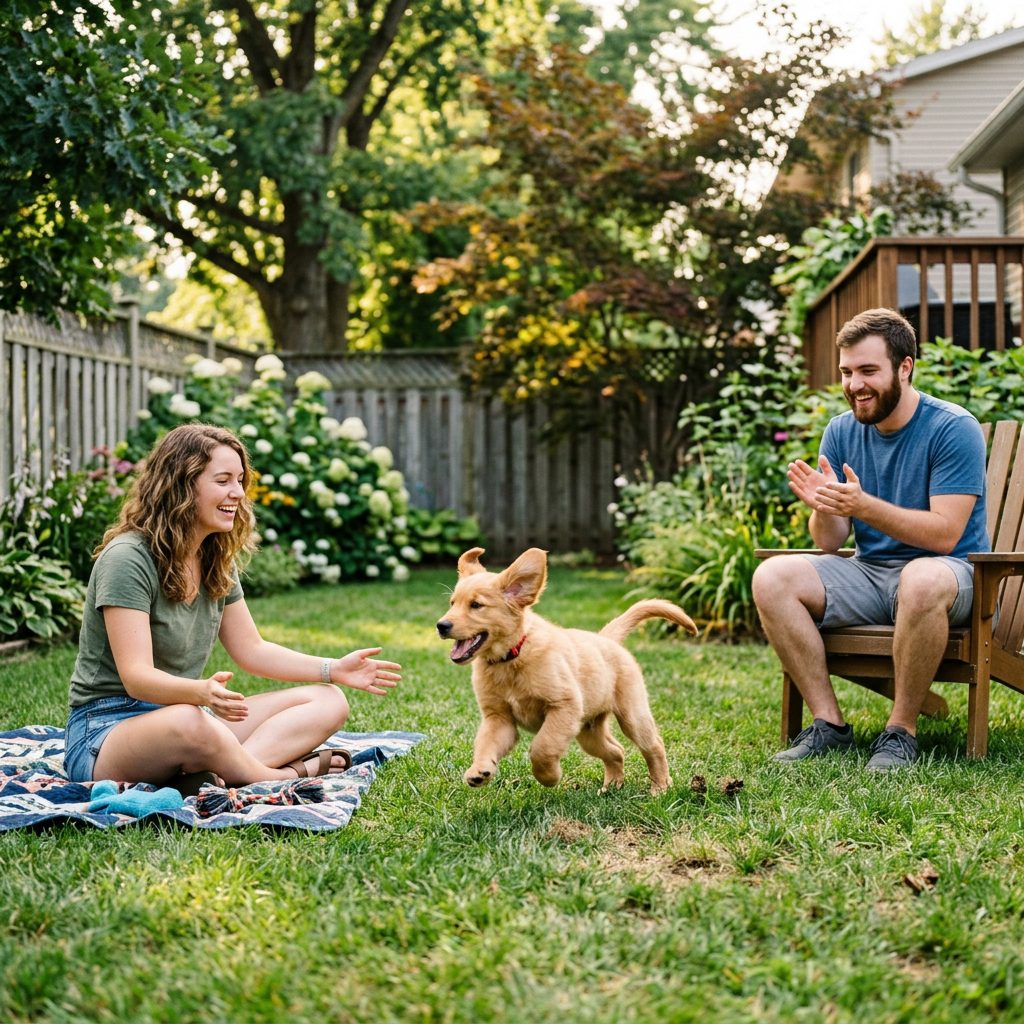
Training should be the highlight of your puppy’s day. If it feels like a chore, they will feel that energy. Incorporating games into your routine builds a “transfer of value” where the puppy associates the thrill of the game with the recall cue.
Hide and Seek
This is a fan favorite. While your puppy is distracted in the house or a fenced yard, hide behind a door or a tree. Call their name once. When they find you, act like they just won the lottery. This teaches them to actively look for you and stay aware of your location.
The Ping-Pong Recall
Two people sit about 20 feet apart with high-value treats. Person A calls the puppy. When the puppy arrives, they get a treat and praise. Then Person B calls. The puppy runs back and forth like a ping-pong ball. This builds incredible muscle memory and speed.
The “Chase Me” Game
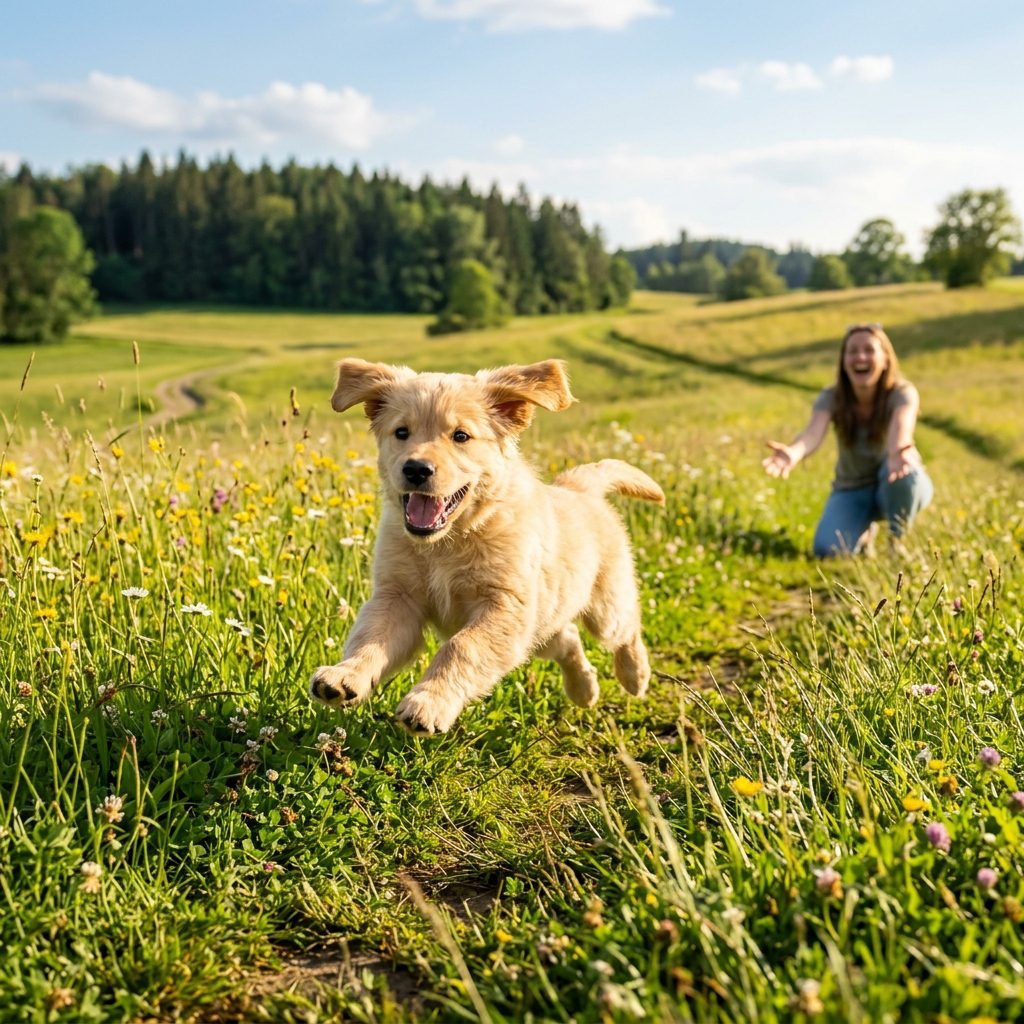
If your puppy ever gets loose and starts running away, never chase them. To a puppy, being chased is a fun game of tag, and they are faster than you. Instead, yell their name, do something silly like a “happy dance,” and run in the opposite direction. Their instinct will be to chase you. When they catch you, reward them heavily.
Troubleshooting: What to Do When They Don’t Come
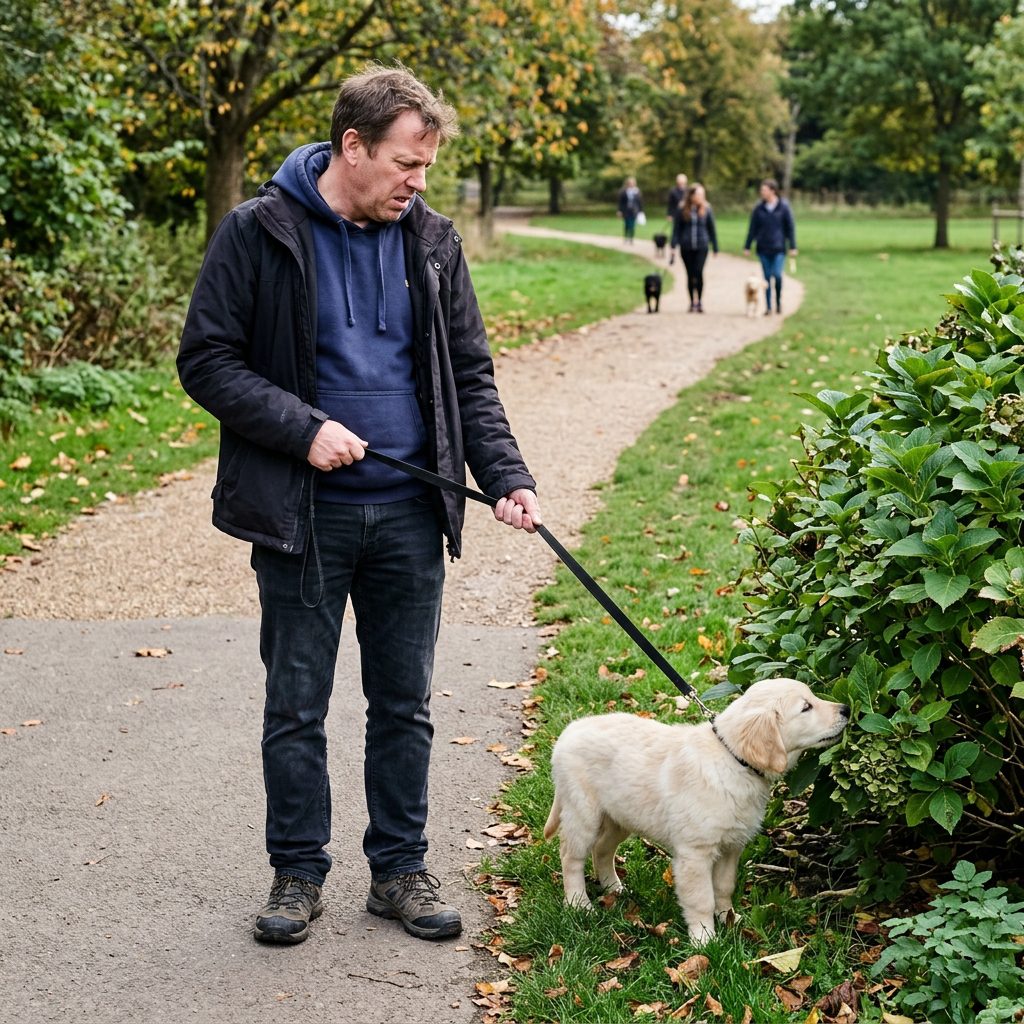
Even with the best training, mistakes happen. How you handle a failed recall determines whether your training stays on track or takes a massive step backward.
The “No-Punishment” Rule
If you call your puppy for ten minutes and they finally come to you, you must still reward them. If you scold them when they finally arrive, you are punishing them for coming back. From the puppy’s perspective, they think, “I finally went back to my human and they were mean to me. I won’t do that again!”
Common Mistakes to Avoid
- Repeating the Cue: “Come. Come! COME!” If you say it three times, you have taught your puppy that the first two are optional. Say it once. If they don’t respond, use the long line to gently guide them to you or go get them.
- The “Poisoned” Cue: As mentioned before, don’t use the recall for things they hate. If you’ve already poisoned the word “Come,” pick a new word like “Here” or “Touch” and start fresh.
- Lack of Engagement: If you are staring at your phone while calling your dog, you aren’t very interesting. Be animated! Use a high-pitched voice, clap your hands, and be the most exciting thing in the environment.
| Problem | Likely Cause | The Fix |
|---|---|---|
| Puppy looks but doesn’t move | Low Motivation | Increase treat value (use steak/cheese). |
| Puppy starts to come but gets distracted | Too much distance too soon | Shorten the leash and move to a quieter area. |
| Puppy runs away when called | The “Chase Me” game | Turn and run the other way; never chase the dog. |
Conclusion
Training a puppy to come every single time is a journey, not a destination. It requires patience, consistency, and a lot of high-quality chicken! Remember that your puppy is navigating a big, exciting world, and you are asking them to give up all those amazing smells and sights just to be near you. Make sure that choice is always worth it for them.
By starting in a low-distraction environment, using a long line for safety, and never punishing your puppy for returning, you are building a bond of trust that will last a lifetime. Keep your sessions short (5-10 minutes), keep them fun, and always end on a high note. Soon enough, your puppy will be turning on a dime the moment they hear your voice, no matter what distractions are around. Happy training!