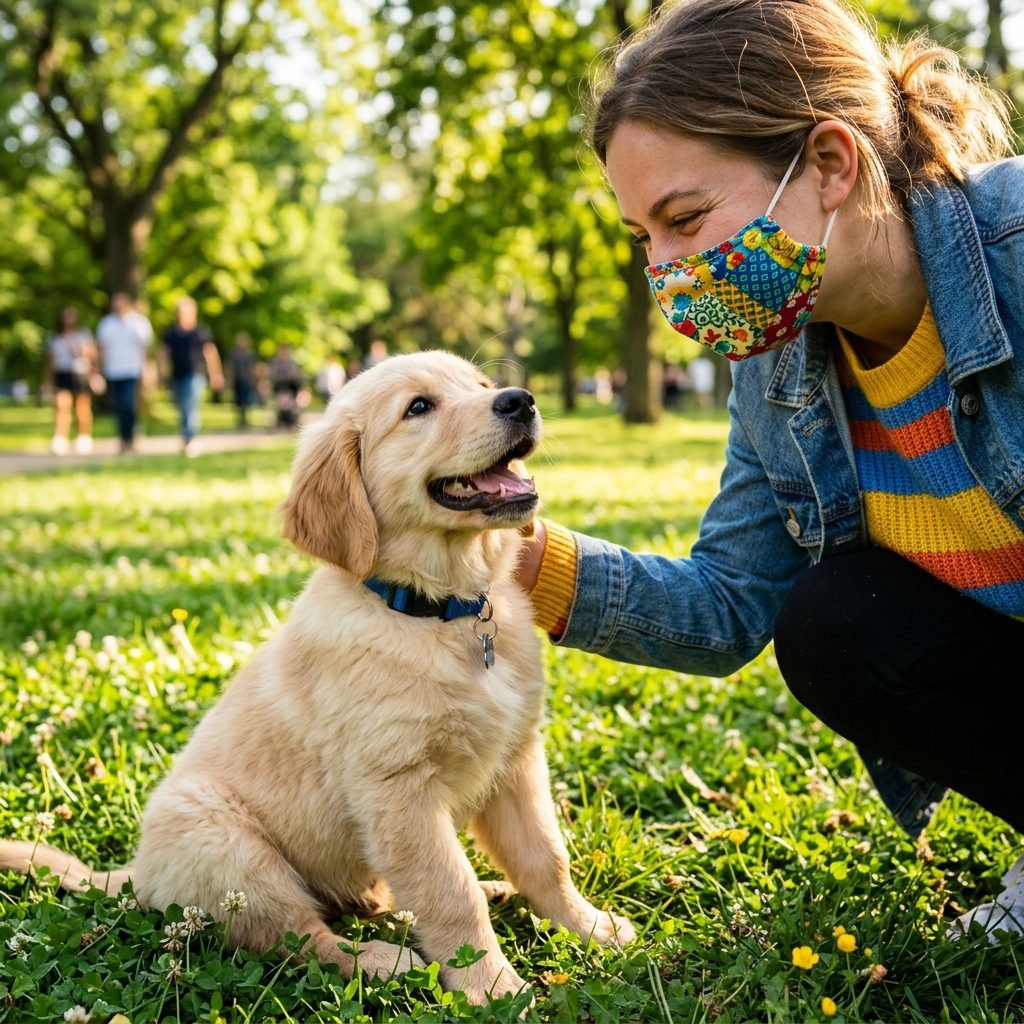
Socialize Puppy To Face Masks And Coverings: Quick Steps For Friendly Greetings
Welcome, savvy dog parents! If you have recently welcomed a bouncing, energetic puppy into your home, you already know that early socialization is the golden key to raising a confident, well-adjusted adult dog. But in today’s ever-changing world, socialization goes far beyond just meeting other dogs or hearing loud sirens. We have to introduce our pups to the everyday realities of human life, and that includes face masks, bulky winter scarves, face shields, and oversized sunglasses.
Have you ever noticed your puppy barking at someone wearing a hat or backing away from a friendly neighbor in a medical mask? It is completely normal! Dogs are incredibly visual communicators, and they rely heavily on reading our facial expressions to understand our intentions. When half of a human’s face is suddenly hidden behind a piece of fabric, it can be incredibly confusing—and sometimes downright spooky—for a young pup learning how the world works.
“Socialization isn’t just about exposure; it’s about creating positive, safe associations with new and potentially scary things in your puppy’s environment.”
In this comprehensive guide, we are going to dive deep into exactly why face coverings can cause anxiety in dogs. More importantly, we will walk you through a foolproof, step-by-step process to socialize your puppy to face masks. By the end of this training journey, your puppy will be offering friendly tail wags and polite greetings to everyone they meet, regardless of what they are wearing on their face. Let’s get started on building that canine confidence!
Understanding Why Face Masks Spook Puppies

To truly help our puppies, we first need to look at the world through their eyes. Dogs have evolved over thousands of years to live alongside humans, and in that time, they have become absolute masters at reading human body language. They look at our eyes to see where our attention is focused, but they rely heavily on our mouths and jawlines to gauge our emotional state. A relaxed, slightly open mouth tells a puppy, “I am friendly and safe.” Conversely, a tight jaw or bared teeth signals tension. When a person approaches wearing a mask, a winter scarf, or a face shield, that vital stream of communication is completely cut off.
Furthermore, masks alter the physical silhouette of the human head. A bulky cloth mask or a large winter scarf can make a person’s head look unnaturally large or misshapen to a dog’s sensitive eyes. Additionally, masks muffle our voices, removing the high-pitched, friendly tones that puppies naturally gravitate toward. Instead of a clear, happy greeting, they hear a low, distorted mumble coming from a faceless figure.
The Canine Perspective: Masked vs. Unmasked
Let’s break down exactly how your puppy perceives these interactions so you can better empathize with their hesitation.
| Visual / Audio Cue | Unmasked Human | Masked Human | Puppy’s Interpretation |
|---|---|---|---|
| Mouth & Jaw | Visible smiles, relaxed muscles | Completely hidden behind fabric | Uncertainty; unable to read the human’s mood or intentions. |
| Voice & Tone | Clear, high-pitched, directional | Muffled, distorted, lower pitch | Confusion; sounds unnatural and potentially alarming. |
| Face Shape | Familiar, standard human silhouette | Altered, bulky, or unnatural shape | Looks like a strange, unpredictable new creature. |
| Scent | Natural human scent | Smells of laundry detergent or medical paper | Unfamiliar scent profile adding to the overall strangeness. |
When you look at the data in the table above, it is easy to see why a puppy might choose to bark or hide. They aren’t trying to be difficult; they are simply experiencing a sensory disconnect. By understanding this, we can approach our training with empathy, patience, and a healthy dose of high-value treats.
Tools and Treats Needed for Success
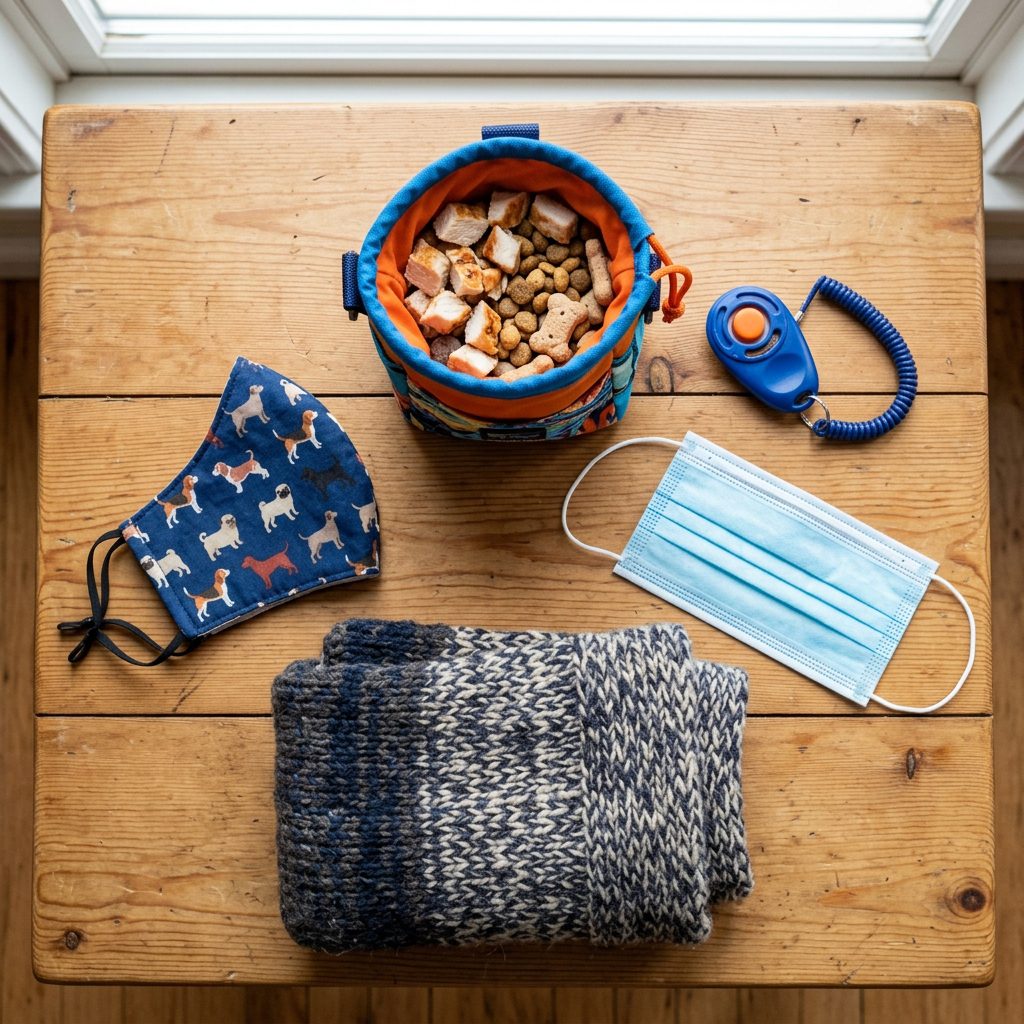
Before we jump into the actual socialization steps, we need to gather our training toolkit. Setting up your training sessions properly is half the battle. Because we are trying to change your puppy’s emotional response from “Uh oh, what is that?” to “Oh boy, here comes a mask, which means I get snacks!”, we need to use rewards that your puppy absolutely adores.
Your Mask Socialization Toolkit
- High-Value Treats: Standard kibble probably won’t cut it for this exercise. You need the good stuff. Think pea-sized pieces of boiled chicken, plain hot dogs, string cheese, or freeze-dried liver. The smellier, the better!
- A Treat Pouch: Timing is everything in positive reinforcement training. A treat pouch allows you to deliver rewards quickly without fumbling in your pockets.
- A Clicker (Optional): If your puppy is already clicker trained, this is the perfect time to use it. The click clearly marks the exact moment your puppy looks at the mask calmly. If you don’t have a clicker, a verbal marker like “Yes!” works just as well.
- A Variety of Face Coverings: Don’t just practice with one mask. Dogs are incredibly specific learners. If you only train with a blue surgical mask, your puppy might still be terrified of a black cloth mask or a floral winter scarf. Gather medical masks, cloth masks of different colors, bandanas, and winter neck gaiters.
- A Quiet Environment: Start your training inside your home, free from other distractions like traffic, other pets, or loud noises. We want your puppy’s full cognitive ability focused on the game.
Remember, keep your training sessions short and sweet. Puppies have very short attention spans. Aim for 3 to 5 minutes per session, a couple of times a day. Always end on a positive note while your puppy is still having fun and engaged.
Step-by-Step Guide to Mask Socialization
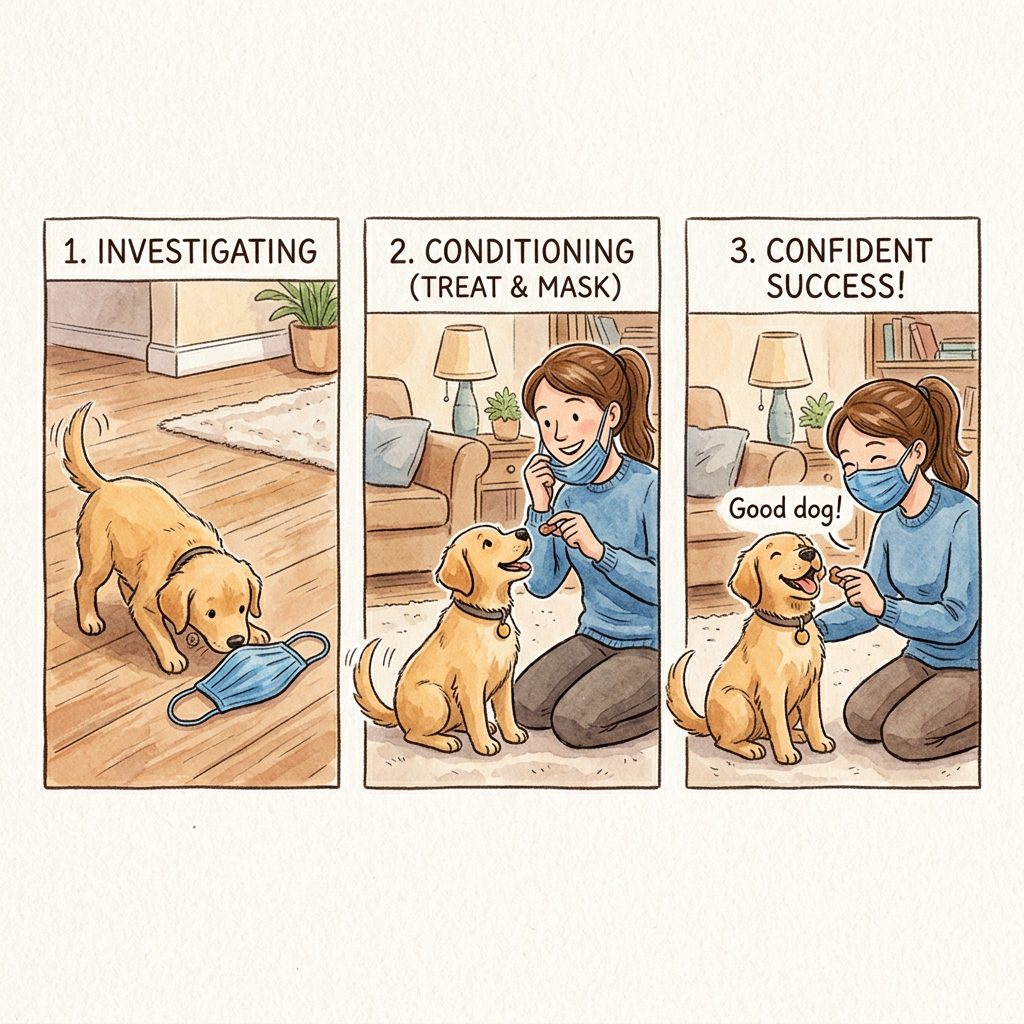
Now that we have our treats ready and we understand why our puppies are nervous, it is time to start the socialization process. We are going to use a technique called desensitization and counter-conditioning. This simply means we are going to introduce the scary thing at a very low intensity (desensitization) and pair it with something amazing (counter-conditioning) to change the dog’s emotional response.
Step 1: Introduce the Mask as a Neutral Object
Do not put the mask on your face yet! To a puppy, a mask is just a weird piece of fabric. Sit on the floor with your puppy and place the mask on the ground a few feet away. Every time your puppy looks at the mask, say “Yes!” and toss them a high-value treat. If they are brave enough to walk up and sniff it, throw a jackpot (three or four treats at once). We want them to think, “Wow, this piece of cloth on the floor magically produces hot dogs!”
Step 2: The Peek-a-Boo Game
Once your puppy is happily ignoring the mask on the floor, pick it up. Hold it in your hand. Treat your puppy for remaining calm. Next, slowly bring the mask up to your chin, hold it there for one second, say “Yes!”, pull the mask away, and give a treat. Repeat this process, gradually moving the mask closer to your mouth and nose. You are playing a slow game of peek-a-boo. The sequence is always: Mask appears -> Puppy gets a treat -> Mask disappears -> Treats stop.
Step 3: Wearing the Mask Briefly
When your puppy is comfortable with you holding the mask over your face, it is time to loop it around your ears. Put the mask on completely. Look at your puppy, say your cheerful marker word (“Yes!”), and feed them a treat. Take the mask off immediately. Repeat this 5 to 10 times. Gradually increase the amount of time you leave the mask on. Put it on, count to five, treat, take it off. Put it on, count to ten, treat, take it off. Your puppy will start to realize that when the mask goes on, the treat buffet opens.
Step 4: Adding Movement and Sound
Dogs are motion-sensitive. A masked person sitting still is much less scary than a masked person walking toward them and talking. Put your mask on, stand up, and take one step back. Treat your puppy if they follow you calmly. Take a step forward, treat. Next, start talking through the mask. Use a happy, silly voice: “Who’s a good puppy?” It will sound muffled, so immediately follow your muffled voice with a delicious treat. Practice walking around your living room wearing the mask, randomly dropping treats for your pup.
Step 5: Generalizing to the Real World
Dogs do not generalize well. Just because they accept you in a mask doesn’t mean they will accept a stranger in a mask. Enlist the help of family members or friends. Have them come over and repeat Steps 2 through 4. Once your puppy is confident indoors, take the show on the road. Sit on a park bench with your puppy. Whenever a masked person walks by at a distance, feed your puppy a treat. As long as your puppy stays relaxed, you can gradually decrease the distance between your puppy and masked strangers.
Troubleshooting Common Reactions
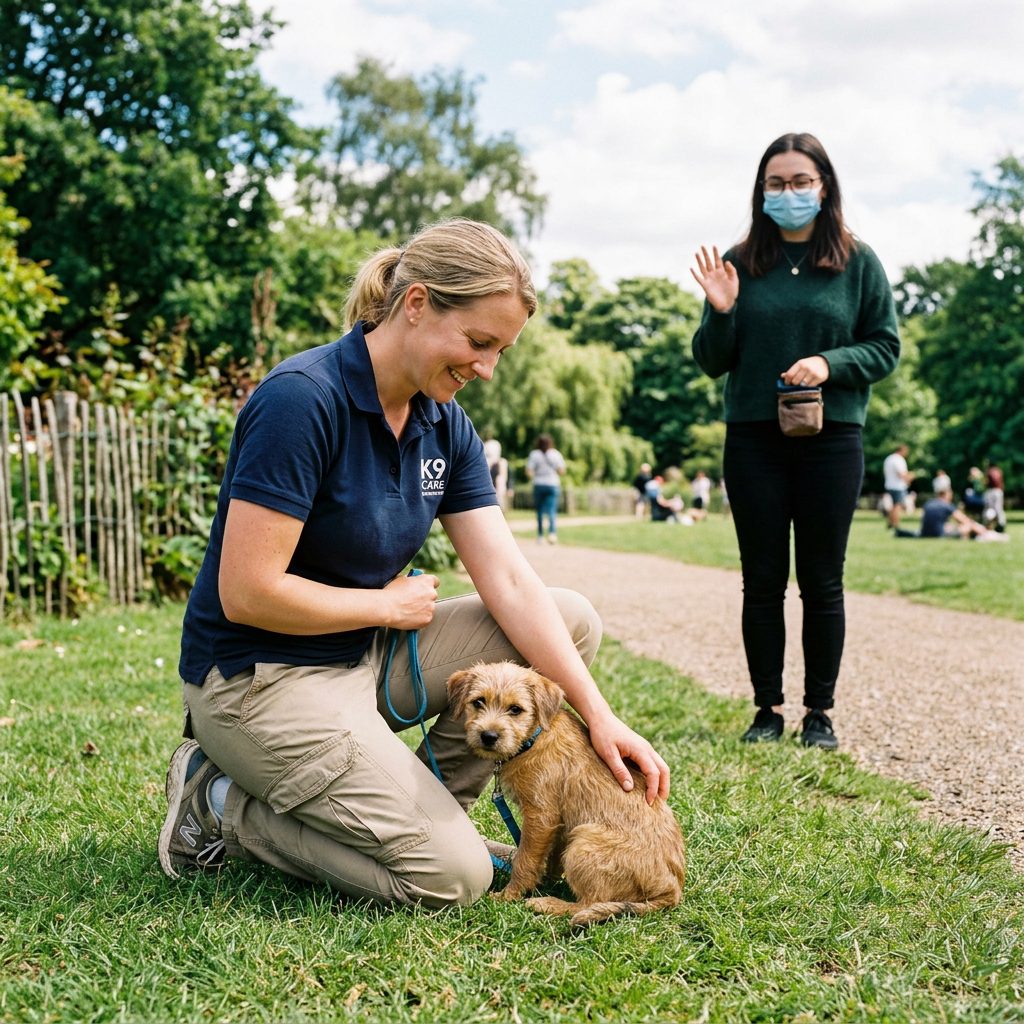
Even with the most careful, step-by-step approach, puppies are living creatures with their own minds and emotions. They go through natural fear periods during their development where things that were once fine suddenly become terrifying. If your puppy has an adverse reaction during training, do not panic. It is simply information telling you that you need to adjust your approach.
Reading Your Puppy’s Body Language
It is crucial to recognize the subtle signs of stress before they escalate into barking or lunging. Watch out for “whale eye” (seeing the whites of their eyes), lip licking when no food is present, yawning when they aren’t tired, or tightly pinned back ears. If you see these signs, you have pushed your puppy too far, too fast.
| Puppy’s Reaction | What It Means | Your Next Action |
|---|---|---|
| Barking or Growling | Fear, feeling threatened, or over-arousal. | Immediately create distance. Take off the mask. Toss a treat away from you to relieve pressure. Lower your criteria for the next session. |
| Freezing or Stiffening | Uncertainty, internal conflict, processing the situation. | Wait patiently. Do not lure them closer with food (this causes conflict). Speak in a gentle tone and wait for them to relax their muscles. |
| Hiding behind your legs | Seeking safety and reassurance from their trusted human. | Advocate for your pup! Ask the masked person to stop approaching and ignore the dog. Praise your dog for choosing to retreat rather than react. |
| Jumping up excitedly | Frustration, over-excitement, or trying to investigate the mask. | Ask for an incompatible behavior, like a “Sit.” Reward heavily for keeping four paws on the floor while greeting. |
If your puppy gets stuck on a certain step, simply go back to the previous step where they were successful and build their confidence back up. Training is rarely a straight line; it is a series of peaks and valleys. If your puppy barks at a stranger on the street, do not correct or scold them. Punishing a fear-based reaction will only confirm to the puppy that masked strangers are indeed bad news. Instead, cheerfully say, “Let’s go!” and jog away to create distance, then reward them for following you.
Common Mistakes to Avoid
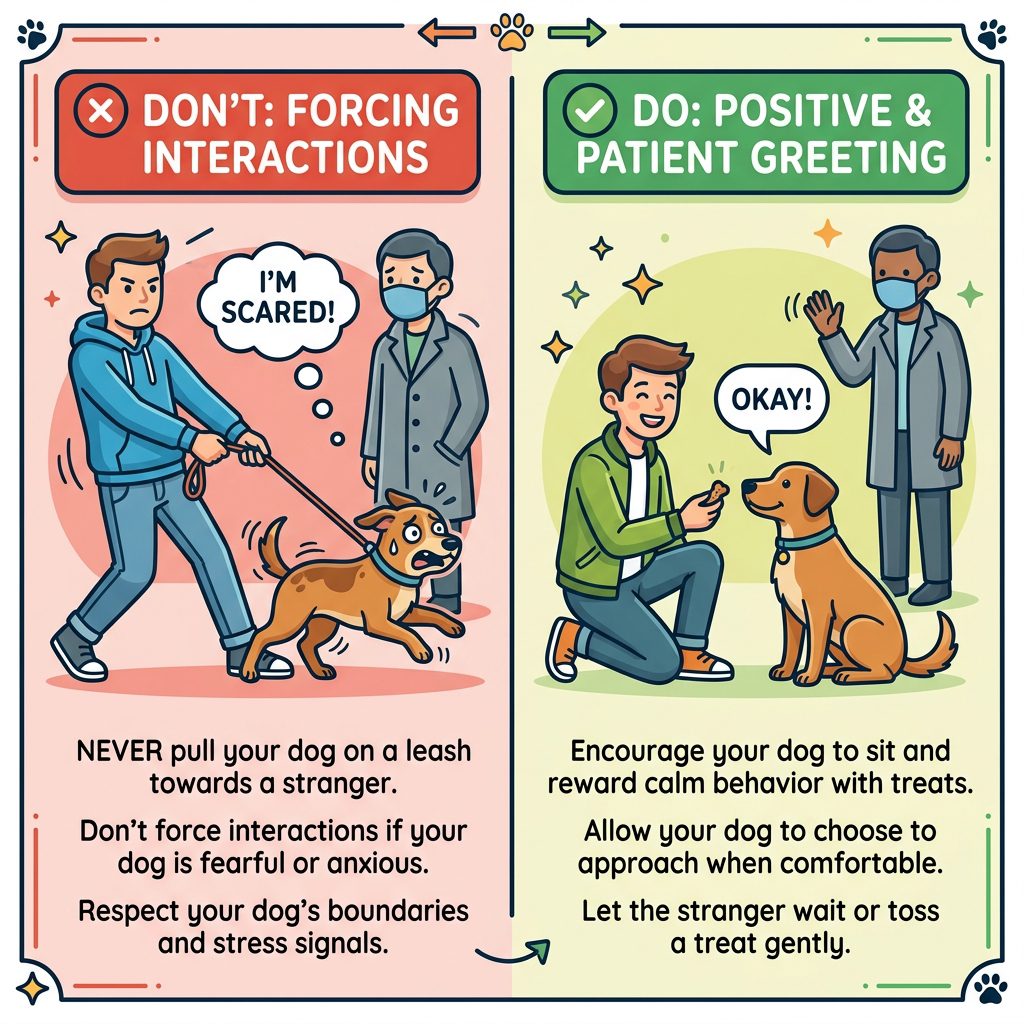
When we are eager for our puppies to succeed, it is easy to accidentally make mistakes that can set back our training. Socialization is a delicate process that requires patience and keen observation. To ensure your puppy becomes a confident canine citizen, be sure to avoid these common pitfalls.
1. Flooding Your Puppy
Flooding occurs when you expose a dog to a scary stimulus at full intensity, preventing them from escaping, in the hopes they will just “get used to it.” For example, taking a terrified puppy into a crowded farmer’s market full of masked people and forcing them to stay. This is incredibly detrimental and often leads to severe behavioral issues and worsened fear. Always prioritize slow, controlled exposure over overwhelming situations.
2. Forcing Interactions
Never force your puppy to approach someone, and never force a masked stranger upon your puppy. If someone says, “It’s okay, dogs love me!” while marching toward your cowering pup, it is your job as a savvy dog owner to step in. Put your hand up and politely say, “We are in training right now, please ignore him.” A puppy should always have the choice to approach or retreat. Choice builds confidence.
3. Using Food as a Bribe Instead of a Reward
There is a subtle but critical difference between luring and rewarding. If you hold a piece of chicken right up to a scary masked stranger’s hand to force your puppy to approach, you are luring. The puppy might be so hungry they overcome their fear to get the food, but once they eat it, they realize they are dangerously close to the scary thing, causing them to panic and bolt. Instead, let the puppy look at the stranger from a safe distance, and deliver the reward away from the scary trigger. This rewards the calm observation without forcing dangerous proximity.
4. Rushing the Process
Puppies learn at their own pace. What takes one puppy three days to master might take another puppy three weeks. Do not compare your dog to the dog next door. If you rush through the steps without ensuring your puppy is truly relaxed and happy at each stage, the foundation will crumble when faced with a real-world distraction. Patience is your greatest training tool.
Conclusion
Socializing your puppy to face masks, winter scarves, and other face coverings doesn’t have to be a stressful chore. By breaking the process down into manageable, positive steps, you are doing so much more than just teaching them to tolerate a piece of fabric. You are building a deep foundation of trust between you and your dog. You are teaching them that no matter how strange or unpredictable the human world gets, they can look to you for guidance, safety, and, of course, delicious snacks!
Remember to keep your training sessions short, varied, and incredibly rewarding. Celebrate the small victories, whether it is a calm glance at a surgical mask or a relaxed tail wag for a neighbor in a winter gaiter. With consistency, empathy, and a pocket full of high-value treats, your puppy will soon be navigating the world with unshakeable confidence, ready to offer friendly, polite greetings to every masked face they meet. Happy training, savvy dog parents!