Socialize Puppy To Bicycles and Skateboards: Stop High-Speed Chasing Today!
Hey there, savvy dog parents! Have you ever been enjoying a perfectly peaceful stroll with your adorable new puppy, soaking in the sunshine, only for a skateboarder to zoom past and suddenly turn your sweet furball into a lunging, barking, high-speed chasing machine? If you are nodding your head (and perhaps rubbing a sore shoulder), you are absolutely not alone. Chasing fast-moving objects like bicycles, skateboards, scooters, and even joggers is an incredibly common behavior in puppies and young dogs. But while it is a natural instinct, it is also a habit that needs to be addressed immediately for the safety of your dog, the rider, and yourself.
Welcome to your ultimate guide on desensitizing and socializing your puppy to wheels! As a canine behavior specialist, I see this issue all the time. Our modern world is filled with strange, loud, and fast-moving contraptions that tap directly into a dog’s primal instincts. The good news? With patience, the right tools, and a solid science-based training plan, you can rewire your puppy’s brain. We are going to transform that frantic must-chase-now impulse into calm, focused attention on you. By the end of this comprehensive guide, you will have a clear, actionable roadmap to stop the high-speed chasing today and pave the way for years of relaxing, stress-free walks. Let us dive into the fascinating world of canine psychology and get your puppy on the path to wheeled-object neutrality!
Understanding the Urge to Chase: Prey Drive vs. Fear
The Psychology Behind the Lunge
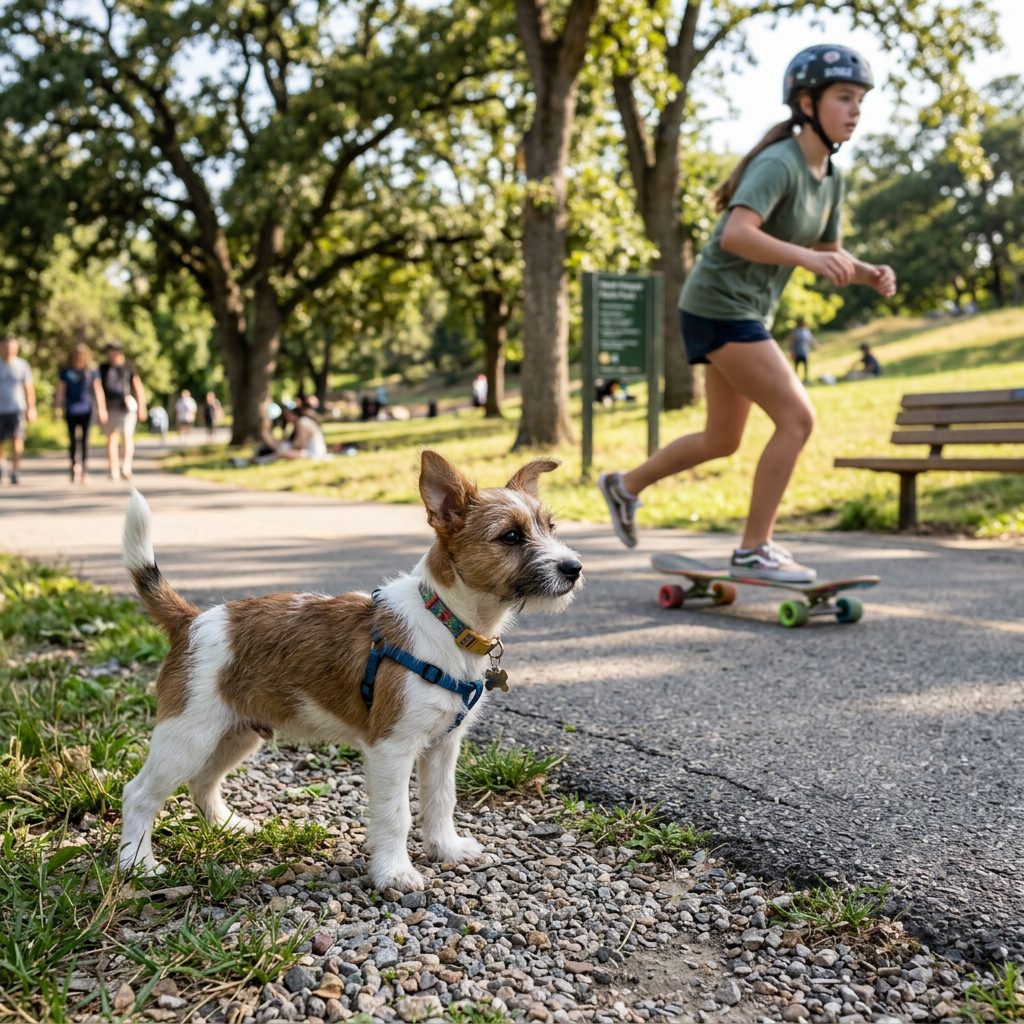
Before we can fix the chasing behavior, we need to understand exactly why your puppy is acting like a tiny, furry heat-seeking missile every time a bicycle or skateboard rattles by. In the dog training world, we generally trace this reaction back to one of two root causes: prey drive or fear-based reactivity. Identifying which emotion is driving your puppy’s behavior is the crucial first step in your training journey.
The Power of Prey Drive
Dogs are predators by nature, and they possess an innate sequence of behaviors known as the predatory motor sequence: Eye, Orient, Stalk, Chase, Grab, Bite, Dissect, Consume. While most domestic dogs do not complete this sequence, the urge to Chase is deeply hardwired into their genetics, especially in herding breeds (like Border Collies and Australian Shepherds) and sporting breeds (like Retrievers and Spaniels). When a bicycle zips past, the rapid movement triggers that ancient predatory reflex. Your puppy’s brain lights up, flooding their system with adrenaline and dopamine. To them, chasing is incredibly self-rewarding and fun.
Fear and the Startle Response
On the flip side, many puppies lunge and bark not because they want to catch the skateboard, but because they are terrified of it. Think about it from a puppy’s perspective: a skateboard is a loud, rumbling, unpredictable monster that vibrates the ground and moves in unnatural ways. If your puppy missed out on early socialization to these specific sights and sounds during their critical socialization window (typically between 3 and 14 weeks of age), their reaction is likely rooted in fear. They bark and lunge in an attempt to scare the scary thing away—a tactic known as a distance-increasing behavior.
Understanding whether your dog is having a ‘YAY, FUN!’ reaction or a ‘YIKES, SCARY!’ reaction will dictate your empathy and timing, but luckily, the foundation of our desensitization protocol remains largely the same for both.
Essential Gear for Successful Socialization
Setting Yourself Up for Success
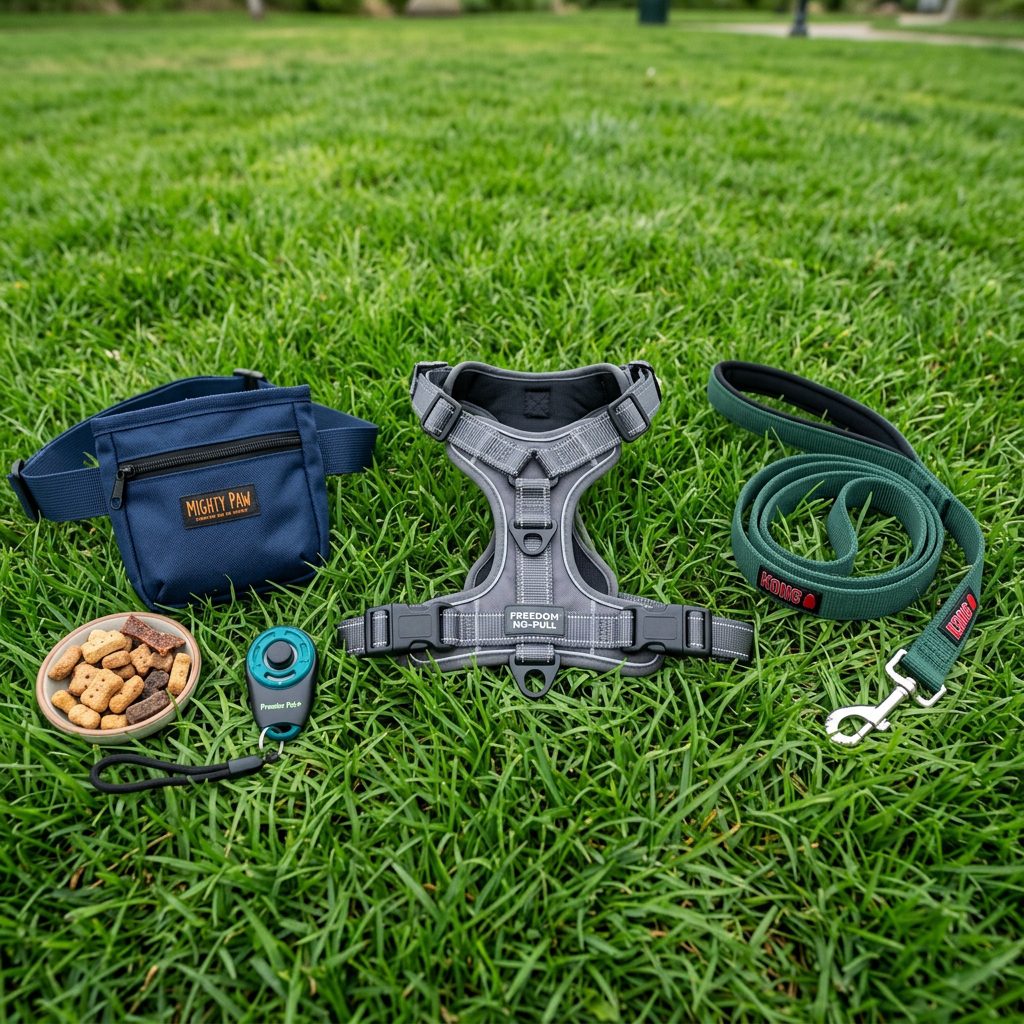
You would not try to build a house without a hammer, and you should not try to modify your puppy’s behavior without the right equipment. To safely and effectively socialize your puppy to bicycles and skateboards, you need to set up your training environment for success. This means having tools that keep your dog safe, prevent rehearsal of the bad behavior, and allow you to deliver rewards with lightning-fast precision.
The Non-Negotiable Training Toolkit
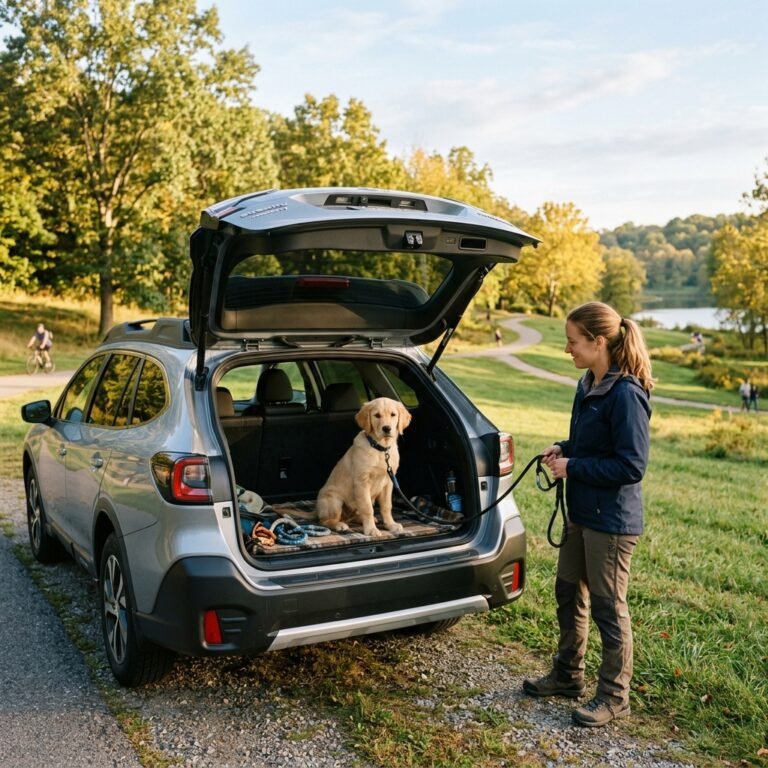
Here is exactly what you need to pack in your training bag before you even think about stepping foot near a bike path:
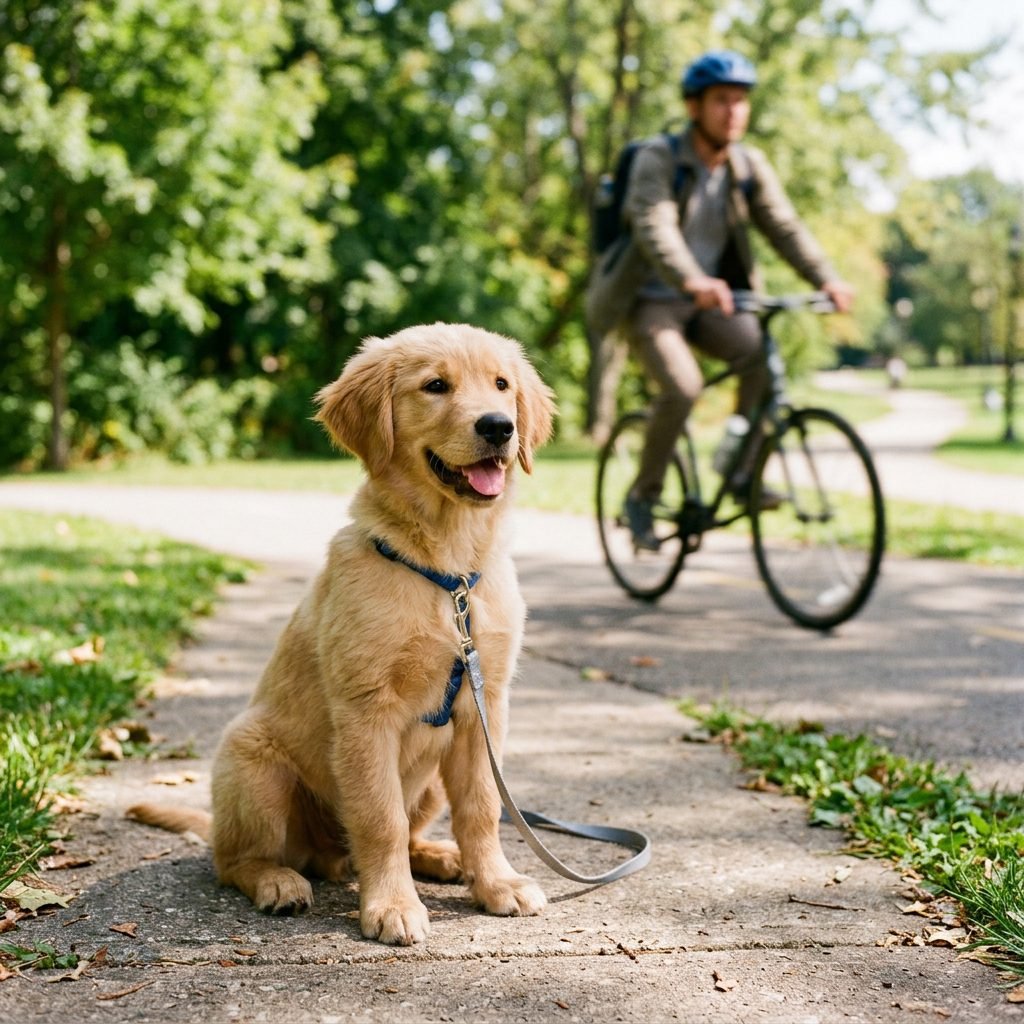
- A Well-Fitted Harness: A front-clip or Y-shaped harness is mandatory. If your puppy lunges while wearing a standard neck collar, they risk severe damage to their trachea and cervical spine. A harness distributes the force safely across their chest.
- A Fixed-Length Leash: Ditch the retractable leash immediately! You need a standard 4-to-6-foot sturdy nylon or leather leash. Retractable leashes offer zero control and can actually reinforce pulling.
- A Clicker or Marker Word: You need a way to tell your dog, ‘Yes! That exact moment of calmness is what earned you a treat.’ A mechanical clicker is fantastic, but a sharp, consistent verbal marker like ‘Yes!’ works beautifully too.
- High-Value Reinforcement: Your dry kibble will not cut it when competing with a zooming skateboard. You need the good stuff. Think tiny, pea-sized pieces of boiled chicken, hot dogs, string cheese, or freeze-dried liver.
| Training Tool | Purpose in Desensitization | Pro Tip |
|---|---|---|
| Front-Clip Harness | Prevents injury during sudden lunges and gently redirects the dog’s momentum back to you. | Ensure it fits snugly so the dog cannot back out of it during a panic response. |
| High-Value Treats | Creates a positive emotional association with the scary/exciting trigger. | Use ‘smelly’ treats; a dog’s sense of smell overrides their visual overstimulation. |
| Treat Pouch | Allows for rapid-fire reward delivery without fumbling in your pockets. | Wear it on your waist at all times during walks so you are never caught unprepared. |
| Mechanical Clicker | Pinpoints the exact millisecond your dog looks at the bike without reacting. | Prime the clicker at home first so the dog knows Click = Treat. |
Step-by-Step Guide to Desensitization
The Engage-Disengage Protocol
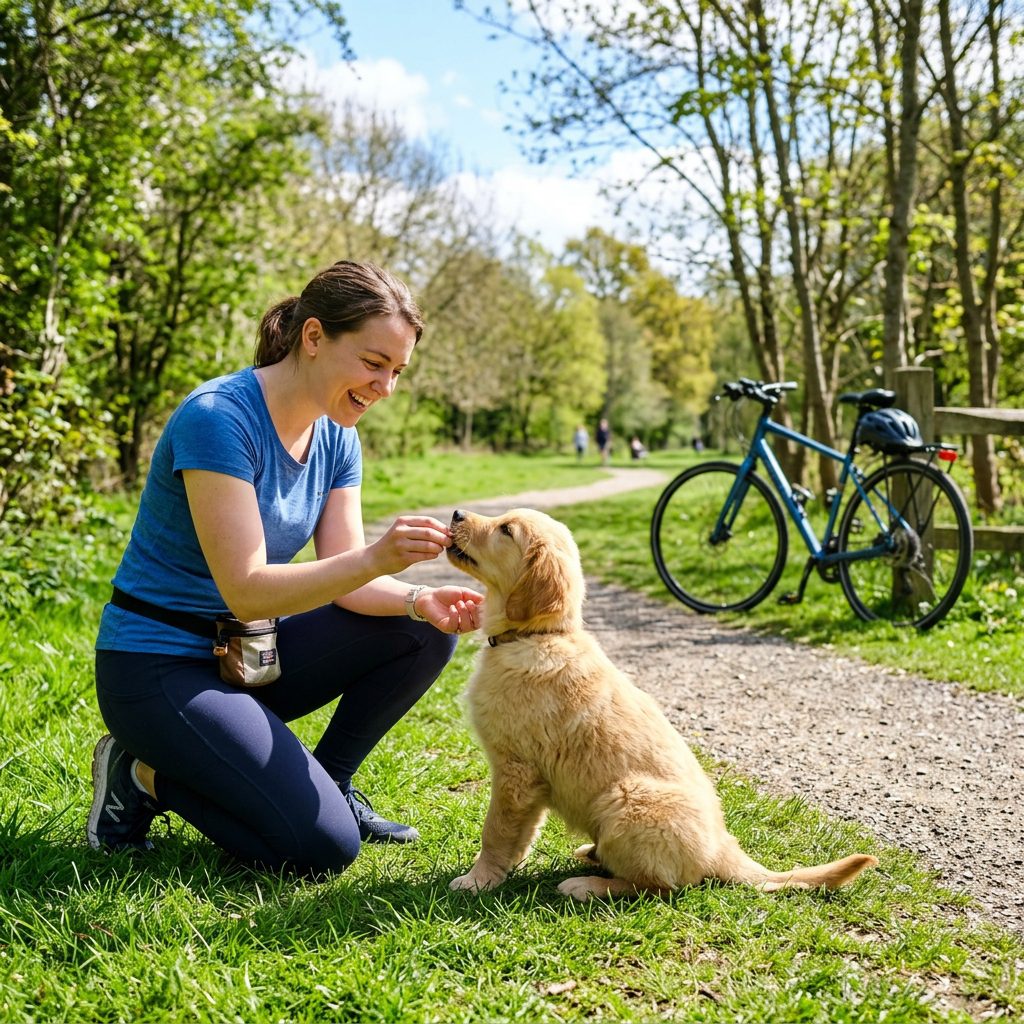
Now we get to the fun part: the actual training! We are going to use a scientifically proven method called Systematic Desensitization and Counter-Conditioning. In plain English, this means we are going to expose your puppy to the trigger (bikes/skateboards) at a level so low they do not react, and pair that exposure with amazing treats. Over time, we change their emotional response from ‘Must chase!’ to ‘Oh, a bike! Where is my chicken?’
Step 1: The Stationary Introduction
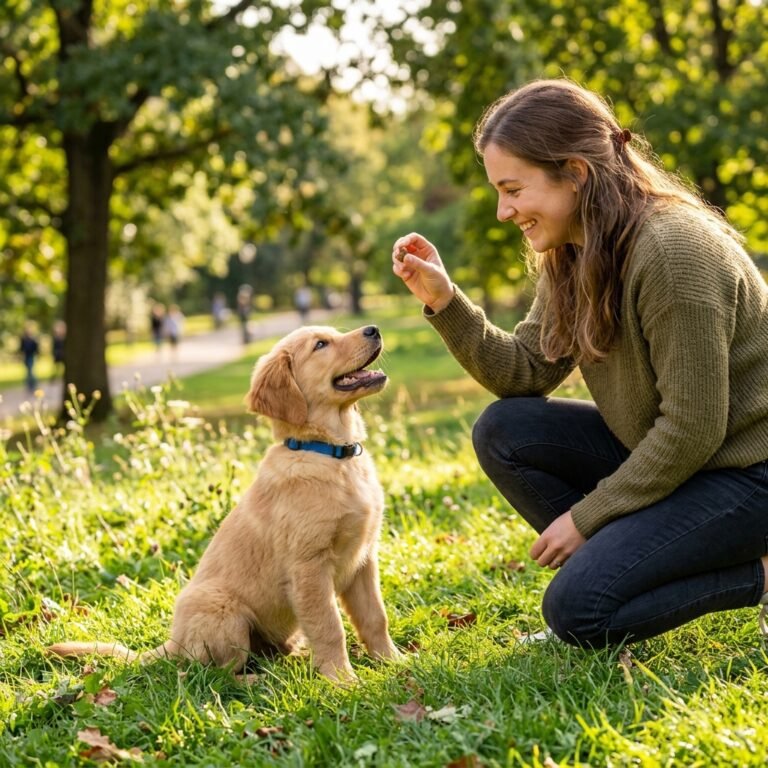
Do not start with moving objects. Start with a completely stationary bicycle or skateboard. Place the object in your living room or driveway. Allow your puppy to approach it at their own pace. If they look at it, click and treat. If they sniff it, click and treat. If they ignore it entirely, that is fine too! The goal is to show them that this weird object is completely harmless and actually predicts the arrival of snacks. Spend a few days just letting the stationary object exist in their environment.
Step 2: Finding Your Dog’s Threshold
When you are ready to move outside, you must understand the concept of Threshold. A threshold is the imaginary line where your dog goes from being calm and able to learn, to being over-aroused and reactive. If your dog is barking, lunging, or refusing high-value food, they are over threshold. Learning cannot happen here. You need to find the distance where your dog can see a moving bike but still respond to their name and take a treat. This might be 50 feet away, or it might be a whole football field away. Find that distance and start there.
Step 3: The ‘Look at That’ Game
This is the core of your training. Enlist a friend to ride a bike very slowly at your dog’s safe distance, or hang out far away from a local bike path. Here is the exact sequence:
- The puppy notices the bicycle in the distance.
- The millisecond your puppy looks at the bike (before they bark or lunge), hit your clicker or say your marker word (‘Yes!’).
- The click will cause your puppy to turn their head toward you.
- Immediately deliver a high-value treat right to their mouth.
- Repeat this every single time the puppy looks at the bike.
What you are doing here is teaching your dog an alternative behavior. Instead of the sight of a bike triggering a lunge, the sight of a bike becomes a cue to look back at you for a reward.
Step 4: Gradually Decreasing Distance
Once your puppy is consistently whipping their head around to look at you every time they see a bike at your starting distance, you can begin to close the gap. Move 10 feet closer and repeat the process. If your puppy reacts, you have moved too close, too fast. Back up and make it easier. Dog training is not a race; it is a marathon. Take your time and celebrate the small victories.
Troubleshooting Common Mistakes and Setbacks
Navigating the Bumps in the Road
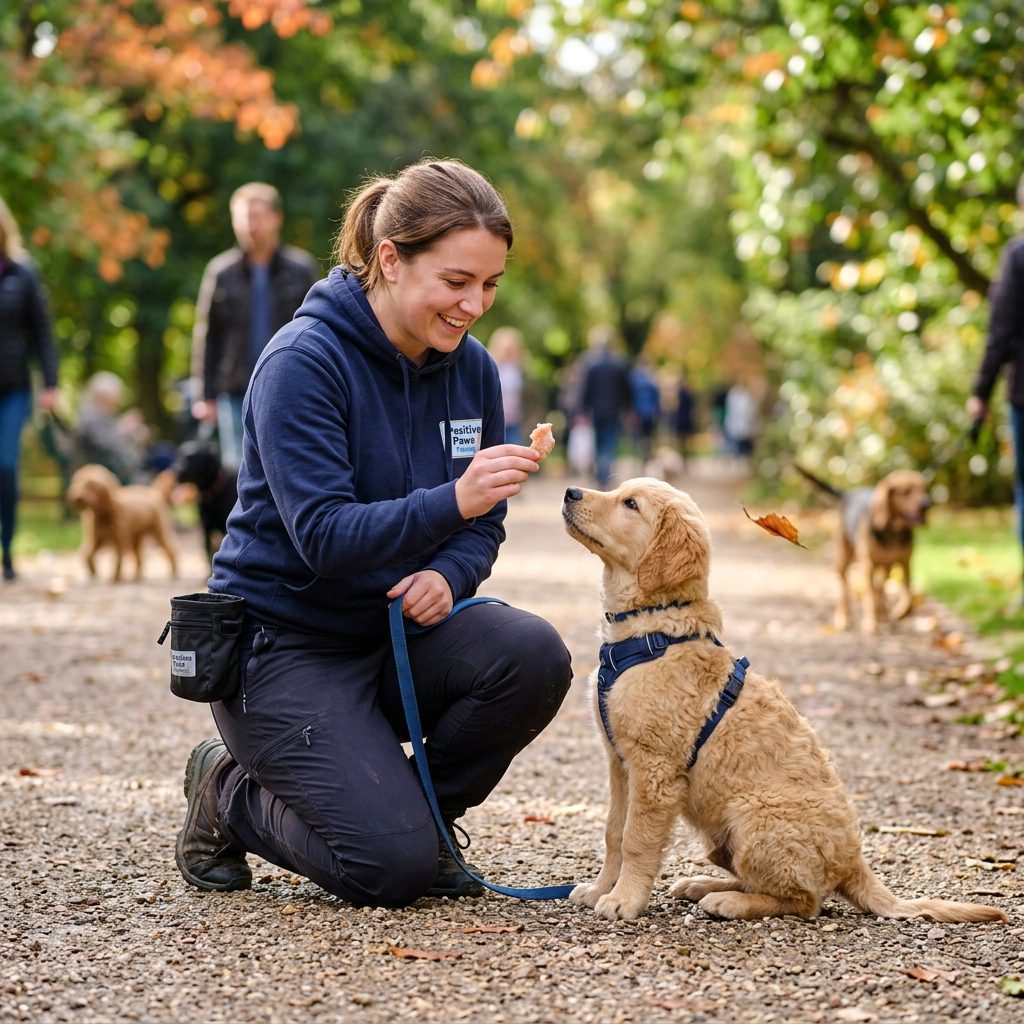
Even the most dedicated puppy parents hit roadblocks during behavior modification. Dogs are living, breathing creatures with good days and bad days, just like us. If you feel like your progress has stalled, do not panic. Let us troubleshoot some of the most common issues you might encounter while socializing your puppy to fast-moving objects.
Mistake 1: Moving Too Fast (Pushing the Threshold)
The number one reason desensitization fails is that owners try to get too close to the trigger before the dog is emotionally ready. If your puppy was doing great at 30 feet, but is lunging at 10 feet, you simply skipped a few steps. Distance is your best friend. When in doubt, increase the distance between your dog and the skateboard. It is always better to practice successful repetitions from far away than to practice failure up close.
Mistake 2: Stingy Rewarding
Are you using dry kibble? Are your treats too big, taking the dog too long to chew? Are you only rewarding every third time the dog looks at the bike? During the initial stages of counter-conditioning, you need a high rate of reinforcement. You should be a veritable Pez dispenser of high-value, pea-sized treats. The reward must be vastly superior to the thrill of the chase.
Handling the ‘Surprise’ Skateboarder
We cannot control the environment 100% of the time. Eventually, a skateboarder is going to come flying around a blind corner and surprise you and your pup. When this happens, do not try to train through it. Your dog will instantly be pushed over threshold. Instead, employ emergency management tactics:
- The U-Turn: Cheerfully say ‘Let’s go!’ and briskly turn 180 degrees, walking away from the trigger to create instant distance.
- The Treat Scatter: If you cannot escape, grab a handful of treats and scatter them directly into the grass. Say ‘Find it!’ Sniffing and searching for food naturally lowers a dog’s heart rate and redirects their brain away from the visual trigger of the skateboard.
- Body Blocking: Use your own body as a visual shield between your puppy and the passing bicycle until it is out of sight.
Remember, management is not failure. Keeping your dog from practicing the lunging behavior during a surprise encounter is a massive win for your long-term training goals!
Taking It to the Streets: Real-World Proofing
Generalizing the Behavior
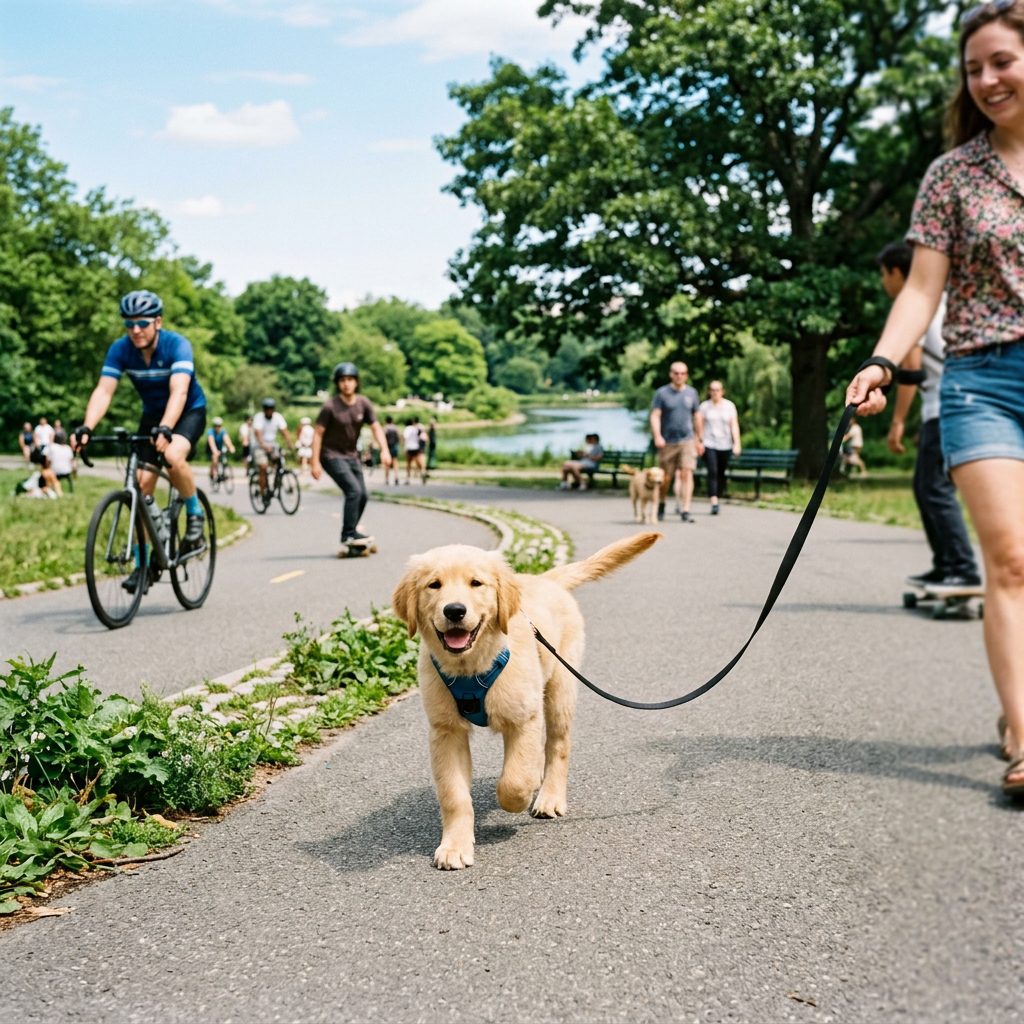
Congratulations! Your puppy is now sitting calmly while your friend rides a bike back and forth in the local park. You have cracked the code! But wait… the next day, a stranger rides a noisy scooter past your driveway, and your puppy loses their mind again. What happened? Did they forget everything? Not at all. You have just discovered that dogs are terrible at generalizing.
What is Generalization?
To a dog’s brain, a blue bicycle at the park on a Tuesday is a completely different entity than a red skateboard on your street on a Friday. They do not automatically understand that the rule ‘ignore the wheels and look at mom/dad’ applies everywhere. You have to teach them that the rule is universal. This process is called proofing or generalizing the behavior.
How to Proof Your Training
To ensure your puppy is rock-solid around wheels no matter where you are, you need to systematically practice in a wide variety of environments and contexts. Here is your proofing checklist:
- Vary the Location: Practice your Engage-Disengage game in your driveway, at different parks, outside coffee shops, and near busy intersections (always maintaining a safe threshold distance).
- Vary the Object: Do not just practice with bicycles. Set up training sessions with skateboards, rollerblades, electric scooters, and even people pushing loud strollers or shopping carts.
- Vary the Rider: Dogs notice details we ignore. Practice around adults, children, people wearing helmets, people wearing bulky coats, and people carrying bags.
- Vary the Speed and Noise: A slow-moving bike is easy. A rattling skateboard hitting a crack in the pavement is hard. Gradually expose your dog to louder, faster, and more unpredictable movements.
As you change these variables, remember to temporarily drop your criteria. If you are practicing in a brand new, highly distracting environment, you might need to increase your distance again until your puppy acclimates to the new setting. Consistency is key. Every time you step out the door, have your treat pouch ready. Every walk is a training opportunity.
Conclusion
Socializing your puppy to bicycles, skateboards, and other fast-moving wheels is not an overnight fix. It is a journey that requires patience, consistency, and a deep understanding of your dog’s emotional state. By recognizing whether your pup is driven by prey instincts or fear, utilizing the correct safety gear, and diligently applying the Engage-Disengage protocol, you are actively rewiring their brain. You are teaching them that the world is safe, that fast objects are nothing to worry about, and that paying attention to you is the most rewarding choice they can make.
Remember to celebrate the small victories. The first time your puppy looks at a passing bike and immediately turns to you for a treat instead of lunging, you will feel an immense sense of pride. There will be setbacks, and there will be surprise skateboarders that test your reflexes, but stick with it! Your dedication today will result in a confident, neutral, and beautifully behaved canine companion for years to come. So grab that treat pouch, load up on the good snacks, and go enjoy the great outdoors with your savvy, well-trained pup!