5 Simple Steps To Teach Your Puppy To Stay Out Of The Kitchen Forever
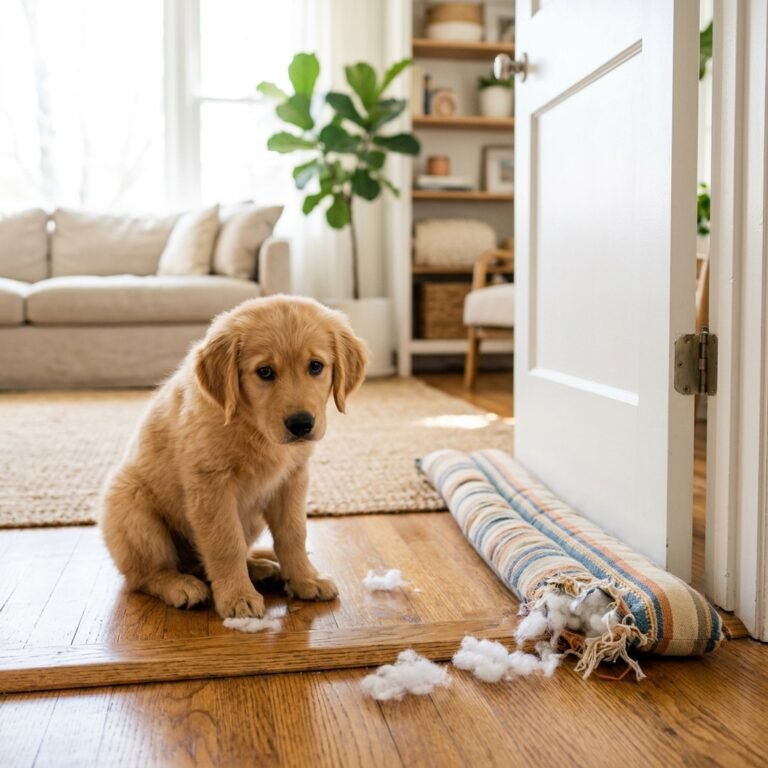
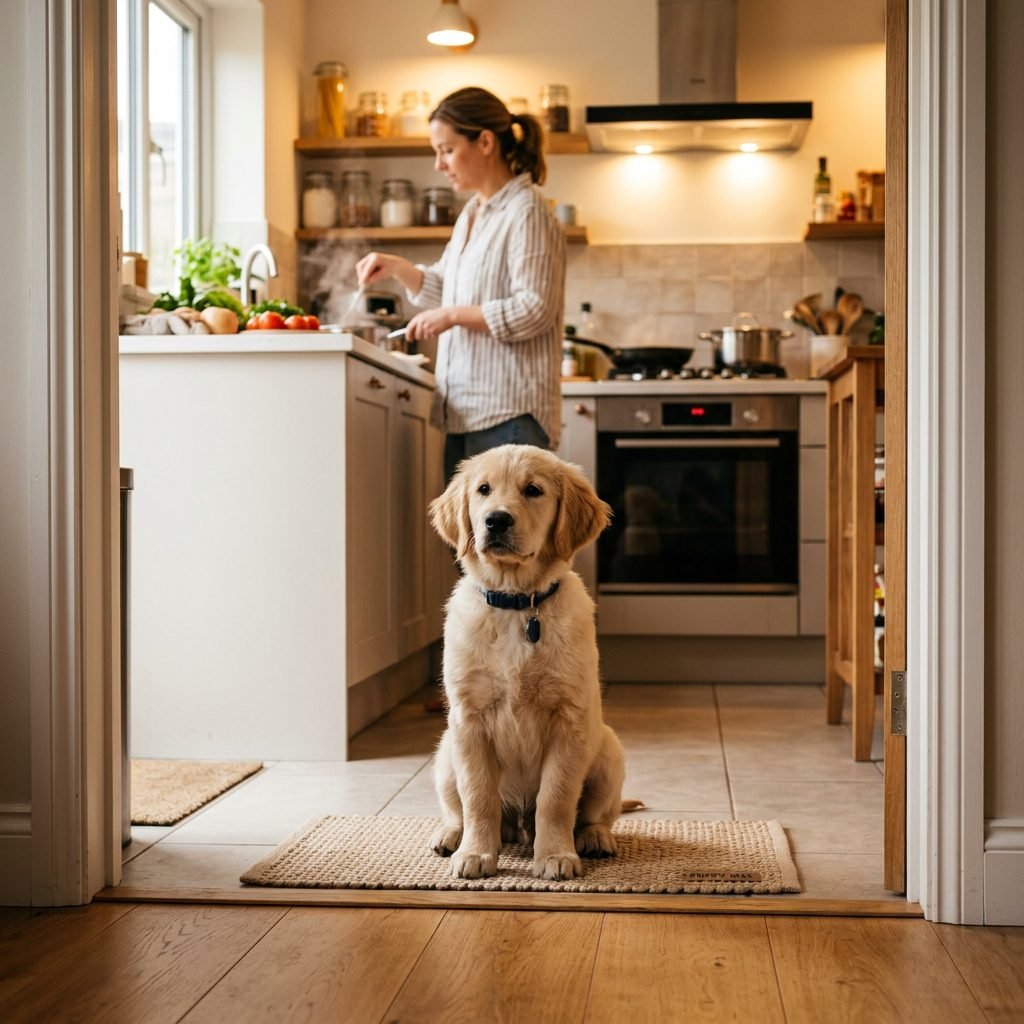
Welcome, savvy dog owners! If you are reading this, you probably know the exact feeling of trying to drain a pot of boiling pasta water while simultaneously doing a delicate tap-dance to avoid stepping on a curious puppy. The kitchen is the heart of the home, filled with tantalizing smells, dropped crumbs, and the constant action that our dogs naturally want to be a part of. However, having a puppy underfoot while you are cooking is not just frustrating; it is a serious safety hazard for both you and your furry best friend.
Think about the potential dangers lurking in your kitchen. Hot liquids can splash, heavy pots can fall, and highly toxic foods like onions, garlic, grapes, and macadamia nuts can easily roll off the cutting board and onto the floor. A lightning-fast puppy can swallow a dangerous item before you even have time to react. Teaching your puppy to stay out of the kitchen is one of the most valuable, life-saving behaviors you can instill in them. It provides you with peace of mind and gives your dog a clear, safe framework for how to behave in the house.
Consistency is the secret ingredient in any successful dog training recipe. By setting clear boundaries now, you are setting your puppy up for a lifetime of success.
In this comprehensive guide, we are going to dive deep into boundary training. We will not be using fear, intimidation, or physical force. Instead, we will rely on the science of positive reinforcement, canine psychology, and clear communication. By establishing an invisible boundary line, you will teach your puppy that the absolute best place to be when you are cooking is safely outside the kitchen. Let us gather our training supplies, put on our trainer hats, and master these five simple steps to teach your puppy to stay out of the kitchen forever!
Setting Yourself Up For Success: The Boundary Training Toolkit
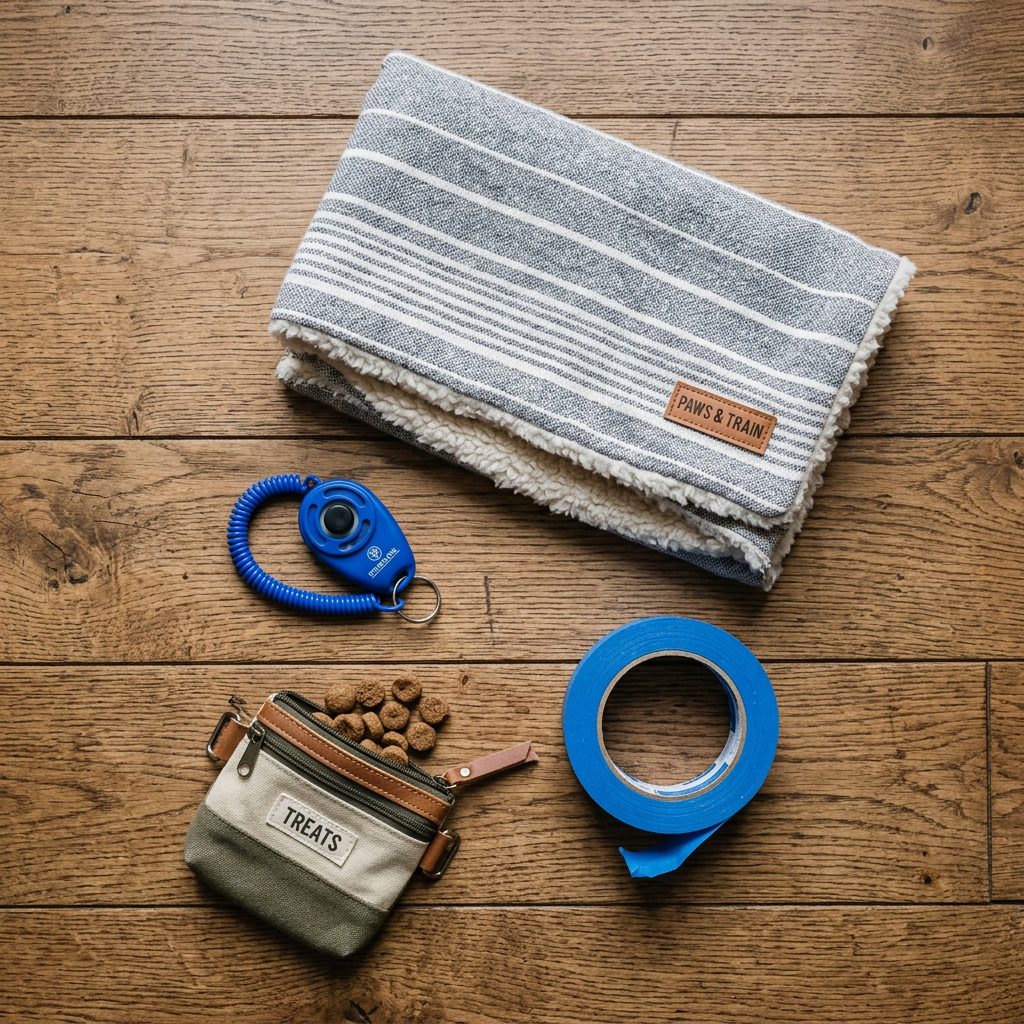
Before we dive into the five steps, it is crucial to prepare your environment and gather the right tools. As a savvy dog owner, you know that preparation is half the battle. You cannot expect your puppy to understand a completely new concept without the proper aids to guide them. Boundary training requires clear communication, and our toolkit is designed to make that communication as black-and-white as possible for your dog.
Essential Training Tools
We are going to use a combination of visual markers, high-value rewards, and comfortable resting places to make staying out of the kitchen incredibly rewarding for your puppy. Here is exactly what you need to get started.
| Tool | Purpose | Pro Tip |
|---|---|---|
| High-Value Treats | To heavily reward your puppy for making the right choice and staying behind the line. | Use boiled chicken, tiny cubes of cheese, or freeze-dried liver. Avoid dry kibble for this high-distraction training. |
| A Training Mat or Bed | To give your puppy a specific “Place” to go to and relax while you are in the kitchen. | Choose a mat with a distinct texture. Elevated beds work wonders for clearly defining the space. |
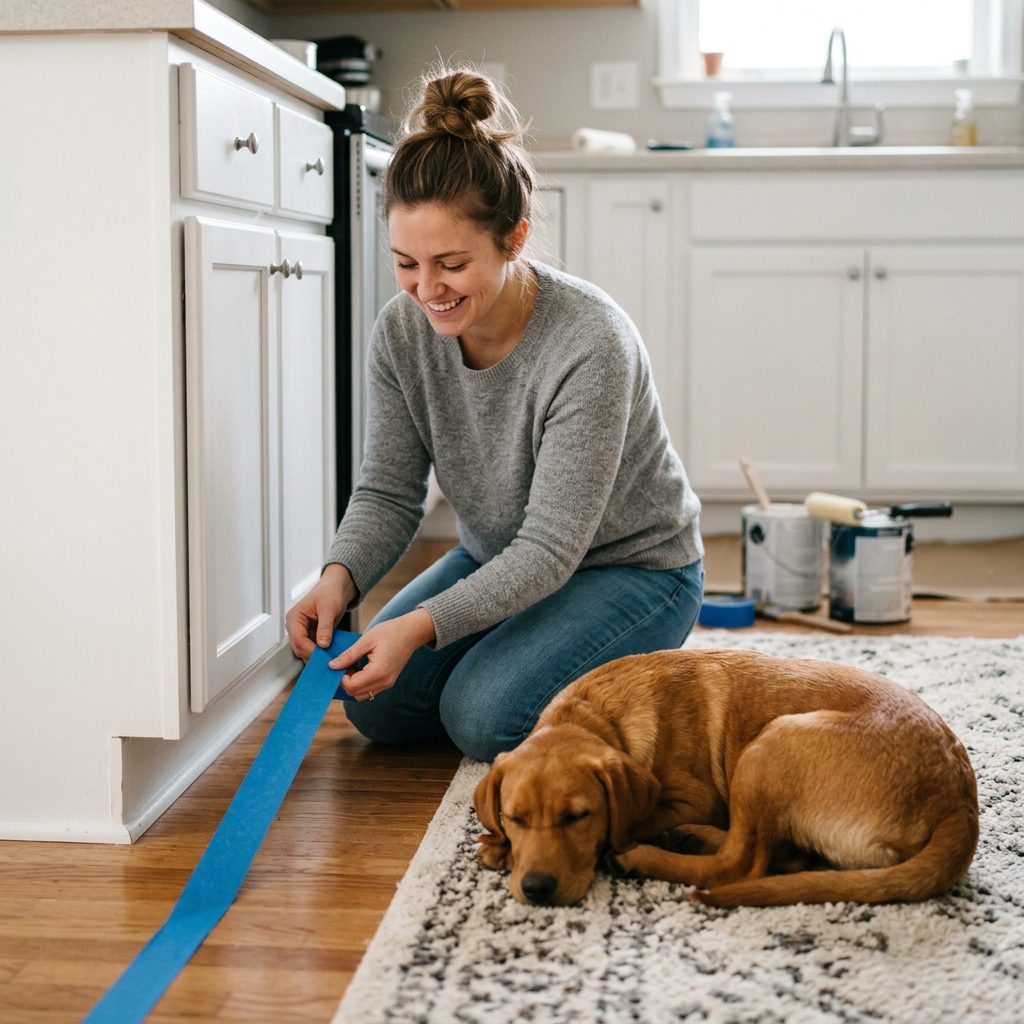
| Painter’s Tape | To create a temporary, highly visible physical line on the floor for your puppy to see. | Place the tape exactly where the flooring transitions, or just outside the kitchen threshold. |
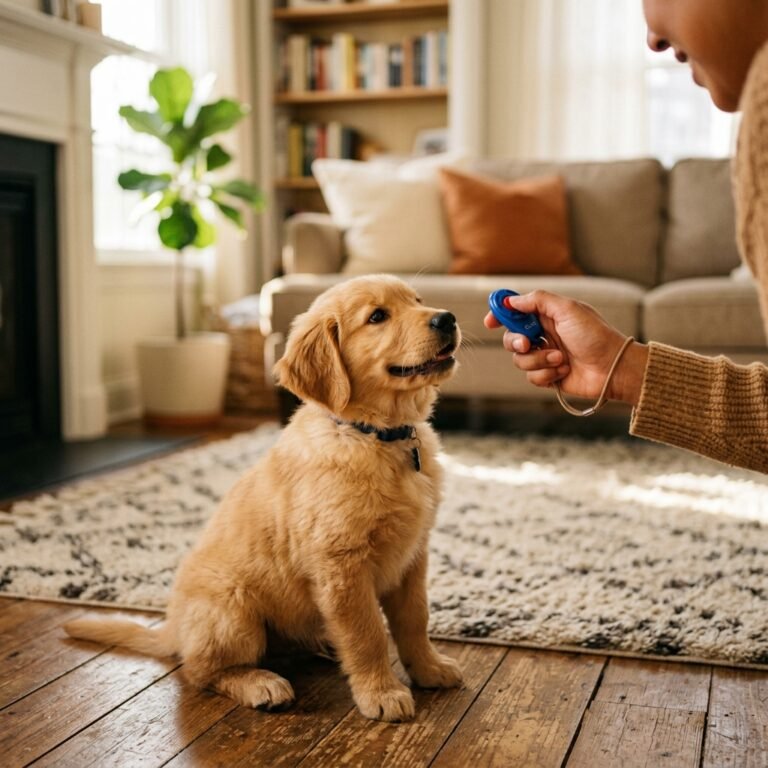
| Clicker (Optional) | To precisely mark the exact moment your puppy stops at the boundary line. | If you do not use a clicker, establish a clear marker word like “Yes!” or “Good!” to use consistently. |
| Baby Gate (Backup) | To physically manage the environment when you cannot actively supervise or train. | Use the gate during actual meal prep early in training to prevent practicing bad habits. |
When selecting your treats, remember the concept of a “reinforcement hierarchy.” Your puppy might work for plain kibble in a quiet living room, but the kitchen smells like roasting meat and sizzling bacon. You need to bring out the big guns to compete with those aromas. The mat you choose will become their safe haven, so ensure it is comfortable and appropriately sized for your growing dog.
Step 1: Establish The Invisible (And Visible) Boundary Line
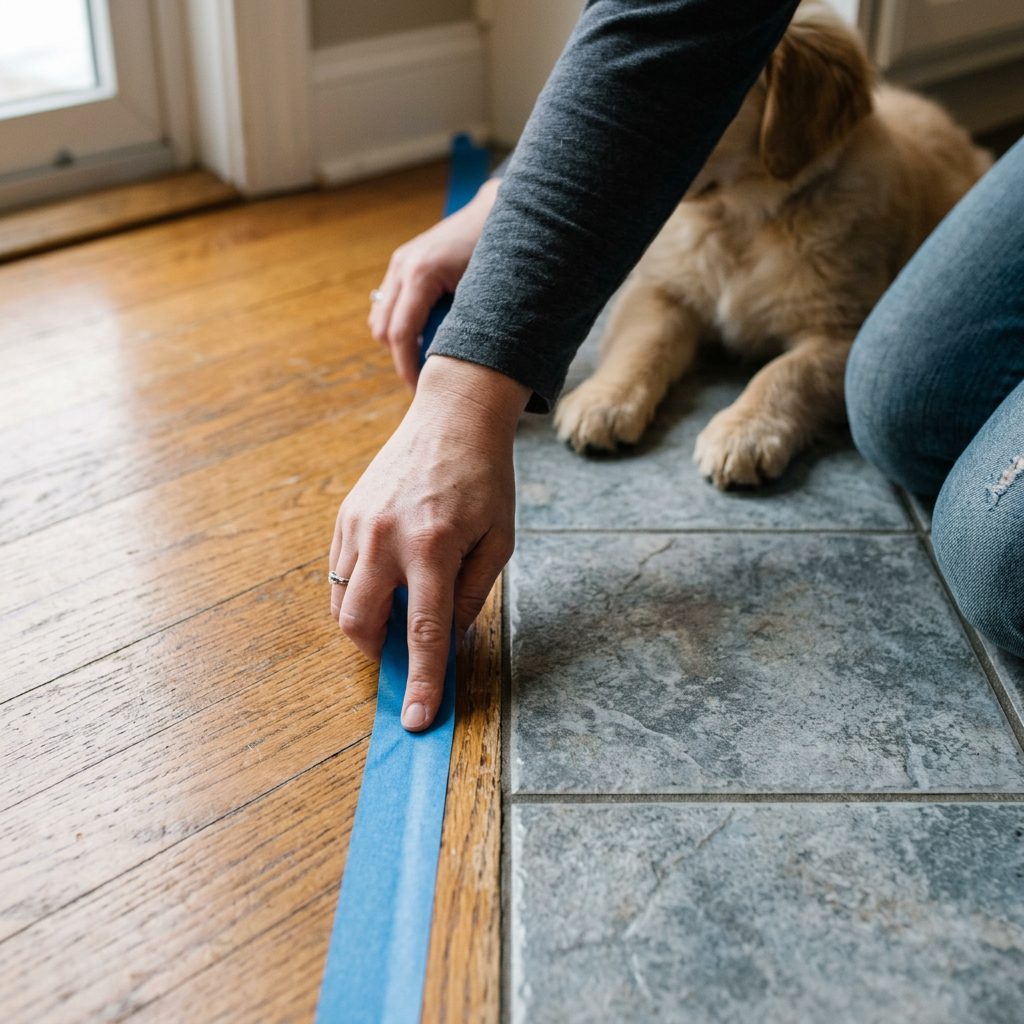
Dogs are incredibly visual and contextual creatures. They do not automatically understand architectural concepts like “rooms” or “kitchens.” To them, the house is just one big territory. Therefore, our very first step is to clearly define where the kitchen begins and where the rest of the house ends. We have to make the invisible boundary visible, at least for the initial training phase.
Drawing The Line
Look at your kitchen entrances. If you have a traditional layout with doorways, the threshold is your natural boundary. If you have an open-concept home, you will need to artificially create a line. Look for natural transitions in the flooring, such as where the hardwood meets the tile, or the edge of a kitchen island. Once you have identified the line, take your painter’s tape and lay down a solid, straight strip across the entire entrance.
The Psychology of the Line
This tape serves two critical purposes. First, it gives your puppy a highly visible, contrasting marker to focus on. Second, and perhaps more importantly, it gives you a strict visual reminder of where the boundary is. One of the biggest mistakes owners make is being inconsistent. If you let the puppy put one paw over the line on Tuesday, but yell at them for it on Wednesday, you will completely confuse them. The tape keeps everyone in the family accountable.
- Rule of thumb: The boundary is an absolute wall. Not even a single paw is allowed to cross the tape.
- Family consistency: Ensure every single member of the household knows where the line is and enforces it equally.
- Patience is key: Do not expect your dog to understand the tape immediately. It is just a visual aid that we will pair with rewards in the next step.
Step 2: Teach The “Out” And “Place” Commands
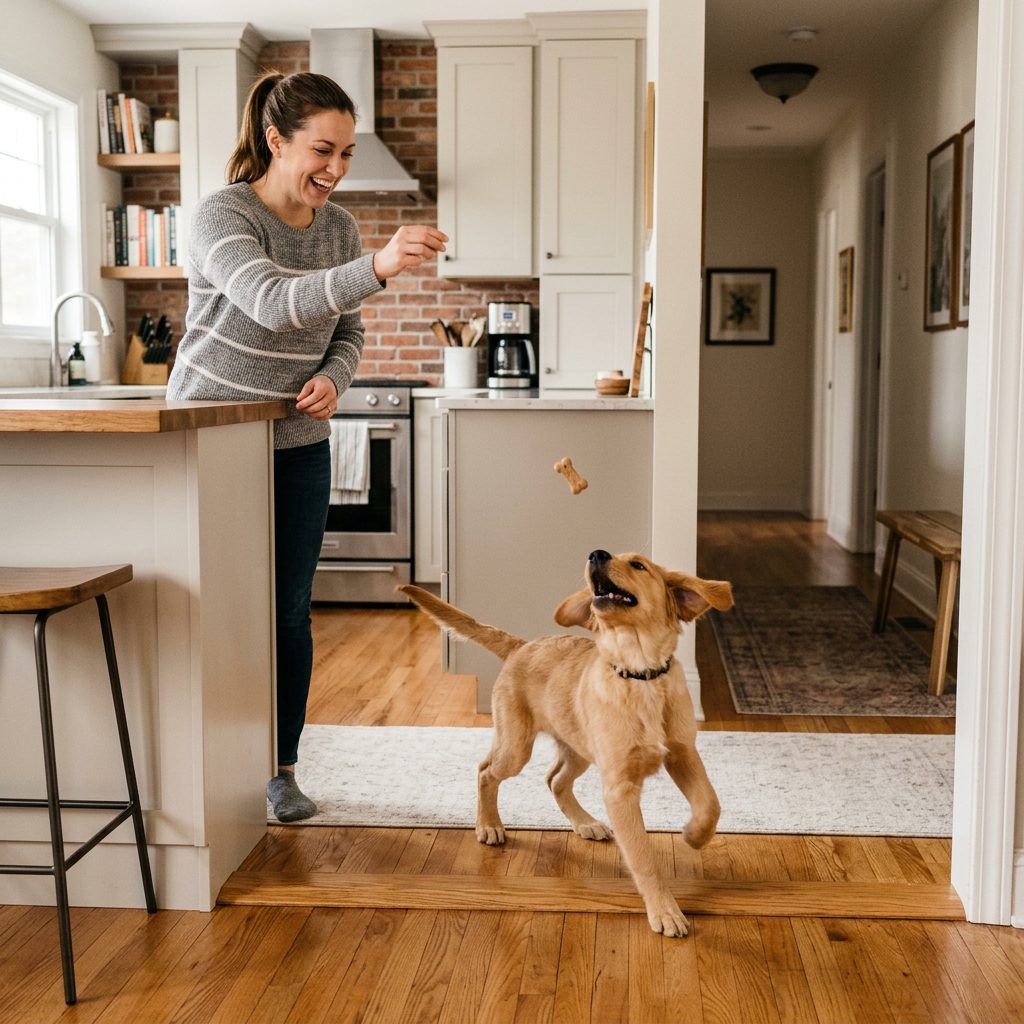
Now that we have our boundary clearly defined, we need to teach the puppy what to do when they approach it. We will use two distinct commands: “Out” (meaning leave the kitchen space) and “Place” (meaning go to your designated mat and settle down). Teaching both gives you incredible control over your dog’s positioning.
Mastering The “Out” Command
Start with you inside the kitchen and your puppy outside. Toss a low-value treat into the kitchen so the puppy crosses the line to eat it. As soon as they eat it, say “Out” in a cheerful, firm tone, and toss a high-value treat behind them, outside the kitchen line. As they turn and cross back over the tape to get the good treat, say “Yes!” or click your clicker. You are essentially teaching them that leaving the kitchen is a highly rewarding game.
Introducing The “Place” Command
While “Out” is great for quick fixes, “Place” is your long-term solution for peaceful cooking. Position your puppy’s mat a few feet away from the kitchen boundary line, ensuring they still have a clear view of you. You want them to feel included without being in the way.
- Lure your puppy onto the mat using a high-value treat held right in front of their nose.
- As soon as all four paws are on the mat, say “Yes!” and feed them the treat.
- Once they are reliably following the lure onto the mat, start asking for a “Sit” or a “Down” while on the mat.
- Introduce the verbal cue “Place” right before you lure them.
- Begin rewarding them continuously for staying on the mat. Drop a treat between their paws every few seconds to build value for staying there.
The goal is to make the mat a “magnet.” The puppy should learn that the mat is the magical spot where delicious things rain from the sky, making the kitchen floor seem boring by comparison.
Step 3: Build Duration And Distance
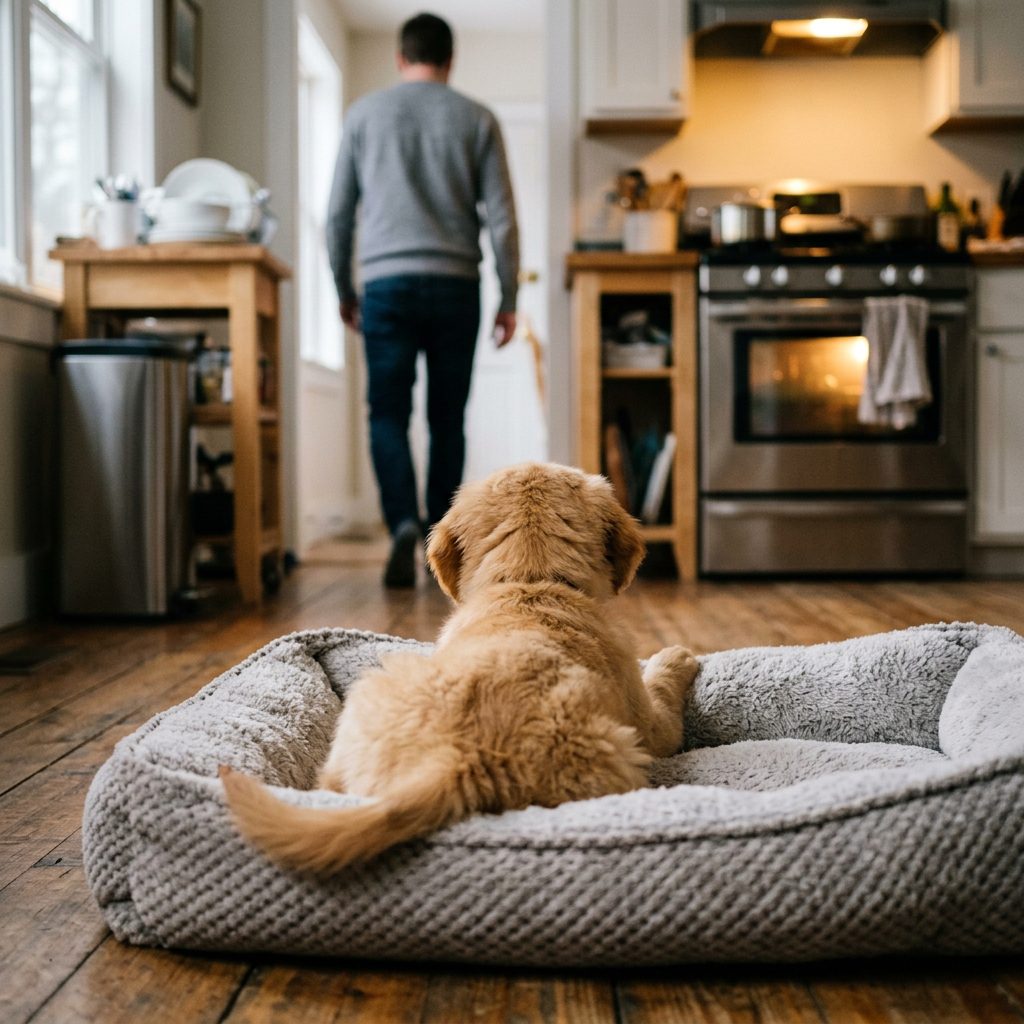
At this point, your puppy knows how to leave the kitchen and how to go to their place. However, if you turn your back to chop an onion, they will likely pop right up and wander back in. This is because we have not yet built up their stamina. In dog training, we call this the “3 Ds”: Duration, Distance, and Distraction. In this step, we will focus on Duration and Distance.
Increasing Duration (The Stay)
Duration means how long your puppy can hold their position on the mat or behind the line without breaking. Start incredibly small. Ask your puppy to go to their place, wait for just two seconds, mark with a “Yes!”, and reward. Gradually increase the time between rewards. Go from two seconds, to five seconds, to ten seconds. If your puppy breaks position and steps toward the kitchen, you have pushed them too fast. Calmly guide them back to their place and lower the time requirement.
Increasing Distance
Distance refers to how far away you can move from the puppy while they maintain their boundary. Start by standing right at the boundary line with them. Ask them to stay, take one single step backward into the kitchen, immediately step back to the line, say “Yes!”, and reward. Slowly build up the distance.
- Step 1: Take two steps into the kitchen and return.
- Step 2: Walk to the kitchen island, touch it, and return to reward.
- Step 3: Walk to the refrigerator, open the door, close it, and return to reward.
- Step 4: Turn your back entirely for five seconds, then turn around and reward.
By slowly increasing your distance, you are teaching the puppy that just because you walk away does not mean the exercise is over. They learn that holding their ground is the only way to earn the paycheck.
Step 4: The Ultimate Test – Adding Kitchen Distractions
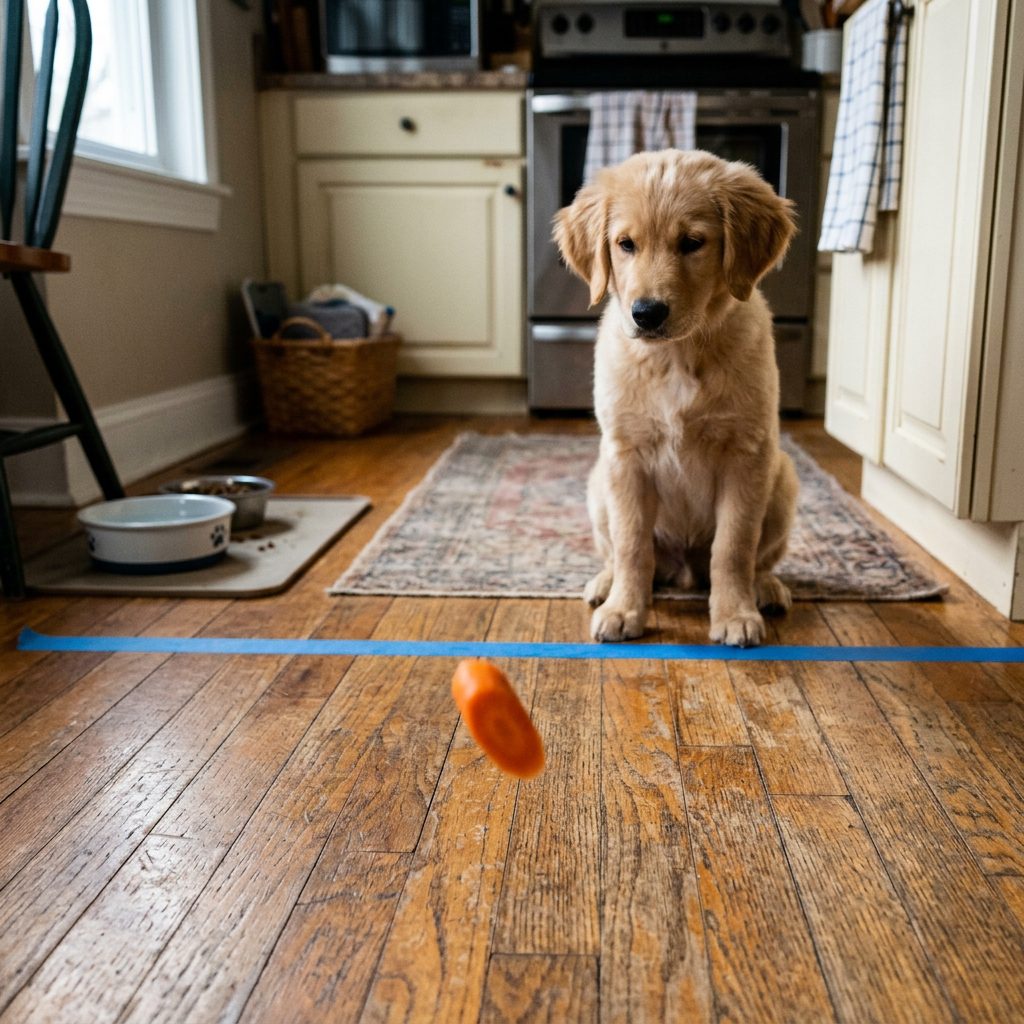
You have built a solid foundation. Your puppy stays on their mat while you walk around the kitchen. Now comes the hardest part: real-world distractions. The kitchen is full of sudden noises, incredible smells, and dropped food. We must systematically desensitize your puppy to these triggers so they do not break their boundary when an accident happens.
Simulating The Chaos
We are going to artificially create the distractions of cooking, but in a controlled manner where you are ready to reward the correct behavior. Put your puppy on their “Place” outside the kitchen boundary. Have a handful of high-value treats ready.
- The Sound Test: Start opening cabinets, banging pots and pans gently, and chopping loudly on a cutting board. If your puppy stays behind the line, frequently walk over and reward them. If they cross the line, stop the noise, calmly say “Oops, out,” reset them, and try again with a softer noise.
- The Dropped Item Test (Level 1): Drop something boring on the kitchen floor, like a wooden spoon or a crumpled piece of paper. The sudden movement will tempt them. If they stay put, shower them with praise and a jackpot of treats.
- The Dropped Food Test (Level 2): This is the ultimate challenge. Drop a piece of low-value food (like a piece of plain bread or a baby carrot) on the kitchen floor. Crucial safety note: Be ready to step on the food if your puppy rushes in! If they hold their boundary despite the dropped food, immediately walk over and give them a massive reward with your high-value treats (chicken or cheese).
You are teaching your dog a profound concept: “The food on the floor is a trick. The real, better food comes directly from my human if I stay exactly where I am.”
Practice these distractions daily. Over time, the sound of a dropping piece of food will actually become a cue for your dog to glue themselves to their mat, anticipating that you will bring them something even better.
Step 5: Fading Rewards And Long-Term Maintenance
Congratulations! Your puppy is now successfully ignoring dropped food and relaxing on their mat while you cook. But you probably do not want to carry a pouch of boiled chicken every single time you make a cup of coffee for the rest of your dog’s life. Step five is all about transitioning from continuous rewards to real-life maintenance.
The Variable Schedule of Reinforcement
To fade out the treats, we use a psychological concept called a variable schedule of reinforcement. Think of a slot machine. If a slot machine paid out exactly one dollar every time you pulled the lever, it would be boring. Because it pays out randomly, it becomes highly addictive. We want to make boundary training “addictive” for your dog.
Start rewarding your dog randomly. Sometimes they get a treat for staying out of the kitchen for five minutes. Sometimes they only get a verbal “Good boy!” Sometimes you toss them a piece of dog-safe vegetable you are chopping. Sometimes they get a massive jackpot of three treats at once. Because they never know when the payout is coming or how big it will be, they will continuously perform the behavior in hopes of hitting the jackpot.
Removing The Tape
Once your puppy has been flawless for several weeks, it is time to remove the training wheels. Peel up the painter’s tape. Your puppy has likely generalized the boundary to the flooring transition or the doorway by now. If they test the waters and step a paw in, immediately give your “Out” command. If they struggle without the tape, put it back down for another week. Dog training is a marathon, not a sprint.
Over the months, the act of staying out of the kitchen will transform from an active training exercise into a passive, ingrained habit. Your dog will naturally wander to their mat or the edge of the room when they hear you start cooking, simply because it is what they have always done.
Troubleshooting Common Boundary Training Mistakes
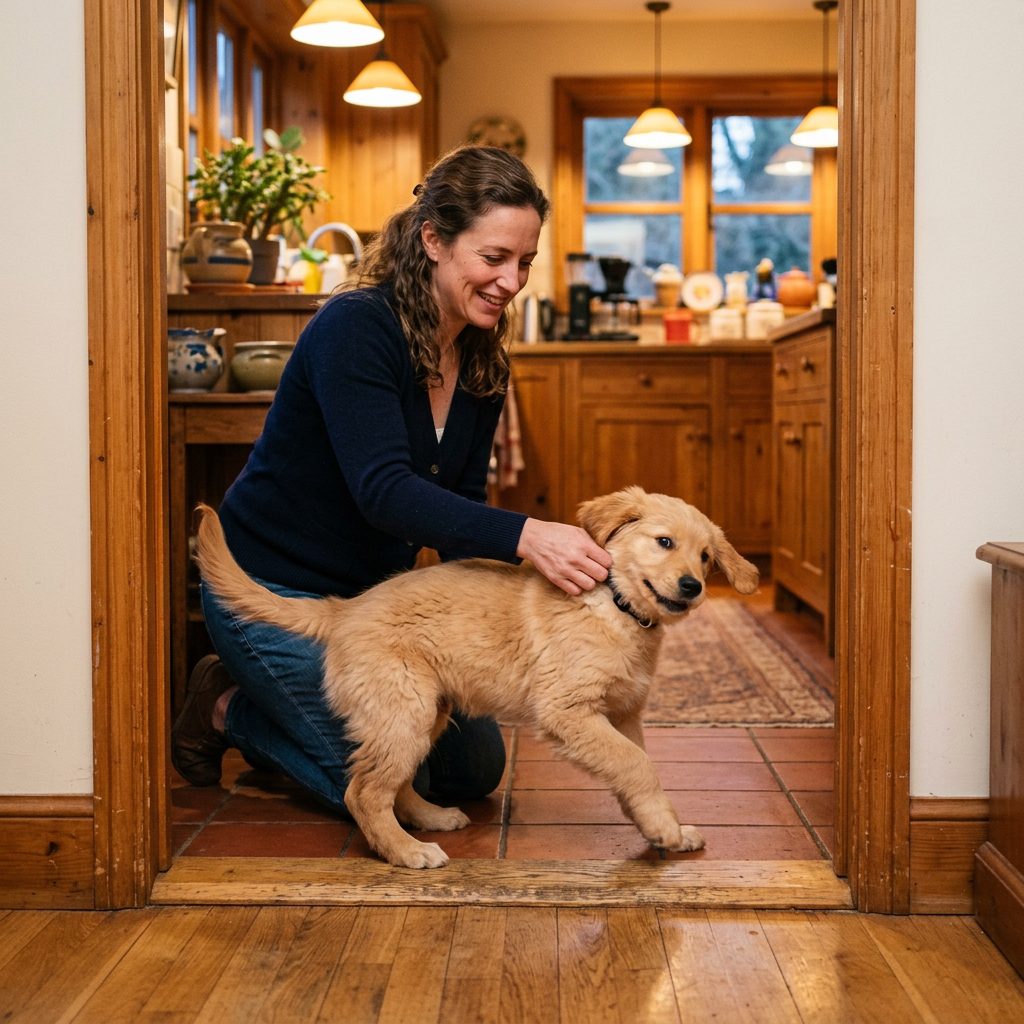
Even with the best training plan, puppies are living, breathing creatures with minds of their own. Setbacks are completely normal and to be expected. As a savvy owner, knowing how to troubleshoot these common issues will keep your training on track and prevent frustration.
What If My Puppy Keeps Breaking The Boundary?
If your puppy is constantly crossing the line, you are likely moving too fast through the steps. Dogs fail when the criteria are too high. Ask yourself:
- Are my treats valuable enough? (If you are using dry kibble, upgrade to hot dogs or cheese).
- Am I asking for too much duration? (Go back to rewarding every 3 seconds instead of every 30 seconds).
- Is the environment too distracting? (Train during quiet times of the day before trying to train while cooking a full family dinner).
The “Drive-By” Snatcher
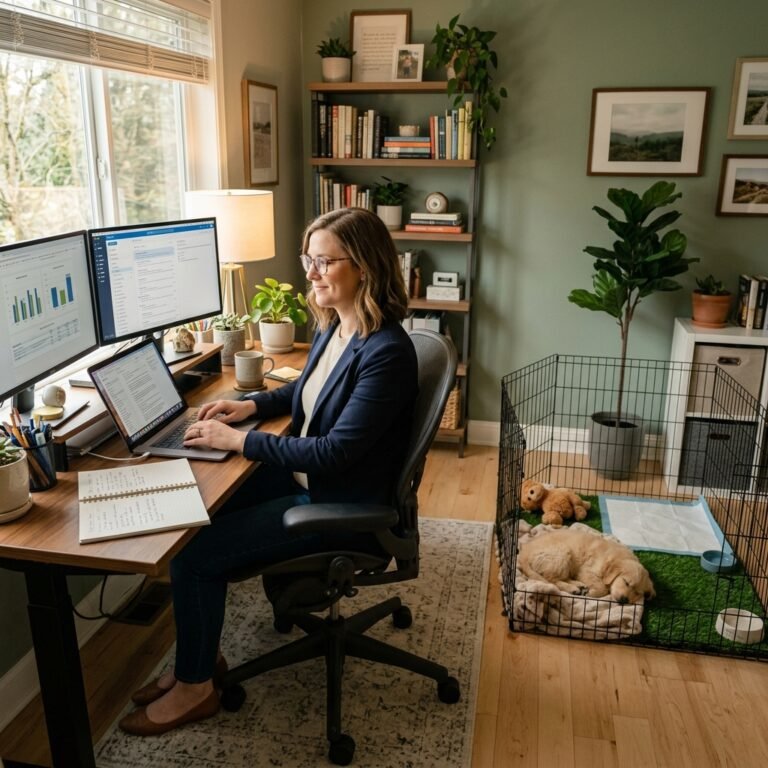
Some clever puppies will learn to wait just outside the kitchen, and the second you drop something or turn your back, they sprint in, snatch the item, and sprint back out. This is self-rewarding behavior. If this happens, you must employ management. Use a baby gate to physically block the entrance when you are doing heavy cooking or handling toxic ingredients. You cannot train effectively if the dog is successfully stealing food, as the food itself reinforces the bad behavior.
Inconsistent Family Members
This is arguably the most common hurdle. If you strictly enforce the boundary, but your partner or children sneak the dog scraps from the table or let the dog hang out by the fridge, the training will fail. Dogs are incredibly smart and will learn who the “weak link” is. Hold a family meeting. Explain the safety reasons behind the rule. Create a strict “No feeding the dog from the kitchen counter” policy. If someone wants to give the dog a dog-safe kitchen scrap, they must walk it over to the dog’s designated mat.
Conclusion
Teaching your puppy to stay out of the kitchen forever is not an overnight process, but it is undoubtedly one of the most rewarding investments you can make in your dog’s safety and your own sanity. By utilizing the proper tools, establishing a clear visual boundary, mastering the “Out” and “Place” commands, gradually increasing distractions, and randomly rewarding success, you are communicating with your dog in a way they truly understand.
Remember, savvy dog owners know that patience and consistency are the cornerstones of all behavioral modification. There will be days when your puppy tests the boundaries—that is just part of growing up! When those moments happen, take a deep breath, rely on your management tools like baby gates, and briefly revisit the foundational steps. Do not let frustration ruin the bond you are building.
Before you know it, you will be effortlessly chopping vegetables, sizzling bacon, and dropping the occasional piece of cheese, all while your faithful companion watches calmly from the safety of their designated mat. You will have transformed your kitchen from a chaotic hazard zone into a peaceful culinary sanctuary. Happy training, and happy cooking!