No More Lunging! How to Train Your Puppy to Stay Calm Around Screaming Kids
Welcome to the Peace and Quiet Zone
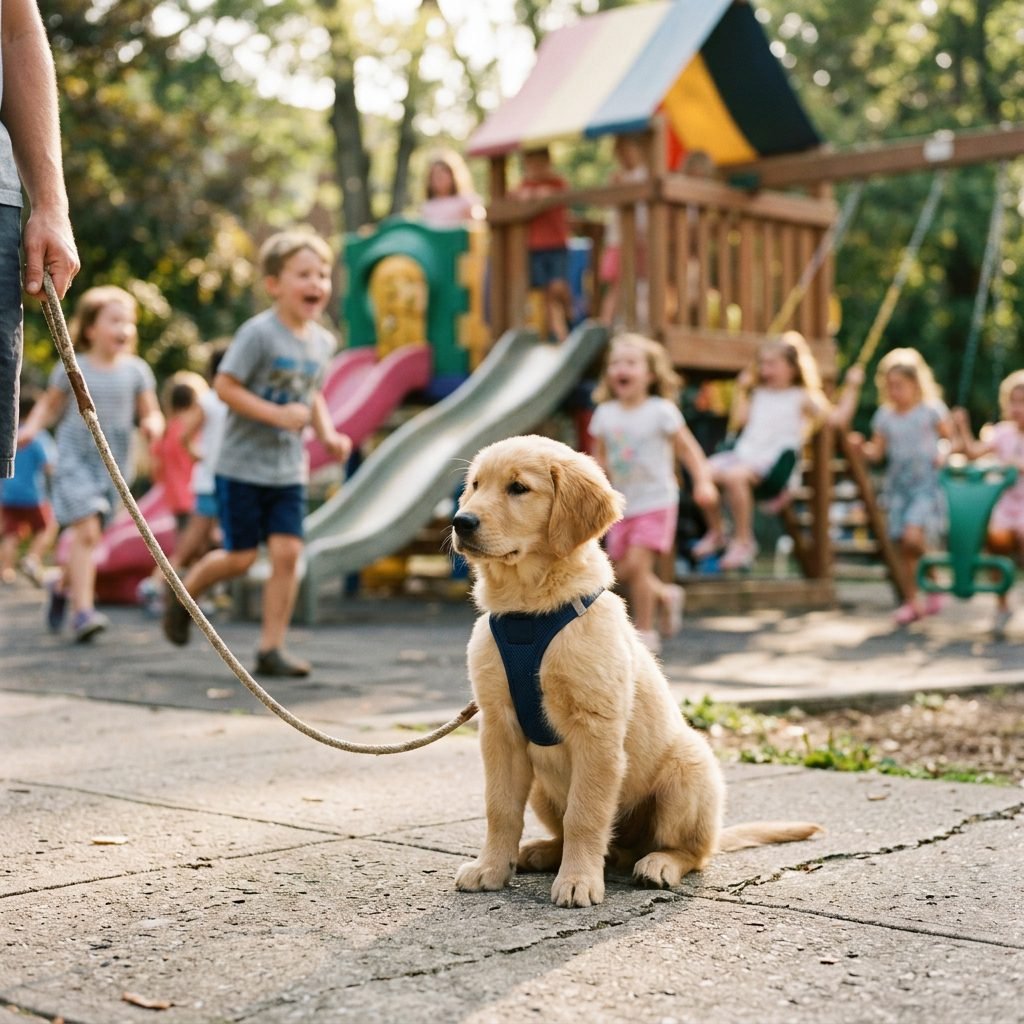
Hey there, savvy dog owners! If you have ever been on the other end of a leash when a group of neighborhood kids starts playing tag, you know the feeling. One second, your puppy is a literal angel, sniffing a dandelion; the next, they are a four-legged rocket ship trying to launch themselves toward the high-pitched screams. It is embarrassing, frustrating, and, let us be honest, a bit exhausting. But here is the good news: lunging is a behavior, not a personality trait. Whether your pup is lunging out of over-the-top excitement or a little bit of nervous uncertainty, we can fix it. In this deep-dive guide, we are going to transform your puppy from a lunging machine into a calm, collected companion who can handle the chaos of childhood with ease. We will explore the psychology behind why those tiny humans trigger such big reactions and provide a step-by-step roadmap to reclaim your peaceful walks. So, grab your favorite training treats, take a deep breath, and let’s get started on the path to a calmer canine!
Understanding the ‘Why’: Why Do Screaming Kids Trigger Lunging?
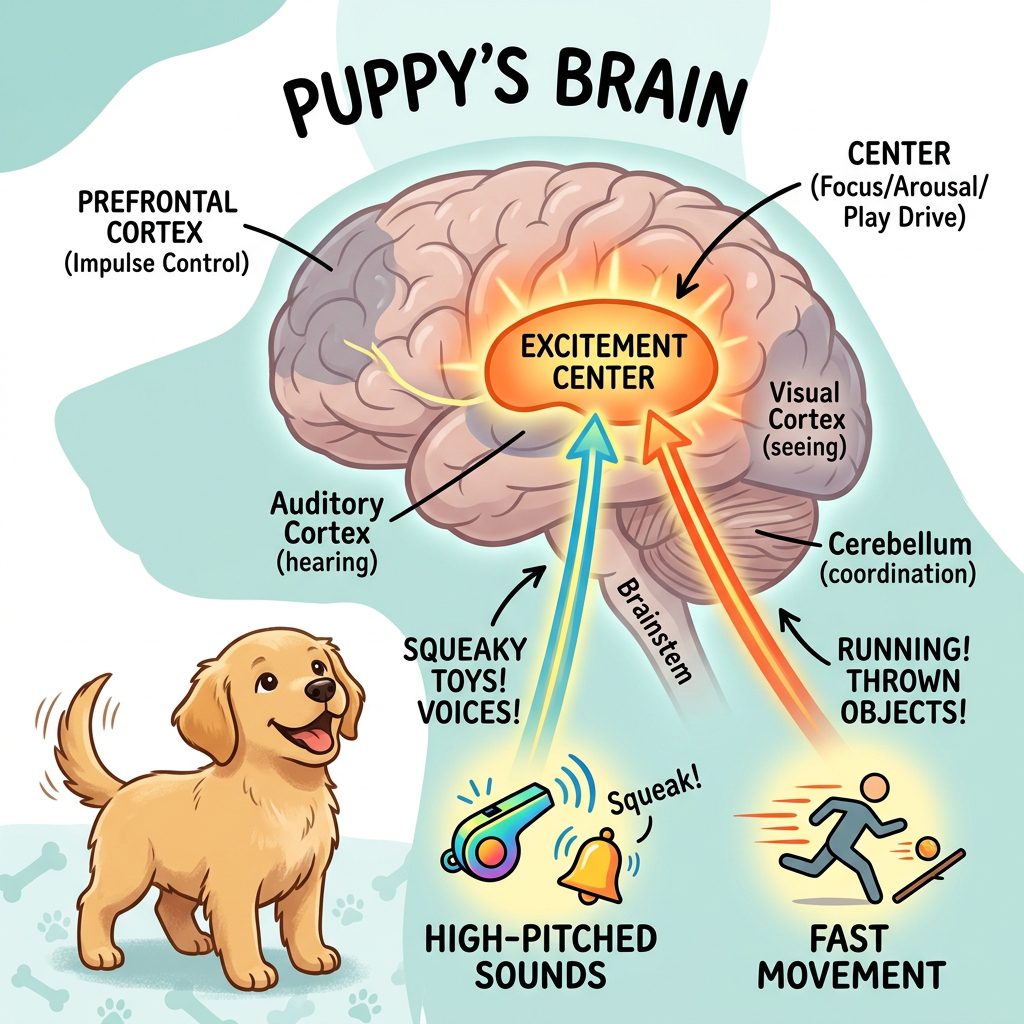
Before we can fix the behavior, we have to understand what is going on inside that fuzzy little head. Puppies are essentially sensory sponges, and screaming children provide a massive amount of sensory input. For a dog, a child running and screaming isn’t just a kid playing; it is a complex cocktail of high-pitched vocalizations and erratic movement. This often triggers one of two things: the prey drive or over-arousal.
The Prey Drive Connection
Dogs are hunters by ancestry. High-pitched noises, like the squeals of a child, can mimic the sound of distressed prey. When a child runs away, it triggers the puppy’s instinct to chase. This isn’t ‘aggression’ in the way humans think of it, but it is a deep-seated biological urge that makes it very hard for a young dog to stay still.
Over-Arousal and Frustration
On the flip side, many puppies lunge because they are desperate to join the fun. They see the movement, hear the excitement, and their ‘arousal bucket’ overflows. When the leash prevents them from reaching the source of the fun, they experience ‘leash frustration,’ which manifests as lunging and barking. Understanding whether your dog is fearful or just over-excited is the first step in tailoring your training approach.
Pro Tip: If your puppy’s tail is wagging broadly and their body is wiggly, it is likely excitement. If their tail is tucked and they are leaning back, it is likely fear-based.
The No-Lunge Toolkit: Essential Gear for Success
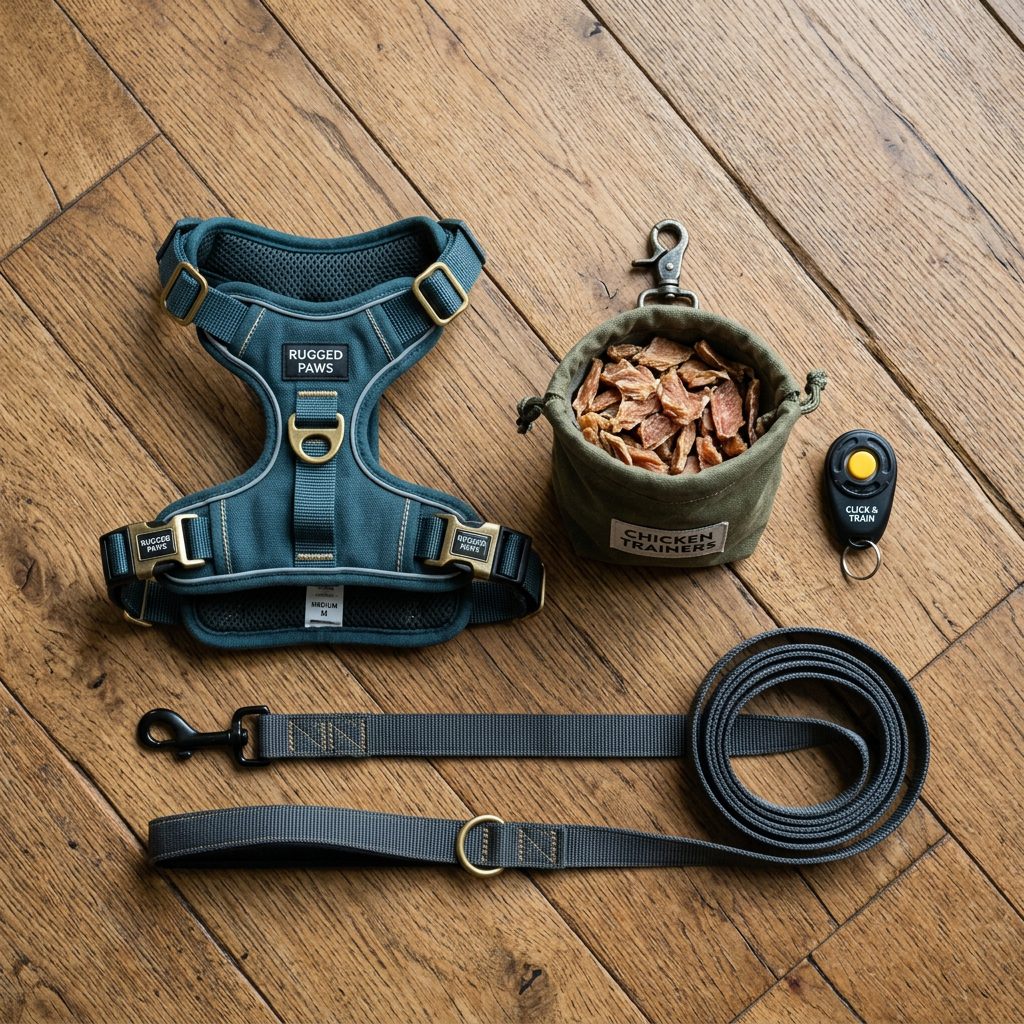
Training is much easier when you have the right tools. You wouldn’t try to build a house without a hammer, and you shouldn’t try to train a lunging puppy without the proper management gear. Our goal is to keep everyone safe while providing the best environment for learning. Below is a breakdown of the gear every savvy dog owner needs for this specific challenge.
| Tool | Best For | Expert Tip |
|---|---|---|
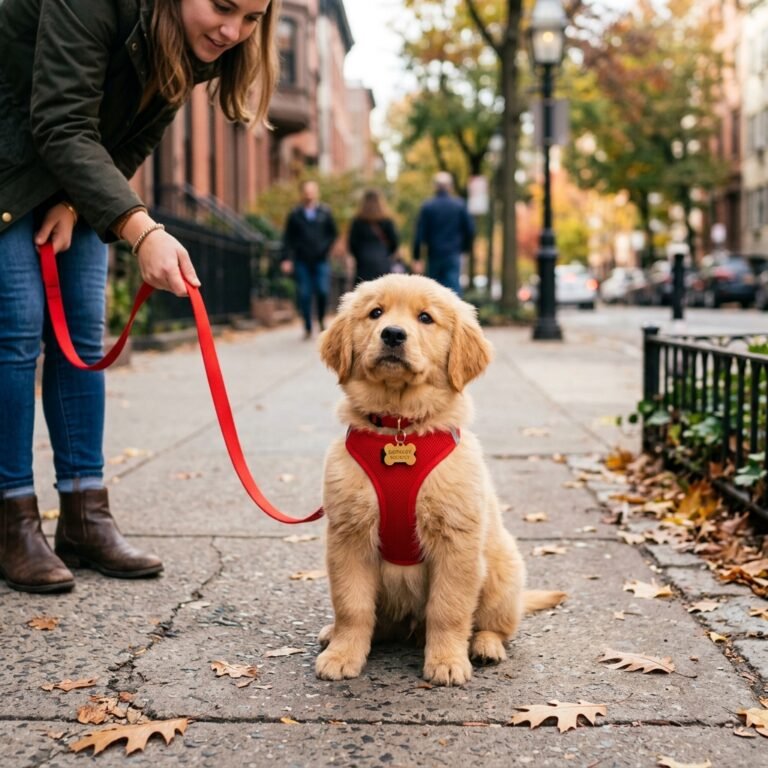
| Front-Clip Harness | Management & Control | The front clip redirects the puppy’s momentum back toward you if they try to lunge. |
| 15-Foot Training Lead | Desensitization | Gives the puppy more freedom to make ‘good choices’ at a distance while staying safe. |
| High-Value Treats | Motivation | Use ‘stinky’ treats like boiled chicken or freeze-dried liver that the puppy only gets around kids. |
| A Clicker | Precision Timing | Marks the exact moment of calm behavior so the puppy knows exactly what they are being rewarded for. |
Using a front-clip harness is a game-changer. Unlike a traditional collar, which puts pressure on the neck and can actually increase a dog’s agitation, a harness allows you to guide their entire body. Pair this with a treat pouch that is easily accessible; timing is everything when you are trying to capture a split second of calm!
Phase 1: Building the Foundation Skills
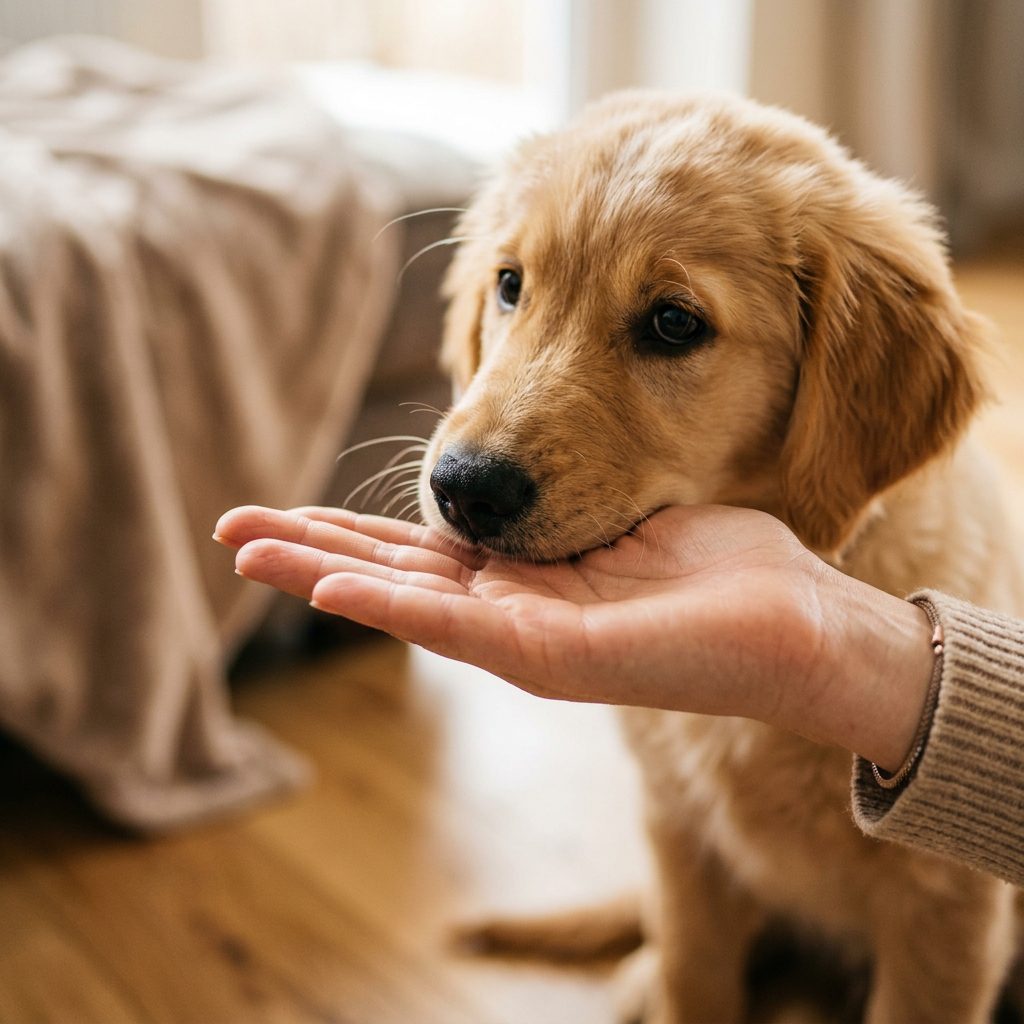
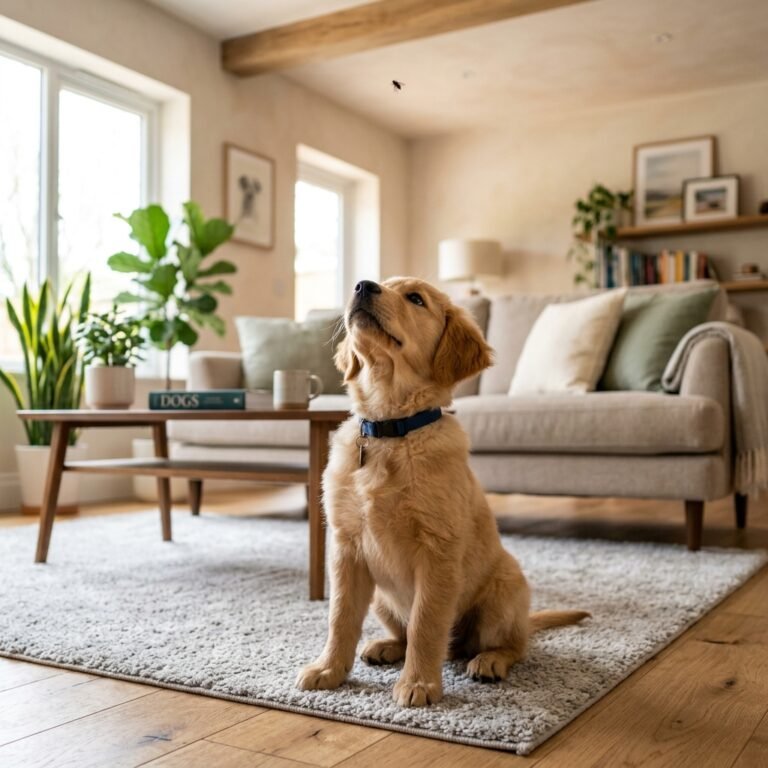
You cannot expect your puppy to be calm around a screaming toddler if they can’t even sit calmly in your living room. Before we head to the park, we need to master three foundational skills: ‘Watch Me,’ ‘Touch,’ and ‘Leave It.’
The ‘Watch Me’ Command
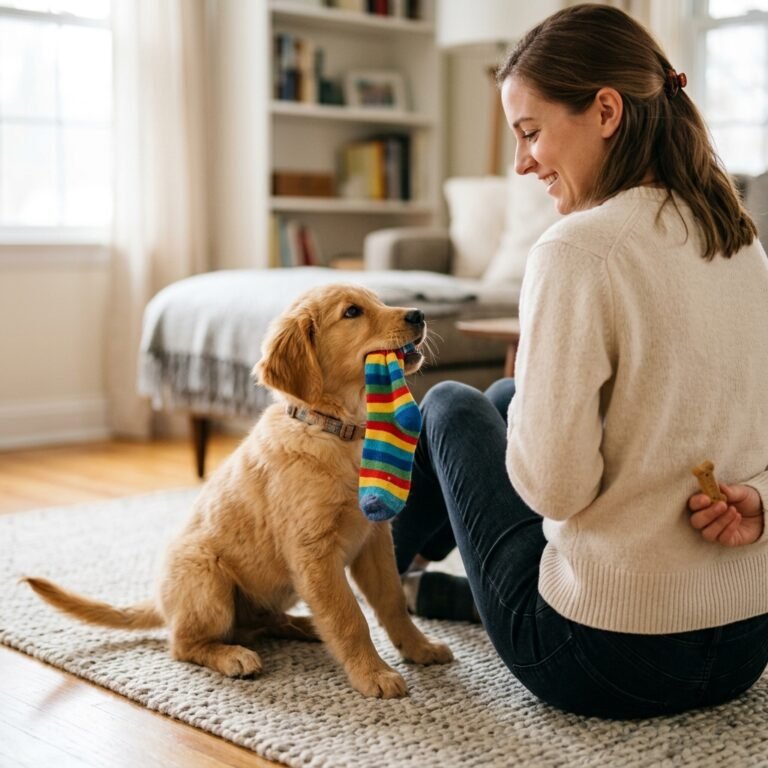
This is the most important tool in your arsenal. It teaches your puppy to check in with you regardless of what is happening in the environment. Start in a quiet room, hold a treat to your nose, and when the puppy makes eye contact, click and reward. Gradually increase the duration of the eye contact before giving the treat.
Hand Targeting (The ‘Touch’ Command)
Teaching your puppy to touch their nose to your palm is a fantastic way to physically redirect them. If you see a group of kids approaching, a ‘Touch’ command moves your puppy’s head and body away from the trigger and back toward you in a positive, game-like way.
The ‘Leave It’ Concept
While often used for dropped food, ‘Leave It’ is also great for visual triggers. You want ‘Leave It’ to mean ‘stop looking at that thing and look at me instead.’ Practice this with toys first, then move to low-level distractions before trying it with children.
Phase 2: The Step-by-Step Desensitization Process
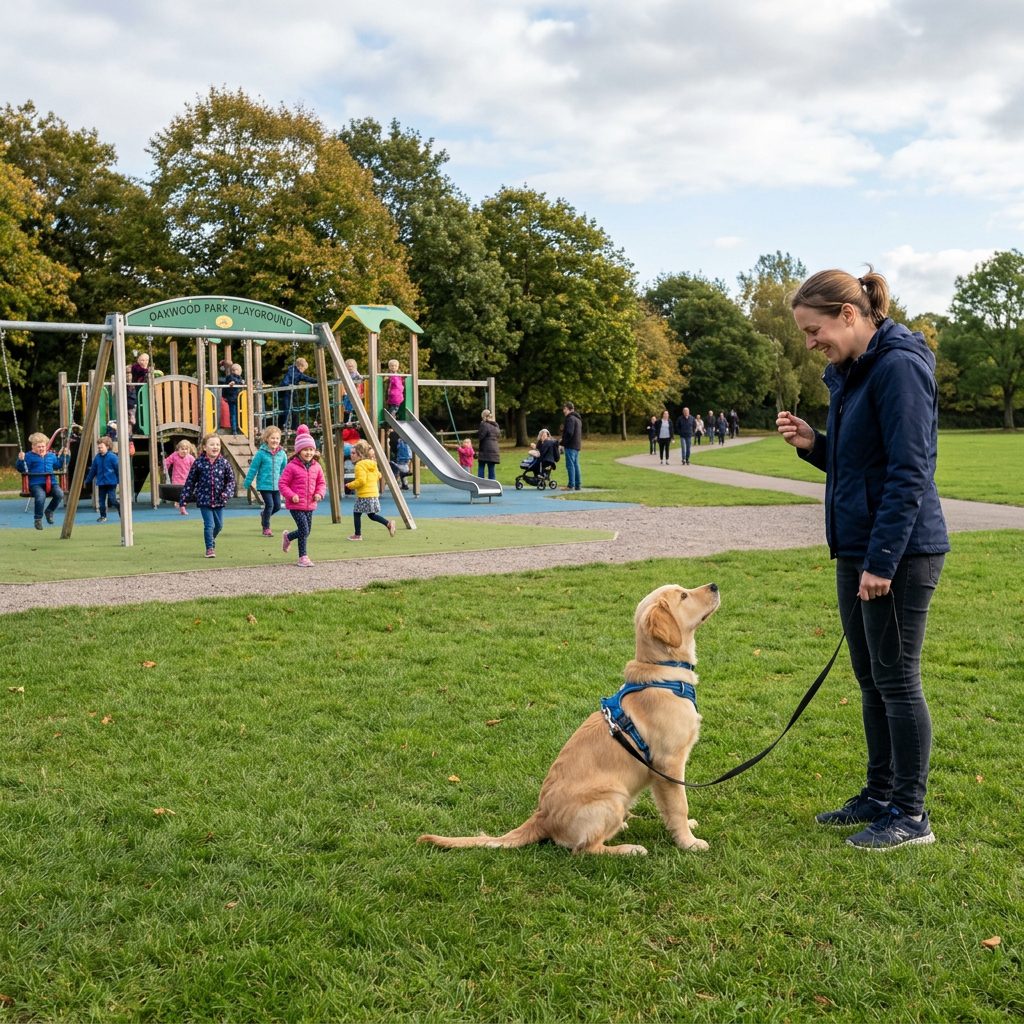
Now we get to the heart of the training. We are going to use a technique called Counter-Conditioning and Desensitization (CC&D). This means we are changing the puppy’s emotional response to the kids while keeping them below their ‘threshold.’
- Find the Threshold: This is the distance at which your puppy can see the kids but doesn’t lunge yet. It might be 50 feet or even 100 feet. Find that ‘safe zone.’
- The ‘Look at That’ (LAT) Game: When your puppy looks at a child, click the second they see them (before they react) and give a treat. We are teaching them: ‘Seeing a kid means a treat is coming from my owner!’
- The Auto-Check-In: After several repetitions, your puppy will start to look at the kid and then immediately look at you for their treat. This is the breakthrough moment! Reward this heavily.
- Decrease the Distance: Very slowly, over several days or weeks, move closer to the kids. If your puppy lunges, you have moved too fast. Back up and try again.
- Add Intensity: Once they are calm around quiet kids, find a place where kids are more active. Again, start at a great distance and work your way in.
Consistency is key. Do not rush this process. If you push your puppy too far too fast, you risk a ‘setback’ where their fear or excitement becomes ingrained. Slow is smooth, and smooth is fast when it comes to dog training.
Troubleshooting: What to Do When a Lunge Happens
Let’s be real: setbacks happen. A kid might jump out from behind a bush, or a ball might roll right under your puppy’s nose. If your puppy ‘breaks’ and starts lunging, don’t panic and don’t scold them. Scolding can actually make the puppy associate the kids with your anger, which increases their stress.
The Emergency U-Turn
If your puppy is over threshold and won’t listen, use the Emergency U-Turn. Simply say ‘Let’s go!’ in a cheerful voice and walk briskly in the opposite direction. Do not tug or jerk the leash; just use your body movement to guide them away. Once you are back in the ‘safe zone,’ ask for a simple command like ‘Sit’ to reset their brain.
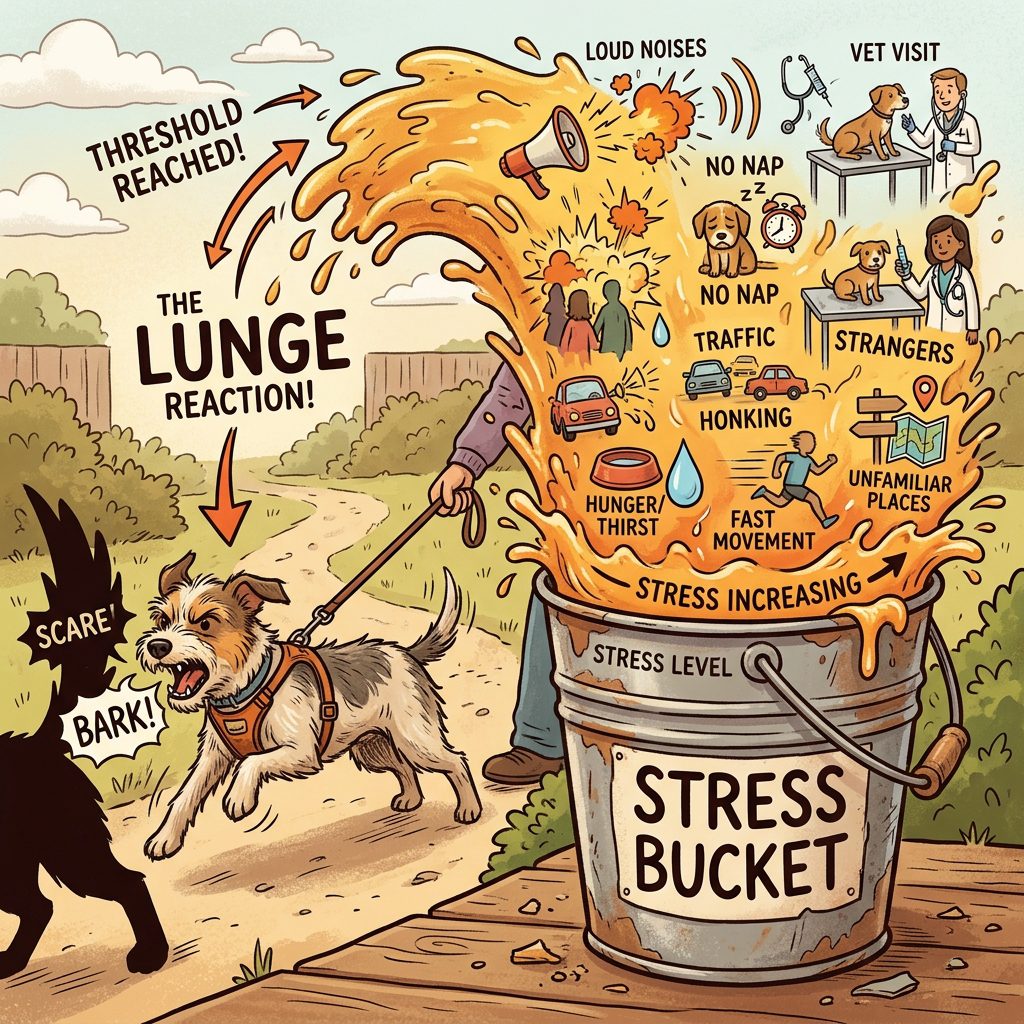
The ‘Stress Bucket’ Theory
Keep in mind that stress is cumulative. If your puppy had a scary vet visit in the morning or didn’t sleep well, they will have a much lower tolerance for screaming kids in the afternoon. This is called ‘trigger stacking.’ On high-stress days, skip the park and do some low-key brain games at home instead.
Long-Term Success: Management and Lifestyle
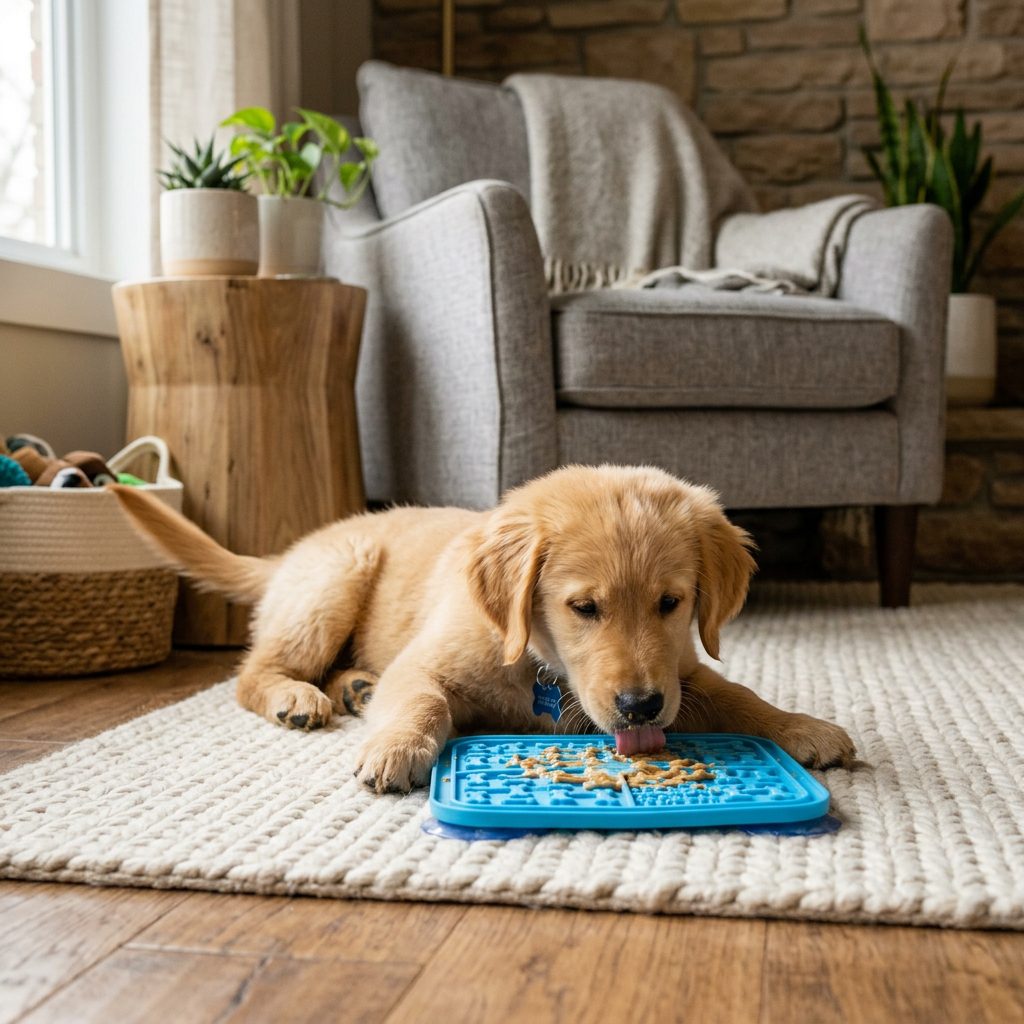
Training doesn’t just happen on walks; it happens 24/7. To ensure your puppy stays calm around children long-term, you need to manage their environment and meet their biological needs.
- Mental Enrichment: A tired dog is a calm dog. Use lick mats, snuffle mats, and puzzle toys to burn off mental energy. A puppy who has just spent 20 minutes solving a food puzzle is much less likely to care about a screaming kid.
- Safe Havens: Use baby gates or crates at home to give your puppy a ‘kid-free zone.’ This prevents them from being constantly practiced in the art of chasing kids around the living room.
- Advocate for Your Dog: Do not be afraid to tell neighborhood kids, ‘We are training right now, please don’t run toward him.’ Being your dog’s protector builds their trust in you.
Finally, remember that socialization is not just about interaction; it is about neutrality. Your puppy doesn’t need to play with every child they see. In fact, it is better if they learn that children are just a neutral part of the environment that they can ignore.
Conclusion
You’ve Got This, Savvy Owner!
Training a puppy to stay calm around the whirlwind of screaming kids is a marathon, not a sprint. It requires patience, high-value snacks, and a whole lot of empathy for your furry friend. By understanding their triggers, building a solid foundation of commands, and using desensitization, you are not just stopping a ‘bad’ behavior—you are giving your puppy the skills they need to navigate a human world with confidence. Remember to celebrate the small wins. That one second where they looked at a running child and then looked back at you? That is a huge victory! Keep at it, stay consistent, and soon enough, those park walks will be the highlight of your day instead of a source of stress. Happy training!