Save Your Woodwork! How to Stop Your Puppy Scratching at Closed Bedroom Doors at Night
Welcome to the ‘Puppy Parent Club,’ where the coffee is strong and the sleep is often interrupted! If you are reading this at 3:00 AM while listening to the rhythmic scritch-scratch-scritch of tiny claws against your expensive mahogany door, know that you are definitely not alone. It is one of the most common—and most frustrating—challenges new dog owners face. You want to sleep, your puppy wants to be with you, and your woodwork is caught in the middle of this emotional tug-of-war.
Understanding why your puppy is acting like a tiny construction crew at your door is the first step toward reclaiming your rest. It is rarely about being ‘naughty.’ Instead, it is usually a mix of separation anxiety, barrier frustration, or simply a lack of understanding regarding the house rules. In this comprehensive guide, we are going to dive deep into the canine psychology behind this behavior and provide you with a step-by-step blueprint to save your doors and your sanity. We will cover everything from immediate physical fixes to long-term behavioral training that will help your pup feel confident and secure, even when there is a door between you.
Understanding the ‘Why’ Behind the Scratching

Before we can fix the behavior, we have to understand the motivation. Puppies are social animals that have spent every moment of their young lives huddled with littermates. Suddenly being asked to sleep alone behind a solid barrier is a massive adjustment.
Common Motivations
- Separation Anxiety: True anxiety is a panic response. If your puppy is also panting, drooling, or howling, they might be genuinely terrified of being alone.
- Barrier Frustration: Some puppies are fine being alone but hate the idea of a closed door. They want to know what is on the other side!
- Attention Seeking: If you have previously opened the door to scold them or let them in, they have learned that scratching equals a response from you.
- Need for a Potty Break: Especially in younger pups, scratching might be a desperate attempt to tell you their bladder is full.
Pro Tip: Use a pet camera to observe your puppy’s body language. A puppy that scratches then curls up to sleep is bored or seeking attention; a puppy that paces and trembles is likely anxious.
Essential Gear: Protecting Your Woodwork and Setting Boundaries
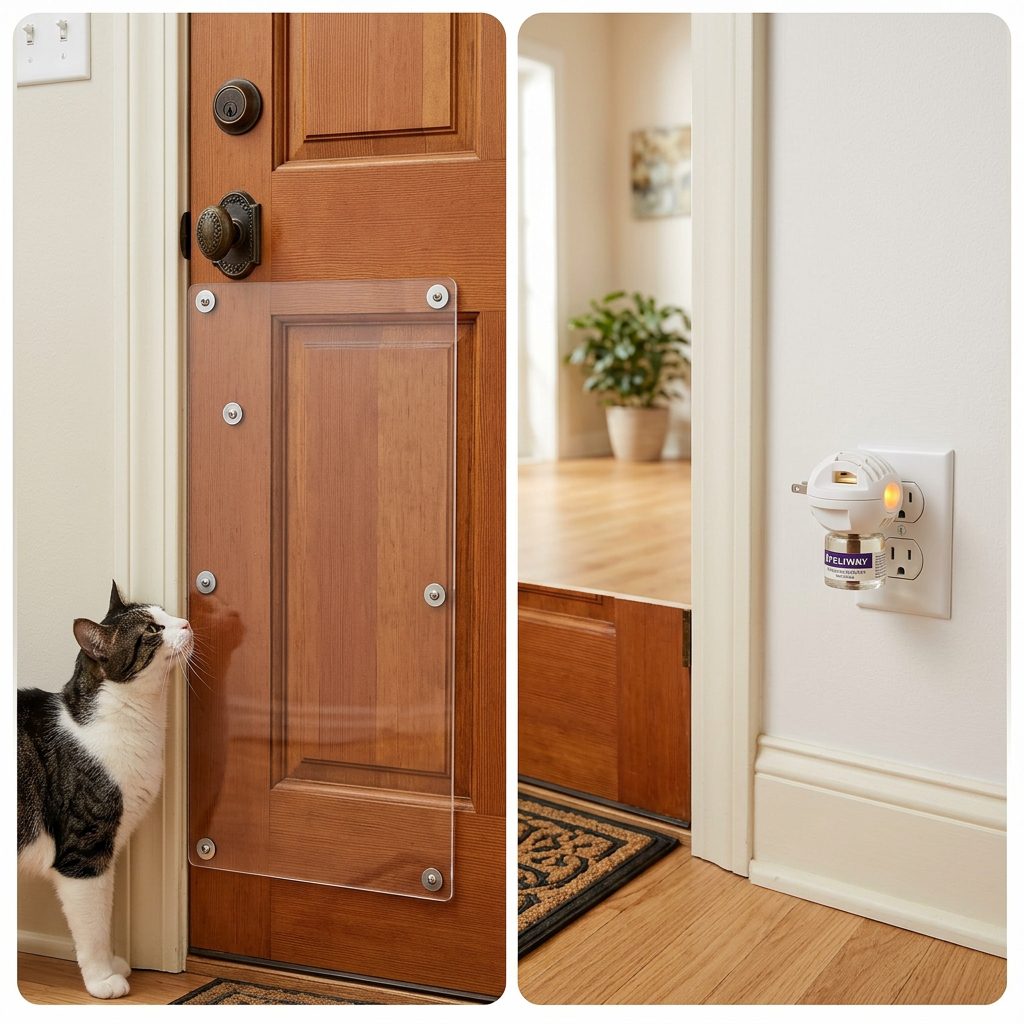
While we work on the ‘brain’ part of training, we need to protect your home. You cannot train a puppy effectively if you are constantly stressed about the door being ruined. Here is a breakdown of the tools that can help.
| Product Category | Specific Tool | How It Helps |
|---|---|---|
| Physical Barriers | Baby Gates | Creates distance from the door so they cannot reach the wood. |
| Surface Protectors | Plexiglass Shield | A clear plastic sheet that covers the door and resists claw marks. |
| Deterrents | Double-Sided Tape | Puppies hate the sticky sensation on their paws. |
| Calming Aids | Pheromone Diffusers | Releases synthetic ‘mother’ pheromones to reduce nighttime stress. |
Choosing the Right Deterrent
When selecting a protector, ensure it is non-toxic. Plexiglass door guards are a favorite among savvy owners because they are virtually invisible and provide a slick surface that offers no ‘grip’ for claws. If your puppy finds scratching unrewarding because they can’t get a grip, they are more likely to give up sooner.
The Step-by-Step Guide to Nighttime Peace
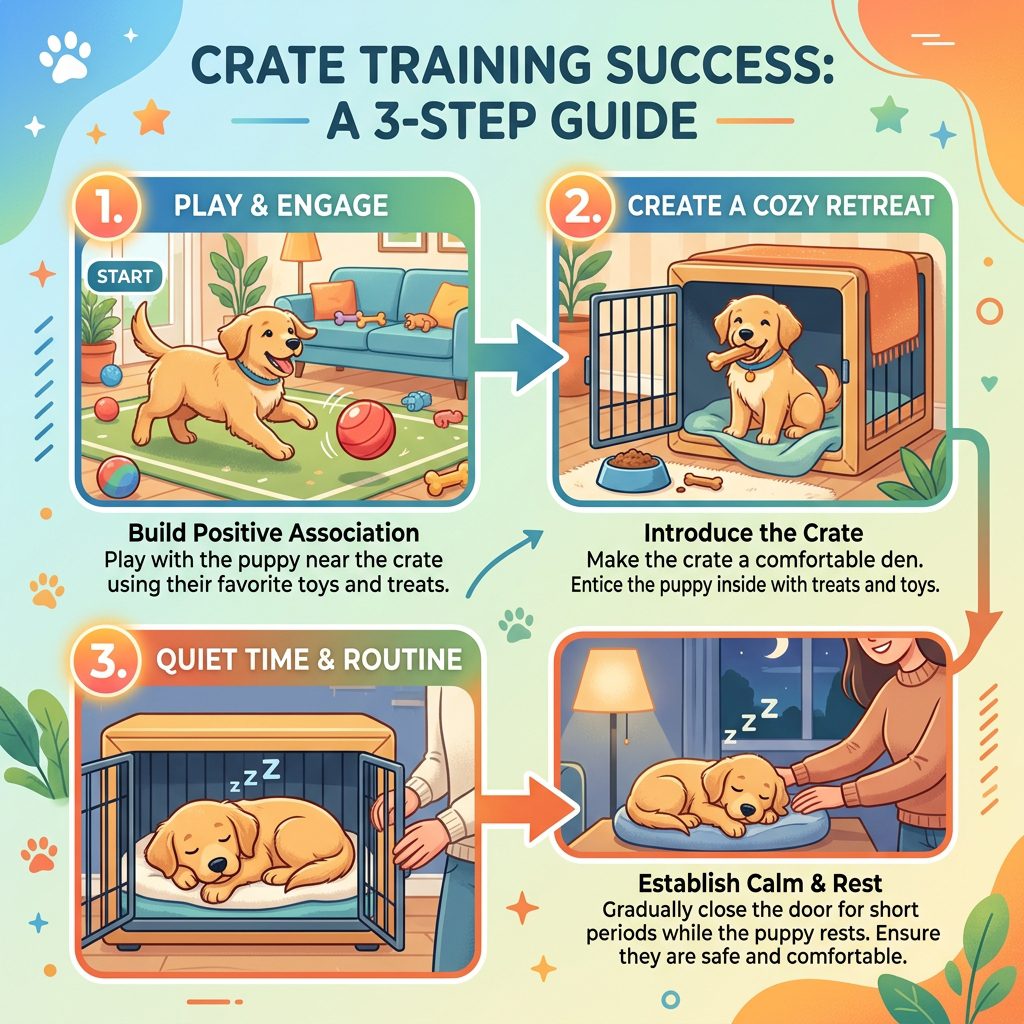
Now, let’s get into the nitty-gritty of the training. This process requires patience and, most importantly, consistency. If you give in once, you reset the clock.
Step 1: The Daytime Door Game
Don’t wait until midnight to teach your puppy that closed doors are okay. During the day, practice closing the door for just five seconds. Reward your puppy with a high-value treat if they stay quiet. Gradually increase the time to minutes, then ten minutes.
Step 2: Establish a ‘Wind-Down’ Routine
Puppies, like toddlers, benefit from a predictable bedtime. A tired puppy is a quiet puppy. Ensure they have had a good play session and a final potty break about 30 minutes before you plan to sleep.
Step 3: Create a High-Value Den
Make their sleeping area (whether a crate or a bed) more exciting than your bedroom. Give them a safe, long-lasting chew or a stuffed frozen toy that they only get at bedtime. This shifts their focus from ‘I’m away from you’ to ‘I have this amazing treat!’
Step 4: The ‘Boring’ Potty Check
If they scratch in the middle of the night, they might need to go out. Take them out on a leash, no talking, no petting, no lights. If they don’t go within two minutes, it’s back to their bed. This teaches them that scratching doesn’t lead to playtime.
Managing the ‘Extinction Burst’
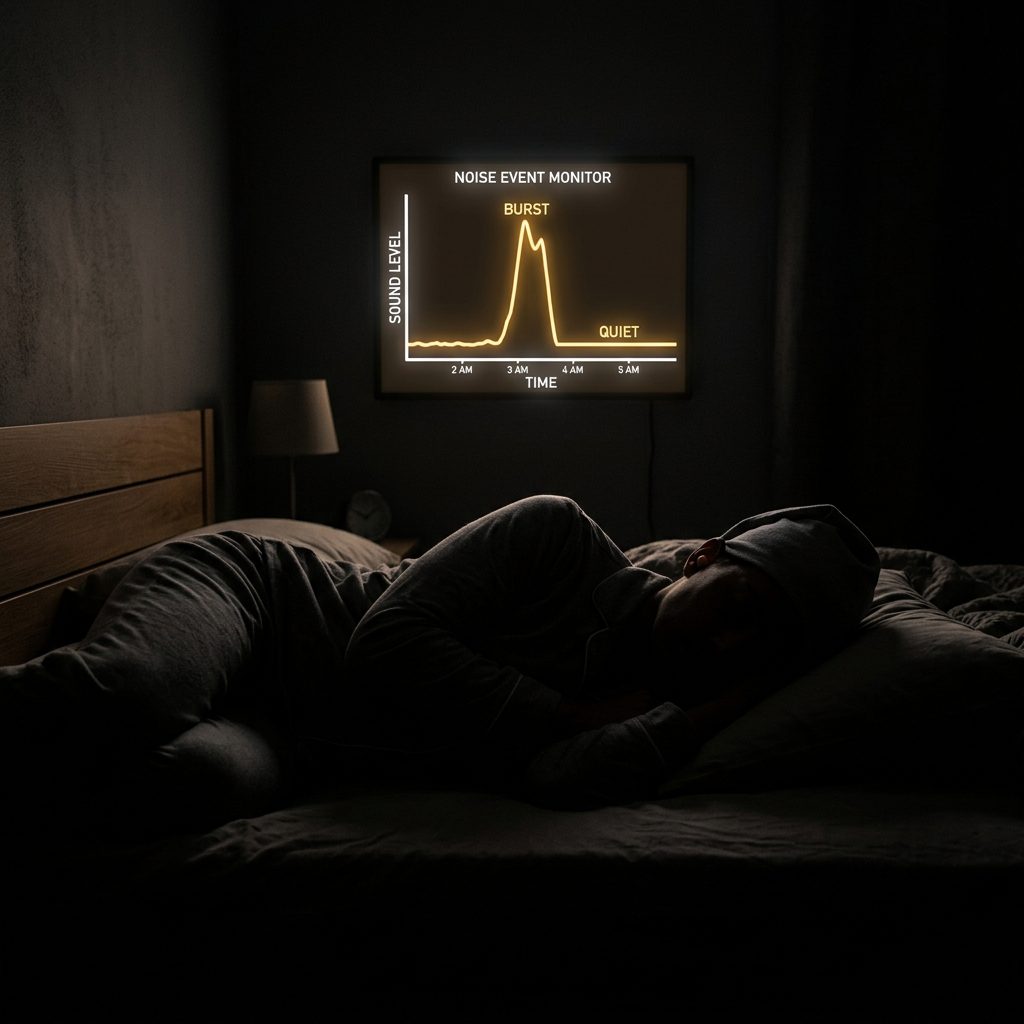
This is the part where most owners fail. When you stop responding to a behavior that used to work (like scratching), the behavior will actually get worse before it gets better. This is called an Extinction Burst.
Think of it like an elevator button. If you press it and nothing happens, you don’t just walk away—you press it harder and faster. Your puppy is doing the same thing. They are thinking, ‘Maybe I’m just not scratching loud enough for them to hear me!’
How to Handle the Burst
- Wear Earplugs: Seriously. If you know their needs are met, protect your sleep so you don’t get frustrated.
- Do Not Scold: Even negative attention is attention. Yelling ‘No!’ through the door tells the puppy that scratching successfully got you to talk to them.
- Wait for the Silence: Only open the door or interact with them when there has been at least 10-20 seconds of complete silence.
Common Mistakes to Avoid
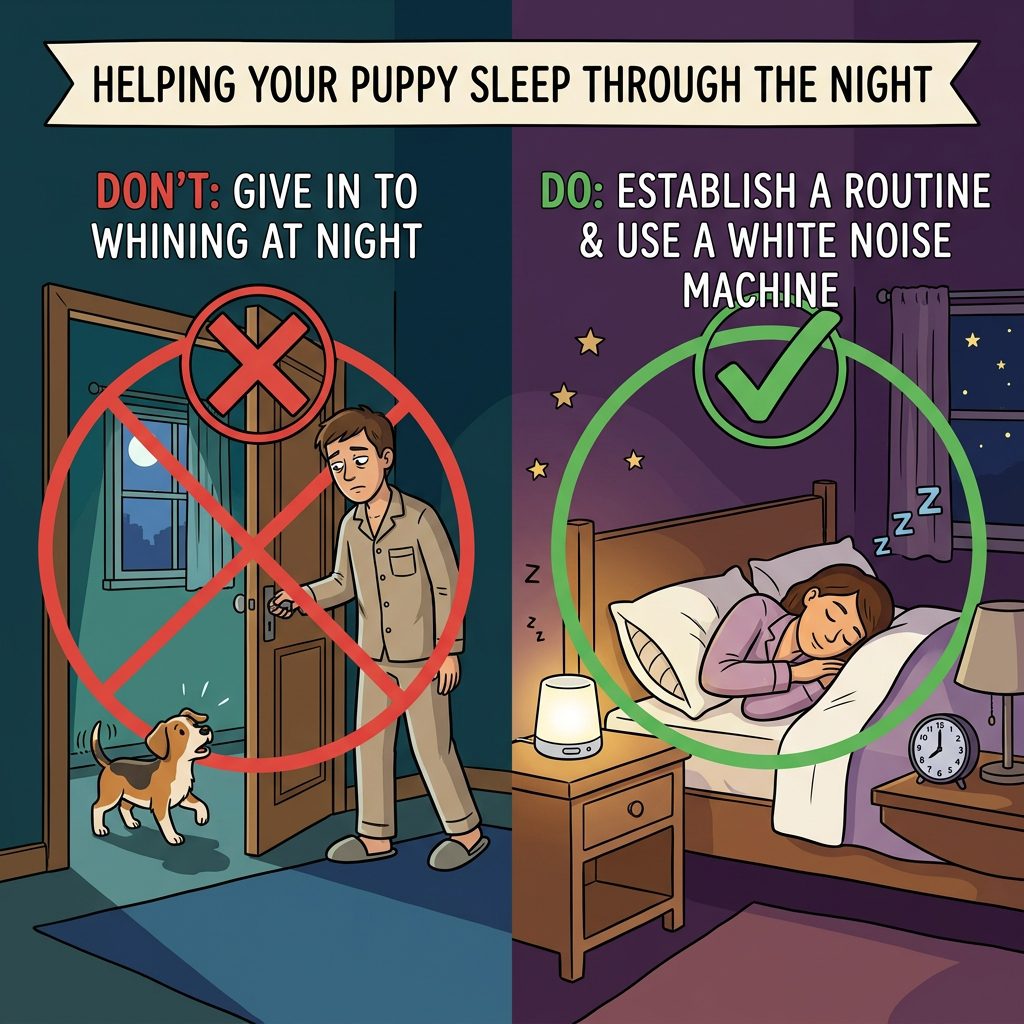
Even the best-intentioned owners can accidentally reinforce the very behavior they are trying to stop. Let’s look at the ‘dos and don’ts’ of door scratching management.
| What NOT to Do | What to DO Instead |
|---|---|
| Opening the door to yell ‘Stop it!’ | Ignore the noise completely until it stops. |
| Giving up and letting them in the bed at 2 AM. | Maintain the boundary to avoid ‘intermittent reinforcement.’ |
| Using physical punishment or ‘scare’ tactics. | Focus on rewarding ‘calm’ and ‘quiet’ behaviors during the day. |
| Skipping the evening exercise session. | Ensure physical and mental enrichment is high before bed. |
One of the biggest pitfalls is intermittent reinforcement. If you ignore the scratching for 20 minutes but then give in because you can’t take it anymore, you have just taught your puppy that they need to scratch for at least 20 minutes to get what they want. You’ve accidentally built incredible persistence!
Conclusion
Stopping a puppy from scratching at your bedroom door is a test of wills, but with the right tools and a consistent plan, you will win. Remember that your puppy isn’t trying to destroy your home; they are just trying to navigate a world that feels very big and lonely at night. By protecting your doors with physical guards, establishing a rock-solid nighttime routine, and pushing through the ‘extinction burst’ without giving in, you are teaching your puppy valuable lessons in independence and confidence.
Consistency is your greatest ally. Stick to the plan for 7 to 14 days, and you will likely see a dramatic transformation. Soon, the only sound you’ll hear at night is the peaceful breathing of a puppy who knows they are safe, secure, and exactly where they are supposed to be. Sweet dreams!