Tired of Chewed Nikes? How to Stop Your Puppy Stealing Shoes for Good!
The Heartbreak of the Chewed Sneaker
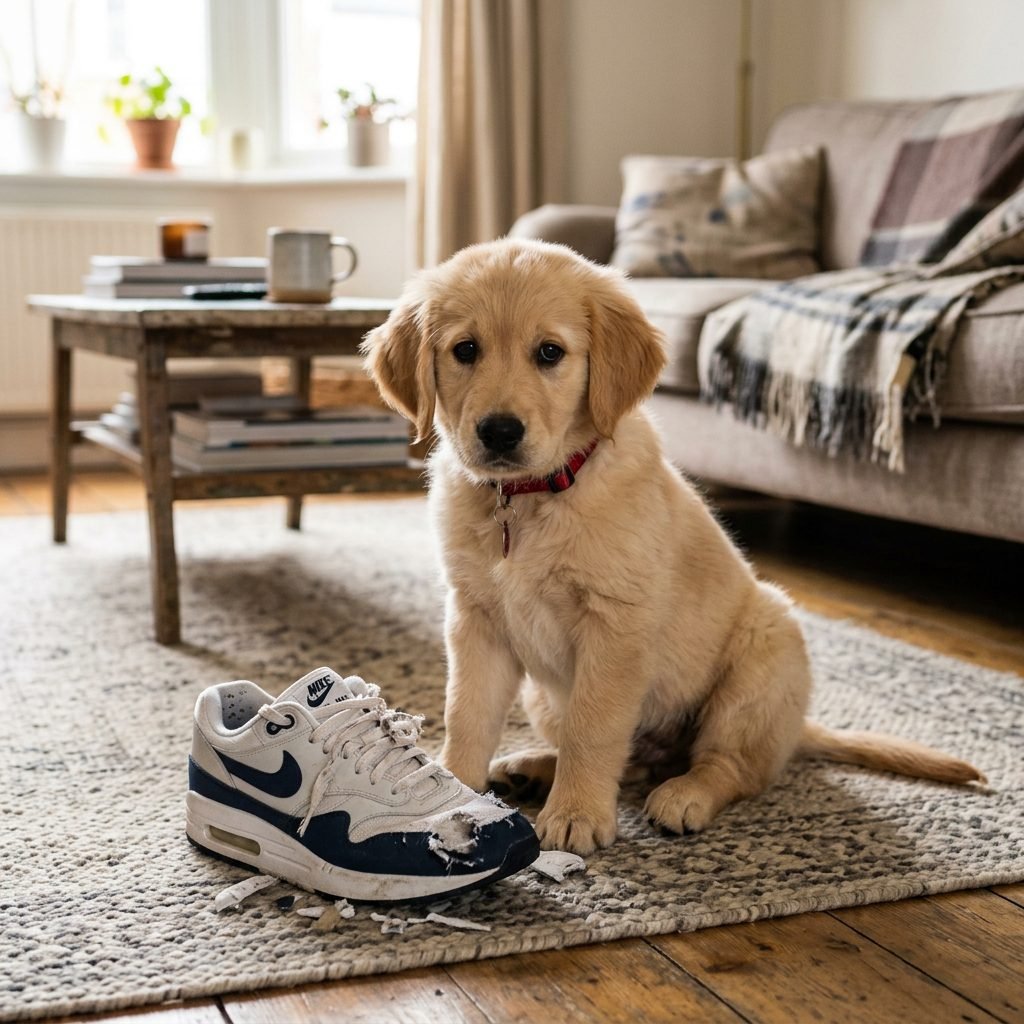
Let us set the scene: You have just walked through the front door after a long, exhausting day. You kick off your brand-new, expensive Nikes, leave them in the hallway, and head to the kitchen to grab a glass of water. Five minutes later, you return to find your sweet, innocent-looking puppy happily gnawing on the heel of your left shoe. The laces are shredded, the foam is punctured, and your heart sinks. If you are reading this, chances are you have experienced this exact scenario, or one very much like it. Hey there, fellow dog parent! Welcome to the frustrating, yet entirely normal, world of puppy shoe-stealing.
As savvy dog owners, we know that our puppies do not chew our belongings out of spite or malice. They are not plotting against our footwear collection. However, knowing that does not make it any less frustrating when a hundred-dollar pair of shoes becomes a makeshift chew toy. Beyond the financial cost, shoe-chewing poses a significant health risk to your furry best friend. Swallowing pieces of rubber, leather, or shoelaces can lead to severe gastrointestinal blockages, which are life-threatening and require expensive emergency veterinary surgery.
Expert Tip: Never give your dog an old, worn-out shoe to chew on as a ‘compromise.’ Dogs cannot tell the difference between an old shoe and a brand-new one. To them, a shoe is a shoe!
In this comprehensive guide, we are going to dive deep into the canine mind to understand exactly why your puppy is so obsessed with your shoes. More importantly, we are going to equip you with a foolproof, step-by-step positive reinforcement training strategy to stop this behavior in its tracks. We will cover the essential tools you need, the exact training steps to follow, and how to troubleshoot common mistakes that most dog owners make when trying to correct this issue. Grab a cup of coffee, put your shoes safely in the closet, and let us get started on saving your footwear and your sanity!
Why Your Puppy is Obsessed with Your Shoes (The Psychology)
Understanding the Canine Mind
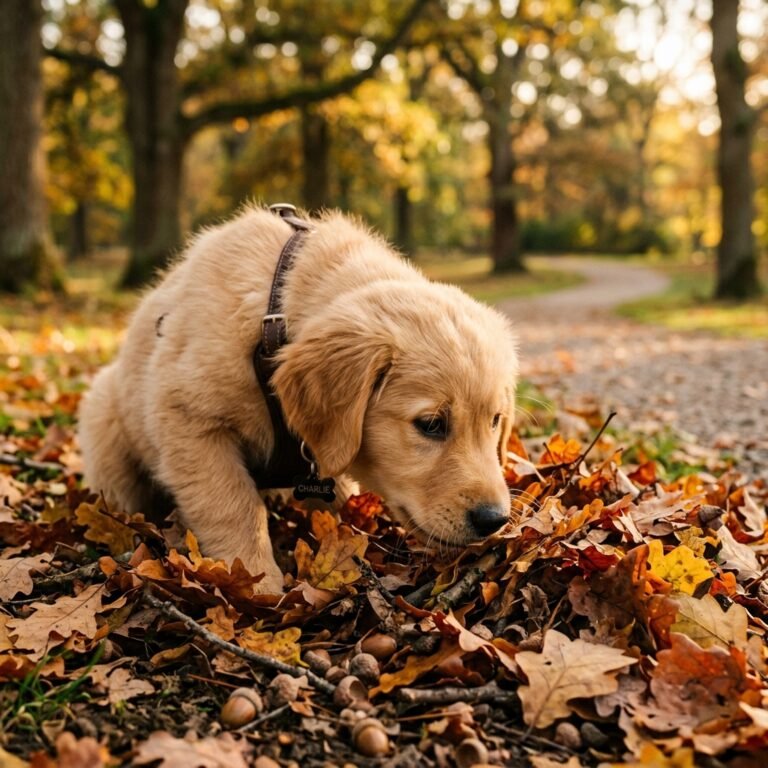
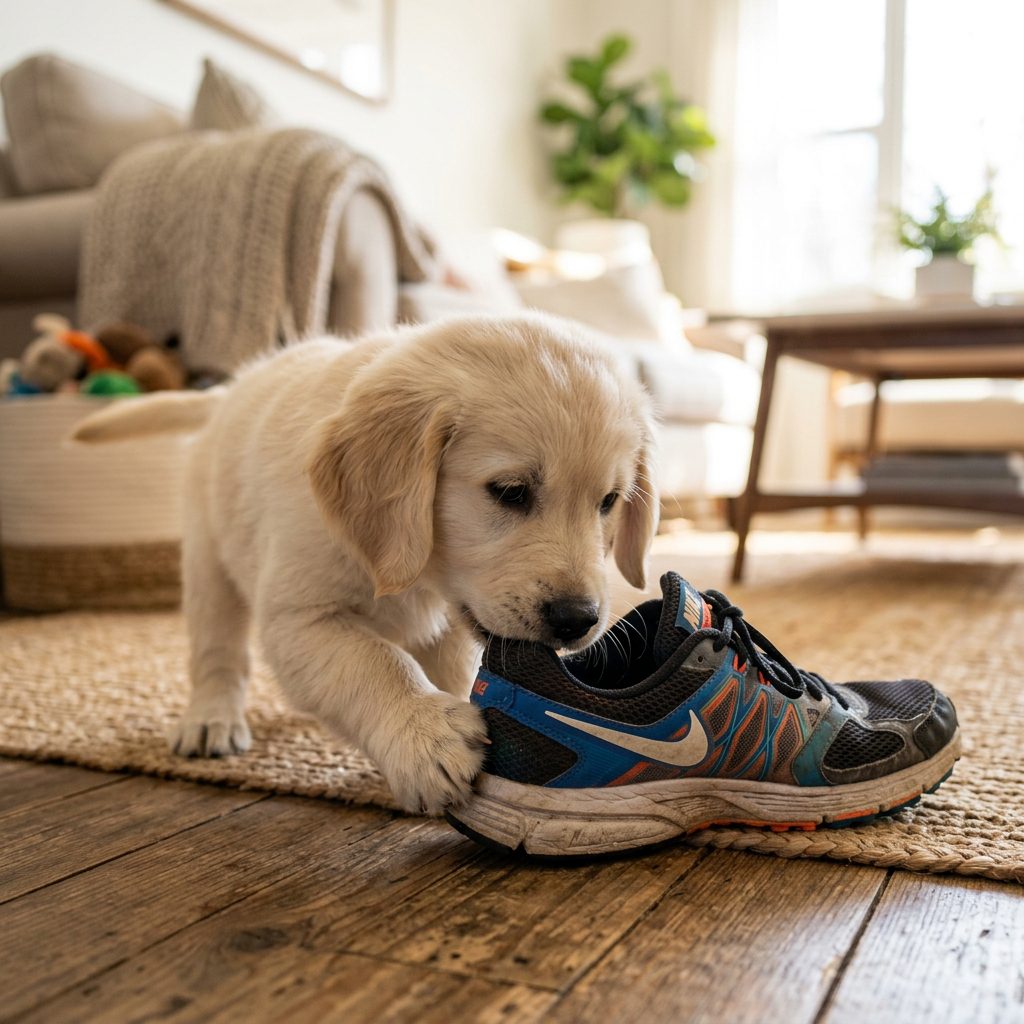
To effectively stop your puppy from stealing your shoes, we first need to understand the root cause of the behavior. Puppies interact with the world using their mouths, much like human toddlers use their hands. When they grab a shoe, they are exploring, playing, and self-soothing. Here are the four primary reasons your puppy has targeted your footwear:
1. The Power of Scent
Your puppy loves you, and your shoes smell exactly like you! Dogs have an olfactory system that is tens of thousands of times more sensitive than ours. Your feet contain a high concentration of sweat glands, meaning your shoes are heavily concentrated with your unique scent. When you leave the house, or when your puppy is feeling anxious or lonely, curling up with (and chewing on) something that smells strongly of you provides immense comfort. It is essentially the canine equivalent of a security blanket.
2. Teething Pain Relief
Just like human babies, puppies go through a painful teething phase. Between the ages of three and six months, their needle-like baby teeth fall out to make way for their adult teeth. During this time, their gums are sore, inflamed, and highly uncomfortable. Chewing provides significant relief by massaging the gums and alleviating the pressure. The texture of a shoe—often a mix of tough leather, squishy rubber, and soft fabric—offers the perfect varied chewing experience to soothe their aching mouths.
3. Boredom and Excess Energy
A tired puppy is a good puppy. If your dog is not receiving enough physical exercise or mental stimulation throughout the day, they will find their own ways to entertain themselves. Unfortunately, their idea of entertainment usually involves destruction. A shoe left out in the open is an incredibly enticing puzzle toy. It has laces to pull, insoles to rip out, and textures to shred. It is the ultimate boredom buster for an under-stimulated canine.
4. The ‘Chase Me’ Game
This is perhaps the most common reason the behavior persists. Think about what happens when your puppy grabs your shoe. You likely gasp, yell ‘Hey! Drop that!’ and run after them. To a puppy, this is the greatest game ever invented! They have successfully trained you to play a high-speed game of tag. By reacting dramatically, you are inadvertently rewarding the behavior with high-value attention. Even negative attention is better than no attention when a puppy is feeling playful.
Tools Needed for Success (Preparation)
Setting Up Your Environment
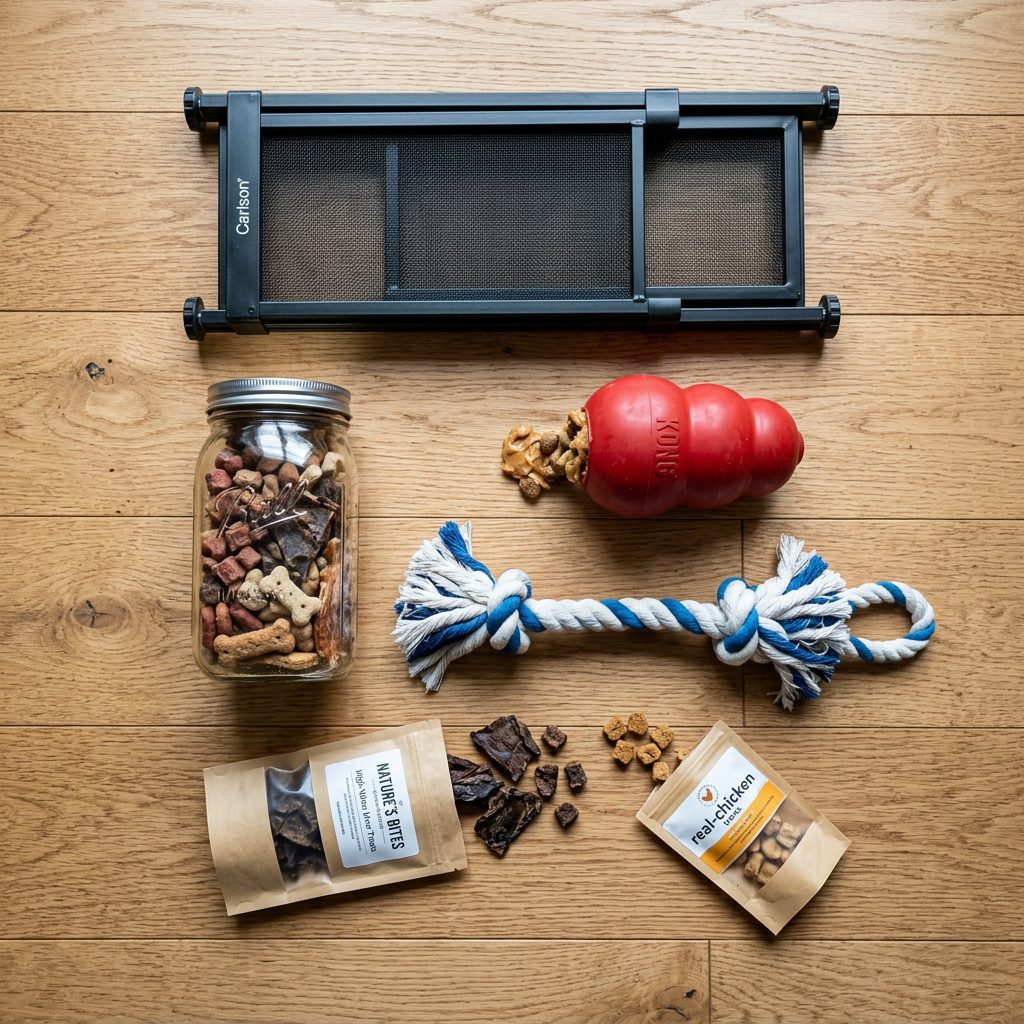
Before we begin the active training steps, we must set our puppies up for success. You cannot train a behavior away if the environment constantly sets the dog up to fail. This phase is all about management and redirection. You will need a few specific tools in your dog training arsenal to make this process smooth and effective.
Essential Management Tools
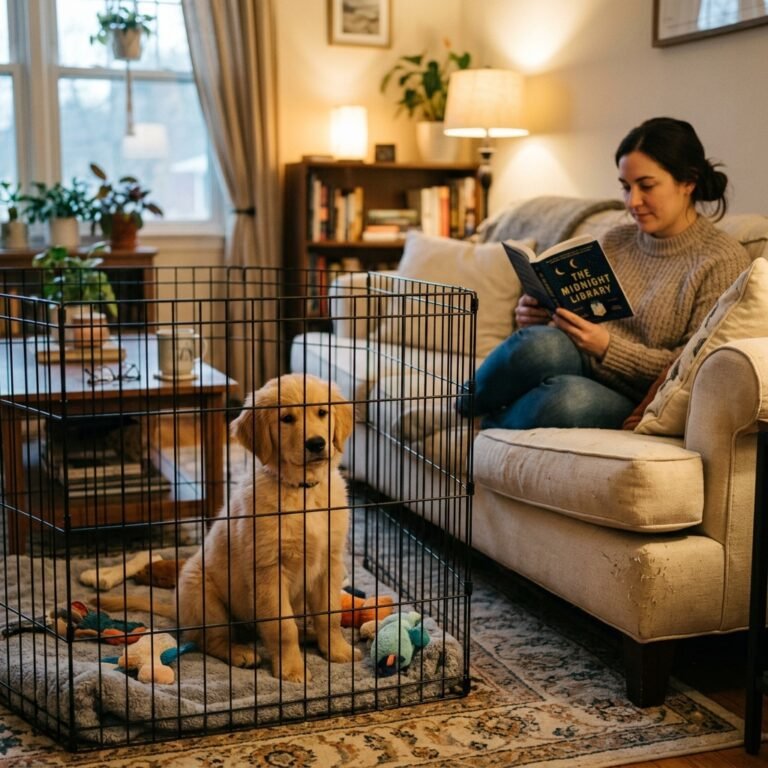
- Baby Gates or Playpens: Use these to restrict your puppy’s access to areas where shoes are kept, such as the front hallway or your bedroom.
- Closed Shoe Cabinets: If you cannot block off the hallway, invest in a shoe storage bench or cabinet with doors that close securely.
- High-Value Training Treats: You will need treats that your puppy goes absolutely crazy for. Think freeze-dried liver, small pieces of boiled chicken, or hot dogs. These are strictly for training, not everyday snacking.
- A Variety of Appropriate Chew Toys: You need to offer alternatives that mimic the satisfying textures of a shoe without the dangers.
Let us look at a breakdown of what constitutes a good alternative chew versus a dangerous one. This is critical for satisfying their natural urge to chew safely.
| Appropriate Chew Toys (Do This) | Inappropriate Chew Toys (Avoid This) |
|---|---|
| Durable rubber toys (e.g., Kongs) stuffed with frozen peanut butter or yogurt. | Old shoes or slippers (teaches them all shoes are okay to chew). |
| Textured teething rings designed specifically for puppies. | Items with strings, ribbons, or small easily detached parts. |
| Edible dental chews or bully sticks (always under supervision). | Rawhide chews (can cause severe digestive blockages and choking). |
| Sturdy rope toys for supervised tug-of-war games. | Any toy that looks similar to household items (e.g., plush toys that look like socks). |
Expert Tip: Rotate your puppy’s toys every few days. If they have access to the same toys all the time, they become boring. Rotating them keeps the toys novel and exciting, reducing the temptation to seek out your shoes!
The Step-by-Step Guide to Stop Shoe Stealing
Executing the Training Plan
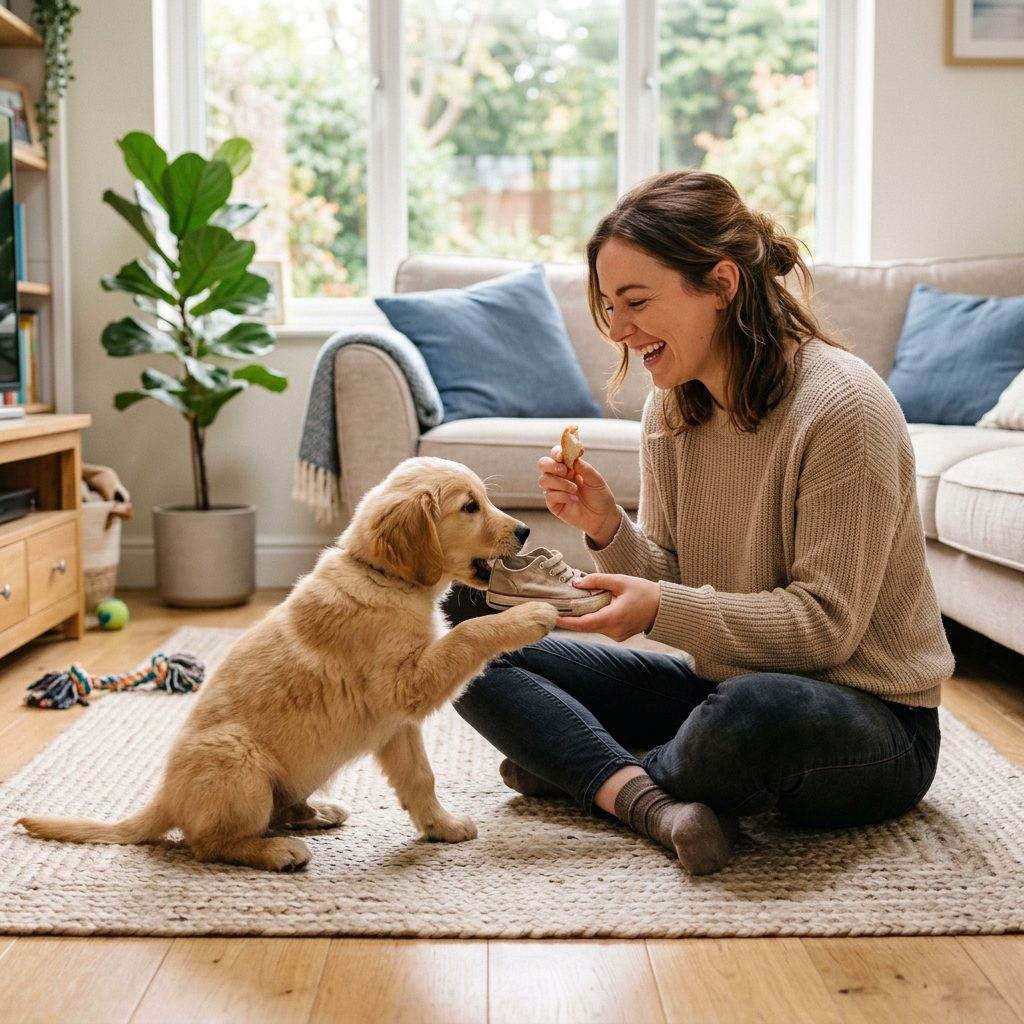
Now that we understand the psychology and have our environment managed, it is time to actively train our puppies. This method relies heavily on positive reinforcement, which means we will reward the behaviors we want to see, rather than punishing the behaviors we do not want. This builds a strong bond of trust between you and your dog.
Step 1: Environmental Management (Prevention)
The golden rule of dog training is: Do not allow the dog to practice the bad behavior. Every time your puppy successfully steals and chews a shoe, the behavior is self-reinforcing because it feels good to them. For the next 30 days, your shoes must be completely inaccessible. Put them in closets, use baby gates, or place them on high shelves. If the puppy cannot reach the shoes, they cannot practice the habit. This breaks the cycle of reinforcement.
Step 2: Teach the ‘Drop It’ Command
Instead of chasing your dog when they grab something they shouldn’t, you need a reliable ‘Drop It’ command. Here is how to teach it:
- Offer your puppy a low-value toy that they like, but do not love. Let them hold it in their mouth.
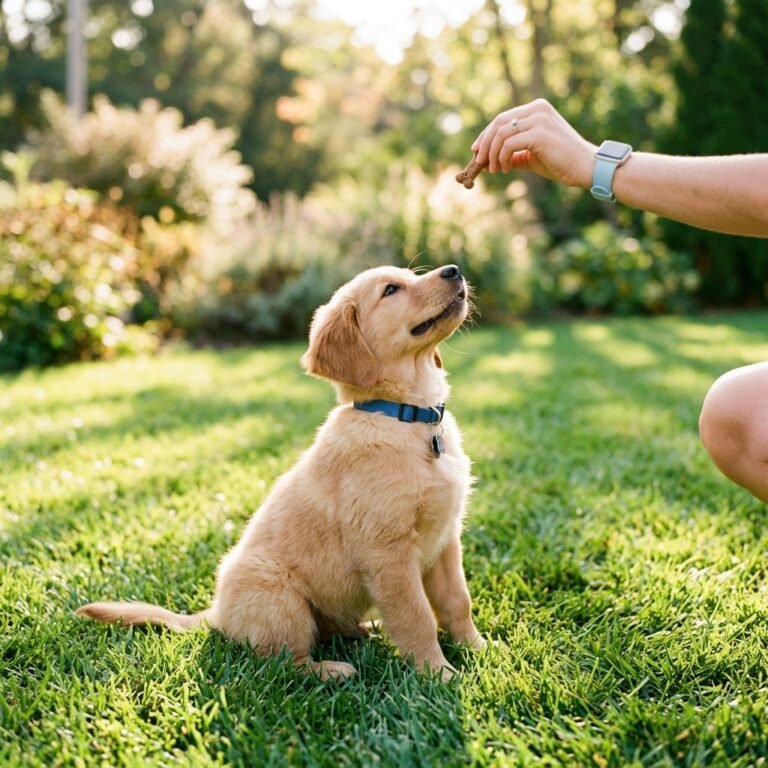
- Hold a high-value treat (like a piece of chicken) right in front of their nose.
- When they open their mouth to take the treat, the toy will fall out. The exact second the toy drops, clearly say ‘Drop it!’ and give them the treat.
- Praise them enthusiastically.
- Repeat this process daily for 5-10 minutes. Over time, delay showing the treat until after you say ‘Drop it!’ so they learn to respond to the verbal cue alone.
Step 3: The Art of the Trade
Once your puppy understands ‘Drop It’, you can apply it to real-life scenarios. If your puppy somehow manages to get a shoe, do not panic and do not yell. Calmly walk over to them (do not run, or you trigger the chase game) with a high-value treat or a better chew toy. Say your ‘Drop It’ command. When they drop the shoe, give them the reward, calmly pick up the shoe, and put it away. You are teaching them that giving up the shoe results in something far more delicious and exciting.
Step 4: Reinforce the Right Choices
Training is not just about stopping bad behavior; it is about encouraging good behavior. When your puppy is quietly chewing on their own Nylabone or stuffed Kong, walk over and calmly drop a treat between their paws, then walk away. Tell them ‘Good chew!’ You are paying them for doing the right thing. If you consistently reward them for chewing their own toys, they will naturally default to those toys instead of seeking out your belongings.
Troubleshooting and Common Mistakes
Overcoming Training Hurdles
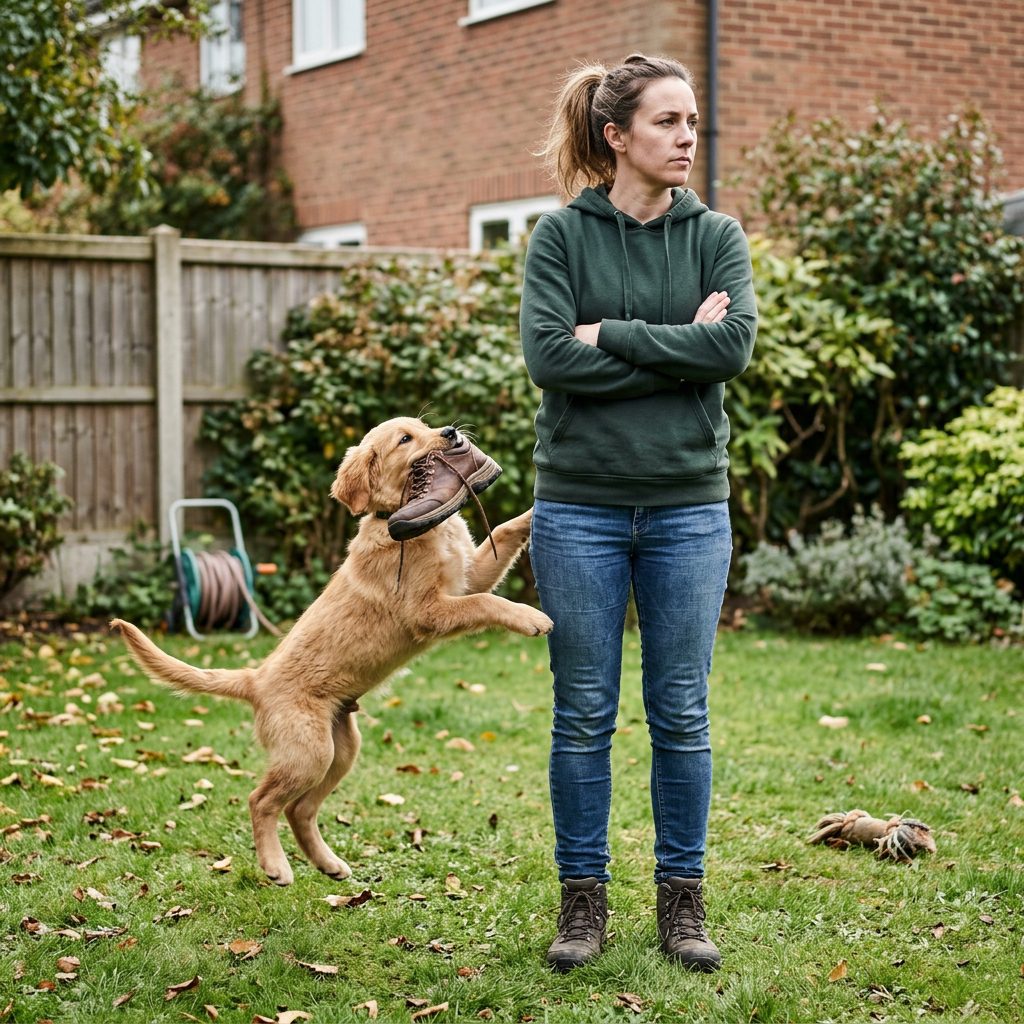
Dog training is rarely a perfectly linear process. You will have great days, and you will have days where it feels like your puppy has forgotten everything. This is completely normal! If you are struggling to get your puppy to leave your Nikes alone, you might be falling into a few common traps. Let us troubleshoot the most frequent issues savvy dog owners face when tackling this behavior.
The Danger of Resource Guarding
If you constantly pry items out of your puppy’s mouth by force, you risk creating a behavioral issue called resource guarding. This is when a dog becomes aggressive (growling, snapping, or biting) to protect an item they value. By forcibly taking the shoe, you teach the dog that human hands approaching their mouth means they are about to lose their prize. This is why the ‘Trade’ game mentioned in Step 3 is so critical. Always trade up!
Why Punishment Fails
Yelling at your dog, swatting them with a newspaper, or rubbing their nose in the chewed shoe does not work. Dogs live in the present moment. If you come home and yell at them for a shoe they chewed two hours ago, they do not connect your anger to the shoe; they just learn that you are unpredictable and scary when you come home. This damages your bond and can create anxiety, which ironically leads to more destructive chewing.
| Common Mistake | Why It Fails | What to Do Instead |
|---|---|---|
| Chasing the puppy when they steal a shoe. | Turns the theft into a highly rewarding game of tag. | Run in the opposite direction to make them chase you, or calmly use the ‘Drop It’ command. |
| Leaving shoes out ‘as a test’. | Sets the puppy up to fail before the habit is fully broken. | Practice strict environmental management for at least 30-60 days. |
| Providing boring, hard plastic toys. | Fails to satisfy the sensory need to shred and tear. | Provide safe, destructible toys like stuffed Kongs or safe edible chews. |
| Punishing the dog after the fact. | Creates fear and anxiety; the dog does not understand the correction. | Interrupt the behavior in the moment, redirect to a toy, and praise the redirection. |
Expert Tip: If your puppy is relentlessly going after your shoes despite having toys, evaluate their daily routine. Are they getting enough physical exercise? Are you doing 15 minutes of mental training a day? A tired dog is a well-behaved dog!
Conclusion
Patience, Consistency, and Intact Footwear
Training your puppy to stop stealing and chewing your shoes is a journey that requires patience, consistency, and a good sense of humor. Remember, your puppy is not trying to make you mad; they are simply navigating their world the only way they know how—with their mouths. By understanding the psychological reasons behind their chewing, utilizing proper management tools, and committing to positive reinforcement training, you can permanently change their behavior.
The key takeaways are simple: Manage your environment so they cannot practice the bad habit, teach a rock-solid ‘Drop It’ command, always trade up instead of forcefully taking items away, and heavily reward your puppy when they choose to chew on their designated toys. It may take a few weeks of diligent effort, but the payoff is immense. Not only will you save hundreds of dollars in ruined footwear, but you will also build a stronger, more trusting relationship with your canine companion.
So, the next time you bring home a fresh pair of Nikes, you can confidently leave them by the door, knowing your savvy training skills have created a polite, well-mannered pup. Keep up the great work, stay consistent with your training, and enjoy the wonderful journey of raising your dog. You’ve got this!