Don’t Get Sued! The Essential Guide to Professional Dog Treat Shelf Life Testing and Lab Analysis
Listen up, savvy dog owners and aspiring treat bakers. You’ve spent months perfecting that peanut butter and pumpkin dog biscuit. Your own pup goes absolutely nuts for it, your neighbors are begging to buy bags of them, and you’re starting to dream about setting up a booth at the local farmers market or launching an Etsy shop. But before you print those cute custom labels and start raking in the cash, we need to have a serious, no-nonsense conversation.
As the Canine Nutrition Hacker, I spend my life analyzing commercial pet food labels like a forensic scientist, exposing cheap fillers and shady marketing. But today, the spotlight is on you. If you are selling dog treats, you are no longer just a loving dog parent—you are a commercial pet food manufacturer in the eyes of the law. And the legal landscape of pet food is an absolute minefield.
Hacker Tip: Ignorance isn’t a legal defense. If your homemade treats grow unseen mold or harbor Salmonella, you aren’t just risking a bad review; you are risking the health of a dog and a devastating lawsuit that could bankrupt you.
Don’t panic. You don’t need a Ph.D. in chemistry to do this right. You just need the insider secrets to professional dog treat shelf life testing and lab analysis. In this essential guide, we are going to break down exactly how to test your treats, how to prove they are safe, and how to get that official Guaranteed Analysis on your packaging so you can sell with absolute confidence. Let’s hack the system and bulletproof your dog treat business.
The Legal Landscape: Why You Can’t Just ‘Guess’
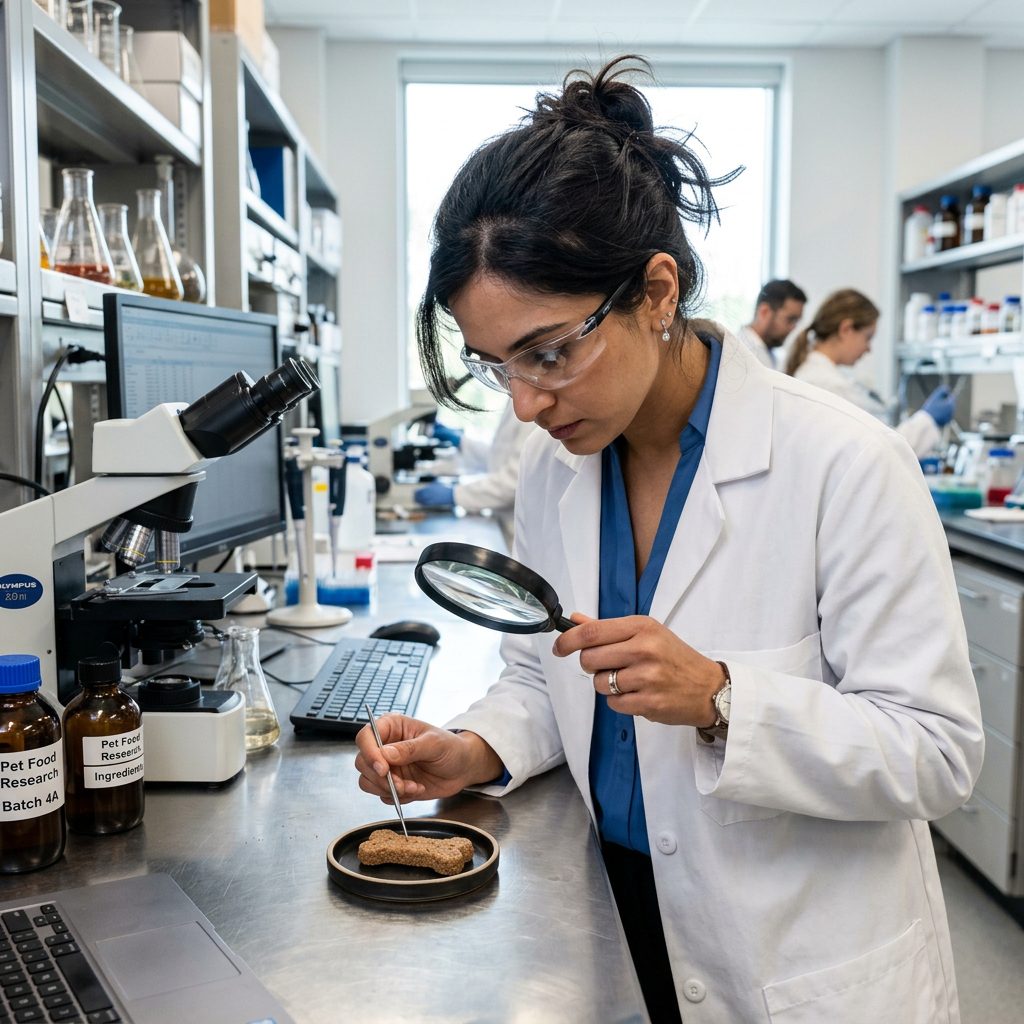
When you transition from baking for your own dog to selling to the public, you immediately fall under the jurisdiction of state and federal feed laws. Yes, dog treats are legally classified as “animal feed.” While the FDA regulates pet food on a federal level, it’s actually your State Department of Agriculture (following guidelines set by AAFCO—the Association of American Feed Control Officials) that will be breathing down your neck.
The Enemy: Unseen Spoilage and Pathogens
When you bake for your own dog, you probably keep the treats in the fridge and feed them within a week. But when you sell, those treats might sit in a hot delivery truck, on a humid store shelf, or in a customer’s pantry for months. This introduces our primary enemies:
- Moisture: The silent killer of shelf life. High moisture leads to mold and bacterial growth.
- Rancid Fats: Unpreserved meats and oils oxidize when exposed to air, creating toxic compounds that can cause severe gastrointestinal distress in dogs.
- Pathogens: Salmonella, E. coli, and Listeria. These are the bacteria that trigger massive, multi-million dollar commercial recalls.
State regulators require you to register your products, and to do that, you need hard, scientific data. You cannot simply write “Lasts for 6 months!” on your bag because it “seemed fine” in your kitchen. You need a certified lab to back up your claims.
Guaranteed Analysis: Your Treat’s Fingerprint
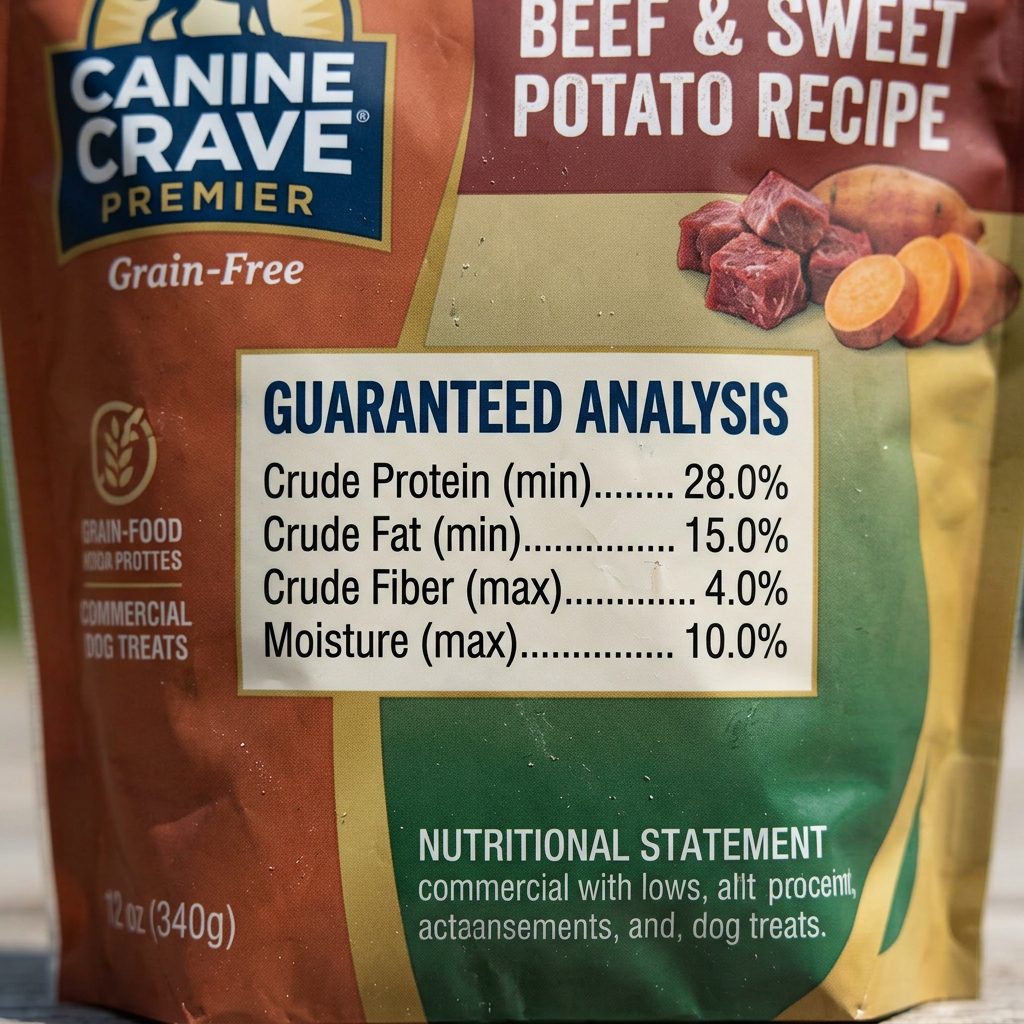
If you’ve ever looked at the back of a commercial dog food bag, you’ve seen the Guaranteed Analysis (GA) panel. It looks like a little math problem: Crude Protein (min), Crude Fat (min), Crude Fiber (max), and Moisture (max). If you are selling treats, almost every state requires you to have this exact panel on your label.
Breaking Down the Big Four
Labs use specific chemical processes to determine these numbers. Here is what they are actually looking for:
- Crude Protein (Minimum): This measures the nitrogen content in your treat, which correlates to protein. If you are using high-quality muscle meats, this number will be high. If you are using cheap fillers like corn gluten meal, the lab will still read it as protein, which is why savvy owners look at the ingredient list, not just the GA!
- Crude Fat (Minimum): Fat is essential for canine energy, but it’s also the most volatile ingredient. The lab extracts the fat using solvents to give you an exact percentage.
- Crude Fiber (Maximum): This measures the indigestible plant material. It helps with digestion, but too much means you’re stuffing your treats with cheap carbs.
- Moisture (Maximum): This is arguably the most critical number for a treat baker. It tells you exactly how much water is left in the product after baking.
Insider Secret: Always formulate your recipes by weight (grams), not volume (cups). When you send your treats to the lab, a recipe made by weight will yield consistent Guaranteed Analysis results batch after batch. Volume measurements are too inconsistent for commercial production.
Water Activity (Aw): The Ultimate Shelf Life Hack
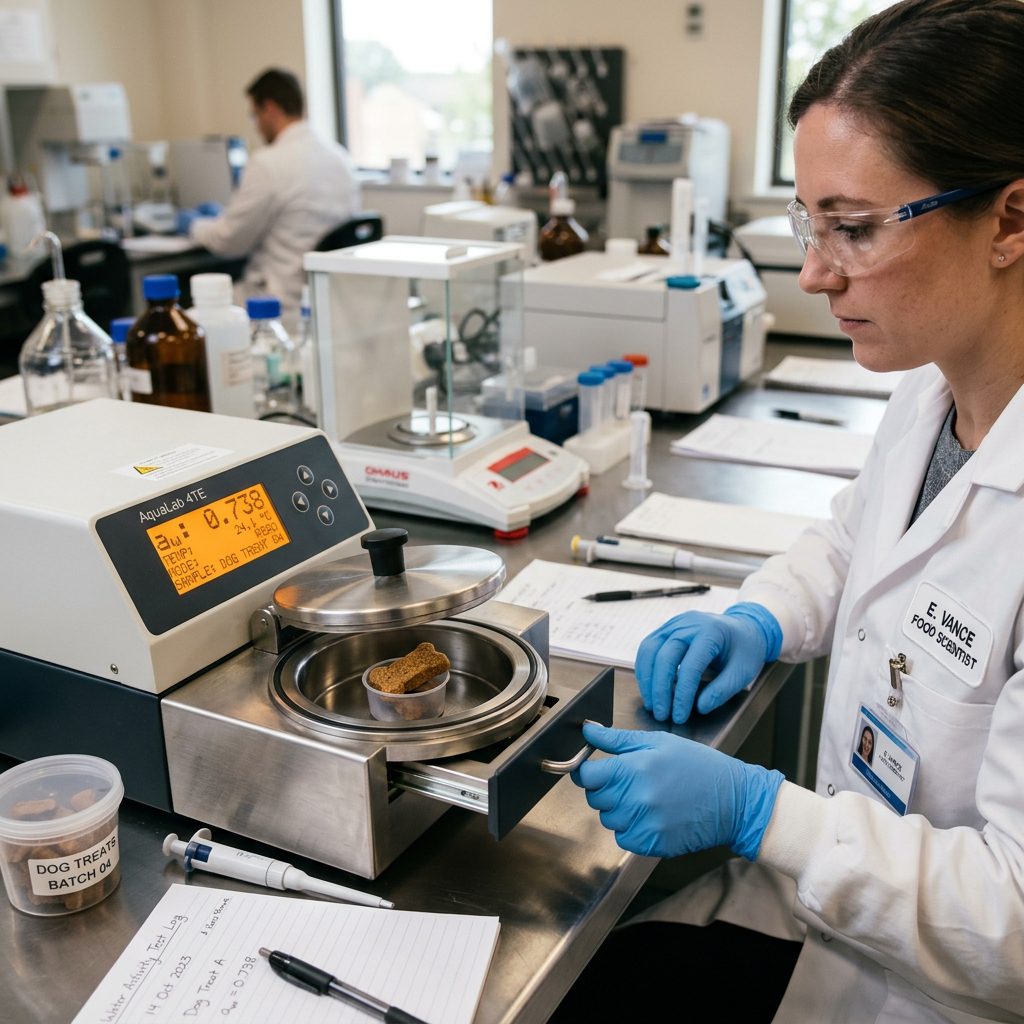
Here is where we separate the amateurs from the true canine nutrition hackers. Most people think “Moisture Content” dictates whether a treat will mold. They are wrong. The true metric you need to test for is Water Activity (Aw).
Moisture vs. Water Activity
Moisture content is the total amount of water in the treat. Water Activity (Aw) is the amount of free water available for bacteria, yeast, and mold to consume and grow. Think of it like a sponge: a damp sponge has high moisture, but if you squeeze it, the water that drips out is the “free” water (Aw).
The Aw scale goes from 0.0 to 1.0. Here is your cheat sheet for dog treat safety:
- Aw 0.90 – 1.0: Highly perishable. Bacteria like Salmonella will thrive. Must be refrigerated or frozen.
- Aw 0.70 – 0.85: Bacteria is halted, but mold and yeast will still grow rapidly at room temperature.
- Aw Below 0.65: The Sweet Spot. At this level, virtually no bacteria, yeast, or mold can grow. Your treat is considered “shelf-stable.”
Hero Ingredients for Shelf Life
If your lab results come back with a high Aw, you don’t necessarily have to bake the treats until they are hard as rocks. You can use natural humectants (ingredients that bind to water, lowering the Aw without ruining the chewy texture). Hero ingredients include vegetable glycerin, honey, and molasses. To fight fat oxidation (rancidity), use natural preservatives like Mixed Tocopherols (Vitamin E) and Rosemary Extract.
The Real Cost Breakdown: Lab Fees vs. Lawsuits
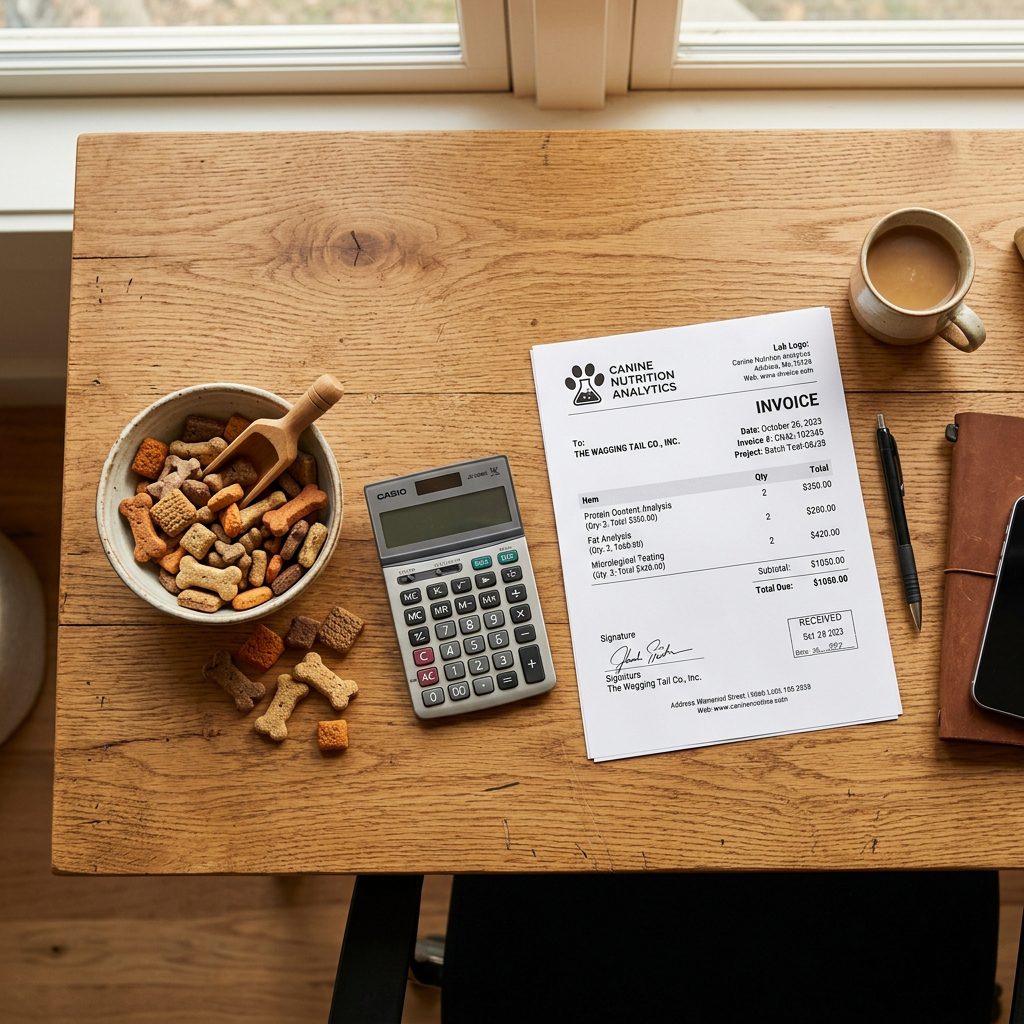
I hear it all the time: “But Hacker, lab testing is so expensive! I’m just a small business!” Let’s get real. The cost of a lab test is a microscopic fraction of the cost of a product recall, veterinary bills, or a lawsuit. When you pay a certified, ISO-accredited laboratory to test your treats, you are buying an insurance policy for your brand’s reputation.
Cost Comparison Analysis
Let’s break down the real numbers. Here is what you can expect to pay for professional lab analysis versus the catastrophic cost of skipping it.
| Testing Type | Estimated Lab Cost (Per Recipe) | The Cost of Skipping It (Recall/Lawsuit) |
|---|---|---|
| Guaranteed Analysis (Basic 4-Panel) | $50 – $100 | Fines from State Dept. of Ag ($500+), Stop-Sale Orders |
| Water Activity (Aw) Testing | $20 – $40 | Moldy batches, customer refunds, ruined brand reputation |
| Microbial Panel (Salmonella, E. coli, Listeria) | $65 – $150 | $10,000+ in veterinary bills, legal fees, and total business closure |
| Accelerated Shelf Life Study (3-6 Months) | $300 – $800 | Selling rancid treats that cause severe canine illness |
As you can see, spending roughly $150 to $200 upfront to get your Guaranteed Analysis, Water Activity, and a basic microbial baseline is a no-brainer. If you can’t afford the lab fees, you cannot afford to be in the commercial dog treat business.
How to Execute Your Shelf Life Testing Strategy
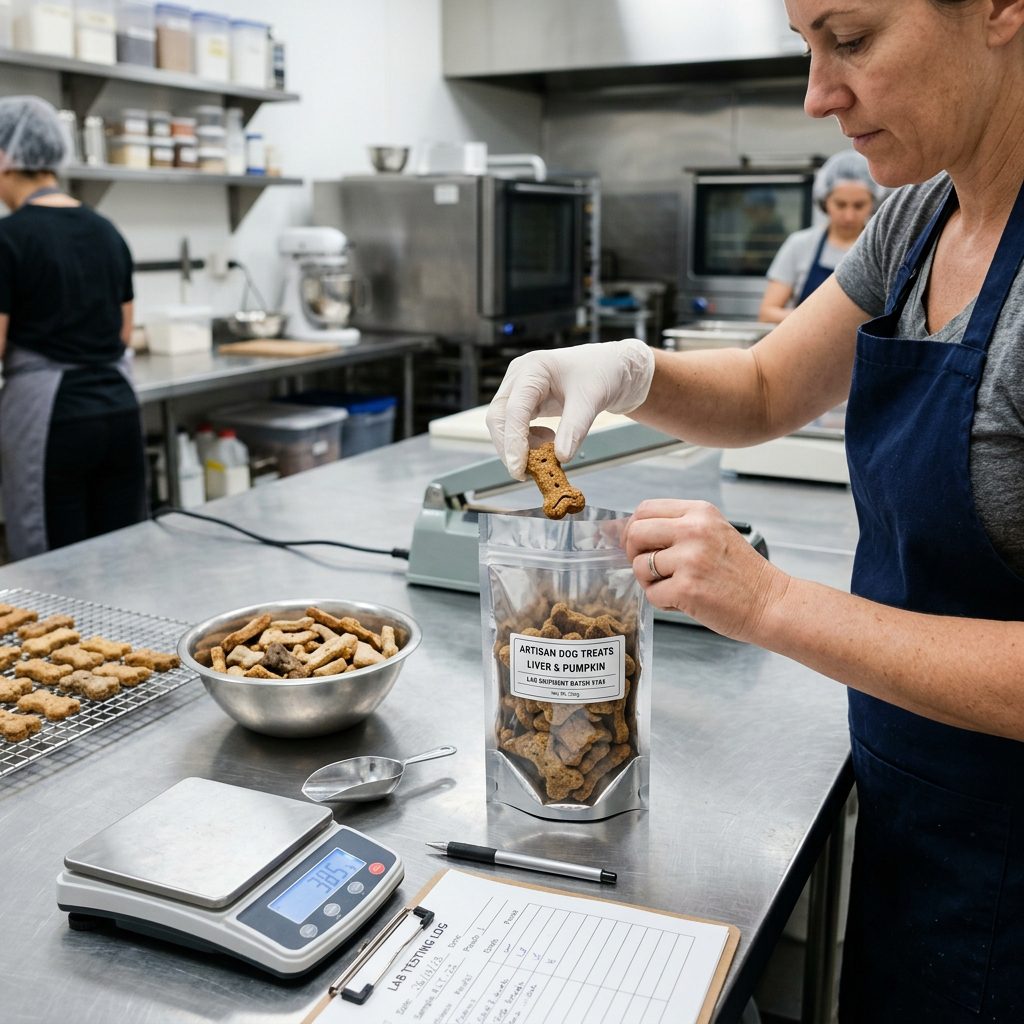
Now that you know the “why” and the “what,” let’s talk about the “how.” You can’t just throw a dog biscuit in a standard envelope and mail it to a lab. You need to follow a strict protocol to ensure your results are accurate and legally defensible.
Step 1: Choose the Right Testing Method
There are two ways to test shelf life:
- Real-Time Testing: The lab puts your treat on a shelf and tests it every 30 days for 6 to 12 months. This is the most accurate method, but it takes forever. You can’t sell your product while you wait.
- Accelerated Testing: The lab puts your treat in an environmental chamber that drastically increases the temperature and humidity. By stressing the product, they can simulate 6 months of shelf life in just a few weeks. This is the insider secret for getting to market faster.
Step 2: Prepare Your Samples Like a Pro
When you send your samples to an ISO-accredited food testing lab, you must mimic your final product exactly. Do not send treats in a Ziploc bag if you plan to sell them in a heat-sealed, nitrogen-flushed mylar pouch. The packaging plays a massive role in shelf life.
- Bake a fresh, standard batch of your treats using exact weight measurements.
- Package the treats exactly as they will be sold to the consumer.
- Label the samples clearly with your company name, the recipe name, and the date baked.
- Ship them via overnight or 2-day delivery to the lab so they don’t degrade in transit.
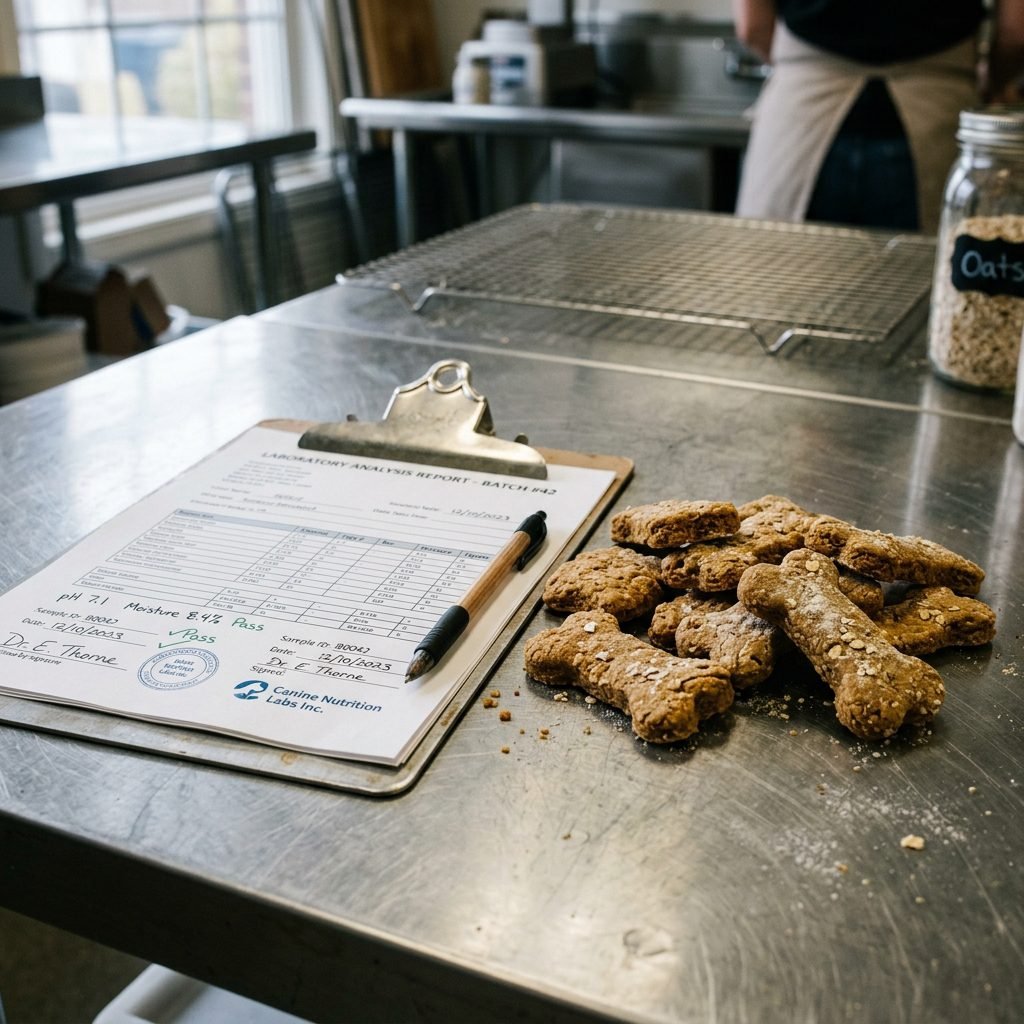
Hacker Tip: Always ask the lab for a “Certificate of Analysis” (COA). This is the official, signed document you will keep in your business files and present to state regulators if you are ever audited.
Conclusion
Entering the commercial dog treat space is incredibly rewarding. There is nothing quite like seeing a dog thrive on a healthy, filler-free treat that you created from scratch. But as savvy dog owners, we know that love isn’t enough to keep dogs safe—science is.
By investing in professional Guaranteed Analysis, understanding the critical difference between moisture and Water Activity, and conducting proper shelf life testing, you are building a bulletproof business. You are protecting dogs from dangerous pathogens, protecting your customers from wasting their hard-earned money on moldy products, and protecting yourself from devastating lawsuits.
Don’t let the legalities intimidate you. Use this guide as your roadmap, partner with a reputable food testing lab, and get your products certified. Now get back in the kitchen, measure your ingredients by weight, and let’s hack the canine nutrition industry together—the right way.