No More Bath Time Terror! How To Desensitize A Puppy To The Blow Dryer Sound In 5 Minutes
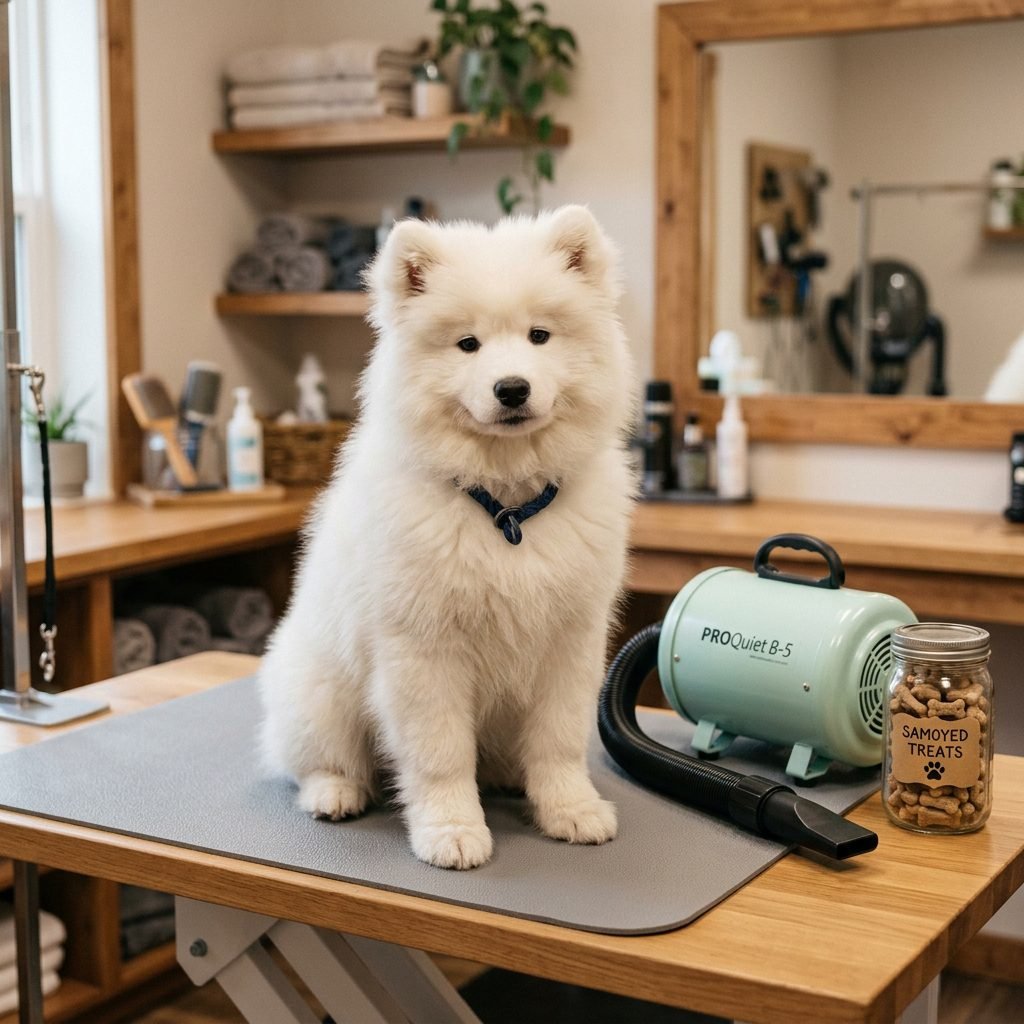
We have all been there: you have just finished giving your adorable new puppy a bath, they look like a drowned rat, and the house is about to be covered in wet-dog-smell if you do not dry them off fast. You reach for the blow dryer, click it on, and—BAM—your sweet puppy turns into a frantic blur of fur, teeth, and terror. It is a common scene in households across the globe. To a puppy, a blow dryer is not just a grooming tool; it is a loud, vibrating, air-blasting monster that smells like burning dust. If we do not handle this introduction correctly, that fear can solidify into a lifelong phobia, making every grooming session a battle of wills.
As a canine specialist, I cannot stress enough how important the socialization period is for these exact scenarios. We often think of socialization as meeting other dogs or people, but it is just as much about sensory socialization. This means teaching your puppy that the weird, loud, and windy things in their environment are actually predictors of good things. Today, I am going to show you how to flip the script. We are going to take that ‘bath time terror’ and turn it into a focused, calm, and even enjoyable experience. And the best part? We are going to do it in focused, 5-minute sessions that fit perfectly into your busy schedule.
By the end of this guide, you will understand the psychology behind why your puppy is afraid, what tools you actually need (and which ones to ditch), and a step-by-step 5-minute protocol to achieve blow-dryer bliss. Let’s dive in and save your bathroom from the ‘wet dog’ shake-off!
Understanding the Terror: Why Puppies Fear the Blow Dryer
The Sensory Overload of the Modern Hair Dryer
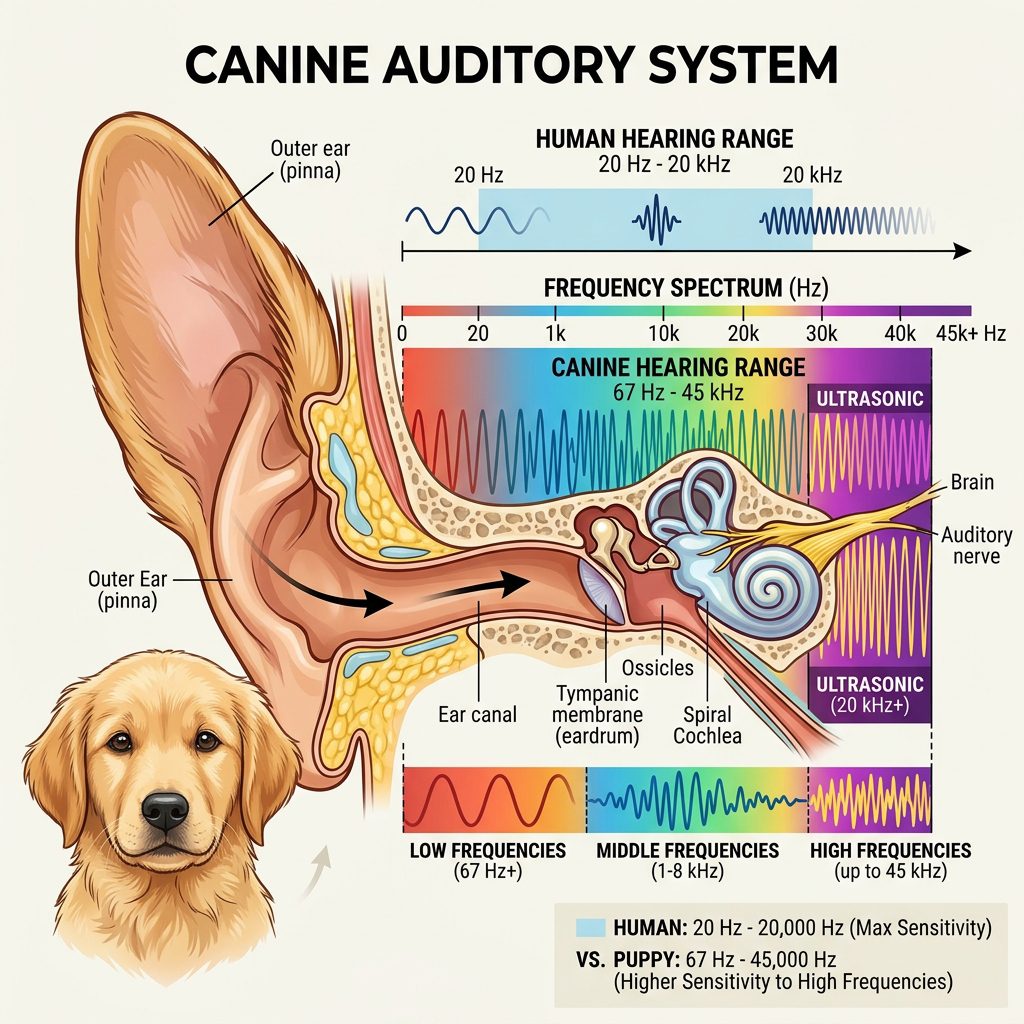
To understand how to fix the fear, we first have to empathize with the puppy. Imagine you are minding your own business when a giant points a machine at you that screams at 85 decibels—roughly the sound of a lawnmower—while blasting hot air directly into your face. It would be terrifying! Puppies have much more sensitive hearing than humans. They can hear frequencies up to 45,000 Hz, whereas humans cap out around 20,000 Hz. The high-pitched whine of a standard hair dryer motor can be physically painful or at least highly irritating to their delicate ears.
The Three Pillars of Dryer Fear
- The Sound: The mechanical roar and the high-pitched whistle.
- The Sensation: The feeling of high-pressure air pushing against their skin and moving their fur in unnatural ways.
- The Vibration: If the dryer touches them or if they are on a table that vibrates with the motor, it creates a ‘buzzy’ feeling that many dogs find unsettling.
Pro Tip: Never ‘flood’ your dog. Flooding is the practice of forcing a dog to endure a scary stimulus until they stop reacting. This doesn’t teach them to be brave; it teaches them ‘learned helplessness,’ which can lead to sudden aggressive outbursts later in life.
When a puppy experiences these three pillars simultaneously without prior training, their ‘flight or fight’ response kicks in. Since they are usually confined in a bathroom or on a grooming arm, they can’t ‘flight,’ so they might resort to ‘fight’ (biting the air or the dryer) or ‘freeze’ (shaking and shut down). Our goal is to stay below their threshold—the point where they start to panic—and slowly move that threshold until the dryer is no big deal.
The Tool Kit: Essential Gear for a Stress-Free Grooming Session
Choosing the Right Equipment
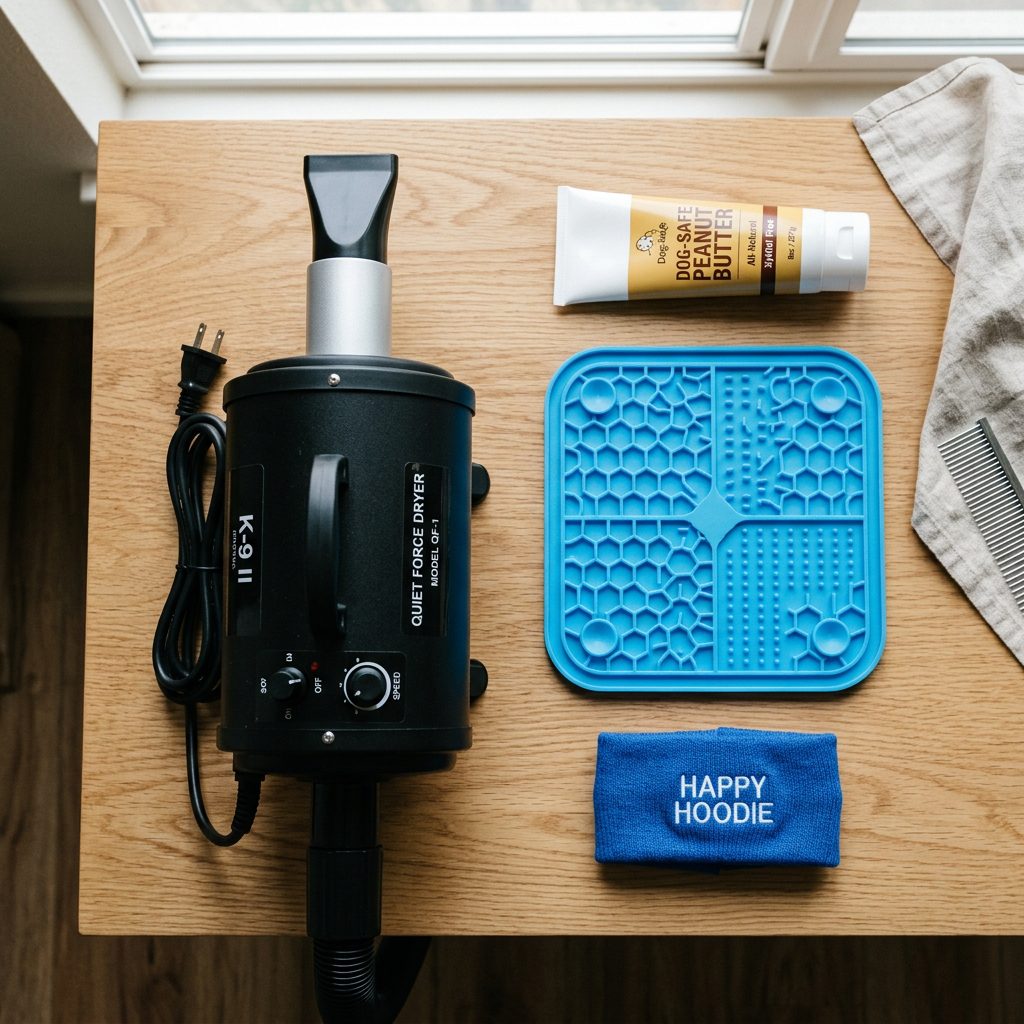
Before we start the 5-minute drill, we need to make sure you aren’t fighting an uphill battle with the wrong tools. Not all dryers are created equal, especially when it comes to sensitive puppies. If you are using your own personal hair dryer, you might be making things harder than they need to be. Human dryers are designed for hair, not fur, and they often get much hotter than is safe for a dog’s skin.
| Feature | Standard Human Hair Dryer | Professional Canine Force Dryer |
|---|---|---|
| Noise Level | High-pitched, loud whine | Lower frequency, often muffled |
| Heat Output | Can reach skin-burning temps | Usually has a ‘no heat’ or ‘warm’ setting |
| Air Pressure | Broad and weak | Concentrated (removes water from undercoat) |
| Hose Length | Short (you must be close) | Long (motor can be far away) |
High-Value Rewards: The Secret Weapon
You cannot use standard kibble for this. We need ‘jackpot’ treats. Think small bits of boiled chicken, freeze-dried liver, or even a lick mat smeared with plain Greek yogurt or peanut butter (ensure it is Xylitol-free!). The goal is to create a Positive Associative Shift. We want the brain to think: Dryer Noise = Chicken Party.
Optional but Helpful: The Happy Hoodie
If your puppy is particularly sensitive to sound, I highly recommend a ‘Happy Hoodie.’ This is essentially a soft, elastic fabric band that goes over the puppy’s ears. It muffles the noise significantly and provides a gentle compression that has a calming effect on many dogs, similar to a weighted blanket for humans.
The 5-Minute Protocol: A Step-by-Step Desensitization Guide
The Daily Drill Structure
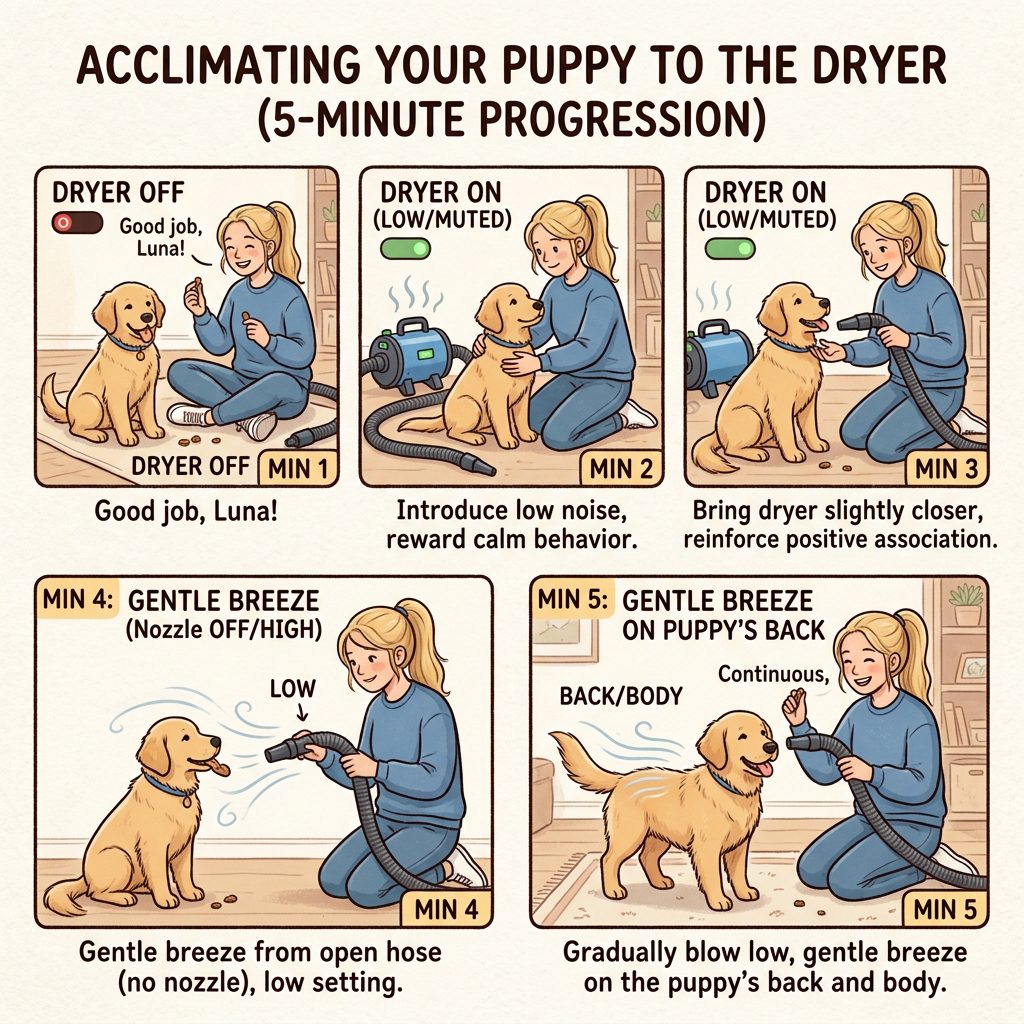
Consistency is more important than duration. Doing this for 5 minutes once a day is 100 times more effective than doing it for an hour once a month. Set a timer on your phone and follow these steps. If your puppy shows signs of extreme stress, go back one step.
Minute 1: The ‘Object Recognition’ Phase
Place the dryer on the floor, turned off. Scatter high-value treats all around the dryer. Let your puppy sniff it, paw it, and explore it at their own pace. Every time they choose to interact with the dryer, praise them calmly. We want them to view the dryer as a ‘treat dispenser’ that just happens to be made of plastic.
Minute 2: The ‘Distal Sound’ Phase
Move the dryer at least 10 feet away from the puppy (or have a helper hold it in another room). Turn it on the lowest setting. The moment the sound starts, start feeding treats continuously. If the puppy looks toward the sound and remains calm, ‘mark’ the behavior with a ‘Yes!’ and a jackpot of treats. Turn the dryer off. The treats stop when the noise stops.
Minute 3: The ‘Proximity’ Phase
Bring the dryer into the same room, but do not point it at the puppy. Turn it on low. Use a lick mat to keep the puppy occupied. Gradually move the dryer closer, a few inches at a time, as long as the puppy continues to lick the mat. If they stop licking and stare at the dryer with a stiff body, you have moved too fast. Back up.
Minute 4: The ‘Indirect Air’ Phase
With the dryer running, point the air away from the puppy. Let them feel the vibration of the air moving in the room without it touching their skin. Continue the ‘Treat Stream.’ We are desensitizing them to the feeling of the air movement in the environment.
Minute 5: The ‘Brief Contact’ Phase
Point the air at the puppy’s rear end or back (never the face) from a distance of at least two feet on the lowest, coolest setting. Touch them with the air for 2 seconds, then turn it away and give a massive reward. Repeat this: 2 seconds of air, then a break with praise. This builds the ‘muscle memory’ that the air is fleeting and rewarding.
Reading the Room: Decoding Your Puppy’s Body Language
Are They Happy or Just ‘Existing’?
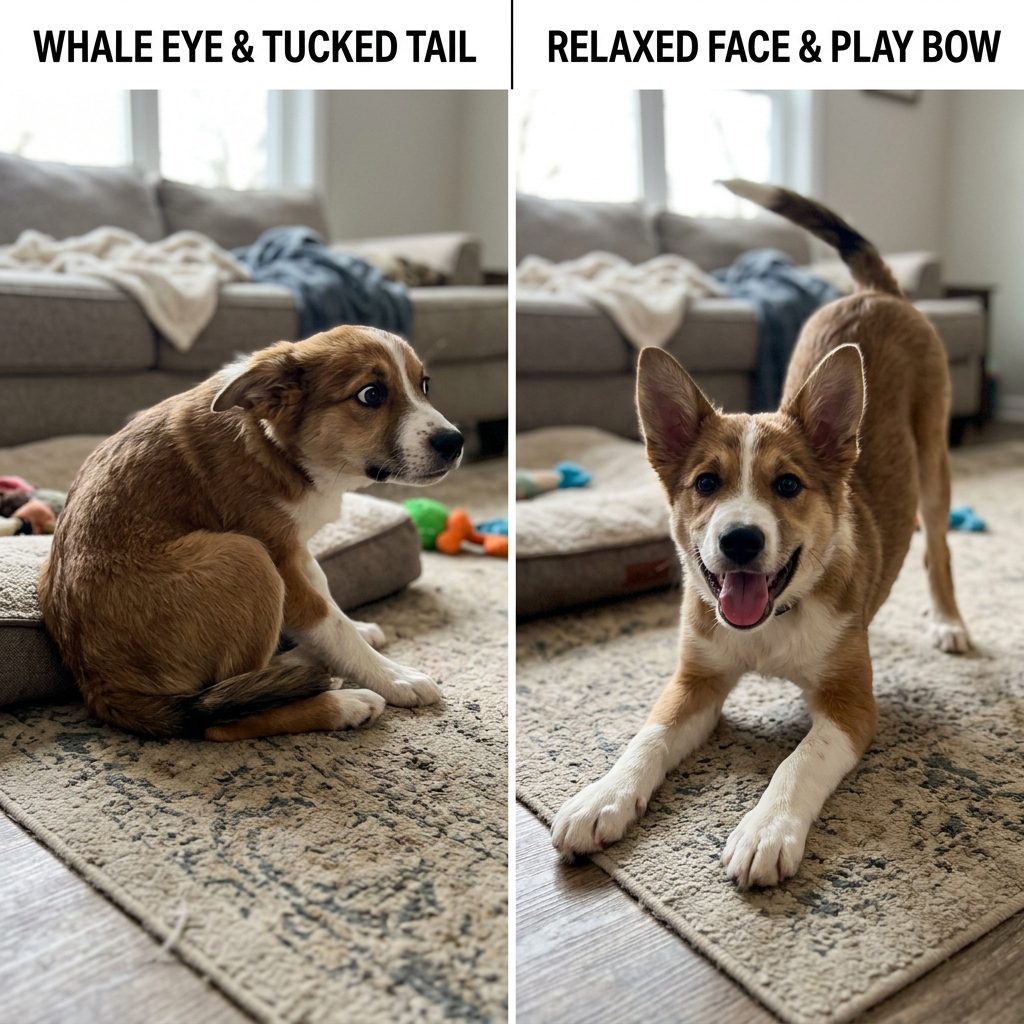
Savvy dog owners know that a dog who isn’t running away isn’t necessarily a dog who is comfortable. During your 5-minute sessions, you need to be a detective of canine body language. If you miss the subtle signs of stress, you might accidentally be sensitizing them (making the fear worse) rather than desensitizing them.
Signs of a Relaxed Puppy
- Soft Eyes: The eyes are almond-shaped and relaxed, not wide with the ‘whites’ showing.
- Loose Body: The puppy’s body looks ‘wiggly’ or relaxed, not stiff like a statue.
- Engagement: They are actively seeking the treats and can easily look away from the dryer to look at you.
Signs of Stress (The ‘Red Zone’)
| Visual Cue | What It Means |
|---|---|
| Whale Eye | Showing the whites of the eyes; indicates high anxiety. |
| Lip Licking | A ‘displacement’ behavior used to self-soothe under pressure. |
| Yawning | Not tired! This is a classic sign of canine stress. |
| Tucked Tail | The puppy is trying to make themselves smaller and protect their vitals. |
| Panting | Heavy panting when it isn’t hot suggests a spike in cortisol (stress hormone). |
If you see these stress signs, stop the session immediately. You haven’t failed; you’ve just found your puppy’s current limit. End on a positive note by doing a simple command they know (like ‘Sit’) and giving a treat, then try again tomorrow with more distance between the puppy and the dryer.
Pro-Tips and Troubleshooting: What to Do When Progress Stalls
Common Roadblocks and How to Smash Them
Even with the best 5-minute plan, you might hit a snag. Every puppy is an individual, and some take longer to process sensory input than others. Here are the most common issues I see in my training practice and how to solve them.
The ‘Air Biter’
Some puppies think the air coming out of the dryer is a toy or a foe that needs to be ‘killed.’ They will snap and lung at the nozzle. The Fix: Use a ‘Happy Hoodie’ to focus their attention and keep a lick mat at eye level. If they snap, the dryer goes off immediately. They learn that biting ends the ‘fun’ (the treats and the interaction).
The ‘Table Shaker’
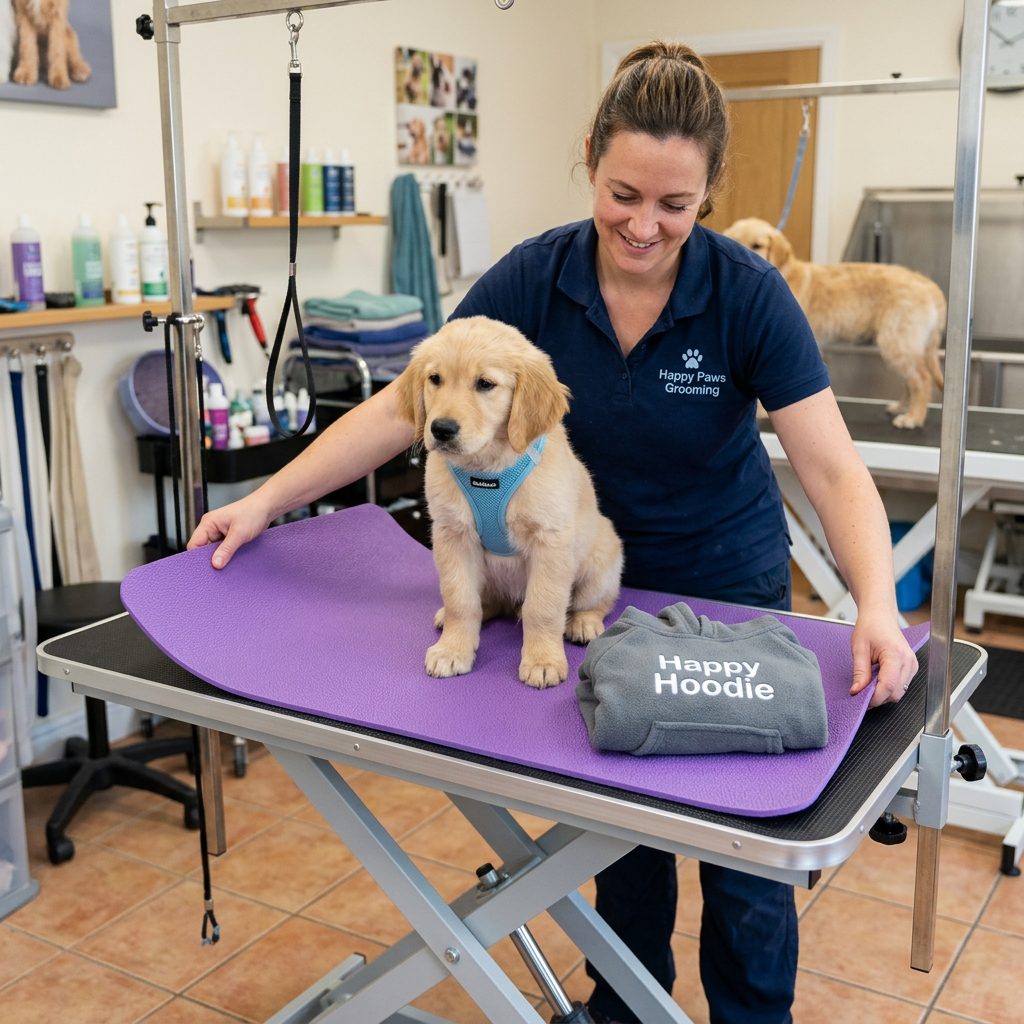
If your puppy is fine on the floor but panics on the grooming table, the issue might be the vibration. The Fix: Place a thick yoga mat or a rubber bath mat on the table to dampen the vibration of the dryer motor. This makes the surface feel much more stable and less ‘spooky.’
The ‘Face-Shy’ Puppy
Most dogs hate air blown in their face. It dries out their eyes and nose. The Fix: Never point the dryer directly at the face. Use a towel to dry the head and ears, and only use the dryer from the neck down. If you must dry the face, use the lowest possible setting and angle the air from behind the head, not directly into the snout.
Trainer’s Secret: Play ‘Dryer Music.’ There are playlists on YouTube and Spotify specifically designed to desensitize dogs to various sounds, including grooming noises. Play these at a low volume during meal times to build a background association of ‘Noise = Food.’
Long-Term Success: From 5 Minutes to Full Groom
Generalizing the Behavior
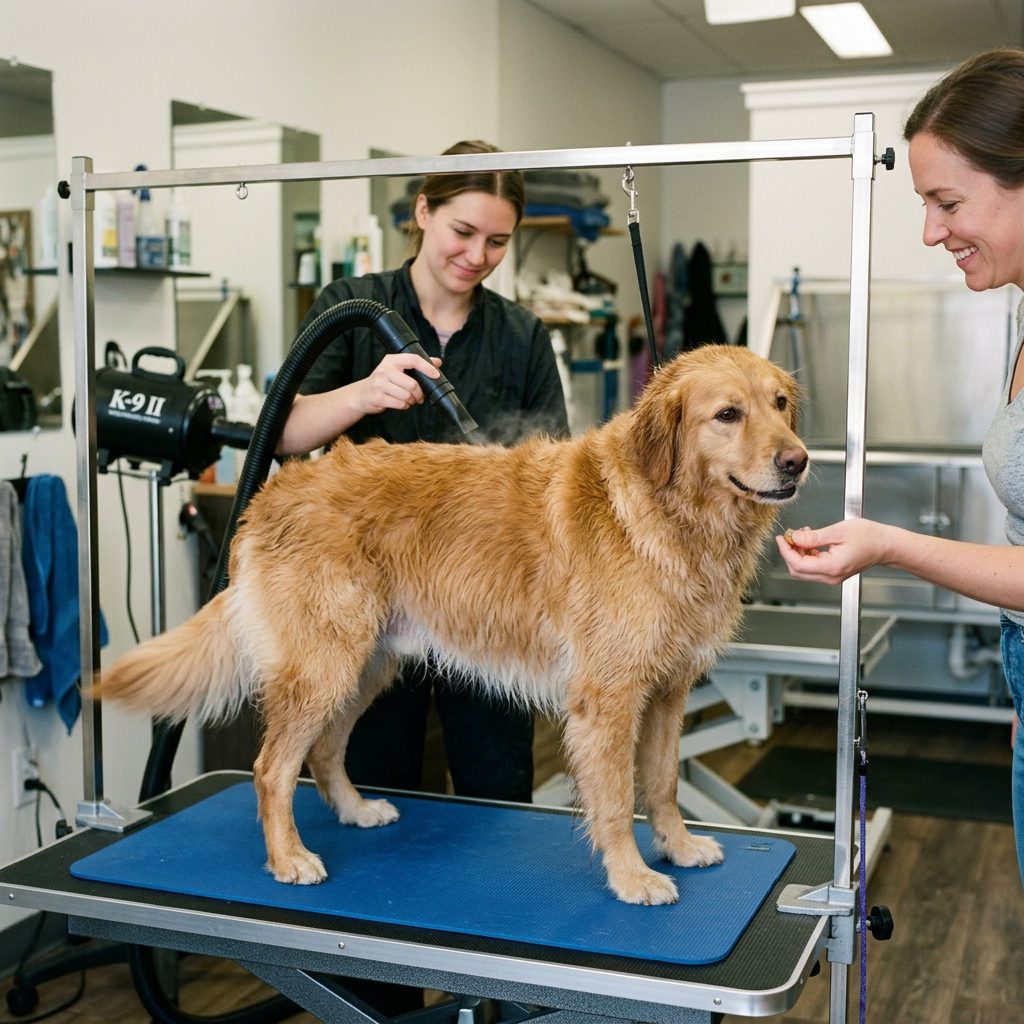
Once your puppy is a pro at the 5-minute drill in the living room, you need to ‘generalize.’ This means moving the practice to the bathroom, the porch, or the groomer’s shop. Dogs are not great at generalizing; just because they are brave in the kitchen doesn’t mean they will be brave in the tub.
Gradually transition your sessions to the actual location where grooming happens. Keep the sessions short and the rewards high. Before you know it, you won’t just be doing ‘drills’—you’ll be drying a wet dog with zero drama. Remember, the goal isn’t just a dry puppy; it’s a confident puppy who trusts you to protect them from the ‘monsters’ in the house.
Conclusion
Desensitizing your puppy to the blow dryer doesn’t have to be a traumatic event for either of you. By breaking the process down into manageable, 5-minute daily sessions, you are working with your puppy’s natural learning pace rather than against it. You are building a foundation of trust that will extend far beyond the bathroom door. Consistency, high-value rewards, and a keen eye for body language are your best tools. So, grab that blow dryer, some boiled chicken, and start your first 5-minute session today. Your future self—and your puppy—will thank you for the peace and quiet of a stress-free bath time!