Stop Separation Anxiety Before It Starts: 5 Crucial Puppy Training Tips
Hey there, fellow savvy dog owners! Welcome to the wonderful, chaotic, and incredibly rewarding world of puppy parenthood. If you have recently brought a furry little bundle of joy into your home, you are probably soaking up all the puppy breath, tail wags, and adorable clumsy moments you can get. But amidst all the cuddles, there is one crucial aspect of their development that often gets overlooked until it becomes a massive problem: teaching them how to be alone.
Let us be real for a second. We love our dogs, and we want to spend every waking moment with them. However, fostering a healthy sense of independence is one of the greatest gifts you can give your new best friend. Separation anxiety is more than just a dog missing their owner; it is a clinical panic disorder that can lead to destructive behavior, incessant howling, self-injury, and a deeply stressed-out pup. The good news? It is entirely preventable if you start early.
Building independence does not mean you love your puppy any less. It means you love them enough to equip them with the confidence they need to navigate the world without you by their side 24/7.
In this comprehensive guide, we are going to dive deep into the psychology of canine independence. We will walk through the essential tools you need, outline five crucial, step-by-step training tips to stop separation anxiety before it even has a chance to take root, and troubleshoot the common hiccups you might face along the way. Grab a cup of coffee, settle in, and let us set your puppy up for a lifetime of calm, confident independence!
Essential Tools for Independence Training
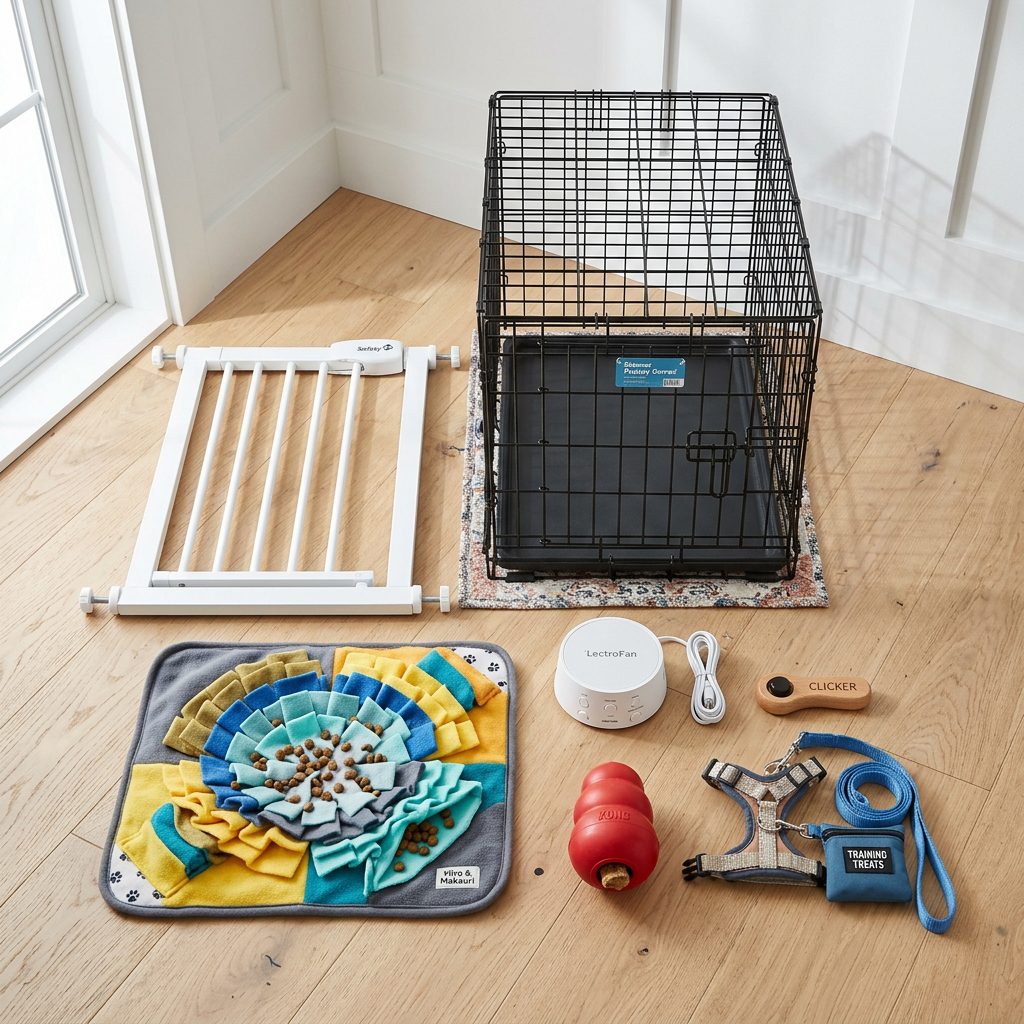
Before we jump into the exact steps and techniques, we need to set up your puppy’s environment for success. Training a puppy to be alone is not just about walking out the door; it is about creating a space where they feel secure, entertained, and relaxed when you are not there. Think of this as building your puppy’s very own Zen den.
The Must-Have Gear
You do not need to buy out the entire pet store, but having a few strategic tools will make independence training significantly easier for both of you. Here is a breakdown of the essentials you should have in your training arsenal.
| Tool | Purpose | Expert Pro Tip |
|---|---|---|
| Wire or Plastic Crate | Provides a secure, den-like safe haven where your puppy can relax without getting into trouble. | Cover the crate with a breathable blanket to make it feel more like a den and block out visual stimuli. |
| Baby Gates or Playpens | Allows you to restrict access to the house while still giving the puppy more room than a crate. | Use these to practice ‘distant togetherness’ where the puppy can see you but cannot physically reach you. |
| Stuffable Chew Toys (e.g., KONG) | Keeps the puppy’s brain engaged and promotes licking, which releases calming endorphins. | Layer high-value treats like peanut butter and plain yogurt, then freeze it overnight to make it last longer. |
| Snuffle Mats or Puzzle Feeders | Turns mealtime into a mental workout, tiring the puppy out before you leave the house. | Supervise the first few uses so your puppy learns how to use it without chewing the actual mat. |
| White Noise Machine or Calming Music | Masks outside noises (like car doors or footsteps) that might trigger anxiety when you leave. | Reggae and soft classical music have been scientifically proven to lower canine heart rates! |
Having these tools ready means that when it is time to practice your departures, you are not scrambling. You are simply executing a well-thought-out plan. The goal is to associate your absence with amazing things happening—specifically, the delivery of their absolute favorite treats and toys that they only get when you are not around.
The 5 Crucial Steps to Prevent Separation Anxiety
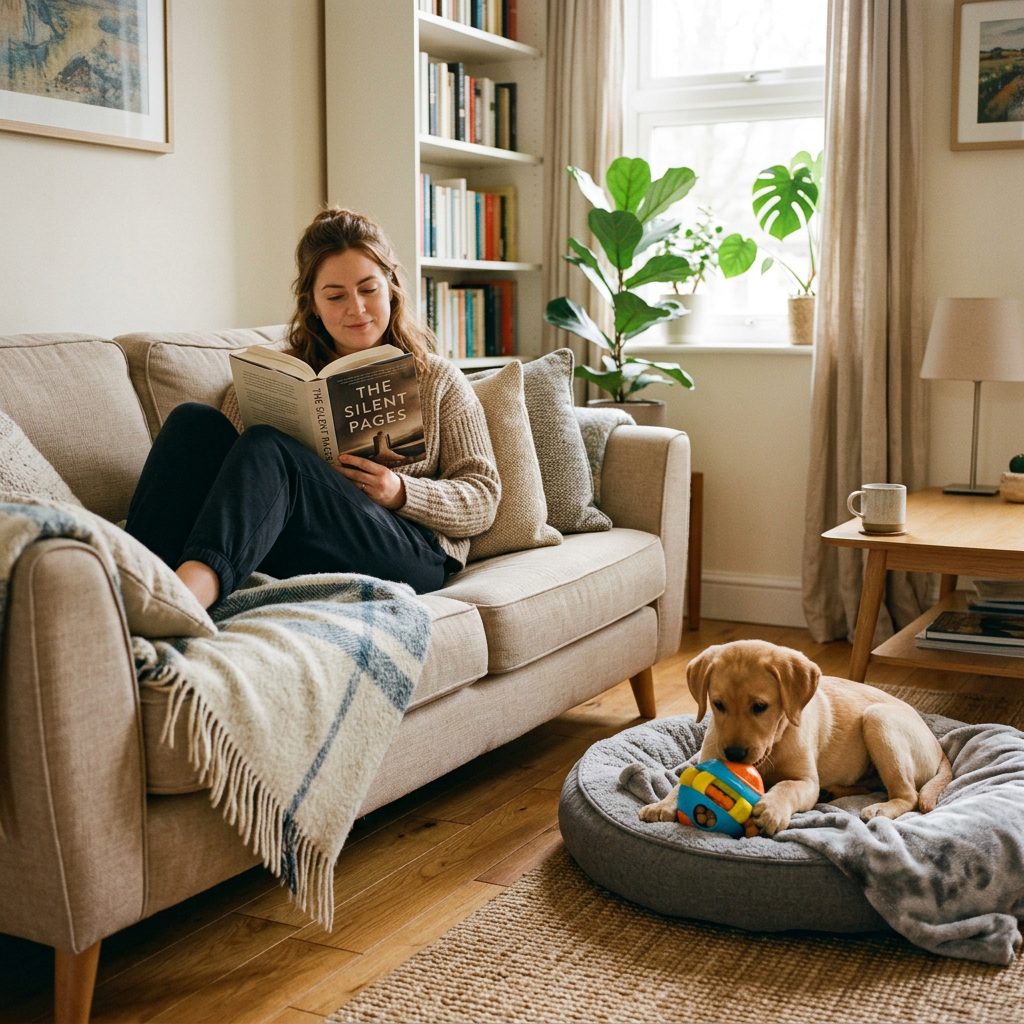
Now that your environment is primed, it is time to get to work. Remember, the key to all puppy training is patience, consistency, and moving at the puppy’s pace. If you rush these steps, you risk creating the very panic you are trying to avoid. Let us break down the five crucial tips to foster unshakeable confidence in your dog.
Step 1: Master the Art of the Micro-Absence
The biggest mistake new owners make is leaving their puppy alone for two hours on the very first day. Independence is a muscle that needs to be built slowly. We start with micro-absences. Place your puppy in their puppy-proofed area or crate with a high-value chew. Step out of the room for literally one to two seconds, and immediately step back in before they even realize you are gone.
- Do not make a fuss: When you return, ignore the puppy. No eye contact, no talking, no petting. This teaches them that your comings and goings are completely mundane events.
- Gradually increase the duration: Move from two seconds to five seconds, then ten seconds, then a minute.
- Vary the time: Do not always make it harder. If you just did a one-minute absence, follow it up with a five-second absence. This keeps the puppy from anticipating that it will always get harder and longer.
Step 2: Make the Crate the Ultimate Safe Haven
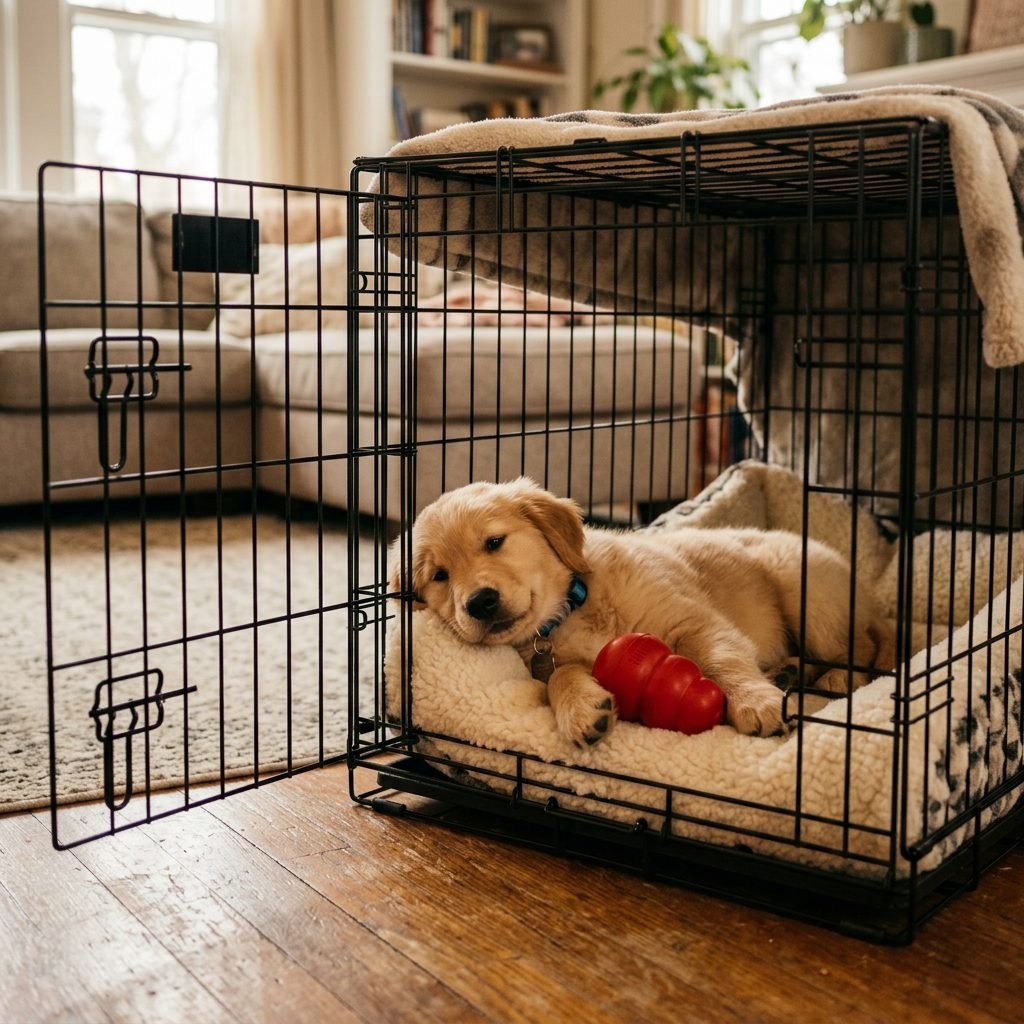
Crate training is not a punishment; it is a vital life skill. A dog that loves their crate is a dog that has a portable safe space anywhere in the world. To make the crate a place of joy, feed all their meals inside it. Toss random treats into the crate when they aren’t looking so they discover “magic” surprises when they wander in. Never force your puppy into the crate or use it as a time-out space when you are angry. The crate should be synonymous with relaxation and premium snacks.
Step 3: Desensitize Your Departure Cues
Dogs are masters of observation. Long before you actually leave the house, your puppy knows you are about to go. How? Because of your departure cues: putting on shoes, grabbing keys, putting on a coat, or picking up a bag. For an anxious dog, the jingling of keys is the trigger that starts the panic sequence.
To stop the panic, you must break the association. Pick up your keys, walk around the living room, and sit back down. Put your coat on, watch five minutes of TV, and take it off. Open the front door, close it, and go make lunch.
By doing this 10 to 15 times a day, your puppy learns that these cues are meaningless background noise, completely neutralizing their anxiety before you even step foot outside.
Step 4: Foster Independent Play
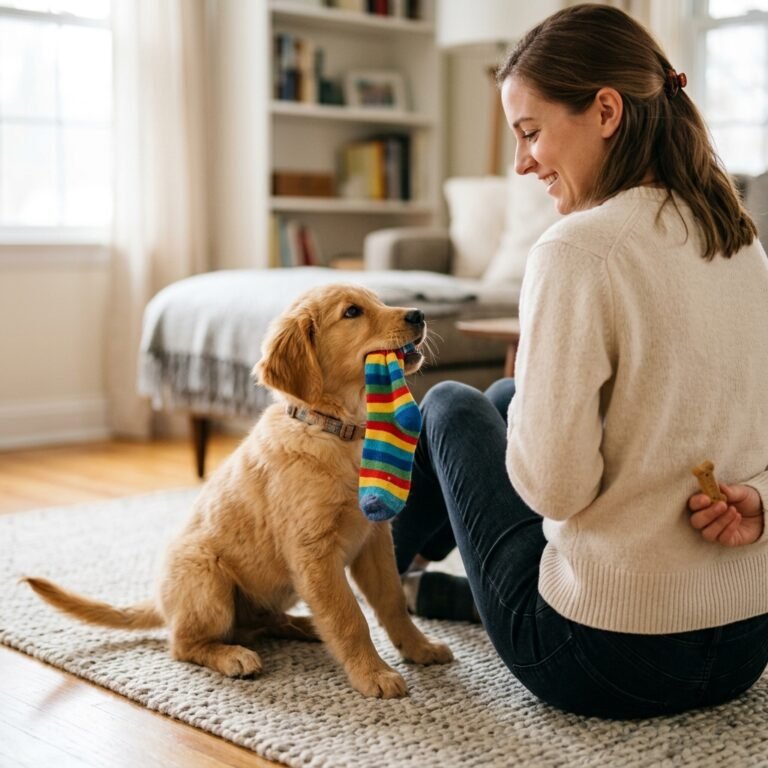
A puppy that constantly demands your attention to be entertained is a puppy that will struggle when you are not there. You must teach them how to self-soothe and play alone. When you are sitting in the living room, give them a puzzle toy or a chew, and completely ignore them. If they bring a toy to you and drop it in your lap, calmly ignore them for a few minutes before engaging. Encourage them to explore their environment and figure out puzzles without your constant guidance or praise.
Step 5: Keep Hellos and Goodbyes Dangerously Boring
This is often the hardest step for humans. When we leave, we want to give our dogs a hug, use a high-pitched voice, and say, “Mommy will be right back, be a good boy!” When we return, we want to match their excited energy. Stop doing this. Highly emotional departures and arrivals create massive spikes in the dog’s arousal levels. It teaches them that your leaving is a huge deal, and your return is the greatest event in history. Instead, five minutes before you leave, completely ignore your dog. When you return, ignore them until they are completely calm and have all four paws on the floor. Only then should you offer calm, gentle affection.
A Sample Independence Training Schedule
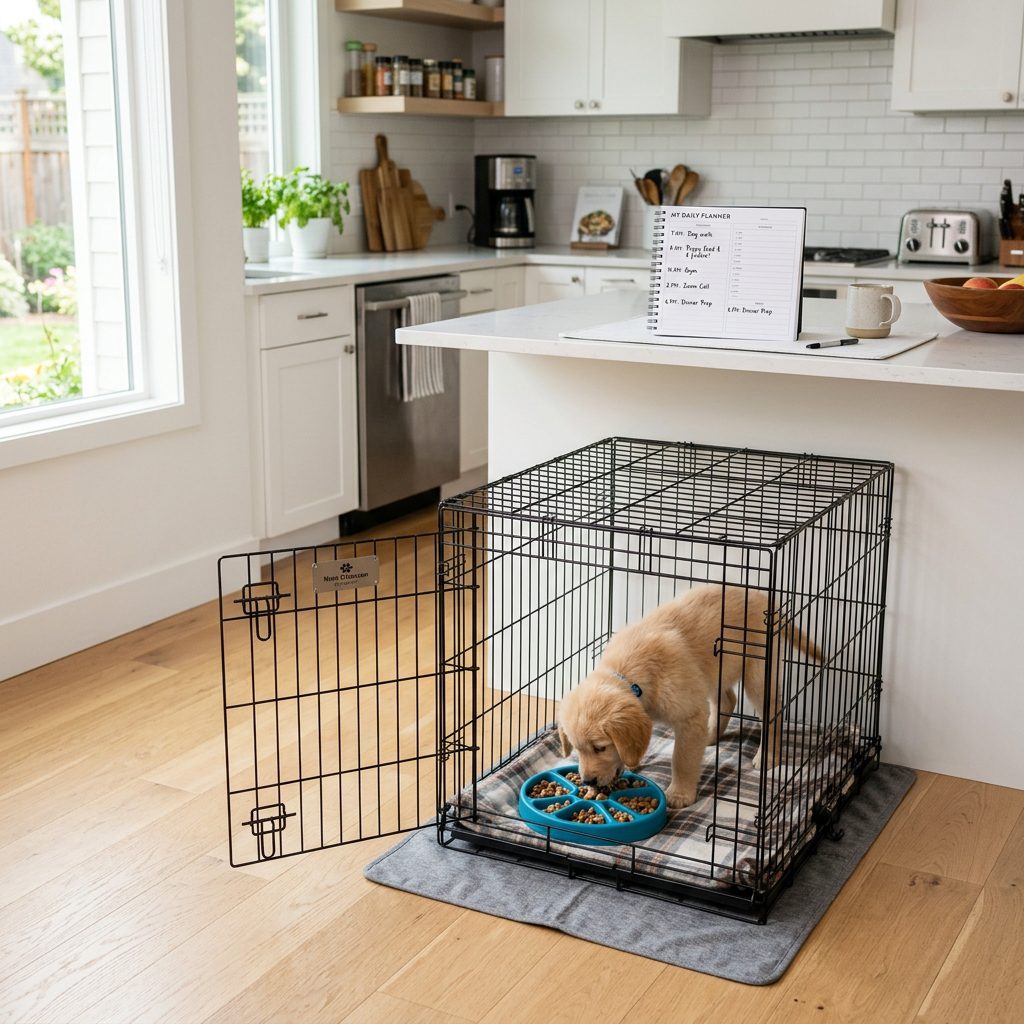
Structure is a puppy’s best friend. Dogs thrive on routine because predictability lowers stress. When your puppy knows what to expect from their day, they spend less time worrying about when you might leave or when they might eat. To help you implement the five crucial tips we just discussed, here is a highly effective daily schedule designed specifically to weave independence training seamlessly into your everyday life.
The Daily Blueprint for a Confident Pup
This schedule is designed for an 8 to 12-week-old puppy. Adjust the times based on your specific dog’s bladder capacity and energy levels. The goal here is to balance active engagement with forced downtime.
| Time of Day | Activity | Independence Focus |
|---|---|---|
| 7:00 AM | Wake up, immediate potty break, and 15 minutes of active training or play. | Bonding and burning off morning energy to prepare for resting. |
| 7:30 AM | Breakfast served entirely in a puzzle feeder inside the crate (door open). | Building positive associations with the crate and encouraging solo problem-solving. |
| 8:00 AM – 10:00 AM | Mandatory Nap Time in the crate (door closed). Owner goes about normal morning routine. | Practicing being confined while the owner is home, desensitizing to household noises. |
| 10:00 AM | Potty break, followed by “Distant Togetherness” in a playpen with a chew toy. | Learning to be awake and calm without demanding direct attention from the owner. |
| 12:00 PM | Lunchtime (in the crate), potty break, and a short sniffari walk outside. | Mental stimulation through sniffing, which tires the brain faster than physical running. |
| 1:00 PM – 3:00 PM | Afternoon Nap Time. Owner practices 5-10 “Micro-Absences” by leaving the house and returning. | Normalizing the owner leaving the property while the puppy is safely contained and tired. |
| 3:00 PM – 5:00 PM | Potty break, free roam (supervised), and practicing departure cues (keys, coat, shoes). | Breaking the anxiety triggers associated with the owner getting ready to leave. |
| 5:00 PM – 7:00 PM | Dinner, evening play, and family time. | Healthy socialization and winding down for the evening. |
| 7:00 PM – Bedtime | Relaxation protocol on a mat, final potty breaks, and sleep in the crate. | Reinforcing that evenings are for calm, independent resting. |
Notice how much of this schedule is dedicated to napping? Puppies need 18 to 20 hours of sleep a day. Often, what owners perceive as separation anxiety or hyperactivity is actually just an overtired, overstimulated puppy throwing a toddler-style tantrum. By enforcing naps in a crate or pen, you are naturally teaching them how to be alone while ensuring they get the rest their developing brains desperately need.
Troubleshooting and Common Mistakes
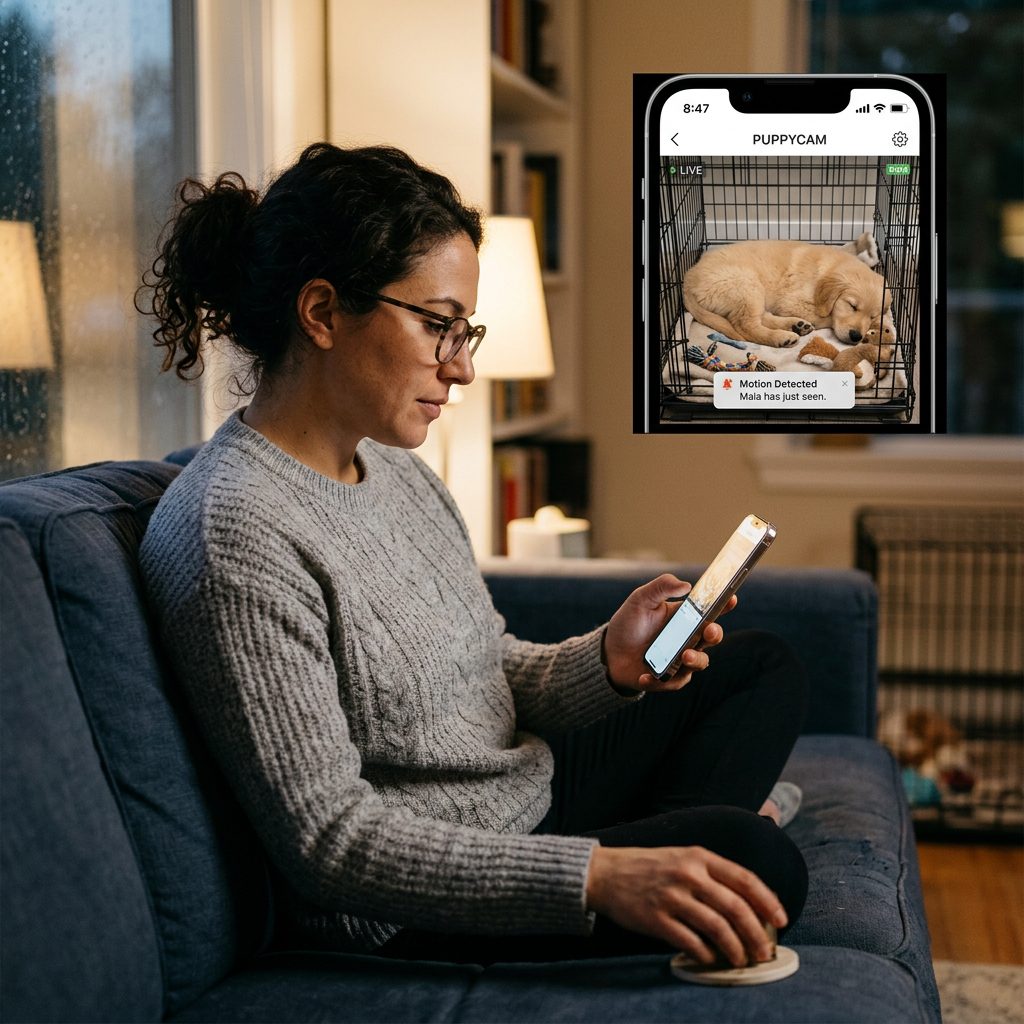
Even with the best tools and the most perfect schedule, training a live animal is rarely a perfectly linear journey. You are going to hit bumps in the road. Your puppy might regress, they might have a bad day, or you might accidentally reinforce the wrong behavior. That is completely normal! The key to success is knowing how to pivot and troubleshoot when things go off script.
Whining vs. True Panic
The most common question savvy dog owners ask is: “Do I let them cry it out?” The answer requires nuance. There is a massive difference between a puppy protesting because they want attention, and a puppy experiencing genuine panic.
- Attention Whining: This usually sounds like short, high-pitched yips, often accompanied by pauses where the puppy stops to listen if you are coming. They might paw at the crate, but they are generally aware of their surroundings. Action: Ignore it. If you return to the room or let them out while they are whining, you have just taught them that crying is the remote control to summon you.
- True Panic: This is continuous, frantic howling, heavy drooling, attempting to chew through the wire of the crate, urinating or defecating in fear, and dilated pupils. Action: You must intervene. Do not make a huge fuss, but calmly let them out. This means you pushed them too far, too fast. You need to take several steps back in your training and reduce the duration of your absences.
The Extinction Burst
If you have been inadvertently rewarding your puppy’s whining by giving them attention, and you suddenly stop, you will likely experience an extinction burst. This is a behavioral phenomenon where the behavior gets significantly worse before it gets better. The puppy thinks, “Hey, my whining usually works! Why isn’t it working? I better whine louder and longer!” Stay strong. If you cave during an extinction burst, you will create a dog with incredible stamina for whining. Stick to your guns, wait for a moment of silence (even just three seconds of quiet), and then reward that silence.
Beware of the “Weekend Warrior” Trap
A major mistake owners make is keeping the puppy glued to their side all weekend because they are off work, and then suddenly leaving for eight hours on Monday. This contrast is a massive shock to the puppy’s system and is a primary trigger for separation anxiety. You must maintain the routine of enforced alone time on Saturdays and Sundays, even if you are home all day. Put them in their pen, go work in the garden, or run an errand without them. Consistency is the bedrock of canine confidence.
Conclusion
Preventing separation anxiety is not about being cold or distant with your new puppy; it is the ultimate act of canine care. By taking the time to implement these five crucial training tips, utilizing the right tools, and sticking to a predictable schedule, you are building a foundation of deep trust and self-assurance in your dog. Remember, progress might be slow, and there will be days where you feel like you are taking two steps forward and one step back. That is just the reality of raising a puppy!
Stay patient, keep your arrivals and departures beautifully boring, and celebrate the small victories—like that first time you return from checking the mail and find your pup happily chewing their KONG instead of waiting by the door. You have got this, and your savvy dedication is going to yield a wonderful, well-adjusted, and independent best friend for years to come. Happy training!