Kitchen Thief! 5 Proven Training Steps To Stop Puppy Counter Surfing For Good
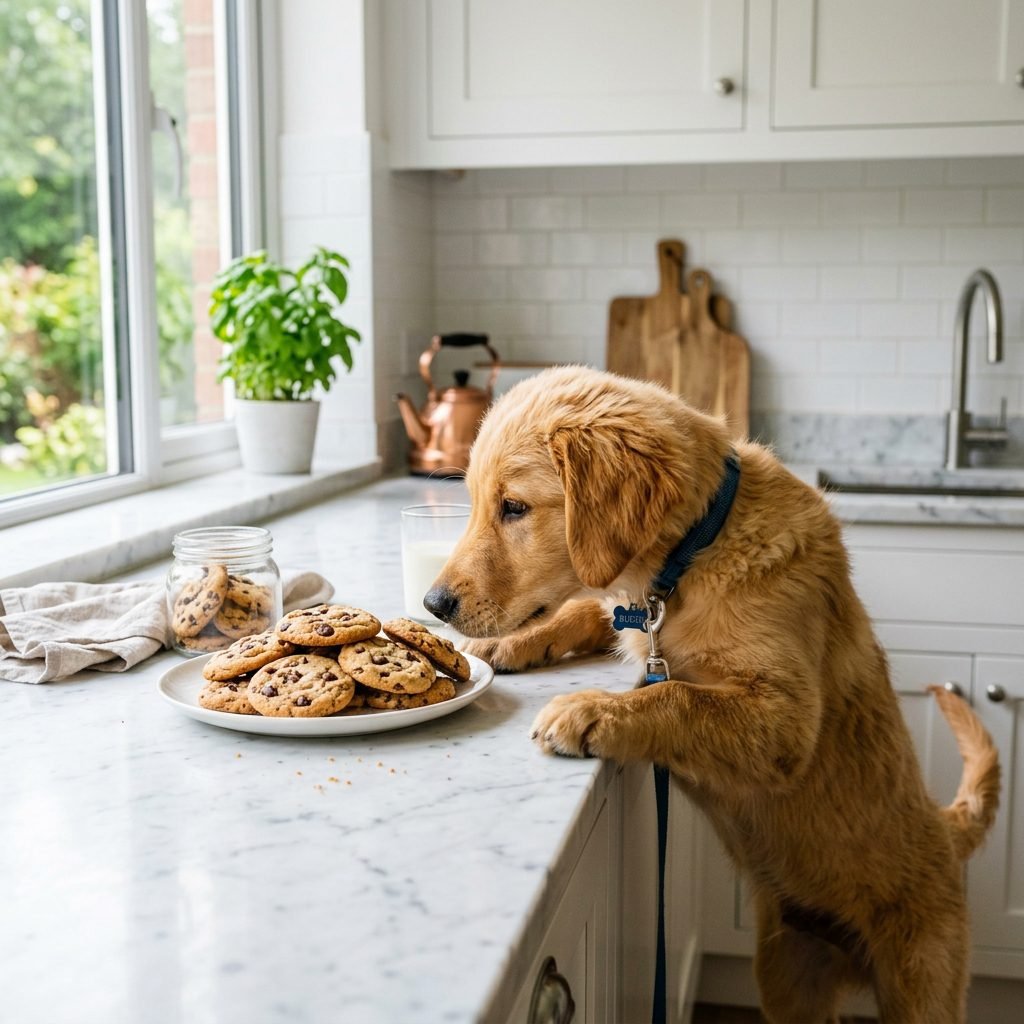
Picture this: You have just spent the last twenty minutes carefully crafting the ultimate turkey and cheddar sandwich. You set it down on the kitchen counter, turn your back for just three seconds to grab a napkin, and when you turn back around, your culinary masterpiece has vanished. In its place sits your sweet, innocent-looking puppy, licking their chops and looking extremely pleased with themselves. If this scenario sounds all too familiar, you are officially dealing with a kitchen thief. Welcome to the frustrating, yet completely solvable, world of counter surfing.
As savvy dog owners, we know that our dogs do not steal food out of spite or a desire to be naughty. From a canine perspective, the kitchen counter is basically a magical shelf that randomly produces delicious, high-value treats. Dogs are opportunistic scavengers by nature, and their incredible sense of smell tells them exactly where the good stuff is hiding. When your puppy jumps up and successfully snags a piece of food, they experience what animal behaviorists call a self-rewarding behavior. The act of jumping up pays off instantly, meaning they are highly motivated to try it again and again.
Every time your dog successfully steals food from the counter, the behavior is heavily reinforced. To stop counter surfing, we have to break the cycle of reinforcement and teach them that keeping all four paws on the floor is actually much more rewarding.
The good news? You do not need to resort to scary deterrents, yelling, or punishment to fix this issue. Using modern, science-based positive reinforcement, you can teach your puppy that the kitchen is a place for calm behavior, not a buffet. In this comprehensive guide, we are going to walk through five proven, actionable training steps to stop puppy counter surfing for good. We will cover everything from environmental management to teaching alternative behaviors that will transform your kitchen thief into a polite, well-mannered companion.
Why Do Dogs Counter Surf in the First Place?
Before we dive into the training steps, it is crucial to understand the psychology behind the behavior. Dogs explore the world with their noses and mouths. When a puppy hits a certain height, usually around 4 to 6 months of age depending on the breed, they suddenly realize there is a whole new world of interesting smells up on your countertops. If they jump up and find nothing, they might try a few more times before giving up. But if they jump up and find a stick of butter, a piece of bread, or a dirty plate to lick, they have just hit the canine jackpot.
This intermittent reinforcement is incredibly powerful. Even if they only find food one out of every ten times they jump up, that one success is enough to keep them trying. It is the exact same psychology that keeps humans pulling the lever on a slot machine. Therefore, stopping this behavior requires a two-pronged approach: preventing them from ever winning the jackpot again, and teaching them a new game where they win by keeping their feet on the ground.
Setting Up For Success: Tools You Will Need
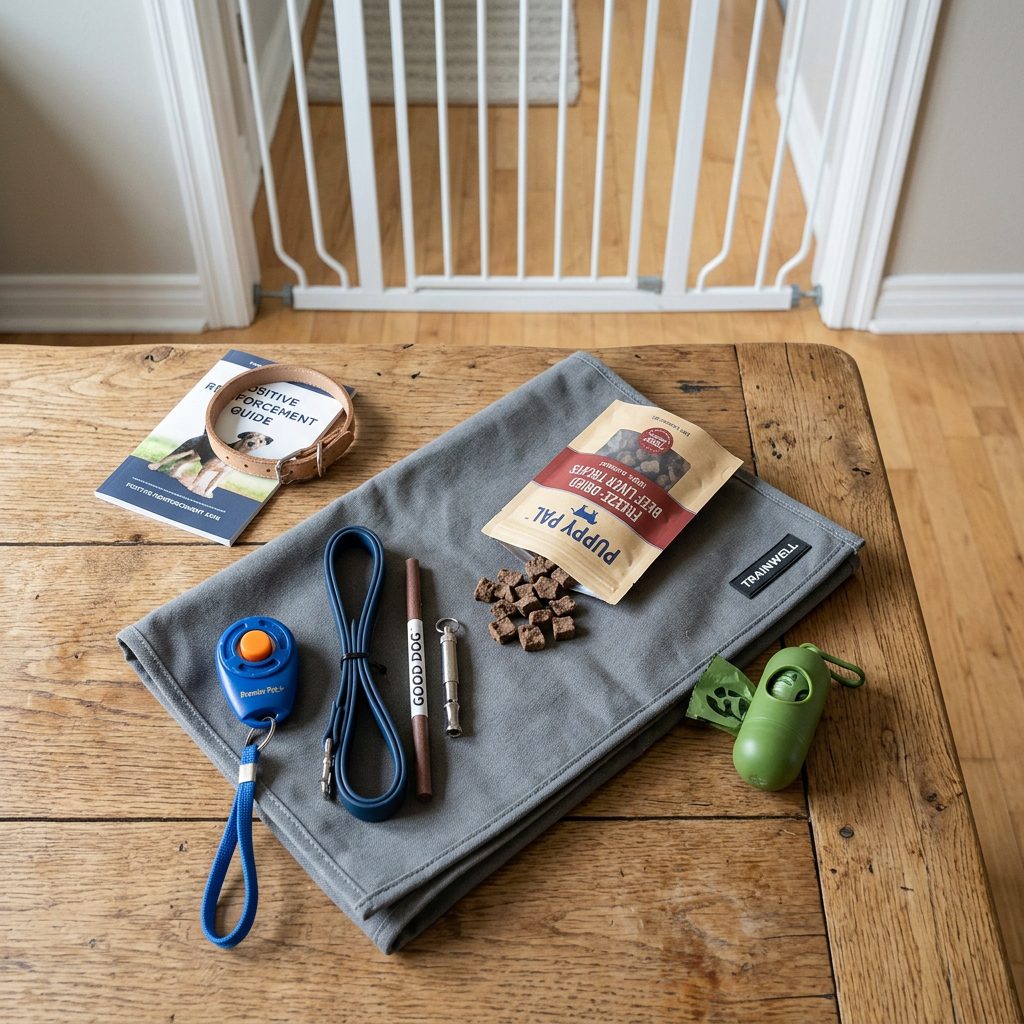
Training a puppy to stop counter surfing requires consistency, patience, and the right set of tools. Before we begin the five steps, you need to set up your environment to support your training goals. Think of this as laying the foundation for your dog’s success. You cannot expect your puppy to make good choices if the environment is constantly tempting them beyond their current level of self-control.
Your Counter Surfing Prevention Toolkit
Here is a breakdown of the essential tools you will need to successfully manage your kitchen and train your puppy. Having these items ready will make the process significantly smoother and less stressful for both of you.
| Training Tool | Purpose and Application |
|---|---|
| High-Value Treats | Boiled chicken, hot dogs, or freeze-dried liver. You need rewards that are better than what is on the counter. |
| Clicker or Marker Word | To precisely mark the exact moment your puppy makes the right choice (e.g., all four paws on the floor). |
| Baby Gates or Playpens | Essential for environmental management. Used to completely block access to the kitchen when you cannot supervise. |
| A Comfortable Mat or Bed | Used for the “Place” command. This gives your dog a designated, rewarding spot to hang out while you cook. |
| A Short Indoor Tether | Helpful for keeping your puppy securely in one spot (like their mat) while you are actively working in the kitchen. |
Now that your toolkit is assembled, let us dive into the five proven steps to eliminate counter surfing from your dog’s behavioral repertoire.
Step 1: Master Environmental Management
The absolute most critical step in stopping counter surfing is one that requires no actual training of the dog at all; it requires training the humans in the house. Environmental management means arranging your home so that your puppy simply cannot practice the unwanted behavior. Remember, every time your dog steals food, the behavior is reinforced. If you do not stop the reinforcement, the training will fail.
Clear the Counters Completely
From this day forward, your kitchen counters must remain completely bare. Do not leave bread bags pushed to the back. Do not leave butter dishes out. Do not leave dirty plates in the sink if your dog can reach them. Wipe down the counters regularly to remove crumbs and lingering smells that might tempt your puppy to jump up for a sniff.
- Push everything back: If you must have items on the counter, ensure they are pushed so far back that even a fully stretched dog cannot reach them.
- Secure the trash: Many dogs will transition from counter surfing to trash raiding. Invest in a heavy-duty trash can with a locking lid.
- Manage the family: Ensure every family member, including children, understands the new rule. A single piece of dropped food or a forgotten sandwich can undo weeks of hard work.
Restrict Kitchen Access
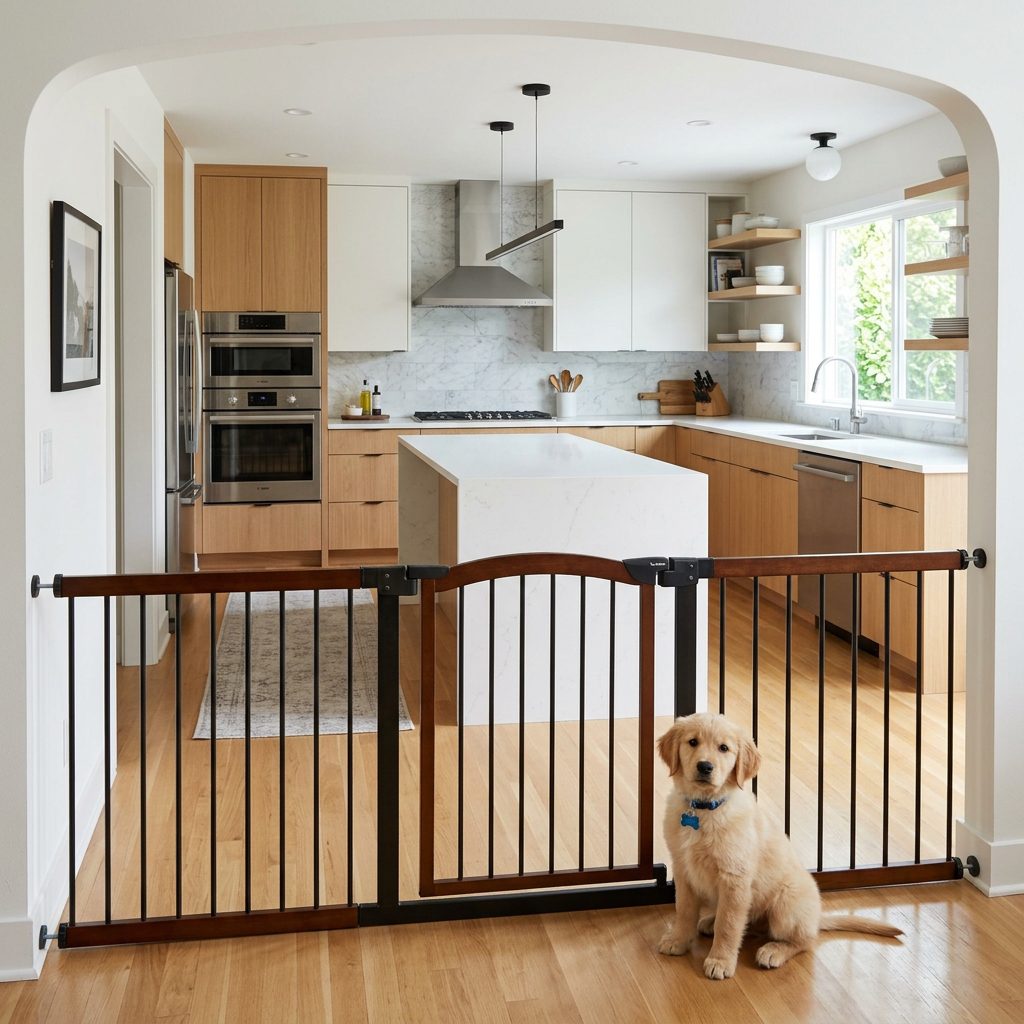
When you are not actively cooking or supervising your puppy, they should not have free-roaming access to the kitchen. Use your baby gates to block off the kitchen entrances. If you have an open-concept home where gates will not work, utilize a playpen or crate your puppy when you cannot keep two eyes on them. Management is not a forever solution, but it is a mandatory temporary measure while your puppy learns the new rules of the house.
Step 2: Teach a Rock-Solid “Leave It” Command
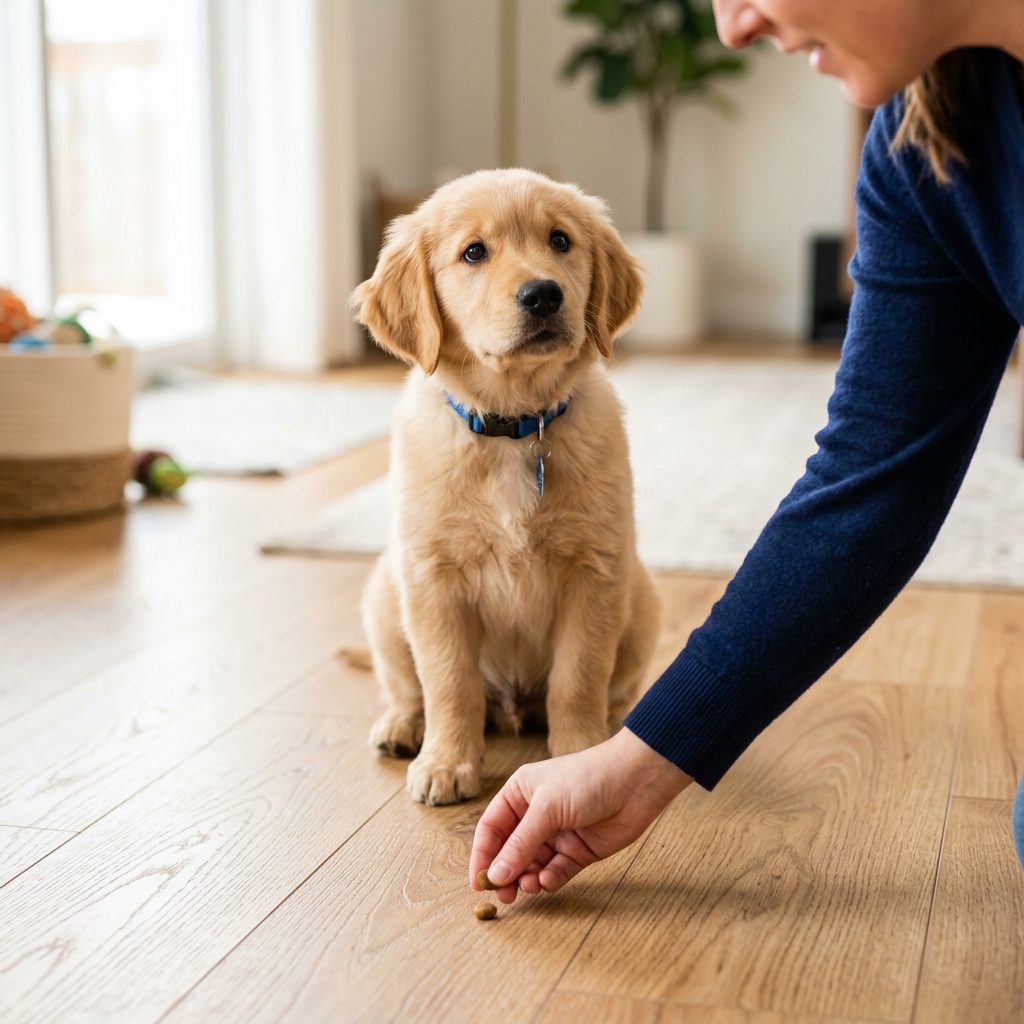
Once you have managed the environment, it is time to start teaching your puppy impulse control. The “Leave It” command is arguably one of the most important cues your dog will ever learn. It tells them that ignoring something they want will actually result in getting something even better from you.
How to Introduce “Leave It”
Start this training outside of the kitchen, in a low-distraction environment like your living room. You want your puppy to understand the concept fully before you test it against the high stakes of kitchen food.
- The Closed Fist Game: Place a low-value treat (like regular kibble) in your hand and close your fist. Present your fist to your puppy. They will sniff, lick, and paw at your hand. Say nothing and wait.
- Mark the Pull-Away: The exact second your puppy stops trying to get the treat and pulls their nose away from your fist, say “Yes!” or click your clicker, and immediately feed them a high-value treat (like chicken) from your other hand.
- Add the Cue: Once your puppy is consistently pulling away from the closed fist, start saying “Leave It” right before you present your hand.
- Level Up to the Floor: Next, place the low-value treat on the floor and cover it with your hand. Tell your puppy to “Leave It.” When they back off, mark and reward from your treat pouch. Gradually progress to having the treat on the floor uncovered, always ready to cover it with your foot if they lunge for it.
Pro Tip: Never reward your dog with the item you told them to leave. “Leave It” means that specific item is off-limits forever. Always reward from a separate, higher-value stash.
Once your puppy has a strong “Leave It” on the floor, you can start practicing with items on low tables, and eventually, the kitchen counter. If you see them eyeing a towel or a safe item on the counter, say “Leave It.” When they look back at you, reward them generously.
Step 3: Establish a “Place” or Mat Command
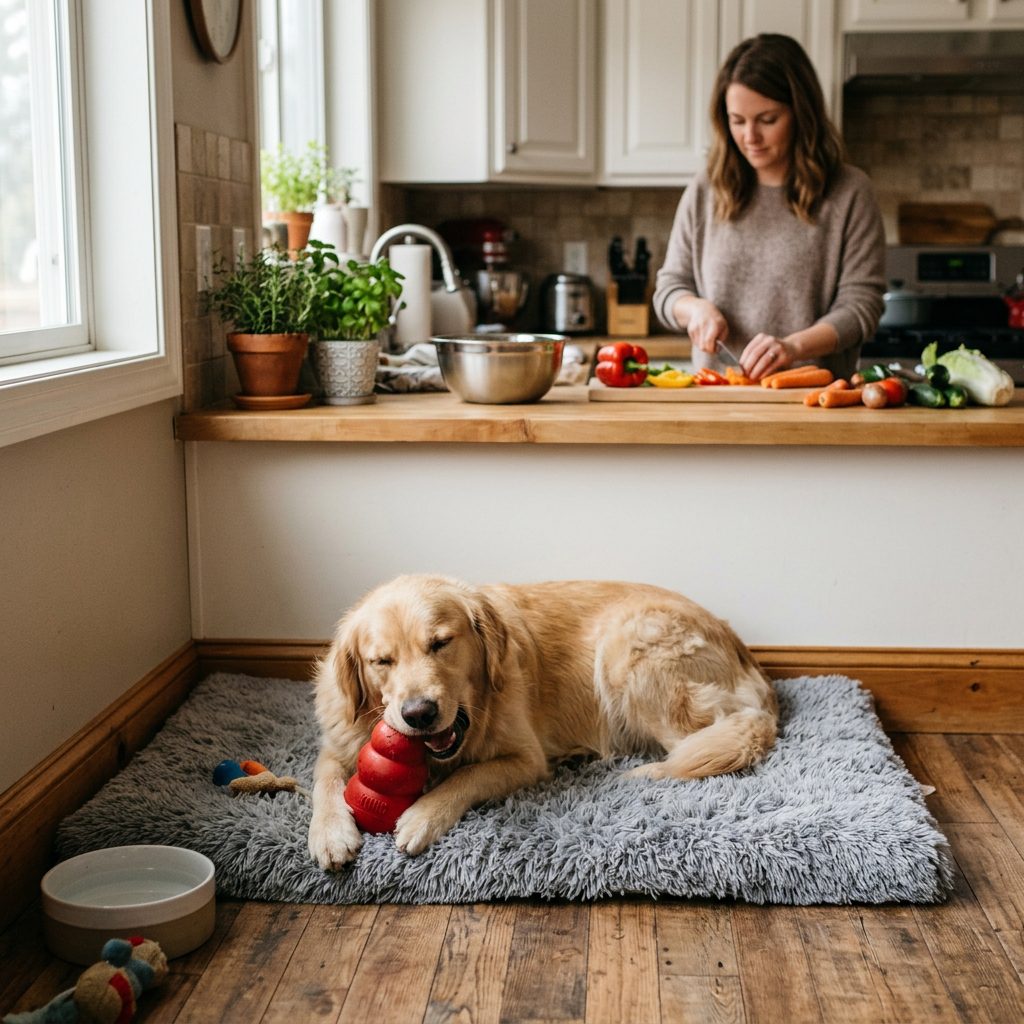
One of the most effective strategies in dog training is teaching an incompatible behavior. An incompatible behavior is an action that makes it physically impossible for the dog to perform the unwanted behavior. If your dog is lying down comfortably on a mat in the corner of the kitchen, it is physically impossible for them to be jumping up on your counters. This is where the “Place” command comes in.
Training the Place Command
Choose a specific mat, dog bed, or small rug. This will become your dog’s designated “Place.” Position this mat just outside the main cooking area of the kitchen, giving them a clear view of you without being underfoot.
- Lure and Reward: Toss a treat onto the mat. As your puppy steps onto it, say “Place” and give them another treat.
- Encourage Settling: Wait for your puppy to sit or lie down on the mat. The moment they do, rain down the treats. You want them to think this mat is the greatest place on earth.
- Build Duration: Start increasing the time between treats. Give a treat every 3 seconds, then every 5 seconds, then every 10 seconds, as long as they stay on the mat.
- Add Distractions: While they are on their place, take a step away, then return and reward. Gradually increase your movement. Start chopping vegetables or opening the fridge. If they break their place to investigate, gently guide them back without a reward, and lower the criteria next time.
To make the “Place” even more enticing during long cooking sessions, provide your puppy with a long-lasting chew, a stuffed Kong, or a lick mat. This gives them a “job” to do while you cook, keeping their mind occupied and their paws off the counters.
Step 4: Reward “Four on the Floor”
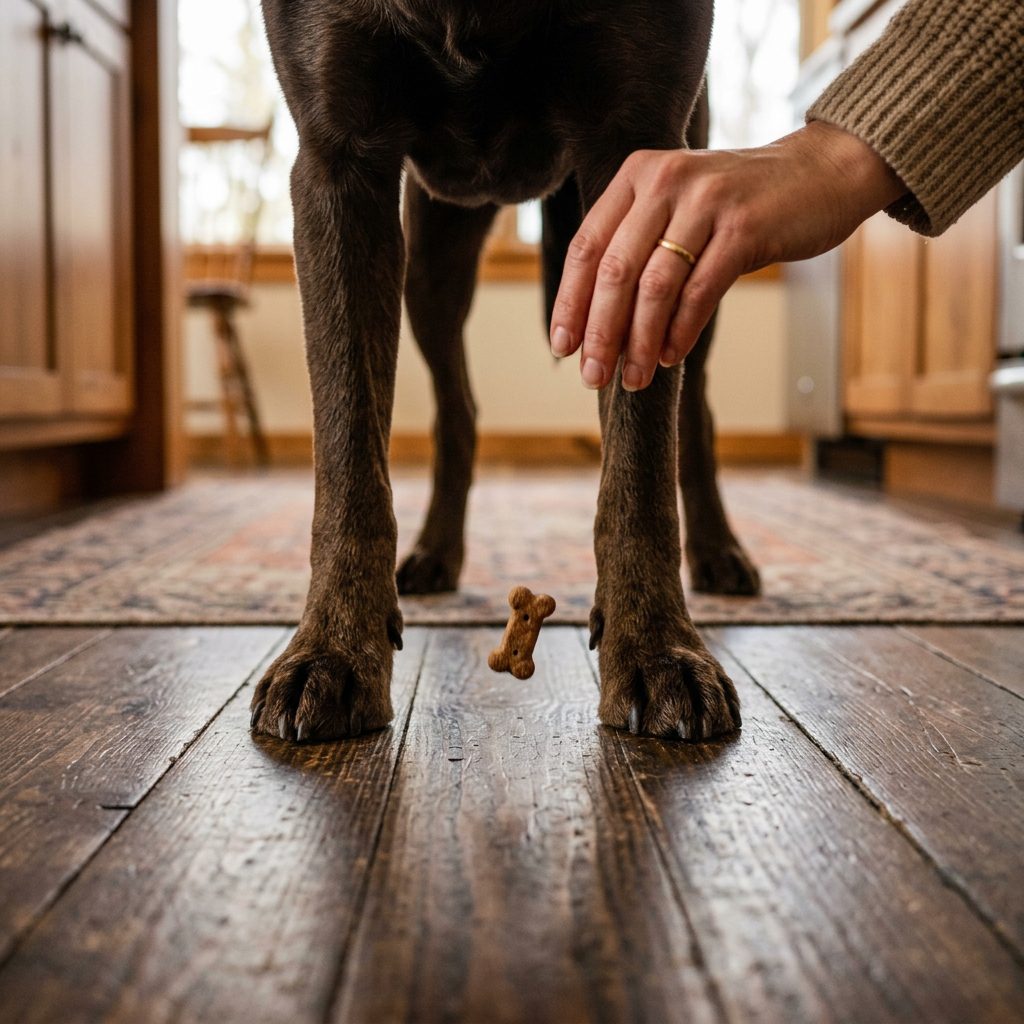
While teaching specific commands like “Leave It” and “Place” is essential, you also want to cultivate a general mindset in your dog that keeping all four paws on the ground is highly profitable. This concept is often referred to as capturing calmness or rewarding default behaviors.
Catch Them Being Good
As dog owners, we are often very quick to correct our dogs when they do something wrong, but we frequently ignore them when they are behaving perfectly. If you are walking through the kitchen and your puppy is simply standing there, sniffing the floor, or sitting quietly while you make coffee, reward them!
Keep a small jar of non-perishable treats on your counter (pushed far back, of course) or keep a few in your pocket. Whenever you notice your dog in the kitchen with “four on the floor,” quietly drop a treat between their front paws. Do not make a big fuss or get them overly excited; just calmly deliver the reward.
The “Scatter” Technique
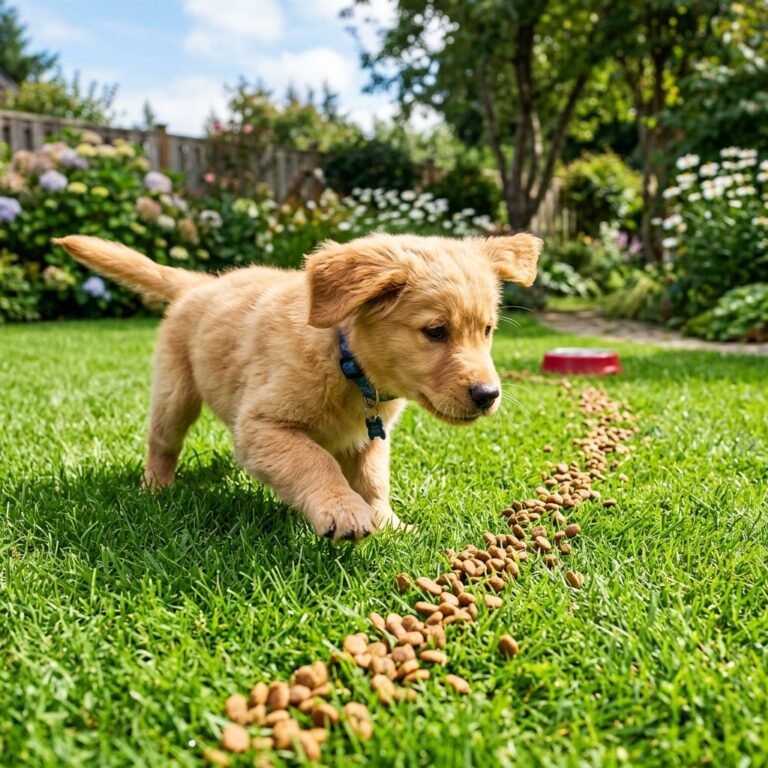
If you have a puppy that gets overly excited when you handle food, try the scatter technique. When you are preparing meals, occasionally toss a small handful of kibble onto the floor away from the counter. This teaches the dog that the floor is where the magic happens, not the countertops. They will naturally start spending more time scanning the floor for dropped goodies rather than looking up at the counters.
Consistency is key here. Your dog needs to learn that jumping up yields absolutely nothing (thanks to your environmental management in Step 1), but keeping their feet on the ground yields a steady stream of rewards.
Step 5: Proofing, Consistency, and Troubleshooting
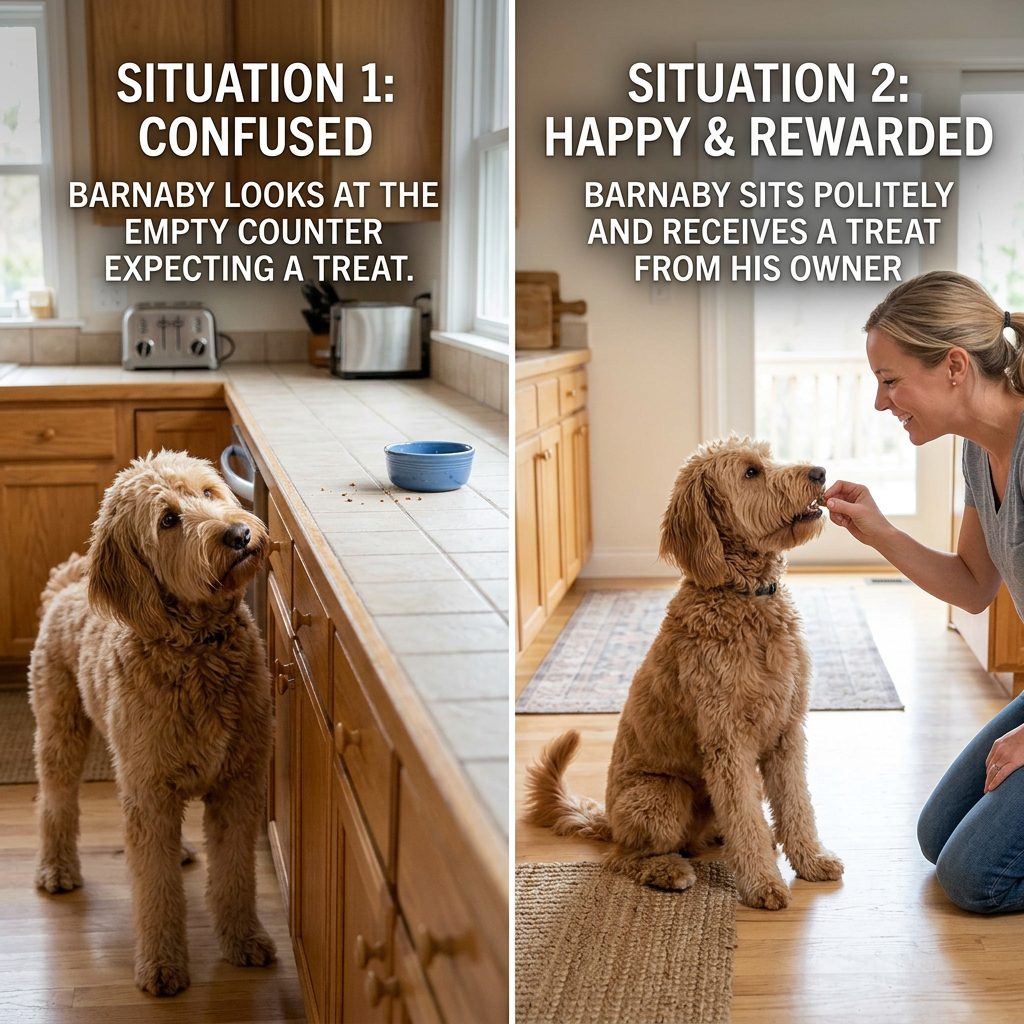
Training is rarely a perfectly linear journey. Just when you think your puppy has mastered the art of staying off the counters, they might hit adolescence, or you might get sloppy with your management, and suddenly the behavior returns. This is completely normal. The final step is all about proofing the behavior (testing it in different scenarios) and knowing how to troubleshoot when things go wrong.
What is an Extinction Burst?
When you first stop rewarding a previously rewarded behavior (by clearing the counters), your dog might actually start jumping up more frequently for a few days. This psychological phenomenon is known as an “extinction burst.” The dog is thinking, “Hey, this used to work! Let me try harder!” It is vital that you do not give in during this phase. If they score a piece of food during an extinction burst, you will have created an even more persistent counter surfer. Stay strong, keep the counters clear, and the behavior will eventually fade.
Troubleshooting Common Mistakes
If you are struggling to see progress, review this troubleshooting table to identify potential gaps in your training plan:
| Common Mistake | The Result | The Solution |
|---|---|---|
| Inconsistent Management | The dog occasionally gets food from the counter, reinforcing the behavior. | Double down on clearing counters. Use baby gates strictly when unsupervised. |
| Punishing the Dog | The dog learns to fear you, but will still counter surf when you leave the room. | Stop yelling or using spray bottles. Focus on rewarding the “Place” command and “four on the floor.” |
| Low-Value Rewards | The dog decides the butter on the counter is better than your dry kibble. | Upgrade your treats. Use real meat, cheese, or liver when working in the kitchen. |
| Rewarding the Jump-Down | The dog learns a behavior chain: “Jump up, jump down, get a treat.” | Never treat a dog right after they jump down. Wait for 10-15 seconds of calm floor behavior before rewarding. |
Remember that proofing takes time. Practice having highly tempting items on the counter while you are actively training and heavily rewarding your dog for choosing their mat or choosing to ignore the food. Over time, the kitchen counter will lose its appeal, and your dog will naturally default to polite behavior.
Conclusion
Transforming your puppy from a notorious kitchen thief into a polite, well-mannered companion is entirely possible. It does not require magic, and it certainly does not require intimidation. By understanding the self-rewarding nature of counter surfing, you can take the power back into your own hands. Remember, the recipe for success is simple: strictly manage the environment so mistakes cannot happen, teach robust alternative behaviors like “Leave It” and “Place,” and generously reward your dog for keeping all four paws on the floor.
Training takes time, and there will likely be a few bumps along the road. Give your puppy grace as they learn the rules of your human world, and give yourself grace if you accidentally leave a sandwich out and suffer a setback. Stay consistent, keep those treats handy, and before you know it, you will be able to leave a full charcuterie board on the counter without a second thought. Happy training, and here is to peaceful, stress-free cooking with your best furry friend by your side!