Waking Up To Mess? Exactly How To Stop Your Puppy From Peeing On Their Bed In The Crate
Let us paint a picture that is probably all too familiar right now. Your alarm goes off, you stretch, and you happily walk over to your puppy’s crate to start the day. But instead of a happy morning greeting, you are hit with that unmistakable, sharp smell of urine. You look inside, and there it is: your sweet little puppy has turned their cozy, expensive orthopedic bed into a giant pee pad. Again.
First things first: take a deep breath. You are not a bad dog parent, and your puppy is not doing this to spite you. Waking up to a mess in the crate is one of the most common frustrations for new puppy owners. As savvy dog parents, we know that dogs naturally have a ‘den instinct.’ In the wild, canines go out of their way to keep their sleeping quarters clean. So, why is your puppy actively soaking their bed?
The truth is, while the den instinct is hardwired into their DNA, our modern domestic setups often accidentally override it. Whether it is a crate that is slightly too spacious, bedding that is too absorbent, or a bladder that just hasn’t fully developed its sphincter muscles yet, there is always a logical, fixable reason behind crate accidents.
In this comprehensive guide, we are going to dive deep into the canine psychology and biology behind crate soiling. We will walk through the exact step-by-step process to stop your puppy from peeing on their bed, look at the essential tools you need, and map out a bulletproof potty schedule. Grab a cup of coffee (and maybe a bottle of enzymatic cleaner), and let’s get your puppy back on track to a dry, comfortable night’s sleep!
Why Is My Puppy Peeing in Their Crate? Understanding the Root Cause
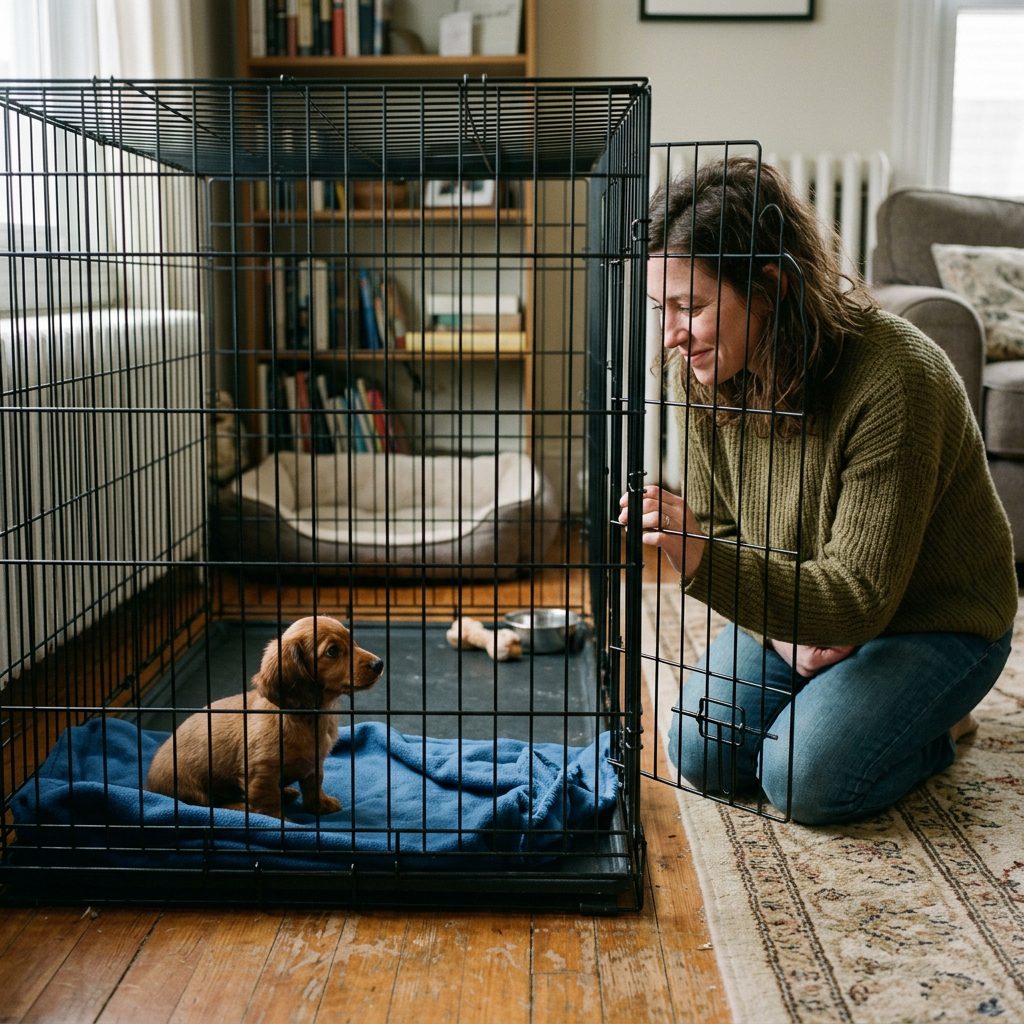
Before we can implement a solution, we have to play detective. Puppies do not want to sleep in their own mess. If they are doing it, something in their environment or biology is forcing their hand (or rather, their bladder). Here are the primary culprits behind crate accidents.
The Crate is Simply Too Big
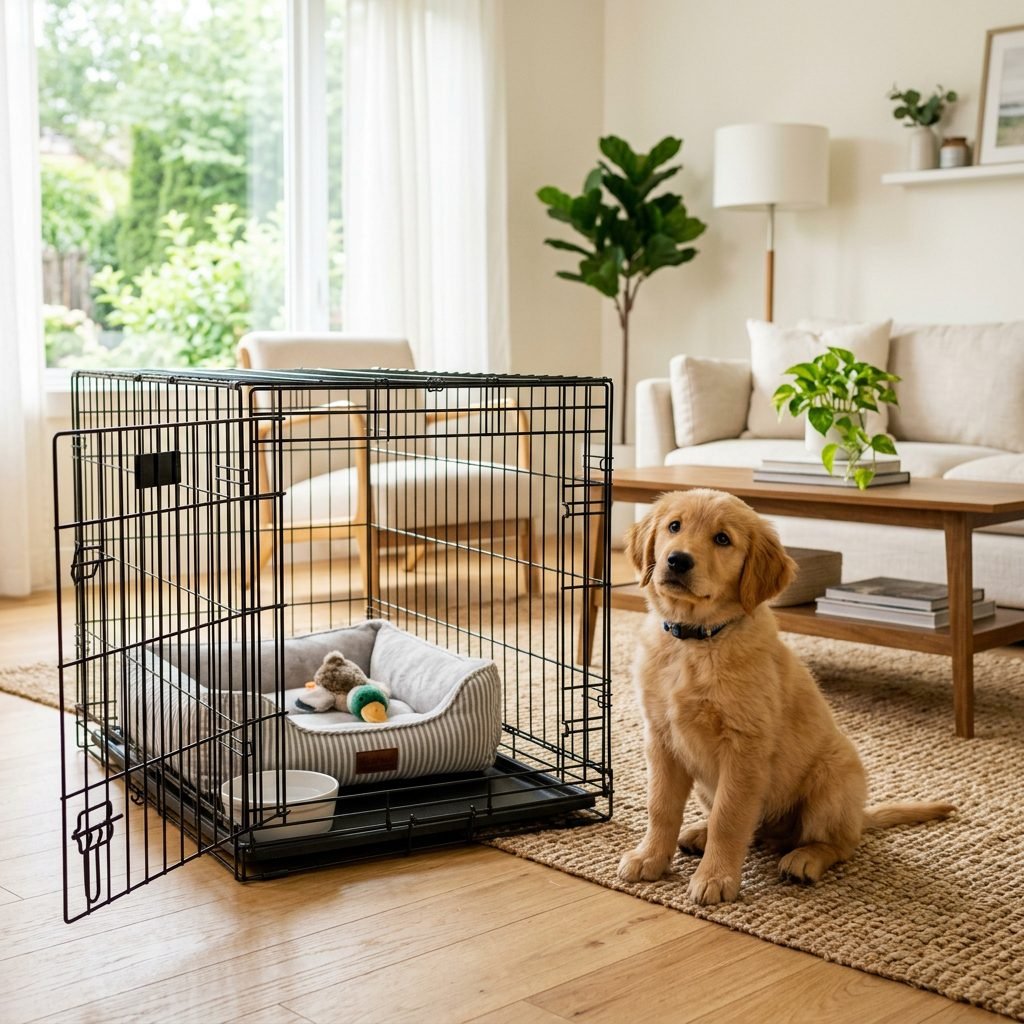
This is the number one mistake even the most experienced dog owners make. When you buy a crate, you usually buy one that will fit your dog when they are fully grown. However, if you give an eight-week-old puppy access to a crate meant for a seventy-pound adult dog, you are not giving them a bedroom; you are giving them a master suite with an en-suite bathroom. If a puppy has enough room to pee in one corner and comfortably sleep in the completely opposite corner without touching the mess, they will do exactly that.
The Bedding is Sabotaging You
We all want our puppies to be comfortable, so we line their crates with plush fleece beds, soft blankets, or fluffy towels. But here is the problem: soft bedding acts like a giant diaper. When a puppy pees on a soft bed, the fabric immediately wicks the moisture away from the surface. The puppy stays completely dry and comfortable, which completely removes the natural negative consequence of peeing in the den. If they do not feel wet, they have no incentive to hold it.
Medical Issues Like UTIs
If your puppy was previously keeping their crate dry and suddenly starts having accidents, or if they are peeing small amounts very frequently, you must rule out a medical issue. Urinary Tract Infections (UTIs) are incredibly common in puppies, especially female puppies. A UTI makes it physically impossible for a puppy to hold their urine. Always consult your veterinarian to run a quick urinalysis if you suspect a health issue.
Unrealistic Schedule Expectations
Puppies have tiny bladders and under-developed bladder control muscles. A general rule of thumb is that a puppy can hold their pee for one hour per month of age, plus one. So, a two-month-old puppy can hold it for about three hours maximum. If you are expecting a ten-week-old puppy to hold it for a full eight-hour night, you are setting them up for inevitable failure.
The Essential Toolkit: What You Need to Stop Crate Accidents
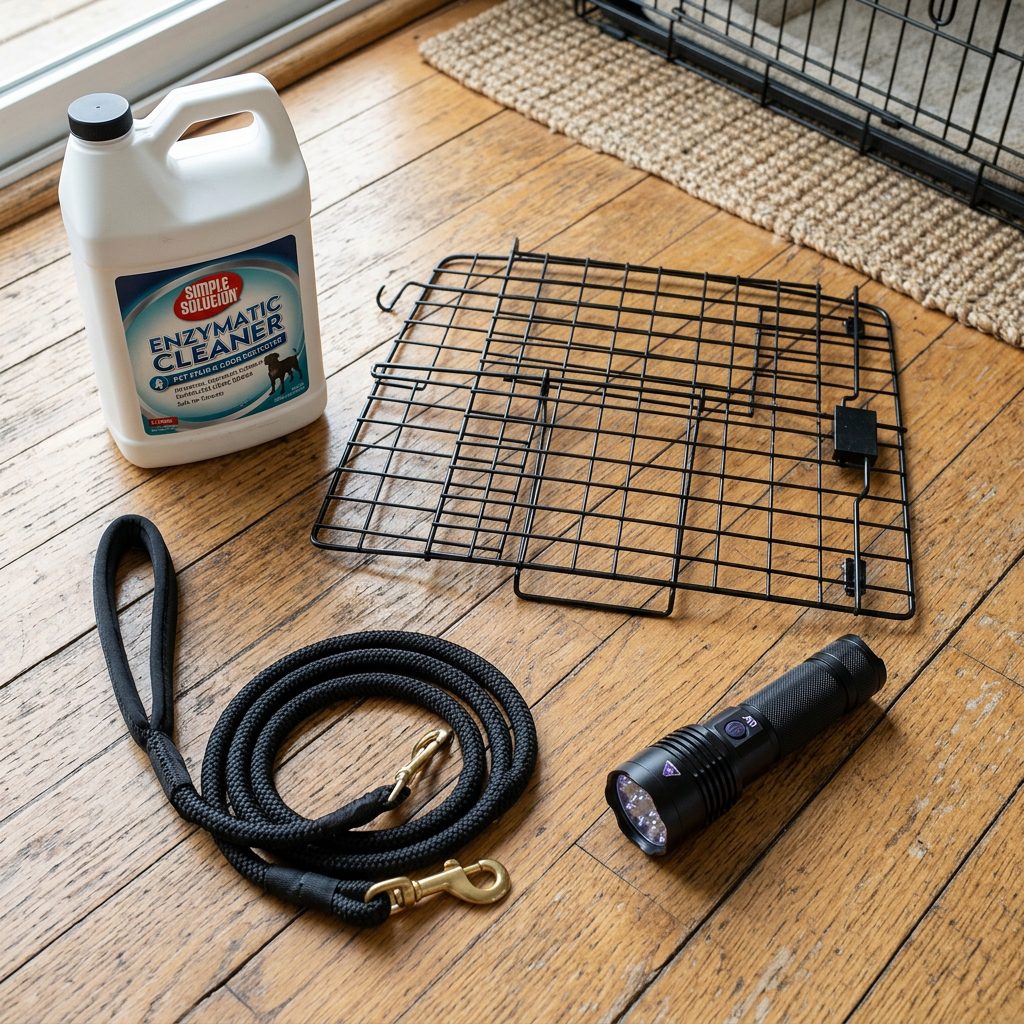
To successfully stop crate accidents, you need to set up the environment for success. Savvy dog owners know that having the right tools makes all the difference in the world. Let’s look at what you need to gather before we start the training process.
| Essential Tool | Primary Purpose | Why It Is Crucial For Success |
|---|---|---|
| Enzymatic Cleaner | Breaks down urine proteins and pheromones | Standard household cleaners (like bleach or ammonia) do not remove the uric acid crystals. If a dog smells pee, they will pee there again. Enzymatic cleaners literally eat the odor-causing bacteria. |
| Crate Divider Panel | Adjusts the internal size of the crate | Allows you to shrink the usable space of a large crate so the puppy only has enough room to stand up, turn around, and lie down. |
| Bare Plastic Crate Pan | Replaces soft, absorbent bedding | Forces the puppy to feel the uncomfortable wetness if they have an accident, triggering their natural instinct to keep their den clean. |
| UV Blacklight | Detects hidden, dried urine spots | Helps you find old accidents in the crate or on the floor that your human nose cannot detect, but your puppy’s sensitive nose definitely can. |
Expert Tip: Never use ammonia-based cleaners anywhere near your dog’s crate. Urine contains ammonia, so cleaning with an ammonia-based product actually tricks your puppy into thinking another dog has marked there, encouraging them to pee over it!
Step-by-Step Guide: How to Stop Crate Peeing for Good
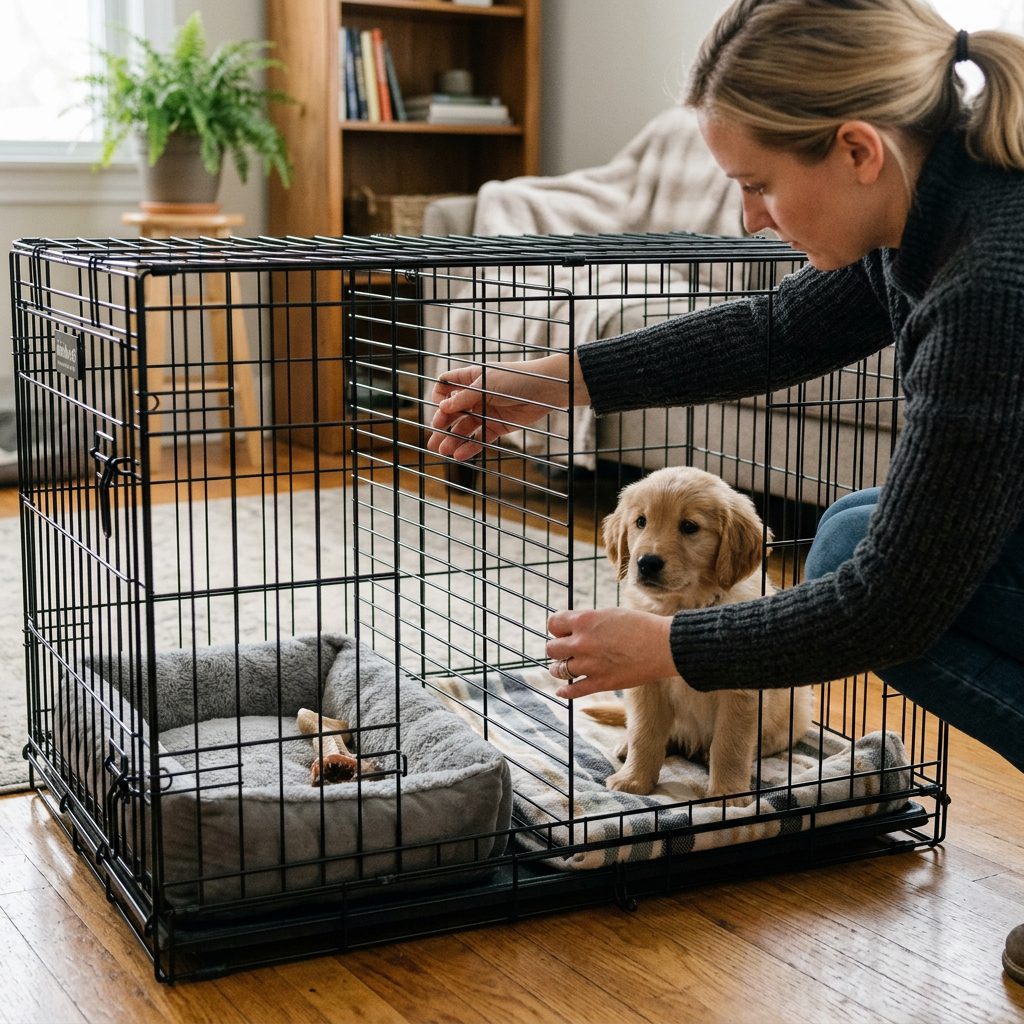
Now that we understand the ‘why’ and have our tools ready, it is time to implement the protocol. Follow these steps exactly, and you will see a dramatic reduction in crate accidents.
Step 1: Remove the Soft Bedding (Tough Love)
This is the hardest step for loving dog owners, but it is absolutely mandatory. You must remove all beds, blankets, and towels from the crate. Your puppy must sleep on the bare plastic pan. Do not worry; dogs are perfectly fine sleeping on hard surfaces (notice how often they choose to sleep on hardwood or tile floors?). By removing the absorbent material, you ensure that if they pee, they have to sit in it. This is uncomfortable, and their natural den instinct will kick in, motivating them to hold it next time.
Step 2: Shrink the Space with a Divider
Install the crate divider panel. Move it forward so that the puppy has just enough room to walk in, turn around in a circle, and lie down. They should not have enough room to take a few steps. If they can walk to a ‘bathroom corner,’ the crate is still too big. As your puppy grows, you can gradually move the divider back.
Step 3: Implement an Evening Water Cut-Off
Manage your puppy’s intake to manage their output. A good rule of thumb is to pick up the water bowl about two hours before bedtime. If bedtime is 10:00 PM, the water comes up at 8:00 PM. Make sure they get plenty of hydration throughout the day, but restricting evening water ensures their bladder is relatively empty when they go to sleep.
Step 4: The ‘Boring’ Midnight Potty Break
Until your puppy is old enough to hold it all night, you must set an alarm and wake up before they have an accident. When you take them out at 2:00 AM, keep it strictly business. Keep the lights dim, do not talk to them in an excited voice, and do not play. Carry them or walk them on a leash directly to their potty spot. Say your potty cue, wait for them to go, calmly praise them, and put them right back in the crate. If you make middle-of-the-night trips fun, they will wake you up just to play.
Step 5: Clean Like a Pro
If an accident does happen, take the puppy out, put them in a safe playpen, and take the crate pan outside or to the bathtub. Spray it heavily with your enzymatic cleaner, let it sit for the required time (usually 10-15 minutes), and wipe it completely dry. Any lingering scent will invite a repeat offense.
The Ultimate Puppy Potty Schedule
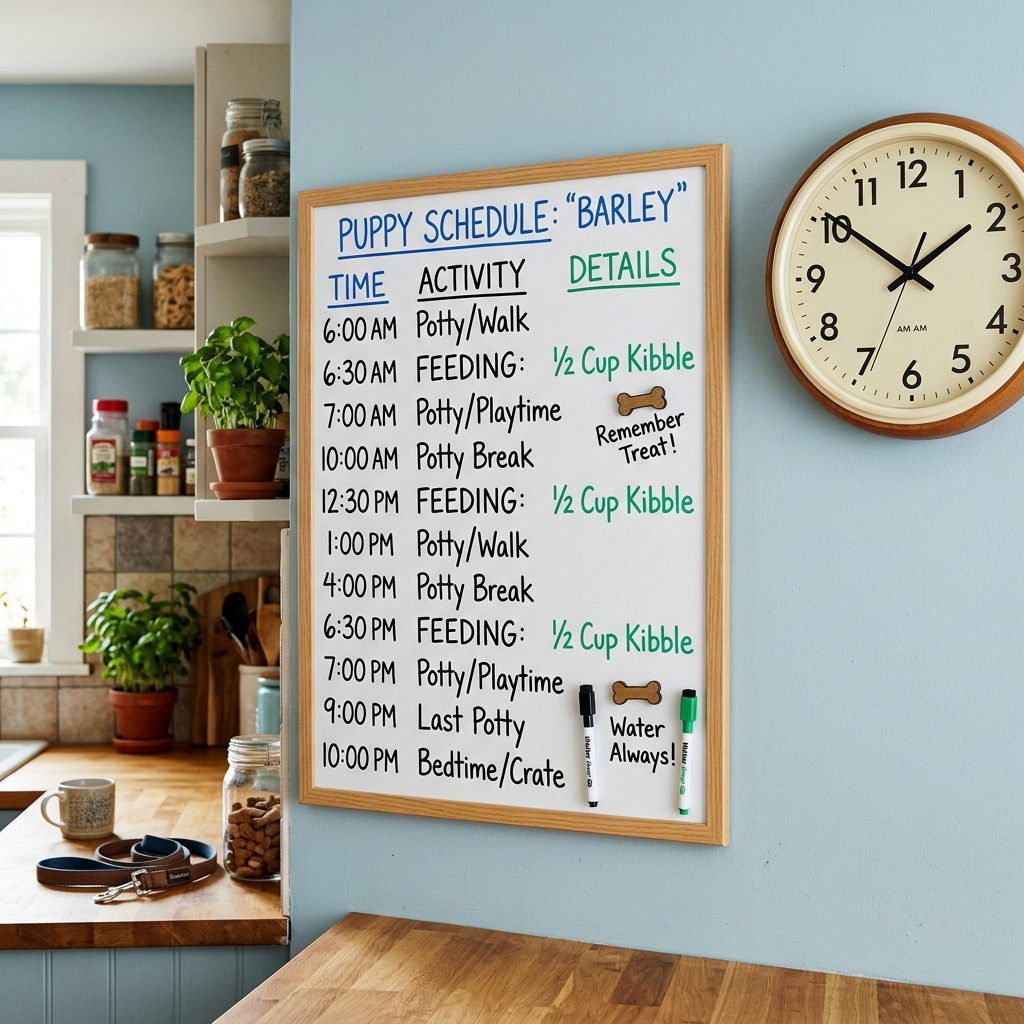
Consistency is the secret weapon of dog training. Puppies thrive on predictability. If their bodies know exactly when the next bathroom break is coming, they are much more likely to hold it. Below is a baseline schedule based on age. Remember, every puppy is different, so adjust this based on your specific dog’s needs.
| Puppy Age | Maximum Daytime Hold Time | Maximum Nighttime Hold Time | Recommended Night Alarms |
|---|---|---|---|
| 8 to 10 Weeks | 1 to 2 Hours | 3 to 4 Hours | 2 alarms (e.g., 1 AM and 4 AM) |
| 11 to 14 Weeks | 2 to 3 Hours | 4 to 5 Hours | 1 alarm (e.g., 2:30 AM) |
| 15 to 16 Weeks | 3 to 4 Hours | 5 to 6 Hours | 1 alarm (if needed) |
| 5 to 6 Months | 4 to 5 Hours | 6 to 8 Hours | Usually sleeps through the night |
Keep in mind that activity level changes everything. A sleeping puppy can hold it much longer than an awake, playing puppy. Always take your puppy out immediately after waking up, immediately after eating or drinking, and after a vigorous play session.
Troubleshooting and Common Mistakes to Avoid
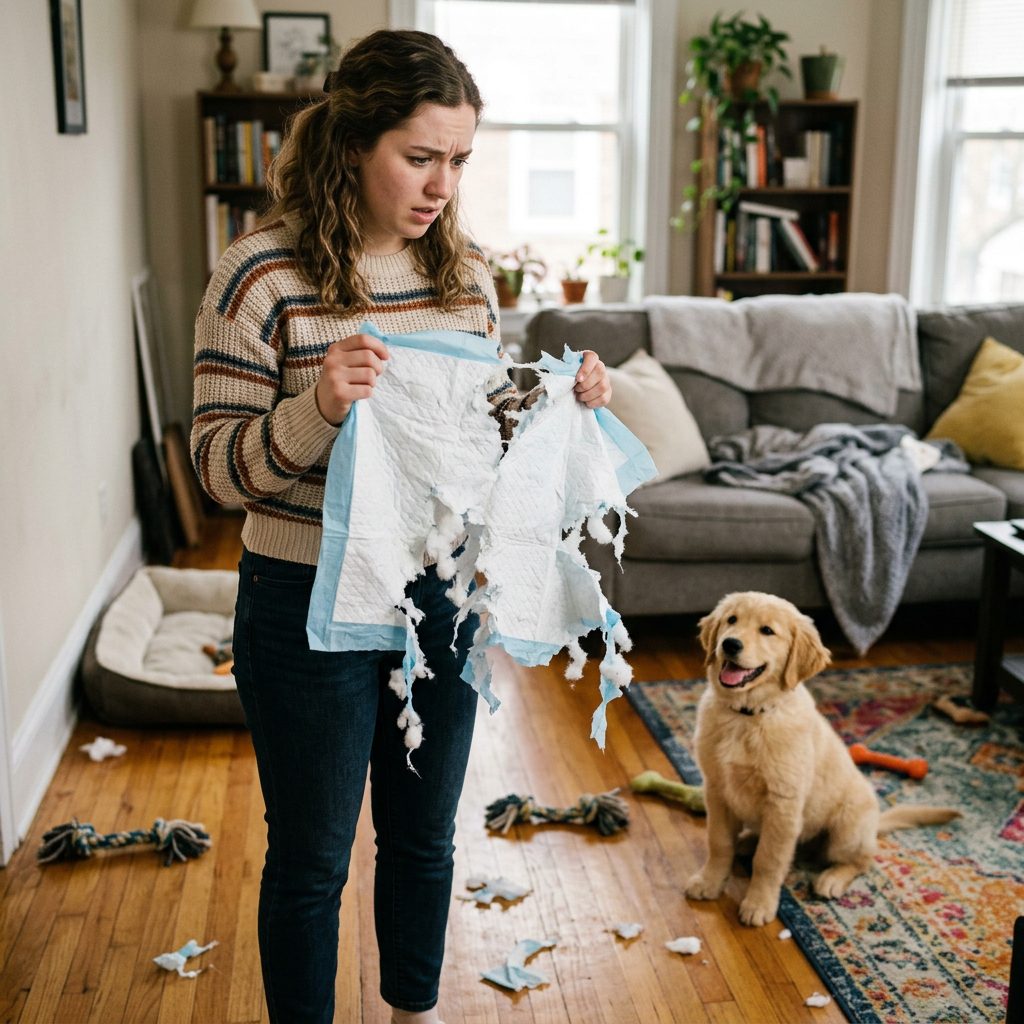
Even with the perfect setup and schedule, bumps in the road happen. Potty training is rarely a perfectly linear journey. Here are the most common mistakes dog owners make that accidentally prolong crate peeing.
Mistake 1: Punishing the Puppy for Accidents
If you wake up to a soiled crate, do not yell, scold, or rub your puppy’s nose in it. Dogs do not associate your anger with the act of peeing hours ago; they just learn that you are scary and unpredictable. Worse, punishing a puppy for peeing can make them terrified to pee in front of you at all, leading them to hide behind the couch to pee, or holding it on walks only to immediately pee in the crate when you are not looking.
Mistake 2: Ignoring the Difference Between ‘Bored’ Whining and ‘Potty’ Whining
Crate training requires you to ignore whining so the puppy learns to self-soothe. However, you must learn your dog’s vocalizations. A sudden, frantic, high-pitched whine or bark in the middle of the night usually means ‘I need to go NOW.’ If you ignore a genuine potty cry in the name of crate training, you are forcing them to soil their den. If you are unsure, take them out for a boring, two-minute potty break. If they don’t go, put them right back.
Mistake 3: Putting Pee Pads Inside the Crate
This is a massive training error. Putting a pee pad inside the crate explicitly teaches the puppy that it is perfectly acceptable to use their sleeping area as a bathroom. It completely destroys the den instinct. Pee pads are made with chemical attractants designed to make the dog want to pee on them. Keep pee pads completely out of the crate, and ideally, completely out of the house if you want them fully outdoor trained.
Mistake 4: Giving the Bed Back Too Soon
Once your puppy has a dry week, you might feel tempted to put that soft, fluffy bed back into the crate. Resist the urge! Wait until your puppy has been completely accident-free in the crate for at least three to four consecutive weeks before slowly reintroducing a thin towel, and eventually a bed. If they have an accident on the new bed, it comes out again immediately.
Conclusion
Waking up to a messy crate is undeniably frustrating, but it is a temporary phase in your journey of raising a wonderful canine companion. By understanding the root causes of crate soiling, removing absorbent bedding, sizing the crate properly, and sticking to a rigorous schedule, you are setting your puppy up for absolute success.
Remember, your puppy is learning a brand new language and a completely new way of living. They rely entirely on you to guide them. Stay patient, stay consistent, and keep that enzymatic cleaner handy. Before you know it, those early morning wake-up calls will feature a dry, happy puppy ready to start the day with you. You have got this, and your puppy is lucky to have such a dedicated owner!