How To Stop Puppy Barking At Neighbors Through Fence (Fast 4-Step Fix!)
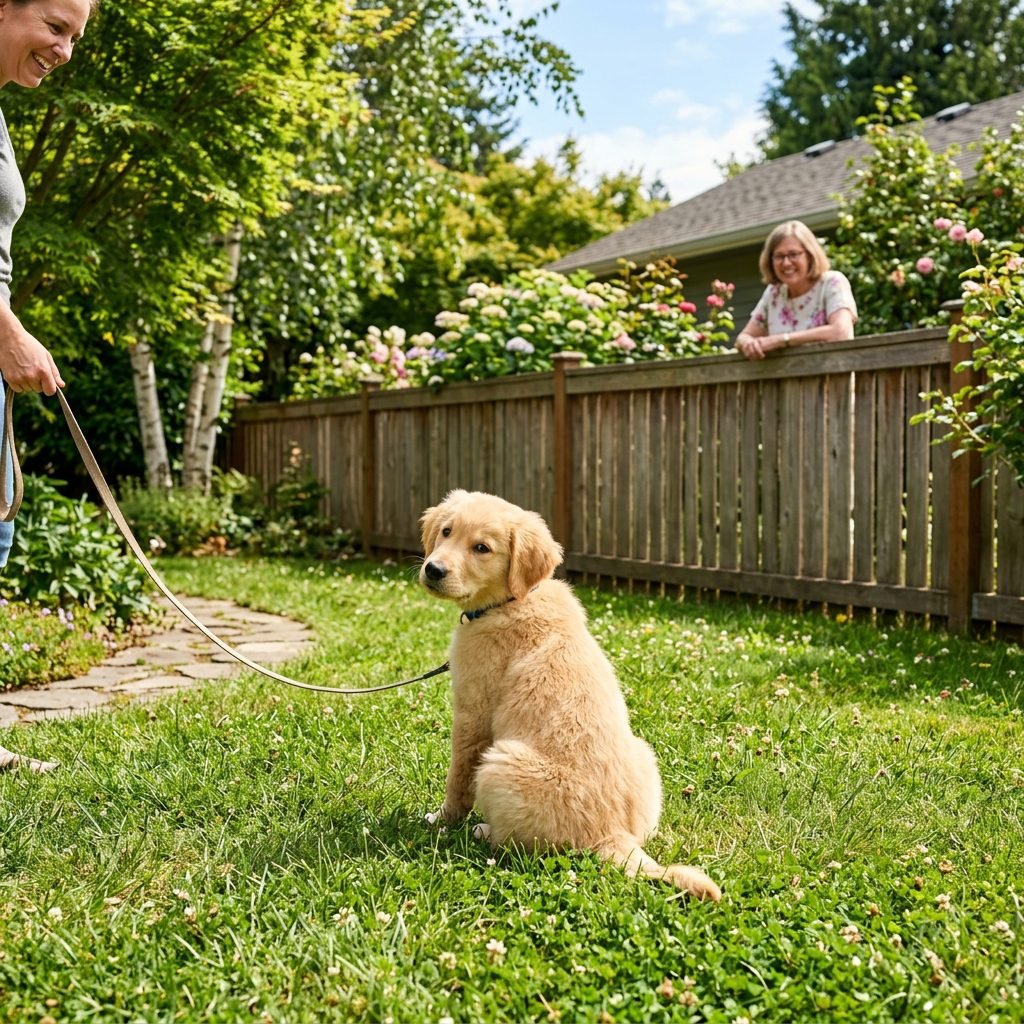
Hey there, savvy dog parents! If you are reading this, chances are you have been dealing with one of the most frustrating aspects of puppyhood: the relentless fence barking. You let your adorable new puppy out for a quick potty break, and the moment they hear a leaf crunch or a footstep next door, they transform into a tiny, furry alarm system. Not only is this stressful for you, but it can also create tension with your neighbors and reinforce bad habits in your growing dog.
First, take a deep breath. You are absolutely not alone in this! Fence barking is an incredibly common behavior issue, especially in young dogs who are just starting to discover their voices and their territory. As a canine specialist, I see this all the time. Puppies bark at fences for a variety of reasons: barrier frustration, territorial instincts, fear, or simply because they want to play with the person or dog on the other side. The good news? Because your puppy is still young, their brain is like a sponge, making this the perfect time to address the behavior before it becomes a lifelong habit.
In this comprehensive guide, we are going to dive deep into a highly effective, positive-reinforcement-based Fast 4-Step Fix. We will not be using any harsh corrections, yell-fests, or scary gadgets. Instead, we are going to use proven behavioral science to change how your puppy feels about the neighbors, teaching them that calmness is far more rewarding than barking. By the end of this article, you will have a clear, actionable roadmap to reclaim your peaceful backyard and keep your neighbors smiling. Let us get started!
Understanding the ‘Why’ and Gathering Your Training Tools
Before we jump into the steps, we need to understand exactly why your puppy is barking at the fence. Dogs do not bark just to annoy us; barking is communication. When a puppy barks through a fence, they are usually experiencing barrier frustration. They hear or smell something interesting (your neighbor), but the fence prevents them from investigating. This frustration builds up and explodes into barking. Alternatively, it could be territorial barking, where your puppy is saying, ‘Hey! This is my yard! Stay away!’ Every time the neighbor eventually goes back inside, your puppy thinks, ‘Aha! My barking worked! I scared them away!’ This is highly reinforcing for the dog.
To break this cycle, we need to change the emotional response and manage the environment. You cannot train a dog who is already over their threshold, meaning they are so worked up that they cannot hear you. Therefore, we need to be prepared with the right tools before we even step foot in the yard.
Essential Training Tools
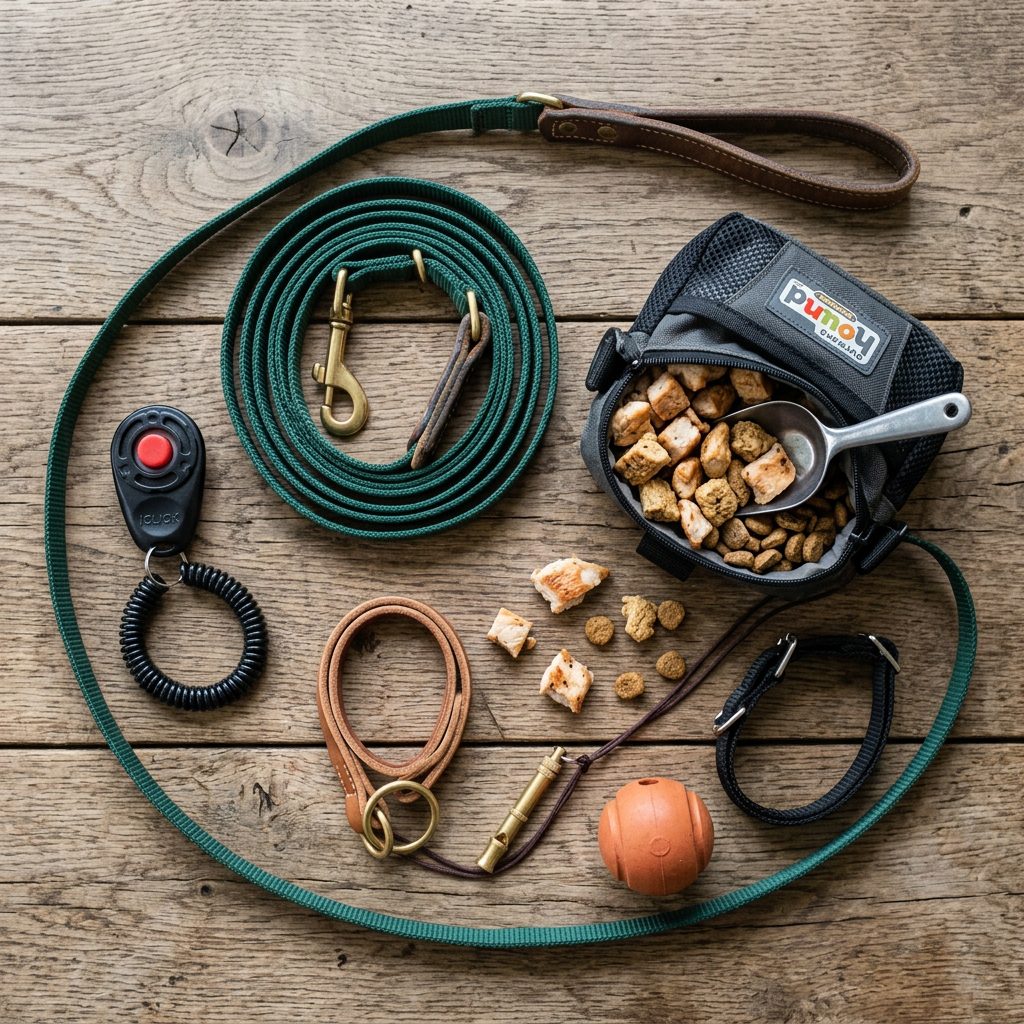
Having the right equipment is half the battle. Below is a breakdown of the tools you will need to execute this 4-step fix successfully.
| Tool | Purpose | Expert Tip |
|---|---|---|
| High-Value Treats | To reward calm behavior and build positive associations. | Use something smelly and soft, like boiled chicken, hot dogs, or cheese. Regular kibble will not work here! |
| Long Training Lead (15-20 ft) | To maintain control without making the puppy feel restricted. | Attach it to a comfortable harness, not a collar, to prevent neck injury if they lunge. |
| Clicker or Marker Word | To precisely mark the exact moment your puppy looks at the fence without barking. | If you do not have a clicker, a sharp, enthusiastic ‘Yes!’ works perfectly. |
| Visual Barrier (Optional but recommended) | To block the puppy’s line of sight if you have a chain-link or wrought-iron fence. | Privacy fabric or reed fencing from a hardware store is a cheap, temporary fix. |
Once you have your toolkit assembled, you are ready to move on to the actual training protocol. Remember, consistency is your best friend here. Grab your treat pouch, put on your most patient mindset, and let us dive into Step 1.
Step 1: Manage the Environment (Stop the Rehearsal)
The golden rule of dog training is this:
Every time your dog practices a behavior, they get better at it.
If you want your puppy to stop barking at the fence, you must first stop them from practicing the behavior of barking at the fence. This is called management, and it is the crucial first step that many dog owners skip.
Implement a Visual Block
If your puppy can see the neighbors through gaps in the fence, a chain-link fence, or a wrought-iron gate, their visual triggers are constantly being activated. Puppies are highly visual creatures. If you can block their view, you can significantly reduce the barking. Consider installing temporary privacy slats, outdoor fabric screens, or even planting fast-growing, pet-safe shrubs along the fence line. If they cannot see the trigger, the intensity of their reaction will drop dramatically.
Never Leave the Puppy Unsupervised
Until this issue is fully resolved, your puppy loses their unsupervised backyard privileges. Period. If you let them out alone and they spend ten minutes barking at the neighbor who is gardening, all your training will be undone. From now on, when the puppy goes out, you go out with them. You are their guide and their teacher.
Use the Long Line
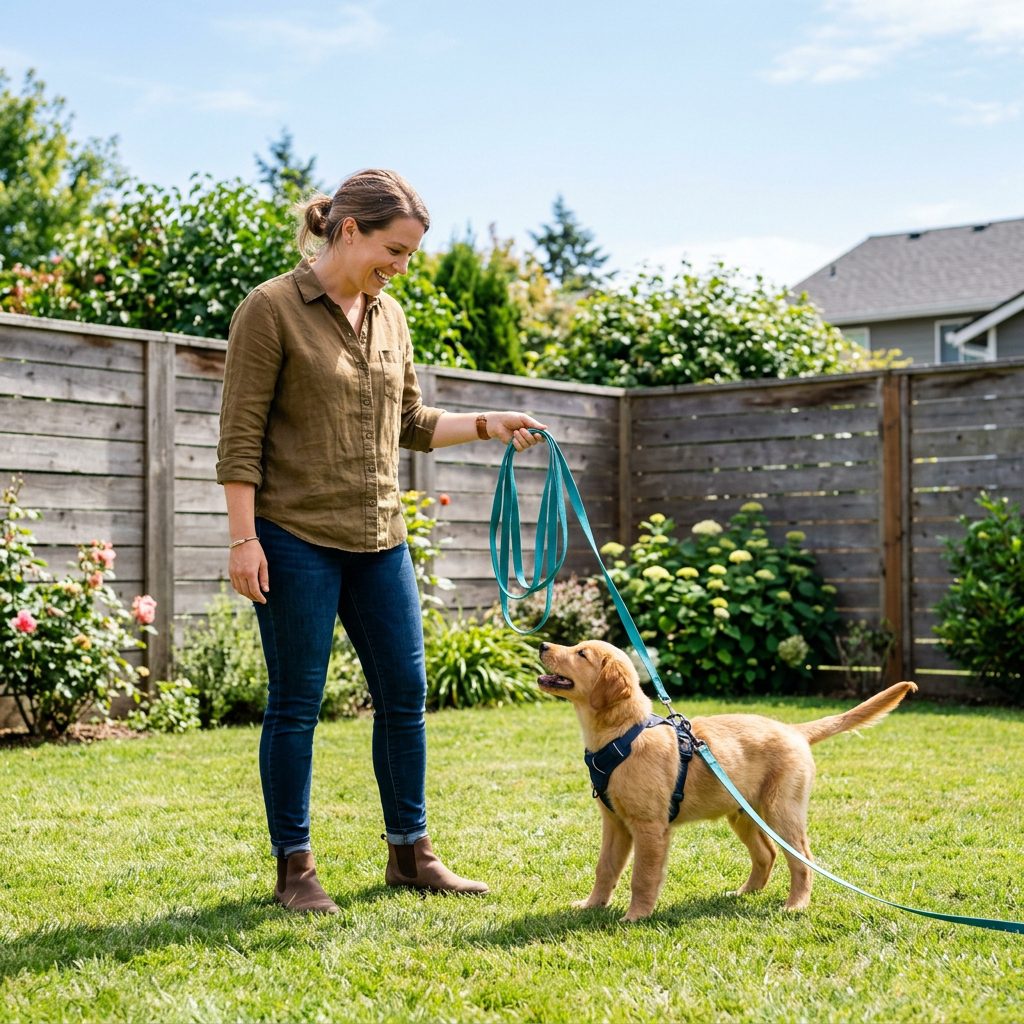
When you take your puppy out, attach them to your 15-20 foot long line. This gives them the freedom to sniff, explore, and go potty, but it removes their ability to sprint directly up to the fence line. If you see the neighbor come outside, you can simply step on the long line to gently prevent the puppy from rushing the fence. Management does not fix the underlying emotion, but it stops the bad habit from getting stronger while you work on the training steps.
Step 2: Build a Rock-Solid ‘Quiet’ and Recall
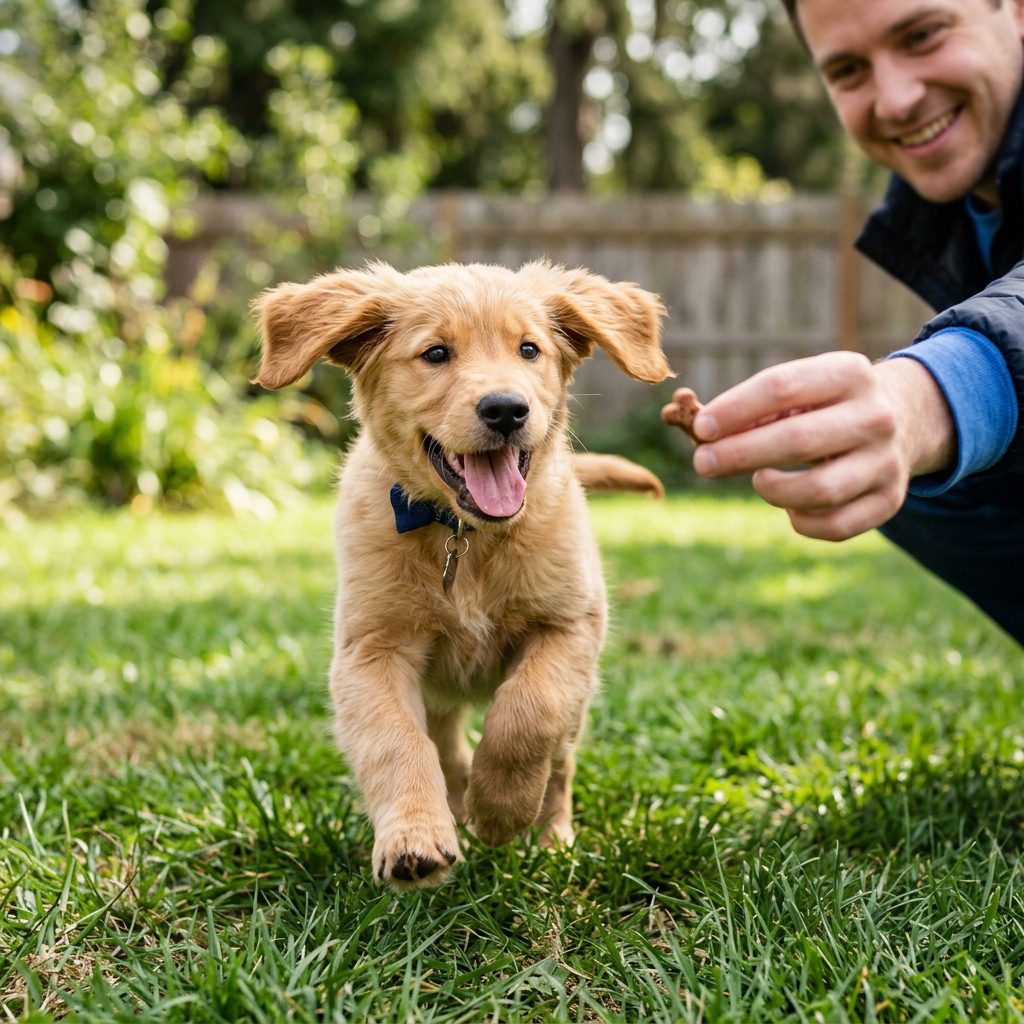
Now that we are managing the environment, we need to teach the puppy what we actually want them to do. It is not enough to just say ‘No bark!’ We have to give them an alternative, incompatible behavior. The best alternative behavior to barking at the fence is running back to you for a delicious reward.
Teaching the ‘Touch’ or Recall Command
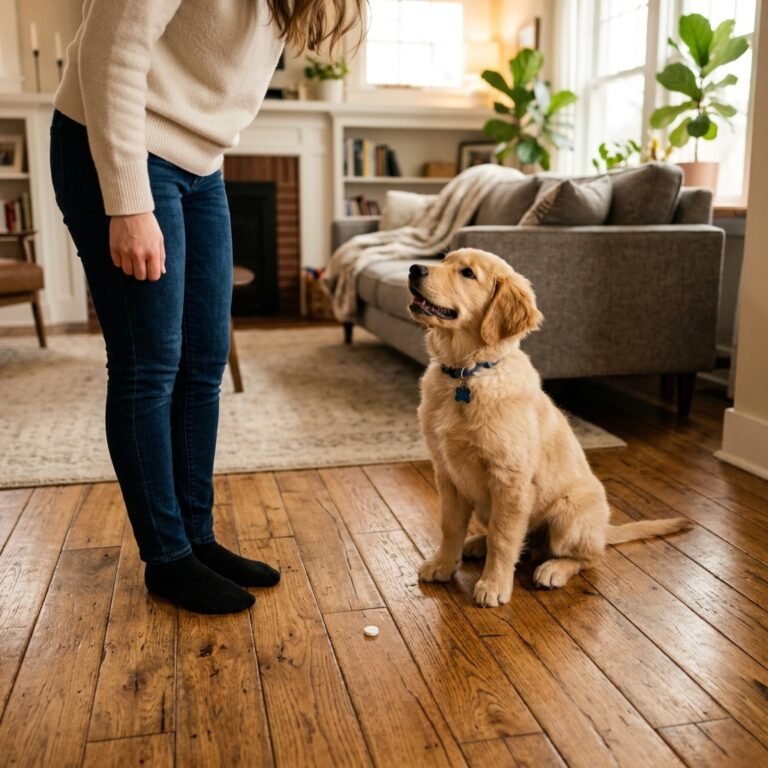
Start inside the house, away from all distractions. Say your puppy’s name in a bright, happy voice. The second they look at you, mark the behavior (click or say ‘Yes!’) and toss them a high-value treat. Repeat this until they whip their head around the moment they hear their name. Next, add distance. Call them from across the room. When they run to you, throw a massive party—lots of praise and several treats.
Once they are pros indoors, move to the backyard when the neighbors are not outside. Practice the recall on the long line. Let them wander, sniff a bush, and then cheerfully call them. If they come, reward heavily. You are building a reinforcement history. You are teaching them that running away from the fence and towards you is the most lucrative game in the world.
Introducing the ‘Quiet’ Cue
You can also capture calmness. When your puppy is sitting quietly in the yard, calmly say ‘Quiet’ and drop a treat between their paws. Do this repeatedly. If they do bark at a random noise, wait for them to pause to take a breath. The exact millisecond they are silent, say ‘Quiet,’ mark with a ‘Yes!’, and reward. Timing is everything here. You must reward the silence, not the bark.
Step 3: Desensitization and Counter-Conditioning (The LAT Game)
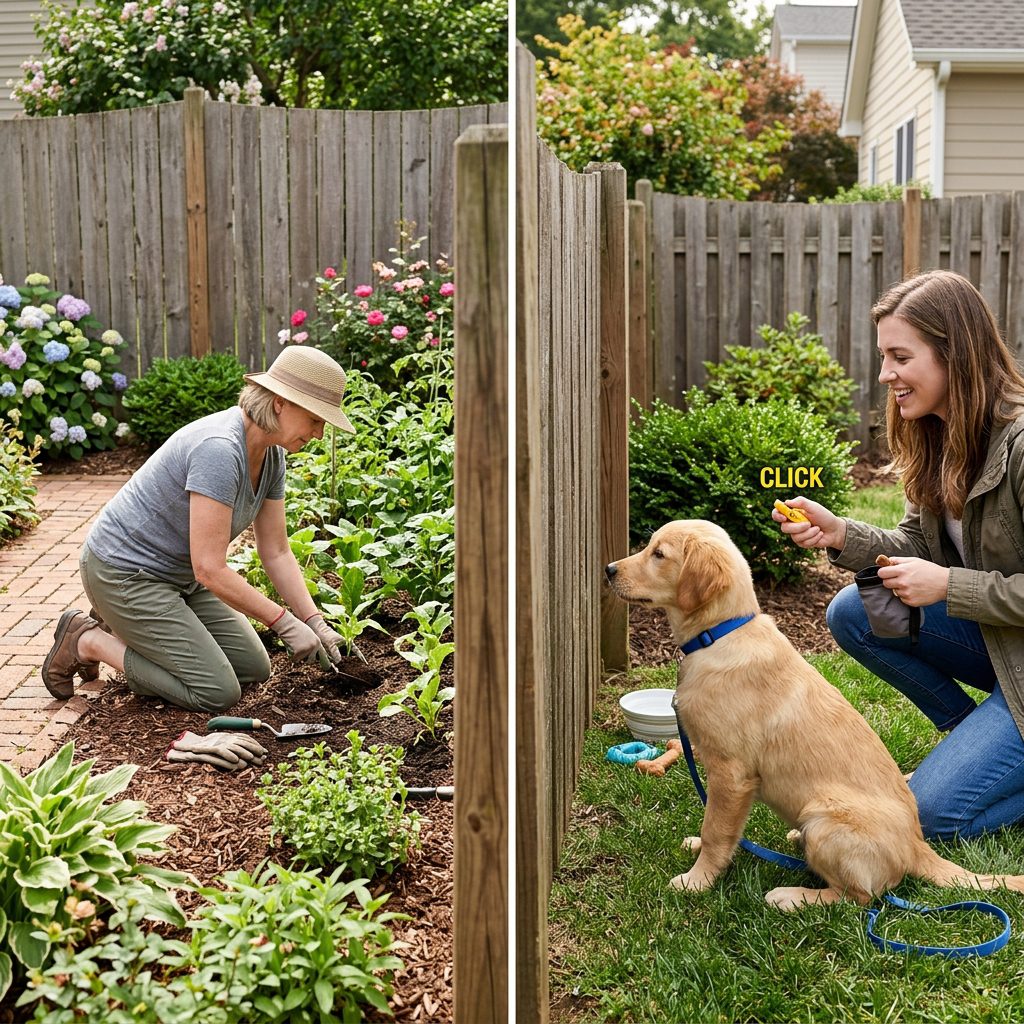
This is where the real magic happens. We are going to change your puppy’s emotional response to the neighbor from ‘Alert! Intruder! Must bark!’ to ‘Oh, the neighbor is there? That means my human is going to give me chicken!’ This process is called Counter-Conditioning, and we achieve it using a popular positive reinforcement game called ‘Look At That’ (LAT).
How to Play ‘Look At That’
For this step, you need to set up a controlled scenario. If you have a friendly neighbor, explain what you are doing and ask if they can help by just standing in their yard for a few minutes. Put your puppy on the long line and stand at a distance from the fence where your puppy notices the neighbor but isn’t barking yet (this is called staying under threshold).
- The Trigger Appears: The neighbor steps outside or makes a noise.
- The Puppy Looks: Your puppy turns their head to look at the fence/neighbor.
- Mark and Reward: The instant your puppy looks at the neighbor (before they have a chance to bark), click or say ‘Yes!’ enthusiastically.
- The Puppy Turns to You: Hearing the marker word, your puppy will whip their head back to you expecting the treat. Give them the high-value treat immediately.
Rinse and Repeat
Repeat this process over and over. Neighbor makes noise -> Puppy looks -> ‘Yes!’ -> Treat. What happens over a few sessions is remarkable. Instead of staring at the fence and building up frustration that leads to a bark, the puppy will hear the neighbor, glance at the fence, and then immediately look back at you, waiting for their chicken. You have successfully rewired their brain! The neighbor is no longer a threat; the neighbor is a cue to look at you for snacks.
Step 4: Proofing and Phasing Out Rewards
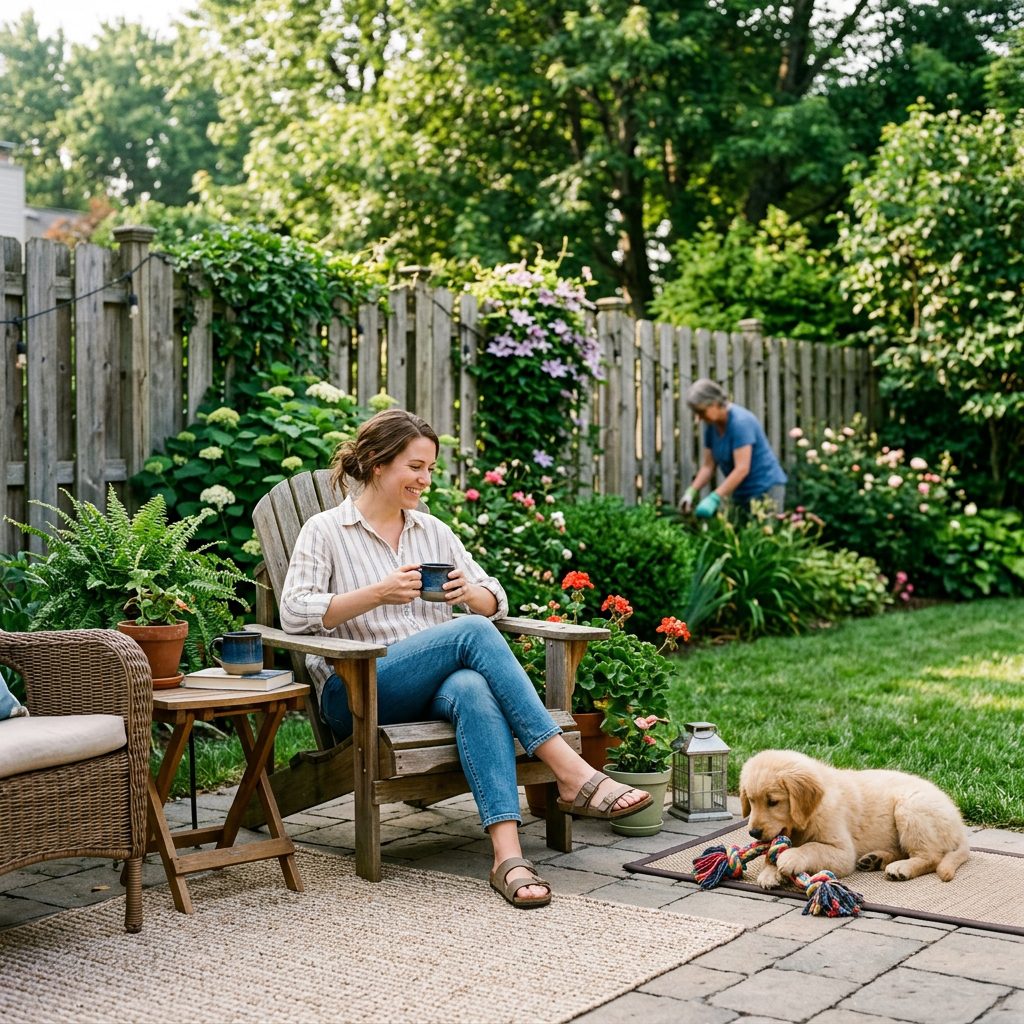
You have managed the environment, built a great recall, and changed their emotional response using the LAT game. Now, you need to ‘proof’ the behavior. Proofing means practicing the behavior in various scenarios so the dog understands the rules apply all the time, not just during formal training sessions.
Decreasing Distance
Slowly start moving closer to the fence during your LAT games. If you started 20 feet away, move to 15 feet, then 10 feet. If your puppy barks, you have moved too close, too fast. Calmly walk them further away to a distance where they can be successful again. Dog training is not a race; it is a marathon. Patience will pay off.
Fading the Treats
Savvy dog owners know you do not want to carry hot dogs in your pockets for the next ten years. Once your puppy is reliably looking at you instead of barking at the fence, you can start ‘fading’ the treats. Instead of treating every single time they look at you, treat every second time. On the non-treat times, offer massive verbal praise or a quick game of tug with their favorite toy. Wean them down to intermittent rewards. Because they never know exactly when the jackpot is coming, the behavior actually becomes stronger!
Removing the Long Line
Finally, when your puppy is ignoring the neighbors completely or naturally disengaging and running back to you, you can drop the long line and let it drag behind them. This gives them the feeling of freedom while still giving you a safety net to step on if they regress. Eventually, you can remove the long line entirely. Congratulations, you have a peaceful backyard again!
Troubleshooting & Common Mistakes
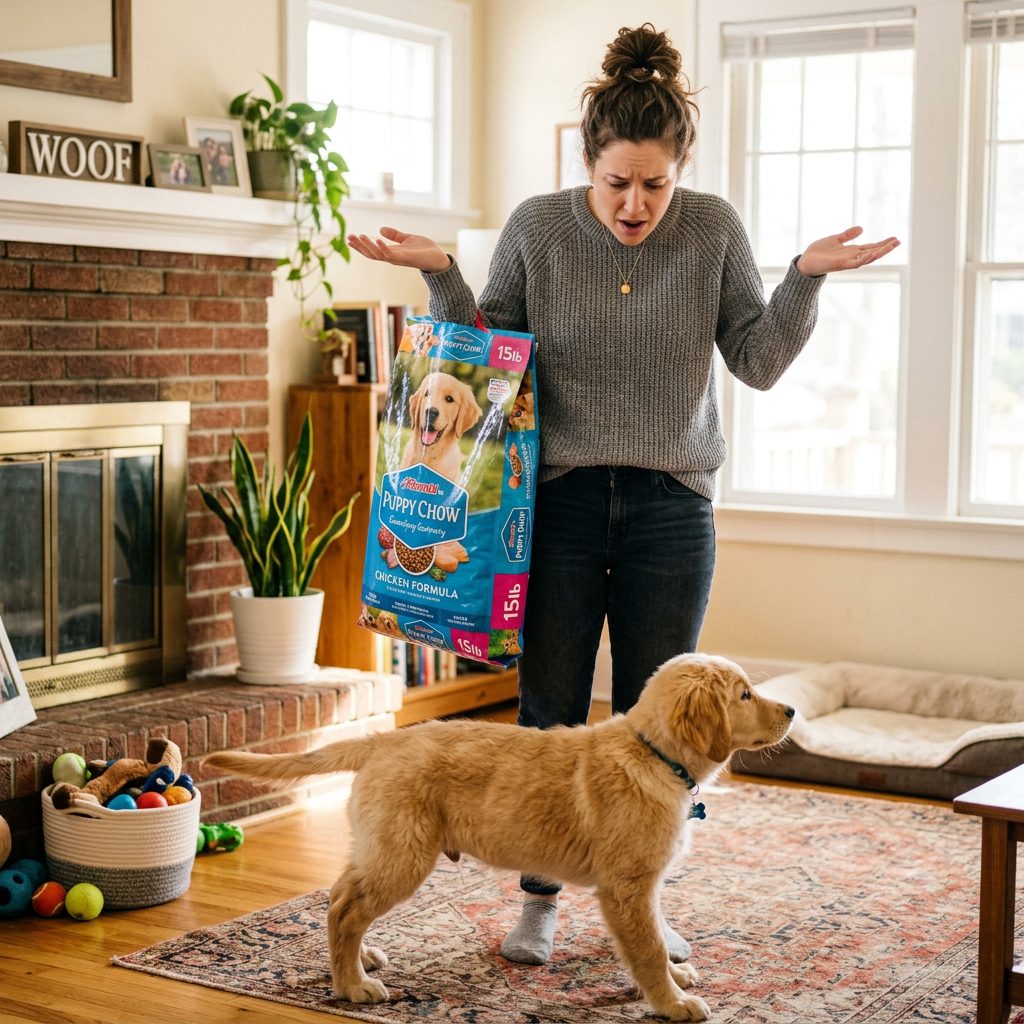
Even with the best intentions, training a puppy is rarely a perfectly linear journey. You will have great days, and you will have days where it feels like your puppy forgot everything. That is completely normal! Let us look at some common pitfalls and how to troubleshoot them so you stay on the path to success.
Common Training Mistakes
| What You Might Do (The Mistake) | Why It Fails | What You Should Do Instead |
|---|---|---|
| Yelling ‘Quiet!’ or ‘No!’ | To the puppy, yelling sounds like you are barking along with them. It increases their arousal and validates their anxiety. | Use a calm, happy voice. Call them away from the fence using their recall word and reward them for coming to you. |
| Using low-value treats (dry kibble) | Kibble is boring. The neighbor is highly stimulating. Boring food cannot compete with a high-arousal trigger. | Upgrade your treats immediately. Use real meat, cheese, or specialized stinky training treats. Make yourself the most exciting thing in the yard. |
| Moving too close to the fence too soon | Pushing the puppy past their threshold means their brain goes into ‘fight or flight’ mode. They literally cannot learn in this state. | Increase distance. Find the ‘sweet spot’ where the puppy notices the neighbor but is still calm enough to eat a treat. |
| Leaving the puppy outside alone | Allows them to practice the bad behavior when you aren’t looking, undoing weeks of hard work. | Always supervise backyard time until the behavior is 100% resolved. Use a long line for management. |
If you find that your puppy is suddenly regressing, do not panic. Simply take a step back in the training plan. Put the long line back on, increase your distance from the fence, and bring out the highest value treats you have. Consistency and patience will always win out over frustration.
Conclusion
Stopping a puppy from barking at the neighbors through the fence does not require magic, intimidation, or expensive gadgets. It simply requires a solid understanding of canine behavior, a pocket full of high-value treats, and a commitment to consistency. By managing the environment, building a strong recall, utilizing counter-conditioning, and carefully proofing the behavior, you are setting your puppy up for a lifetime of success.
Remember, savvy dog parents, training is a journey you take with your dog. Celebrate the small victories, stay patient during the setbacks, and always keep your training sessions positive and upbeat. Before you know it, your backyard will be a peaceful oasis once again, and your neighbors will be marveling at your incredibly well-behaved pup. Happy training!