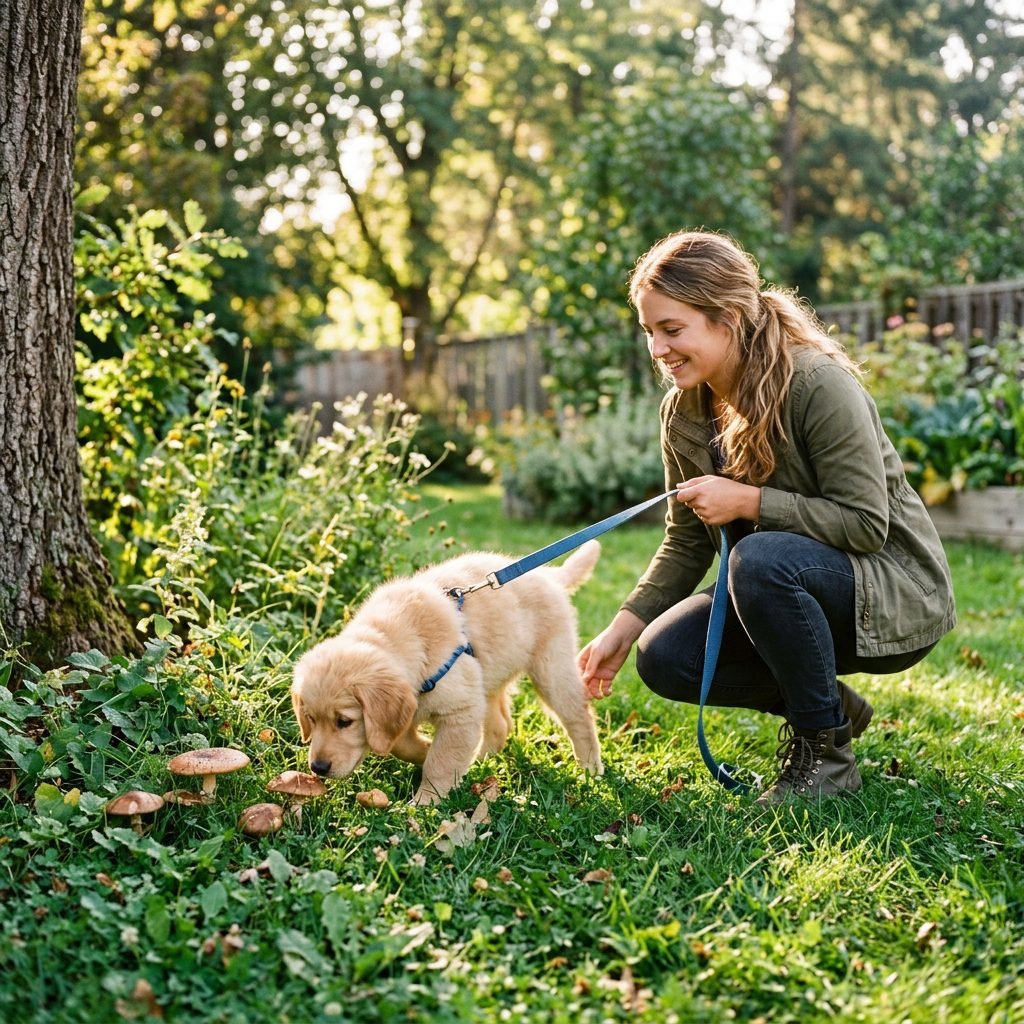
Toxic Yard Alert: How to Train Your Puppy to Stop Eating Dangerous Mushrooms Today
Hey there, savvy dog parents! If you have recently welcomed a bouncy, curious puppy into your home, you already know that everything—and I mean everything—goes straight into their mouths. It is how they explore the world. But when the rainy season hits or the morning dew creates the perfect humid environment, our beautiful backyards can suddenly sprout hidden dangers: wild mushrooms.
While some backyard fungi are harmless, others can be incredibly toxic and even life-threatening to our dogs. As a responsible and proactive dog owner, you cannot simply hope your puppy ignores them. You need an actionable, foolproof plan. Today, we are going to dive deep into a comprehensive training guide designed specifically to teach your puppy to ignore these dangerous yard invaders.
In this guide, we will cover the essential tools you need, a step-by-step breakdown of the life-saving Leave It command, clever environmental management strategies, and what to do if the worst happens. Grab a cup of coffee, and let us get your yard safe and your puppy trained!
Understanding the Fungal Threat: Why Mushrooms Are a Big Deal
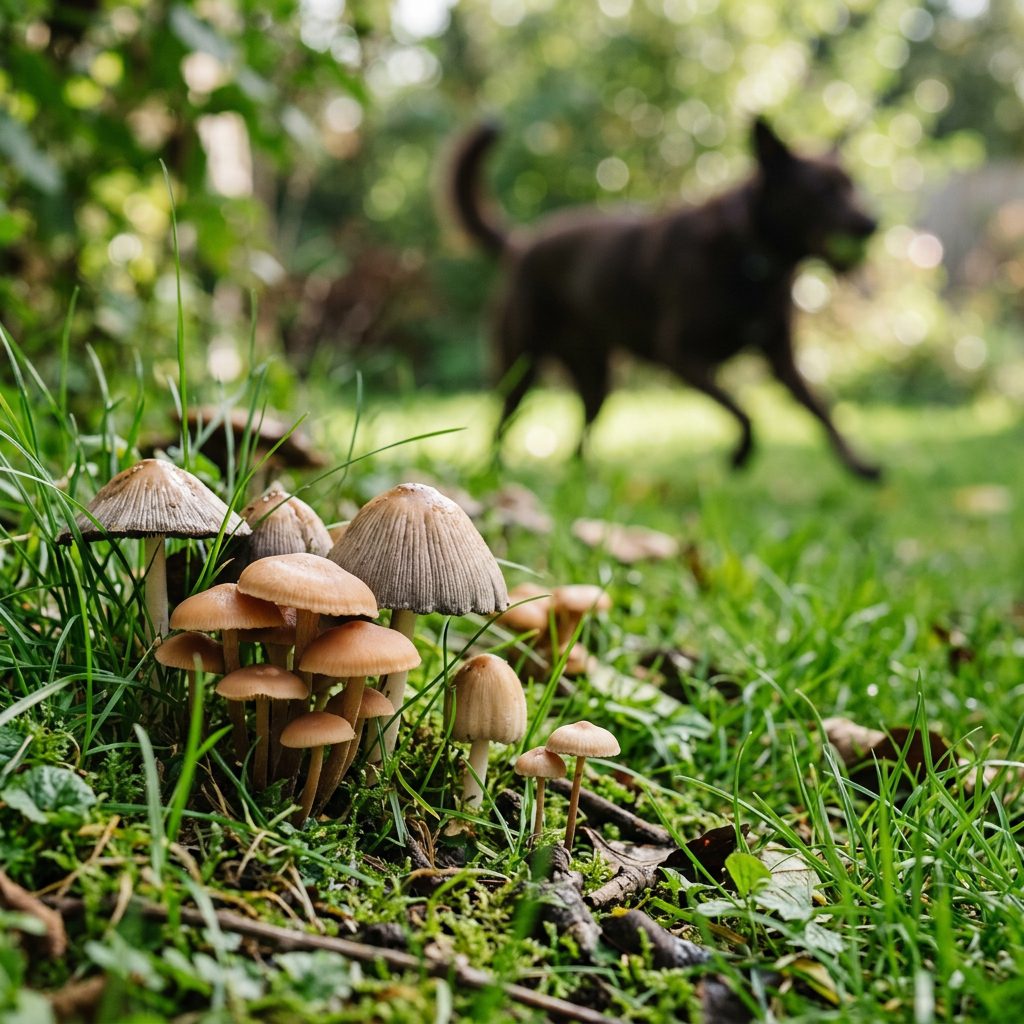
Before we jump into the training, it is crucial to understand exactly what we are up against. Wild mushrooms are notoriously difficult to identify, even for seasoned foragers. What looks like a harmless little brown mushroom could actually be an Amanita phalloides, commonly known as the Death Cap, or a species of Inocybe that contains high levels of muscarine.
The Symptoms of Mushroom Toxicity
If your puppy ingests a toxic mushroom, the symptoms can range from mild gastrointestinal upset to severe neurological issues or organ failure. Here is what you need to watch out for:
- Gastrointestinal distress: Vomiting, diarrhea, and abdominal pain often occur within 15 minutes to a few hours after ingestion.
- Neurological signs: Tremors, seizures, uncoordinated walking (ataxia), and extreme lethargy.
- SLUDGE syndrome: Salivation, Lacrimation (tearing), Urination, Defecation, Gastrointestinal upset, and Emesis (vomiting)—classic signs of muscarine poisoning.
- Organ failure: Jaundice, weakness, and coma, which can occur days after eating certain liver-toxic mushrooms.
Always treat every wild yard mushroom as if it is highly toxic. It is simply not worth the risk to guess.
Because puppies have smaller bodies and developing immune systems, a very small amount of a toxic mushroom can have devastating effects. This is why training your dog to automatically ignore these yard hazards is one of the most important things you will ever do for them.
Essential Tools for Mushroom Avoidance Training
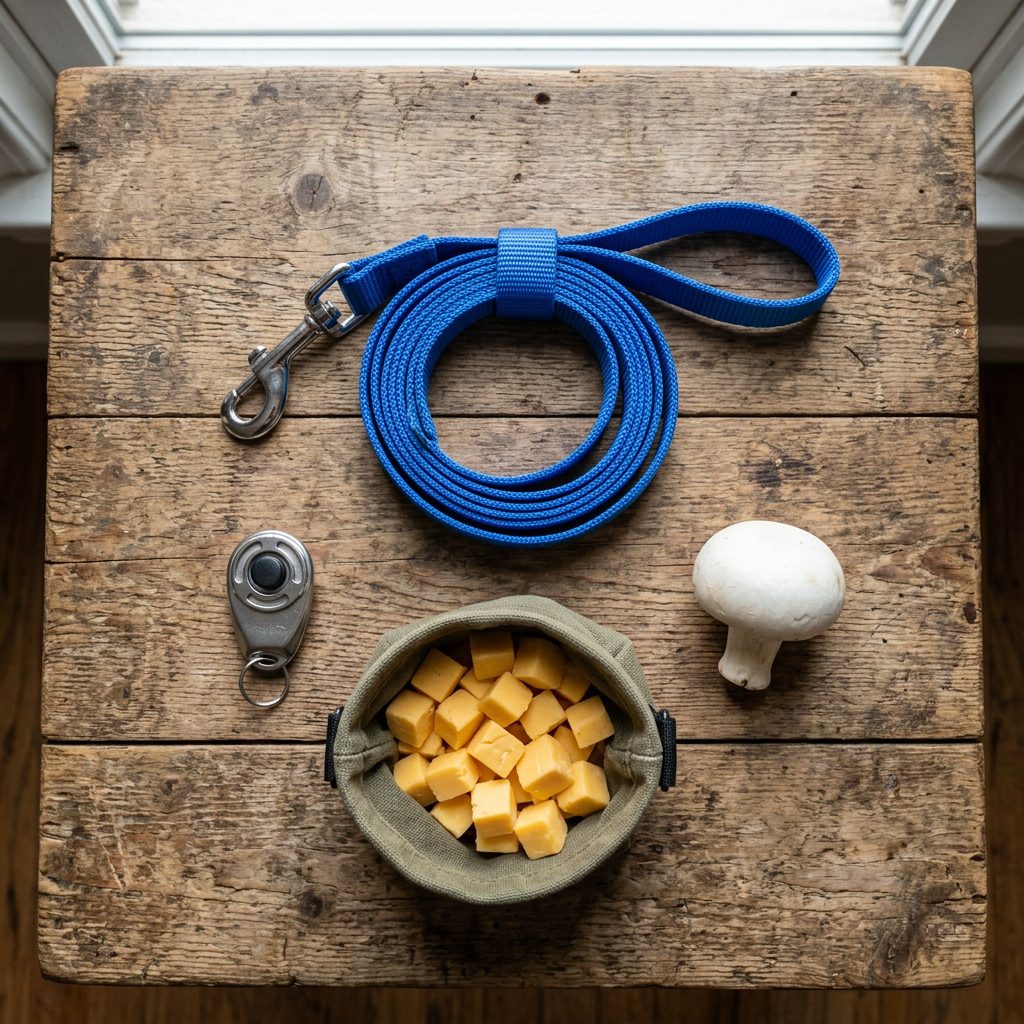
Alright, let us set ourselves up for success. You wouldn’t try to bake a cake without measuring cups, and you shouldn’t try to train a life-saving behavior without the right gear. Here is your training toolkit:
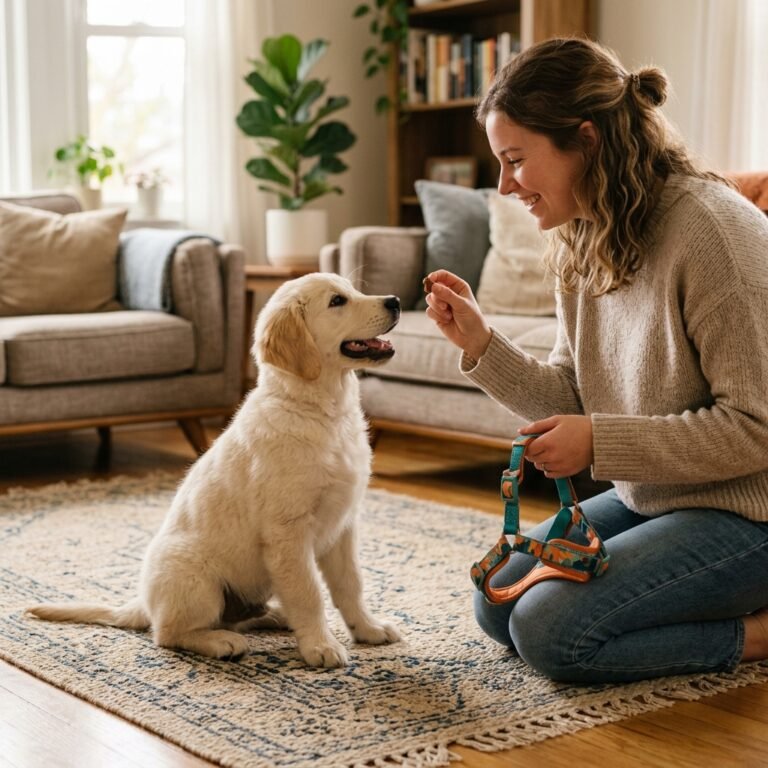
- High-Value Treats: Forget the dry kibble for this one. We are competing with the incredibly interesting smells of the outdoors. You need the good stuff: boiled chicken breast, small cubes of mild cheese, or hot dogs. The treats should be pea-sized so your puppy can eat them quickly without losing focus.
- A Standard 6-Foot Leash: A fixed-length leash gives you control. Avoid retractable leashes, as they teach dogs to pull and do not offer the precise handling we need for safety training.
- A Flat Collar or Well-Fitted Harness: Ensure your puppy is comfortable but secure. If they try to dart for a mushroom, you need to know they won’t slip out of their gear.
- A Training Clicker (Optional but Recommended): Clickers provide a sharp, distinct sound that tells your puppy, Yes! That exact choice you just made earned you a reward.
- Safe Decoys: We will never use real wild mushrooms for training. Instead, use safe, boring items like a piece of crumpled paper, a plain white button mushroom from the grocery store (which is safe for dogs, though we still don’t want them eating it), or a small dog toy.
Having these tools ready before you step foot in the yard will make your training sessions smooth, efficient, and fun for your puppy.
Step-by-Step Guide: Mastering the ‘Leave It’ Command
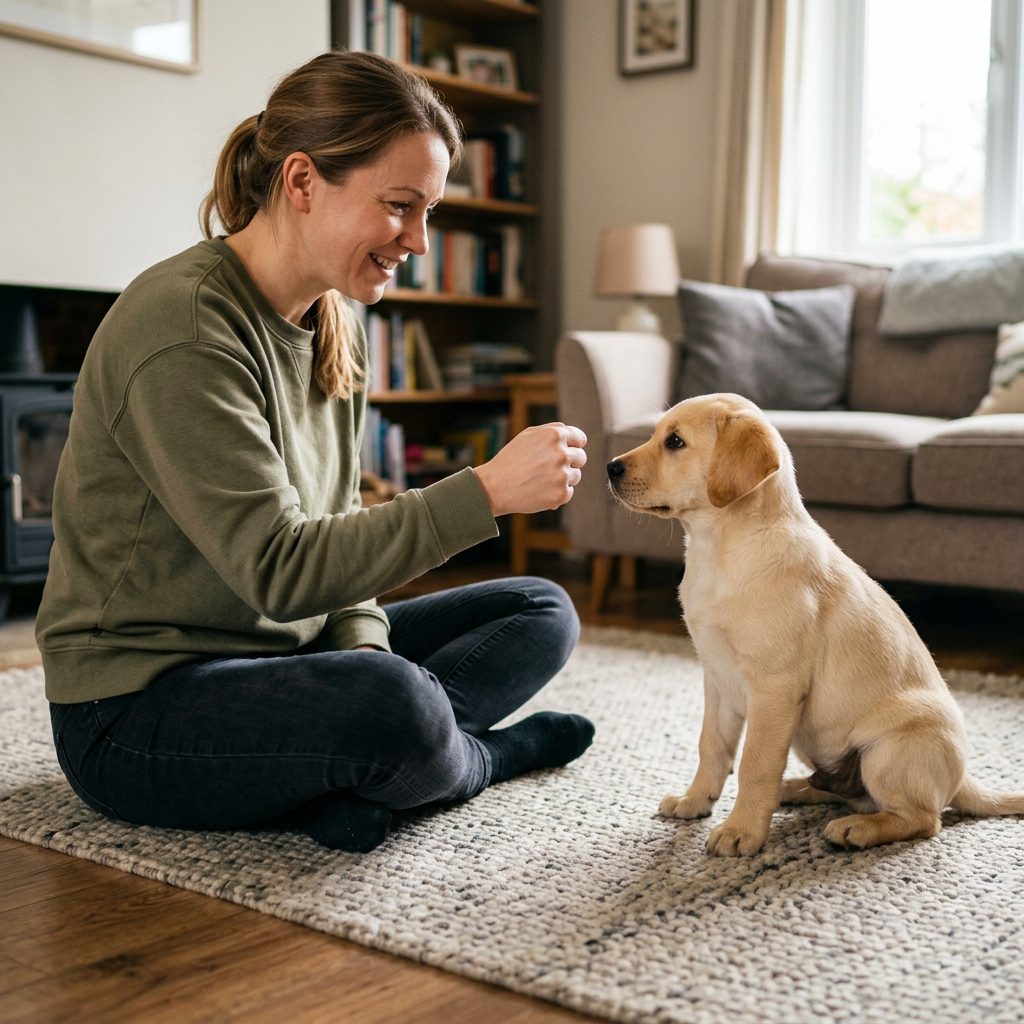
The foundation of keeping your puppy away from toxic yard hazards is a rock-solid Leave It command. Leave It means exactly that: disengage from whatever you are looking at or sniffing, and look at me instead. Here is how to teach it from scratch.
Step 1: The Closed Fist (The Basics)
- Sit on the floor with your puppy. Put a low-value treat (like a piece of kibble) in one hand and close your fist. Have a high-value treat (like chicken) hidden in your other hand behind your back.
- Present your closed fist with the kibble to your puppy. They will sniff, lick, and paw at your hand. Do nothing. Just wait patiently.
- The exact second your puppy pulls their nose away from your fist—even for a split second—say Yes! (or click) and immediately give them the high-value treat from your other hand.
- Repeat this until your puppy immediately ignores your closed fist when you present it. Once they are doing this reliably, start adding the verbal cue Leave It right as you present your fist.
Step 2: The Open Palm (Adding Difficulty)
- Now, place the low-value treat in your open palm. Say Leave It.
- If your puppy moves toward the treat, simply close your hand. Wait for them to back off, then open it again.
- When they can look at the exposed treat in your open palm without diving for it, mark with a Yes! and reward from your hidden stash of high-value treats.
Step 3: The Floor Challenge
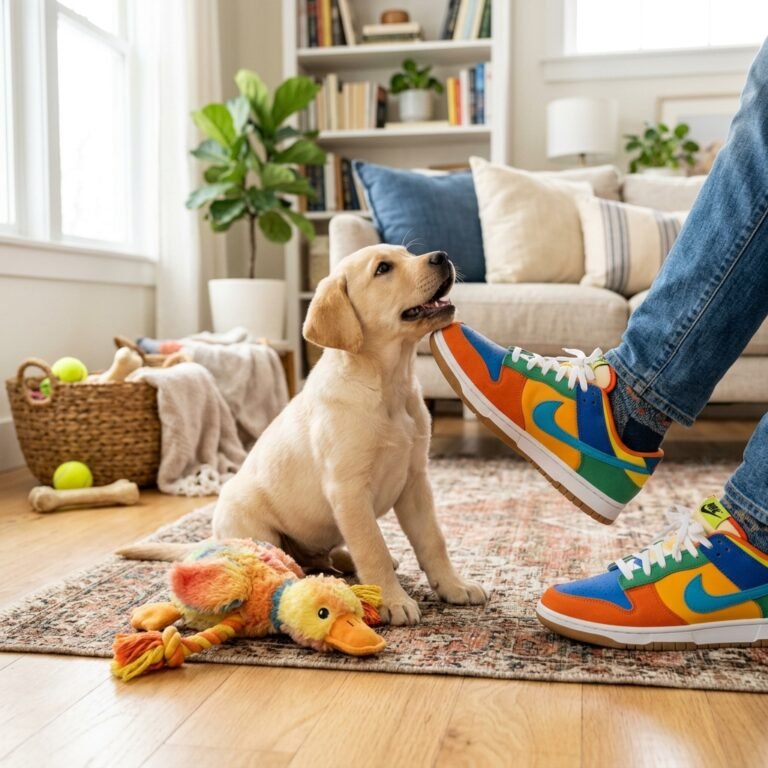
- Stand up. Place the low-value treat on the floor and cover it with your shoe. Say Leave It.
- Wait for your puppy to stop sniffing your shoe and look up at you. Mark and reward with the high-value treat.
- Gradually move your foot away so the treat is exposed on the floor. If they dive for it, quickly cover it with your foot again. The goal is for them to see the treat on the floor, hear the command, and immediately look at your face.
Step 4: The Yard Setup (Simulating Mushrooms)
- Take your puppy out into the yard on their 6-foot leash. Before bringing them out, place your safe decoys (like the grocery store button mushrooms) in the grass.
- Walk your puppy toward the decoy. As soon as they notice it and begin to move their nose toward it, say Leave It in a firm but cheerful tone.
- Stop walking so the leash prevents them from reaching the decoy. The moment they turn their head away from the decoy and look at you, erupt in praise! Give them a jackpot of high-value treats.
- Practice this daily. Eventually, your puppy will associate seeing a mushroom-like object with looking at you for a reward.
Environmental Management: Mushroom-Proofing Your Yard
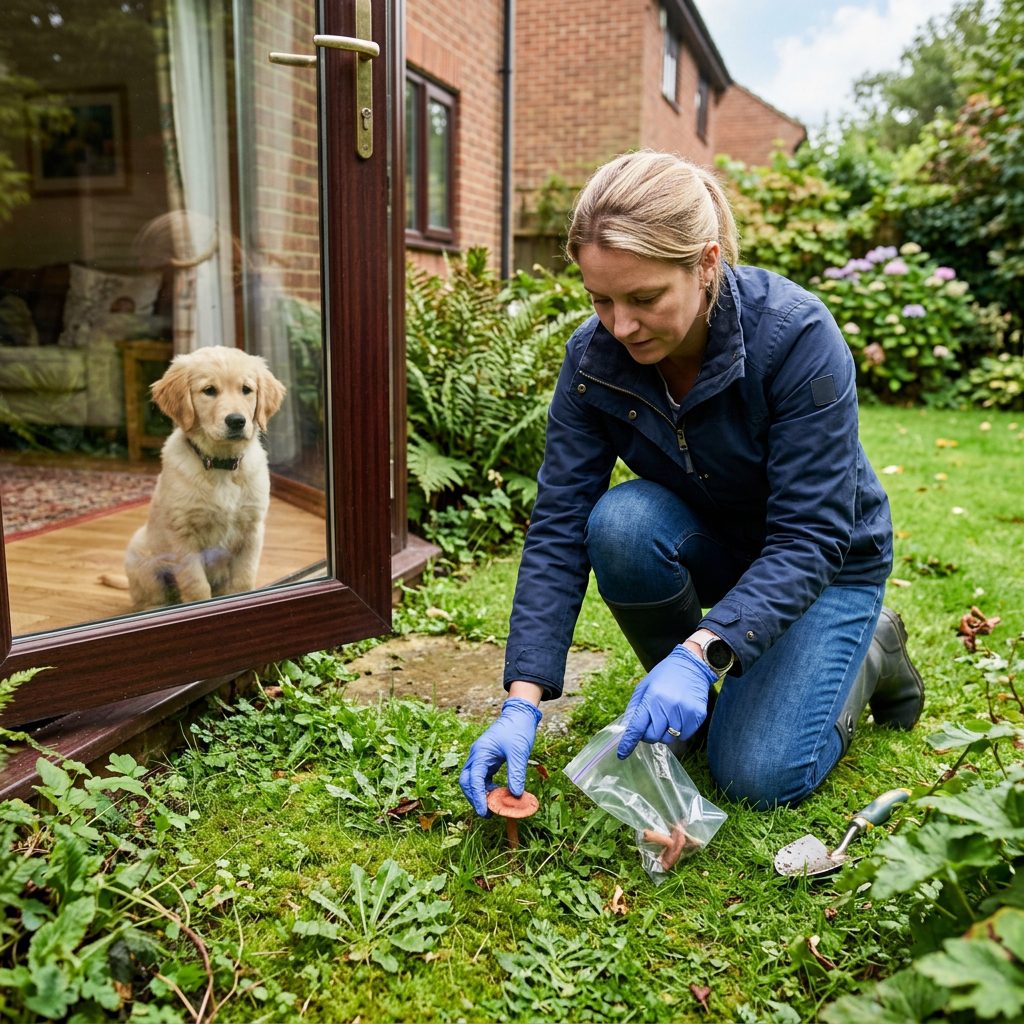
Even the best-trained puppy can have a moment of weakness, especially if they are bored or unsupervised. Training is your primary weapon, but environmental management is your safety net. You must actively control your yard’s environment to minimize the risk.
Daily Yard Patrols
Mushrooms can literally pop up overnight. A yard that was clear on Tuesday evening can be a minefield by Wednesday morning. You need to make a habit of walking your yard before you let your puppy out.
| Season/Weather Condition | Mushroom Growth Risk | Recommended Yard Patrol Frequency |
|---|---|---|
| Spring & Fall (Cool, damp) | Very High | Twice daily (Morning and Evening) |
| Summer (Hot, dry) | Low to Moderate | Once daily or after heavy rain |
| Winter (Freezing) | Very Low | Once weekly |
| After Heavy Rainfall | Extreme | Before every single potty break |
Lawn Care and Maintenance
Fungi thrive on decaying organic matter. By removing their food source, you can significantly reduce the number of mushrooms in your yard.
- Pick up dog waste promptly: Dog feces can actually act as a fertilizer for certain types of yard fungi. Keep the lawn clean!
- Remove decaying wood: Old tree stumps, rotting logs, and buried roots are prime real estate for mushrooms. Have stumps professionally ground down.
- Rake up dead leaves: Thick layers of wet, decaying leaves create the perfect dark, damp environment for fungal spores to thrive.
- Aerate your lawn: Improving drainage in your yard prevents the soggy soil conditions that mushrooms love.
Pro Tip: Never kick or mow over a mushroom to get rid of it. This simply spreads the spores across your yard, ensuring a larger crop next time it rains. Always pluck them from the base using a plastic bag over your hand, tie the bag shut, and throw it in the trash.
Troubleshooting: Common Training Mistakes and Fixes
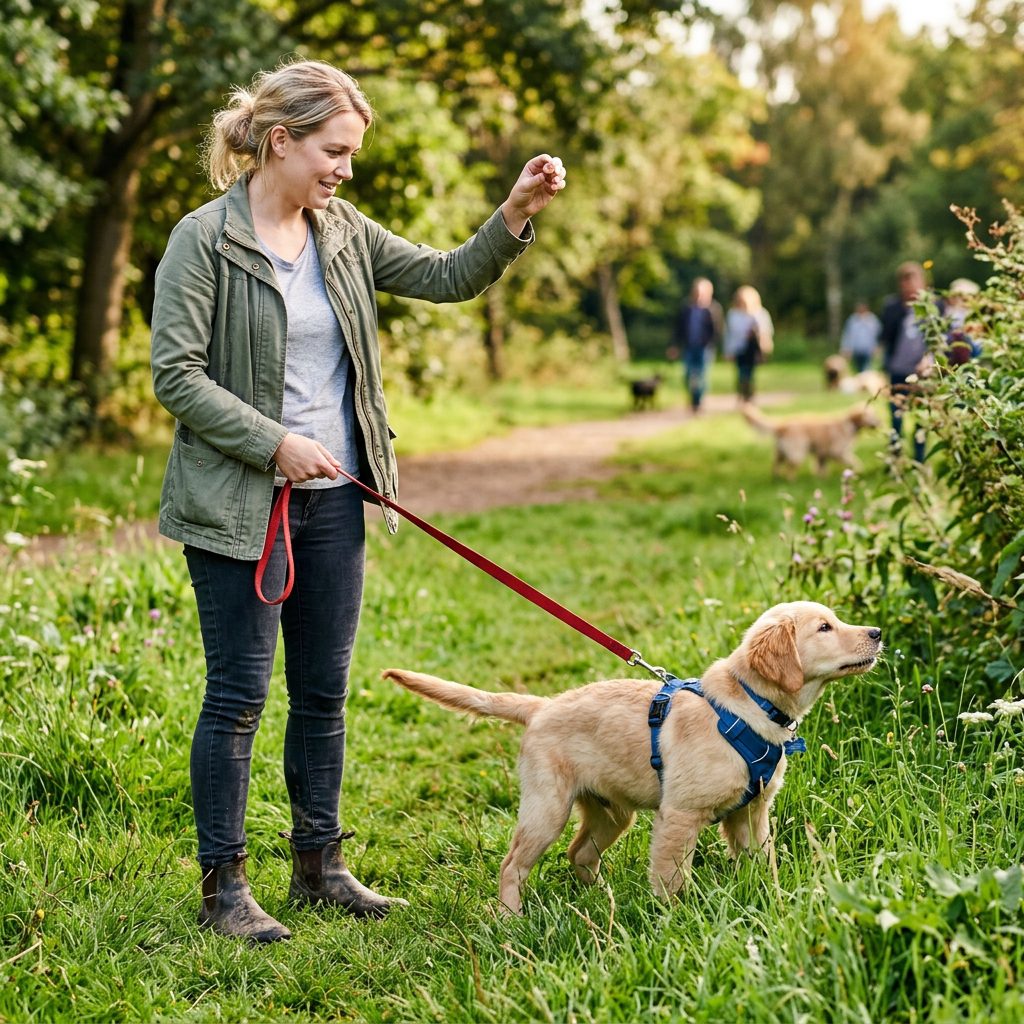
Training is rarely a perfectly linear journey. You will hit roadblocks, and your puppy will have days where they seem to forget everything they have learned. Do not panic! Here are the most common troubleshooting scenarios when teaching your dog to avoid yard mushrooms.
Problem 1: My puppy ignores the high-value treat and wants the mushroom decoy anyway.
The Fix: Your high-value treat isn’t high-value enough, or you have progressed too quickly. If your dog prefers the environment over your reward, you need to up the ante. Switch to something irresistible like boiled hot dogs or tiny bits of steak. Also, take a step back in training. If they are failing in the yard, go back to practicing in the living room where there are fewer distractions.
Problem 2: My puppy is too fast, and they grab the decoy before I can say ‘Leave It’.
The Fix: This is an issue with leash management. When practicing in the yard, you must keep the leash short enough that your puppy physically cannot reach the decoy. You control the distance. Anticipate their movements; watch their ears and nose. The moment they lock eyes on the target, issue the command. Do not wait for them to start moving toward it.
Problem 3: My puppy drops the decoy when I say ‘Leave It’, but then immediately goes back for it.
The Fix: Leave It means leave it forever, not just for a second. If your dog turns back to the object, use the Let’s Go command. Say Leave It, mark and reward when they look at you, and immediately say Let’s Go while quickly walking in the opposite direction. Reward them continuously for following you away from the hazard. We want to teach them that moving away from the mushroom is a highly rewarding game.
Emergency Action Plan: What If Your Puppy Eats a Mushroom?
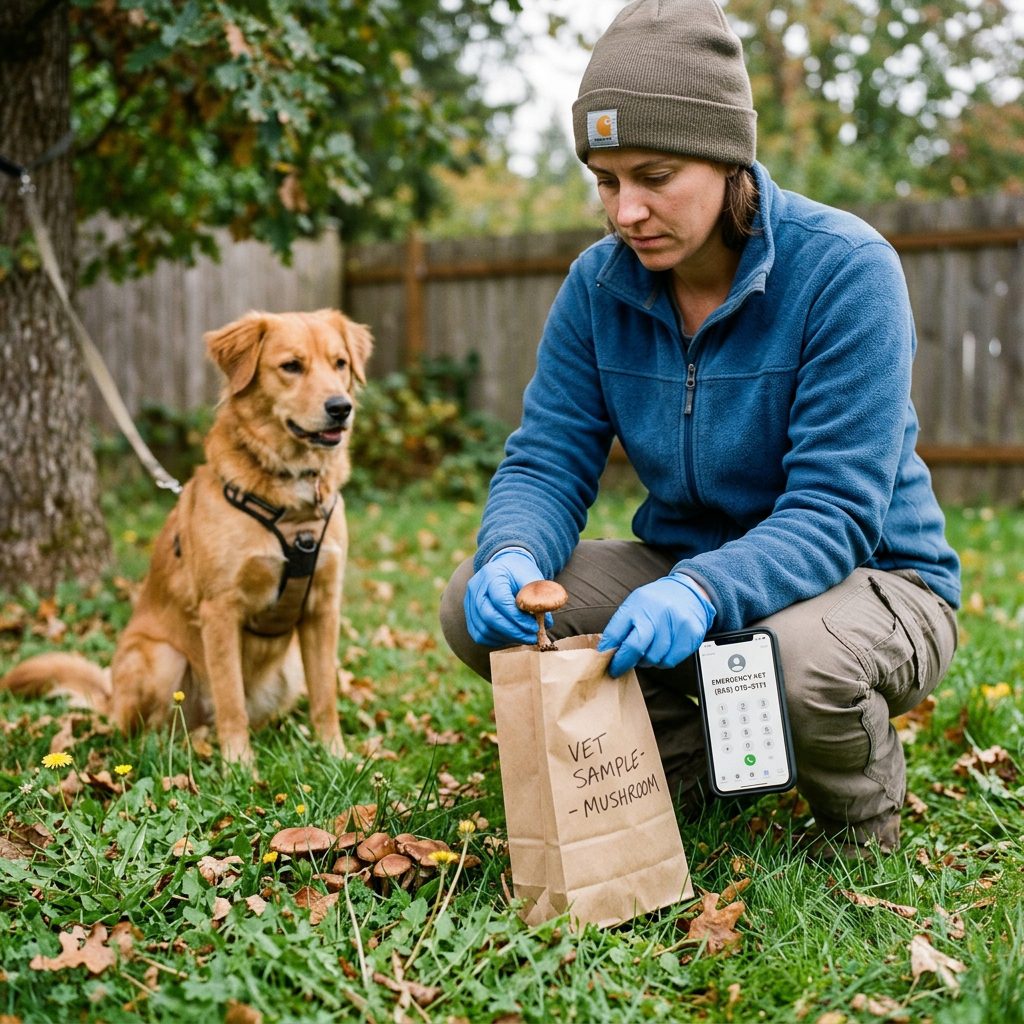
Despite our best efforts, accidents happen. Puppies are lightning-fast, and a momentary lapse in attention can result in them swallowing a wild mushroom. If this happens, you must act immediately. Time is of the essence when dealing with potential toxicity.
Step-by-Step Emergency Protocol
- Do not panic, but act fast: Remove your puppy from the area immediately so they cannot eat any more.
- Collect a sample: This is critical. Grab a plastic bag or wear gloves and pick another mushroom of the exact same type that your dog ate. Try to get the whole mushroom, including the base in the soil. Place it in a paper bag or wrap it in a dry paper towel (do not put it in a sealed plastic bag, as it will decay rapidly, making identification harder for the vet).
- Take clear photos: Take pictures of the mushroom where it is growing. Get close-ups of the cap, the gills underneath, and the stem. This will help a mycologist or your vet identify the species.
- Call the experts immediately: Do not wait for symptoms to appear! By the time symptoms of liver-toxic mushrooms show up, severe damage has already been done. Call your local emergency veterinarian or the ASPCA Animal Poison Control Center (888-426-4435) right away.
- Follow veterinary instructions: The vet may instruct you to induce vomiting at home using 3% hydrogen peroxide, but never do this without explicit veterinary approval, as it can be dangerous depending on the puppy’s size and what they ingested. Most likely, they will tell you to bring the dog in immediately.
Always keep your emergency vet’s phone number and the Animal Poison Control number saved in your phone’s contacts. In a panic, you do not want to be wasting time Googling for phone numbers.
Being prepared is the ultimate sign of a savvy dog owner. By understanding the risks, mastering the Leave It command, managing your yard, and knowing exactly what to do in an emergency, you are setting your puppy up for a long, happy, and safe life by your side.
Conclusion
Training your puppy to stop eating dangerous mushrooms in the yard is not a one-and-done event; it is an ongoing process of education, vigilance, and environmental management. As savvy dog owners, we have to stay one step ahead of our curious companions. By mastering the Leave It command, utilizing high-value rewards, and keeping a close eye on our lawns—especially after a good rain—we can create a safe haven for our dogs to play.
Remember, your puppy looks to you for guidance. Keep your training sessions short, positive, and fun. Celebrate their successes, be patient with their mistakes, and always prioritize their safety above all else. You’ve got this! Now, grab those high-value treats, head out to the yard, and start building that life-saving communication with your furry best friend.