The Ultimate Daytime Puppy Playpen Schedule (Perfect For Busy Work-From-Home Pet Parents!)
The Work-From-Home Puppy Paradox
Let’s be honest: when you first decided to bring a puppy home while working remotely, you probably envisioned a fluffy companion snoozing peacefully at your feet while you crushed your quarterly goals. The reality? It’s often more like a high-stakes game of keeping a tiny land shark from eating your baseboards while you’re trying to present a slide deck to your boss.
The secret to surviving (and thriving) as a WFH pet parent isn’t just luck; it’s a structured daytime puppy playpen schedule. A playpen isn’t just a physical barrier; it is a psychological tool that teaches your puppy independence, prevents destructive habits, and ensures they get the 18 to 20 hours of sleep their growing bodies desperately need. In this guide, we are going to break down the exact science of the playpen routine so you can finally close your office door—or at least your focus—without the guilt.
The Anatomy of a Perfect Playpen Setup
Setting the Stage for Success
Before we dive into the hourly breakdown, we have to ensure the environment is conducive to calm behavior. If the playpen is a boring cage, your puppy will resent it. If it’s a chaotic toy box, they’ll never nap. We need to find the Goldilocks zone of puppy management.
Essential Components of the ‘Playpen Palace’
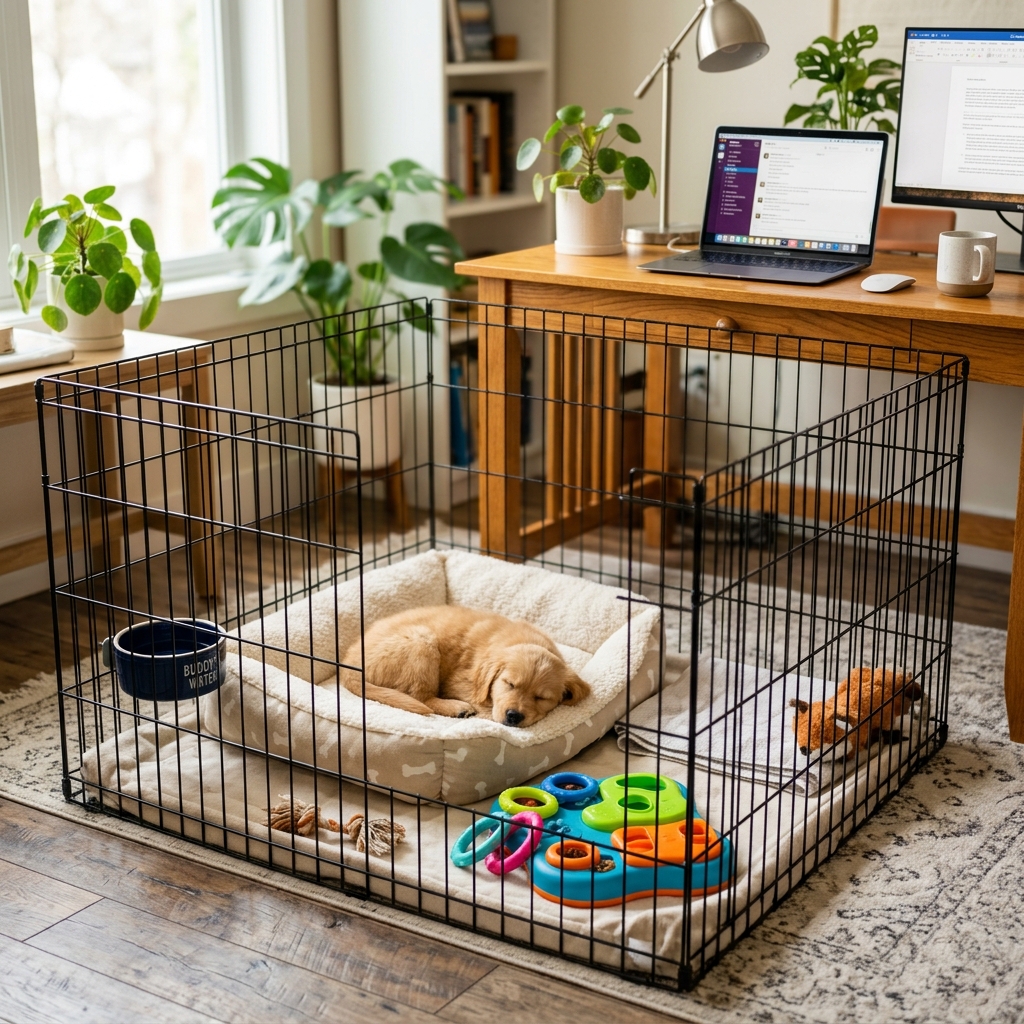
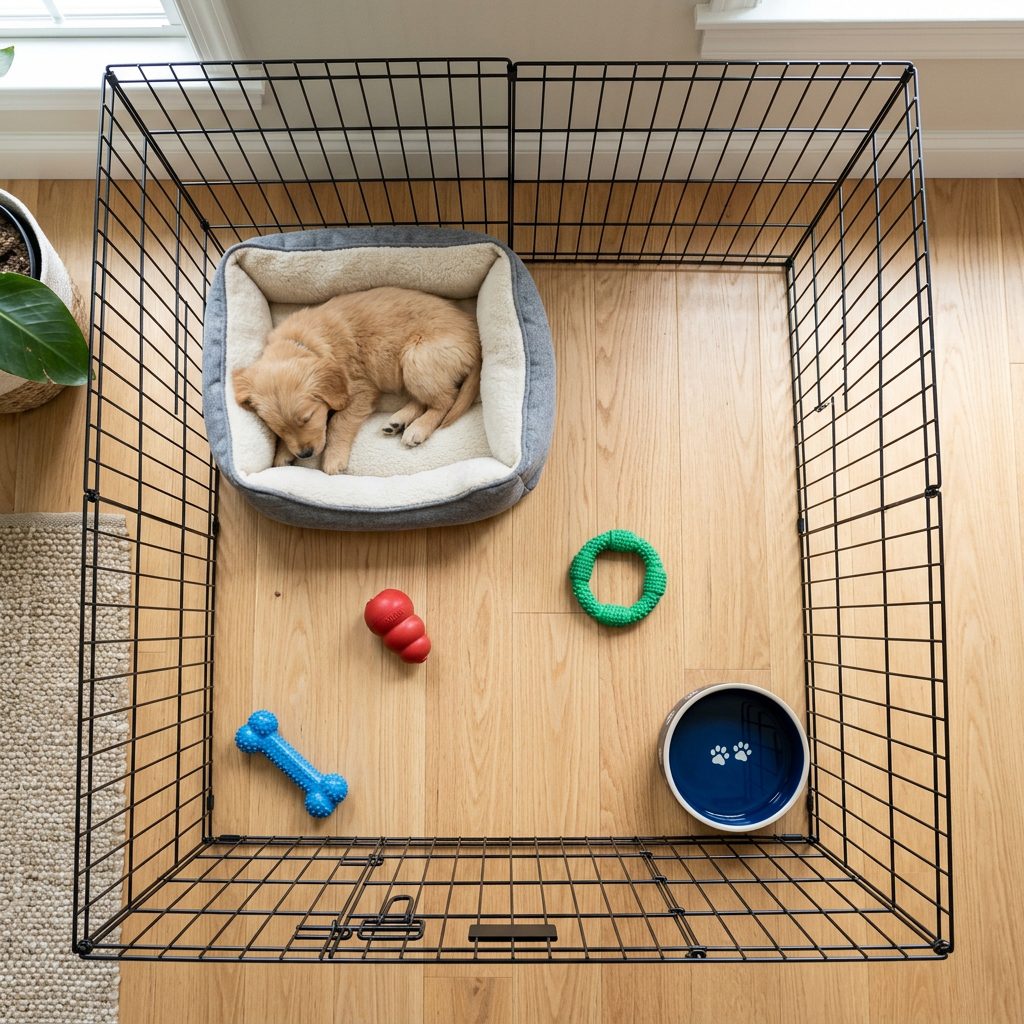
Your puppy’s playpen should be large enough for them to move around, but not so large that they feel they can use one corner as a bathroom. Ideally, it should be located in a ‘low-to-medium’ traffic area where they can see you but aren’t constantly overstimulated by your movement.
| Item | Purpose | Pro Tip |
|---|---|---|
| Comfortable Bed | Provides a clear cue for naptime. | Use a chew-resistant bed for teething puppies. |
| Non-Spill Water Bowl | Hydration without the mess. | Heavy ceramic bowls are harder to flip. |
| Safe Chew Toys | Self-soothing and dental relief. | Rotate toys daily to maintain interest. |
| Long-Lasting Enrichment | Mental stimulation during ‘quiet’ work hours. | Frozen KONGs or lick mats are WFH lifesavers. |
| Potty Solution (Optional) | For very young puppies (8-10 weeks). | Only use if you can’t step away for outdoor breaks. |
Expert Tip: Avoid putting ‘plush’ toys in the pen unsupervised if your puppy is a shredder. Stick to durable rubber or hard nylon to prevent choking hazards while you’re focused on your screen.
The Ultimate 9-to-5 Puppy Playpen Schedule
The Hourly Blueprint
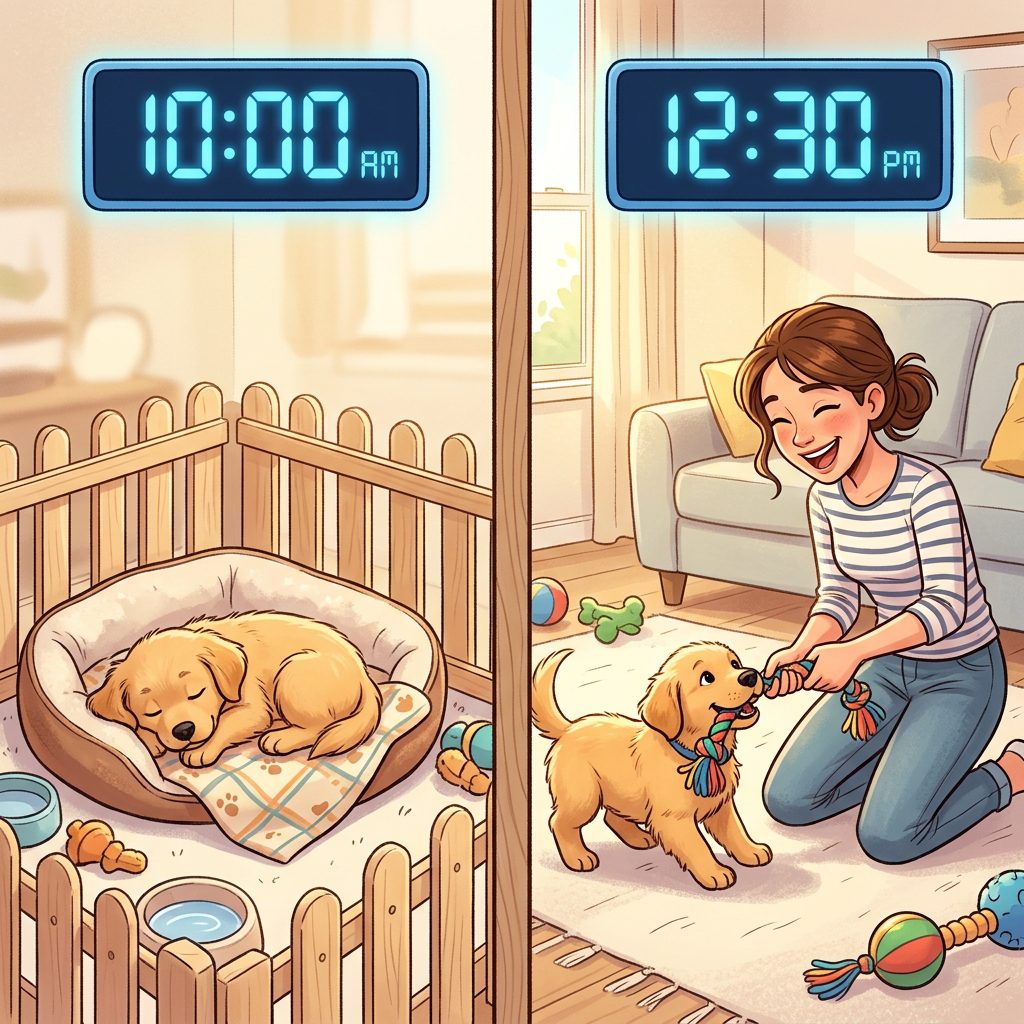
Puppies thrive on predictability. When they know exactly when to expect food, play, and sleep, their cortisol levels drop, and their ‘demand barking’ decreases. This schedule assumes a standard workday, but you can shift the blocks to fit your specific ‘office’ hours.
The Morning Power Block (7:00 AM – 9:00 AM)
- 7:00 AM: Wake Up & Potty. Immediate trip outside. No play yet—just business.
- 7:15 AM: Breakfast & Training. Use half their meal for a quick 10-minute training session (Sit, Stay, Place).
- 7:30 AM: High-Energy Play. Fetch, tug, or a walk. Drain that morning battery!
- 8:30 AM: The Transition. Final potty break, then into the playpen with a ‘high-value’ treat (like a small piece of boiled chicken) to create a positive association.
The Deep Work Block (9:00 AM – 12:00 PM)
This is your time for meetings. The puppy should be in ‘Nap Mode’ now. Most puppies follow a 1-hour up, 2-hours down rhythm.
The Mid-Day Reset (12:00 PM – 1:00 PM)
Lunch for you, adventure for them. This is the time to get them out of the house or engage in heavy mental stimulation. If you have a backyard, let them sniff around—sniffing is naturally tiring for a dog’s brain.
The Afternoon Focus Block (1:00 PM – 4:30 PM)
- 1:00 PM: Back to the Pen. Provide a frozen enrichment toy (lick mat or stuffed toy) to help them settle back down after the excitement of lunch.
- 3:00 PM: Quick Potty Break. A 5-minute ‘boring’ potty break. No play, just a stretch and a pee.
- 3:05 PM: Quiet Pen Time. Short nap or self-directed play with a chew bone.
The ‘Clock-Out’ Transition (4:30 PM – 5:30 PM)
As you wrap up your emails, let the puppy out for their evening routine. This signals the end of the ‘independent’ day and the start of family time.
Mastering the ‘Quiet’ Command: Training for the Pen
How to Prevent Playpen FOMO
The biggest hurdle for WFH parents is the whining. Your puppy sees you, they want you, and they don’t understand why that wire fence is in the way. This is known as FOMO (Fear Of Missing Out).
The ‘Value Loading’ Technique
You must make the playpen the most rewarding place on earth. Never use the pen as a punishment. If your puppy does something wrong, don’t huff and puff and throw them in the pen. Instead, use a neutral ‘time out’ or simply redirect them.
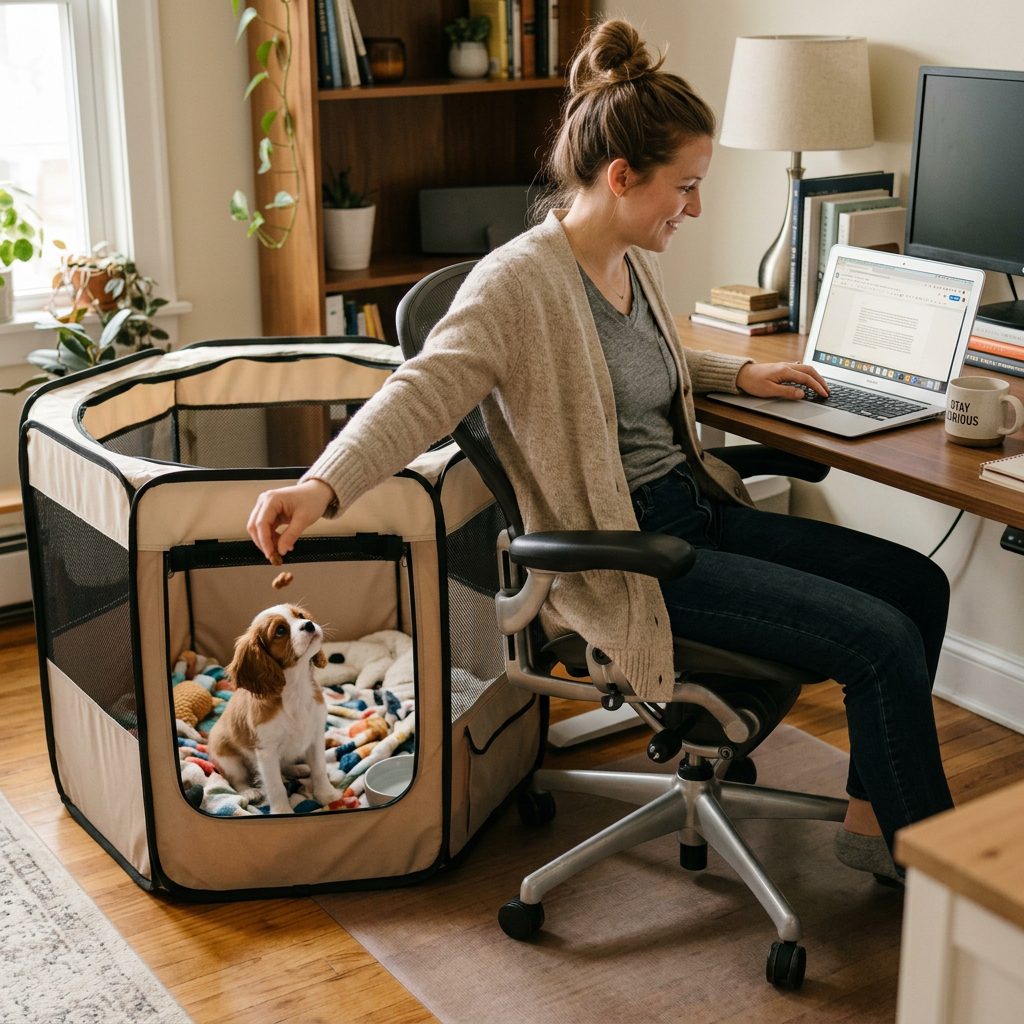
- Random Acts of Treats: While your puppy is playing quietly in the pen and you are working, occasionally walk over and drop a treat in without saying a word. This teaches them that calmness equals rewards.
- The ‘Settling’ Exercise: Before you start a meeting, practice ‘Capturing Calm.’ When your puppy lies down in the pen, click and treat.
- Gradual Distance: Start with the pen right next to your desk. Over a week, move it 6 inches further away every day until it’s in its permanent location.
“The goal of playpen training isn’t just confinement; it’s the development of an ‘off-switch’. A dog that learns to settle themselves is a dog that will be a joy to live with for the next 15 years.”
Meeting-Friendly Enrichment: Keeping Them Busy
Silencing the Squeakers
We’ve all been there: you’re on a call with a client, and suddenly your puppy decides it’s the perfect time to play with their loudest, most obnoxious squeaky toy. To prevent this, you need a Meeting-Ready Toy Rotation.
The ‘Quiet Toy’ Hierarchy
| Toy Type | Noise Level | Duration | Best For… |
|---|---|---|---|
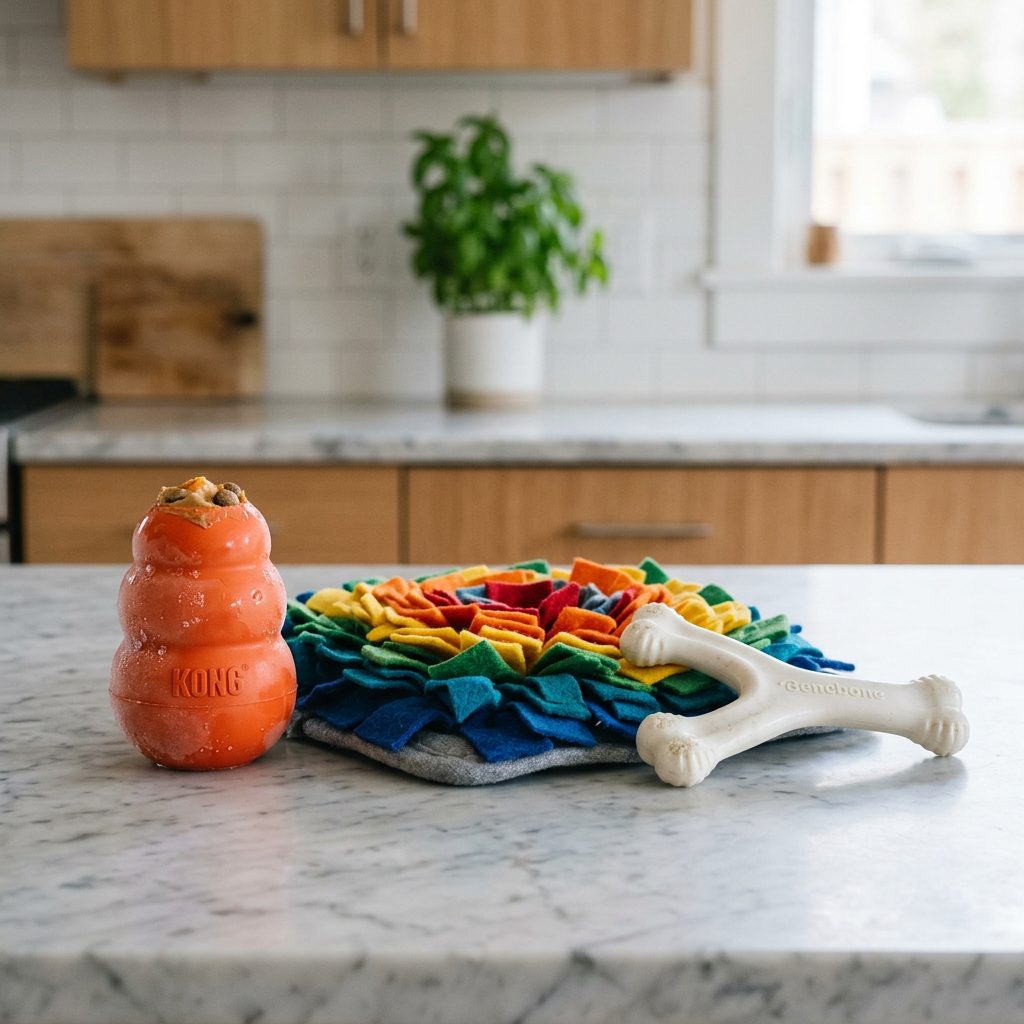
| Stuffed KONG | Silent | 20-40 mins | Deep focus work/Webinars |
| Snuffle Mat | Soft Rustling | 15 mins | Short calls/Emailing |
| Nylon Chew Bone | Silent (Clicking) | Hours | General background play |
| Puzzle Slider | Moderate Clacking | 10 mins | Quick breaks |
The Magic of Freezing
If you haven’t discovered the power of a freezer, you’re working too hard. Stuffing a rubber toy with wet food, pumpkin puree, or plain Greek yogurt and freezing it overnight turns a 5-minute snack into a 30-minute mental workout. The act of licking is also physiologically soothing for dogs, helping them transition into a nap once the toy is empty.
Troubleshooting Common Playpen Challenges
What to Do When the Plan Fails
Even the best-laid schedules hit snags. Teething, growth spurts, and ‘teenage’ phases can all disrupt the flow. Here is how to handle the most common issues savvy owners face.
The ‘Help, I’m Dying’ Scream
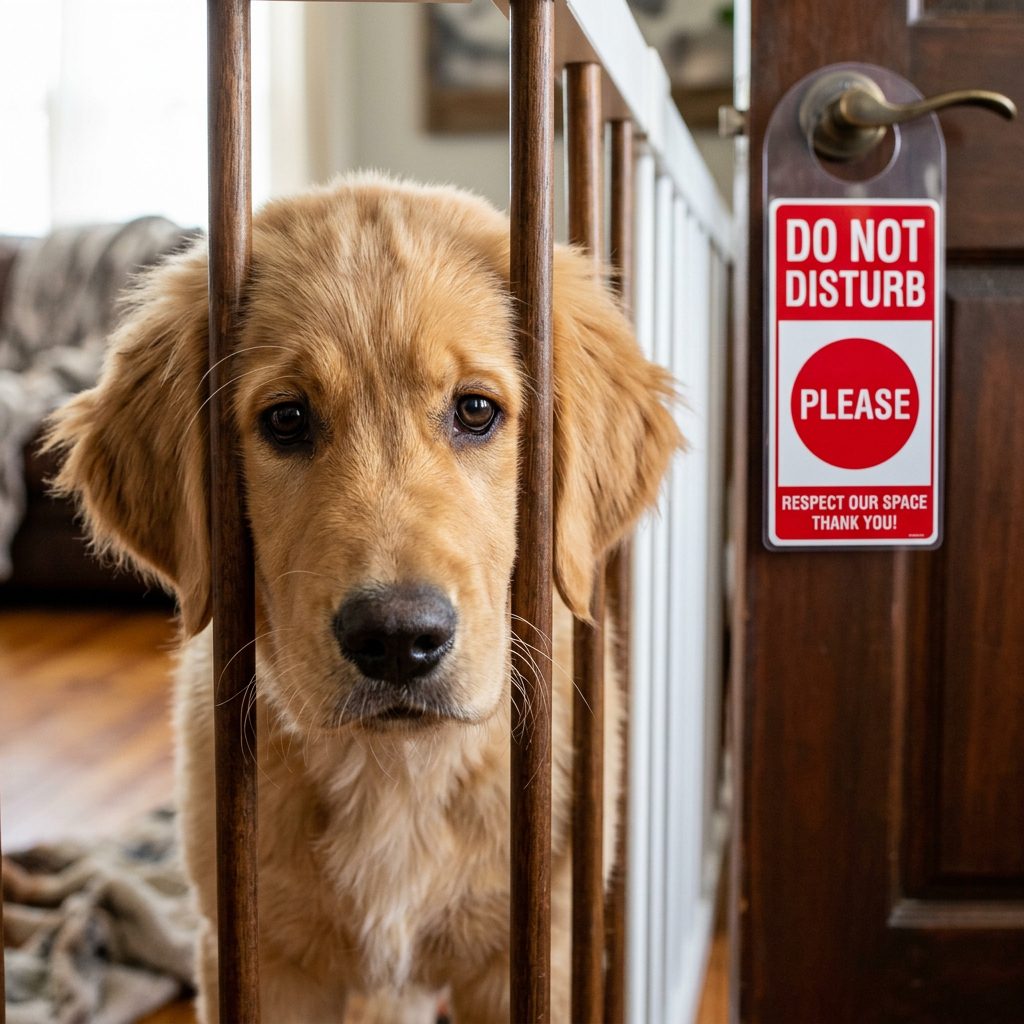
If your puppy is barking or whining in the pen, do not acknowledge them until there is at least a 3-second gap of silence. If you let them out while they are barking, you have just taught them that barking is the key to the gate. Wait for silence, then reward.
The Playpen ‘Potty’ Accident
If your puppy is consistently peeing in their pen, it’s usually one of three things:
- The pen is too large (they think one side is a bathroom).
- The schedule is too long (they physically can’t hold it).
- The cleaning agent isn’t an enzymatic cleaner (they can still smell the old scent).
Regression During Teething
Around 4-6 months, your puppy might suddenly start chewing the playpen bars or their bed. This is physical discomfort, not bad behavior. Increase the availability of cold chews—frozen washcloths (supervised) or chilled rubber rings can provide the relief they need to get back to their schedule.
Long-Term Benefits of the Playpen Routine
Beyond the Puppy Months
You might wonder: ‘Will I have to use a playpen forever?’ The answer is no! The playpen is training wheels for the brain. By following this schedule, you are teaching your dog Independent Value.
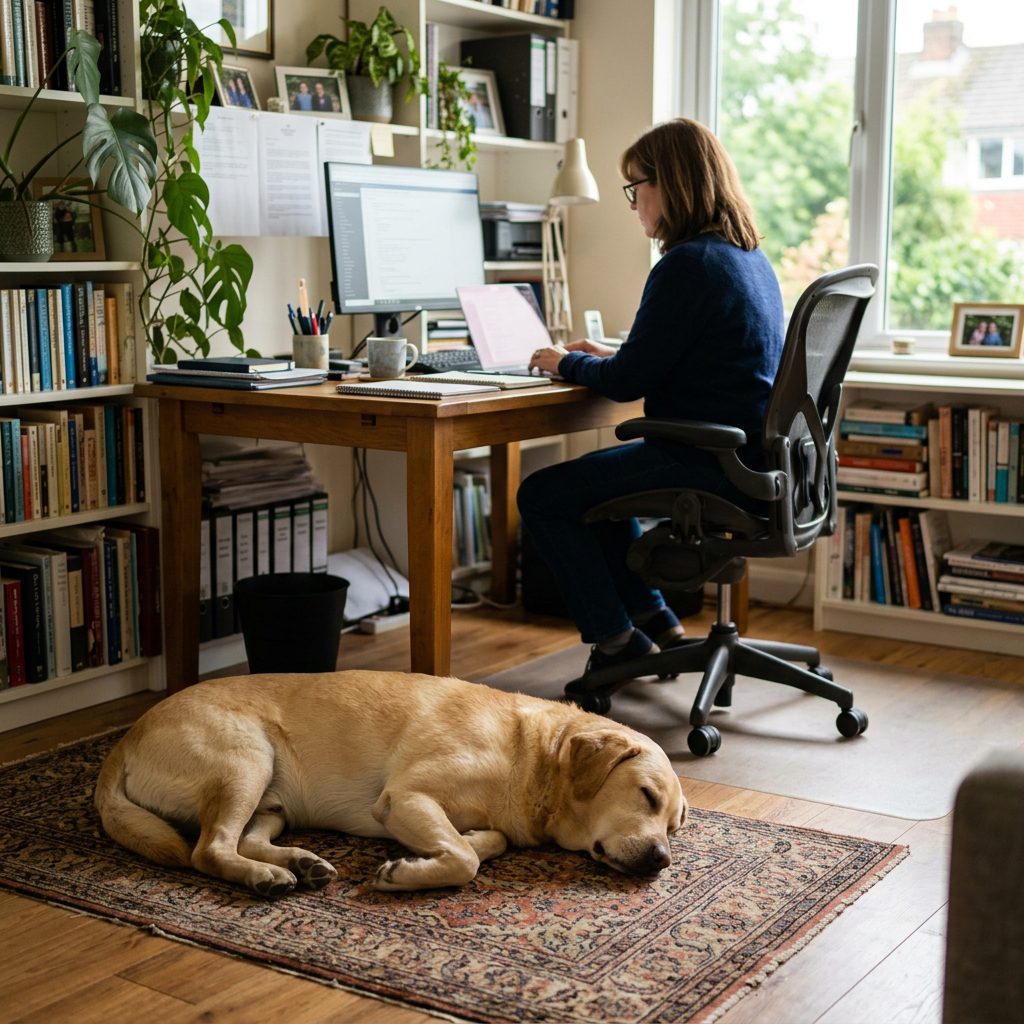
A dog that has been playpen trained is significantly less likely to develop severe separation anxiety because they have learned that being ‘alone’ (even with you in the other room) is a safe, rewarding experience. Eventually, as your puppy matures (usually between 10-18 months), you can start leaving the pen door open, then removing the pen entirely. You’ll find that your adult dog naturally follows the schedule you built—napping while you work and ready for adventure when you log off.
Conclusion
Success is a Marathon, Not a Sprint
Balancing a career and a new puppy is one of the most challenging ‘new parent’ experiences you can have. It requires patience, a lot of coffee, and a rock-solid routine. By implementing this daytime puppy playpen schedule, you aren’t just making your work life easier; you are giving your puppy the gift of structure and security.
Remember, some days will be harder than others. If you have a day full of back-to-back meetings and the puppy is particularly restless, don’t be afraid to utilize a dog walker or a ‘doggy daycare’ once a week to give yourself a mental break. You’re doing a great job, and with this schedule in hand, you’re well on your way to having the perfect WFH colleague.