
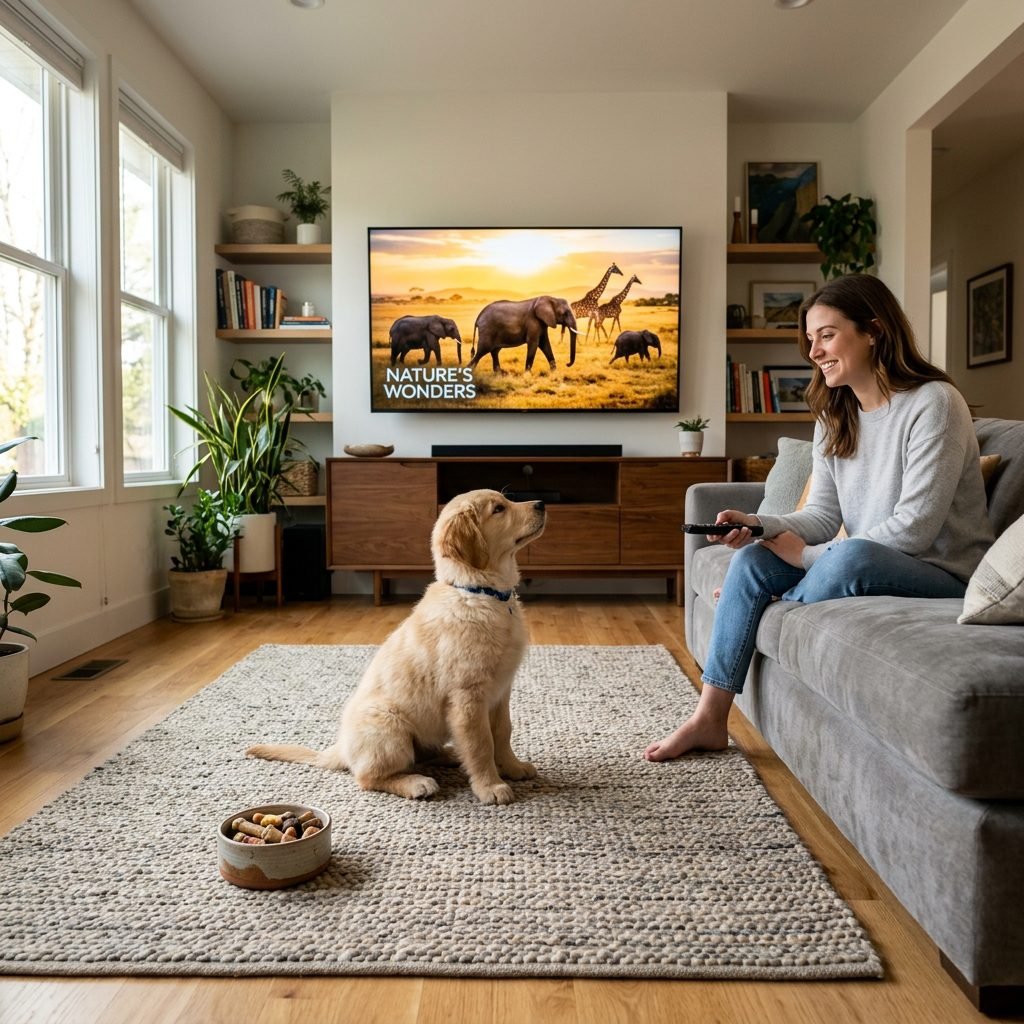
Is Your Puppy Barking At The TV? Here’s The 10-Minute Fix You Haven’t Tried
The Living Room Battle: Why Your TV is Your Puppy’s New Nemesis
We have all been there. You finally sit down after a long day, remote in hand, ready to binge-watch your favorite series or catch the big game. You press play, and suddenly, your living room transforms into a chaotic symphony of sharp, frantic barks. Your puppy is lunging at the screen, hackles raised, convinced that the lion in the documentary or the football player running a route is a direct threat to the household. It is frustrating, it is loud, and for many savvy dog owners, it feels like an unsolvable puzzle.
But here is the good news: your puppy isn’t ‘broken,’ and they aren’t trying to be a nuisance. They are simply reacting to a high-tech stimulus that their ancestral brain isn’t quite equipped to handle. In this guide, we are going to dive deep into the why behind this behavior and, more importantly, I am going to walk you through a 10-minute fix that utilizes the principles of desensitization and counter-conditioning. By the end of this article, you will have the tools to turn your puppy from a TV-hater into a calm couch companion.
Understanding the ‘Digital Intruder’: Why Puppies Bark at Screens
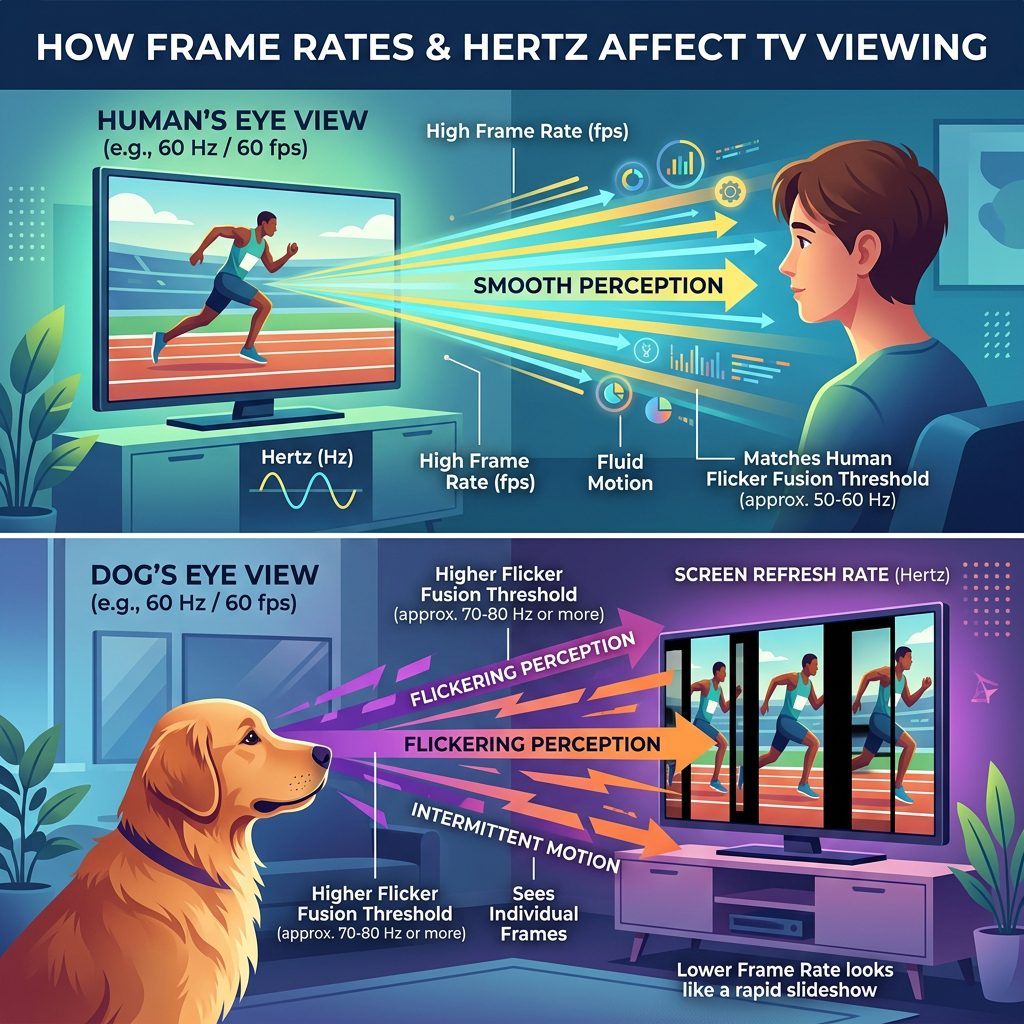
Before we can fix the behavior, we have to understand what is happening in that furry little head. Dogs don’t see the world the same way we do, and they certainly don’t see televisions the same way. To a puppy, the TV is a glowing portal of high-speed motion, unpredictable sounds, and ‘animals’ that appear and disappear into thin air.
The Science of Frame Rates and Canine Vision
Have you ever noticed that older TVs seemed to bother dogs less? That is because of something called Flicker Fusion Frequency. Humans see a series of still images as a continuous motion at about 60 hertz. Dogs, however, have a much higher flicker fusion frequency, often requiring 70 to 80 hertz to see smooth motion. On older, slower monitors, your puppy might have seen the TV as a flickering, strobe-like mess. Modern high-definition TVs, with their high refresh rates, look incredibly realistic to dogs, which is exactly why they are more reactive to them now than they were twenty years ago.
The Three Main Triggers
Most puppies bark at the TV for one of three reasons:
- Predatory Drive: Fast-moving objects (like a ball or a running animal) trigger the ‘chase’ instinct.
- Fear/Territoriality: A large dog or a strange person appearing ‘inside’ the house feels like an intrusion.
- Frustration: The puppy wants to interact with the ‘thing’ on the screen but cannot reach it, leading to a vocal outburst.
| Trigger Type | Common Visuals | Typical Reaction |
|---|---|---|
| Predatory | Birds, balls, moving cars | Whining, lunging, high-pitched barking |
| Fearful | Large dogs, growling sounds | Backing away, low growling, hackles up |
| Excitement | Cartoon characters, high-pitched voices | Tail wagging while barking, jumping |
The Tools You Need for the 10-Minute Fix
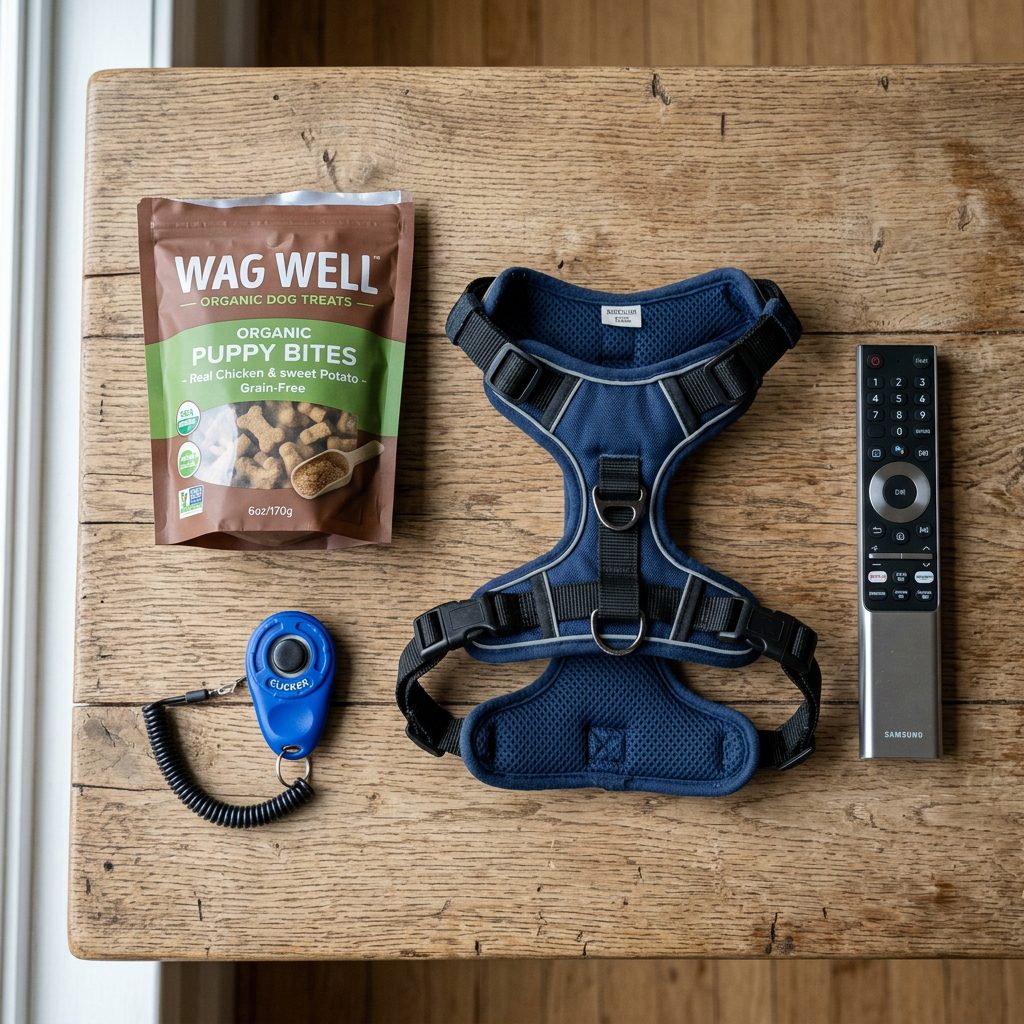
You don’t need expensive gadgets or shock collars to fix this. In fact, using punishment will likely make the problem worse by associating the TV with fear. Instead, we are going to use Positive Reinforcement. Here is your kit for success:
- High-Value Treats: We aren’t talking about standard kibble. Use small pieces of boiled chicken, freeze-dried liver, or string cheese. It needs to be something your puppy loves.
- A Clicker (Optional): If you have already clicker-trained your pup, this is the perfect time to use it. If not, a consistent ‘Yes!’ will work as a verbal marker.
- A Leash and Harness: This isn’t for correction; it is for safety and to prevent your puppy from physically reaching the screen.
- The Remote Control: You need to be in total control of the ‘stimulus’ (the TV).
Expert Tip: Ensure your puppy has had a good walk or play session about 30 minutes before you start. A tired puppy is a much more focused student!
The Step-by-Step Guide: The 10-Minute Counter-Conditioning Fix
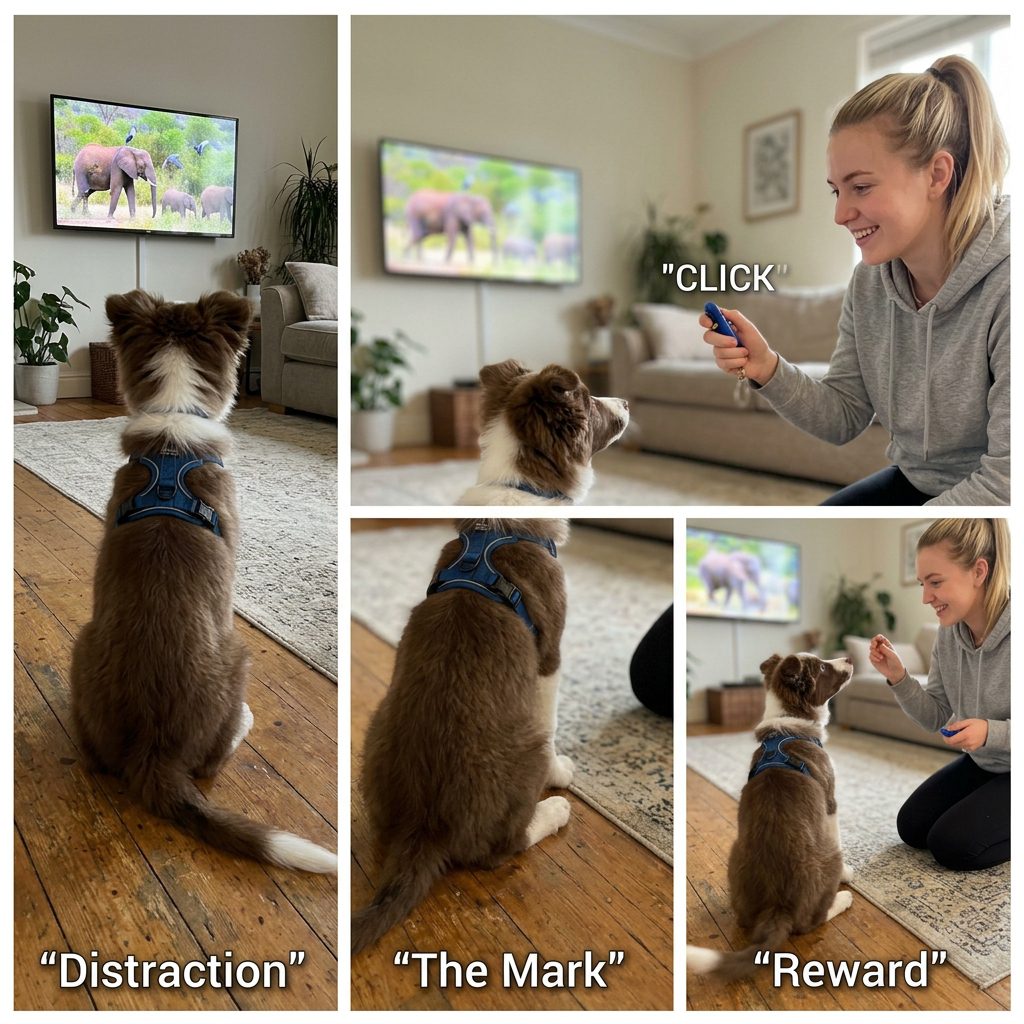
This technique is based on a concept called the ‘Look at That’ (LAT) game, popularized by trainer Leslie McDevitt. The goal is to change your puppy’s emotional response from ‘I must bark at that!’ to ‘I saw that, and now I expect a treat from you!’
Step 1: Find the Threshold (Minutes 1-2)
Start with the TV off. Put your puppy on a leash and sit at a distance where they are calm. Turn the TV on to a ‘boring’ channel (like a news broadcast with little movement) at a very low volume. If your puppy looks at the TV and doesn’t bark, Click/Mark and Treat immediately. If they bark, you are too close or the volume is too high. Move back.
Step 2: The ‘Look and Mark’ (Minutes 3-5)
Wait for your puppy to glance at the TV. The second their eyes hit the screen, Mark (Click or say ‘Yes!’) and give a treat. You are teaching them that looking at the screen makes food appear. Repeat this 10-15 times. We want them to start looking at the screen and then immediately looking back at you for their reward.
Step 3: Increasing the Stimulus (Minutes 6-8)
Now, slightly increase the volume or switch to something more ‘exciting,’ like a nature show. Continue the pattern: Look at screen -> Mark -> Treat. If the puppy begins to get ‘stuck’ staring at the screen (fixating), use a gentle touch or a kissy noise to get their attention, move further away, and reset.
Step 4: The ‘Auto-Check’ (Minutes 9-10)
By the final minutes, your puppy should be glancing at the screen and then looking at you automatically. This is the ‘aha!’ moment. Reward this ‘check-in’ heavily. You are effectively rewriting the brain’s wiring from ‘React’ to ‘Consult Owner.’
| Phase | Action | Goal |
|---|---|---|
| Initial Look | Mark/Treat for looking calmly | Create positive association |
| Volume Up | Mark/Treat for ignoring sound | Desensitize to audio triggers |
| Active Motion | Mark/Treat for disengaging | Control predatory instinct |
Common Mistakes and Troubleshooting
Even the best trainers hit roadblocks. If your 10-minute sessions aren’t showing progress, check for these common errors:
1. Moving Too Fast
The most common mistake is trying to watch an action movie on day one. If your puppy is over-threshold (barking, lunging, unable to take treats), you have asked too much of them. Go back to a static image or a muted screen.
2. Using Low-Value Rewards
If the TV is more interesting than your treats, the TV wins. You need ‘jackpot’ rewards for this specific training. Save the plain biscuits for ‘sit’ and ‘stay’; use the ‘good stuff’ for the TV.
3. Accidental Reinforcement
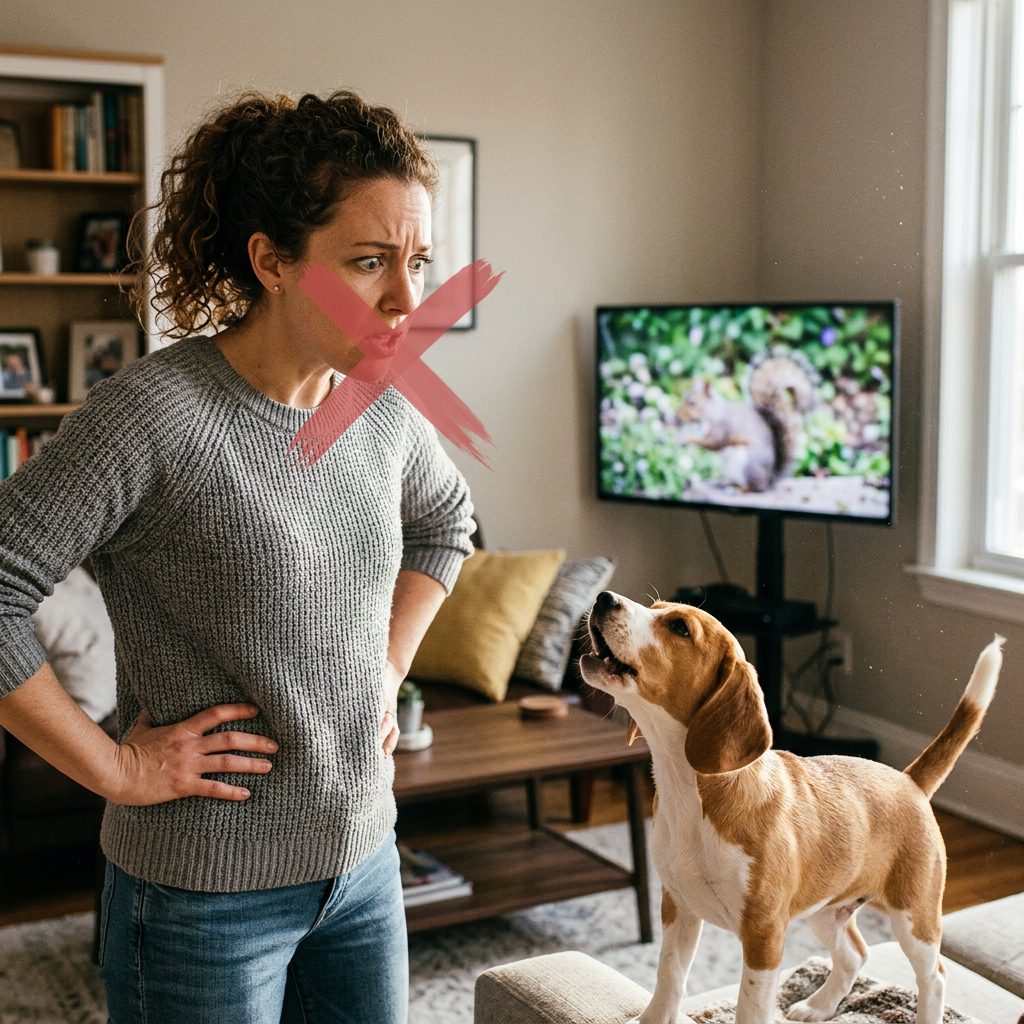
Do you yell ‘Quiet!’ or ‘No!’ when your puppy barks? To a puppy, this often feels like you are barking along with them. It adds energy to the situation. Silence and moving the puppy away is a much more effective ‘consequence’ than shouting.
4. Ignoring the Audio
Sometimes it isn’t the picture; it is the sound of a doorbell on a commercial or a dog barking in the distance. If audio is the trigger, practice the 10-minute fix with the screen off and just the audio playing at a low level.
Beyond the Fix: Long-Term Management and Enrichment
While the 10-minute fix is powerful, it works best when combined with a lifestyle that meets your puppy’s needs. A puppy who has been crated all day with no mental stimulation is going to have a much harder time staying calm during your evening Netflix session.
The Power of ‘Place’ Training
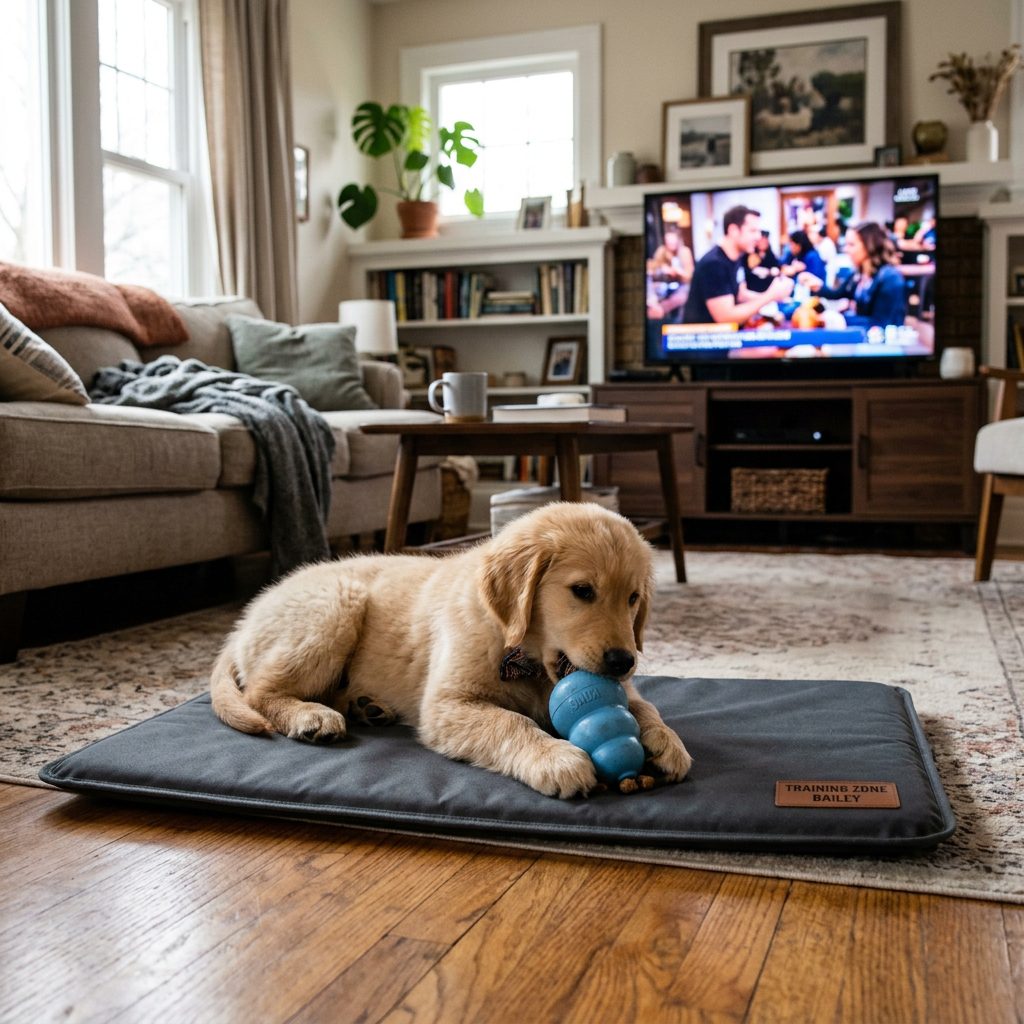
Teaching your puppy a ‘Place’ command (going to a specific mat or bed) is a game-changer. When the TV goes on, give the ‘Place’ command and provide a long-lasting chew or a stuffed food toy. This gives the puppy a ‘job’ to do that is incompatible with lunging at the TV.
Visual Enrichment
Believe it or not, there is such a thing as ‘Dog TV.’ These channels are specifically designed with colors and frame rates that appeal to dogs. Using these for short, supervised periods can help desensitize your puppy to the screen in a controlled environment.
- Mental Stimulation: Use puzzle feeders to tire out the brain.
- Physical Exercise: A tired body is less likely to lunge.
- Decompression: Give your puppy ‘quiet time’ in a room without a TV to prevent over-stimulation.
Conclusion
Peace at Last: Consistency is Your Secret Weapon
Stopping a puppy from barking at the TV isn’t about dominance or ‘showing them who is boss.’ It is about communication. By using the 10-minute fix, you are telling your puppy: ‘I see what you see, it’s not a threat, and if you look at me instead of reacting, great things happen.’
Remember that behavior modification takes time. While the ‘fix’ is a 10-minute exercise, you may need to repeat it daily for a week or two before the behavior becomes a permanent habit. Stay patient, stay positive, and keep those high-value treats handy. Before you know it, you will be back to enjoying your movies in peace, with a sleepy, happy puppy snoozing at your feet. Happy training!