
Stop the Destruction! 9 Genius Ways to Keep Your Puppy From Chewing Furniture
Welcome to Puppyhood: The Bitey Phase
Congratulations on bringing home your new furry best friend! Puppyhood is filled with sweet cuddles, hilarious zoomies, puppy breath, and… a seemingly insatiable desire to turn your favorite mid-century modern coffee table into a pile of toothpicks. If you are a savvy dog owner reading this, you are likely staring at a gnawed-on baseboard or a frayed sofa cushion, wondering how something so incredibly adorable can be so destructive.
First, take a deep breath. You are not alone, and your puppy is not doing this out of spite. Chewing is a completely natural, biological necessity for young dogs. They explore the world with their mouths, much like human toddlers do with their hands. However, just because it is natural does not mean you have to sacrifice your home decor to the teething gods. Stopping the destruction requires a blend of proactive management, positive reinforcement, and understanding canine psychology.
Expert Vet Tip: Never punish a puppy for chewing after the fact. If you find a chewed chair leg hours later, your puppy will not connect your anger to their past action. They will only learn to fear your arrival. Correction must happen in the exact moment the teeth touch the furniture!
In this comprehensive guide, we are going to dive deep into the canine mind to understand exactly why your puppy is drawn to your furniture. More importantly, we will walk through nine genius, actionable, and highly effective ways to stop the destruction in its tracks. By implementing these strategies, you will not only save your furniture but also build a stronger, more trusting bond with your growing pup. Let us get started on transforming your little landshark into a well-behaved canine citizen!
Understanding the ‘Why’: The Root Causes of Puppy Chewing
Decoding Your Puppy’s Chewing Habit
Before we can effectively stop your puppy from chewing on your furniture, we must first understand why they are doing it. Dogs do not engage in behaviors without a reason. As a savvy owner, identifying the root cause is your first step toward a permanent solution. Generally, puppy chewing falls into one of three main categories: teething, boredom, or anxiety.
The Teething Phase
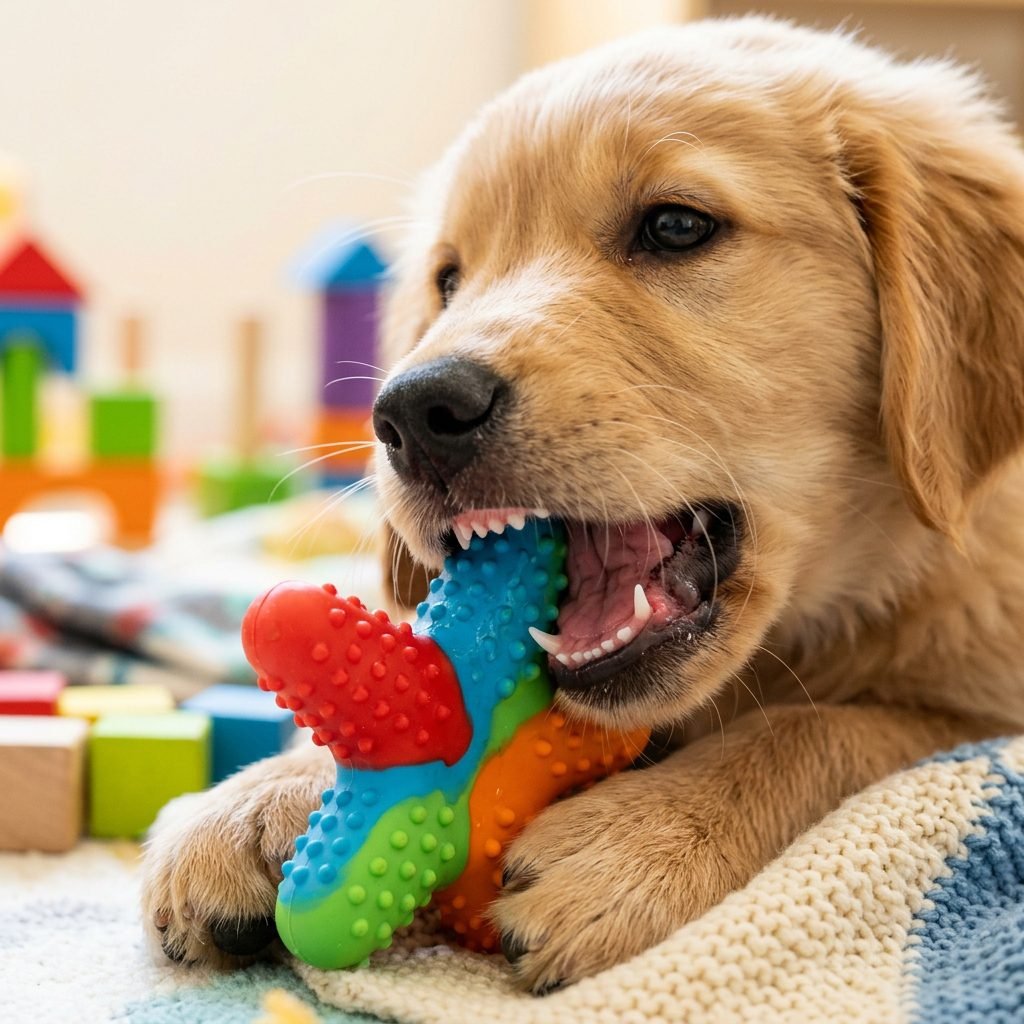
Between the ages of three and six months, your puppy is going through a massive physical change. They are losing their 28 razor-sharp baby teeth and growing 42 adult teeth. This process is incredibly uncomfortable. Their gums are sore, swollen, and throbbing. Chewing on hard surfaces—like your wooden chair legs or the firm edge of a couch—provides counter-pressure that relieves this pain. It is essentially a canine pacifier.
Boredom and Lack of Stimulation
Working breeds, terriers, and highly intelligent dogs need a job. If you do not provide them with an outlet for their energy, they will invent their own job. Unfortunately, “interior demolition expert” is a very popular career choice for bored puppies. If a puppy is under-stimulated mentally or physically, they will seek out activities that are self-rewarding, and chewing releases endorphins in a dog’s brain, making it a highly reinforcing activity.
Separation Distress and Anxiety
Sometimes, chewing is a coping mechanism for stress. If your puppy only destroys furniture when you leave the house, you might be dealing with a mild to severe case of separation anxiety. Chewing helps soothe their nervous system. If you suspect anxiety is the root cause, the training approach will need to focus on building their confidence when left alone, rather than just redirecting the chewing.
| Puppy Age/Trigger | Primary Reason for Chewing | Recommended Action Focus |
|---|---|---|
| 3 to 6 Months | Teething and sore gums | Provide frozen chews and soft rubber toys to soothe inflammation. |
| 7 to 12 Months | Adolescent boredom and exploration | Increase physical exercise and introduce complex puzzle toys. |
| Only when left alone | Separation anxiety or distress | Crate training, desensitization, and potentially consulting a behaviorist. |
Genius Ways 1 & 2: Puppy-Proofing and Safe Confinement
Setting Up for Success Through Environmental Management
When it comes to dog training, management is 90 percent of the battle. You cannot train a behavior if you are constantly allowing the puppy to practice the bad habit. Every time your puppy successfully chews on your furniture, the behavior is reinforced because it feels good. Our goal is to prevent the rehearsal of the unwanted behavior entirely.
1. Master the Art of Puppy-Proofing
You need to view your house from the perspective of a curious puppy. Get down on your hands and knees and look around. What looks enticing? Tassels on a rug? The wooden legs of a coffee table? Loose electrical cords? Your first line of defense is removing access to these items. Use sturdy baby gates to block off rooms that contain expensive or highly chewable furniture. If there is a specific antique chair you love, move it to a safe room until the teething phase is over. Out of sight, out of mind is a powerful training tool.
2. Embrace the Crate or Playpen
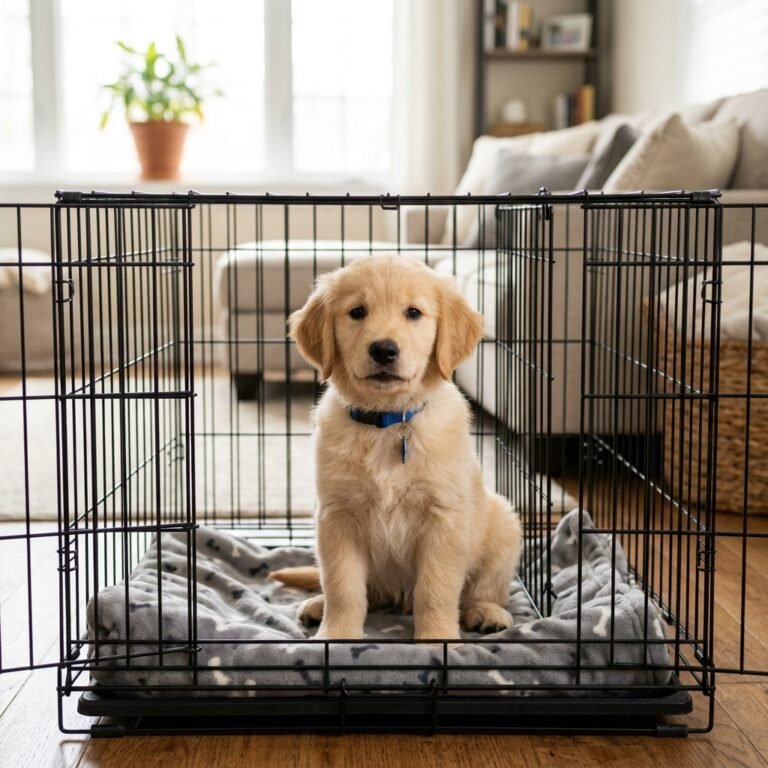
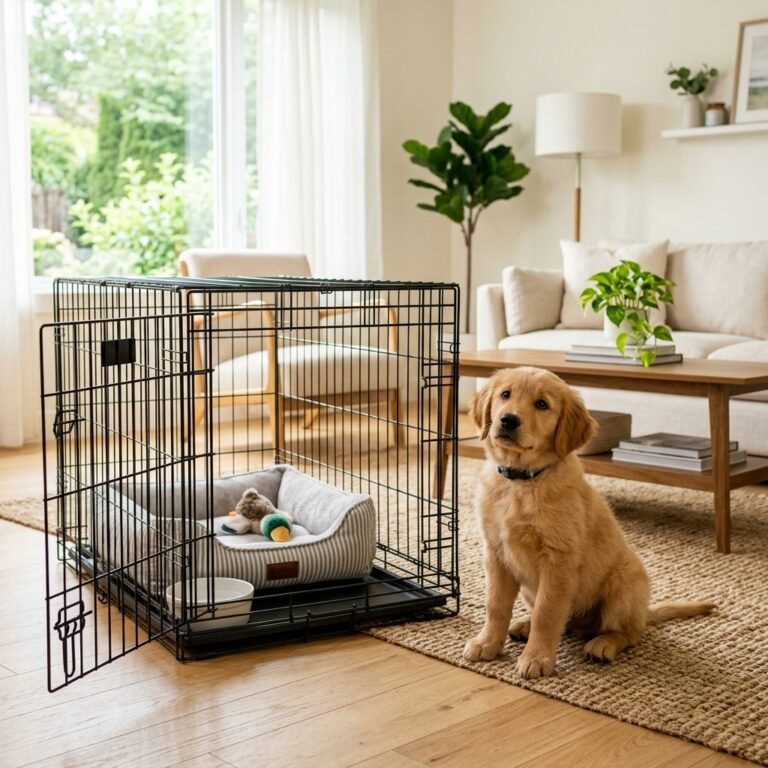
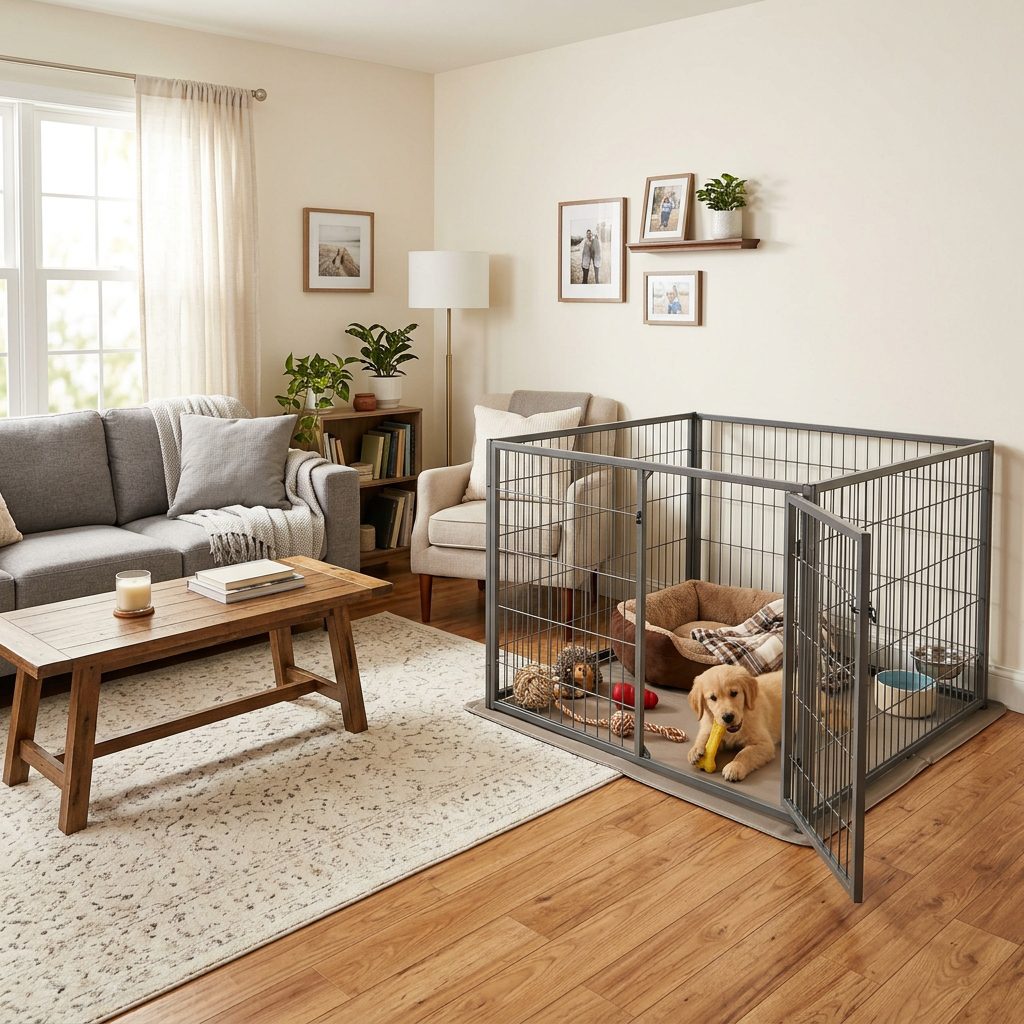
Many new owners feel guilty about using a crate or an exercise pen, but when introduced correctly, these tools are invaluable. A crate mimics a natural den, providing your puppy with a safe, quiet place to decompress. More importantly, it keeps your furniture safe when you cannot actively supervise your dog. If you need to take a shower, answer an important email, or cook dinner, your puppy should be in their pen or crate with an appropriate chew toy. Unsupervised free roam is a privilege that must be earned over months of good behavior, not a right granted on day one.
Training Golden Rule: If your eyes are not actively on the puppy, the puppy should be in a puppy-proofed zone. Freedom in the house is earned through maturity and training!
Genius Ways 3 & 4: The Power of Redirection and High-Value Chews
Trading Up: How to Redirect Destructive Energy
Puppies are going to chew; that is a non-negotiable fact of canine biology. Your job is not to stop them from chewing entirely, but to dictate what they are allowed to chew. This is where the art of redirection and providing high-value alternatives comes into play.
3. The Bait-and-Switch Redirection Technique
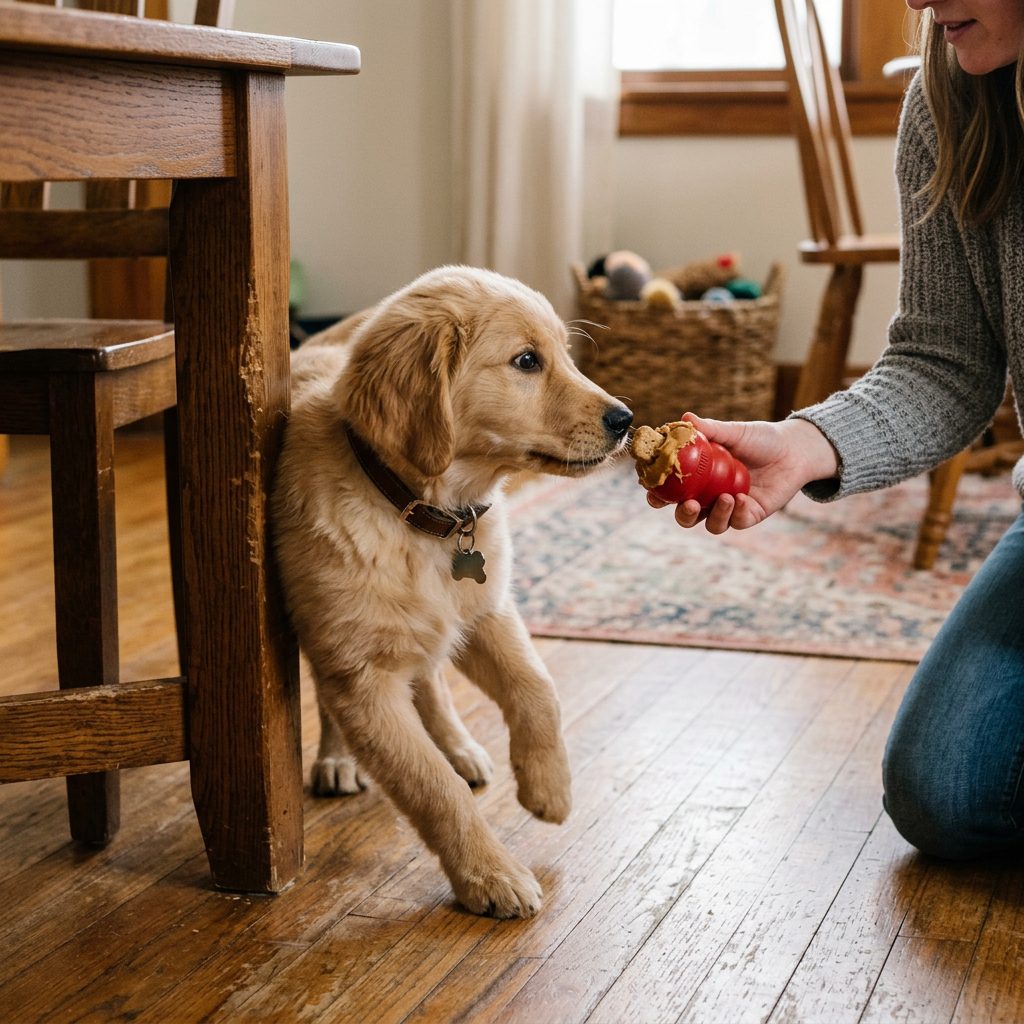
When you catch your puppy approaching the furniture with that unmistakable “I’m going to bite this” look in their eyes, do not panic and do not yell. Yelling can sometimes be interpreted by the puppy as you barking along with them, turning it into a game! Instead, use a cheerful, high-pitched voice to interrupt their thought process. Make a kissy noise or say their name. The second they look away from the furniture and toward you, offer them a highly desirable chew toy. When they take the toy, praise them lavishly. You are teaching them: “The couch is boring, but this toy I have is amazing!”
4. Curate a Menu of High-Value Chews
Not all chew toys are created equal, and puppies have specific textural preferences that can change daily. If your puppy is chewing on a wooden chair leg, they are looking for something hard and splintery. Offering them a plush squeaky toy won’t satisfy that specific craving. You need to curate a diverse “chew menu” to match their needs. Keep a rotation of toys so they don’t get bored of the same item day after day.
| Chew Category | Best Used For | Safety Notes & Tips |
|---|---|---|
| Hard Rubber Toys (e.g., Kongs) | Heavy chewers and soothing sore gums. | Stuff with wet food or peanut butter and freeze for maximum relief and duration. |
| Natural Edible Chews (e.g., Bully Sticks) | Long-lasting engagement and satisfying the urge to gnaw. | Always supervise to prevent choking when the chew gets small. Use a bully stick holder. |
| Textured Nylon Bones | Simulating the hardness of wood furniture. | Check regularly for sharp edges and discard if large pieces break off. |
Genius Ways 5 & 6: Taste Deterrents and the ‘Leave It’ Command
Building Boundaries with Taste and Training
While management and redirection are your primary tools, sometimes you need extra layers of defense. This is where we combine sensory deterrents with foundational obedience training to create clear boundaries for your puppy.
5. Utilize Bitter Apple and Taste Deterrents
Taste deterrents, such as bitter apple or sour cherry sprays, can be highly effective for many dogs. These sprays are non-toxic but taste absolutely awful to most canines. By lightly coating the legs of your furniture or the edges of your rugs, you create a negative association with chewing those items. The puppy takes a bite, gets a mouthful of bitter flavor, and decides the couch isn’t so tasty after all. However, a word of caution: A small percentage of dogs actually enjoy the taste of these sprays! Always test the spray on a piece of tissue paper first, offer it to your puppy, and watch their reaction. If they spit it out and shake their head, you are good to go. Apply the spray daily, as it evaporates quickly.
6. Teach a Bulletproof ‘Leave It’ Command
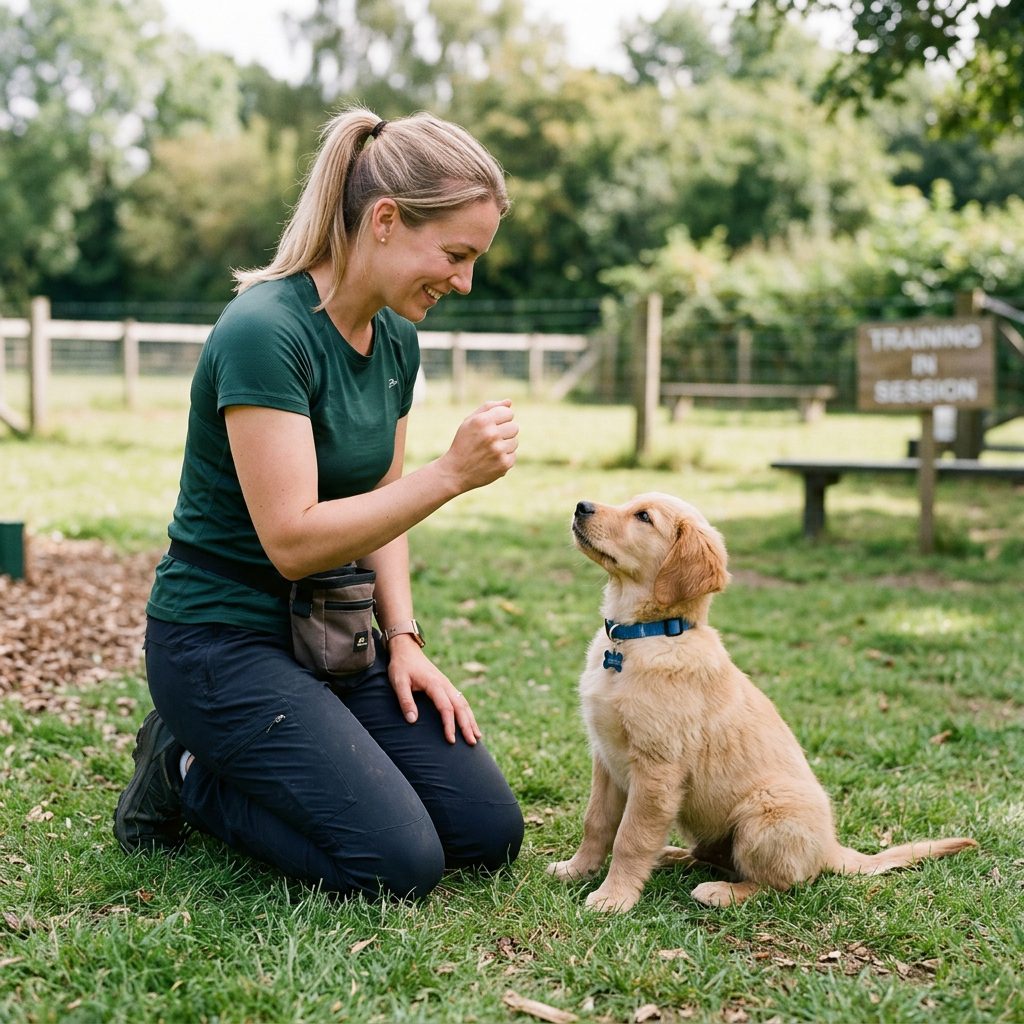
The “Leave It” command is arguably the most important cue you can teach a dog. It tells them to immediately disengage from whatever they are focusing on. Teaching this requires patience and high-value rewards.
- Step 1: Hold a low-value treat in your closed fist and present it to your puppy. They will sniff, lick, and paw at your hand. Ignore this completely.
- Step 2: The exact millisecond your puppy stops trying to get the treat and pulls their head away, say “Yes!” or click your clicker.
- Step 3: Immediately reward them with a high-value treat (like a piece of chicken or cheese) from your other hand. Never give them the treat they were told to leave.
- Step 4: Repeat this until they automatically pull away when you present the closed fist. Then, add the verbal cue “Leave It” right before presenting your hand.
- Step 5: Gradually increase the difficulty by placing the low-value treat on the floor, covering it with your hand, and eventually leaving it uncovered. Once mastered, you can use this cue when your puppy approaches the furniture!
Genius Ways 7 & 8: Mental Stimulation and Physical Exercise
A Tired Puppy is a Good Puppy
It is a well-known adage in the dog training world: a tired dog is a good dog. However, savvy owners know that physical exhaustion is only half the equation. Mental fatigue is just as critical, if not more so, for preventing destructive behaviors like chewing.
7. Amp Up the Mental Workouts
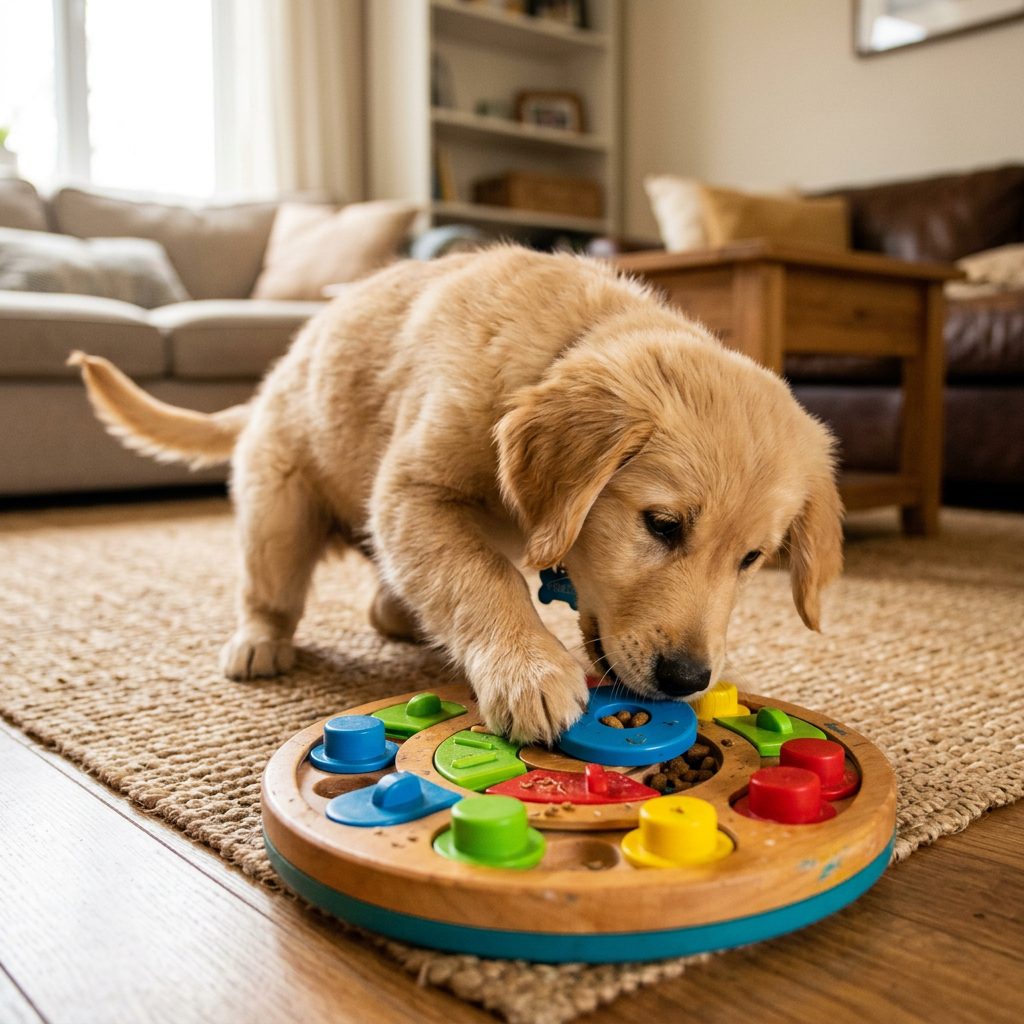
Did you know that fifteen minutes of intense mental stimulation can tire a puppy out as much as a three-mile walk? Dogs are natural foragers and scavengers. Serving their meals in a standard stainless-steel bowl is a missed opportunity for mental enrichment. Ditch the bowl! Instead, feed your puppy their daily kibble rations using interactive puzzle toys, snuffle mats, or treat-dispensing balls. When a puppy has to use their nose, paws, and brain to extract their food, it burns a tremendous amount of cognitive energy. A puppy that has just spent 30 minutes working out a puzzle toy is highly likely to take a long, peaceful nap rather than seek out your furniture for entertainment.
8. Ensure Adequate Physical Exercise
While we must be careful not to over-exercise young puppies (forced running on hard surfaces can damage their growing growth plates), they still need appropriate physical outlets. Short, frequent walks are better than one exhausting hike. Incorporate “sniffaris” into your routine—these are walks where the puppy is allowed to stop and sniff every blade of grass, fire hydrant, and tree trunk. Sniffing lowers a dog’s heart rate and provides massive sensory input. Additionally, incorporate structured playtimes, such as a game of tug-of-war or fetch in the backyard. Tug is actually a fantastic way to satisfy the chewing urge in a cooperative, owner-approved manner. Just remember to teach a “Drop It” command to keep the game safe and controlled.
Pro Tip for Savvy Owners: Keep a daily journal of your puppy’s exercise and mental enrichment. If you notice a spike in destructive chewing on a Tuesday, check your journal. You might find that Tuesday was a rainy day with less walk time, proving the direct link between under-stimulation and furniture destruction!
Genius Way 9: Professional Troubleshooting and When to Seek Help
Consistency is Key: Getting Everyone on the Same Page
The final genius way to stop furniture chewing is perhaps the most challenging: human consistency. Dogs are highly contextual learners who thrive on black-and-white rules. If the rules are gray, the puppy will exploit the loopholes.
9. Get the Whole Family on Board
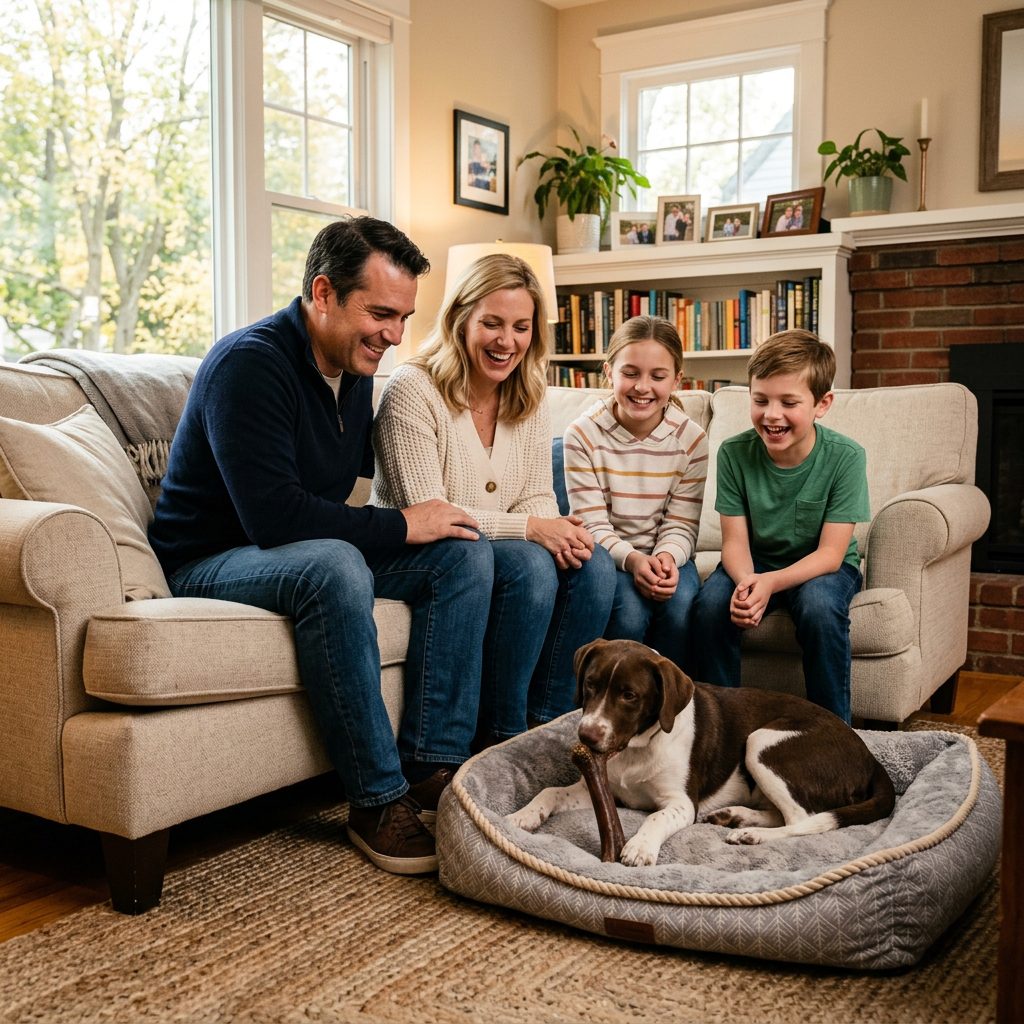
If you strictly enforce the “no chewing the couch” rule, but your partner laughs and lets the puppy gnaw on the throw pillows when you are not looking, your puppy will be thoroughly confused. To a dog, a throw pillow on the couch is part of the couch. Every single member of the household—including children and frequent guests—must respond to the puppy’s chewing in the exact same way. Everyone must use the same “Leave It” cue, everyone must redirect to the same high-value toys, and everyone must commit to not leaving tempting items within the puppy’s reach. Hold a family meeting and establish the puppy protocol.
Troubleshooting Common Mistakes
Even the savviest dog owners can fall into training traps. Here are a few common mistakes to avoid during this process:
- Confusing Toys with Household Items: Do not give your puppy an old, retired shoe to chew on and then expect them to understand why your brand-new leather loafers are off-limits. To a dog, leather is leather. Only provide toys that look distinctly different from household items.
- The Chase Game: If your puppy grabs a throw pillow and you chase them around the living room to get it back, you have just rewarded them with the greatest game of tag ever! Instead of chasing, run away from them enthusiastically to make them chase you, or grab a high-value treat and happily offer a trade.
- Ignoring Underlying Medical Issues: While rare, obsessive chewing can sometimes be linked to gastrointestinal distress, nutritional deficiencies, or severe dental anomalies. If your puppy’s chewing seems frantic, obsessive, or is accompanied by other symptoms like vomiting or diarrhea, it is time to consult your veterinarian.
Remember, puppyhood is a phase. The teething will end, their brains will mature, and with your consistent guidance, they will learn the rules of the house. Stay patient, stay positive, and keep those chew toys handy!
Conclusion
Surviving Puppyhood with Your Furniture Intact
Navigating the teething and chewing phase of puppyhood can certainly test the patience of even the most dedicated and savvy dog owners. It is completely normal to feel frustrated when you find teeth marks on your favorite chair, but remember that your puppy relies entirely on you to teach them how to navigate our human world. They do not come pre-programmed knowing that a Kong is a toy and a coffee table is not.
By understanding the root causes of their behavior—whether it be the pain of teething, the frustration of boredom, or simply natural canine exploration—you can approach the problem with empathy rather than anger. Implementing these 9 genius strategies requires a multi-faceted approach. You must manage their environment with baby gates and crates, provide highly satisfying and safe chew alternatives, utilize taste deterrents, and exhaust them both mentally and physically every single day. Most importantly, you must remain consistent. Training is not a one-time event; it is a daily conversation between you and your dog.
Stay proactive, keep your sense of humor, and celebrate the small victories. Before you know it, those needle-sharp puppy teeth will be replaced by adult teeth, the frantic chewing phase will subside, and you will be left with a well-adjusted, beautifully behaved adult dog. You have got this, and your furniture will survive!