How To Teach Puppy Wipe Paws At Door (And Keep Muddy Floors Spotless!)
Welcome to the club of savvy dog owners who are tired of playing the endless game of floor-mopping! If you have ever watched in slow-motion horror as your joyful puppy bounds through the front door, tracking a masterpiece of muddy paw prints across your freshly cleaned hardwood or pristine carpets, you are in exactly the right place.
We all love letting our dogs romp in the yard, splash in spring puddles, and enjoy the great outdoors. But the aftermath? Not so much. While keeping a towel by the door is the traditional go-to method, many puppies squirm, nip, or run away when you try to grab their sensitive paws. What if there was a better way? What if your dog could actually take responsibility for their own muddy feet?
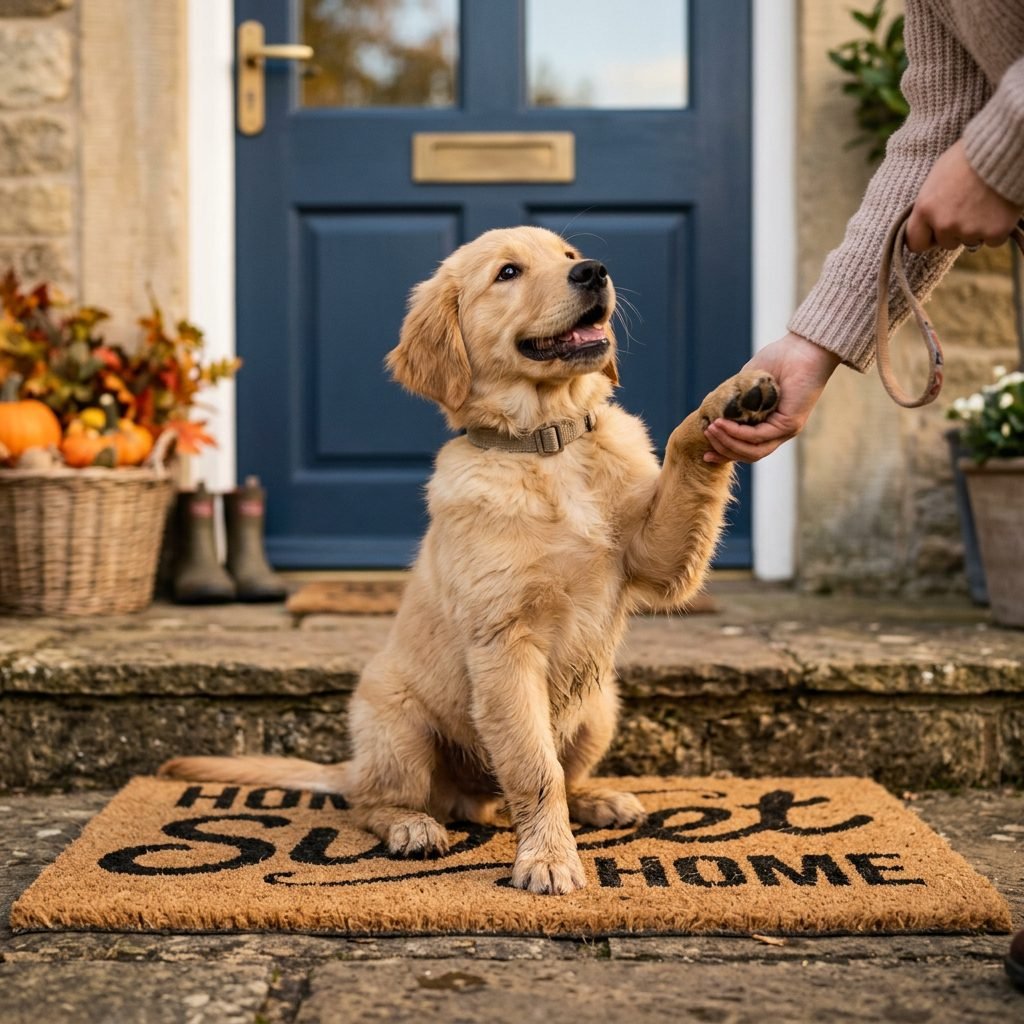
Teaching your puppy to wipe their paws at the door isn’t just an impressive party trick to show off to your guests; it is a highly practical, sanity-saving behavior that builds your dog’s confidence and keeps your home spotless. Plus, it is an incredibly fun bonding exercise! Because this trick relies on shaping your dog’s natural scratching instincts, it is highly rewarding for them to learn.
In this comprehensive guide, we will walk through the exact, step-by-step positive reinforcement process to transform your puppy from a mud-tracking menace into a polite, paw-wiping pro. Grab some high-value treats, find a good doormat, and let’s get started on saving your floors!
Tools and Preparation: Setting Up for Success
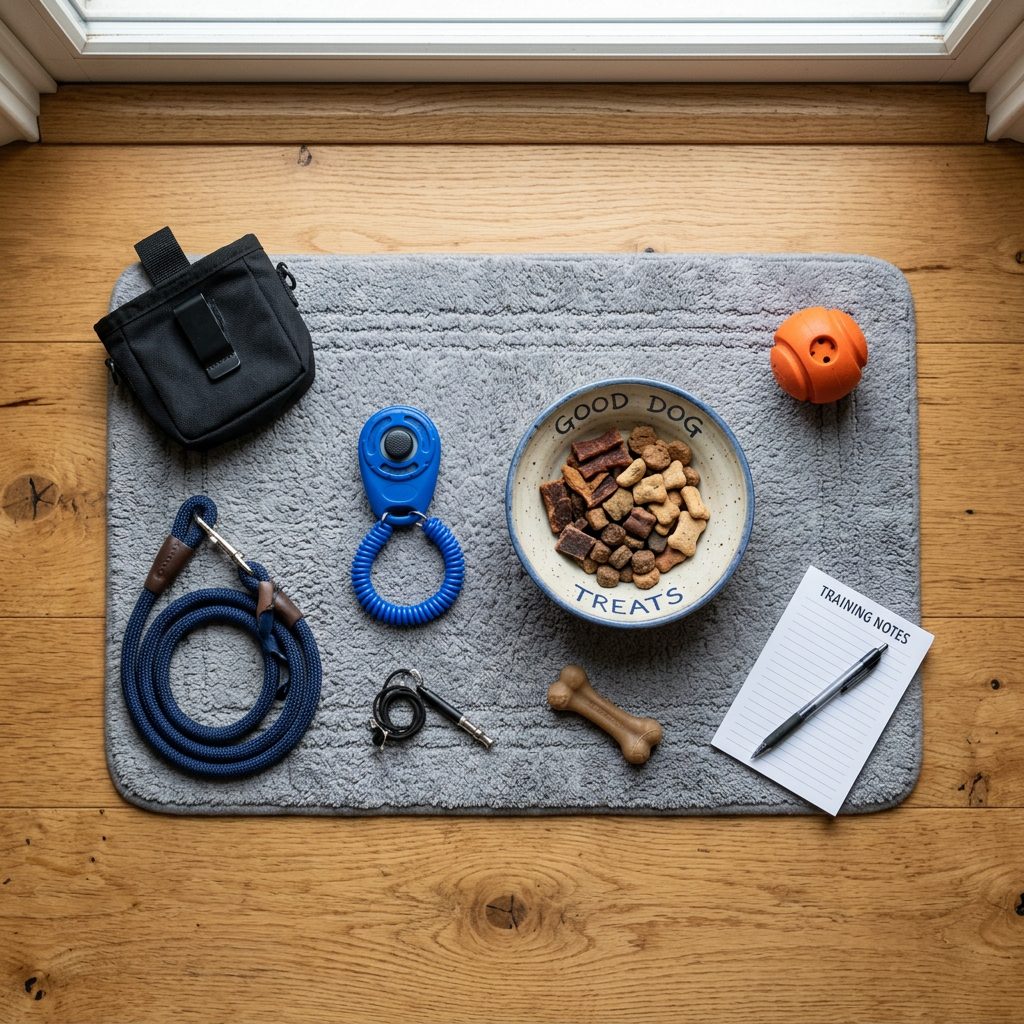
Before we dive into the training steps, it is crucial to set your puppy up for success by gathering the right tools. You don’t need much, but having the correct type of doormat and the right motivation will make this process significantly smoother.
Choosing the Right Doormat
Not all doormats are created equal, especially when it comes to training a young dog. Puppies have sensitive paw pads, and if a mat is too prickly or uncomfortable, they will avoid stepping on it altogether. You want a mat that encourages digging and scratching while effectively trapping dirt.
| Doormat Material | Pros for Training | Cons for Training |
|---|---|---|
| Microfiber / Chenille | Super absorbent, incredibly soft on sensitive puppy paws, traps mud perfectly. | Can be easily chewed or torn if your puppy gets too enthusiastic. |
| Coir (Coconut Fiber) | Excellent abrasive texture for scraping off dried-on mud and debris. | Can be prickly and uncomfortable for very young or sensitive puppies. |
| Rubber with Bristles | Highly durable, great for heavy mud, very easy to hose off outside. | Does not absorb water well, which may leave paws wet. |
Pro Tip: For this training, a microfiber “noodle” mat is often the best choice. The deep fibers are perfect for hiding treats, which is a core part of our training strategy!
Gathering Your Training Supplies
- High-Value Treats: Forget the dry kibble for this one. You need smelly, irresistible treats like freeze-dried liver, tiny pieces of hot dog, or plain boiled chicken. The smellier, the better, as your puppy will be using their nose to find them.
- A Clicker (Optional): If your puppy is already clicker trained, this is a great time to use it. The click accurately marks the exact moment their paw scrapes the mat. If you don’t have a clicker, a verbal marker like “Yes!” works perfectly.
- A Quiet Room: Start training in a distraction-free zone inside your house, not at the actual front door where outside smells and noises might distract them.
Phase 1: The ‘Target’ Game and The Scratch
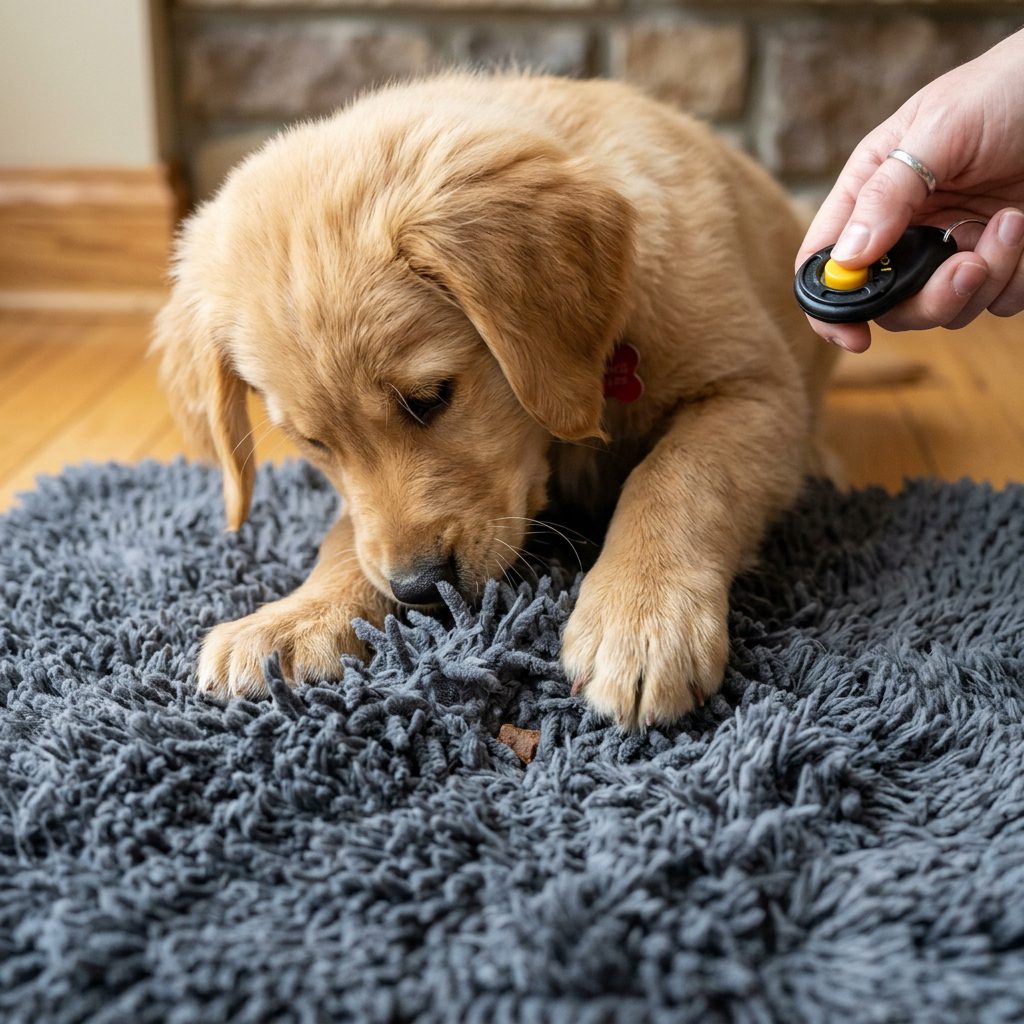
Now that we have our supplies, it is time to introduce your puppy to the mat. We are going to break this behavior down into tiny, manageable steps using a technique called “shaping.”
Step 1: Mat Association
First, we want your puppy to realize that the doormat is the best place in the world to be. Place the mat on the floor in your quiet training room.
- Stand near the mat with your puppy. If your puppy looks at the mat, say “Yes!” and toss a treat onto the mat.
- If your puppy steps on the mat with even one paw, say “Yes!” and give them a jackpot (2-3 treats).
- Encourage them to step off the mat, then wait for them to step back on it voluntarily. Mark and reward every time those paws hit the fabric.
Training Rule: Never force or drag your puppy onto the mat. Let it be their choice. Confidence is key to learning new behaviors!
Step 2: Encouraging the Wiping Motion
Once your puppy is happily standing on the mat waiting for treats, it is time to encourage the scratching motion. This is where the magic happens!
- Ask your puppy to sit or stand near the mat.
- Take a highly aromatic treat and, while they are watching, enthusiastically rub it into the fibers of the doormat. Hide it well!
- Tell your puppy to “Find it!”
- As your puppy sniffs the mat, they will naturally use their front paws to dig or scratch at the fibers to get the treat out.
- The exact second you see their paw make a scratching or wiping motion, say “Yes!” or click, and hand them an additional treat from your pocket.
Repeat this step frequently. Your puppy will soon realize that the act of scratching the mat is what causes you to deliver the extra treats. Once they start scratching the mat before you even hide a treat, you are ready for the next phase!
Phase 2: Adding the Cue and Moving to the Door
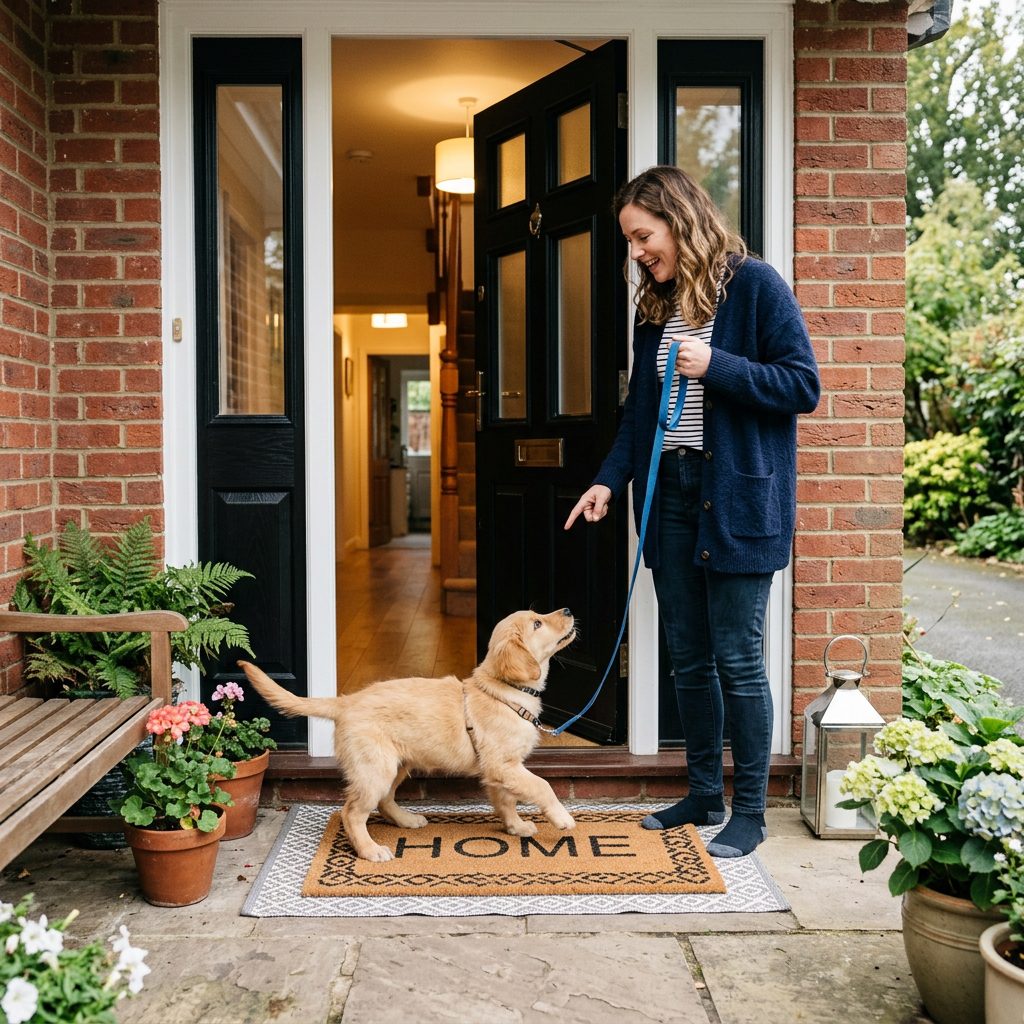
Your puppy is now a professional mat-scratcher in the living room. The next challenge is attaching a verbal command to the action and moving the behavior to its permanent home: the doorway.
Step 3: Naming the Behavior
Dogs learn through association. Up until now, the sight of the mat has been the trigger to scratch. We need to add a verbal cue so you can command the behavior on demand.
- Right before your puppy is about to scratch the mat, clearly say your chosen cue. Great options include “Wipe your paws,” “Doormat,” or “Clean.”
- When they perform the scratch, mark with “Yes!” and reward.
- Practice this for a few days. Eventually, say the cue while standing completely still. If your puppy scratches the mat, offer a massive reward! You have successfully linked the word to the action.
Step 4: Transitioning to the Entryway
Dogs are notoriously bad at generalizing. Just because they know “Wipe your paws” in the living room doesn’t mean they understand it at the front door. We have to teach them in the new context.
| Training Schedule | Location & Context | Goal for the Session |
|---|---|---|
| Days 1-3 | Living Room (Quiet) | Solidify the verbal cue without hiding treats. |
| Days 4-6 | Inside the Front Door (Closed) | Puppy responds to the cue by the real door. |
| Days 7-9 | Inside the Front Door (Open) | Puppy ignores outside distractions and wipes paws. |
| Days 10-14 | Coming Inside from Outdoors | Puppy pauses at the mat to wipe before fully entering the house. |
When you start practicing coming in from the outside, keep your puppy on a leash. This prevents them from bolting past the mat and into the house. Walk up to the door, stop at the mat, and give your cue. Do not let them move forward into the house until they give the mat a good scratch!
Troubleshooting: When Your Puppy Won’t Cooperate
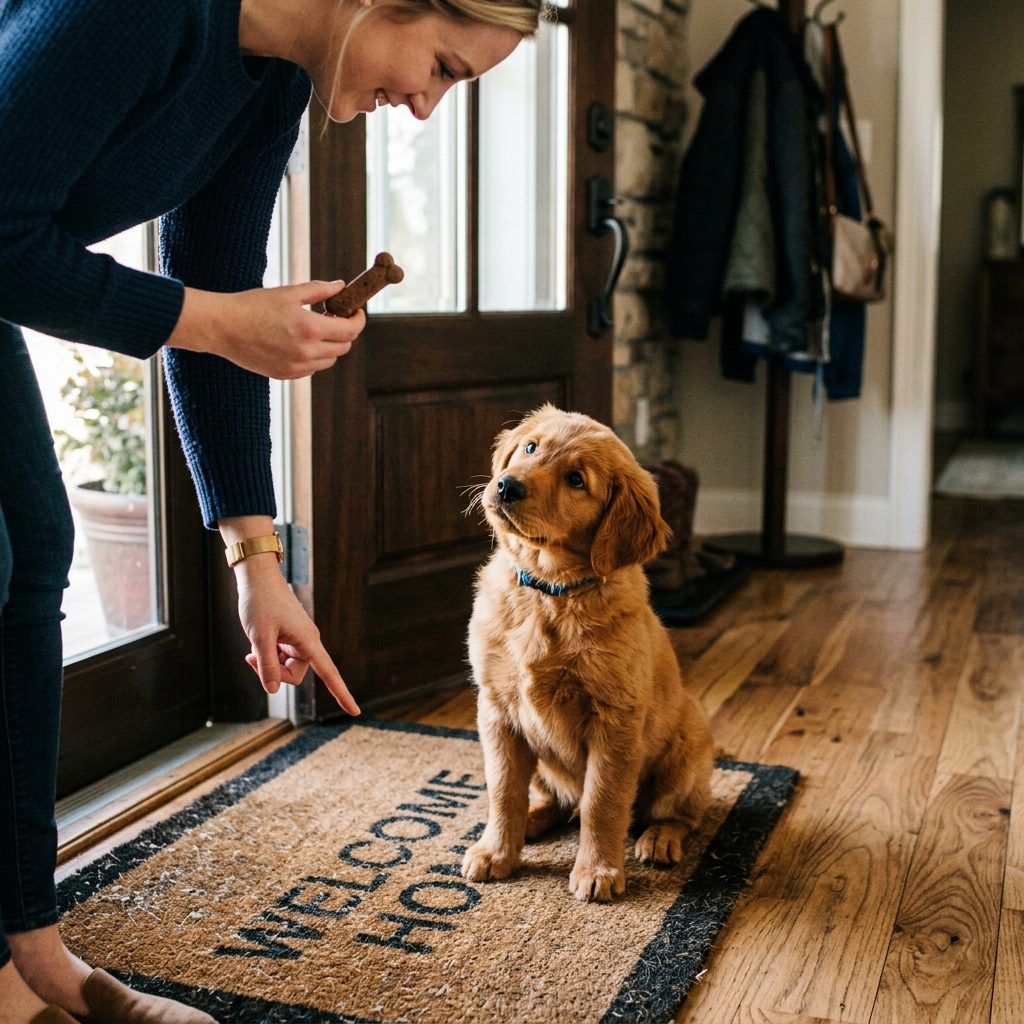
Dog training is rarely a perfectly straight line. You might run into a few roadblocks as you teach this trick. Don’t worry! Here are the most common issues savvy dog owners face and how to fix them.
Problem: My Puppy is Eating or Chewing the Mat
Puppies explore the world with their mouths. If your puppy decides the mat is a chew toy rather than a wiping station, immediately interrupt the behavior with a cheerful “Oops!” and remove the mat. Wait a few minutes, put it back down, and try again. If the chewing persists, you may need to switch to a less chewable mat, like a heavy-duty rubber or coir option, until they are older.
Problem: They Only Wipe One Paw
Many dogs have a dominant paw, just like humans are left or right-handed! If your dog only wipes the right paw, try hiding the treat on the far left side of the mat to encourage them to use the other foot. You can also teach “Other paw” by gently tapping the lazy leg and rewarding any movement from it.
Problem: They Just Stare at Me
If you say “Wipe your paws” and your puppy just sits and stares at you, they are confused. You have moved too fast. Take a step back in your training. Go back to hiding a treat in the fibers of the mat to remind them what the mat is for. Never repeat the command over and over (e.g., “Wipe. Wipe. Wipe your paws. Wipe!”). This just teaches your dog to ignore the word. Say it once, wait five seconds, and if they don’t do it, help them out by pointing at the mat.
Problem: It Doesn’t Work When Their Paws are Actually Muddy
Wet, muddy paws feel different to your dog than dry paws. The sensation of scratching a mat with wet feet might feel weird to them at first. The first few times it rains, you may need to go back to the very basics—hide a high-value treat in the mat right as they come inside to remind them that the game is still the same, even when it’s raining!
Advanced Proofing: Taking the Show on the Road
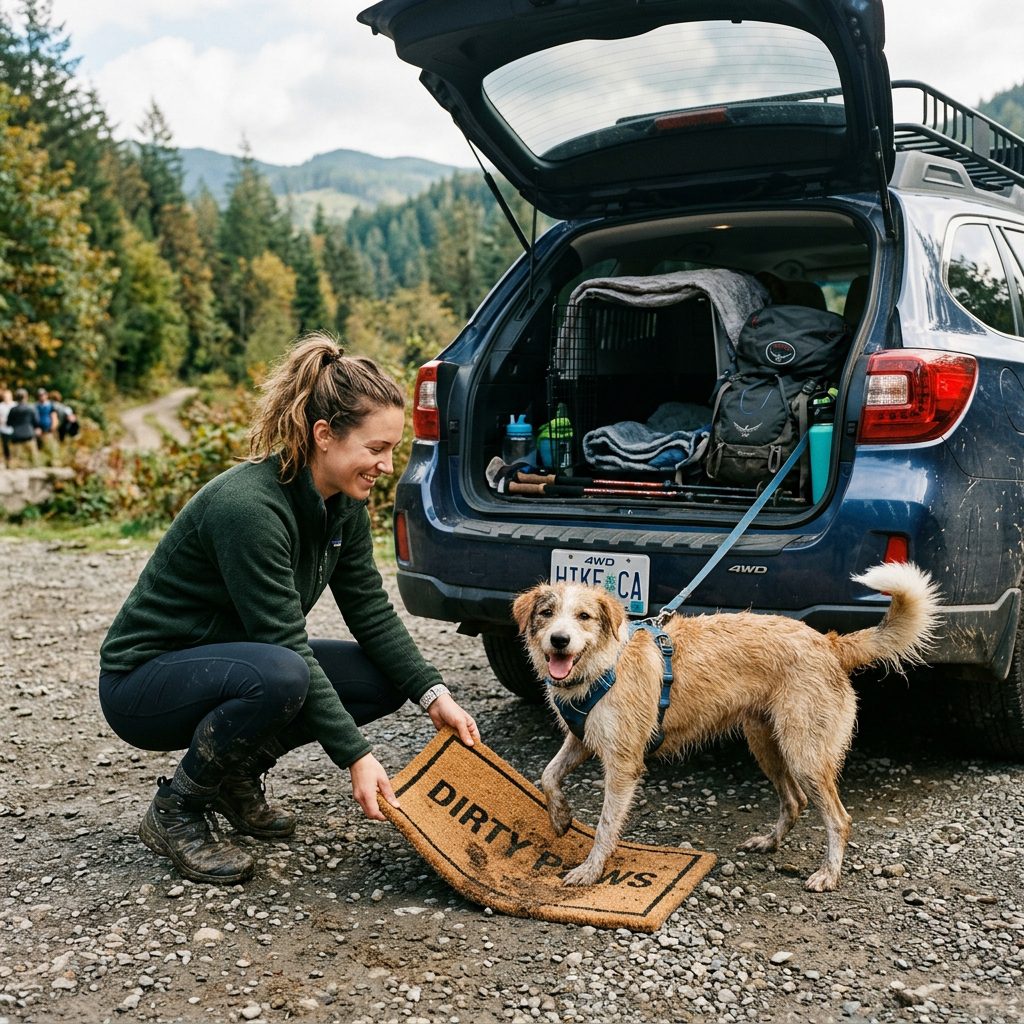
Once your puppy has mastered the front door, you can truly solidify this behavior by taking it on the road. A truly savvy dog owner knows that “proofing” a behavior in multiple environments is the key to a reliable, well-trained dog.
The Back Door and the Car
Start moving the mat to different doors in your house. The back patio door, the garage door, etc. You can even buy a portable microfiber towel or mat to keep in your car. Before your dog jumps into the backseat after a muddy hike, toss the mat on the ground and ask them to “Wipe your paws.”
Tackling the Back Paws
You might be wondering, “What about the back paws?” Teaching a dog to wipe their back paws is a much more advanced trick, often called “Bull kicking” or “Scratching.” To teach this, you can put a sticky note on the floor behind them and click/reward when their back foot touches it, eventually shaping it into a backward scrape. However, for most pet owners, teaching the front paws and simply doing a quick towel-dab on the back paws is more than enough to keep the floors pristine!
Remember: Training should always be fun. If you or your puppy are getting frustrated, end the session on a positive note by asking for a simple trick they already know, like a “Sit,” give them a treat, and try again tomorrow.
Conclusion
Teaching your puppy to wipe their paws at the door is a game-changer for keeping your home clean and your muddy floors spotless. While it takes a little patience, some high-value treats, and a few weeks of consistent practice, the payoff is absolutely worth it. Not only will you save hours of mopping during the rainy season, but you will also provide your puppy with mental stimulation and a fun “job” to do every time they come inside.
Remember to keep your training sessions short—just five to ten minutes a day is plenty for a growing puppy. Celebrate the small victories, be patient with their learning curve, and soon enough, you will have a polite, paw-wiping companion.
Have you tried teaching your dog to wipe their paws? Do you have a favorite type of doormat that works wonders for muddy seasons? We would love to hear your success stories (and see your spotless floors)! Happy training!