Don’t Buy Everything! 10 Must-Have Puppy Training Supplies Professional Trainers Use
Welcome to puppy parenthood! If you are reading this, you are likely staring down the aisles of a massive pet supply store—or scrolling endlessly through online catalogs—feeling completely overwhelmed. The pet industry is a multi-billion dollar machine, and marketing campaigns want you to believe that you need every gadget, gizmo, and glittering accessory to raise a good dog. But here is a little secret from the professional training world: you absolutely do not.
In fact, buying too much gear can actually overcomplicate your training process, drain your wallet, and leave you incredibly frustrated. As savvy dog owners, you want to cut through the noise and find out what actually works. You want the tried-and-true tools that professionals rely on daily to shape confident, well-adjusted, and obedient companions.
“The secret to great dog training isn’t found in a shopping cart. It is found in consistency, clear communication, and having a few high-quality tools that set your puppy up for success.”
Today, we are going to dive deep into the minimalist trainer’s toolkit. We will explore the exact 10 must-have items you need to build a rock-solid foundation with your new puppy. More importantly, we will discuss why you need them and how to use them effectively. Grab a cup of coffee, put away your credit card for a moment, and let’s streamline your puppy training journey!
The Foundation: Essential Walking and Safety Gear
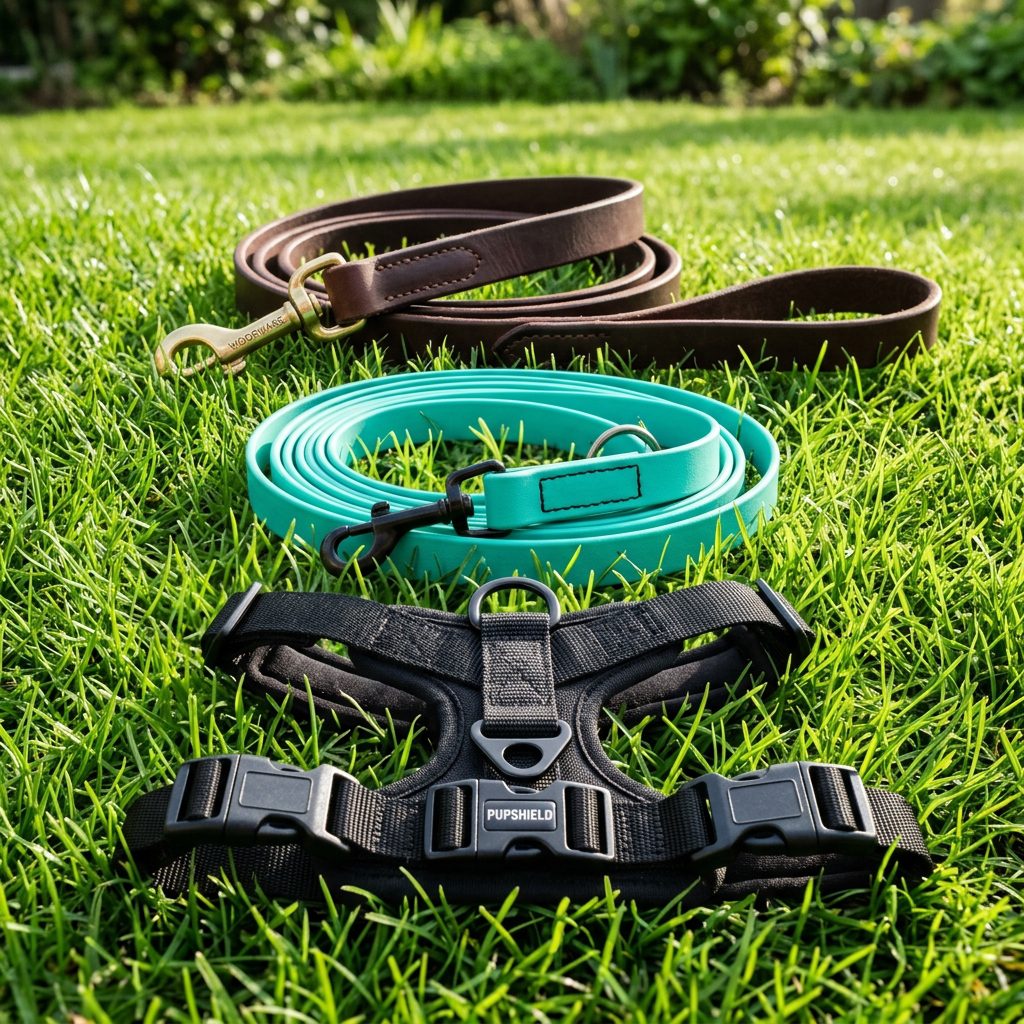
When it comes to walking your puppy, the right gear makes all the difference between a relaxing stroll and a frustrating game of tug-of-war. The goal of your walking equipment should be safety, comfort, and clear communication. Let’s look at the three foundational items every puppy owner needs.
1. A Standard 6-Foot Leather or Biothane Leash
Step away from the retractable leashes! While they might seem convenient, retractable leashes actually teach your puppy that pulling gets them where they want to go. Furthermore, they offer you zero control in an emergency and can cause severe friction burns. Instead, professional trainers swear by a standard 6-foot leash made of either high-quality leather or Biothane. Leather softens beautifully over time and provides a fantastic grip, while Biothane is waterproof, stink-proof, and incredibly durable. A 6-foot length provides enough slack for your puppy to sniff and explore, but keeps them close enough for you to guide them safely through crowded environments.
2. A Well-Fitted Front-Clip Harness
Puppies have delicate tracheas, and a standard flat collar can cause severe damage if your puppy suddenly lunges or pulls. While a collar is great for holding ID tags, a harness is the safest option for walking. Specifically, you want a front-clip harness. When a puppy pulls while wearing a front-clip harness, the tension gently guides their chest back toward you, naturally discouraging the pulling behavior without causing pain or choking. Look for a harness with multiple adjustment points to accommodate your puppy’s rapid growth spurts.
3. A 15-to-30-Foot Long Line
If you want a dog that comes back to you every single time you call them, a long line is your best friend. A long line is exactly what it sounds like: a very long leash (usually 15 to 30 feet) that allows your puppy to experience the illusion of freedom while you maintain a physical safety net. Trainers use long lines to practice recall (the “come” command) in open fields and parks. It allows your puppy to explore, sniff, and run, but if they decide to ignore your call, you can gently step on the line to prevent them from running off, thereby ensuring that “come” is a non-negotiable command.
| Leash Type | Best Use Case | Pros | Cons |
|---|---|---|---|
| 6-Foot Standard | Neighborhood walks, vet visits, basic obedience. | Maximum control, safe, teaches loose-leash walking. | Limited roaming distance for the dog. |
| Long Line (15-30ft) | Parks, beaches, practicing recall commands. | Allows safe exploration, builds off-leash reliability. | Can easily get tangled in brush or legs. |
| Retractable | NOT RECOMMENDED | Gives dog freedom in open spaces. | Teaches pulling, high injury risk, easily dropped. |
The Reward System: High-Value Treats and Accessible Pouches
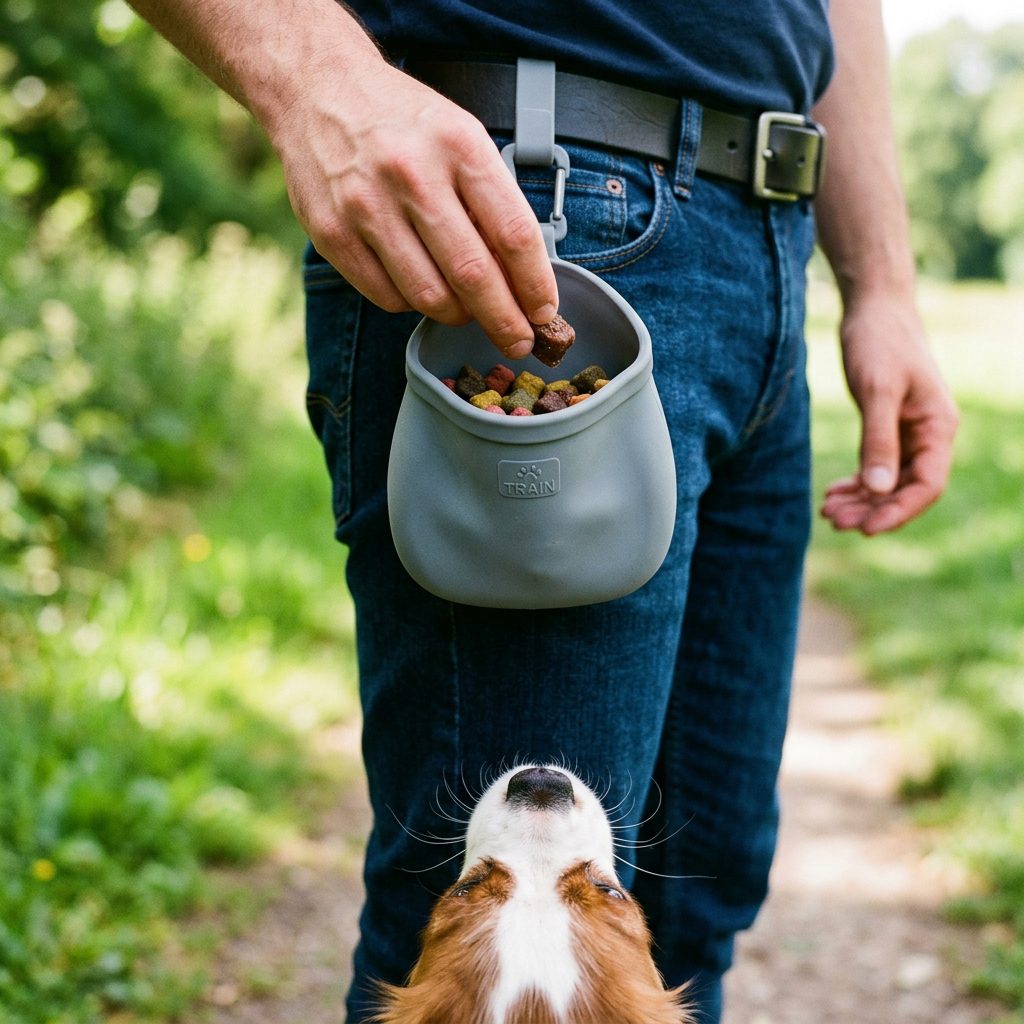
Positive reinforcement training relies heavily on paying your dog for a job well done. Just like you wouldn’t go to work for free, your puppy needs a paycheck for choosing good behaviors over naughty ones. However, not all “paychecks” are created equal.
4. High-Value, Soft Training Treats
The crunchy biscuits you find in the supermarket aisles are great for a bedtime snack, but they are terrible for active training. They take too long to chew, leaving your puppy distracted and breaking the flow of your training session. For training, you need soft, smelly, and pea-sized treats. Professional trainers use a hierarchy of rewards. Low-value treats (like their daily kibble) can be used for practicing known commands in a quiet living room. But when you are teaching a brand-new behavior or working in a highly distracting environment (like a busy park), you need to bring out the big guns: high-value treats. Think boiled chicken breast, small cubes of cheese, or specialized freeze-dried liver. These treats should be irresistible to your puppy.
5. A Quick-Access Silicone Treat Pouch
Timing is everything in dog training. If your puppy sits, but it takes you ten seconds to dig a treat out of a plastic baggie in your pocket, your puppy has already forgotten why they are being rewarded. A dedicated treat pouch that clips to your belt or wears around your waist is an absolute necessity. Silicone pouches are highly recommended by professionals because they do not absorb odors, they are incredibly easy to wash (just throw them in the dishwasher), and they feature magnetic closures that allow you to reach in with one hand while keeping the treats secure when you bend over.
| Treat Value Level | Examples | When to Use |
|---|---|---|
| Low Value | Standard kibble, dry biscuits, carrots. | Low distraction environments (home), maintaining known commands. |
| Medium Value | Commercial soft training treats, jerky. | Moderate distractions (backyard, quiet street), learning new tricks. |
| High Value | Boiled chicken, hot dogs, cheese, liver. | High distractions (parks, pet stores), counter-conditioning, recall training. |
Communication Tools: Bridging the Gap Between Human and Canine
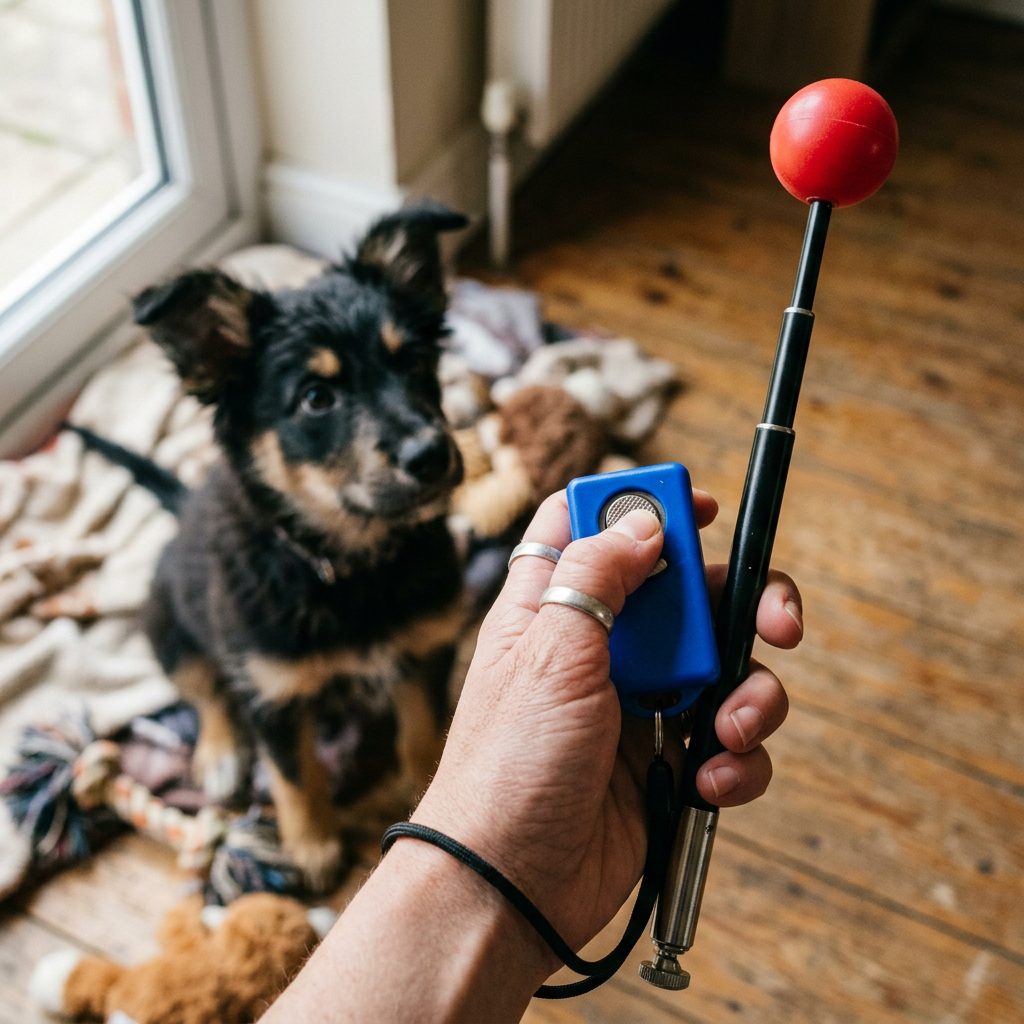
Dogs do not speak English. When we train them, we are essentially trying to bridge a massive language barrier. To do this efficiently, we need tools that provide crystal-clear communication, eliminating the “static” of our daily chatter.
6. A Classic Box Clicker
A clicker is a small plastic box with a metal tongue that makes a distinct “click-clack” sound when pressed. It is the cornerstone of marker training. The clicker serves one simple purpose: it takes a snapshot of the exact moment your puppy does the right thing. It tells the puppy, “Yes! That exact behavior you just did is what earned you a treat.” Because the click sounds exactly the same every single time, it cuts through the emotional variations in our human voices. Once a puppy understands that a click equals a treat, you can teach them incredibly complex behaviors with pinpoint accuracy. Best of all? A standard box clicker costs about two dollars.
7. A Telescopic Target Stick
While often overlooked by pet owners, a target stick is a favorite among professional trainers. A target stick is essentially a long wand (often collapsible like a radio antenna) with a small colored ball on the end. You teach your puppy to touch their nose to the ball. Once they understand this “target” game, you can use the stick to guide your puppy into various positions—like spinning in a circle, walking perfectly at your side, or going into their crate—without ever having to physically push or pull them. It builds confidence and encourages the puppy to think and problem-solve, rather than just being physically manipulated.
“Remember, the clicker does not train the dog. The clicker simply marks the behavior. Your timing, patience, and consistency are what actually train the dog.”
Management and Safe Spaces: Preventing Bad Habits
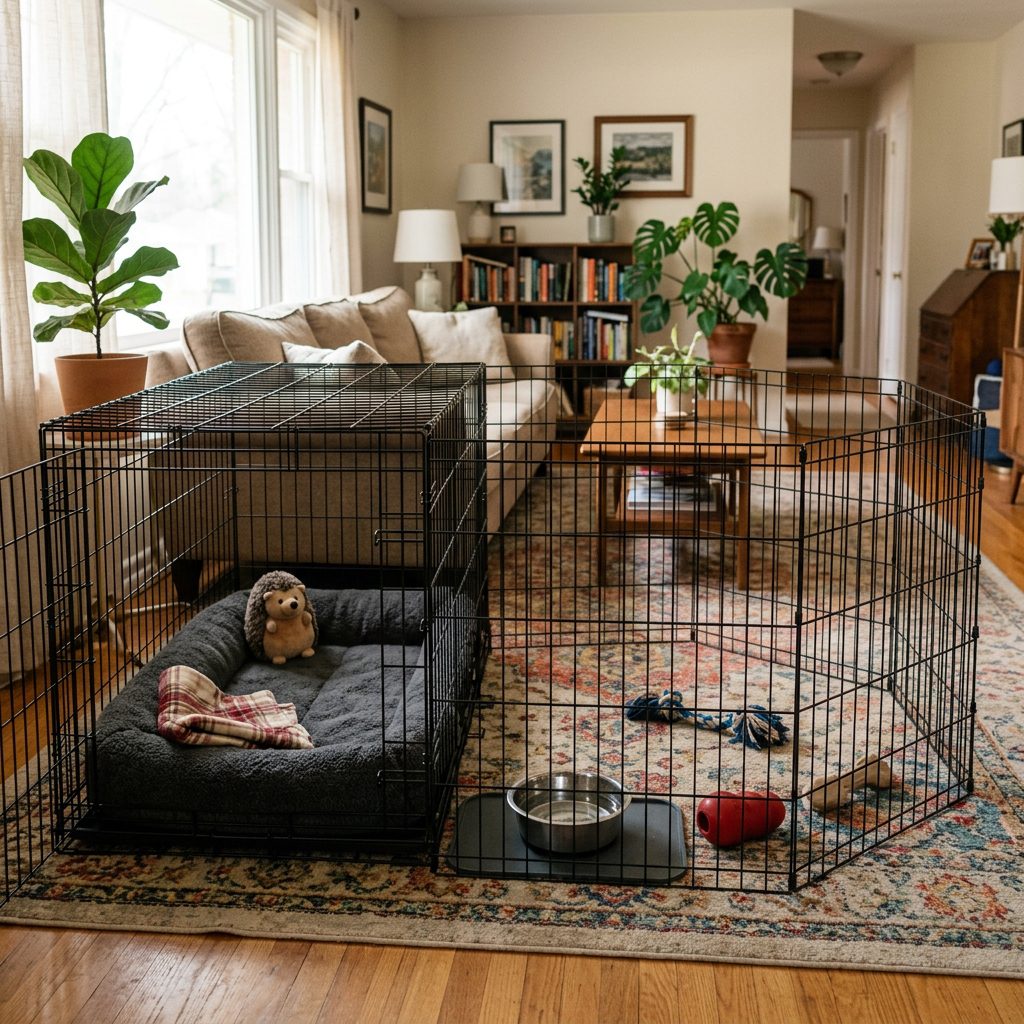
One of the golden rules of dog training is: Manage the environment to prevent the behavior you do not want. If your puppy never has the opportunity to chew your favorite shoes or pee on the living room rug, you never have to correct those behaviors. Management tools are your sanity savers during the first year of your puppy’s life.
8. An Adjustable Wire Crate with a Divider
Crate training is one of the most valuable gifts you can give your dog. A crate is not a jail; when introduced correctly, it mimics a natural canine den—a safe, quiet place where your puppy can retreat to sleep and decompress. Furthermore, because dogs naturally do not want to soil where they sleep, a crate is the ultimate potty-training tool. When buying a crate, do not buy a small one and then a larger one later. Buy a high-quality wire crate that will fit your dog at their adult size, but ensure it comes with a wire divider panel. You can use the divider to make the space small while they are a puppy (just big enough to stand up, turn around, and lie down) and expand it as they grow.
9. A Sturdy Exercise Pen (X-Pen)
You cannot keep your eyes on your puppy 100 percent of the time. You need to cook dinner, answer emails, and take showers. This is where the exercise pen (or X-pen) comes in. An X-pen is a portable, foldable fence that creates a safe, enclosed play area in your home. It offers more freedom than a crate but keeps the puppy contained away from electrical cords, houseplants, and valuable furniture. Professional trainers often attach the X-pen directly to the crate, creating a “puppy apartment” where the dog has a bedroom (the crate) and a living room (the pen) to play safely with their toys.
| Age of Puppy | Maximum Time in Crate (Daytime) | Potty Break Frequency |
|---|---|---|
| 8 – 10 Weeks | 1 to 2 Hours | Every 1 to 2 Hours |
| 11 – 14 Weeks | 2 to 3 Hours | Every 2 to 3 Hours |
| 15 – 16 Weeks | 3 to 4 Hours | Every 3 to 4 Hours |
| 17+ Weeks | 4 to 5 Hours | Every 4 to 5 Hours |
Mental Stimulation: Tiring Out the Puppy Brain
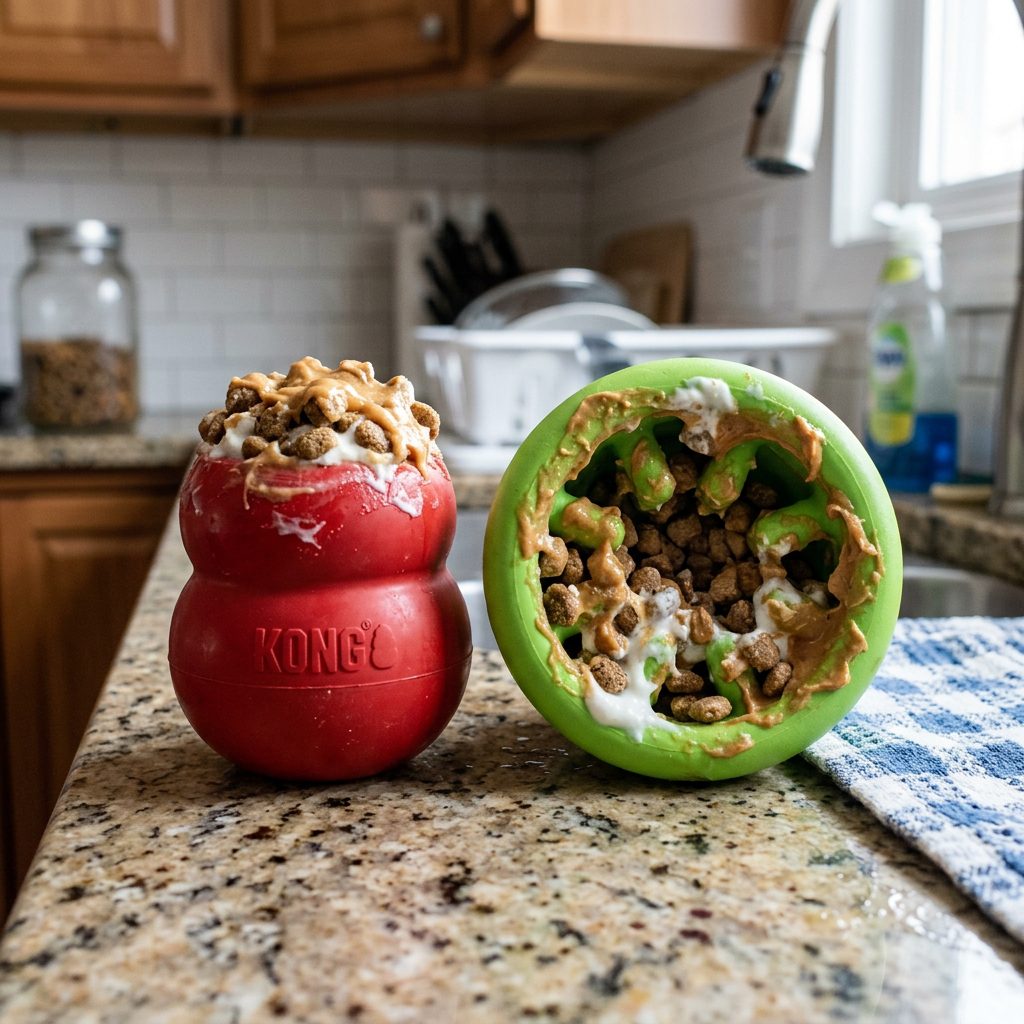
Many new dog owners make the mistake of trying to exhaust their puppies with endless physical exercise. They throw the ball for hours or take them on incredibly long runs. The problem? You are inadvertently building a canine athlete with endless stamina. While physical exercise is important, mental stimulation is vastly more effective at tiring out a puppy and promoting calm behavior.
10. Stuffable Rubber Enrichment Toys
If you only buy one toy for your puppy, make it a durable, stuffable rubber toy, such as a classic Kong or a West Paw Toppl. These are not just toys; they are essential pacifiers and brain-games. Dogs are natural foragers, and they find the act of licking and chewing to be incredibly soothing. Licking actually releases endorphins in a dog’s brain, helping them relax and settle down.
Professional trainers rarely feed puppies out of standard metal bowls. Instead, they use mealtime as an opportunity for enrichment. You can soak your puppy’s kibble in water or dog-safe bone broth, mix it with a little plain pumpkin puree or plain yogurt, stuff the mixture into the rubber toy, and freeze it solid. Handing your puppy a frozen stuffed toy when they go into their crate or X-pen will keep them happily occupied for 30 to 45 minutes. It tires out their brain, prevents destructive boredom chewing, and helps them build a positive association with their safe spaces.
- Pro-Tip Recipe 1: Kibble soaked in warm water, mixed with a tablespoon of peanut butter (ensure it is xylitol-free!), and frozen.
- Pro-Tip Recipe 2: Plain Greek yogurt mixed with mashed blueberries and a few pieces of freeze-dried liver, stuffed and frozen.
- Pro-Tip Recipe 3: Canned wet puppy food mashed with steamed carrots and green beans, packed tightly and frozen.
Conclusion
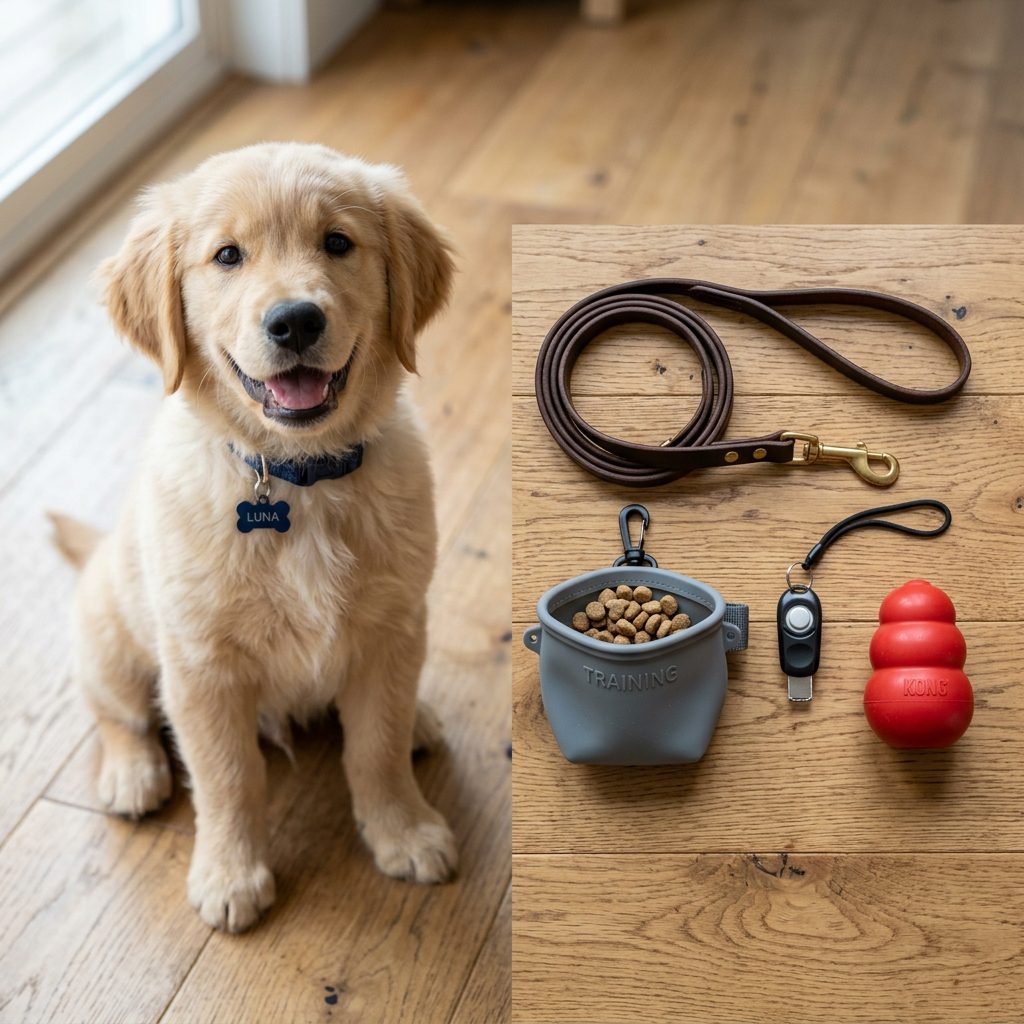
Bringing a new puppy into your home is a thrilling adventure, but it does not require you to empty your bank account on every trendy gadget on the market. By sticking to these 10 essential tools—a solid leash, a front-clip harness, a long line, high-value treats, a treat pouch, a clicker, a target stick, a crate, an X-pen, and stuffable enrichment toys—you are setting yourself up for absolute success.
Remember, the gear is only as good as the human holding it. Professional trainers use these tools because they facilitate clear communication, promote safety, and encourage positive reinforcement. Your patience, consistency, and sense of humor will always be your most valuable assets. Focus on building a bond of trust with your new furry best friend, use these essential tools to guide them, and you will be well on your way to raising a confident, well-behaved, and incredibly happy dog. Happy training!