Is Your Puppy Afraid Of Robotic Vacuum Cleaners? Try This 4-Step Calm Plan
Welcome back, fellow dog lovers! If you are reading this, you probably love a clean house just as much as you love your furry best friend. We all know the struggle of keeping up with the endless tumbleweeds of dog hair that magically appear in the corners of our living rooms. Enter the robotic vacuum cleaner: a modern marvel of convenience that keeps our floors spotless while we sip our morning coffee. However, for our puppies, this magical cleaning disc can seem like a terrifying alien invader. It makes weird noises, moves unpredictably, and seems to have a mind of its own. It is completely natural for a young dog to be suspicious or downright terrified of this new household gadget.
As savvy dog owners, we know that forcing our puppies to just deal with it is never the right approach. Fear can quickly escalate into anxiety, reactivity, or even aggression if not handled with care and empathy. That is why we are here to help you navigate this common modern-day dog parenting hurdle. By utilizing the science of canine behavior, specifically systematic desensitization and counter-conditioning, we can change your puppy’s emotional response from fear to complete indifference.
The goal is not just to stop your puppy from barking at the vacuum, but to genuinely change how they feel about its presence in their home.
In this comprehensive guide, we are going to break down exactly why your puppy is so spooked, the essential tools you will need for success, and walk you through our foolproof 4-Step Calm Plan. Whether your puppy runs and hides under the sofa or tries to boldly attack the sweeping brushes, this guide is tailored to help you build their confidence. Let us dive into the fascinating world of canine psychology and turn that scary robot into just another boring piece of furniture!
Why Your Puppy Sees the Robot Vacuum as a Mortal Enemy
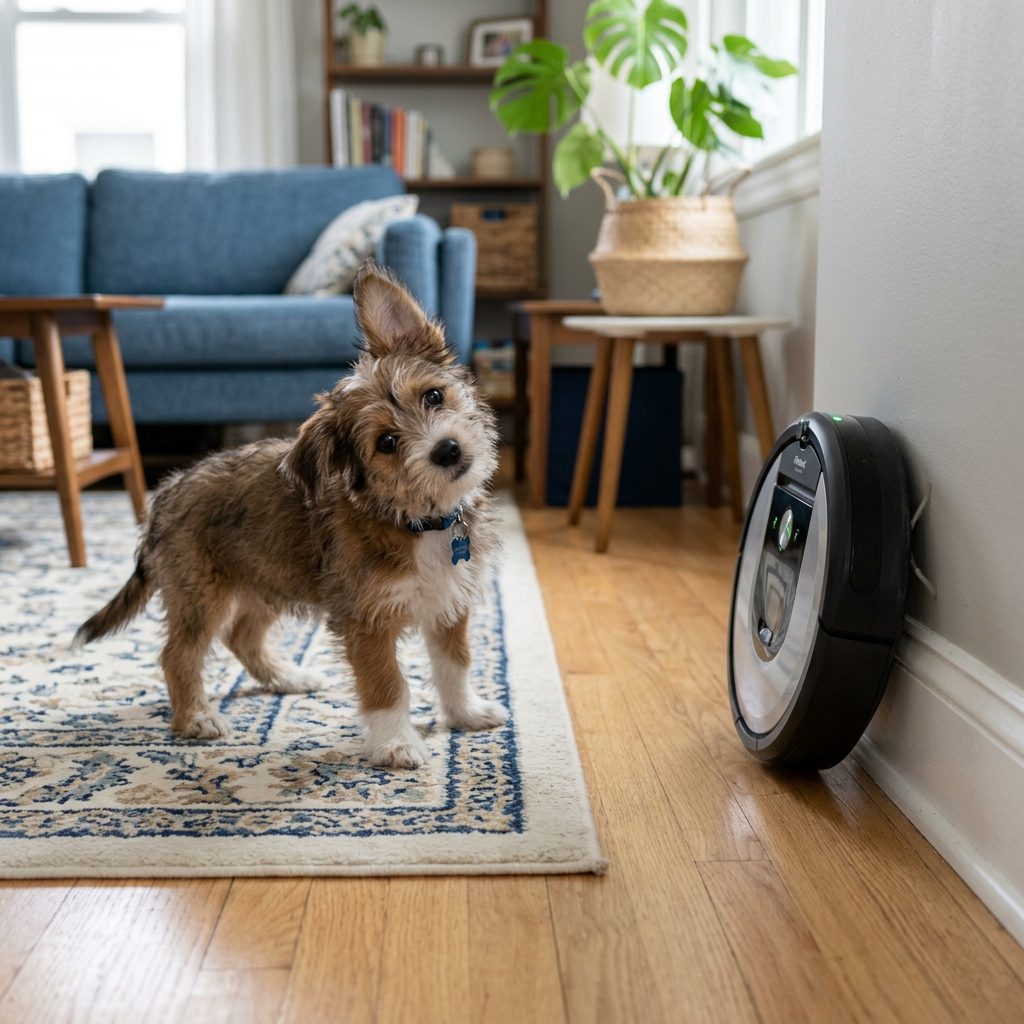
To effectively train your puppy, you first need to step into their paws and understand the world from their perspective. Dogs are incredibly perceptive creatures, relying heavily on their senses of hearing, smell, and sight to navigate their environment. When a robotic vacuum cleaner enters the scene, it essentially violates all the natural rules of movement and sound that your puppy understands.
The Unpredictable Movement
In nature, things that move on their own are usually alive. Your puppy’s instincts tell them that this small, round object zipping across the floor is a living creature. However, unlike a cat or another dog, the robot vacuum does not have eyes, a face, or readable body language. It moves erratically, suddenly changing direction, bumping into walls, and spinning around. For a puppy trying to read the intentions of this object, the lack of communication is deeply unsettling.
The High-Frequency Sounds
While the hum of a vacuum might just sound like white noise to us, your puppy’s hearing is far more sensitive. Robotic vacuums emit high-frequency whines from their motors and sweeping brushes that can be grating or even physically uncomfortable for a young dog. This auditory assault, combined with the fact that the noise grows louder as the object approaches them, triggers their natural fight-or-flight response.
The Invasion of Personal Space
Puppies are highly territorial of their safe zones, such as their bed, their crate, or the area where they eat. A robotic vacuum does not respect these boundaries. It will happily ram right into your dog’s food bowl or try to sweep over the edge of their favorite sleeping mat. This perceived invasion of personal space can make your puppy feel cornered and defensive. Understanding these triggers is the first step in our training journey. We are not just fighting bad behavior; we are addressing a very real, instinctual fear.
Essential Tools for Your Desensitization Toolkit
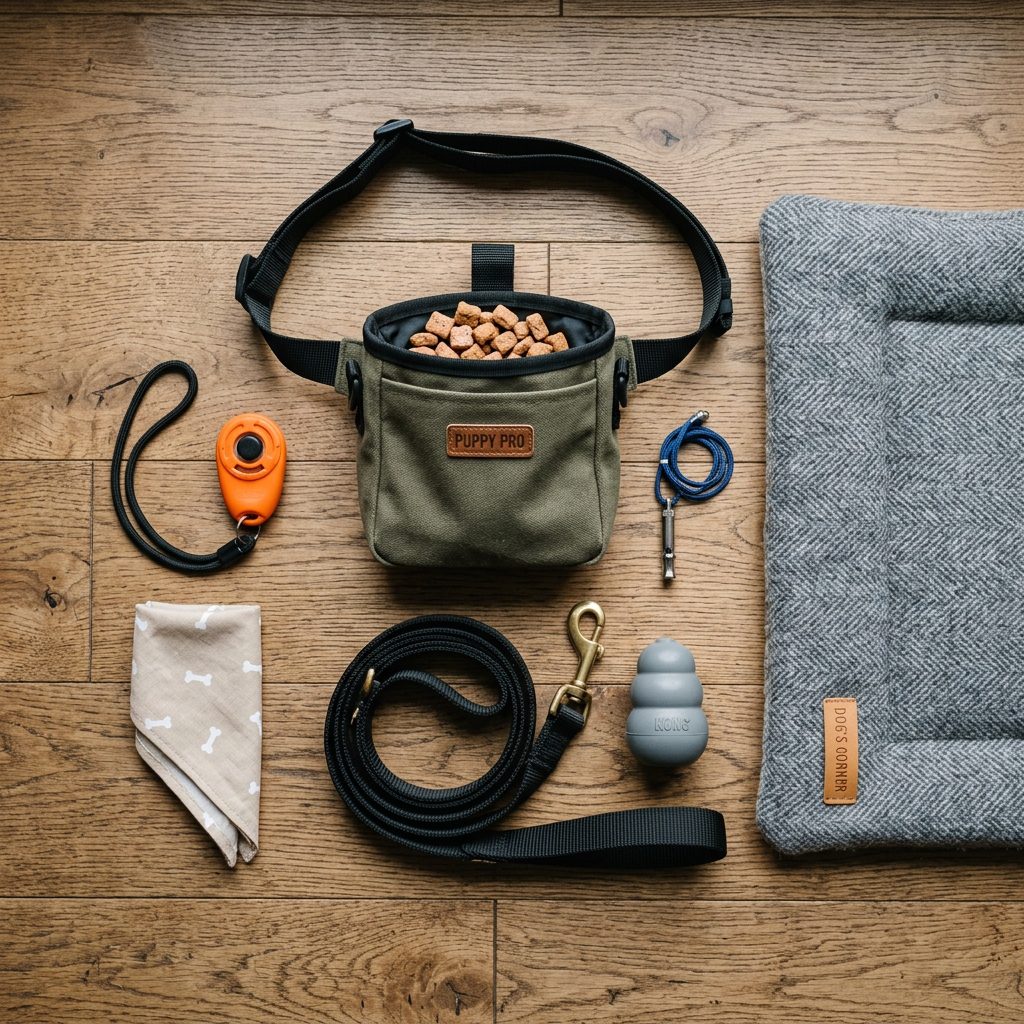
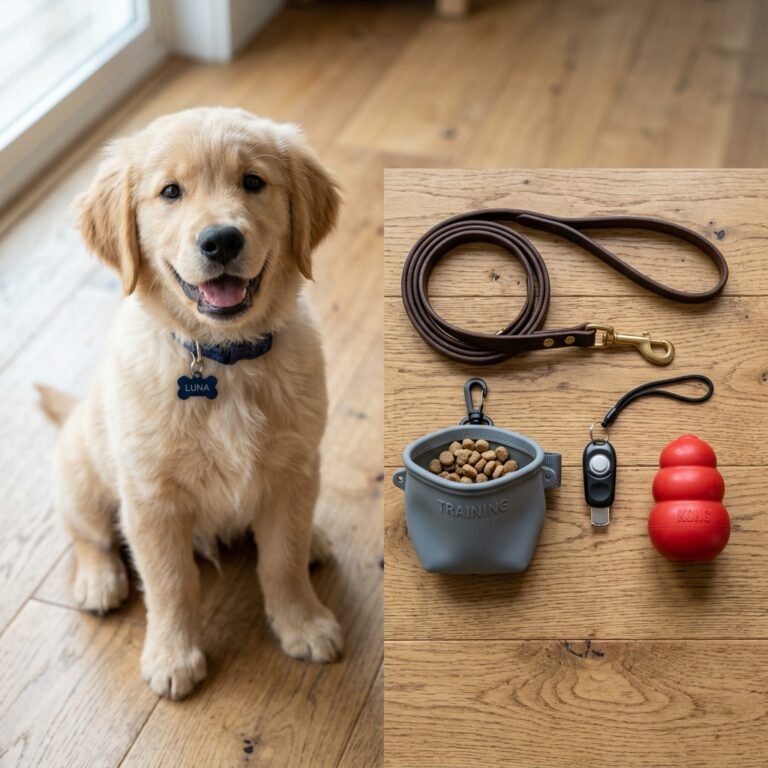
Before we introduce the vacuum to your puppy in a structured way, we need to gather our training supplies. Setting yourself up for success means having the right tools on hand to reward positive behavior instantly. The methodology we are using relies heavily on positive reinforcement, which means we will be paying your puppy handsomely for their bravery.
Choosing the Right Rewards
Not all treats are created equal. When dealing with fear, you need to bring out the big guns. We call these High-Value Treats. These should be things your puppy rarely gets and absolutely loves, such as boiled chicken, hot dogs, or small cubes of cheese. You will also need standard treats for when they become more comfortable.
| Tool | Description | When to Use |
|---|---|---|
| High-Value Treats | Smelly, soft, highly desirable foods (e.g., chicken, liver). | Used in the early stages when fear is highest, or when the vacuum is moving. |
| Standard Treats | Your dog’s regular kibble or basic crunchy biscuits. | Used in later stages when the dog is mostly calm and just needs a reminder. |
| Clicker (Optional) | A small mechanical device that makes a sharp click sound. | Used to mark the exact moment your dog looks calmly at the vacuum. |
| A Safe Mat or Bed | A comfortable, designated spot for your dog to relax on. | Used to teach the ‘place’ command, giving them a safe zone away from the robot. |
| Standard Leash | A regular 6-foot leash (not retractable). | Used to manage your puppy’s distance from the vacuum so they don’t rush it. |
Having these tools organized before you turn the vacuum on ensures that you aren’t scrambling for a treat while your puppy is actively reacting.
Preparation is the bridge between a panicked puppy and a peaceful home.
The 4-Step Calm Plan: From Fear to Indifference
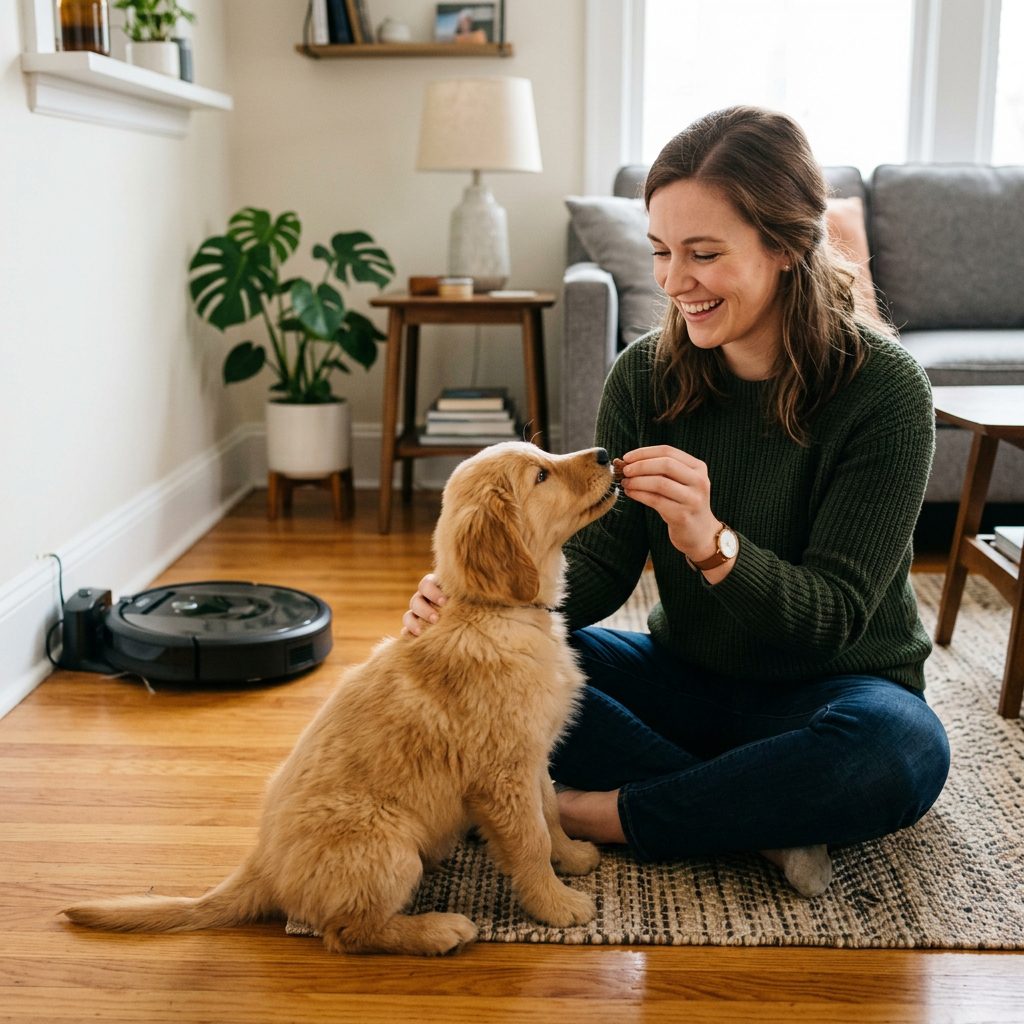
Now that we understand the psychology and have our tools ready, it is time to implement the 4-Step Calm Plan. This process requires patience. Do not rush through the steps. Let your puppy’s body language dictate the pace. If they show signs of stress (yawning, lip licking, whale eye, or tucking their tail), you have moved too fast and need to take a step back.
Step 1: The Sleeping Robot
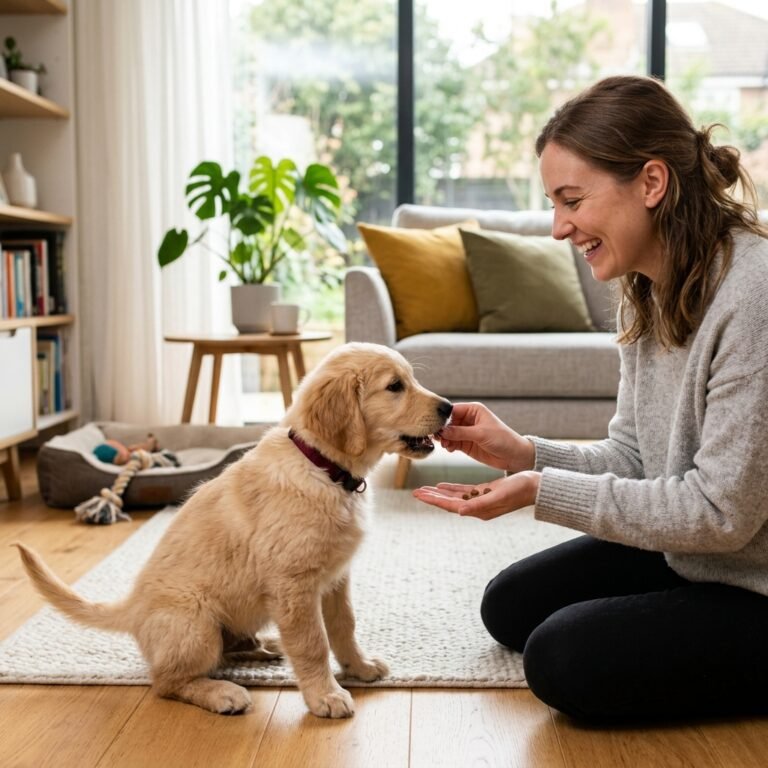
Begin with the robot vacuum completely turned off and stationary. Place it in the middle of the room. Put your puppy on a leash and walk them into the room. Keep a comfortable distance where your puppy notices the vacuum but is not reacting. Every time your puppy looks at the vacuum, say Yes! (or click your clicker) and give them a high-value treat. You are creating a positive association: looking at the scary disc equals delicious chicken. Slowly decrease the distance over a few days until your puppy can sniff the turned-off vacuum comfortably.
Step 2: The Waking Robot
Once your puppy is completely ignoring the stationary vacuum, it is time to introduce sound. Keep the vacuum in one place (you may need to hold it or use its spot-clean function if it doesn’t move far). Have a helper turn the vacuum on while you stand at a far distance with your leashed puppy. The moment the sound starts, rain down the high-value treats. When the sound stops, the treats stop. Your puppy will quickly learn that the humming noise is the dinner bell for the best treats in the house.
Step 3: The Restrained Robot
Now we add movement. Allow the vacuum to move around the room, but keep your puppy on a leash and at a safe distance, ideally on their designated safe mat. Ask your puppy to sit or lie down. As the vacuum zips around, continuously reward your puppy for remaining on their mat and staying calm. If the vacuum comes too close, gently guide your puppy further away to maintain their threshold of comfort.
Step 4: Peaceful Coexistence
The final step is removing the leash. Turn the vacuum on during a time when your puppy is naturally relaxed, perhaps after a long walk. Sit with your puppy and offer occasional standard treats as the vacuum goes about its business. Do not make a big deal out of it. Your calm energy will translate to your puppy.
| Training Phase | Goal | Estimated Timeframe |
|---|---|---|
| Step 1: Sleeping | Comfortable sniffing the powered-off machine. | 3 to 5 Days |
| Step 2: Waking | No reaction to the sound of the motor starting. | 4 to 7 Days |
| Step 3: Restrained | Staying calm on a mat while the robot moves. | 1 to 2 Weeks |
| Step 4: Coexistence | Ignoring the vacuum while off-leash in the house. | Ongoing Maintenance |
Troubleshooting Common Setbacks
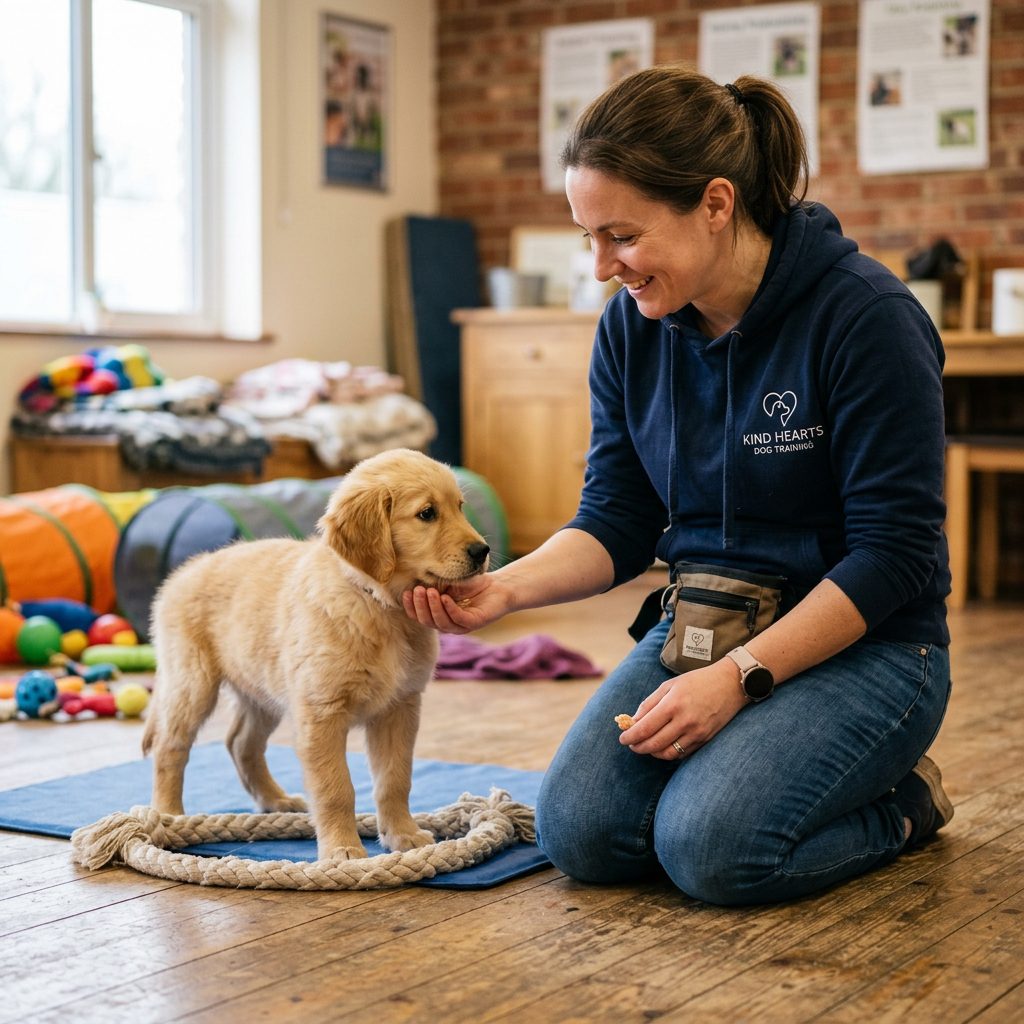
Training is rarely a perfectly straight line. It is completely normal to experience setbacks along the way. Your puppy might have a great day where they completely ignore the vacuum, followed by a day where they decide it is their mortal enemy once again. The key is to remain calm, objective, and ready to adjust your training strategy.
What If My Puppy Barks and Lunges?
If your puppy is barking, lunging, or trying to bite the sweeping brushes of the vacuum, they are over their threshold. This means the stimulus is too intense for them to process logically, and they have entered fight mode. Do not punish the barking. Punishing them will only confirm their suspicion that the vacuum brings bad things. Instead, calmly pick up the leash, create more distance between your puppy and the vacuum, and wait for them to quiet down. Once they stop barking, reward them heavily. Next time, start your training session from this greater distance.
What If My Puppy Runs and Hides?
Flight is the opposite side of the fear coin. If your puppy tucks their tail and bolts under the couch, do not drag them out. Forcing them to face their fear will result in a phenomenon called flooding, which can cause severe psychological trauma. Let them hide. Turn the vacuum off, and toss high-value treats near their hiding spot. Your goal is to coax them out voluntarily. You will need to spend much more time on Step 1 and Step 2 of the Calm Plan, ensuring they feel incredibly safe before introducing any movement.
What If My Puppy Pees Out of Fear?
Submissive or fear-based urination is a clear sign of extreme distress. If this happens, immediately stop the training session. Clean up the mess without scolding your puppy—making a fuss will only increase their anxiety. This severe reaction indicates that you need to take things incredibly slow. You may even need to start by just having the vacuum in the same room while it is covered with a towel, slowly uncovering it over a period of weeks.
Common Mistakes Savvy Owners Should Avoid
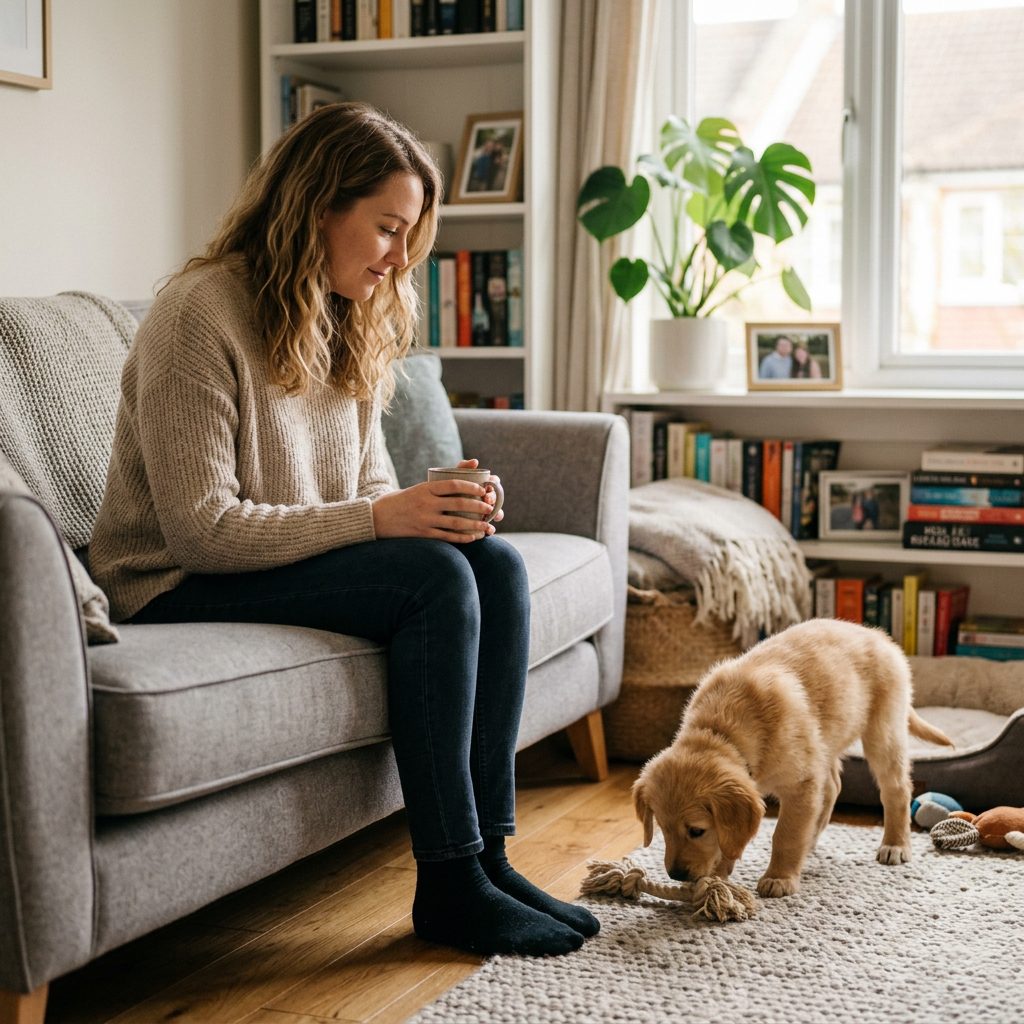
Even the most dedicated and well-meaning pet parents can make mistakes when trying to help their dogs overcome fears. When dealing with a robotic vacuum, there are a few common pitfalls that can drastically set back your training progress. By being aware of these mistakes, you can ensure your 4-Step Calm Plan goes off without a hitch.
- Laughing at the Fear: It can be objectively funny to watch a puppy jump three feet in the air because a small plastic disc bumped into their paw. However, laughing, pointing, or turning it into a game can confuse your puppy. They need you to be a calm, confident leader, not an unpredictable audience member.
- Putting Treats ON the Vacuum: Many owners think that placing a treat directly on top of the scary object is a great way to build confidence. This is a trap! It forces the puppy to approach something they are terrified of just to get the food. They might snatch the treat, but their internal stress levels will be sky-high. Always deliver treats from your hand, away from the vacuum.
- Leaving the Vacuum on a Schedule: While you are in the active stages of training, disable the automatic scheduling feature on your robotic vacuum. You do not want the vacuum waking up and surprising your puppy while you are not there to manage the situation and provide positive reinforcement. Every interaction should be controlled until they reach Step 4.
- Rushing the Process: The timeframe provided in our table is just an estimate. Some puppies will breeze through the steps in a week, while others might take months. Let the dog set the pace. If you rush, the fear will return.
Conclusion
In conclusion, teaching your puppy to accept a robotic vacuum cleaner is a fantastic exercise in building trust and communication between you and your furry best friend. By understanding the root of their fear, arming yourself with high-value treats, and methodically working through our 4-Step Calm Plan, you can transform a terrifying household monster into a completely ignorable piece of plastic. Remember that patience, consistency, and empathy are your greatest tools as a savvy dog owner. Do not be discouraged by setbacks; they are just opportunities to reinforce your puppy’s safe boundaries. Soon enough, you will be able to enjoy a spotlessly clean floor while your puppy snoozes peacefully right next to the very machine they used to fear. Happy training, and here is to a cleaner, calmer home for both you and your dog!