
The Ultimate Secret to Train Your Puppy to Settle on a Picnic Blanket Every Single Time
Picture this: It is a gorgeous Saturday afternoon. The sun is shining, a gentle breeze is blowing, and you have just laid out a beautiful spread of cheese, crackers, and sandwiches on your favorite checkered picnic blanket. It is the perfect day—until your adorable, yet endlessly energetic puppy decides that your charcuterie board is a chew toy and the blanket is a wrestling mat. We have all been there. Trying to enjoy a relaxing outdoor meal with a hyperactive puppy can quickly turn into a stressful game of keep-away. But what if I told you that enjoying a peaceful picnic with your dog is entirely possible? As savvy dog owners, you know that training is about communication and setting your dog up for success.
The ultimate secret to getting your puppy to settle on a picnic blanket every single time boils down to a concept called target training combined with a highly rewarding place command. By transforming the blanket from a chaotic playground into a designated relaxation zone, you can teach your puppy that calmness is the most rewarding behavior of all.
The secret isn’t just tiring them out before the picnic; it is giving them a clear, highly rewarded job to do while they are there.
In this comprehensive guide, we are going to dive deep into the exact step-by-step process to achieve blanket bliss. We will cover the psychology behind the settle command, the exact tools you need, a foolproof training schedule, and how to troubleshoot those inevitable puppy hiccups along the way. Grab your training treats, and let us get started!
The Psychology of the ‘Settle’ Command
Before we jump into the mechanics of training, it is crucial to understand why the settle command works and how your puppy’s brain processes it. Dogs, especially puppies, are incredibly context-specific learners. When you take a puppy to a park, their senses are instantly overwhelmed. There are new smells, rustling leaves, running children, and other dogs. To a puppy, a blanket on the ground looks like an invitation to play.
The secret to the settle command is changing the context of the blanket. Instead of it being a launchpad for zoomies, we want to condition the blanket to act as an off-switch. This is rooted in classic operant conditioning. By consistently pairing the act of lying down on the blanket with high-value rewards and a calm environment, your puppy learns that the blanket is a safe, rewarding place to relax.
Why Target Training is the Key
Target training involves teaching your dog to interact with a specific object—in this case, the picnic blanket. Here is why it is so effective:
- Clear Boundaries: The blanket provides a visual boundary. Your puppy knows exactly where they are supposed to be.
- Predictability: Dogs thrive on routine. When the blanket comes out, they know exactly what game we are playing: the relaxation game.
- Portability: Once trained, this behavior transfers anywhere. A blanket at the park, a mat at a cafe, or a towel at the beach all mean the exact same thing to your dog: settle down.
By focusing on building a strong positive association with the blanket itself, rather than just endlessly repeating the word ‘down’, you are giving your puppy a tangible target that instantly cues a calm state of mind.
Your Picnic Training Toolkit
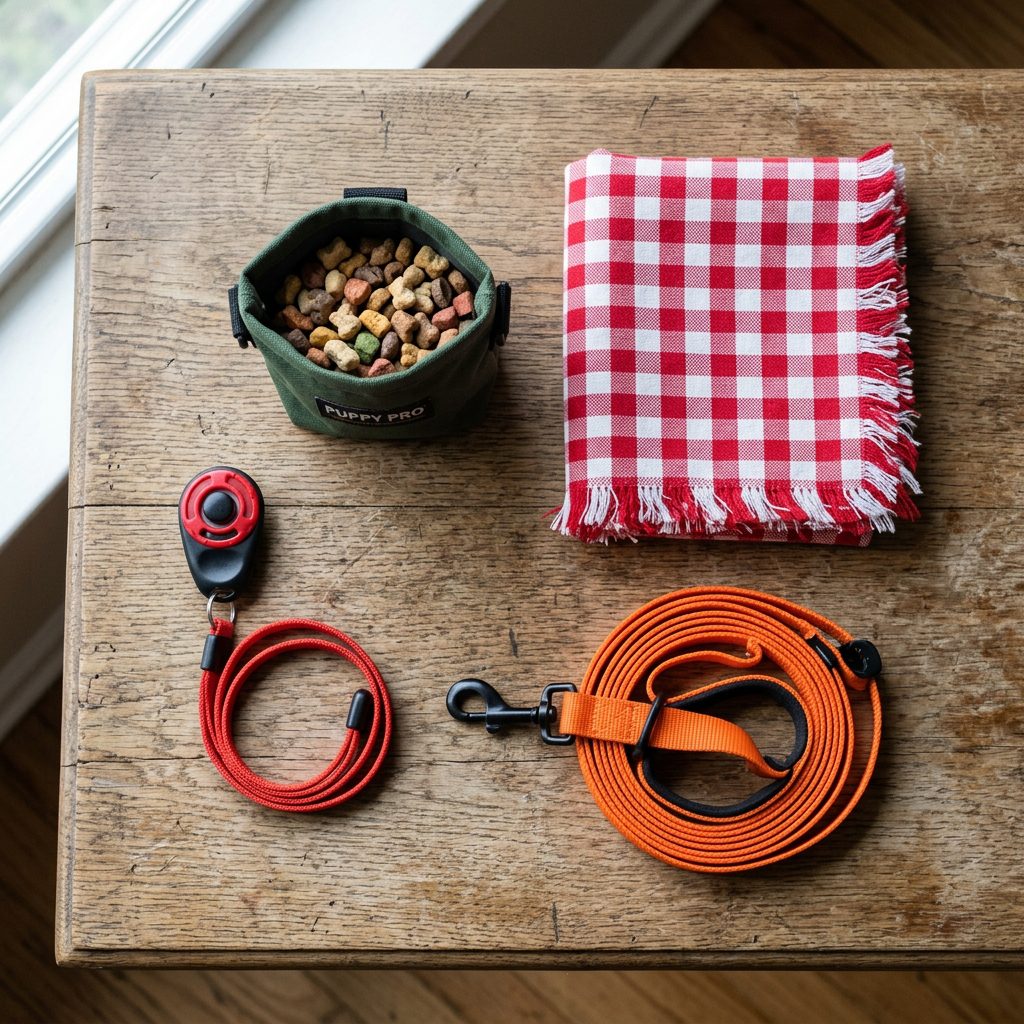
To set your puppy up for absolute success, you need the right gear. Trying to teach a complex behavior like settling in a highly distracting environment without the proper tools is like trying to build a house without a hammer. Here is exactly what you need in your training toolkit before we begin the step-by-step process.
Essential Gear Breakdown
First and foremost, you need the right blanket. Do not use your grandmother’s heirloom quilt for this training! You want something durable, washable, and easily recognizable to your dog. Next, you need a tiered system of treats. Puppies get bored easily, and what works in your quiet living room will not cut it when there is a squirrel ten feet away at the park.
| Tool / Gear | Specific Recommendation | Why You Need It |
|---|---|---|
| The Training Blanket | A dedicated, durable, machine-washable blanket or mat. | Needs to look and feel distinct so the puppy recognizes their specific target area. |
| High-Value Treats | Boiled chicken, hot dogs, or freeze-dried liver. | Essential for rewarding the puppy during the initial learning phases and in highly distracting outdoor environments. |
| Low-Value Treats | Their daily kibble or dry biscuits. | Used for maintaining the behavior once learned, preventing overfeeding and an upset stomach. |
| A Clicker (Optional) | Standard dog training clicker. | Provides a precise, consistent sound to mark the exact moment the puppy’s elbows hit the blanket. |
| A Long Line Leash | A 10 to 15-foot lightweight leash. | Allows the puppy freedom to make choices while keeping them safely tethered to you at the park. |
Pro Tip: Only bring out this specific blanket during training sessions initially. If you leave it lying around the house all day, it loses its novelty and its power as a specific behavioral cue.
The Step-by-Step Guide to Blanket Bliss
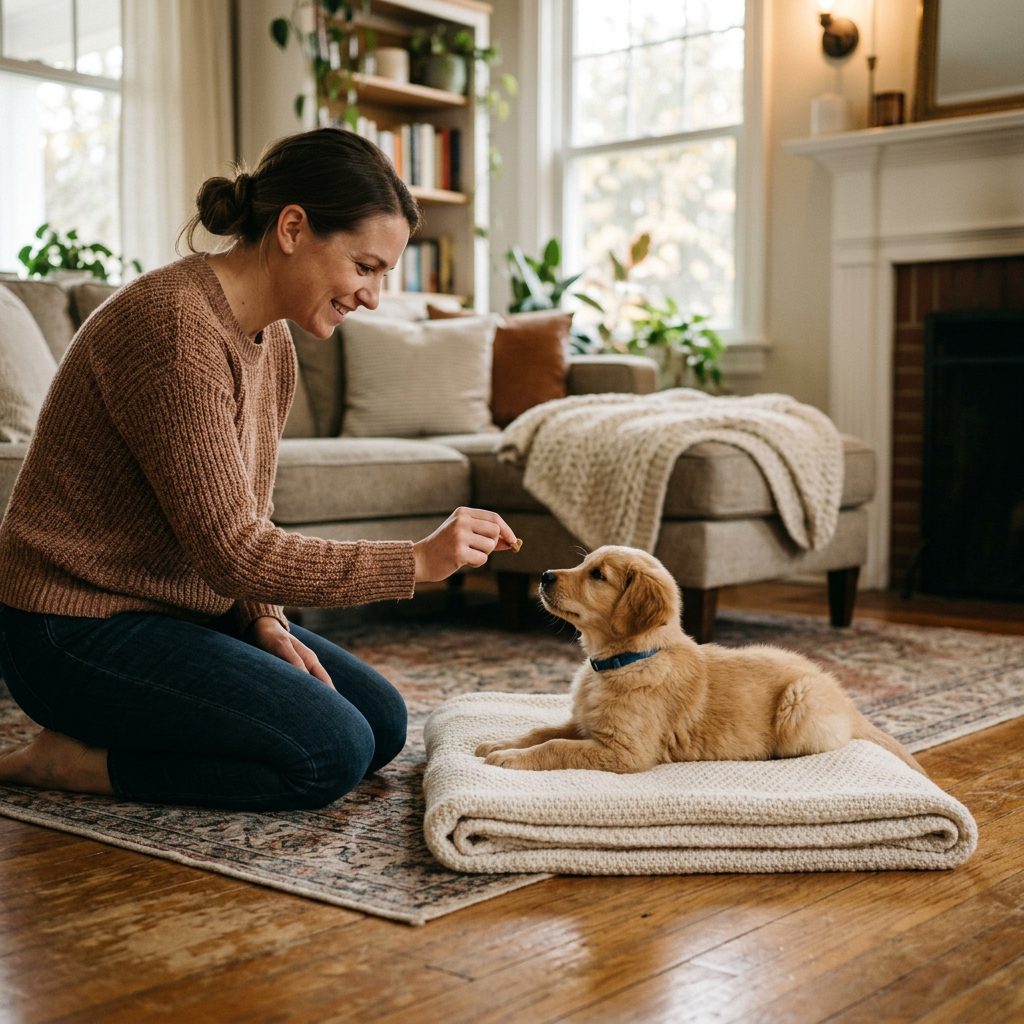
Now we reach the ultimate secret: the training process itself. The biggest mistake dog owners make is taking the blanket straight to the park and expecting the dog to understand. We must build this behavior in stages, starting in the most boring room of your house.
Phase 1: The Indoor Introduction (Capturing the Behavior)
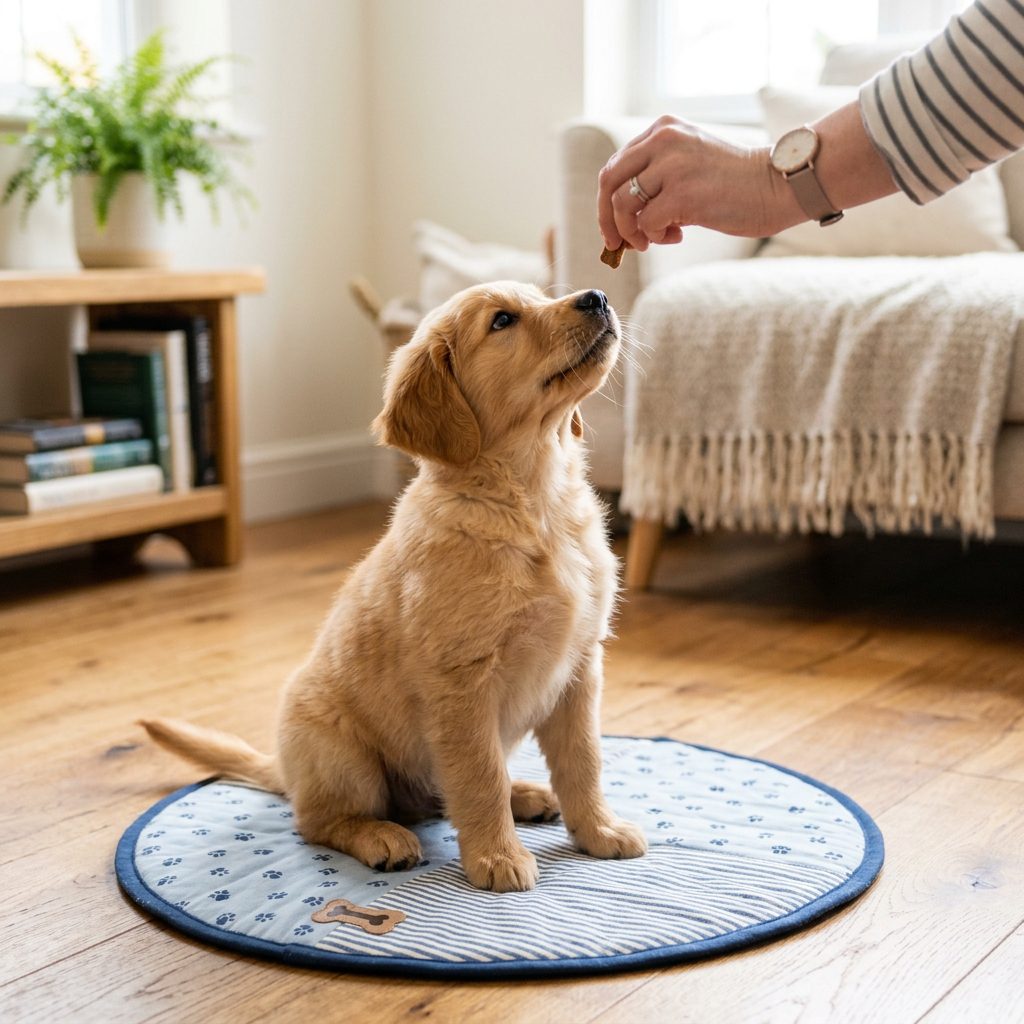
Start in a quiet room with no distractions. Have your treats ready in a pouch.
- Present the Blanket: Unfold the blanket and place it on the floor. Do not say anything to your puppy just yet.
- Wait for Interaction: Let your puppy investigate. The moment they step one paw on the blanket, click (or say Yes!) and toss a treat onto the blanket.
- Build to All Four Paws: Wait for them to step completely onto the blanket. Click and reward. Repeat this until the puppy is eagerly running to the blanket as soon as you put it down.
Phase 2: Asking for the ‘Down’
Once your puppy confidently stands on the blanket, we need to transition them into a settled position.
- Lure the Down: When they are on the blanket, take a treat, hold it to their nose, and slowly lower it to the floor between their front paws.
- Mark and Reward: The exact millisecond their elbows touch the blanket, click and give them the treat.
- Add the Cue: Once they are easily following the lure, start saying your cue word (like Settle or Place) right as they begin to lie down.
Phase 3: Building Duration (The Secret Sauce)
Getting them to lie down is easy; keeping them there is the hard part. The secret here is a rapid rate of reinforcement.
- Once they are in the down position on the blanket, do not let them get up immediately. Instead, feed them a treat every 2 seconds while they remain lying down.
- Slowly increase the time between treats: 2 seconds, then 5 seconds, then 10 seconds.
- If they get up, do not scold them. Simply withhold treats, wait for them to offer the down again, and resume feeding, but at a slightly faster rate to rebuild their confidence.
Remember: You are paying your dog an hourly wage to stay on the blanket. If the pay stops too soon, they will quit the job!
Taking It Outside: Proofing Against Distractions
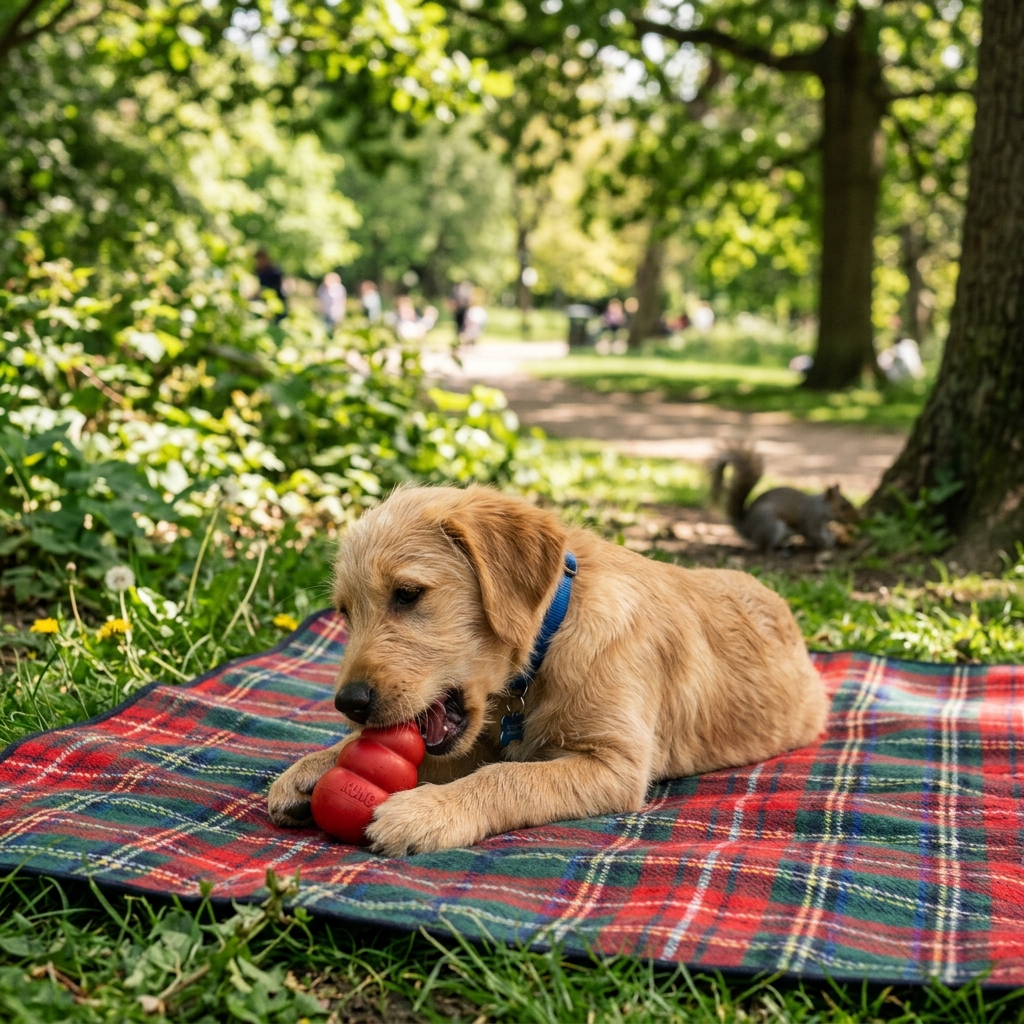
You have mastered the living room. Your puppy is a blanket-settling champion indoors. Now comes the ultimate test: the great outdoors. Taking the behavior outside requires proofing, which means teaching the dog that the rules apply no matter what is happening around them.
The Distraction Ladder
When you move outside, you must temporarily lower your expectations. You cannot expect a 10-minute settle at a busy dog park on day one. We use a concept called the Distraction Ladder to slowly build the puppy’s tolerance to the outside world.
| Environment Level | Location Example | Treat Value Needed | Expected Duration |
|---|---|---|---|
| Level 1: Low Distraction | Your own fenced backyard. | Medium (Cheese/Kibble mix) | 3 to 5 minutes |
| Level 2: Medium Distraction | A quiet, empty local park early in the morning. | High (Chicken/Hot dogs) | 2 to 3 minutes |
| Level 3: High Distraction | A park with people walking by at a distance. | Highest (Liver/Steak) | 1 to 2 minutes |
| Level 4: Real-World Picnic | A bustling park with food present on the blanket. | Highest + Chews/Kongs | 10+ minutes (with a chew) |
The ‘Real Picnic’ Strategy
When you are ready for a real picnic, bring a secret weapon: a stuffed, frozen Kong or a long-lasting chew (like a bully stick).
- Set up the blanket and immediately cue your puppy to Settle.
- As soon as they lie down, hand them the high-value frozen Kong.
- The act of licking and chewing is scientifically proven to release endorphins in a dog’s brain, naturally lowering their heart rate and promoting a calm state of mind.
- While they are focused on their chew, you can finally enjoy your sandwich in peace!
Troubleshooting Common Puppy Mistakes

Even with the best training plan, puppies will be puppies. You are going to run into a few roadblocks. As a savvy dog owner, the key is not to get frustrated, but to analyze why the behavior is breaking down and adjust your training strategy accordingly. Here are the most common issues you will face when teaching the ultimate picnic blanket settle, and exactly how to fix them.
Problem 1: The Puppy Chews the Blanket
This is incredibly common. Blankets are soft, textured, and fun to bite. If your puppy starts digging or chewing the blanket, they are likely overstimulated or bored.
- The Fix: Immediately interrupt the behavior with a cheerful Oops! and gently use the leash to guide them off the blanket. Wait 10 seconds, then invite them back on and immediately ask for a Settle. Reward them instantly for the correct behavior. If they keep chewing, the session is over. Pick up the blanket and try again later.
Problem 2: The Pop-Up Puppy (They Won’t Stay Down)
You ask for a settle, they lie down, grab the treat, and instantly pop back up to their feet. This means your rate of reinforcement is too slow.
- The Fix: You need to deliver the treats faster. Have 5 treats in your hand. The moment they lie down, feed them one after another in rapid succession (boom, boom, boom). This pins them to the blanket. Slowly stretch out the time between treats once they realize staying down keeps the food flowing.
Problem 3: Whining and Barking on the Blanket
If your puppy is lying down but vocalizing, they are experiencing frustration. They are physically settling, but their brain is still racing. They want to go play!
- The Fix: Do not reward the whining, but do not punish it either. Wait for a three-second pause in the noise, then instantly drop a treat between their paws. Additionally, this is a sign you might have progressed too fast on the Distraction Ladder. Move further away from the exciting things in the park to lower their threshold.
Expert Tip: Always end your training sessions on a high note. If your puppy gives you a beautiful 30-second settle, jackpot them with a handful of treats, release them with an enthusiastic ‘Free!’, and pack up the blanket. Leave them wanting more!
Conclusion
Training your puppy to settle on a picnic blanket every single time is not magic; it is simply a matter of consistency, patience, and understanding how your dog learns. By turning the blanket into a highly rewarding target, managing your environments through the Distraction Ladder, and utilizing long-lasting chews for real-world scenarios, you are giving your puppy the tools they need to succeed.
Remember, your puppy wants to be a good companion, but the human world is confusing and full of overwhelming stimuli. It is our job as savvy, responsible owners to clearly communicate our expectations. The time you invest right now in your living room and quiet local parks will pay off in years of peaceful, idyllic summer picnics with your furry best friend lounging happily by your side.
So, grab your clicker, chop up some high-value treats, and unfold that blanket. You now possess the ultimate secret to outdoor relaxation with your dog. Happy training, and more importantly, happy picnicking!