Pregnant? 7 Crucial Steps To Desensitize A Puppy To A Baby Stroller Before Baby Arrives!
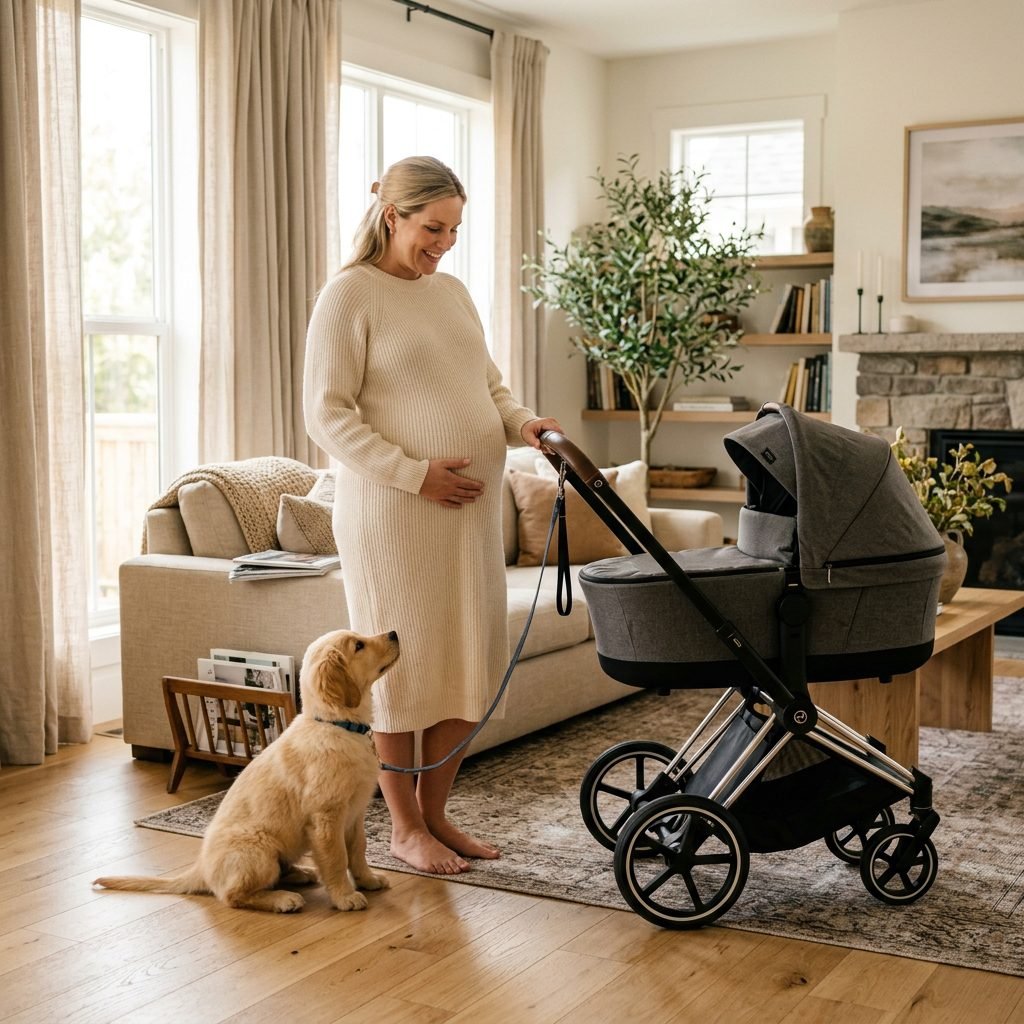
First off, a huge congratulations on your growing family! Welcoming a new baby is one of the most exciting times in your life, but as a savvy dog owner, you already know that it also requires a bit of proactive preparation. Among the nursery decorating and baby-proofing, there is one massive, rolling, weird-smelling contraption that is about to invade your puppy’s territory: the baby stroller.
To us, a stroller is just a convenient way to transport our little ones. But to a dog, especially a young puppy or a sensitive adult dog, a stroller can look like an intimidating, wheeled space alien. It moves strangely, it clicks, it clacks, and it takes up a lot of space on the sidewalk. If you wait until the baby is actually in the stroller to introduce your dog to it, you are setting yourself up for stressful walks, leash pulling, and a lot of frustration.
Expert Tip: The golden rule of dog training for expectant parents is to introduce new baby equipment at least three to four months before the baby’s due date. This gives your dog ample time to process the new object without the added stress of a crying newborn.
In this comprehensive guide, we are going to walk through the 7 crucial steps to desensitize your puppy to a baby stroller. By taking this slow, positive, and reward-based approach, you will transform that scary rolling machine into a cue for calm behavior and tasty treats. Let’s get your furry firstborn ready for peaceful family strolls!
Getting Your Training Toolkit Ready
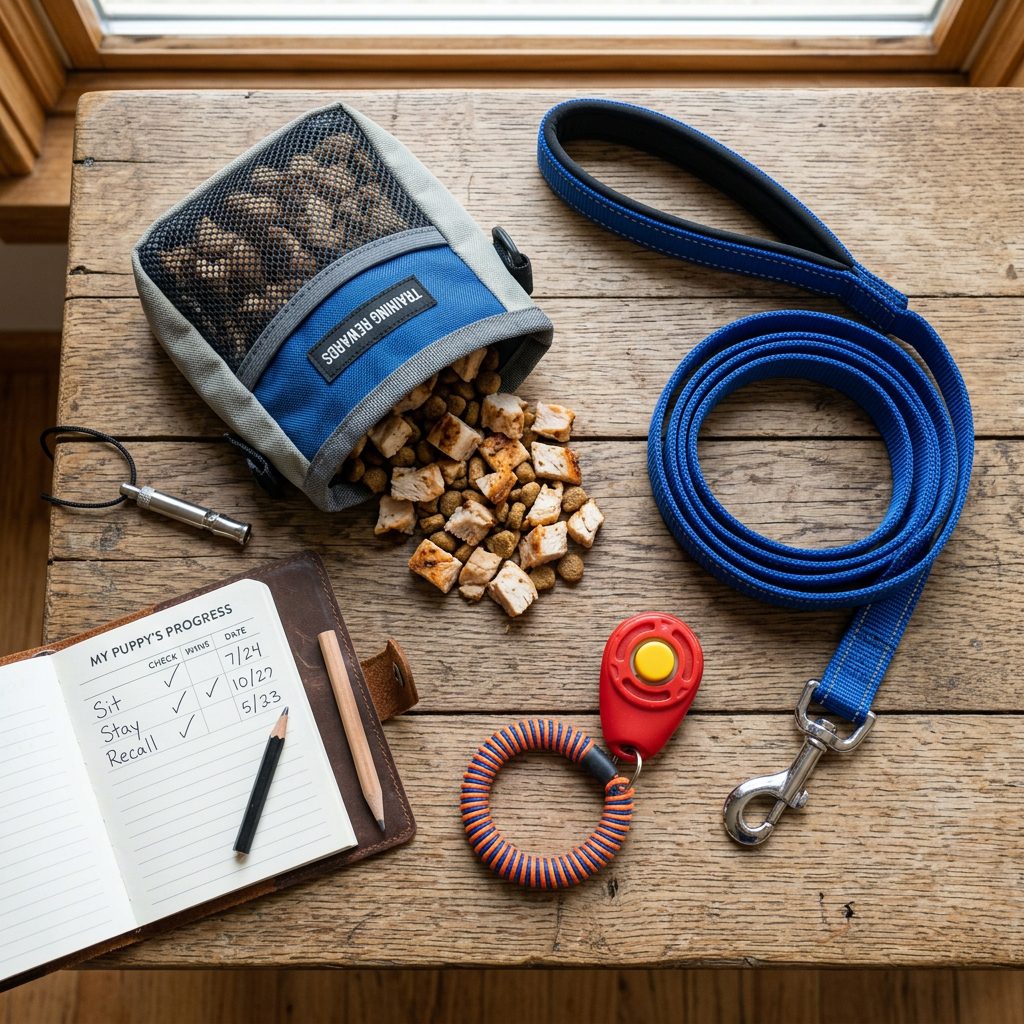
Before we dive into the 7 steps, we need to set the stage for success. Desensitization is all about changing your dog’s emotional response to a trigger (in this case, the stroller) from fear or over-excitement to complete neutrality and calmness. To do this effectively, you need the right tools.
Essential Training Gear
You don’t need a lot of fancy equipment, but having the right treats and leash setup is non-negotiable. Here is what you should have on hand before you even take the stroller out of its box.
| Training Tool | Purpose | Why It Is Crucial |
|---|---|---|
| High-Value Treats | To create a strong positive association. | Standard kibble won’t cut it. Use boiled chicken, hot dogs, or freeze-dried liver to make the stroller seem amazing. |
| Clicker (or Marker Word) | To pinpoint the exact moment of good behavior. | Timing is everything. A clicker tells your dog exactly *why* they are getting a treat. |
| Standard 6-Foot Leash | For safe, controlled indoor and outdoor practice. | Retractable leashes are dangerous around strollers. A standard leash gives you proper control. |
| Treat Pouch | For quick, hands-free access to rewards. | You will need your hands to maneuver the stroller and hold the leash; a pouch keeps treats accessible. |
Once you have your toolkit assembled, find a quiet, distraction-free room in your house. The living room or a spacious hallway is perfect. Now, let’s get rolling!
Steps 1 & 2: The Meet and Greet (Stationary Desensitization)
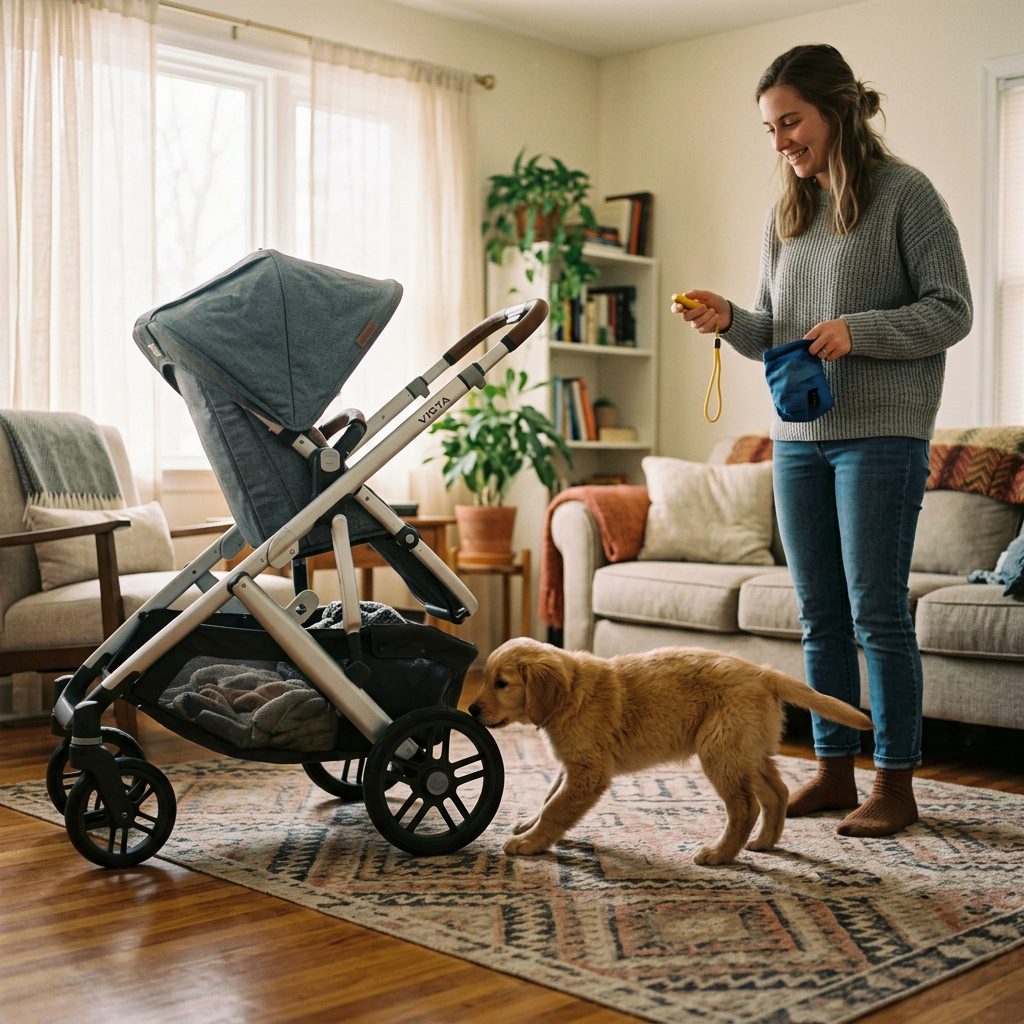
The biggest mistake expecting parents make is unboxing the stroller, popping it open, and immediately rolling it toward the dog. This sudden, jerky movement can trigger a dog’s fight, flight, or freeze response. We are going to start incredibly slow.
Step 1: The Silent Treatment
First, assemble the stroller while your dog is in another room. Once it is fully set up and locked into a stationary position, bring your dog into the room on a loose leash. Do not point at the stroller, do not drag your dog toward it, and do not make a big deal out of it. Just let the stroller exist in the space.
- Allow your dog to investigate at their own pace.
- If your dog looks at the stroller, click (or say ‘Yes!’) and toss a high-value treat on the floor away from the stroller.
- Tossing the treat away relieves pressure, allowing your dog to retreat, eat, and choose to approach again.
Step 2: Building Positive Associations
Once your dog is comfortable being in the same room as the stationary stroller, it is time to up the ante. We want the dog to think, ‘Wow, whenever I am near this weird wheeled thing, it rains chicken!’
Walk your dog up to the stroller. Every time they sniff the wheels, the basket, or the handle, reward them generously. You can even start feeding your dog their regular daily meals out of a bowl placed right next to the stroller tires. Spend at least a week on Steps 1 and 2 until your dog completely ignores the stationary stroller or looks at it with happy anticipation.
Steps 3 & 4: Adding Motion and Sound
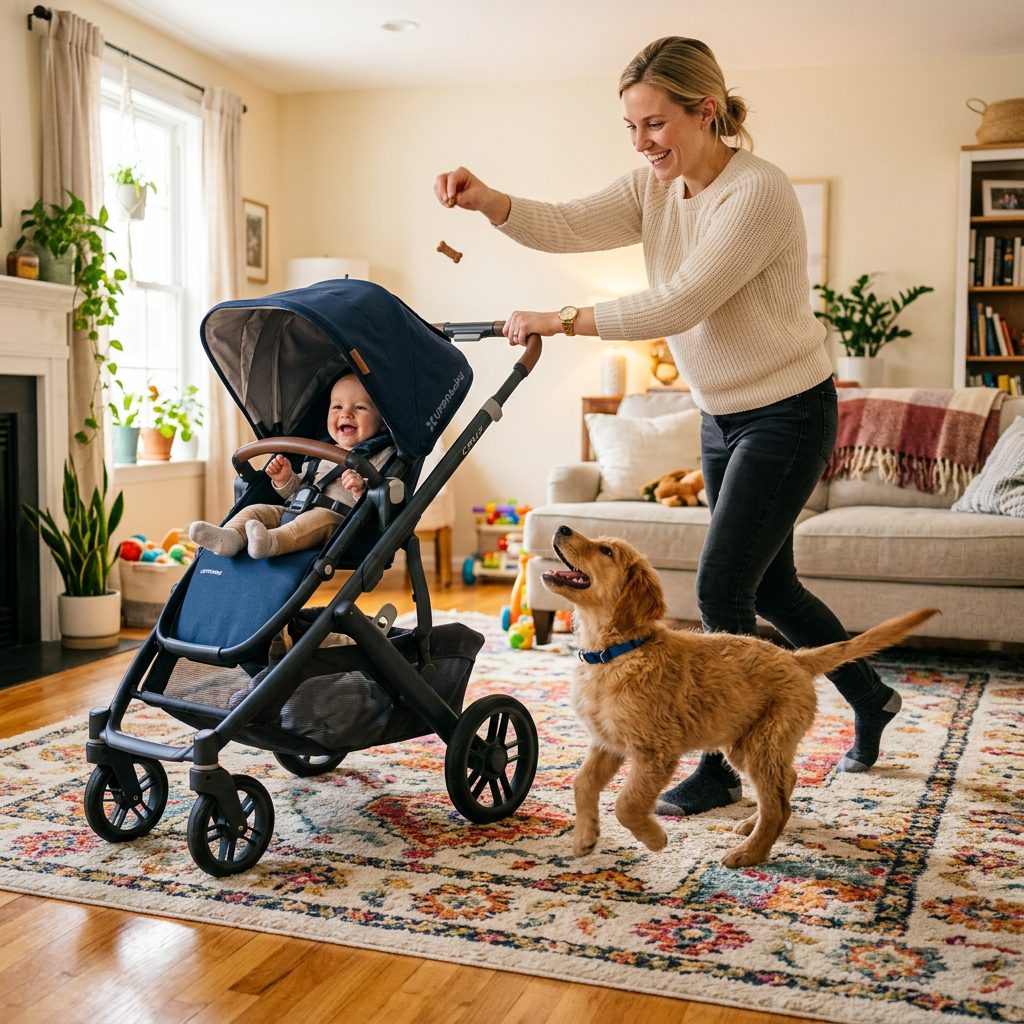
Now that your dog is best friends with the parked stroller, it is time to introduce the elements that actually make strollers scary: movement and noise.
Step 3: The First Roll
With your dog off-leash in the house (or on a very loose leash if they are prone to bolting), stand by the stroller. Gently push it forward just one inch. It might squeak or click. The moment you move it, mark the behavior (click or say ‘Yes!’) and toss a treat.
Expert Tip: Keep your movements slow and predictable. Do not push the stroller directly at your dog, as this is highly confrontational in dog body language. Always push it parallel to them or slightly away from them.
Gradually increase the distance you push the stroller. Push it a foot, treat. Push it a few feet, treat. If your dog barks or backs away, you have moved too fast. Go back to moving it just an inch until they are comfortable again.
Step 4: Creating Distance and Pace
Once your dog is comfortable with the stroller moving slowly, start walking around your living room or kitchen with it. Encourage your dog to follow you. Use an upbeat, happy voice. ‘Let’s go! Good boy!’ Drop treats behind the stroller as you walk so your dog learns that following the stroller is a highly rewarding game. Practice turning corners, stopping suddenly, and backing up, rewarding your dog for staying calm through all these unpredictable motions.
Steps 5 & 6: Leashing Up and Hitting the Road
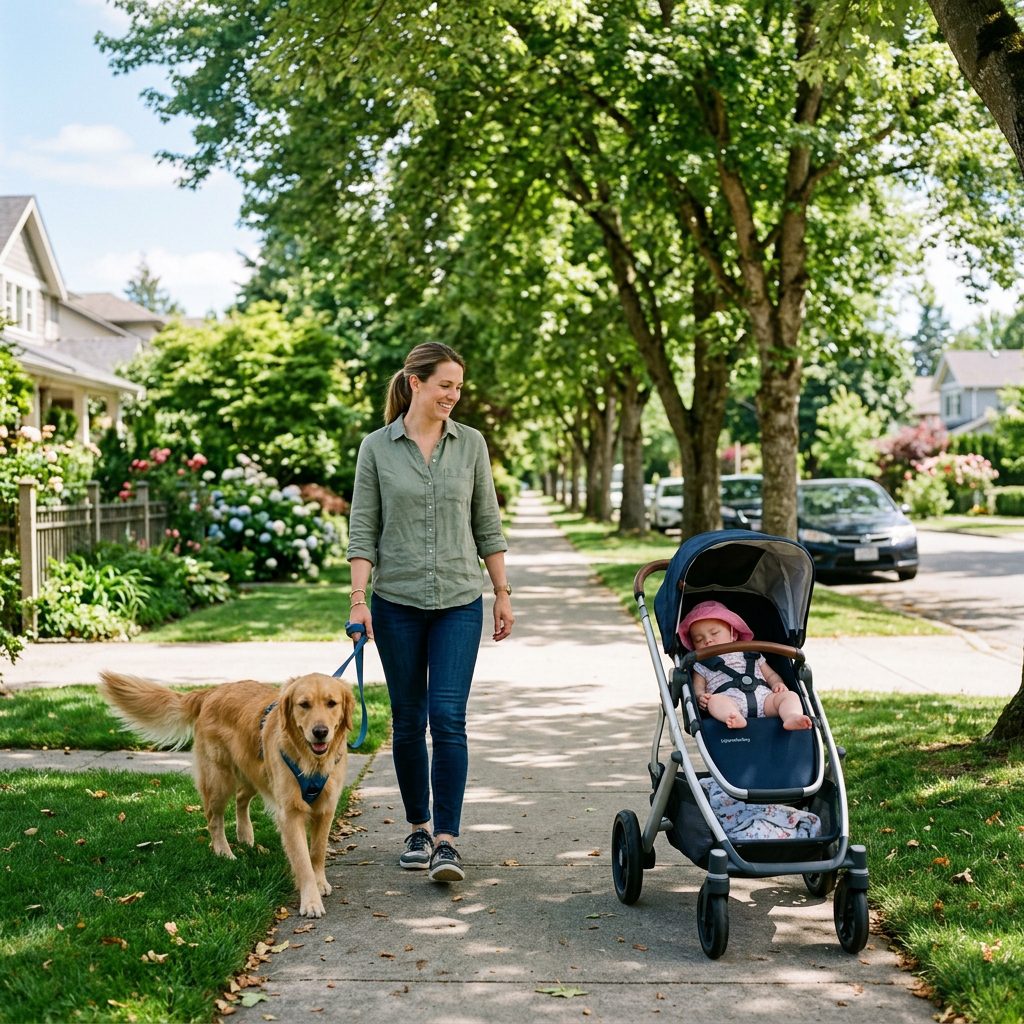
Handling a dog on a leash while pushing a stroller is a mechanical skill that takes practice for you, not just the dog. It is time to merge leash walking with stroller pushing.
Step 5: Indoor Leash Walks
Clip the 6-foot leash to your dog’s harness or collar. Hold the stroller handle with both hands, and loop the leash over your thumb, or hold it securely in one hand while steering with the other. Never tie the leash to the stroller itself! If your dog lunges at a squirrel, they could tip the stroller over.
Walk laps around your house. Reward your dog for staying in the ‘heel’ position (right beside the stroller wheel, not crossing in front of it). If they cross in front of the stroller, stop immediately, gently guide them back to the side, and reward them when they are in the correct position.
Step 6: The Great Outdoors
It is time to take the show on the road. Start in a low-distraction environment, like your driveway or a quiet street during off-peak hours. The outdoor world is full of smells, sounds, and sights that will compete with the stroller for your dog’s attention.
- Start by just standing at the end of your driveway with the stroller and the dog, rewarding for calm behavior.
- Take a short walk down the block and back. Keep the first few sessions under 10 minutes.
- Heavily reward your dog every time they look up at you and check in while walking next to the stroller.
- Gradually increase the length and complexity of your walks over several weeks.
Step 7: Simulating the Real Deal with Baby Distractions
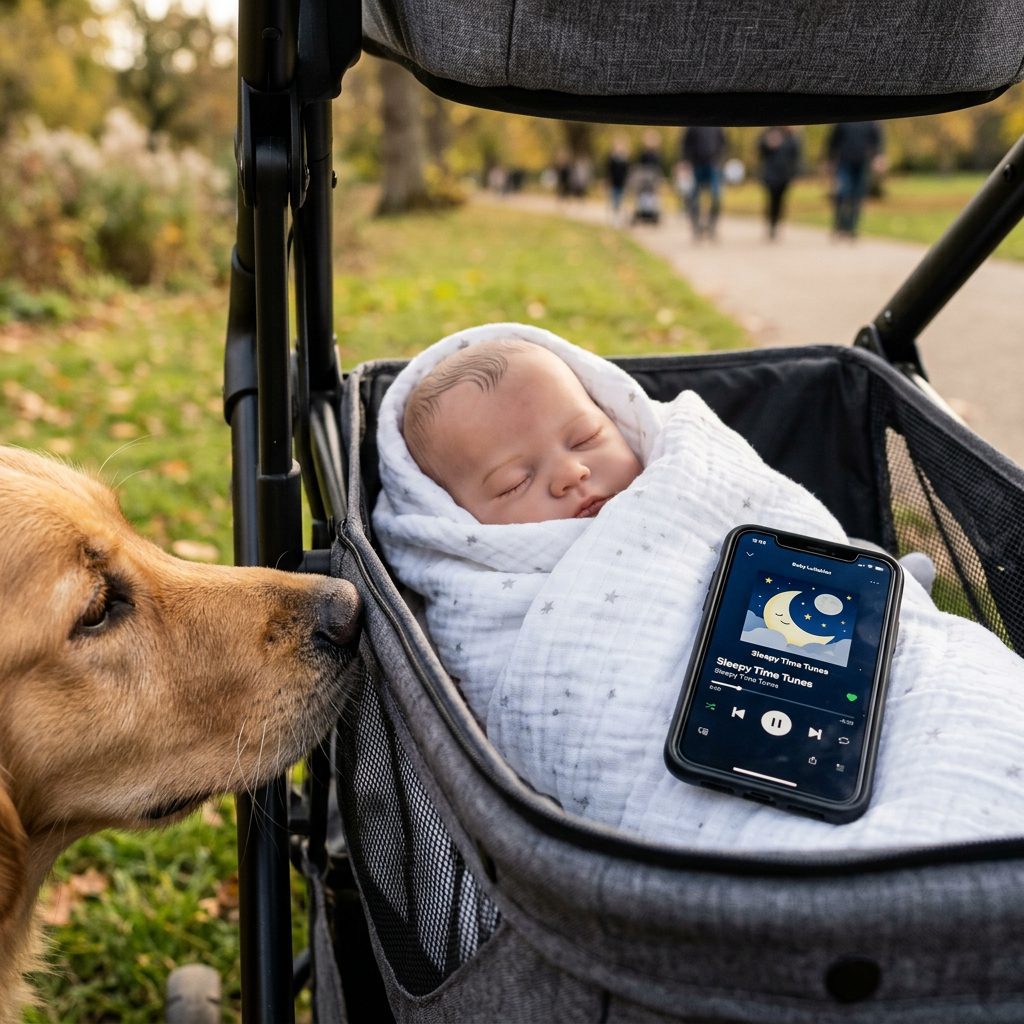
You have mastered the walk, but right now, the stroller is empty. When the baby arrives, the stroller will suddenly be filled with a squirming, crying, unpredictable little human. We need to bridge that gap before the due date.
Adding the ‘Baby’
Believe it or not, practicing with a realistic baby doll is one of the most effective ways to prepare your dog. Place a swaddled doll inside the stroller. This changes the visual silhouette of the stroller, which your dog will absolutely notice.
Next, we need to add sound. Babies cry, coo, and sneeze unexpectedly. Find a playlist of baby sounds on your phone (YouTube and Spotify have plenty of ‘baby crying sound effects’ for dog desensitization).
| Simulation Step | How to Execute | Goal |
|---|---|---|
| Visual Simulation | Place a doll or a bag of flour wrapped in a baby blanket in the stroller. | Dog accepts that the stroller now ‘carries’ something and doesn’t try to jump into it. |
| Audio Simulation | Play baby crying sounds on your phone at a low volume while walking. | Dog learns that sudden noises from the stroller are normal and not a reason to panic. |
| Scent Simulation | Rub baby lotion or baby powder on the blankets inside the stroller. | Dog associates the new smells with the positive experience of the walk. |
Combine all these elements on your daily practice walks. Play the crying sounds from your phone (tucked into the stroller caddy) while you walk your dog. If your dog remains calm and stays in their walking position despite the crying, give them a jackpot reward!
Troubleshooting Common Stroller Training Mistakes
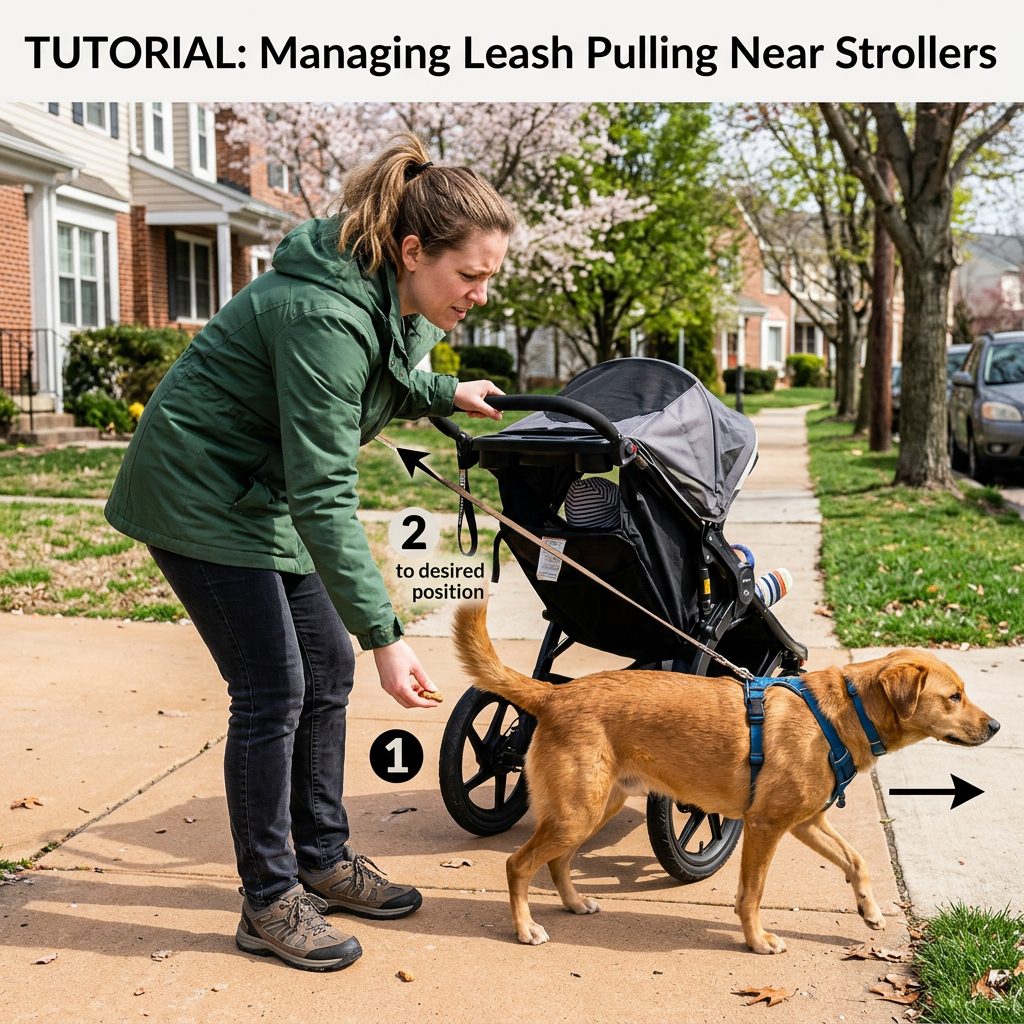
Even with the most meticulous preparation, dogs can be unpredictable. You might run into a few speed bumps during your desensitization training. Do not panic! This is completely normal, especially if your dog is going through a fear period or has a naturally anxious temperament. Here is how to troubleshoot the most common stroller training issues.
Common Problems and Solutions
| The Problem | Why It Happens | How to Fix It |
|---|---|---|
| Dog crosses in front of the stroller. | They are trying to lead the walk or get to a smell faster. | Stop immediately. Do not run them over! Use a treat to lure them back to the side. Practice the ‘Heel’ command heavily indoors. |
| Dog barks wildly at the stroller. | The stroller is moving too fast, or the dog is over-threshold (too stressed). | Increase distance. Move the stroller further away and make it stationary again. Rebuild the positive association slowly. |
| Dog pulls hard on the leash. | They are ignoring the stroller and focusing on outdoor distractions. | Stop walking. Wait for the dog to create slack in the leash and look back at you. Reward them, then continue. Do not let pulling be successful. |
| Dog is terrified of the wheel noise. | Some strollers have squeaky wheels or loud plastic parts. | WD-40 the wheels if possible. Otherwise, record the wheel sound on your phone and play it at a low volume during meal times to desensitize them to the specific noise. |
Expert Tip: Never punish your dog for being afraid of the stroller. Yelling or leash-popping will only confirm their suspicion that the stroller is a bad, scary thing. Always use patience and positive reinforcement to change their emotional state.
If your dog is severely reactive to the stroller and these steps are not working after a few weeks of consistent effort, do not hesitate to reach out to a certified, positive-reinforcement dog trainer. They can offer personalized guidance to ensure your family is ready for the baby’s arrival.
Conclusion
Preparing your dog for a new baby is a journey, and desensitizing them to the baby stroller is one of the most important steps you can take. By starting months in advance, breaking the process down into manageable steps, and keeping everything positive, you are setting your dog up for a lifetime of successful family walks.
Remember, the goal is not just to teach your dog to tolerate the stroller, but to help them view it as a normal, non-threatening part of their everyday life. Be patient with your pup, celebrate the small victories, and keep those high-value treats handy. Before you know it, you will be confidently strolling through the neighborhood with your baby sleeping soundly and your dog trotting happily by your side. You’ve got this, and congratulations again on the newest addition to your pack!