The “Go To Place” Miracle: How To Teach Your Puppy Absolute Calm On Command
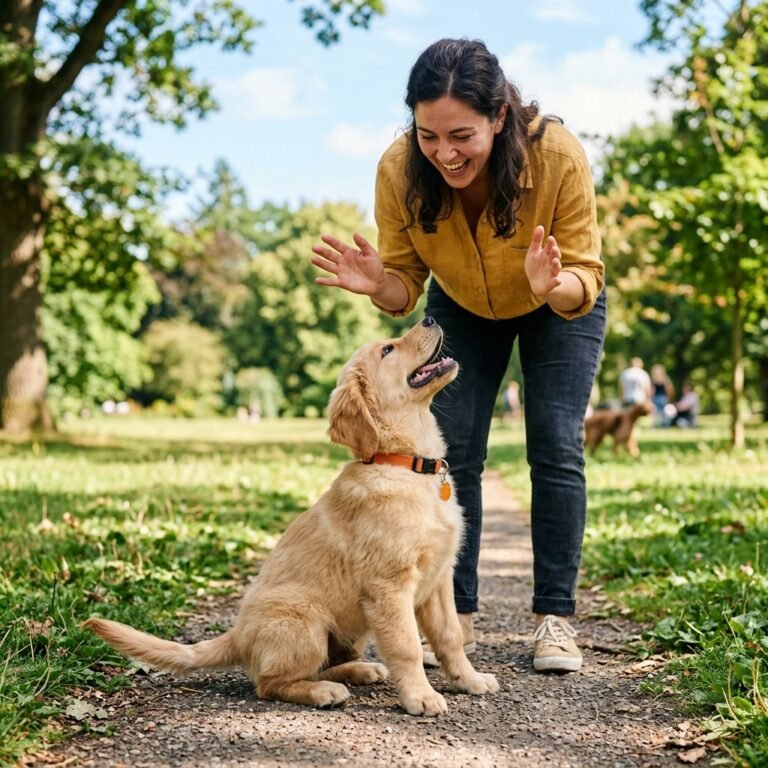
Welcome to the club of savvy dog owners who are about to discover the absolute holy grail of dog training. If you have ever felt like your puppy is a furry tornado—constantly underfoot while you are cooking, jumping on guests the second the doorbell rings, or pacing the living room when you just want to sit down and watch a movie—you are not alone. Most dog owners struggle with a puppy that simply does not know how to turn off. We often think that the solution to a hyperactive puppy is more physical exercise. We take them on longer walks, throw the ball until our arms ache, and arrange endless puppy playdates. But here is the secret that professional trainers know: physical exhaustion does not equal mental calmness. In fact, sometimes you are just building a super-athlete with boundless stamina! What your puppy truly needs is an off-switch. They need to be taught how to relax.
Enter the “Go To Place” command. This isn’t just a neat party trick; it is a fundamental lifestyle command that will transform your household dynamics. “Place” means exactly what it sounds like: go to a specific boundary (like a dog bed, a mat, or a raised cot), lay down, and do not leave until you are explicitly released. It is the ultimate tool for teaching self-regulation, impulse control, and absolute calm on command. In this comprehensive guide, we are going to walk through exactly how to teach your puppy this miracle command, the specific tools you will need to set yourself up for success, and how to troubleshoot the common hiccups along the way. Grab a cup of coffee, get your treat pouch ready, and let’s dive into the “Go To Place” miracle!
The Magic Behind the Boundary: Why “Place” Works
Understanding Canine Psychology
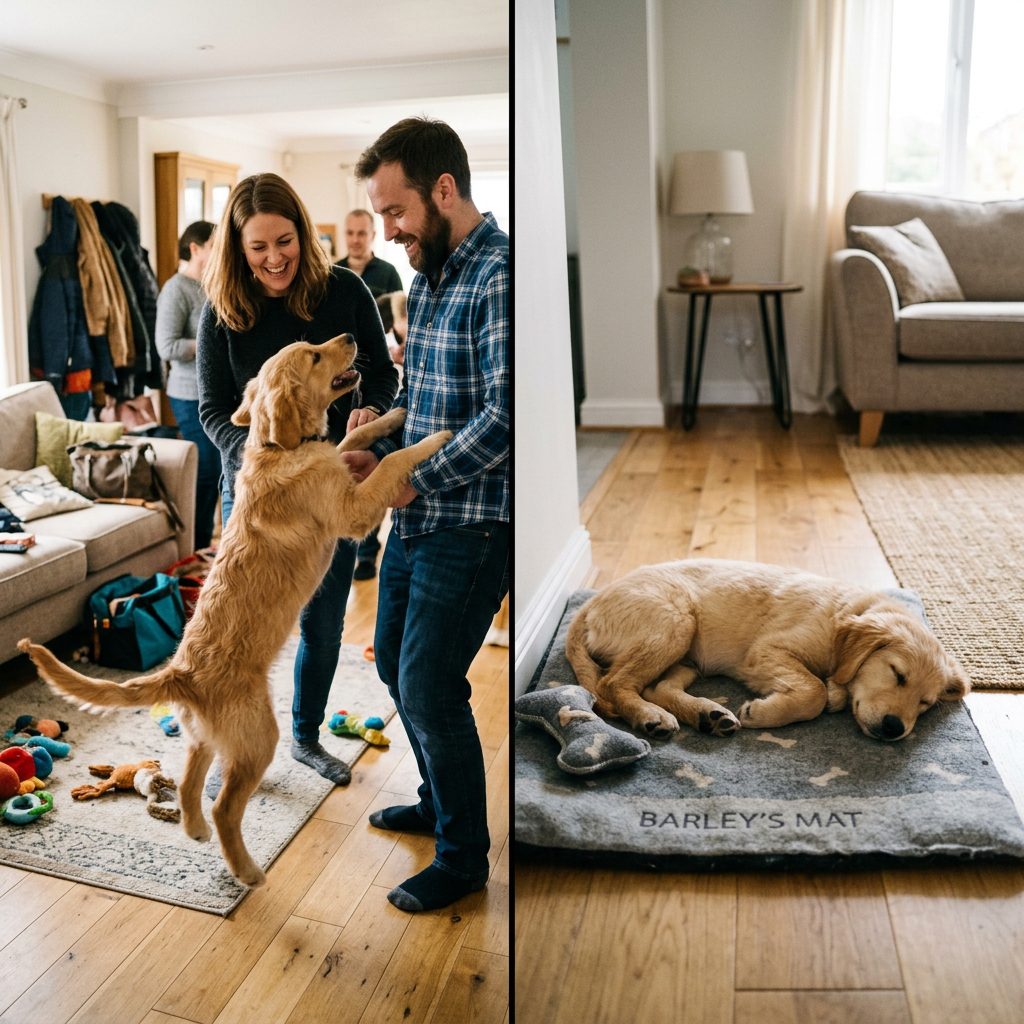
To truly master the “Place” command, we first need to understand why it works so brilliantly from a canine psychological perspective. Many dog owners confuse “Place” with “Stay.” While they might look similar to the untrained eye, their internal mechanics and emotional states are completely different. When you tell a dog to “Stay,” you are usually asking for a temporary, high-arousal behavior. The dog is frozen, muscles tense, eyes locked on you, just waiting for the release word so they can explode back into action. “Stay” is active. “Place,” on the other hand, is passive. It is a state of mind as much as it is a physical action.
The Power of a Physical Boundary
Dogs are incredibly spatial creatures. They understand the world through physical boundaries and environmental cues. When you introduce a specific bed or mat and designate it as their “Place,” you are giving them a clear, black-and-white rule. The rule is simple: as long as all four paws are on this specific surface, you are doing your job. This removes the guesswork for your puppy. They don’t have to wonder if they are allowed to sniff the floor, shift their weight, or roll over onto their side. As long as they remain on the boundary, they are succeeding. This clarity drastically reduces anxiety and confusion, which are often the root causes of hyperactive pacing.
“Place is not a prison; it is a sanctuary. It is the one spot in the house where your dog knows they are completely safe, off-duty, and expected to do absolutely nothing.”
Furthermore, the “Place” command teaches emotional regulation. Puppies are naturally impulsive. When the doorbell rings, their instinct is to rush the door, bark, and jump on the newcomer. By sending them to “Place,” you are giving them an incompatible behavior. They literally cannot jump on the pizza delivery guy if they are laying flat on their cot. Over time, the repetition of going to their bed when exciting things happen actually rewires their brain. The doorbell stops being a trigger for chaos and instead becomes an environmental cue for relaxation. They learn that calmness is the only pathway to getting what they want.
Setting Up for Success: Tools of the Trade
Gathering Your Training Equipment
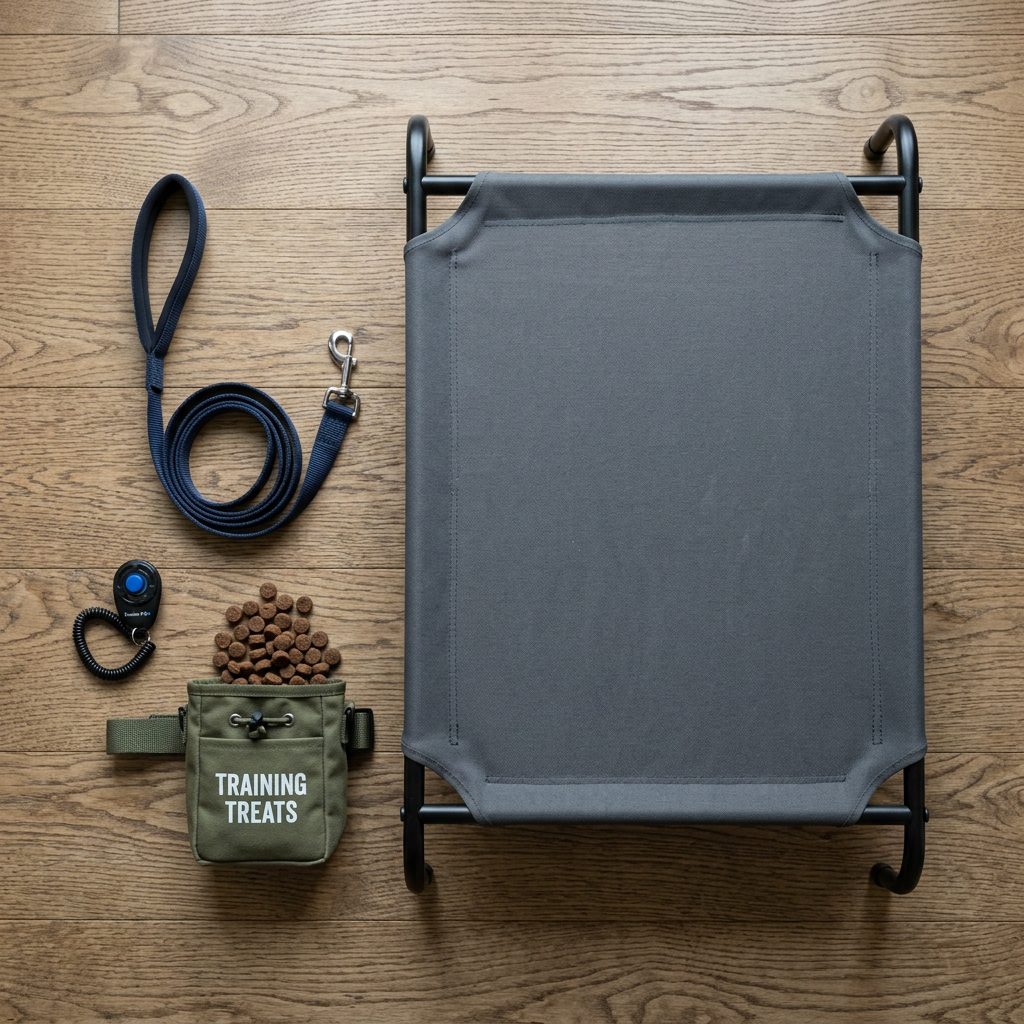
Before we start the actual training process, we need to gather our tools. As a savvy dog owner, you know that setting your environment up for success is half the battle. You do not need a lot of fancy equipment to teach this command, but choosing the right tools will make the process significantly smoother and faster for both you and your puppy.
Choosing the Right “Place” Bed
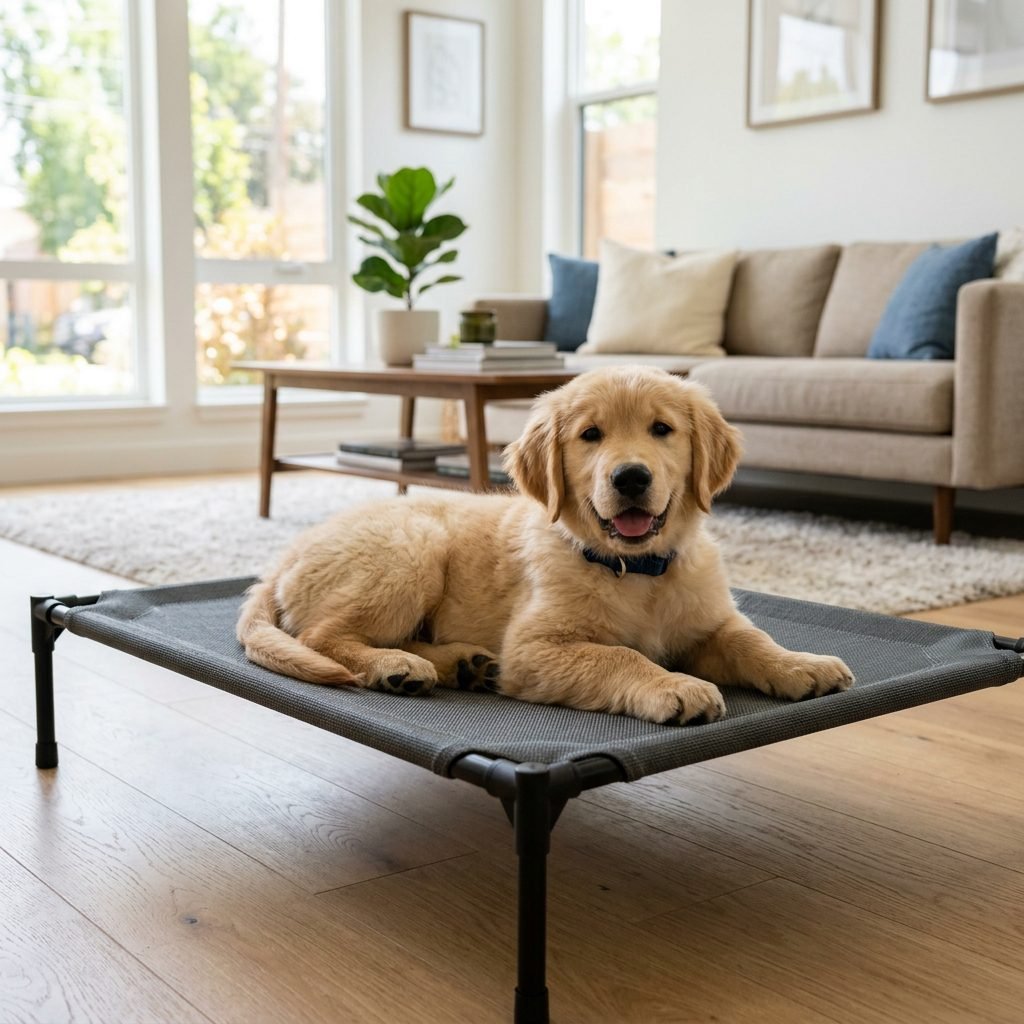
The single most important tool is the “Place” itself. While you can technically use any dog bed, rug, or towel, professional trainers highly recommend using a raised dog cot, especially in the early stages of training. Why? Because a raised cot provides a very distinct, tactile boundary. Your puppy can clearly feel the difference between the hard floor and the elevated cot. If they slide one paw off, they instantly know they have broken the boundary. Soft, plushy beds often have ambiguous edges, making it harder for a learning puppy to know exactly where the “Place” ends and the floor begins.
| Type of Boundary | Best Used For | Pros | Cons |
|---|---|---|---|
| Raised Dog Cot (e.g., Kuranda, Coolaroo) | Initial training, hyperactive dogs, chewers | Clear tactile edges, chew-proof, cooling, easy to clean | Bulky, hard to travel with, takes up space |
| Flat Mat or Towel | Advanced dogs, traveling, cafe visits | Highly portable, easy to wash, inexpensive | No distinct edges, easily bunched up by scratching |
| Plush Dog Bed | Cozy evening relaxation for trained dogs | Very comfortable, warm, aesthetically pleasing | Ambiguous borders, encourages chewing in young puppies |
High-Value Rewards and the Leash
Next, you will need a standard leash. Yes, even inside the house! A 4-to-6-foot leash is your steering wheel. It prevents your puppy from making mistakes and running off with their reward. It allows you to gently guide them back to the boundary without nagging them verbally or getting frustrated. Finally, you need a highly reinforcing reward system. Because we are asking the puppy to choose a boring mat over exciting environmental stimuli, your treats need to be top-tier. Think boiled chicken, hot dogs, cheese, or freeze-dried liver. You will also want a portion of their daily kibble for building duration. We will use the high-value treats for the actual movement onto the bed, and the lower-value kibble for the prolonged settling process.
The Step-by-Step Guide to Teaching Place
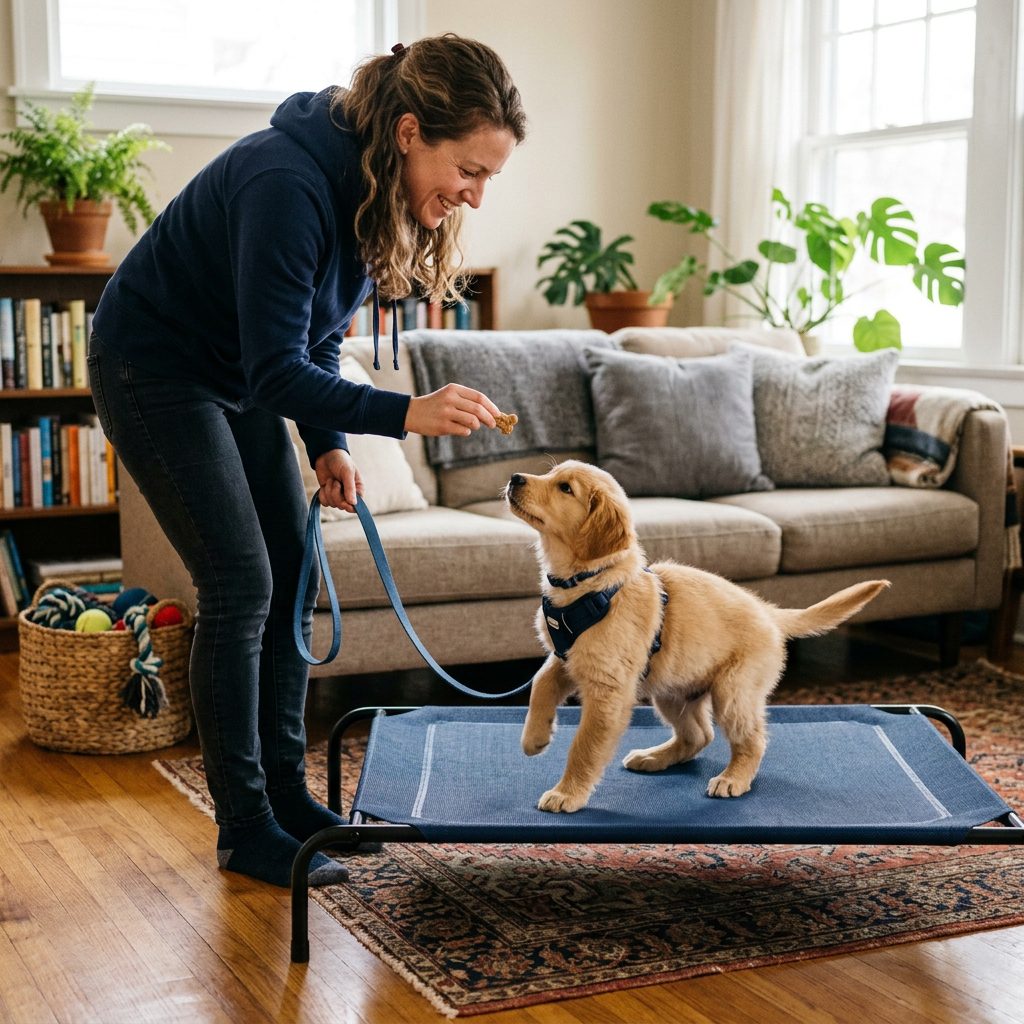
Phase 1: Luring and Marking
Now that we have our tools and understand the philosophy, it is time to get to work. Teaching “Place” is a game of patience and consistency. We are going to break this down into digestible phases. Do not rush to the next phase until your puppy has completely mastered the current one.
- The Setup: Put your puppy on a leash. Stand a few feet away from the cot or mat. Have a handful of high-value treats in your hand or treat pouch.
- The Lure: Say the word “Place” in a cheerful, inviting tone. Immediately put a treat right in front of your puppy’s nose and slowly lure them onto the bed.
- The Mark: The exact second all four paws are on the bed, say “Yes!” (or click your clicker) and feed them the treat directly on the bed. Crucial tip: Deliver the treat low to the bed, right between their front paws. We want to encourage a downward focus, not jumping up at your hands.
- The Release: Say “Free!” or “Break!” and enthusiastically toss a treat away from the bed to reset them. This teaches them that they are only allowed off when they hear the release word.
- Repeat: Do this 10 to 15 times per session. Your puppy will quickly start to realize that the bed is a magical dispenser of chicken.
Phase 2: Asking for the Down
Once your puppy is happily running onto the bed when you say “Place,” it is time to ask for more. We don’t just want them standing there; we want true relaxation.
- Send your puppy to “Place” using your verbal cue and a slight hand gesture.
- Once all four paws are on the bed, do not immediately say “Yes.” Instead, stand up straight and wait.
- Most puppies will look at you, confused. Just wait them out. If they offer a “Sit,” praise them calmly, but do not release the treat just yet.
- Lure them into a “Down” position if they do not offer it naturally after a few seconds. The second their elbows hit the mat, say “Yes!” and deliver a jackpot (3-4 treats in a row, fed slowly and low on the bed).
- From this point forward, the “Place” command is only fulfilled when the puppy is in a completely relaxed “Down” position on the boundary.
Phase 3: Building Duration (The Art of Doing Nothing)
This is where the magic truly happens. We want the puppy to stay on the bed for longer periods without constantly needing attention. The secret here is a steady stream of calm reinforcement.
- Send your puppy to “Place” and wait for the “Down.”
- Instead of releasing them immediately, wait 3 seconds. If they stay, calmly say “Good” and drop a piece of kibble between their paws.
- Wait 5 seconds. Drop another piece of kibble.
- Wait 10 seconds. Drop another piece. You are paying them a steady salary for doing absolutely nothing.
- If the puppy breaks the boundary (gets up without permission), simply say “Nope” or “Uh-uh,” use the leash to gently guide them back, and withhold the treat. Reset your timer.
- Release them with “Free!” after a successful duration. Gradually build this up from 30 seconds to 5 minutes, 10 minutes, and eventually 30+ minutes while you watch TV or eat dinner.
Proofing: Taking Place to the Next Level
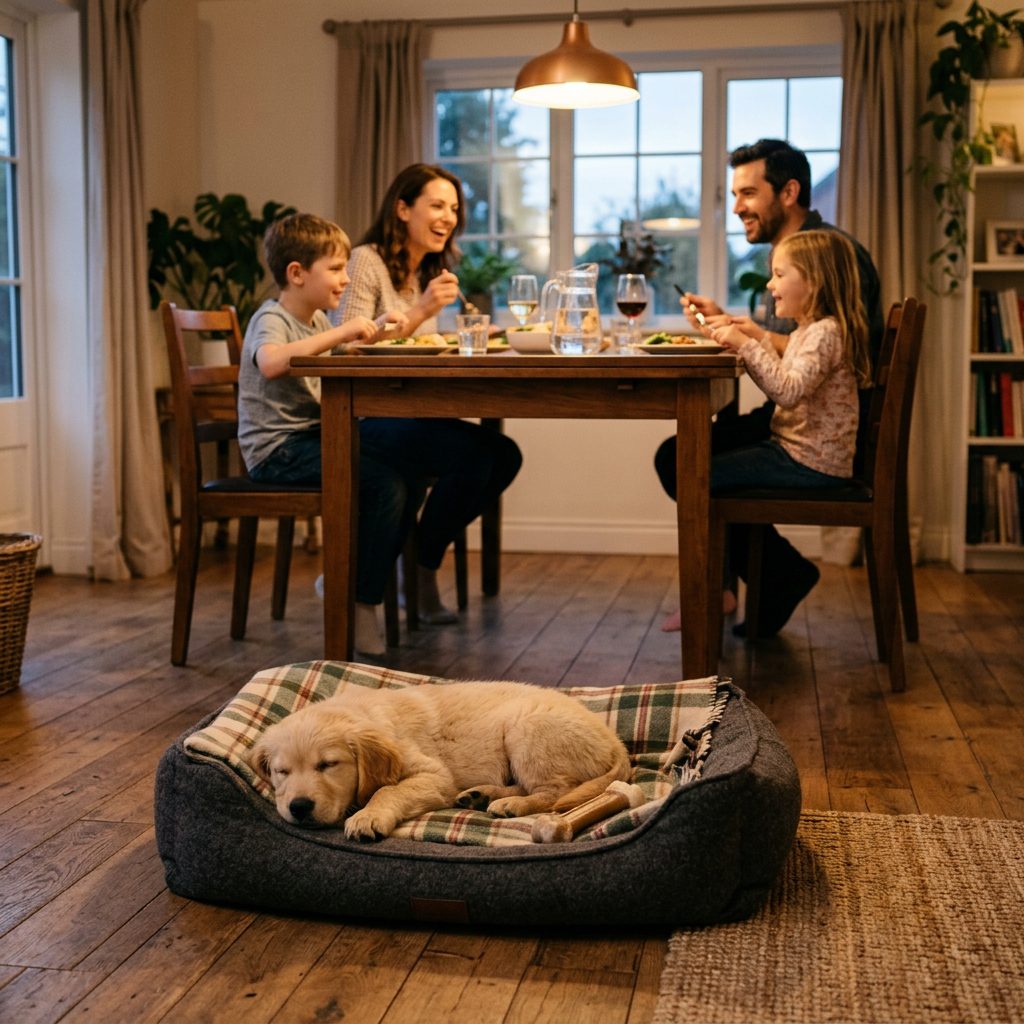
Mastering the Three D’s: Duration, Distance, and Distraction
A command is only as good as its reliability under distraction. If your puppy can only do “Place” in a perfectly quiet living room with zero distractions, you don’t really have a functional “Place” command yet. Proofing is the process of intentionally challenging your dog to ensure they truly understand the rules of the game in all contexts. We do this by slowly and systematically introducing the Three D’s: Duration, Distance, and Distraction.
Adding Distance and Distraction
Once your dog can hold “Place” for 10 minutes while you sit right next to them, it is time to start moving around. Take one step back. Return and reward. Take three steps back. Return and reward. Walk out of the room for two seconds. Return and reward. You are teaching them that your movement does not equal their release. Once distance is solid, start adding weird distractions. Drop a toy on the floor. Do some jumping jacks. Knock on the wall. Ring the doorbell. If they break “Place,” do not get angry. Simply view it as information: the distraction was too hard. Gently put them back on “Place,” make the distraction a little easier, and try again.
| Training Phase | Primary Goal | Example Scenario | Duration Expectation |
|---|---|---|---|
| Week 1: Foundation | Building immense value for the boundary | Quiet living room, no other pets or kids around | 10 seconds to 2 minutes |
| Week 2: Distance | Dog stays while handler moves | Walking around the room, sitting on the couch | 5 to 15 minutes |
| Week 3: Distractions | Dog ignores environmental triggers | Bouncing a ball, opening the front door, vacuuming | 15 to 30 minutes |
| Week 4: Real World | Absolute calm during chaotic events | Guests coming over, family eating dinner at the table | Up to 1 hour or more |
“The rule of thumb for proofing is simple: Set your dog up to succeed, but challenge them enough that they have to think. If they are failing more than 20% of the time, you have made the distraction too hard, too fast. Slow down and build their confidence.”
Troubleshooting Common Hiccups
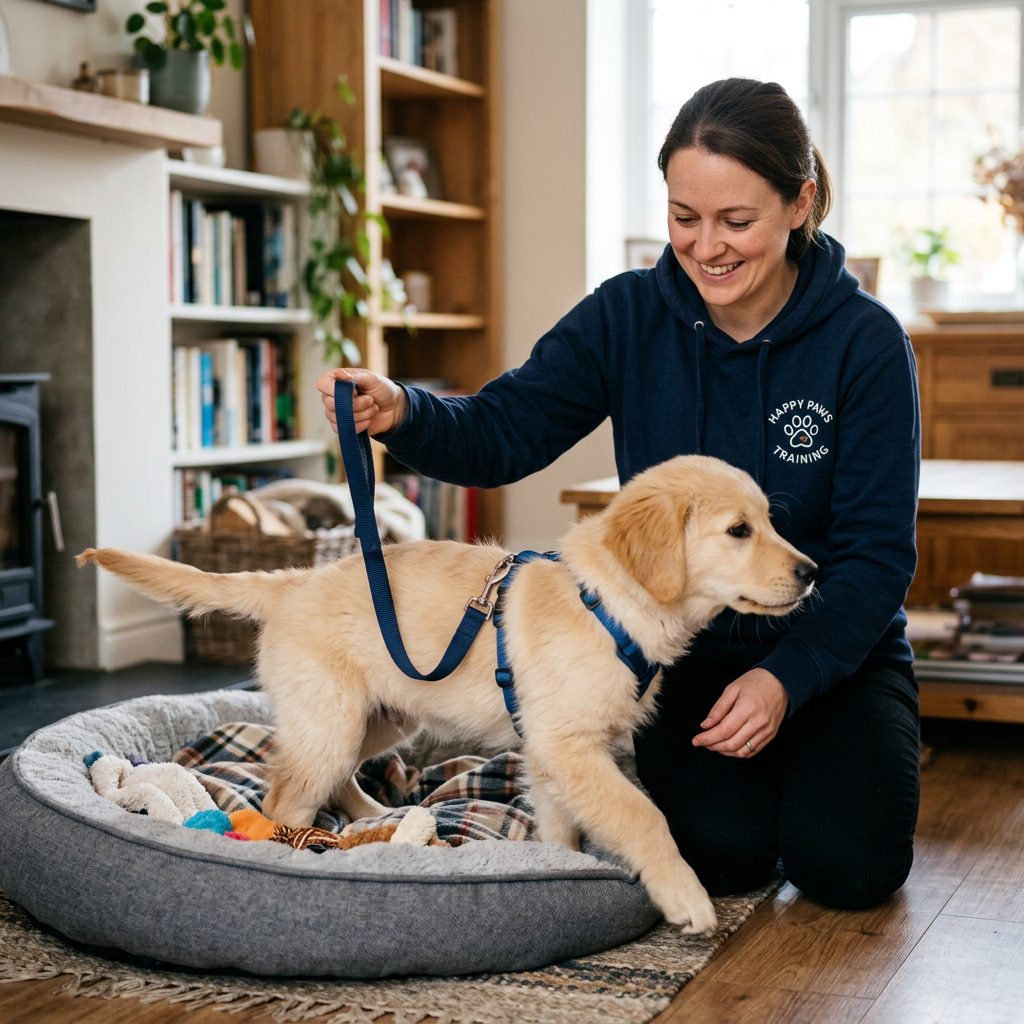
Overcoming Training Roadblocks
Dog training is rarely a perfectly linear journey. Even the smartest, most eager-to-please puppies will test boundaries and make mistakes. As a savvy owner, knowing how to confidently navigate these roadblocks is essential to your success. Let’s look at some of the most common issues owners face when teaching the “Place” command and exactly how to fix them so you can keep moving forward.
The Yo-Yo Dog (Constantly Breaking the Boundary)
If your puppy is constantly popping up and leaving the bed every few seconds, you are likely progressing too fast. You have either asked for too much duration before they were ready, or the distractions in the room are simply too high for their current skill level. The Fix: Take a step back in your training. Put the leash back on to manage their movement. Decrease the time between your rewards. If you were rewarding every 30 seconds, go back to rewarding every 5 seconds. You need to make staying on the bed far more rewarding than leaving it. Also, ensure your release word is crystal clear. If you don’t release them consistently, they will start releasing themselves.
Whining, Barking, and Tantrums on Place
Some puppies will physically stay on the bed but will vocalize their intense frustration. They might whine, bark, or huff because they want to be part of the action, especially if you are eating or greeting guests. This is a classic puppy temper tantrum. The Fix: Do not reward the noise. If you look at them, talk to them (even to say ‘hush’), or give them a treat while they are whining, you are reinforcing the whining. You must wait for a moment of silence—even just one single second of quiet—and immediately mark and reward that silence. Over time, they will learn that calm, quiet behavior is the only thing that produces the paycheck.
Confusing “Place” with “Bedtime” or Punishment
Sometimes owners only use the “Place” command when the dog is in trouble, or right before locking them in a crate for the night. If you do this, “Place” becomes associated with isolation or punishment, and the dog will actively avoid it. The Fix: Use “Place” randomly during fun, positive times! Send them to “Place” while you prepare their dinner, then enthusiastically release them to eat. Send them to “Place” for two minutes before a fun walk. Make it a gateway to good things, not just a time-out zone. The bed should be a place they want to go because great things happen there.
Conclusion
Your Calm Companion Awaits
Teaching the “Go To Place” command is, without a doubt, one of the most rewarding investments you can make in your puppy’s education and your own sanity. It is the ultimate tool for bridging the gap between a chaotic, hyperactive puppy and a sophisticated, well-mannered adult dog. Remember that absolute calm does not happen overnight. It requires patience, consistency, and a willingness to communicate clearly with your canine companion. Celebrate the small victories—the first time they offer a deep sigh, roll onto their hip, and rest their chin on their paws while on the mat is a massive milestone! Stay consistent with your boundaries, keep your training sessions positive and upbeat, and before you know it, you will have unlocked the “Go To Place” miracle. Here is to enjoying a peaceful home and a beautifully balanced, calm dog!