
Stop Puppy Chewing Dog Bed: 5 Hacks To Keep Your Bed Safe Forever
We have all been there. You walk into the living room or open the crate after a long day, expecting to see your sweet, angelic puppy resting peacefully. Instead, you are greeted by what looks like a winter wonderland in the middle of July. Fluff, foam, and fabric shreds are scattered everywhere, and sitting right in the center of the carnage is your puppy, wagging their tail as if they have just painted a masterpiece. It is incredibly frustrating, not to mention expensive to keep replacing these beds! But beyond the cost and the mess, a puppy chewing their dog bed is a serious safety hazard. Swallowing fabric or synthetic stuffing can lead to dangerous intestinal blockages that require emergency veterinary surgery.
If you are feeling at your wits’ end, take a deep breath. You are absolutely not alone, and you are in the right place. As a canine specialist, I talk to savvy dog owners every single day who are dealing with this exact same fluffy nightmare. The good news? This is a completely normal developmental phase, and more importantly, it is entirely fixable. Puppies explore the world with their mouths, and to them, a plush, zipper-lined dog bed is basically a giant, irresistible chew toy that you have generously placed on the floor for their amusement.
In this comprehensive guide, we are going to dive deep into the canine mind to understand exactly why your puppy is treating their bed like a midnight snack. Then, we will walk through five foolproof, field-tested hacks to keep your dog bed safe forever. From choosing the right materials to mastering the art of canine redirection, these strategies will save your sanity, your wallet, and your puppy’s digestive tract. Let us roll up our sleeves and get started on saving your next dog bed!
Understanding the Why: Why Do Puppies Chew Their Beds?

Before we can fix the behavior, we have to understand the root cause. Puppies do not destroy their beds out of spite or because they are angry with you for leaving them alone. In the canine world, chewing is a natural, instinctual behavior that serves several important purposes. By identifying why your puppy is chewing, you can tailor your approach to be much more effective.
The Teething Phase
Between the ages of four to six months, puppies go through a very intense teething phase. Their baby teeth are falling out, and their adult teeth are pushing through the gums. This process is incredibly uncomfortable, and sometimes downright painful. Chewing on soft, giving materials—like the plush edge of a dog bed—provides soothing relief to their sore gums. If your puppy is in this age bracket, their bed-chewing is likely a medical necessity in their mind.
Boredom and Excess Energy
Puppies are little balls of boundless energy. If they do not receive enough physical exercise and mental stimulation throughout the day, they will find their own ways to entertain themselves. Unfortunately, human ideas of entertainment and puppy ideas of entertainment rarely align. A stuffed dog bed offers a highly rewarding, interactive activity. It rips, it tears, and it spills out fun fluff! If a puppy is bored, the bed becomes a puzzle toy.
Separation Anxiety or Stress
Chewing is a self-soothing behavior for dogs. The act of chewing releases endorphins in the canine brain, which helps calm them down. If your puppy only destroys their bed when you leave the house, they might be experiencing mild to severe separation anxiety. They are chewing the bed because the repetitive motion helps them cope with the stress of being alone.
Remember: Your puppy isn’t giving you a hard time; they are having a hard time. Understanding the motivation behind the chewing is the first step to stopping it permanently.
Hack 1: Invest in a Chew-Resistant, Fluff-Free Bed
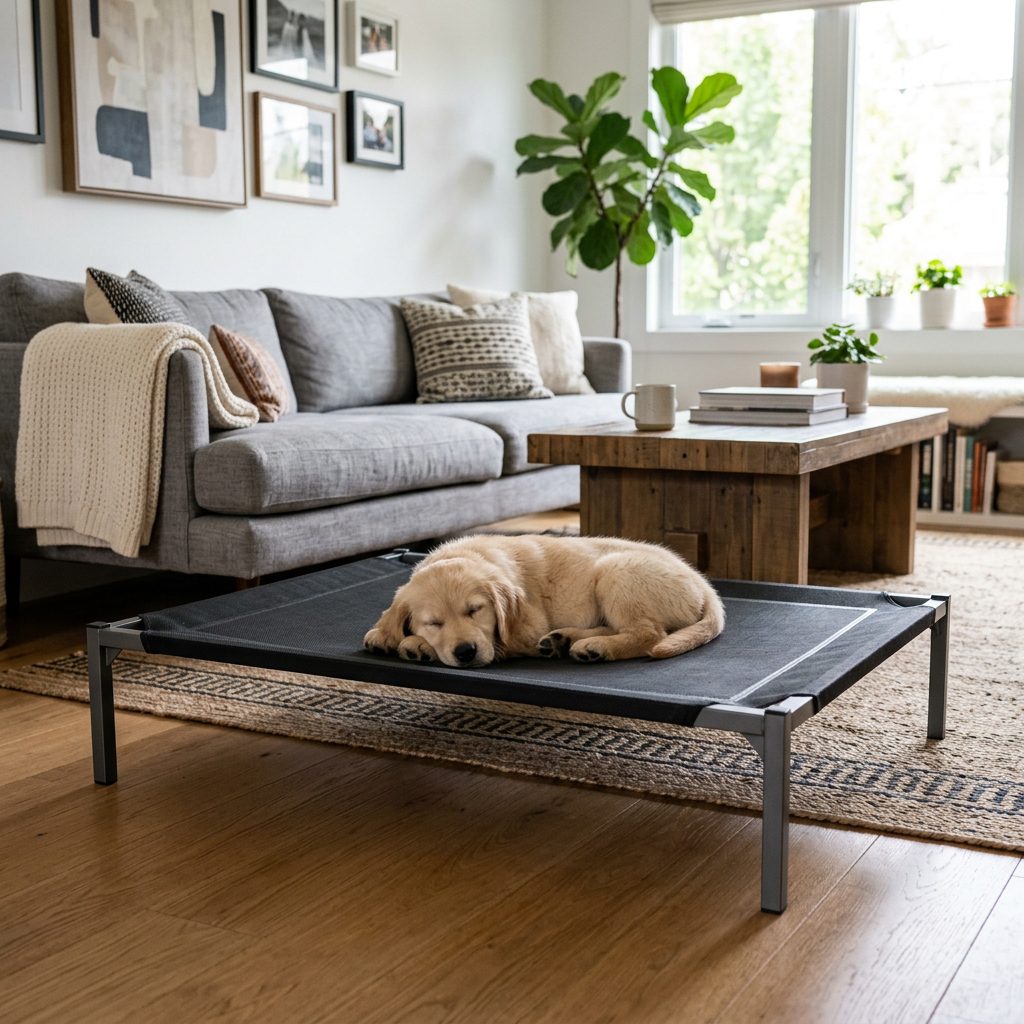
The very first hack is the most practical one: stop buying beds that are easy to destroy. While those fluffy, cloud-like sherpa beds look incredibly cozy to us, they are a textural dream for a chewing puppy. Zippers, piping, loose seams, and tags are all invitations for your puppy’s needle-like teeth to start pulling. To stop the cycle immediately, you need to swap out their current bed for a chew-resistant alternative.
What Makes a Bed Chew-Resistant?
You want to look for beds made from heavy-duty, tightly woven materials like ballistic nylon, heavy canvas, or proprietary chew-proof fabrics. These materials are slippery and tough, making it very difficult for a puppy to get a grip and puncture the fabric. Additionally, the design of the bed matters immensely. The best chew-proof beds have hidden seams, no zippers, and no raised edges (bolsters) that a puppy can easily wrap their jaws around.
The Elevated Cot Solution
For chronic chewers, elevated cot-style beds are often the ultimate solution. These beds consist of a sturdy metal or PVC frame with a piece of durable fabric stretched tightly across the top. Because the fabric is pulled taut like a drum, there is no loose material for the puppy to grab onto. Plus, they offer excellent airflow, which is great for keeping your puppy cool.
| Bed Material / Type | Pros | Cons | Best For |
|---|---|---|---|
| Plush / Sherpa | Very soft, warm, and cozy. | Extremely easy to chew; hazardous stuffing. | Older, non-chewing adult dogs. |
| Ballistic Nylon | Tough, water-resistant, difficult to puncture. | Can be noisy when the dog moves; less cozy. | Moderate chewers and diggers. |
| Elevated Cot (PVC/Metal) | Taut fabric prevents grabbing; cooling. | Requires assembly; not as soft as foam. | Severe chewers and teething puppies. |
| Canvas | Durable, machine washable, classic look. | Seams can still be vulnerable to sharp teeth. | Light chewers. |
By removing the temptation of a fluffy, easily destructible bed, you immediately set your puppy up for success. You can always reintroduce a softer bed once they have outgrown the teething phase and learned proper chew toy etiquette.
Hack 2: Master the Art of Redirection and Toy Rotation
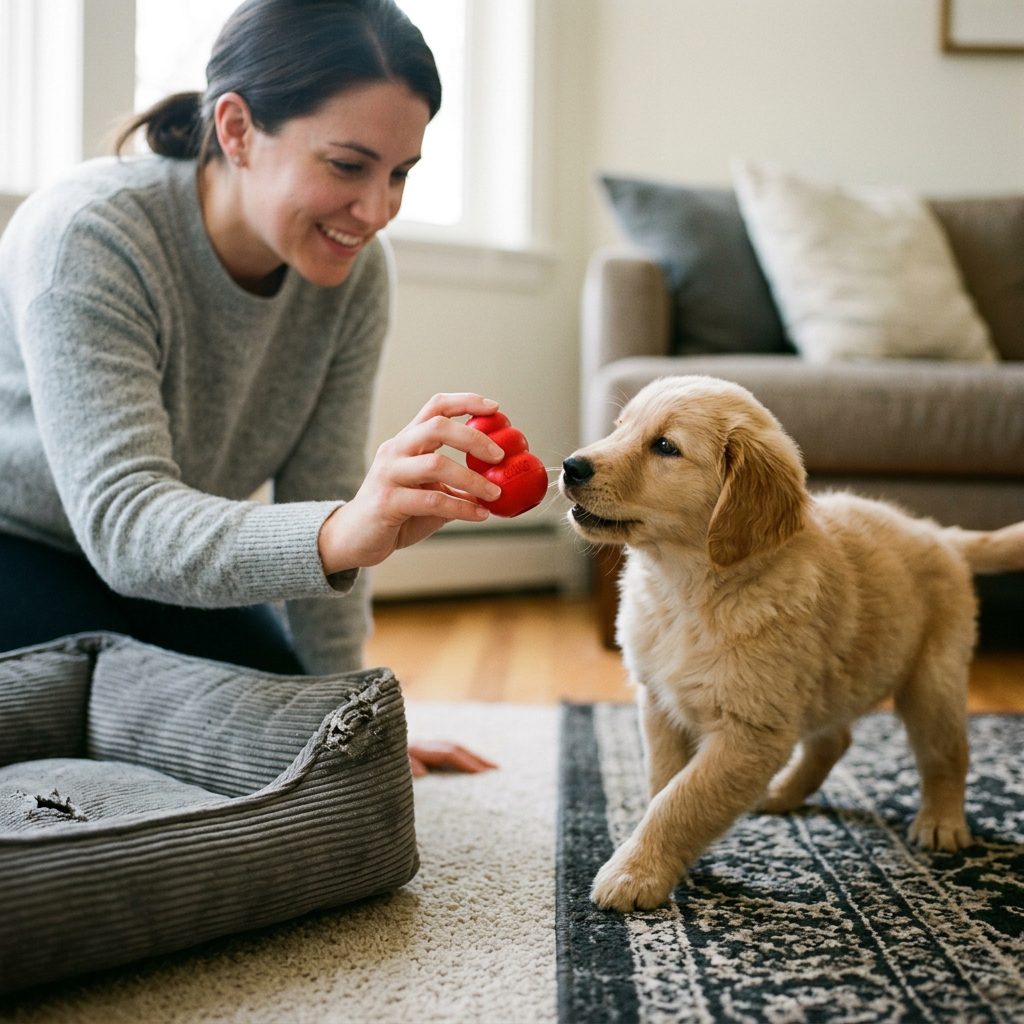
Now that you have optimized the bed itself, it is time to train the brain. Puppies need to chew, so simply telling them ‘No’ when they bite the bed is not enough. You have to tell them what they can chew instead. This is where the art of redirection comes into play.
The Redirection Technique
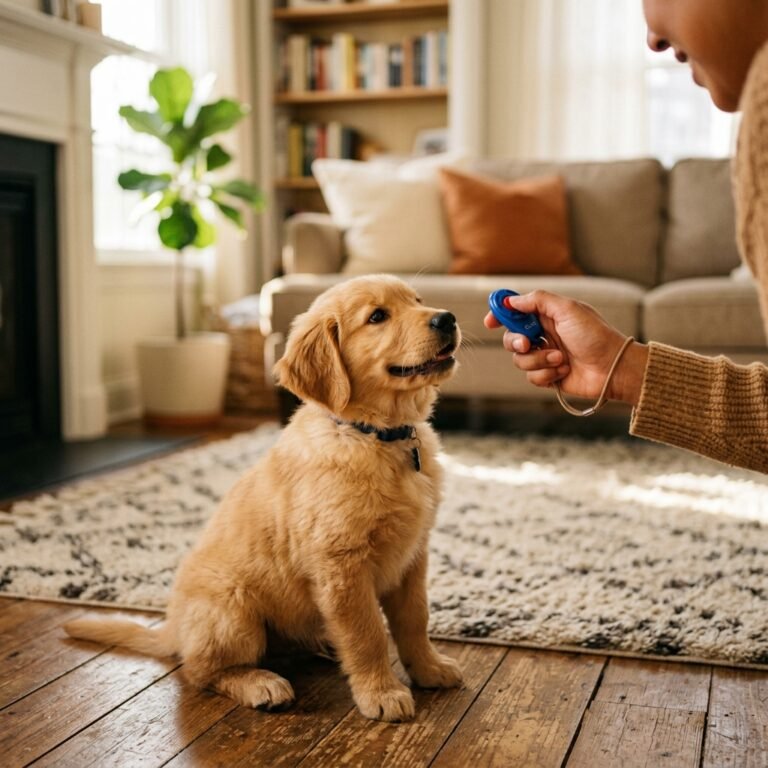
Whenever you catch your puppy starting to nibble on their bed, calmly but firmly say ‘Ah-ah’ or ‘Leave it’ to interrupt the behavior. Immediately offer them a high-value chew toy. The moment they take the toy in their mouth, praise them enthusiastically! Tell them what a good, brilliant puppy they are. You are teaching them a very simple equation: Bed = Boring and No Praise. Toy = Fun and Lots of Praise!
Choosing the Right Alternatives
Not all toys are created equal. If your puppy is chewing a soft bed, handing them a rock-hard nylon bone might not satisfy the specific textural craving they have. Try offering a variety of textures to see what they prefer. Stuffed Kongs, durable rubber toys with some give, or thick rope toys (always supervised) can be great substitutes. If they are teething, try freezing a wet washcloth (tied in a knot) or a rubber chew toy. The cold temperature will numb their sore gums, making it much more appealing than the room-temperature dog bed.
The Power of Toy Rotation
Puppies get bored easily. If they have access to the exact same five toys every single day, those toys lose their novelty, and the forbidden dog bed suddenly looks like a brand-new adventure. To combat this, implement a toy rotation strategy. Keep a stash of chew toys hidden away in a closet. Every two to three days, swap out the toys in their toy bin for the hidden ones. This simple trick tricks your puppy into thinking they are getting brand-new toys every week, keeping their interest focused on their appropriate chew items rather than their bed.
Hack 3: Utilize Taste Deterrents the Right Way
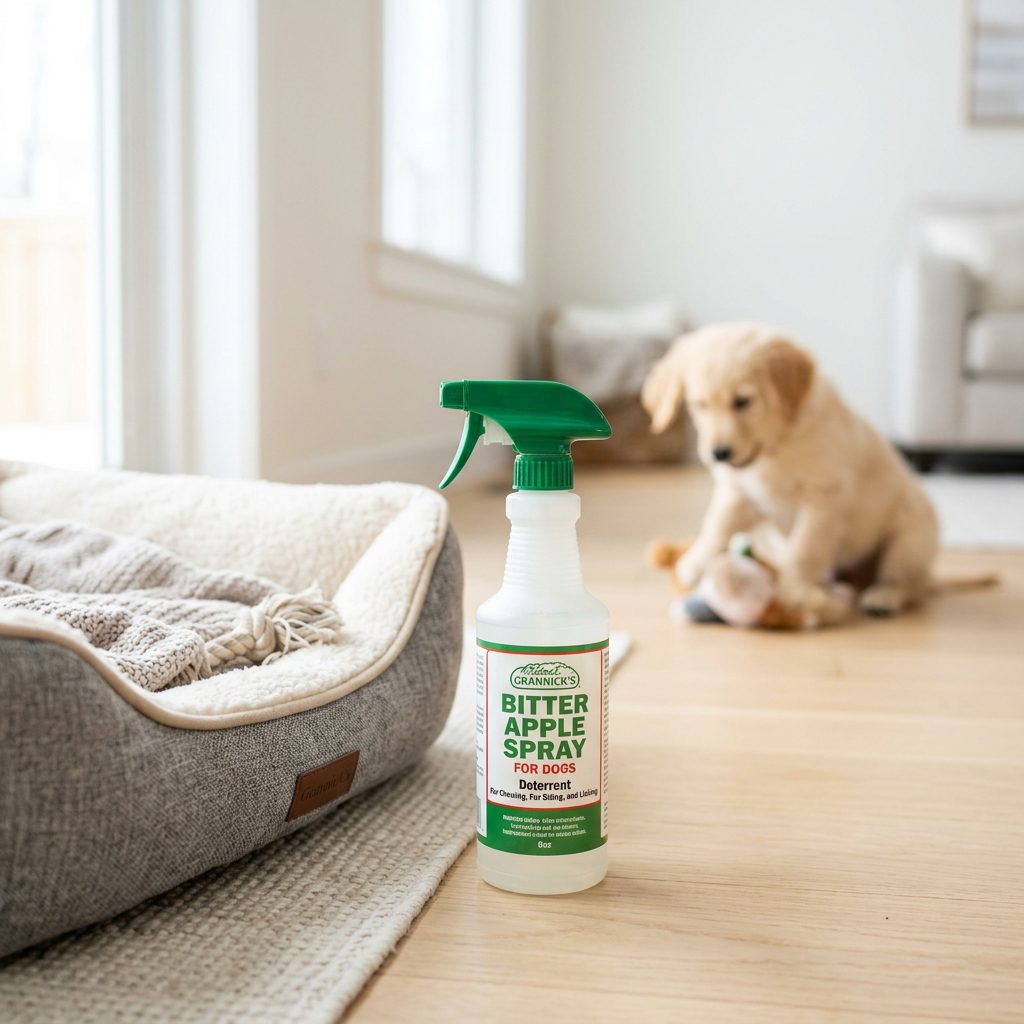
Taste deterrents, like bitter apple or cherry sprays, are classic tools in the dog trainer’s arsenal. They work by making the object taste incredibly foul to the dog, thereby discouraging them from putting their mouth on it. However, many owners try these sprays once, claim they do not work, and throw them in the trash. The secret to success with taste deterrents lies entirely in how you use them.
The Setup: Testing the Spray
Before you douse the entire dog bed in bitter spray, you need to make sure your puppy actually dislikes the taste. Surprisingly, a small percentage of dogs actually enjoy the taste of bitter apple! Spray a small amount on a piece of tissue or a cotton ball and gently offer it to your puppy. If they sniff it, taste it, and immediately back away, shake their head, or spit it out, you have a winner. If they try to eat the cotton ball, you will need to find a different brand or flavor (like white vinegar or a citrus-based deterrent).
Consistent Application is Key
The biggest mistake owners make is spraying the bed once and expecting it to work forever. These sprays evaporate and lose their potency quickly, often within 24 hours. To build a solid aversion, you must be incredibly consistent. You need to spray the corners, seams, and edges of the dog bed heavily, every single day, for at least two to three weeks. You are trying to build a strong association in your puppy’s brain: Every time I put my mouth on this bed, it tastes absolutely disgusting.
Pairing Deterrents with Redirection
A taste deterrent is not a standalone magical cure; it is a management tool that buys you time to train. When the puppy goes to bite the bed and gets a mouthful of bitter spray, they will naturally pull away. This is your golden window of opportunity! The moment they pull away in disgust, immediately offer them a tasty, appropriate chew toy. You are essentially setting up a scenario where the bed punishes them (with a bad taste) and you reward them (with a good toy).
Hack 4: Ramp Up Mental and Physical Enrichment
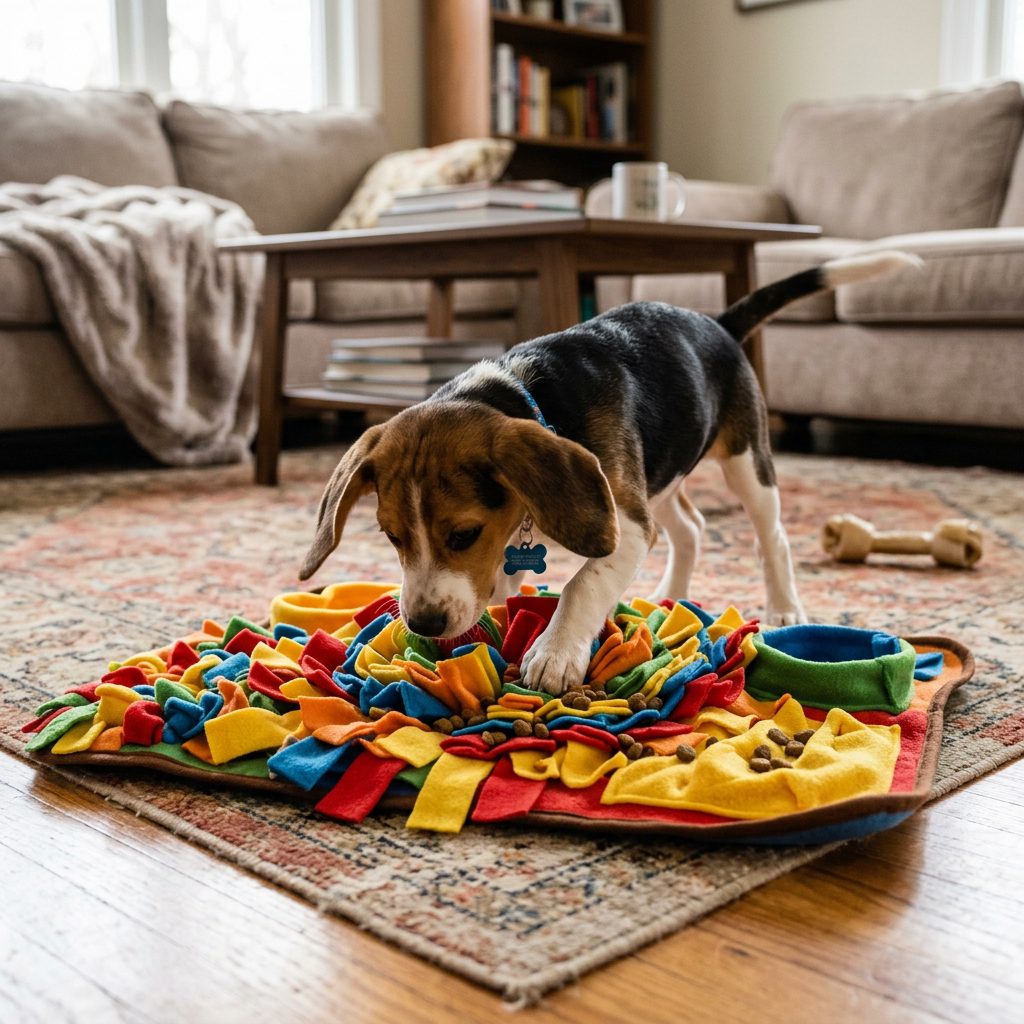
As the old saying goes in the dog training world: A tired dog is a good dog. If your puppy is chewing their bed out of boredom or pent-up energy, all the bitter spray and chew-proof beds in the world will only act as temporary band-aids. You have to address the underlying need for stimulation. When a puppy’s needs are fully met, they are much more likely to use their bed for its intended purpose: sleeping.
Physical Exercise: Beyond the Backyard
Simply letting your puppy out into the backyard to run around is rarely enough exercise. They need structured physical activity. Depending on your puppy’s age and breed, this could mean multiple brisk walks a day, a game of fetch, or a playdate with a vaccinated, well-behaved adult dog. However, be mindful of their growing joints—avoid forced running or jumping from heights until they are fully grown. A physically exhausted puppy will view their bed as a place of rest, not a playground.
Mental Enrichment: Tiring Out the Brain
Did you know that fifteen minutes of intense mental stimulation can tire a puppy out just as much as a three-mile walk? Puppies are incredibly smart and they love to work. If you do not give them a job, they will invent one (like ‘Dog Bed Demolition Expert’). Incorporate mental enrichment into their daily routine to drain that mental energy.
- Snuffle Mats: Instead of feeding your puppy out of a standard bowl, hide their kibble in a snuffle mat. This forces them to use their nose to forage for their food, which is highly mentally taxing.
- Training Sessions: Spend 10-15 minutes a day teaching new tricks or reinforcing basic obedience commands. The concentration required to learn will leave them happily exhausted.
- Puzzle Toys: Invest in interactive puzzle toys where the puppy has to slide or lift compartments to reveal treats.
Pro Tip: Try taking your puppy on a ‘Sniffari’. Go for a walk where the sole purpose is to let them sniff every blade of grass, fire hydrant, and tree they want. Sniffing is how dogs process the world, and it is incredibly tiring for their brains!
Hack 5: Restrict Access and Supervise (The Management Phase)
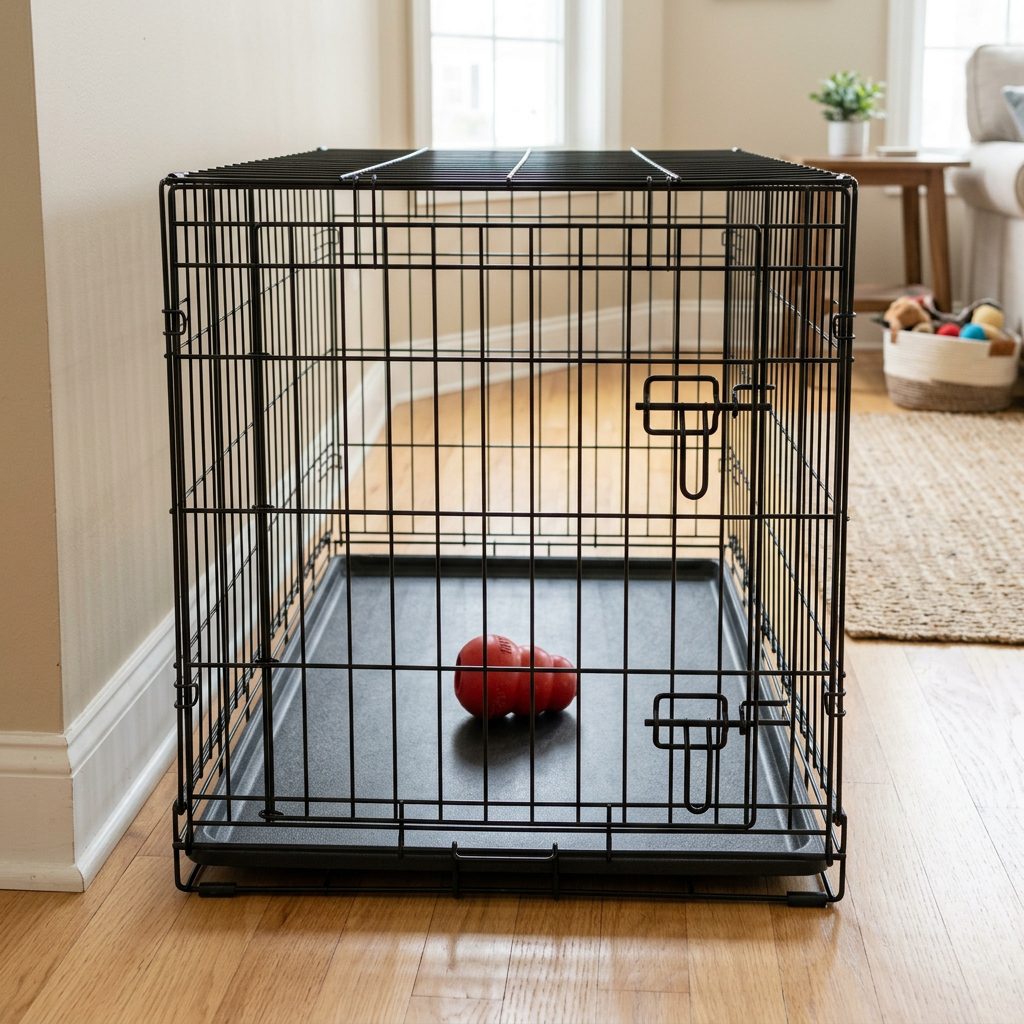
Our final hack is perhaps the most crucial for long-term success: environmental management. If your puppy is repeatedly practicing the behavior of chewing their bed, that behavior is becoming a deeply ingrained habit. Every time they successfully rip a hole in the bed, they are rewarded by the fun of it. To break a habit, you must prevent the puppy from practicing it in the first place.
The Golden Rule of Supervision
If you cannot actively supervise your puppy, they should not have access to a destructible bed. It is that simple. When you are cooking dinner, answering emails, or watching television and cannot keep two eyes on the dog, the plush bed needs to be picked up and put away. Only bring the cozy bed out when you are sitting right there, ready to redirect them with a toy the second they show interest in chewing the fabric.
Crate Training Tweaks
Many owners put a plush bed inside the crate to make it comfortable, only to come home to a shredded mess. If your puppy chews their bed while in the crate, you must remove it. It is not mean; it is a matter of life-saving safety. Ingesting crate pad material is a leading cause of bowel obstructions in puppies.
| Problem Scenario | Management Solution |
|---|---|
| Chews bed in crate when left alone. | Remove bed completely. Use a bare crate pan or a tight-fitting, chew-proof mat. |
| Chews living room bed when you aren’t looking. | Pick up the bed when unsupervised. Use baby gates to restrict access to rooms with beds. |
| Chews bed at night while you sleep. | Use a crate for sleeping without soft bedding until the teething phase passes. |
| Drags the bed around the house to chew. | Anchor the bed or use a heavy, elevated cot that cannot be easily moved. |
Puppies actually do not mind sleeping on hard surfaces as much as we think they do. If you feel terrible leaving them on a bare plastic crate pan, try laying down a tightly woven, cheap towel. If they chew the towel, remove that as well. As they mature, get past the teething phase, and learn the rules of the house, you can slowly reintroduce soft bedding during supervised times, eventually working your way up to leaving it with them full-time.
Conclusion
Dealing with a puppy that treats their bed like an all-you-can-eat buffet can test the patience of even the most seasoned dog owner. But by understanding the root causes of their chewing—whether it is teething, boredom, or stress—you can implement these five hacks to turn the tide. Remember to invest in a chew-resistant bed, master the art of redirection, use bitter deterrents consistently, exhaust them mentally and physically, and manage their environment rigorously.
Puppyhood is a fleeting, chaotic, and beautiful phase. The chewing will not last forever, especially if you remain consistent with your training and boundaries. Stick to the plan, keep your sense of humor intact, and soon enough, you will have a well-behaved adult dog who knows exactly how to snooze peacefully on their favorite, fully intact dog bed. You have got this, and your puppy is lucky to have an owner so dedicated to their safety and happiness!