7 Crate Training Hacks For Your Puppy’s First Night That Actually Work
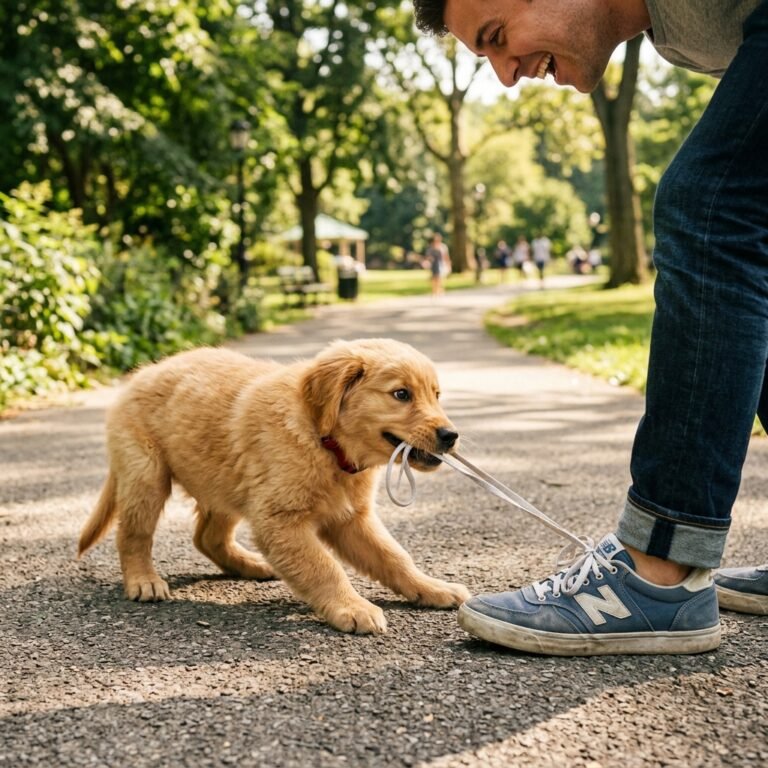
Welcome to puppy parenthood! If you are reading this, you are likely preparing for one of the most notoriously exhausting experiences of dog ownership: the first night home. Bringing a new puppy into your life is an incredibly exciting milestone, but let us be entirely honest with each other—that first night can be a real test of your patience and your sanity. Your savvy dog owner instincts have led you here because you know that preparation is the ultimate key to success.
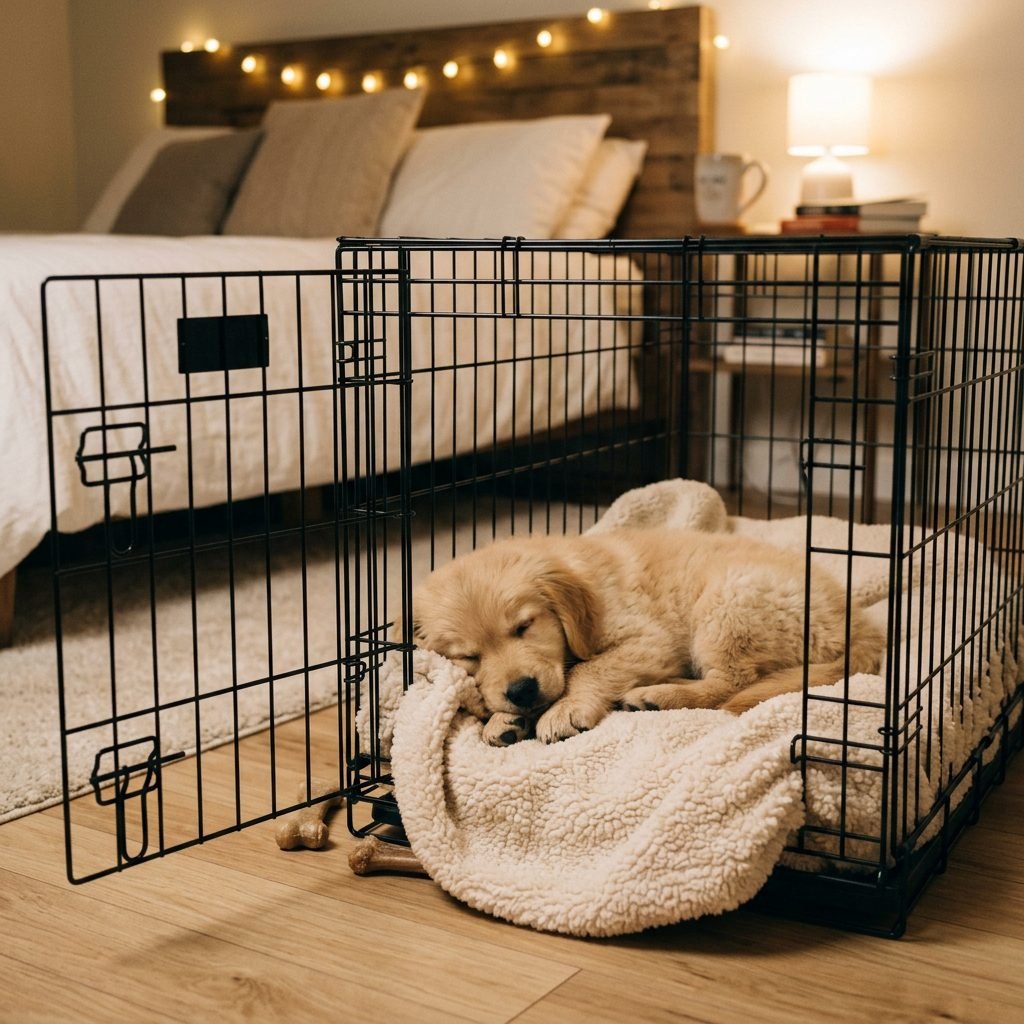
For a puppy, leaving their mother and littermates to sleep alone in a strange new environment is terrifying. Their natural instinct tells them that being separated from their pack is dangerous. This is exactly why they cry, howl, and whine when placed in a crate for the first time. However, crate training is not cruel; in fact, when done correctly, it provides your dog with a safe, comforting den of their own. It aids immensely in potty training, prevents destructive chewing, and ensures your puppy is safe when you cannot supervise them.
The goal of the first night is not perfection. The goal is to make your puppy feel secure enough to rest, laying the foundation for a lifetime of positive crate associations.
In this comprehensive guide, we are going to dive deep into seven actionable, proven crate training hacks designed specifically for your puppy’s first night. We will cover the exact tools you need, the behavioral psychology behind why these hacks work, and how to troubleshoot the inevitable midnight crying. Grab a cup of coffee (you might need it tomorrow morning!), and let us set you and your new best friend up for a peaceful night.
Setting Up for Success: Your Crate Training Toolkit
The Essential Pre-Game Preparation
Before we even get to the hacks, we need to talk about your equipment. As a savvy dog owner, you know that having the right tools can make or break your training experience. You cannot expect a puppy to settle into a cold, oversized, bare metal cage. We need to transform that wire or plastic box into a luxurious, inviting den that your puppy actually wants to spend time in.
The Right Size Matters
The most common mistake new puppy parents make is buying a massive crate intended for their dog’s adult size, without using a divider. If a crate is too large, your puppy will simply sleep in one corner and use the opposite corner as their personal bathroom. Dogs naturally do not want to soil their sleeping area, so the crate should only be large enough for them to stand up, turn around, and lie down comfortably.
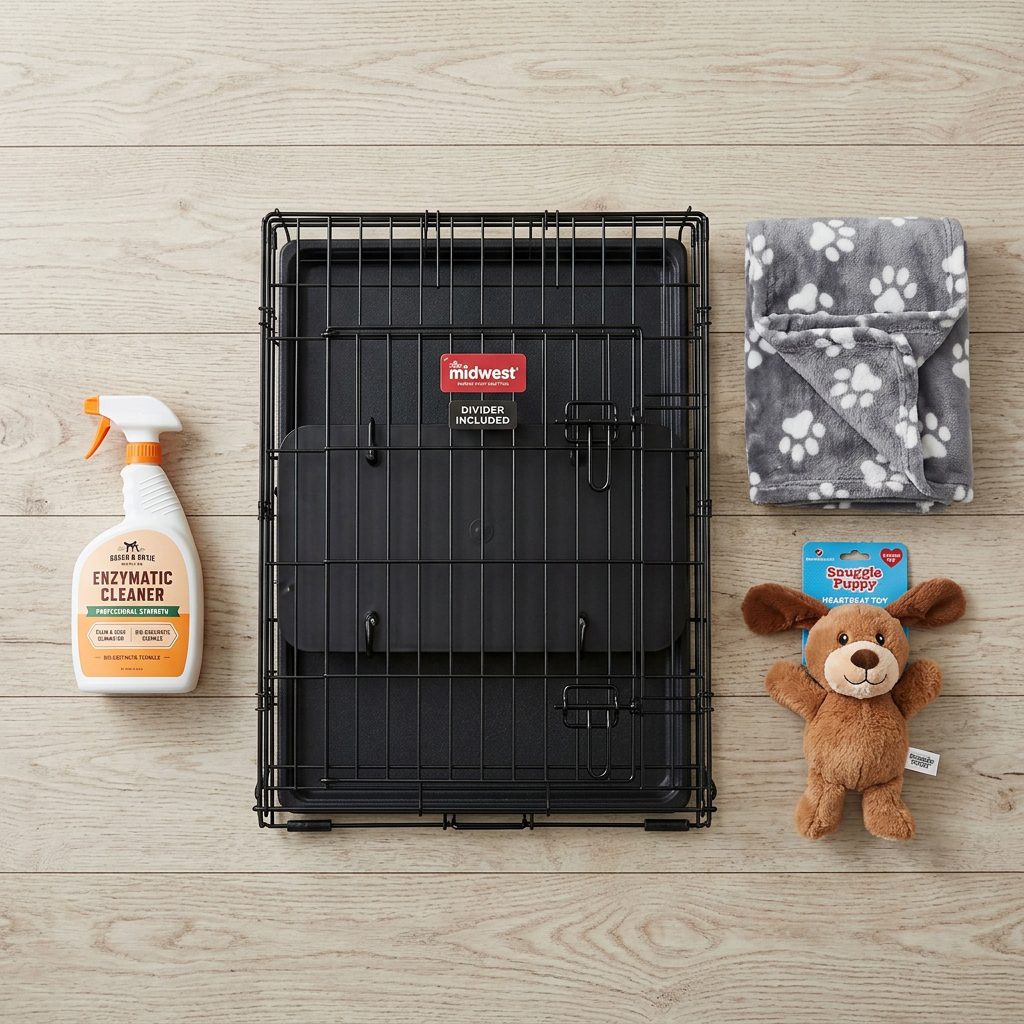
Your Ultimate First-Night Crate Toolkit
Here is a breakdown of the exact items you need to prepare before the sun goes down on your puppy’s first day home.
| Essential Tool | Purpose | Expert Recommendation |
|---|---|---|
| Wire Crate with Divider | Grows with your puppy while preventing potty accidents. | Adjust the divider so the space is cozy but not cramped. |
| Fleece Blanket or Towel | Provides a soft, warm surface that mimics sleeping with littermates. | Avoid expensive beds initially, as puppies often chew or soil them. |
| Crate Cover | Creates a dark, den-like atmosphere that encourages sleep. | A breathable blanket works perfectly; leave one side open for airflow. |
| Enzymatic Cleaner | Eliminates the scent of any inevitable accidents. | Keep this right next to the crate for rapid midnight cleanups. |
Once you have your toolkit assembled, it is time to implement the strategies that will actually get your puppy to close their eyes and drift off to sleep.
Hack 1 & 2: Location and The Heartbeat Surrogate
Hack 1: Location, Location, Location
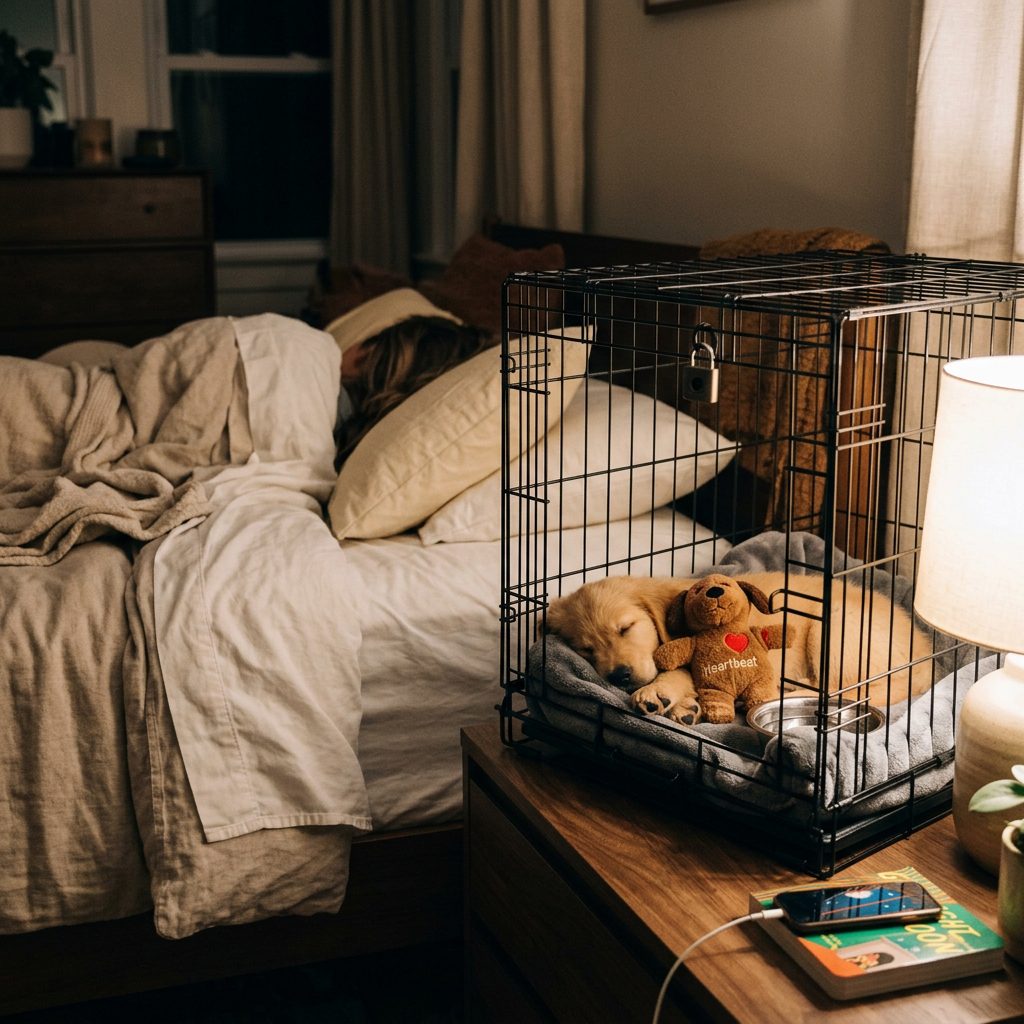
Where you place the crate on the first night is arguably the most critical decision you will make. Many new owners mistakenly put the crate in the living room, kitchen, or laundry room, thinking they want to keep the dog out of the bedroom. This is a massive mistake for the first night. Remember, your puppy has just lost their entire family. Isolating them in a dark, distant room is a guaranteed recipe for panic, howling, and severe anxiety.
The Hack: Elevate the crate and put it right next to your bed. If it is a wire crate, place it on a sturdy chair or nightstand so your puppy can physically see you. When they inevitably wake up and whine, you can simply dangle your fingers through the wire to reassure them that they are not alone. Hearing your breathing and smelling your scent provides immense comfort. As the weeks go by and your puppy becomes more confident, you can gradually move the crate further away, inching it toward the door, into the hallway, and eventually into their permanent sleeping spot.
Hack 2: The Heartbeat Surrogate
Up until today, your puppy has slept in a warm puddle of their littermates, listening to the rhythmic heartbeat of their mother. Replicating this sensation is one of the most effective ways to trigger their natural sleep instincts.
The Hack: Invest in a behavioral aid toy, such as a Snuggle Puppy, which comes with a battery-operated beating heart and a disposable heat pack. If you do not have one of these specialized toys, you can easily DIY this hack. Take a sturdy, hard-plastic water bottle, fill it with warm (not boiling) water, wrap it securely in a thick towel, and place it in the crate. Alongside the warm bottle, place a loud ticking analog clock wrapped in a blanket near the outside of the crate. The ticking mimics the mother’s heartbeat, and the warm bottle provides the physical sensation of a littermate. This combination works like absolute magic to soothe a frantic puppy.
Hack 3 & 4: The Burnout and White Noise Magic
Hack 3: The Pre-Bedtime Burnout
A tired puppy is a good puppy, and a deeply exhausted puppy is a sleeping puppy. If your puppy has been napping all evening while you watch television, they are going to be wide awake and ready to party the moment you lock them in their crate for the night.
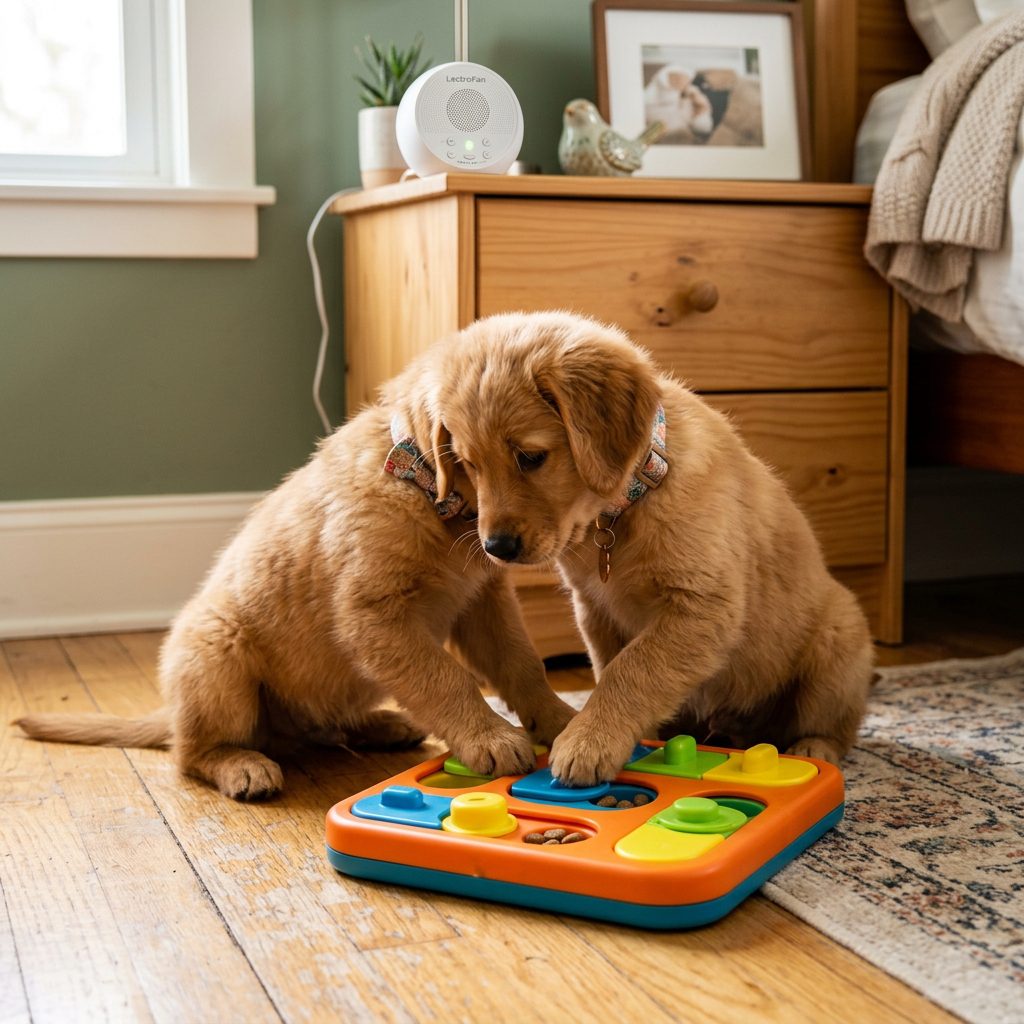
The Hack: Implement a strict schedule of mental and physical exhaustion exactly one hour before your intended bedtime. Do not just rely on physical exercise like running around the yard; physical exhaustion only builds physical stamina. You need to drain their mental energy. Engage in a 15-minute training session focusing on simple commands like ‘sit’ or ‘look at me’. Use a snuffle mat or a puzzle toy to feed them a small portion of their kibble. Play a structured game of tug, practicing the ‘drop it’ command. After this intense burst of brain-taxing activity, take them outside for one final, long, boring potty break. By the time you bring them back inside, their eyelids should be drooping.
Hack 4: White Noise Magic
Puppies have incredibly sensitive hearing. In their new home, every creaking floorboard, passing car, or hum of the refrigerator is a brand new, potentially terrifying sound. These unfamiliar noises can easily startle a sleeping puppy awake, leading to a crying fit.
Creating a consistent auditory environment masks sudden household noises and acts as a cue to your puppy’s brain that it is time to sleep.
The Hack: Utilize white noise. You do not need a fancy machine; a simple box fan pointed away from the crate, a humidifier, or an old smartphone playing a continuous loop of rain sounds or brown noise works perfectly. Turn this sound on about ten minutes before you put the puppy in the crate. Over time, classical conditioning will take over. The moment your puppy hears that specific white noise, their brain will associate it with deep relaxation and sleep. Ensure the volume is loud enough to drown out the house settling, but not so loud that it damages their sensitive ears.
Hack 5 & 6: The Midnight Potty and The ‘No Talk’ Rule

Hack 5: The Boring Midnight Potty Break
Let us set realistic expectations: an eight-week-old puppy physically cannot hold their bladder for eight hours. You will have to wake up in the middle of the night. A general rule of thumb is that a puppy can hold their bladder for one hour per month of age, plus one. Therefore, a two-month-old puppy can hold it for about three hours. You should proactively set an alarm to take them out before they wake up crying in distress.
The Hack: You must become a boring ninja during these midnight potty breaks. When your alarm goes off, do not turn on all the lights. Do not use your happy, high-pitched dog voice. Do not offer cuddles or playtime. Calmly open the crate, pick the puppy up (to prevent them from peeing on the floor while walking to the door), and carry them outside to their designated potty spot. Stand completely still. Give them three to five minutes to do their business. The moment they finish, offer a quiet ‘good dog’, pick them back up, and place them directly back into the crate. If they do not go within five minutes, bring them back in, crate them, and try again in 15 minutes. This teaches them that nighttime wake-ups are strictly for business, not for socializing.
Hack 6: The ‘No Talk’ Rule for Whining
This is the hardest hack to execute, but it is the most vital for long-term success. Your puppy will likely whine when placed back in the crate. As a loving owner, your first instinct is to lean over and say, ‘It is okay buddy, go to sleep, Mommy is right here.’ Unfortunately, dogs do not speak English. What your puppy actually learns is: ‘If I make noise, the human talks to me and gives me attention!’
The Hack: Once you know your puppy has an empty bladder, is safe, and is not in physical pain, you must implement the ‘No Talk’ rule. Ignore the attention-seeking whining completely. Do not speak to them, do not make eye contact, and do not tap the cage. Any attention, even negative attention like yelling ‘Quiet!’, is a reward for a dog seeking connection. If the whining escalates to a full-blown panic attack (panting, digging frantically, drooling), you may need to quietly dangle your fingers in the crate to soothe them without speaking. Learning the difference between a ‘I need to pee’ whine and an ‘I am bored and want out’ whine takes time, but staying completely silent is crucial to extinguishing attention-seeking behavior.
Hack 7: The Evening Crate Party
Hack 7: Gradual Introductions Before Bedtime
Imagine being abducted by aliens, taken to a new planet, and immediately locked in a small metal box in the dark. You would panic, right? That is exactly what happens if the very first time your puppy sees the crate is at 11:00 PM when you are ready to go to sleep. You must build positive associations with the crate while the sun is still up.
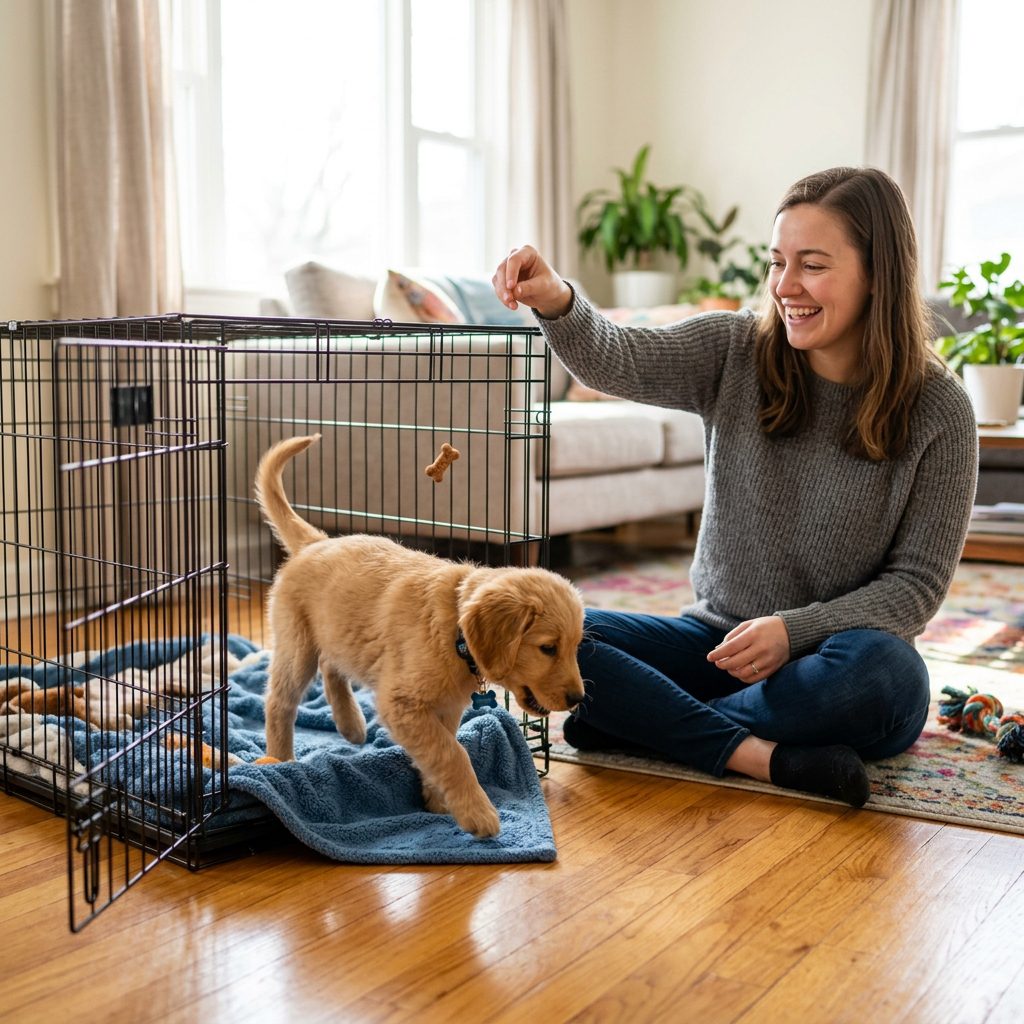
The Hack: Throw an evening crate party. A few hours before bedtime, prop the door of the crate wide open. Sit on the floor next to it with a handful of high-value treats—think tiny pieces of boiled chicken or freeze-dried liver. Toss a piece of chicken just outside the crate. Then, toss one right at the entrance. Finally, toss one all the way at the back of the crate. Let your puppy walk in, eat the treat, and walk right back out. Do not close the door! Repeat this game ten to fifteen times. Next, feed them their evening dinner inside the crate, again leaving the door open.
By turning the crate into a magical dispenser of delicious food and fun games, you are fundamentally changing the puppy’s emotional response to the space. When 11:00 PM rolls around and you finally close the door, the crate will not be a scary prison; it will be the awesome place where the chicken happens. This proactive psychological conditioning drastically reduces first-night anxiety.
Troubleshooting & Common Mistakes
Why Is My Puppy Still Crying?
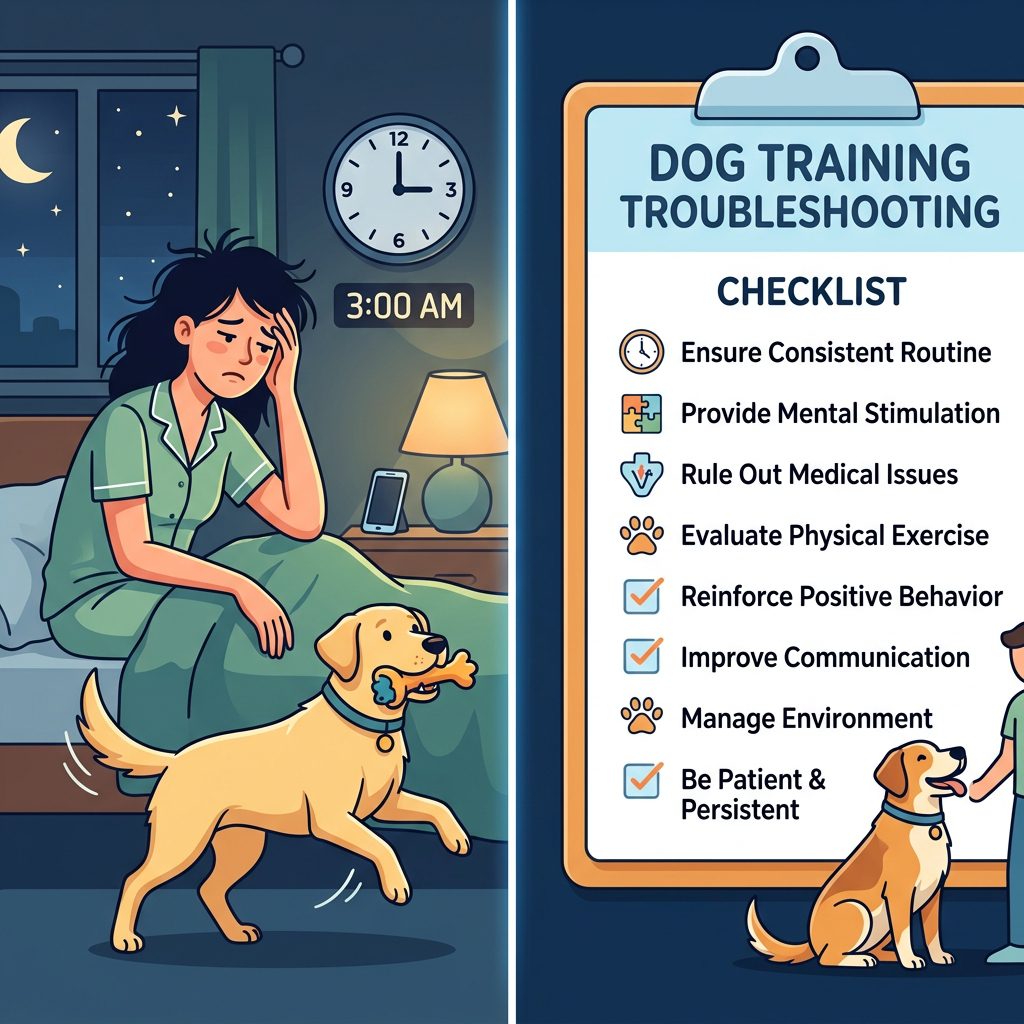
Even with all seven hacks perfectly executed, puppies are living creatures with their own minds, and things do not always go exactly to plan. If you are staring at the ceiling at 3:00 AM listening to a howling puppy, you need to troubleshoot the situation logically. Let us look at some common mistakes and how to fix them.
Mistake 1: Using the Crate as a Punishment
Never, under any circumstances, shove your puppy into the crate out of anger or frustration because they chewed a shoe or had an accident. The crate must remain a sanctuary. If you use it as a ‘time-out’ jail, your puppy will dread going in there at night.
Mistake 2: Bedding that is Too Hot
While we recommended a warm water bottle, be careful not to overheat your puppy. Certain breeds with thick double coats (like Huskies, Malamutes, or Golden Retrievers) get hot very quickly. If you notice your puppy panting, digging at the blanket to push it out of the way, or pressing their belly against the bare plastic tray, they are likely too warm. Remove the thick blankets and let them sleep on the cooler surface.
Mistake 3: Giving In Too Quickly
Consistency is the bedrock of dog training. If your puppy cries for forty-five minutes, and you finally break down, open the crate, and let them sleep in your bed, you have just taught them a terrible lesson. You taught them that crying for forty-five minutes unlocks the door. The next night, they will cry for two hours, expecting the same result. You must outlast the tantrum.
When to Consult a Professional
| Normal Puppy Behavior | Signs of Severe Distress (Consult a Trainer) |
|---|---|
| Whining for 10-15 minutes before settling. | Non-stop howling or barking for over an hour. |
| Scratching at the door a few times. | Frantic digging resulting in bleeding paws or broken teeth. |
| Restlessness before finding a comfortable spot. | Excessive drooling, panting, or urinating from pure fear. |
If you observe signs of severe confinement anxiety or panic that go beyond normal whining, do not force the issue. Consult a certified positive reinforcement dog trainer or a veterinary behaviorist to develop a specialized desensitization plan.
Conclusion
Surviving your puppy’s first night in the crate is a rite of passage for every savvy dog owner. It requires a delicate balance of deep empathy for a baby animal that misses its family, and firm, unwavering consistency to establish healthy long-term boundaries. By setting up the perfect den, utilizing the power of proximity, exhausting them mentally and physically, and mastering the boring midnight potty break, you are setting yourself up for success.
Remember, crate training is a marathon, not a sprint. The first night might be bumpy, the second night will be slightly better, and by the end of the first week, you will likely have a puppy who willingly walks into their crate to snooze. Stay patient, stick to the hacks, and remember that this exhausting phase is incredibly short. Before you know it, you will have a well-adjusted, crate-trained adult dog, and you will look back on these sleepless nights with a smile. You’ve got this, and more importantly, you are going to be a fantastic dog parent. Now, go get some rest!