Why is My Puppy Barking at Their Food Bowl? (And How to Fix This Weird Behavior)
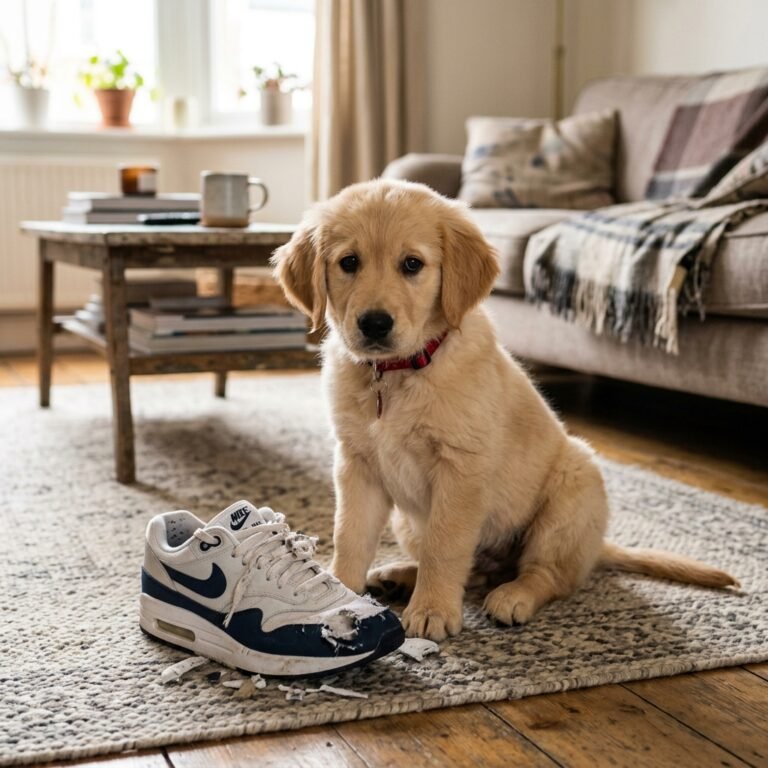
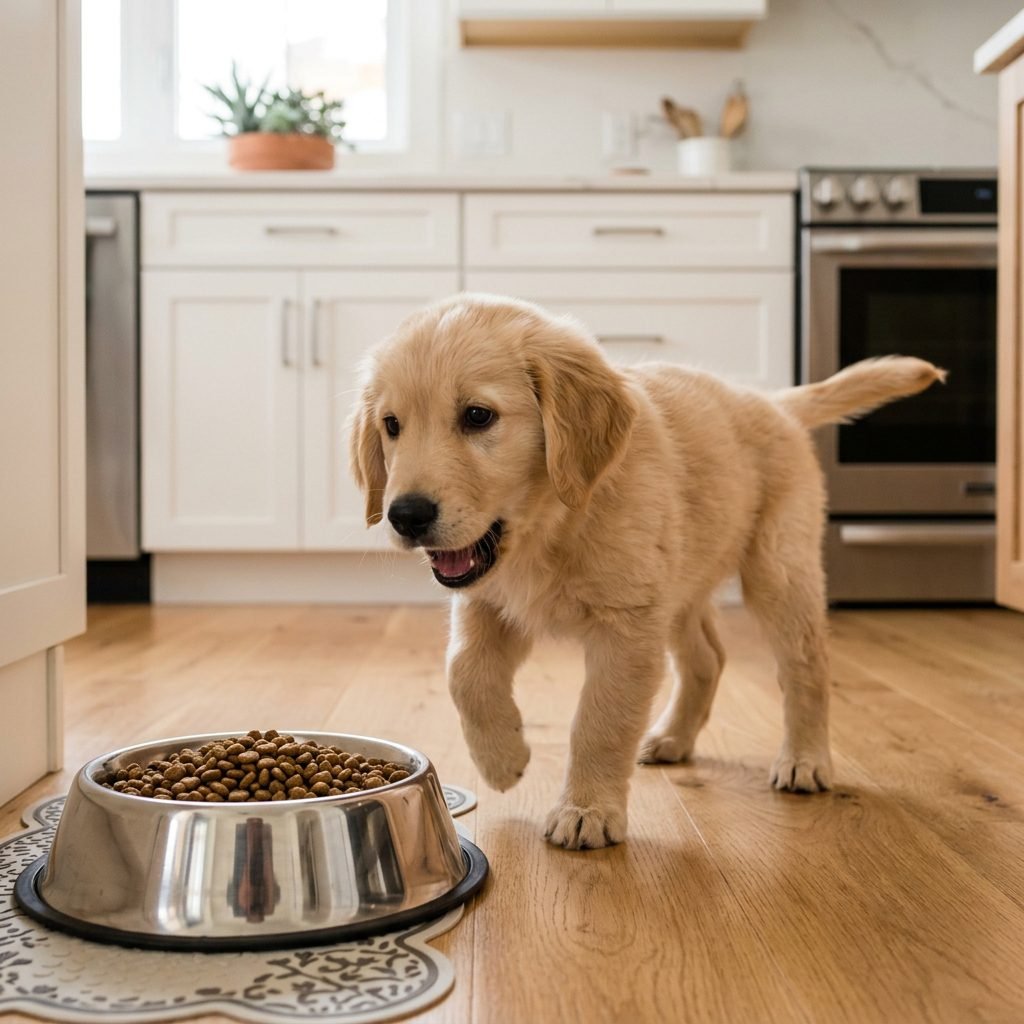
Imagine this: You have just prepared a delicious, high-quality meal for your new furry best friend. You carefully place the bowl on the kitchen floor, expecting them to dive in with that classic, ravenous puppy enthusiasm. But instead of eating, your puppy jumps back, lowers their front paws into a play bow, and starts barking at their food bowl like it just insulted their mother. If you are reading this, you are likely a savvy dog owner who wants to understand the why behind your dog’s quirks, rather than just treating the symptoms. Let’s be real—watching your puppy yell at their dinner is equal parts hilarious, confusing, and slightly concerning.
As dog behaviorists and canine specialists, we see this quirky behavior more often than you might think. While it might seem like your puppy has completely forgotten how to eat, barking at the food bowl is actually a complex form of communication. Your puppy is trying to tell you something about their environment, their emotional state, or the bowl itself. Whether it is a fear of their own reflection, a startling noise, or just an overflow of puppy frustration, understanding the root cause is the first step to peaceful mealtimes.
In this comprehensive guide, we are going to dive deep into the canine psychology behind why puppies bark at their food bowls. More importantly, we will walk you through a step-by-step, positive reinforcement-based training protocol to fix this weird behavior. By the end of this article, you will have all the tools, knowledge, and confidence you need to transform mealtime from a noisy standoff into a calm, enjoyable routine for your growing pup.
Decoding the Barks: Why is Your Puppy Yelling at Their Dinner?
Before we can fix the behavior, we need to put on our detective hats and figure out what is triggering your puppy’s vocal protests. Puppies experience the world very differently than adult dogs. Their senses are highly acute, and they are encountering many everyday objects for the very first time. What looks like a simple metal bowl to you might look like a noisy, shiny, unpredictable monster to a ten-week-old pup.
1. The Reflection and Shadow Factor
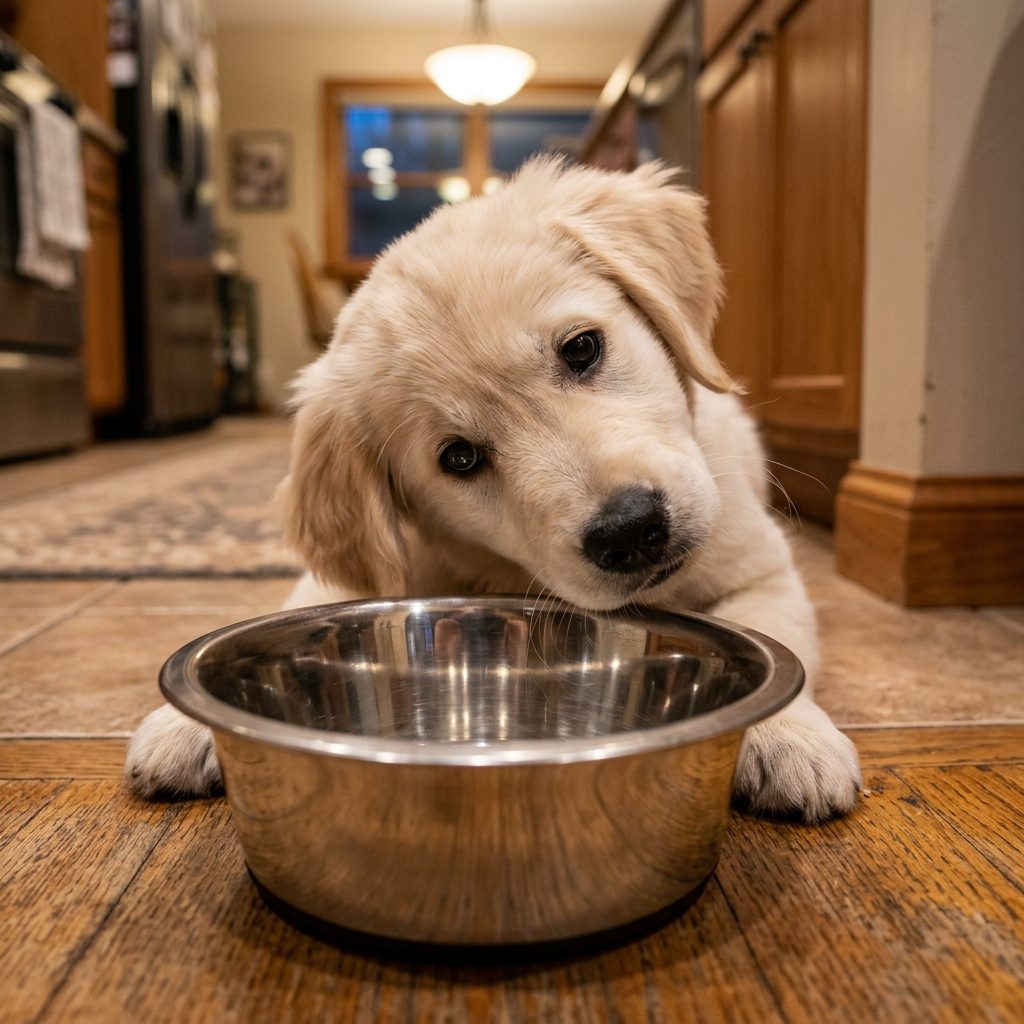
If you use a stainless steel bowl, this is often the primary culprit. Stainless steel is highly reflective. When your puppy leans in to take a bite, they suddenly see another “puppy” staring back at them. This “other puppy” moves when they move and disappears when they back away. For an unsocialized or easily startled puppy, this reflection can trigger a fear response or a playful barking fit. Similarly, the bowl can cast strange shadows depending on your kitchen lighting, which can also spook a sensitive pup.
2. The Noise Factor (Collar Tags and Sliding Bowls)
Puppies have incredibly sensitive hearing. If your puppy wears a collar with metal ID tags, those tags will inevitably clink against a metal or ceramic bowl when they lean down to eat. That sudden, sharp CLINK right next to their ears can be terrifying. Additionally, if the bowl slides across a hard tile or wooden floor while they eat, the scraping sound can turn mealtime into a scary, noisy event.
3. Teething Discomfort
Just like human babies, puppies go through a painful teething phase between three and six months of age. If you are feeding them hard, crunchy kibble, chewing might actually hurt their sore gums. In this scenario, the puppy wants to eat because they are hungry, but they know that eating causes pain. The barking is an expression of pure frustration.
4. Resource Guarding and Excitement
Sometimes, barking isn’t about fear at all. Some puppies get so over-aroused and excited about mealtime that they simply cannot contain their energy, resulting in a barrage of barks. On the flip side, early signs of resource guarding can also manifest as barking. If your puppy barks when you approach the bowl, they might be trying to say, “Back off, this is mine!”
| Puppy’s Body Language | Likely Cause of Barking | Immediate Action to Take |
|---|---|---|
| Tail tucked, ears back, jumping away from bowl | Fear (Reflection, Noise, or Shadows) | Change bowl material or remove noisy collar tags. |
| Play bow, tail wagging, pouncing at the bowl | Playfulness / Seeing their reflection | Ignore the behavior; scatter food on the floor. |
| Whining, barking, picking up food and dropping it | Teething Pain / Hard Food | Soften kibble with warm water or bone broth. |
| Stiff body, hard stare, barking when you approach | Early Resource Guarding | Consult a trainer; start hand-feeding immediately. |
Step-by-Step Guide: How to Fix Food Bowl Barking
Now that we have identified the potential triggers, it is time to implement a training strategy. As savvy dog owners, you know that forcing a fearful or frustrated dog into a situation will only make the behavior worse. We need to use desensitization and counter-conditioning to change how your puppy feels about their food bowl. Here is our expert, step-by-step protocol to fix the behavior.
Step 1: Eliminate Environmental Triggers
Before you even begin training, set your puppy up for success by removing the obvious obstacles. If your puppy wears a collar with jingling tags, take the collar off before mealtime, or use a tag silencer. If the bowl slides on the floor, place a non-slip silicone mat underneath it. If you suspect teething pain, soak their kibble in warm water for ten minutes before serving to make it mushy and soothing.
Step 2: The Scatter Feeding Method
If your puppy is terrified of the bowl itself, take the bowl out of the equation entirely for a few days. We want to ensure your puppy is still getting their nutritional needs met without the stress. Take their meal and scatter the kibble directly onto a clean rug, a snuffle mat, or the grass in your backyard. Scatter feeding engages their natural foraging instincts, builds confidence, and completely bypasses the scary bowl.
Step 3: Hand-Feeding Near the Bowl
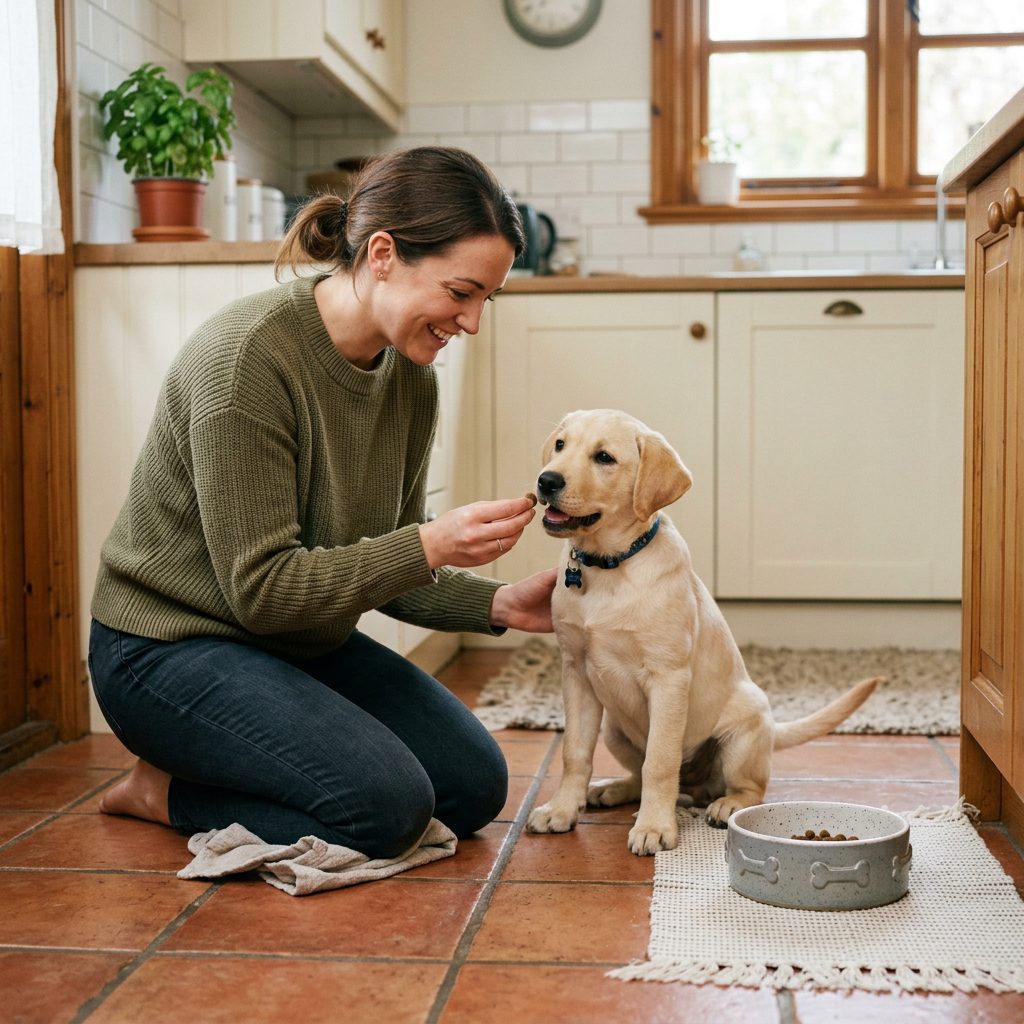
Once your puppy is eating confidently from the floor, reintroduce the bowl, but do not put the food inside it just yet. Place the empty bowl on the floor. Sit next to the bowl with a handful of your puppy’s food. Whenever your puppy looks at the bowl without barking, praise them calmly and hand-feed them a piece of kibble.
Expert Tip: Patience is your greatest tool here. Do not lure the puppy toward the bowl or force them to approach it. Let their natural curiosity take over. Reward any brave steps toward the bowl with high-value treats.
Step 4: The “Drop and Treat” Technique
Once your puppy is comfortable standing near the empty bowl, start dropping a single piece of kibble into the bowl. Let them eat it out of the bowl, then praise them. By dropping the food in one piece at a time, you are teaching the puppy that the bowl is a magical dispenser of good things, rather than a scary object. Gradually increase the amount of food you place in the bowl until they are eating a full meal without hesitation.
Bowl Upgrades and Environmental Tweaks
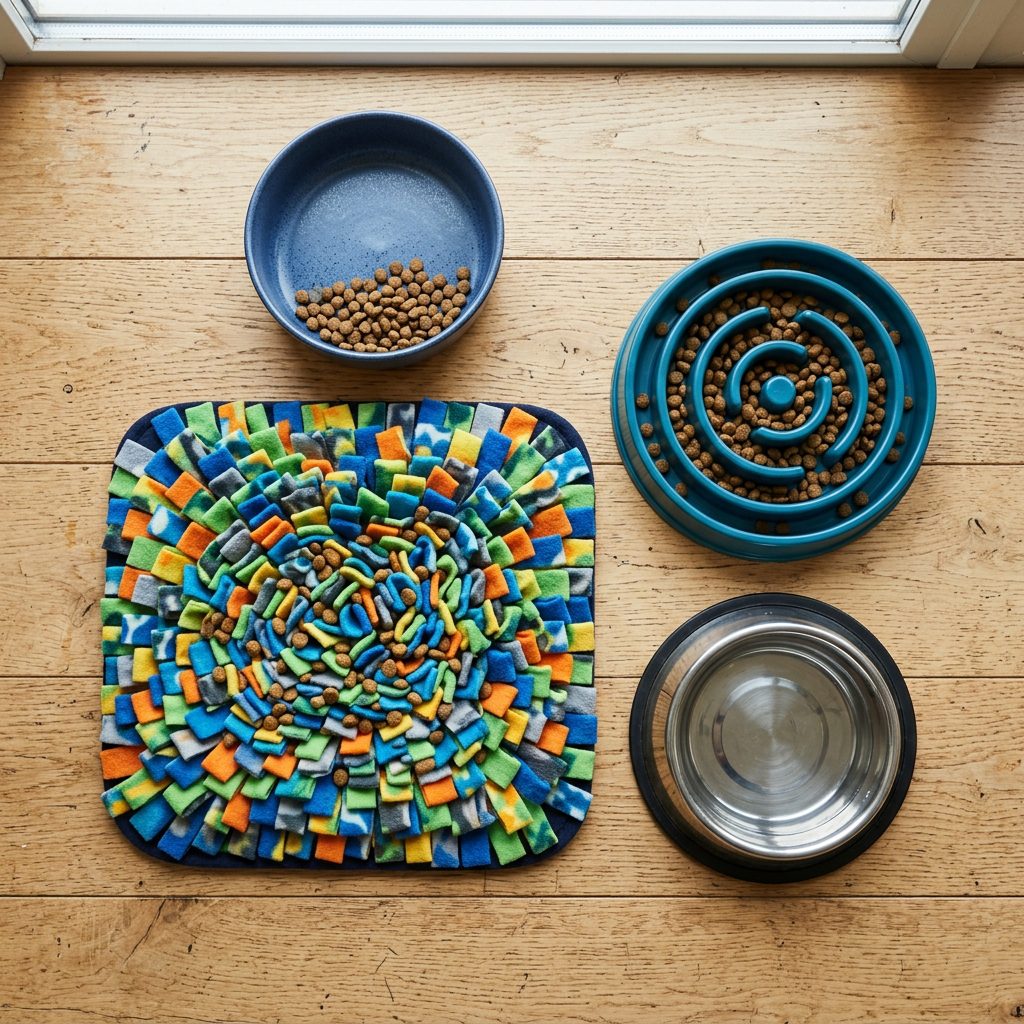
Sometimes, the easiest way to fix a behavioral issue is to simply change the equipment. If you have spent weeks trying to desensitize your puppy to a stainless steel bowl and they are still barking at it, it might be time to switch things up. The material, shape, and depth of the bowl can drastically impact your dog’s eating experience.
Choosing the Right Material
Not all dog bowls are created equal. As we discussed, stainless steel is durable and hygienic, but it is also reflective and noisy. Ceramic bowls are heavy, meaning they won’t slide around the floor, and they do not cast reflections. However, they can chip or break. High-quality, BPA-free plastic bowls are quiet and non-reflective, but they can harbor bacteria if they get scratched. For puppies who bark at their bowls, a heavy, matte-finish ceramic bowl is usually the gold standard.
| Bowl Material | Pros for Anxious Puppies | Cons to Consider |
|---|---|---|
| Stainless Steel | Very sanitary, indestructible | Highly reflective, very noisy, cold to the touch |
| Ceramic (Matte) | Heavy (no sliding), quiet, no reflections | Can break if dropped, porous if chipped |
| Silicone / Rubber | Completely silent, soft on teeth, no reflections | Can be chewed up by aggressive chewers |
| BPA-Free Plastic | Quiet, inexpensive, non-reflective | Scratches easily, can cause doggy acne/bacteria buildup |
Alternative Feeding Tools
If traditional bowls just aren’t working, or if your puppy’s barking is rooted in excess energy and frustration, consider ditching the standard bowl altogether. Interactive feeders are incredible tools for savvy dog owners. A Snuffle Mat mimics grass and requires your dog to use their nose to find their food, which is incredibly calming for their nervous system. Lick mats smeared with wet food and frozen can soothe a teething puppy’s gums while keeping them quietly occupied. Finally, slow feeder puzzle bowls can turn mealtime into a brain game, redirecting their barking energy into problem-solving energy.
Troubleshooting Common Puppy Training Mistakes
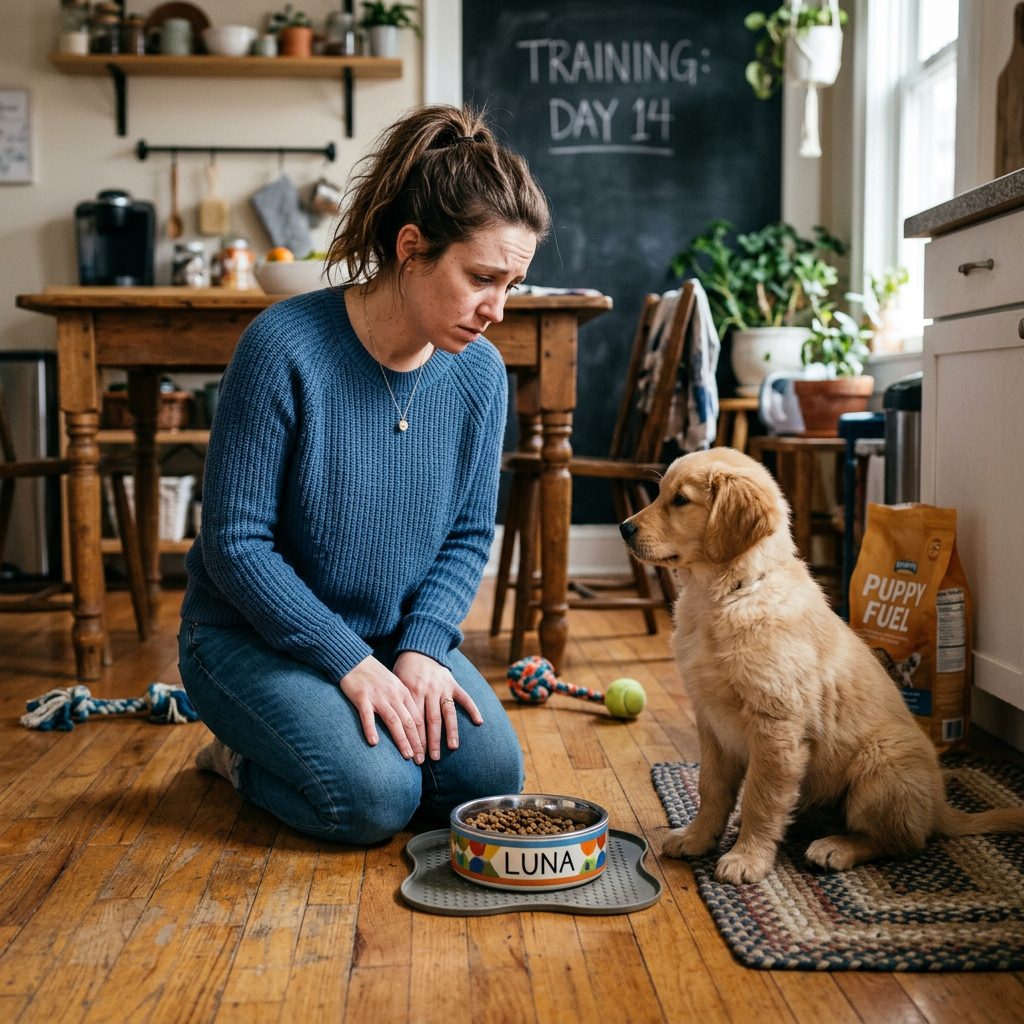
Training a puppy requires consistency, and it is incredibly easy to accidentally reinforce the exact behavior you are trying to stop. When dealing with a puppy barking at their food bowl, there are a few common pitfalls that well-meaning dog owners often fall into. Let’s make sure you avoid these completely.
Mistake 1: Yelling or Barking Back
It can be frustrating when you just want your dog to eat, but raising your voice will only escalate the situation. If your puppy is barking out of fear, yelling will validate their fear—they will think, “Wow, my human is scared and upset too, this bowl really is dangerous!” If they are barking out of playfulness, they will think your yelling is just you joining in on the game. Always remain calm, quiet, and neutral.
Mistake 2: Forcing the Puppy to the Bowl
Never pick your puppy up and physically place them in front of the bowl, and never push their head down toward the food. This removes their agency and will instantly create a negative, fearful association with mealtime. If they back away and bark, let them back away. Give them the space they need to process the environment.
Mistake 3: Free-Feeding
Leaving the food bowl out all day (free-feeding) might seem like a good way to let your puppy get used to it on their own time, but it actually devalues the food. If the food is always available, your puppy has no motivation to overcome their fear of the bowl to eat it. Establish strict meal times. Offer the food for 15 minutes. If they bark and refuse to eat, calmly pick the food up and try again at the next scheduled mealtime (using the scatter or hand-feeding methods discussed earlier). A healthy puppy will not starve themselves, and structured mealtimes build food drive.
Conclusion
Dealing with a puppy who insists on barking at their food bowl can certainly test your patience, but remember that this is just a temporary phase in your dog’s development. By understanding the root causes—whether it is the scary reflection of a stainless steel bowl, the jarring clink of collar tags, or the painful reality of teething—you can approach the problem with empathy rather than frustration.
As savvy dog owners, your goal is to build your puppy’s confidence. By utilizing step-by-step desensitization, upgrading your feeding equipment to matte ceramic bowls or snuffle mats, and avoiding common training pitfalls, you will quickly turn mealtime back into the peaceful, tail-wagging experience it was meant to be. Stay consistent, keep training sessions positive, and don’t forget to celebrate the small victories. Before you know it, your furry friend will be diving into their dinner without a single woof!