The Secret to Making Homemade Dog Treats Last 6 Months Without Bad Chemicals
The ‘Moldy Cookie’ Heartbreak
Listen, I’ve been there. You spend two hours in the kitchen, sourcing organic liver and hand-slicing sweet potatoes, only to find a fuzzy green coat of mold on your hard work three days later. It’s infuriating. Most ‘savvy’ dog owners eventually give up and go back to buying those store-bought bags that contain ingredients you can’t pronounce, like Butylated Hydroxyanisole (BHA) or Propylene Glycol. Why? Because those chemicals keep treats ‘fresh’ on a shelf for two years.
But here’s the insider secret: you don’t need a lab coat or a barrel of chemicals to make your dog’s treats last. As the Canine Nutrition Hacker, I’ve spent years deconstructing the science of food preservation to find the sweet spot between ‘all-natural’ and ‘long-lasting.’ Today, I’m showing you exactly how to achieve a 6-month shelf life for your homemade treats without a single drop of artificial preservatives. We are going to master the art of moisture control, natural antioxidants, and high-tech (but affordable) storage.
Hacker Tip: The big pet food companies want you to believe that shelf stability requires chemicals. It doesn’t. It requires physics.
The Enemy of Longevity: Moisture and Fat
If you want your treats to last, you have to understand the two things that kill them: Moisture and Oxidation. Bacteria and mold need water to survive. If your treat is soft, chewy, or ‘cake-like,’ it has high water activity. In the world of food science, we call this ‘aw.’ High water activity means a short life span.
The Moisture Rule
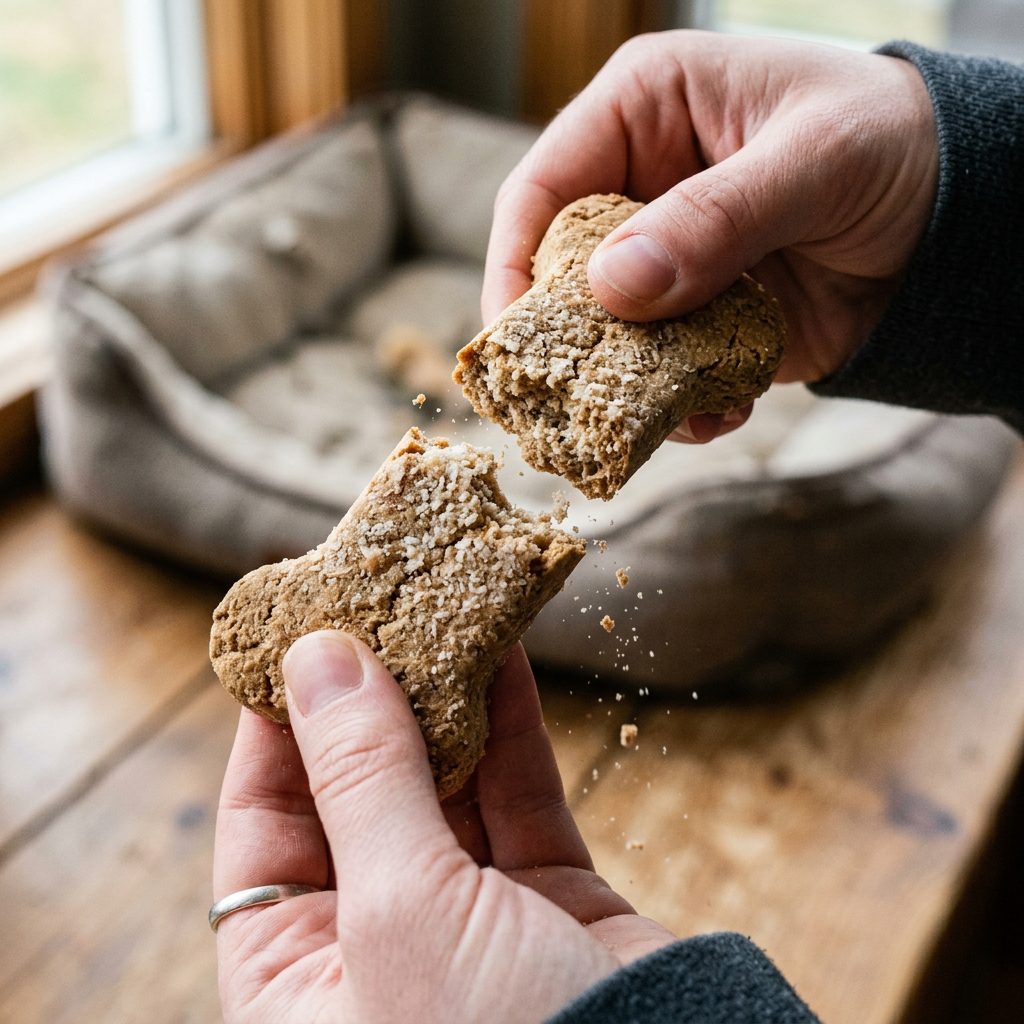
To get to that 6-month mark, you need to remove at least 90-95% of the moisture. This is why ‘biscuits’ often fail while ‘jerky’ succeeds. If your treat snaps when you break it, you’re on the right track. If it bends, it’s going to mold within a week unless it’s in the freezer.
The Fat Problem
Fat doesn’t mold, but it does go rancid. When fat is exposed to oxygen, it breaks down and creates a nasty smell and toxic compounds. This is why high-fat treats (like those made with bacon grease or fatty beef) will never last 6 months at room temperature. For long-term storage, we stick to lean proteins.
- Safe Proteins: Chicken breast, beef heart, extra-lean ground turkey, or white fish.
- Safe Carbs: Sweet potatoes, pumpkin puree (not pie filling), and chickpea flour.
The Natural Preservative Toolkit
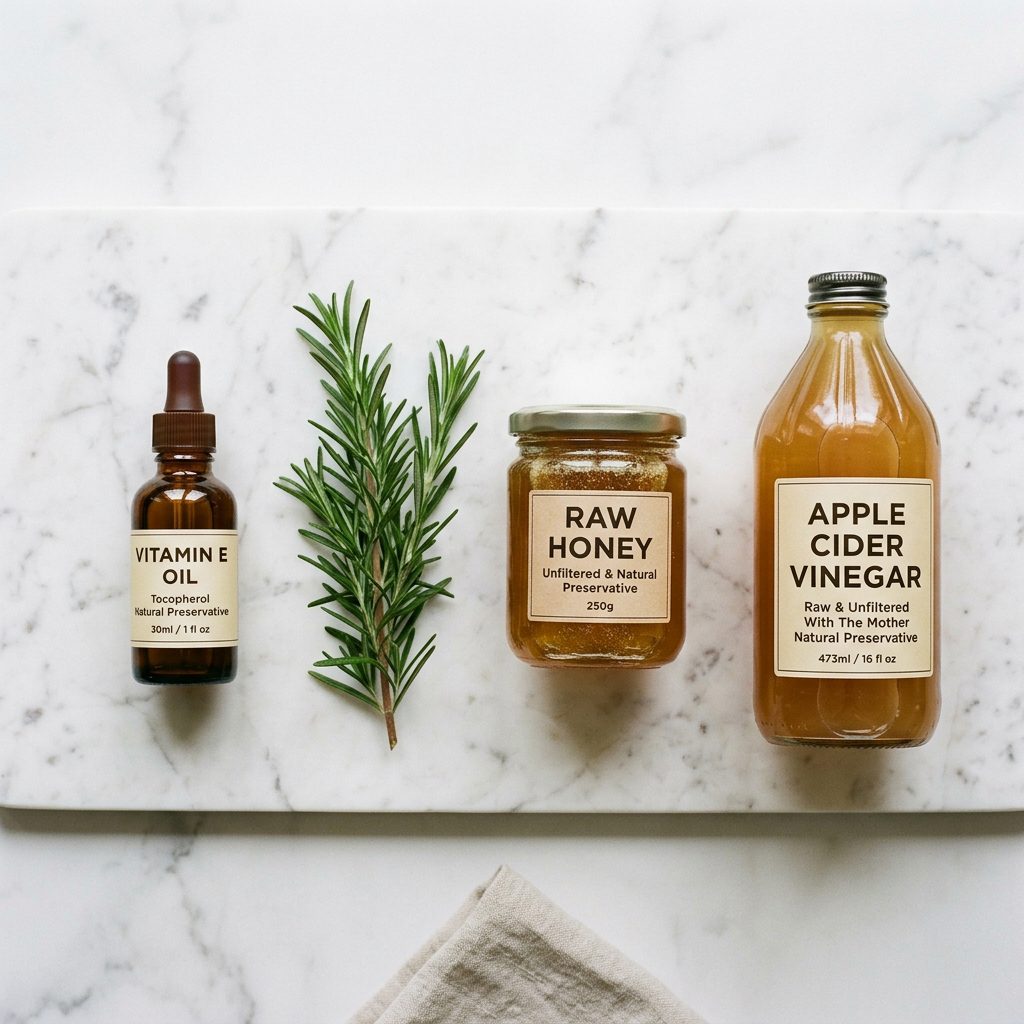
You don’t need BHA, but you do need Antioxidants. These help prevent the fats from oxidizing. Here are the three ‘Hacker Approved’ natural preservatives that actually work:
- Vitamin E (Mixed Tocopherols): This is the gold standard. You can actually buy Vitamin E oil and add a few drops to your dough or jerky marinade. It’s what the high-end ‘natural’ brands use.
- Rosemary Extract: A powerful natural antioxidant. Be careful—a little goes a long way, and you want the extract, not just the dried herb.
- Honey: While it’s a sugar, honey has low water activity and natural antimicrobial properties. It’s a great binder for biscuits that need to last.
Insider Secret: If you are making biscuits, adding a tablespoon of Apple Cider Vinegar to the dough can lower the pH, making it much harder for bacteria to colonize your treats.
The Dehydration Masterclass: Oven vs. Dehydrator
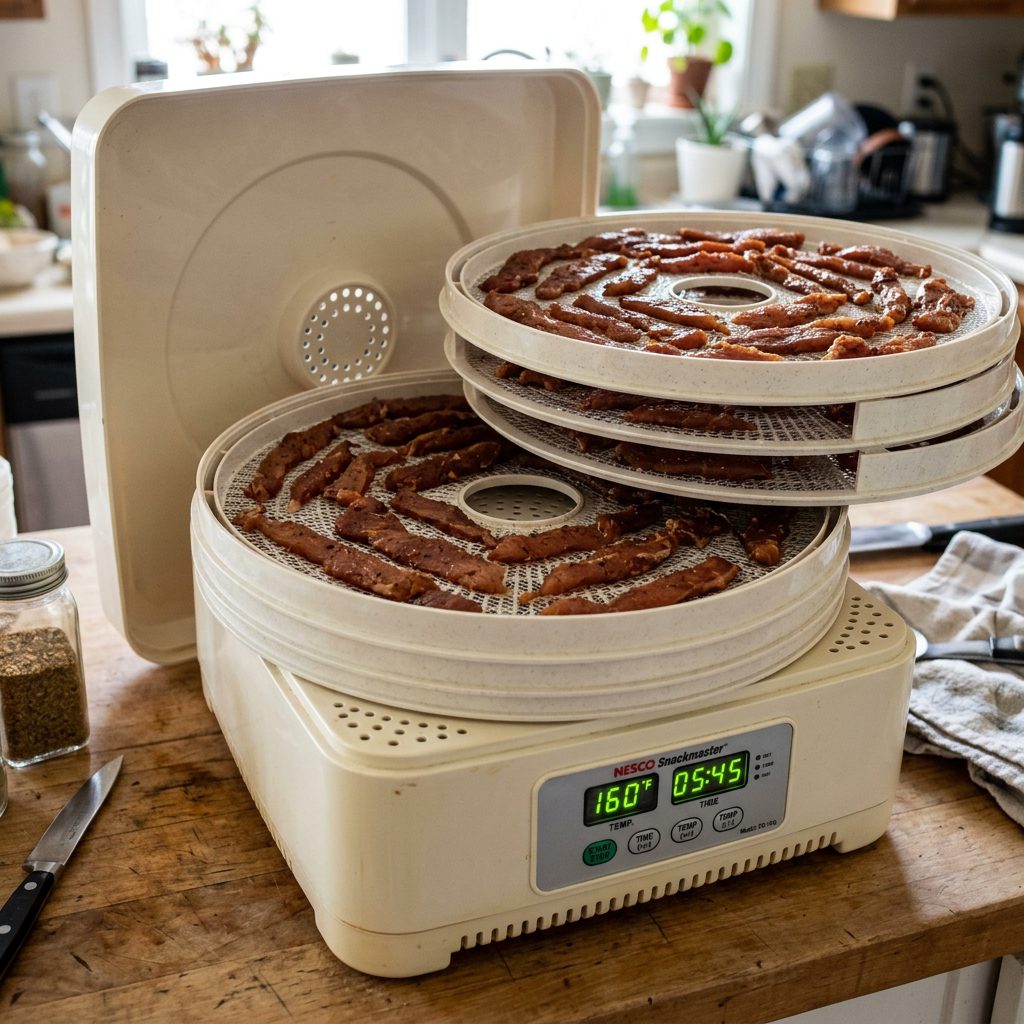
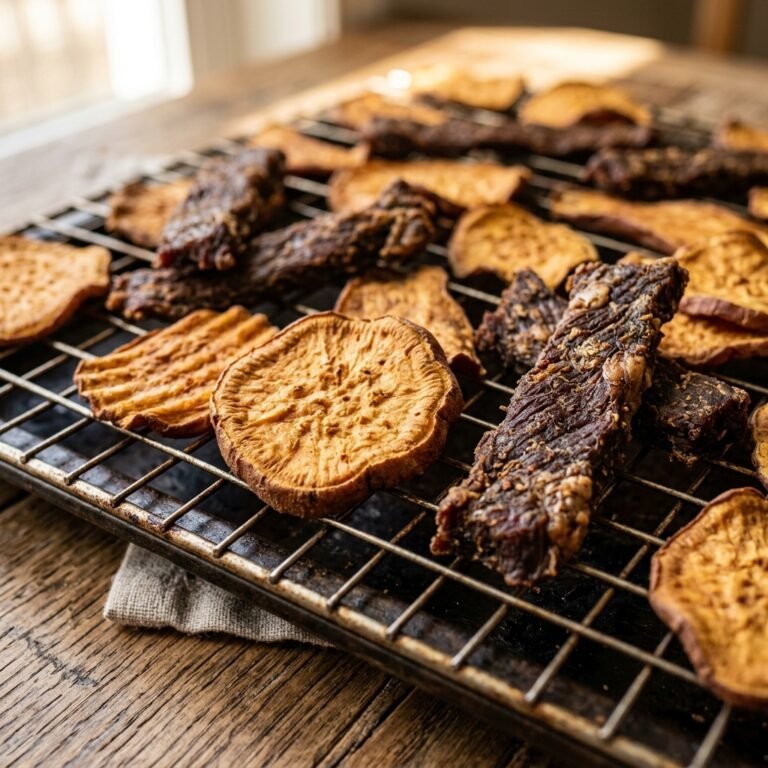
You cannot achieve a 6-month shelf life with a standard bake. Baking ‘cooks’ the food, but it often leaves a moist center. To get that ‘industrial-grade’ dryness, you need to dehydrate.
The Dehydrator Advantage
A dedicated food dehydrator uses a fan to circulate warm air constantly. This pulls moisture from the center of the treat to the surface. For meat-based treats, you must reach an internal temperature of 160°F (71°C) to kill pathogens like Salmonella. Most dehydrators allow you to set this exact temperature.
The Oven Hack
If you don’t own a dehydrator, you can use your oven, but you have to ‘hack’ it. Set your oven to its lowest setting (usually 170°F). Prop the door open slightly with a wooden spoon to let moisture escape. This creates the airflow necessary to dry rather than just bake.
| Method | Time Required | Shelf Life Expectancy | Best For |
|---|---|---|---|
| Standard Baking | 20-40 Mins | 3-5 Days | Soft Chews |
| Oven Dehydrating | 6-8 Hours | 2-3 Months | Biscuits / Sweet Potato |
| Dedicated Dehydrator | 10-14 Hours | 6+ Months | Meat Jerky / Organs |
The Safe Chef Recipe: 6-Month Beef & Parsley ‘Power Snaps’
SAFETY DISCLAIMER: I am not a veterinarian. While these methods are used for preservation, always introduce new treats slowly. For long-term storage, ensure your equipment is sterilized.
This recipe uses the leanest possible protein and natural antimicrobials to ensure it stays fresh without a fridge.
Ingredients:
- 1 lb Extra-Lean Ground Beef (95% lean or higher)
- 1/4 cup Fresh Parsley (Natural breath freshener and antimicrobial)
- 1 tsp Vitamin E Oil (Mixed Tocopherols)
- 1/2 tsp Sea Salt (Natural preservative – do not exceed this amount)
Instructions:
- Mix all ingredients in a bowl until thoroughly combined.
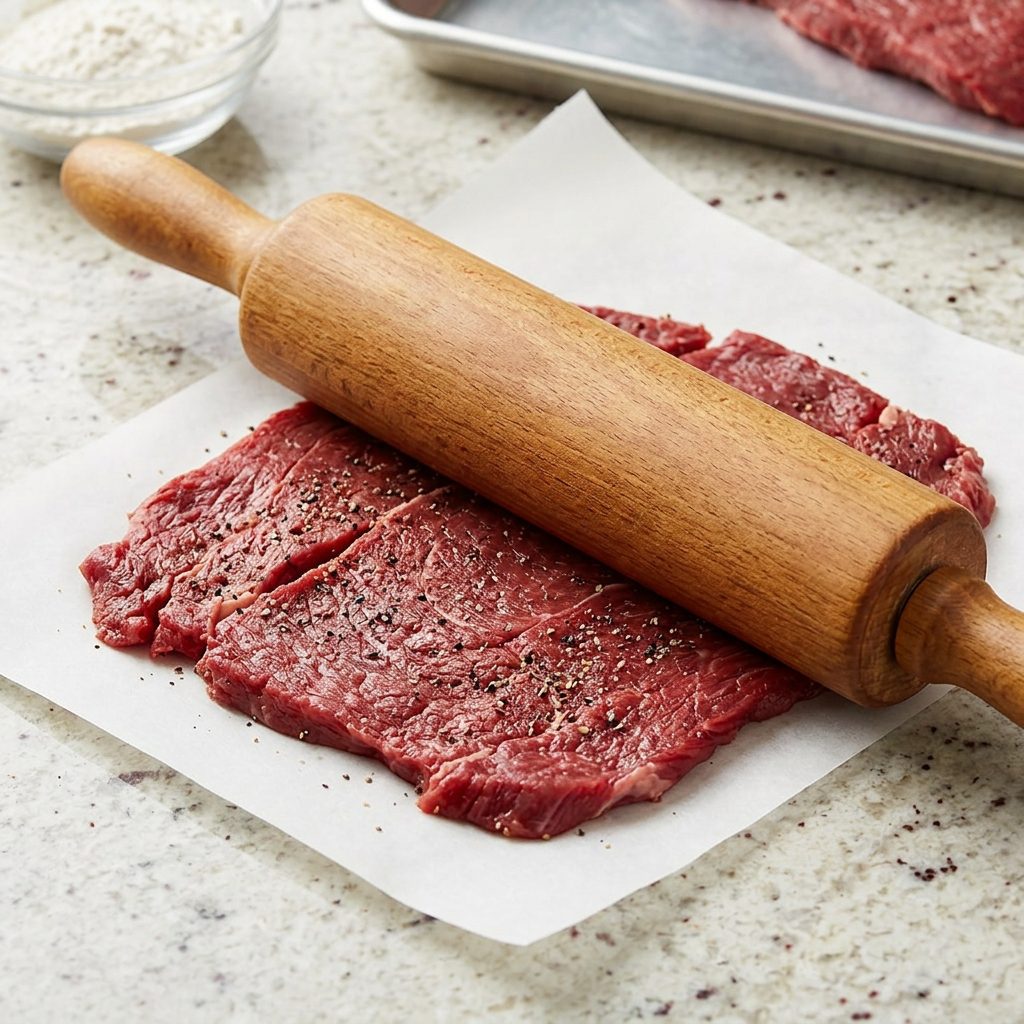
- Roll the mixture between two sheets of parchment paper until it is 1/8 inch thick.
- Remove the top sheet and score the meat into small squares with a pizza cutter.
- Dehydrate: Place in a dehydrator at 160°F for 12 hours. The treats should be ‘brittle’ and snap easily.
- The Cooling Phase: This is critical. Let the treats cool completely to room temperature before packaging. If you pack them warm, condensation will form, and mold will grow in 48 hours.
The Vault: Professional Storage Hacks
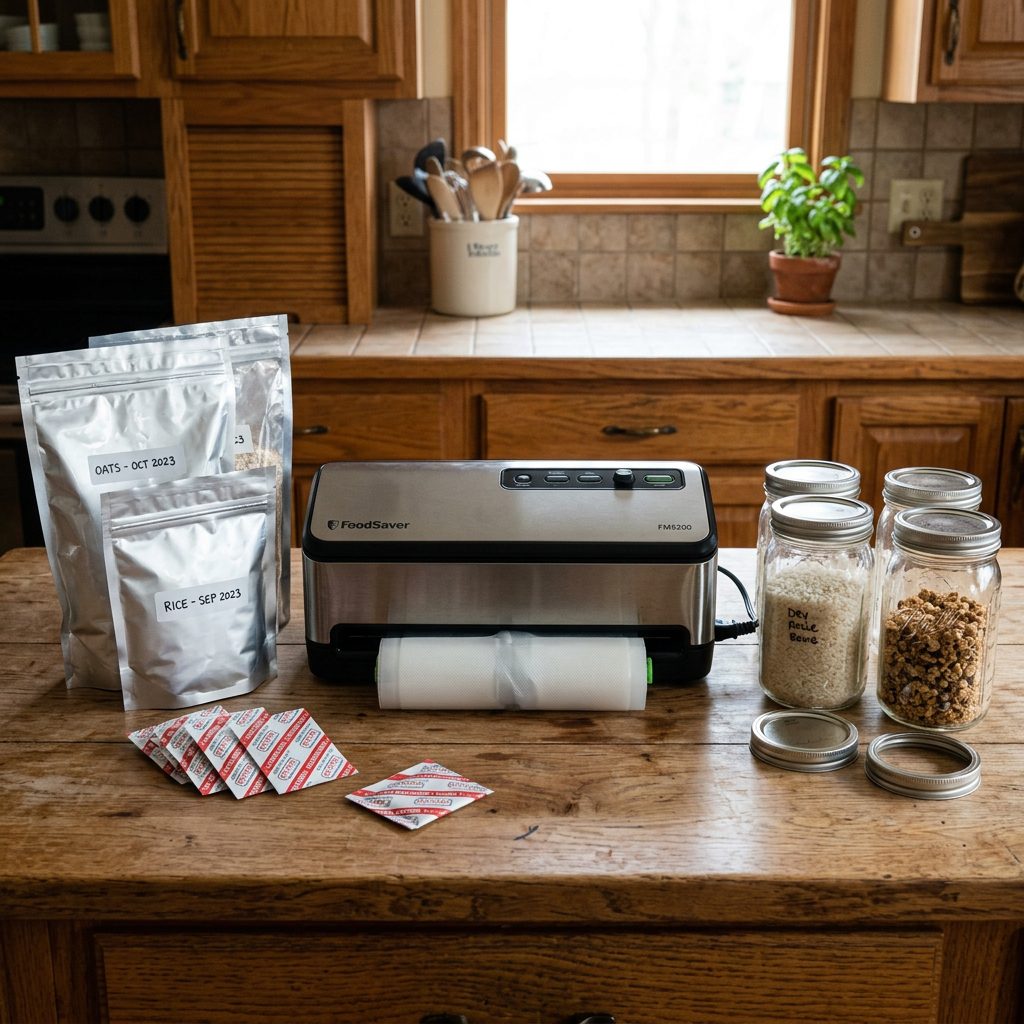
Even the driest treat will spoil if it’s sitting in a plastic baggie on your counter. Oxygen is the enemy. To get to 6 months, you need to use ‘The Vault’ method.
1. Vacuum Sealing
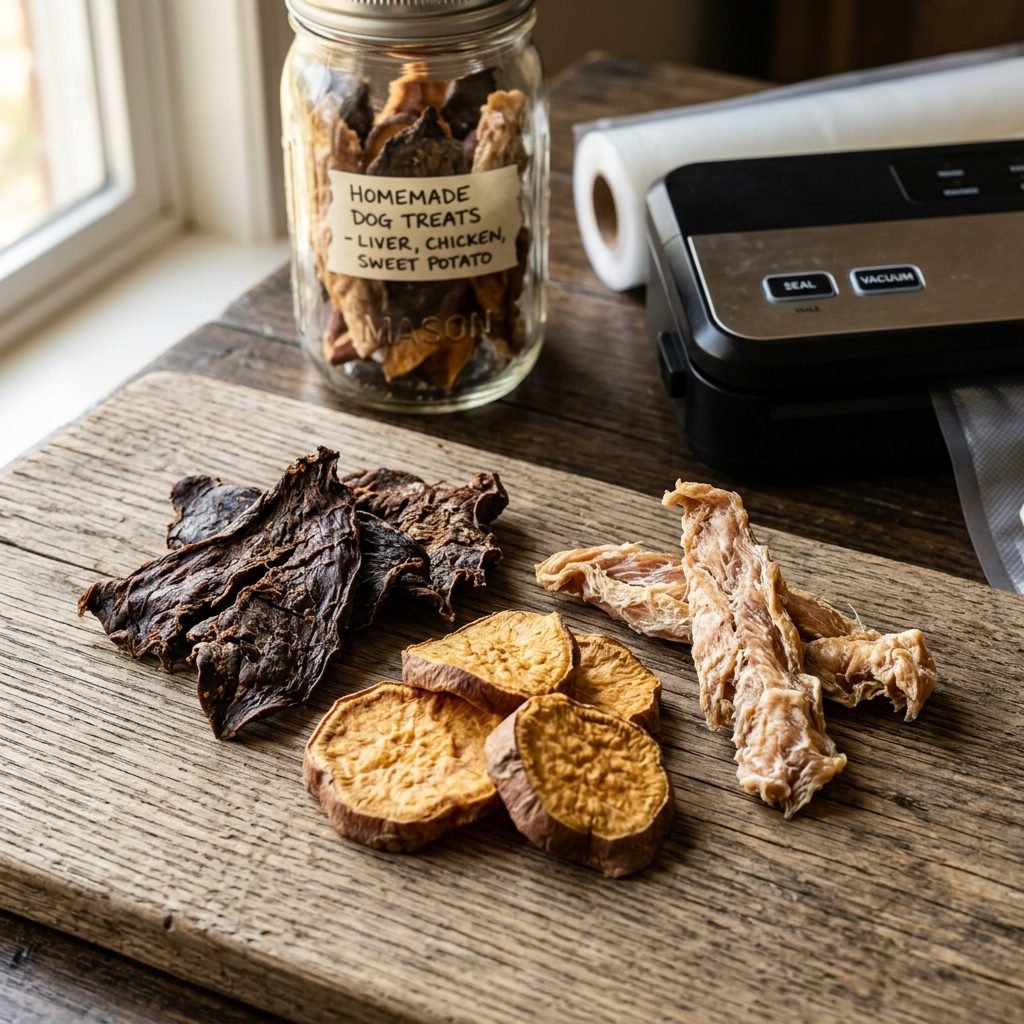
A vacuum sealer is a dog owner’s best friend. By removing the air, you remove the oxygen that allows fat to go rancid. I recommend sealing treats in small batches (one-week portions). This way, you aren’t exposing the whole 6-month supply to air every time your dog wants a snack.
2. Oxygen Absorbers
Have you ever seen those little ‘Do Not Eat’ packets in beef jerky bags? Those are Oxygen Absorbers. They contain iron powder that chemically traps any remaining O2. You can buy a pack of 50 on Amazon for ten bucks. Drop one into your glass jar or vacuum bag for an extra layer of protection.
3. Mylar Bags
If you are serious about the ‘Dog Apocalypse’ (or just want to save money by bulk cooking once a year), use Mylar bags. They are light-proof and air-proof. Store-bought treats in plastic bags actually ‘breathe’ slightly, which is why they eventually go stale. Mylar is a total blackout vault.
The Real Cost Breakdown: DIY vs. Premium Store-Bought
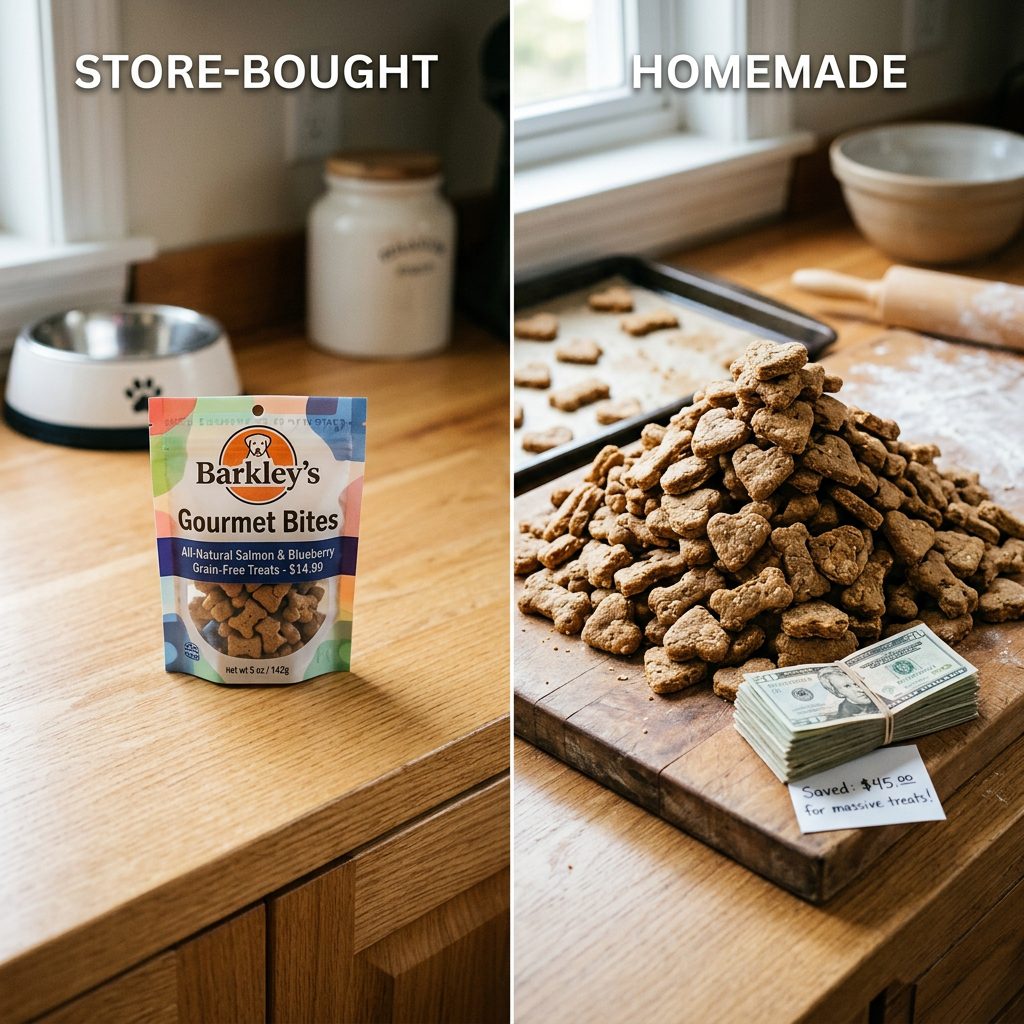
Is it worth the effort? Let’s look at the numbers. High-quality, single-ingredient jerky at a pet boutique can cost an absolute fortune. By making it yourself, you aren’t just controlling the chemicals—you’re saving hundreds of dollars a year.
| Treat Type | Store Price (per lb) | DIY Price (per lb) | Annual Savings* |
|---|---|---|---|
| Beef Jerky (Single Ingredient) | $28.00 | $6.50 | $344.00 |
| Sweet Potato Chews | $14.00 | $1.20 | $204.00 |
| Chicken Breast Strips | $22.00 | $4.00 | $288.00 |
*Based on feeding 2oz of treats per day for a medium-sized dog.
The Verdict: You are looking at a 75-80% cost reduction by doing it yourself. That’s money you can put toward better quality kibble or that fancy orthopedic bed your dog definitely deserves.
Conclusion
You Are Now a Canine Nutrition Hacker
Making treats that last 6 months isn’t magic—it’s just disciplined moisture management. By choosing lean meats, utilizing natural antioxidants like Vitamin E, and mastering the dehydration process, you’ve officially bypassed the ‘Big Pet Food’ chemical machine. Your dog gets better nutrition, and your wallet gets a break.
Remember the golden rules: Snap-dry, Cool completely, and Vacuum seal. If you follow those three steps, you’ll never have to toss a moldy bag of treats again. Now get in that kitchen and start hacking!