Stop Overpaying! How to Make Crunchy Dehydrated Duck Feet at Home for Pennies!
The Boutique Treat Scam Ends Today
Let’s get real for a second: have you looked at the price of ‘artisanal’ or ‘all-natural’ duck feet at the local pet boutique lately? I saw a bag last week where a single, solitary duck foot was priced at nearly $2.50. For a byproduct! As the Canine Nutrition Hacker, that kind of markup makes my blood boil. We are talking about a part of the bird that is often discarded in the human food chain, yet because it’s ‘natural’ and ‘grain-free,’ big-box retailers think they can charge us premium steak prices. I’m here to tell you that’s highway robbery, and your dog’s joint health shouldn’t be a luxury item.
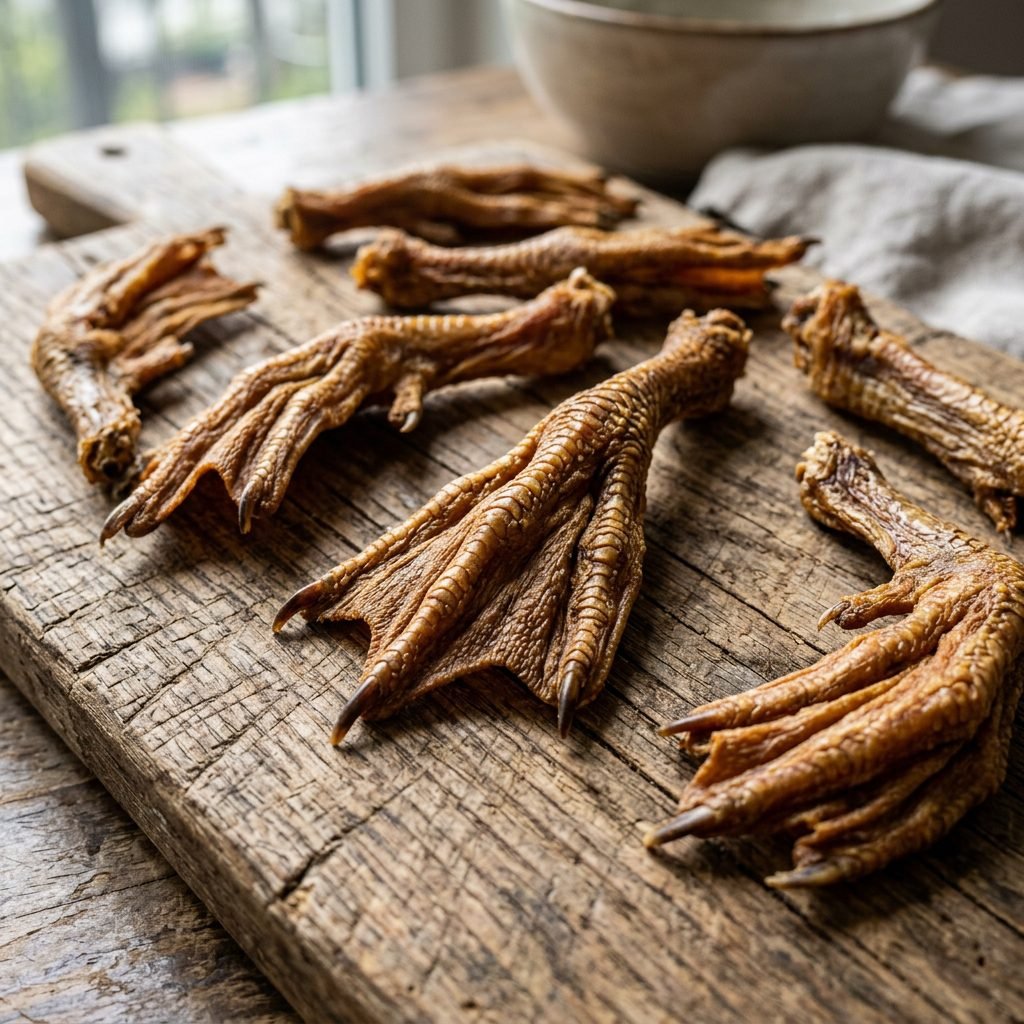
Duck feet are nutritional powerhouses. They are packed with natural glucosamine and chondroitin, which are the building blocks for healthy cartilage and joint fluid. If you have a senior dog or a breed prone to hip dysplasia, these aren’t just treats; they are preventative medicine. But you don’t need a fancy label to get those benefits. Today, I’m pulling back the curtain on how you can source these for pennies and dehydrate them in your own kitchen. No fillers, no preservatives, and absolutely no overpaying. Grab your apron, because we’re about to save you a fortune while making your dog the happiest pup on the block.
The Safety First Protocol: Read This Before You Start
Disclaimer and Safe Handling
Before we dive into the ‘how-to,’ we need to talk shop about safety. I am not a veterinarian or a certified veterinary nutritionist. I am a researcher and a dog owner who obsesses over ingredient labels. While duck feet are generally safe, every dog is different. Always introduce new treats slowly to avoid digestive upset. Furthermore, treats should never exceed 10% of your dog’s daily caloric intake.
The ‘Cooked Bone’ Warning
There is a massive difference between dehydrating and cooking/baking. You must never feed your dog cooked bird bones. High-heat cooking (like roasting or frying) changes the molecular structure of the bone, making it brittle and prone to splintering, which can cause internal perforations. Dehydration, however, uses low heat over a long period to remove moisture. This leaves the bone in a state where it crumbles or crushes when chewed, rather than snapping into shards. This guide focuses strictly on low-temperature dehydration for maximum safety.
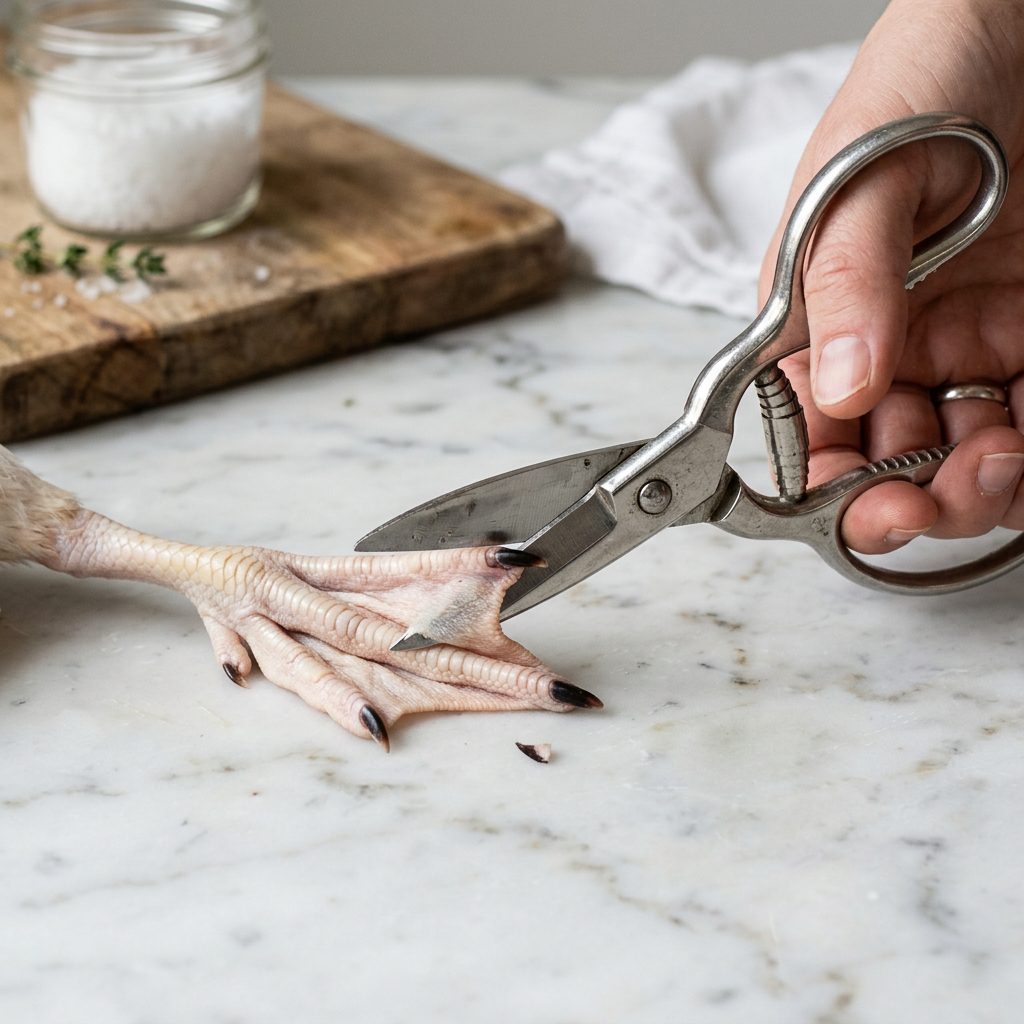
Insider Secret: If you are worried about the ‘claws’ or nails on the duck feet, you can easily snip them off with heavy-duty kitchen shears before dehydrating. Most dogs handle them fine, but for ‘gulpers’ who don’t chew thoroughly, removing the nails adds an extra layer of safety.
The Sourcing Secret: Where the Pros Buy

Stop Shopping at Pet Stores
If you buy your raw materials from a pet store, you’ve already lost the game. To make this cost-effective, you need to go where the chefs go. The absolute best place to find raw duck feet for pennies is your local Asian Supermarket (think H-Mart, 99 Ranch, or local independent grocers). In these markets, duck feet are a culinary staple, not a ‘specialty pet item,’ and the price reflects that.
Where Else to Look
- Local Poultry Farms: If you live near a farm that raises ducks for meat or eggs, they often have ‘waste’ parts available for next to nothing.
- Restaurant Wholesalers: Some wholesalers will sell to the public if you buy in bulk (20-40 lbs). If you have a chest freezer, this is the ultimate money-saving move.
- Custom Butchers: Ask your butcher to save poultry feet for you. They might even give them to you for free if you’re a regular customer.
When sourcing, look for feet that are creamy white or pale yellow. Avoid any that have dark ‘ammonia burns’ or look excessively grey, as this indicates they aren’t fresh. Since we are dehydrating them, freshness is paramount to prevent bacterial growth during the low-heat process.
The Math: Store-Bought vs. DIY Hacker Style
The Financial Breakdown
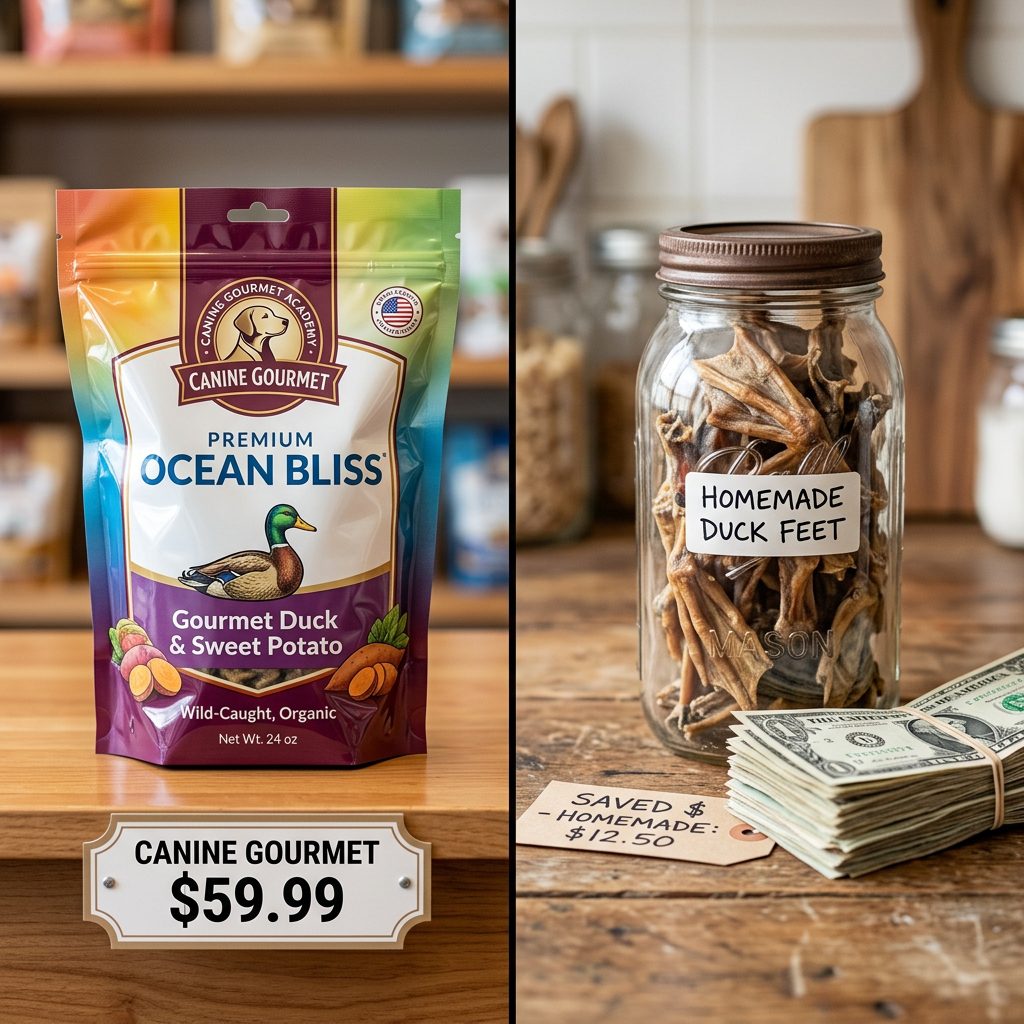
Let’s look at the numbers because the math doesn’t lie. When you buy a bag of 10 dehydrated duck feet at a premium pet store, you are paying for the packaging, the marketing, the shipping, and the retail markup. When you make them at home, you are only paying for the raw material and a tiny bit of electricity.
| Metric | Boutique Pet Store | The Hacker DIY Method |
|---|---|---|
| Average Price | $18.00 per 10-pack | $3.50 per 2lb bag (approx. 24 feet) |
| Cost Per Foot | $1.80 | $0.14 |
| Annual Savings* | $657.00 | $51.10 |
| Quality Control | Unknown preservatives/sourcing | Human-grade, 100% transparent |
*Based on feeding 1 foot per day.
By switching to the DIY method, you are saving over $600 a year. That is money you could spend on higher-quality base kibble, vet visits, or a really nice GPS collar. This is why we hack the system!
The Master Recipe: From Raw to Crunchy
The Step-by-Step Dehydration Process
Making these is incredibly simple, but it requires patience. You cannot rush the dehydration process. If you try to speed it up by raising the temperature, you risk cooking the bone (danger!) or ‘case hardening,’ where the outside dries but the inside stays moist and molds.
Ingredients & Tools
- 2-5 lbs of Raw Duck Feet
- A Dehydrator (or an oven with a ‘Dehydrate’ setting)
- White Vinegar (for cleaning)
- Kitchen Shears
Instructions
- The Prep: Soak the raw feet in a sink filled with cold water and a splash of white vinegar for 10 minutes. This helps remove any surface bacteria or slime. Rinse thoroughly.
- The Manicure: Use your kitchen shears to snip off the claws. This is optional but recommended for small dogs or aggressive chewers.
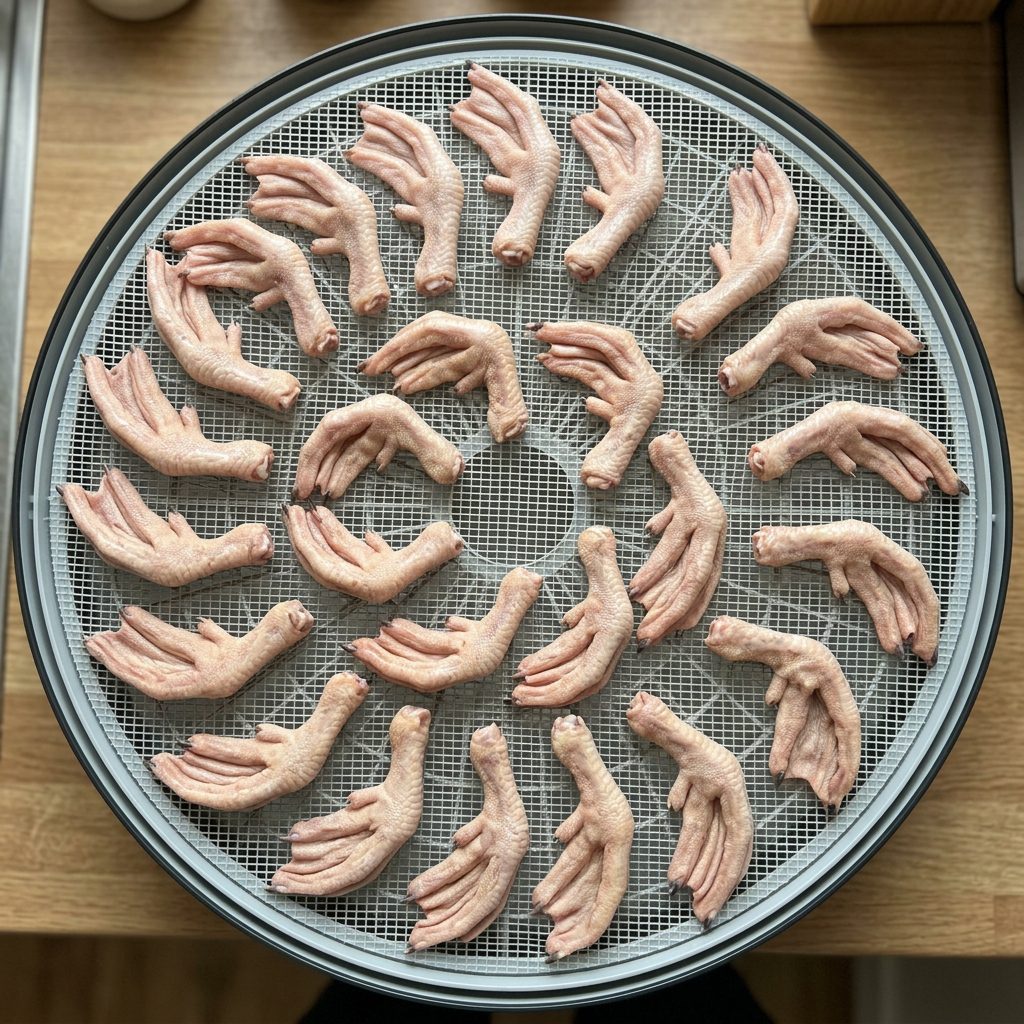
- The Arrangement: Lay the feet out on your dehydrator trays. Ensure they are not touching. Airflow is the secret to a shelf-stable treat.
- The Dehydration: Set your dehydrator to 160°F (71°C). This temperature is high enough to kill pathogens like Salmonella but low enough to keep the bones safe.
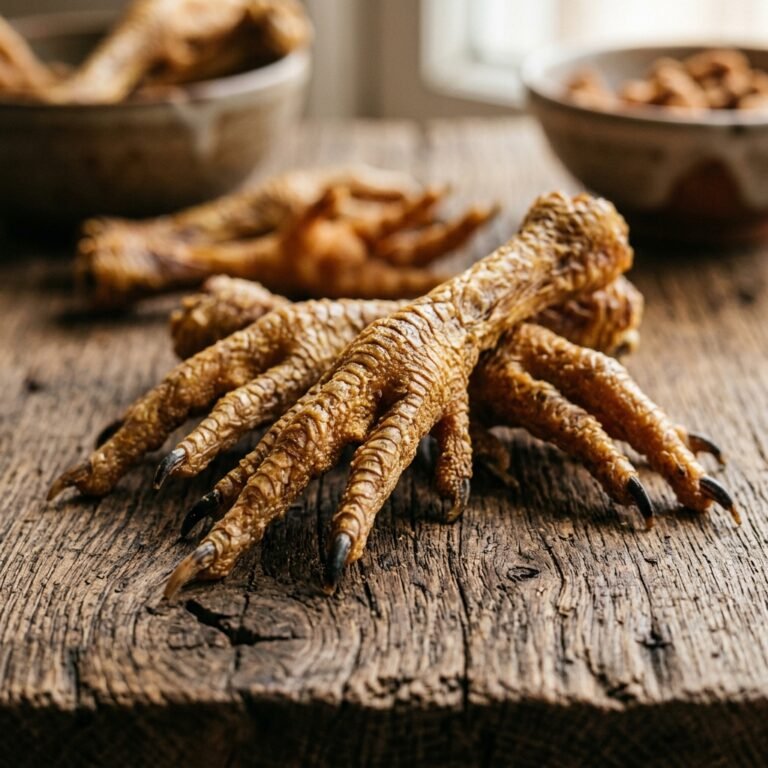
- The Wait: Dehydrate for 24 to 36 hours. The feet are done when they feel completely hard, look ‘leathery’ or translucent, and the joints don’t have any ‘give’ when you try to bend them.
Hacker Tip: If you don’t have a dehydrator, use your oven at its lowest possible setting (usually 170°F) with the door propped open slightly with a wooden spoon to let moisture escape. Note: This takes less time than a dehydrator but requires constant monitoring!
Storage and Preservation Hacks
How to Keep Them Fresh for Months
Because these treats contain natural fats and zero chemical preservatives, they can go rancid or grow mold if stored incorrectly. Moisture is your enemy here. If you’ve spent 30 hours dehydrating them, don’t ruin them by tossing them in a plastic bag while they’re still warm.
The Cooling Phase
Let the duck feet cool completely on the trays before moving them. If you put warm treats in a jar, they will create condensation, and condensation equals mold. I usually let mine sit for at least 2 hours at room temperature.
Storage Tiers
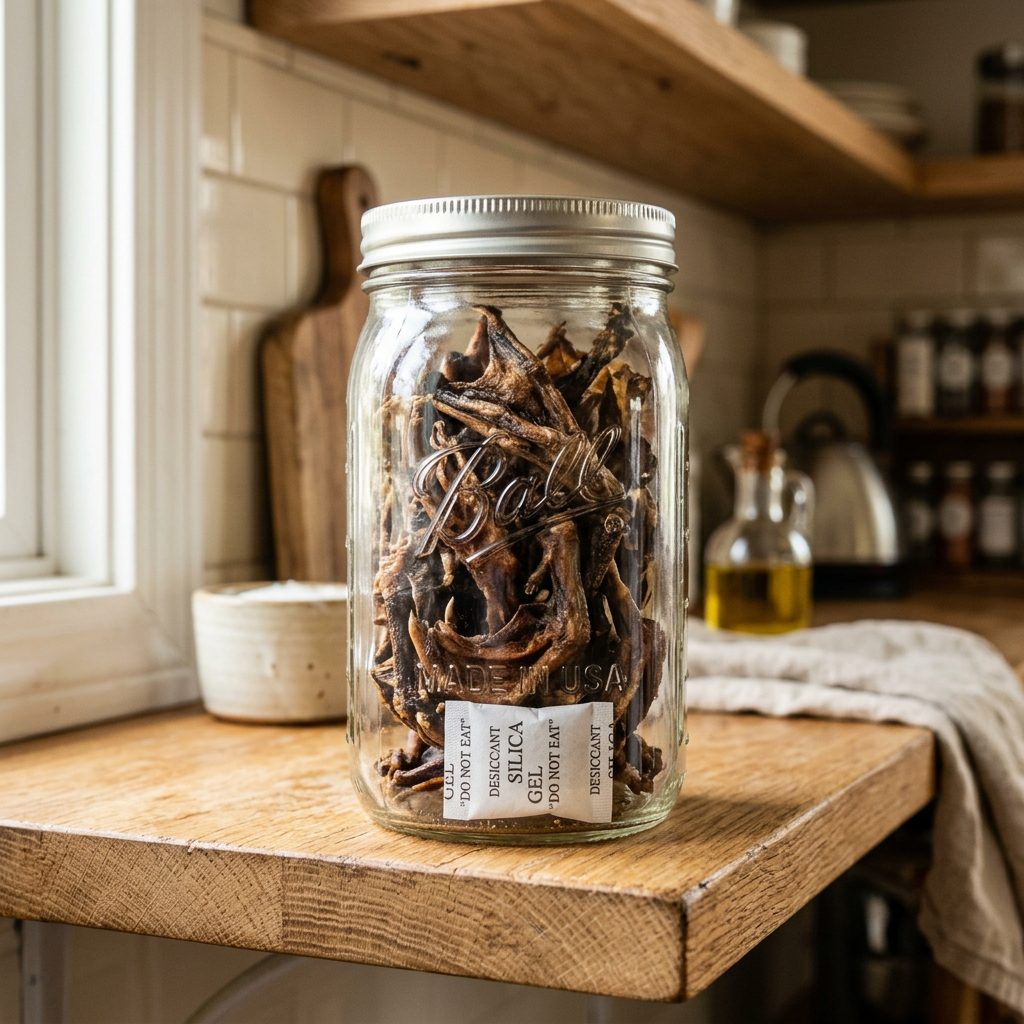
- Countertop (Short Term): Store in an airtight glass jar for up to 2 weeks.
- Refrigerator (Medium Term): Keep in a sealed container for up to 4 weeks.
- Freezer (Long Term): This is my favorite method. They will stay perfect for 6 months in the freezer. Since they have no water content, they don’t actually ‘freeze’ solid, so you can give them to your dog straight from the freezer for a cold, crunchy snack.
Hacker Tip: Buy some food-grade silica gel desiccant packets (the kind you find in new shoes or beef jerky bags) and toss one into your storage jar. They absorb any stray moisture and keep the treats ‘snap-crunchy’ for much longer.
Conclusion
You’re Now a Member of the Nutrition Underground
Congratulations! You just took a massive step toward becoming a more self-sufficient, savvy dog owner. By making your own dehydrated duck feet, you aren’t just saving money—you’re ensuring that your dog is getting a single-ingredient, high-protein, joint-supporting treat without any of the ‘mystery meat’ fillers found in commercial snacks. You know exactly where the feet came from, how they were cleaned, and how they were processed. That peace of mind is worth just as much as the $600+ you’re saving every year.
Remember, the ‘pet industry’ wants you to believe that providing high-quality nutrition is complicated and expensive. It’s not. It just takes a little bit of ‘hacker’ spirit and a willingness to look past the shiny packaging. Your dog doesn’t care about the brand on the bag; they care about the crunch, the flavor, and the love you put into their health. Now go out there, find those duck feet, and start dehydrating! Your dog (and your wallet) will thank you.