WFH Nightmare? How to Stop Your Puppy Squeaking Toys During Zoom Calls Instantly
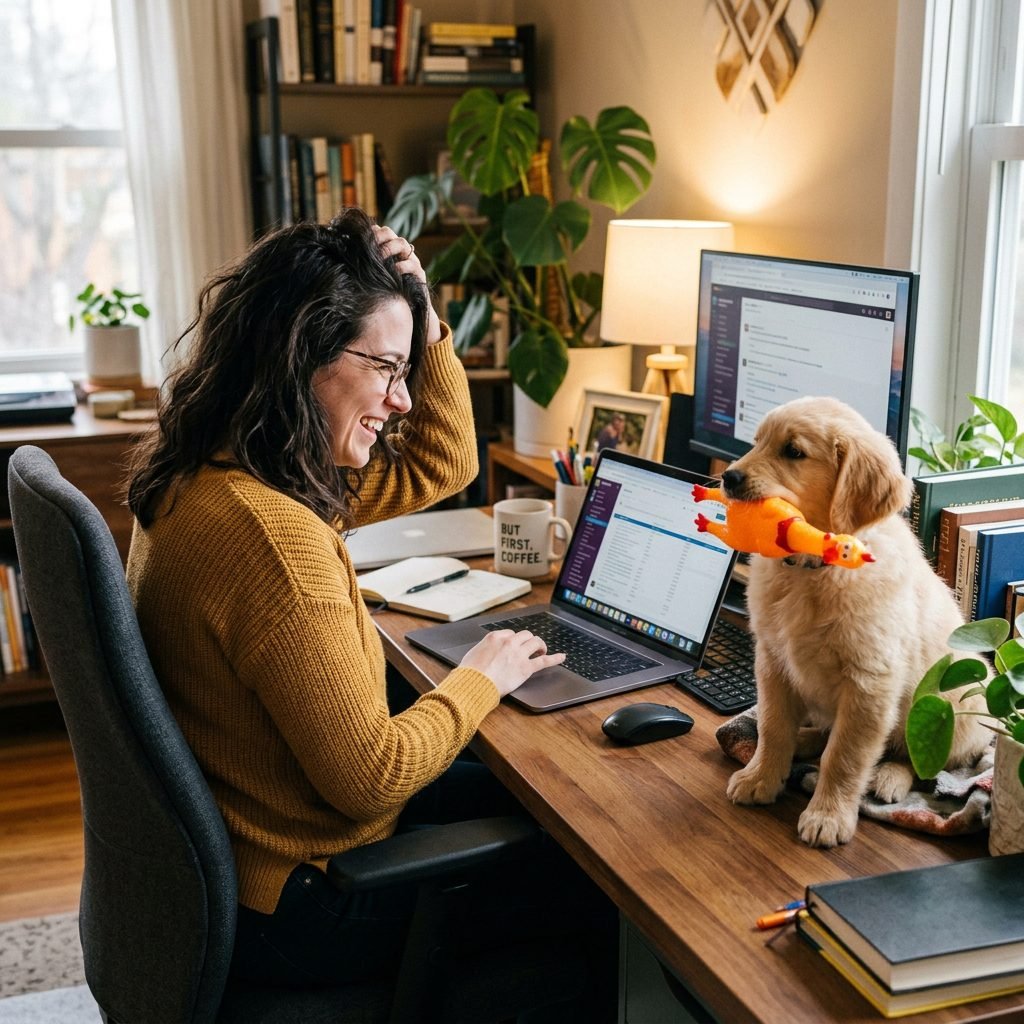
If you are a savvy dog owner navigating the remote work lifestyle, you already know the scenario all too well. You have just unmuted yourself on a crucial Zoom call with your boss, a high-stakes client, or your entire department. You take a deep breath to deliver your brilliant insight, and right on cue, it happens: SQUEAK! SQUEAK! SQUEAK! Your adorable, innocent-looking puppy has decided this is the exact moment their favorite plush squirrel needs to be aggressively chomped. It is the ultimate work-from-home nightmare.
As dog lovers, we want our furry best friends to be happy and enriched. We buy them the best toys, provide top-tier nutrition, and ensure they get plenty of exercise. But balancing a professional career with a playful puppy in the same physical space requires a strategic approach to canine management. You cannot simply tell a dog that you are on a conference call. To them, you are home, which means it is playtime.
Fortunately, you do not have to choose between your career and your puppy’s happiness, nor do you have to banish them to another room where they might whine or scratch at the door. The secret lies in understanding your dog’s natural drives, utilizing the right tools, and implementing a foolproof training protocol. In this comprehensive guide, we are going to walk you through a step-by-step process to instantly stop the squeaking during your meetings and teach your pup how to settle quietly while you conquer your workday.
Expert Tip: Your dog does not squeak toys during your meetings to spite you. They often do it because your sudden talking (to your computer) signals to them that you are active, engaged, and potentially ready to interact!
Let us dive into the psychology of the squeak, the best quiet toy alternatives on the market, and the exact steps you need to take to reclaim the peace and quiet of your home office.
Understanding the Squeak: Why Puppies Love Noisy Toys
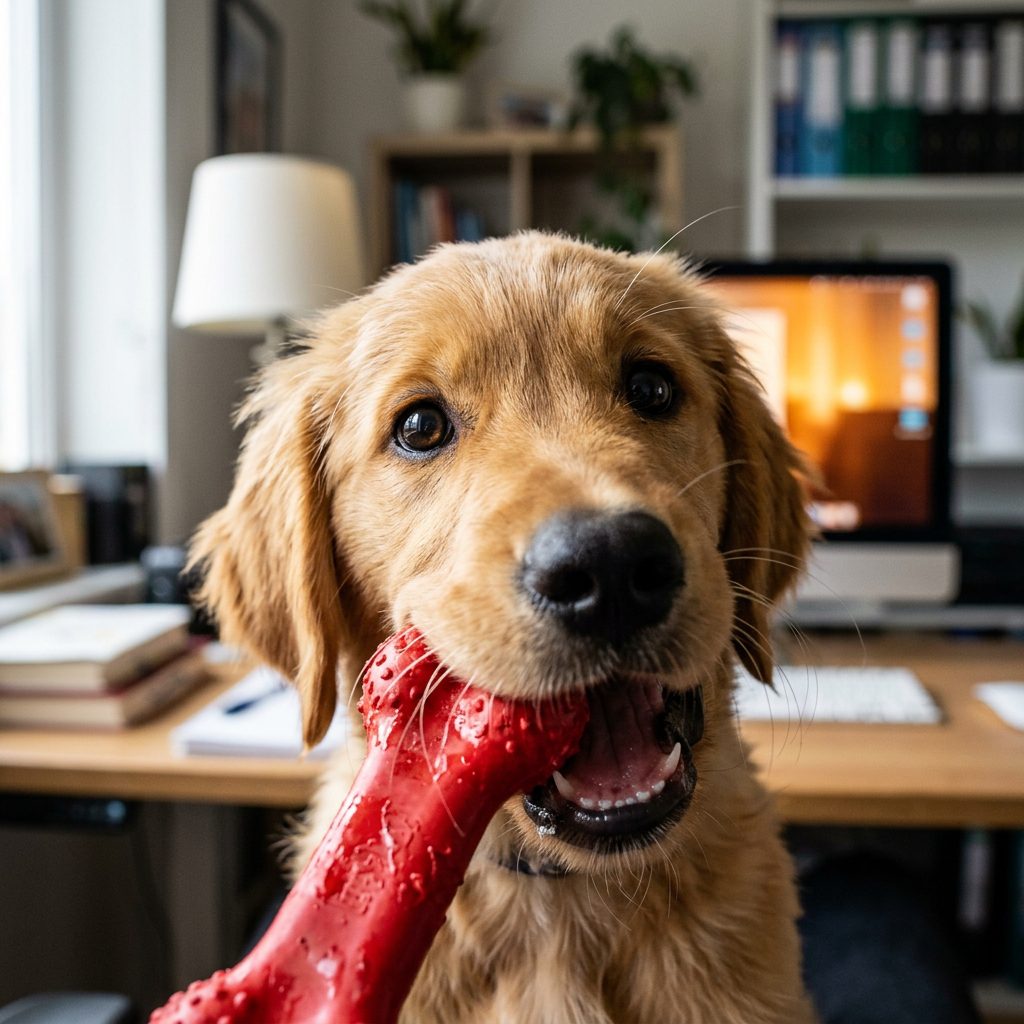
Before we can effectively stop the behavior, we have to understand why puppies are so obsessed with squeaky toys in the first place. It is not just about making a racket; it is deeply rooted in their canine DNA. Dogs are descendants of wolves, and despite centuries of domestication, they still possess a natural prey drive. When a puppy bites down on a toy and it emits a high-pitched squeak, it mimics the sound of a small, injured animal. This triggers a massive release of dopamine in your dog’s brain.
Every time the toy squeaks, your puppy’s brain says, Yes! You caught it! Good job! It is a self-rewarding loop. They bite, it squeaks, they feel good, so they bite it again. This is why dogs can sit in the corner and squeak a toy rhythmically for twenty minutes straight. It is highly stimulating and incredibly satisfying for them.
The Zoom Call Trigger
So, why does it always seem to happen the second you log into a virtual meeting? Dogs are masters of observation. When you are quietly typing on your keyboard, your energy is low and focused. Your puppy likely naps or chews a bone quietly. But when a Zoom call starts, your energy shifts. You sit up straighter, you project your voice, and you become animated. To your dog, this sudden burst of vocalization and energy means the pack leader is active! They want to join in on the fun, so they grab their highest-value, most stimulating toy to celebrate and try to engage you.
Understanding this is crucial because it shifts our perspective from frustration to empathy. Your puppy is not being bad; they are just responding to their instincts and your energy changes. Our goal is not to suppress their joy, but to redirect that instinctual energy into quiet, equally satisfying outlets during your working hours.
Tools of the Trade: WFH-Friendly Toy Alternatives
The first and most immediate step to stopping the squeak is environmental management. If there are no squeaky toys available during your work hours, your dog cannot squeak them. It really is that simple! However, you cannot just take away their fun without providing an alternative. A bored puppy is a destructive puppy, and if they do not have an approved toy to chew on, they might decide your ergonomic office chair looks like a great snack.
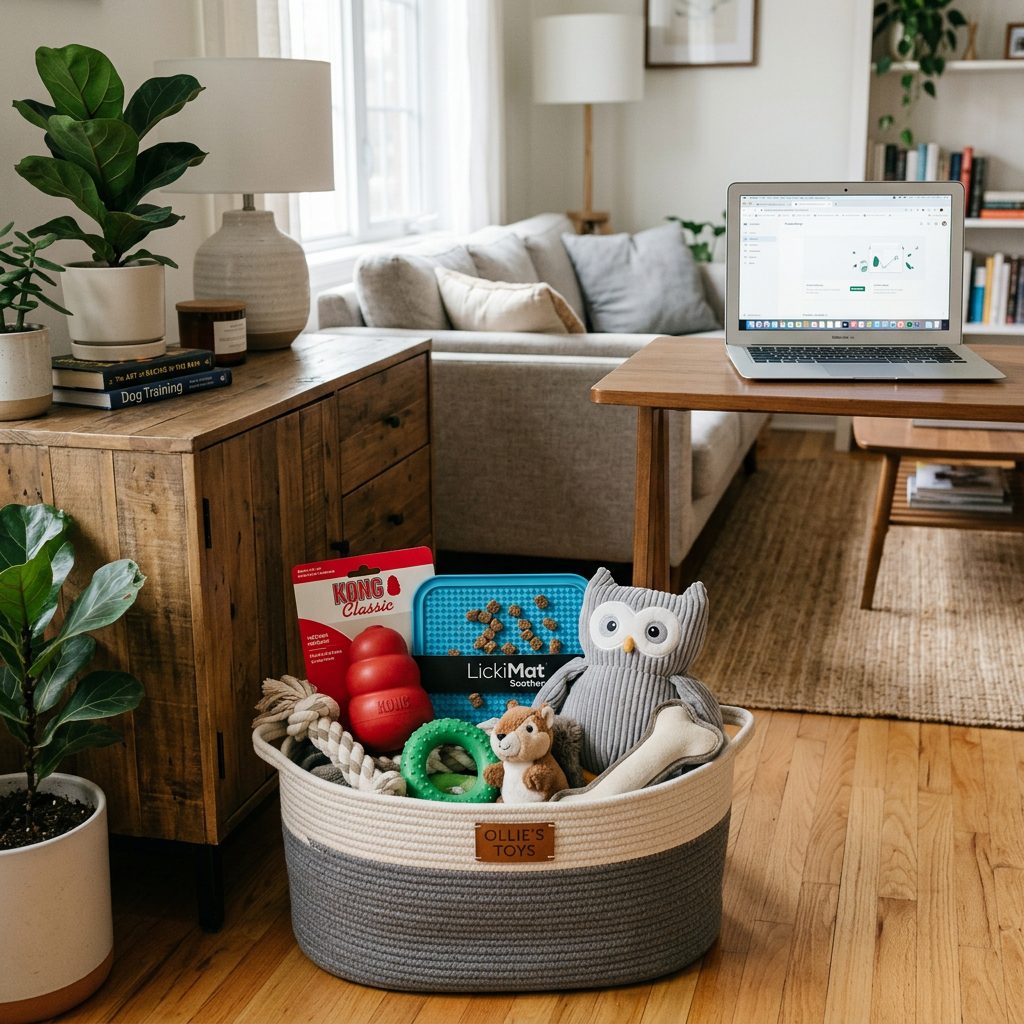
As a savvy dog owner, you need to curate a specific WFH Toy Box. These toys should only be available while you are working, making them high-value and exciting. Below is a breakdown of the best silent alternatives to traditional noisy toys.
| Traditional Noisy Toy | Quiet WFH Alternative | Why It Works for Your Dog |
|---|---|---|
| Standard Squeaky Plush | Ultrasonic Silent Squeaker Toys | These toys have a squeaker tuned to an ultrasonic frequency. Your dog hears the satisfying squeak, but human ears (and your laptop microphone) hear nothing but air. |
| Hard Plastic Chew Bones (clattering on hardwood) | Durable Rubber Chew Toys (e.g., Kongs) | Rubber absorbs the impact when dropped, eliminating the loud clattering sounds. Stuffing them with frozen treats adds hours of silent licking and chewing. |
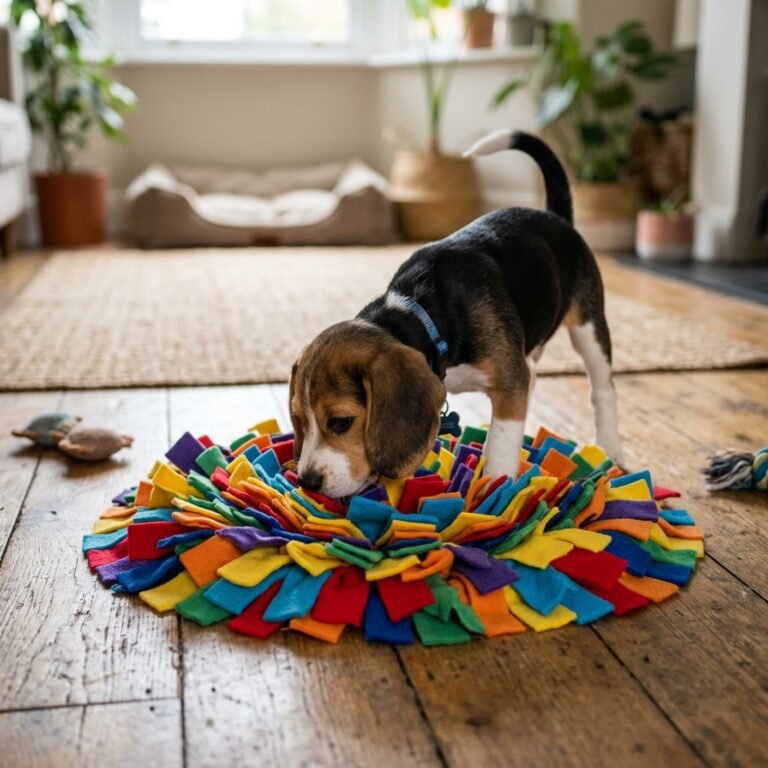
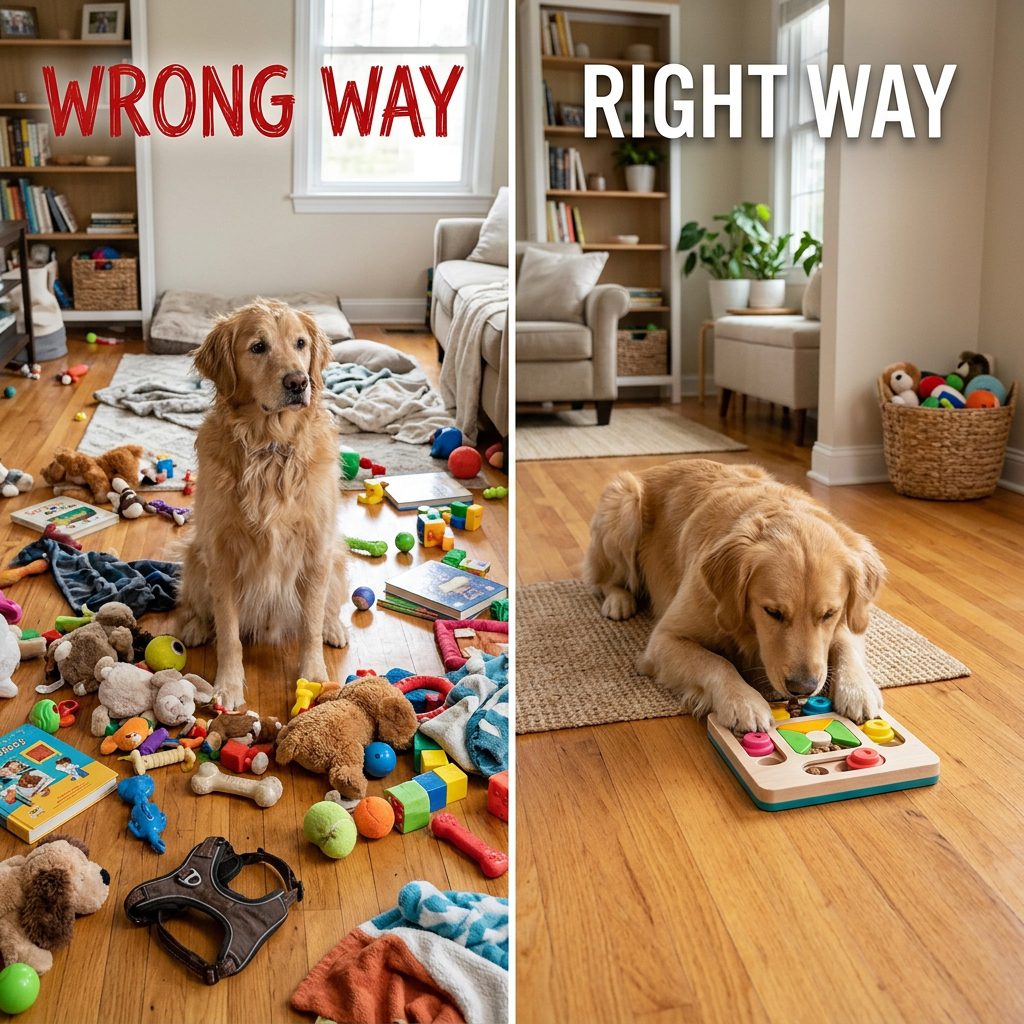
| Crinkle Toys | Snuffle Mats | Instead of the loud crinkling noise that mimics rustling leaves, a snuffle mat provides the same foraging stimulation quietly as they sniff out hidden kibble. |
| Squeaky Tennis Balls | Lick Mats with Suction Cups | Licking is naturally soothing and lowers a dog’s heart rate. A lick mat smeared with peanut butter and frozen will keep them quietly anchored to the floor. |
Creating the Ultimate Quiet Kong
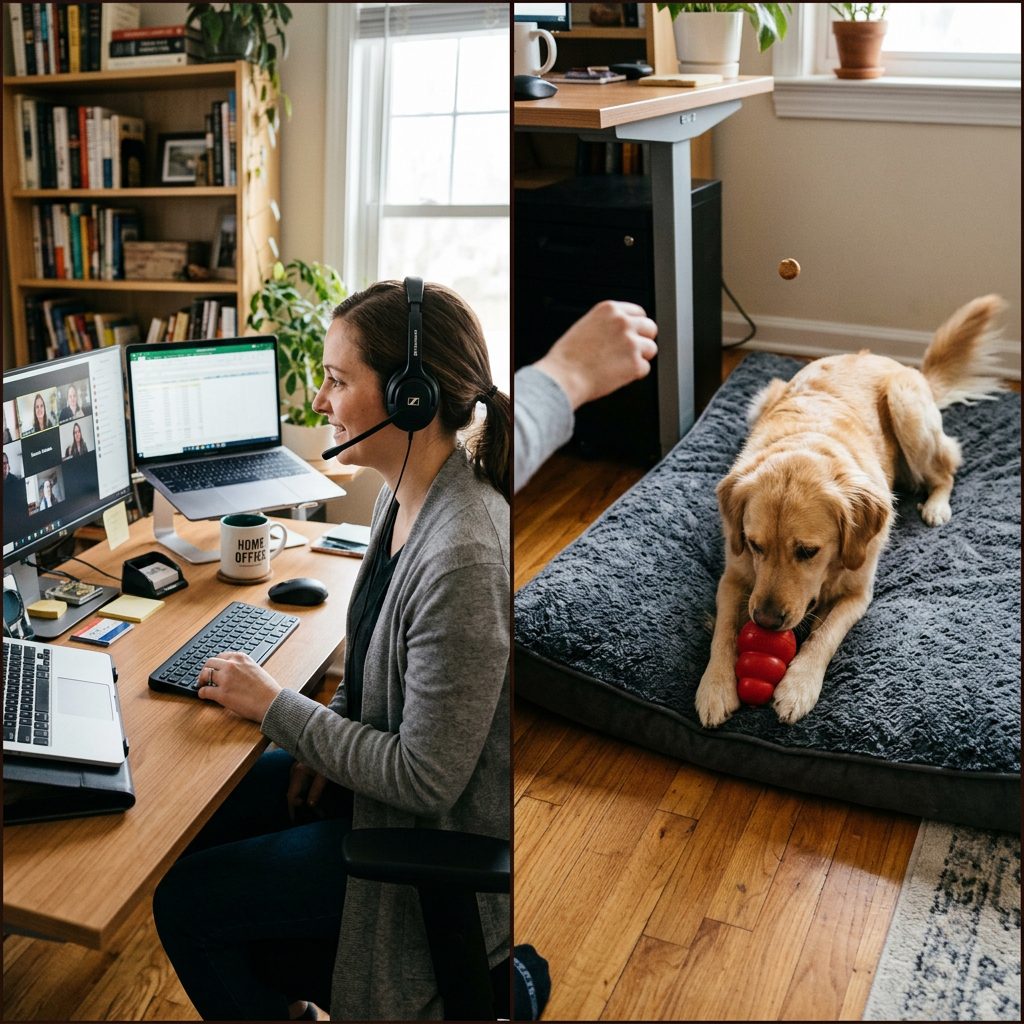
One of the best tools in your arsenal is a stuffed, frozen rubber toy. The act of licking and gnawing is naturally exhausting for dogs. To create a WFH lifesaver, layer the inside of a Kong with dry kibble, plain yogurt, and a bit of dog-safe peanut butter. Freeze it overnight. When your meeting starts, hand this to your dog. They will be quietly engaged for 30 to 45 minutes, giving you plenty of time to nail your presentation.
The Step-by-Step Guide: Silencing the Zoom Chaos
Now that we have the right tools, it is time to implement a bulletproof routine. Consistency is the key to all dog training. If you follow these steps every time you have a meeting, your puppy will soon learn that Zoom calls equal quiet, focused chew time.
Step 1: The Pre-Meeting Burn
A tired dog is a quiet dog. If you know you have an important hour-long meeting at 10:00 AM, do not expect your puppy to sleep through it if they have been cooped up all morning. At 9:30 AM, take them for a brisk 15-minute walk, play a quick game of tug, or do a short 5-minute training session to tire out their brain. Burning off that top layer of physical and mental energy makes it much easier for them to settle down.
Step 2: The Toy Rotation Strategy
Before you sit down at your desk, do a quick sweep of the room. Pick up every single squeaky toy, crinkle toy, or hard bone that makes noise. Put them in a closet or a bin out of the dog’s reach. Next, bring out your designated WFH Toy Box. Offer your dog one of the quiet alternatives, like a frozen lick mat or a silent squeaker. By rotating toys, you keep the quiet toys novel and exciting.
Step 3: The Mute-Button Swap (The Trade Game)
What happens if you missed a squeaky toy under the sofa, and your dog finds it mid-meeting? Do not panic, and do not yell. Yelling just looks like you are barking along with them! Instead, utilize the mute button on your call and initiate The Trade. Keep a jar of high-value, silent treats (like soft training treats or plain boiled chicken) on your desk. When they squeak the toy, calmly offer a treat right to their nose. When they drop the noisy toy to eat the treat, quietly scoop up the toy and replace it with a silent chew toy. Unmute and carry on.
Step 4: Rewarding the Quiet
This is the step most dog owners forget. We are so relieved when our dogs are finally quiet that we ignore them, fearing we might wake the sleeping beast. But if you want the quiet behavior to continue, you must reinforce it! While you are on your call, if your dog is lying quietly on their bed chewing a silent toy, periodically toss a small treat between their paws. Do not say anything, just drop the reward. You are actively paying them for being quiet.
Troubleshooting: What to Do When the Squeaking Returns
Even with the best tools and routines, puppies are unpredictable. Sometimes, despite your best efforts, the squeaking returns, or it morphs into a different disruptive behavior. Let us troubleshoot some common WFH puppy problems.
Problem: My Dog Ignores the Quiet Toys
If your puppy turns their nose up at the silent squeaker or the stuffed Kong, the toy simply isn’t high-value enough to compete with the fun of a noisy toy. You need to up the ante. Try stuffing the Kong with something smellier and more enticing, like wet dog food, tripe, or small pieces of hot dog. Ensure that these specific high-value treats are only given during your meetings. Scarcity creates demand.
Problem: The Squeaking Turns into Demand Barking
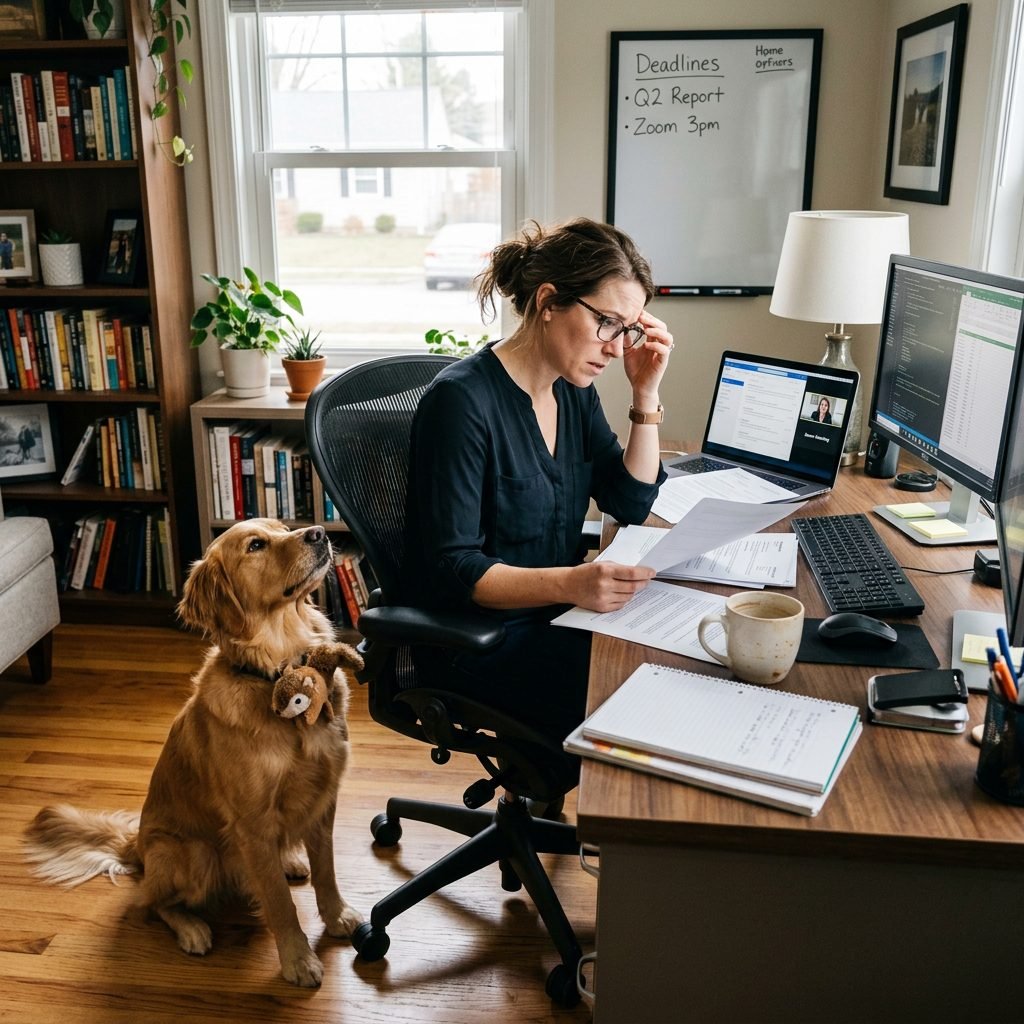
You took the squeaky toy away, and now your puppy is sitting next to your chair, staring at you, and barking sharply. This is demand barking. They are saying, Give me back my toy, or pay attention to me! Giving in to this is a massive mistake. If you look at them, talk to them, or give the toy back, you have just taught them that barking works.
Instead, you must completely ignore the barking. Cross your arms, look away, and do not make eye contact. If the barking is too loud for your call, calmly stand up, walk out of the room, and close the door behind you. Wait for 10 seconds of complete silence, then re-enter. Your dog will quickly learn that barking makes their favorite person leave, while quiet chewing makes them stay.
Expert Tip: Keep a white noise machine or a fan running near your desk. This can help muffle the sound of your voice during calls, making your dog less likely to be triggered by your sudden speaking.
Problem: They Keep Bringing the Toy to My Lap
If your dog is forcefully nudging a toy into your leg while you type, they are craving interactive play, not just independent chewing. This is a sign that the Pre-Meeting Burn (Step 1) was not sufficient. For an immediate fix, keep a snuffle mat nearby. Tossing a handful of kibble into the mat forces them to use their nose, which is incredibly tiring and distracts them from wanting to play fetch with you.
Common Mistakes to Avoid When Managing WFH Puppy Behavior
As we wrap up our strategy, it is important to highlight the pitfalls that can derail your progress. Many well-meaning, savvy dog owners accidentally reinforce the exact behaviors they are trying to stop. Avoid these common mistakes to ensure your home office remains a peaceful environment.
Mistake 1: Leaving Toys Out 24/7
If your dog has access to every toy they own all day long, the toys lose their magic. This is known as toy fatigue. When your Zoom call starts and you need them to be distracted, they will look at their toy basket and think, I have been looking at those all day, they are boring. I would rather bother you. Keep toys put away and only bring out specific items for specific times. WFH toys are for working hours only.
Mistake 2: Punishing the Squeak
Never scold, yell, or physically punish your dog for squeaking a toy or seeking your attention. First, it damages the bond and trust between you and your puppy. Second, negative attention is still attention. To a bored dog, you yelling No! Stop it! is better than you ignoring them. It becomes a game. Always use positive reinforcement and redirection instead of punishment.
Mistake 3: Inconsistent Routines
Dogs thrive on predictability. If Monday is a free-for-all where they can squeak toys all day, but Tuesday you expect them to be perfectly silent, they will be confused and frustrated. Set a clear boundary. During your designated working hours, the noisy toys go away, and the quiet enrichment begins. Consistency is the secret ingredient to a beautifully behaved dog.
Mistake 4: Forgetting to Take Breaks
You cannot expect a puppy to lie quietly for 8 hours straight. It is biologically impossible and unfair to the dog. Use the Pomodoro technique or schedule 10-minute breaks between your meetings. Use this time to actively engage with your dog. Take them outside, play a quick game of fetch, or just give them some belly rubs. Fulfilling their need for connection will make them much more willing to settle down when you need to focus.
Conclusion
Working from home with a puppy does not have to be a nightmare of constant interruptions and embarrassing Zoom call blunders. By understanding your dog’s natural instincts, investing in the right silent enrichment tools, and committing to a consistent daily routine, you can easily transform your chaotic home office into a peaceful, productive sanctuary.
Remember, your puppy is not trying to ruin your career; they just want to be part of your world. By providing them with high-value, quiet alternatives and rewarding their calm behavior, you are setting them up for success. You are teaching them how to be an excellent canine coworker.
So, take a deep breath, clear out those noisy squeakers before your next big meeting, and stuff a few Kongs for the freezer. With a little patience and these expert strategies, you will be unmuting your microphone with absolute confidence, knowing your furry best friend is happily and quietly enjoying their day right beside you. You’ve got this!