Stop Puppy From Jumping On Couch: 4 Golden Rules For Boundary Training
Welcome to the World of Boundary Training
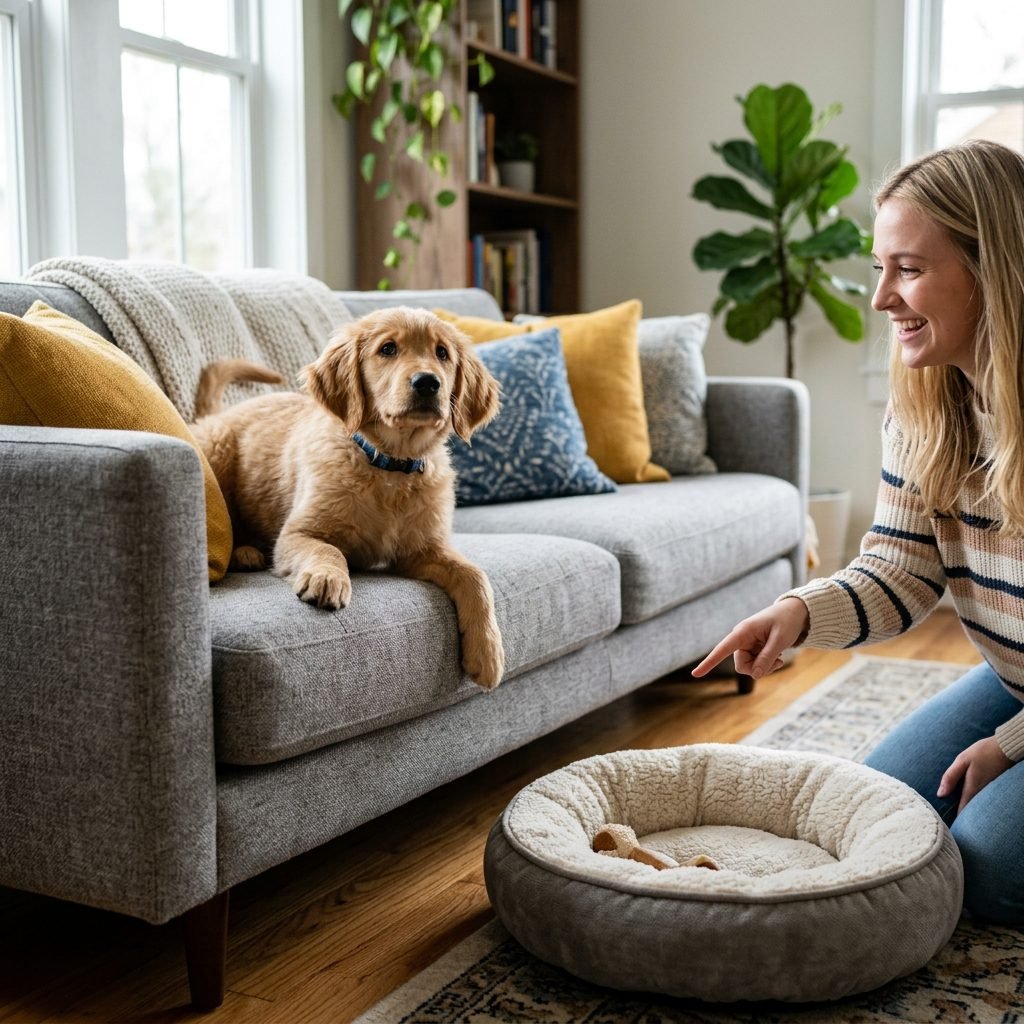
Bringing a new puppy into your home is an incredibly exciting journey, but it doesn’t take long for savvy dog owners to realize that these little bundles of joy are essentially spring-loaded. One minute they are chewing on a toy, and the next, they have launched themselves onto your expensive living room couch. If you are reading this, you are likely tired of fur on the cushions, muddy paw prints on your throws, and the constant battle of space. But do not worry! Teaching your puppy that the couch is off-limits is a completely achievable goal.
As a dog owner who wants a well-mannered companion, establishing boundaries early on is one of the most loving and effective things you can do. Dogs, especially puppies, thrive on structure. When the rules of the house are clear, consistent, and fair, your puppy will feel more secure, and your relationship will blossom. Boundary training isn’t about being overly strict or punishing your dog; it is about clear communication and setting them up for success.
Consistency is your best friend in puppy training. If the couch is off-limits today, it must be off-limits tomorrow, the next day, and forever. Mixed signals are the enemy of a well-trained dog.
In this comprehensive guide, we are going to dive deep into the psychology of why your puppy is so obsessed with your furniture, and more importantly, we will walk through the four golden rules to stop your puppy from jumping on the couch. By utilizing positive reinforcement, smart environmental management, and a bit of patience, you will soon have a puppy who happily chooses their own bed over yours.
Why Your Puppy Loves the Couch (And Why Boundaries Matter)
The Psychology Behind the Jump
Before we can effectively stop a behavior, we need to understand why it is happening in the first place. Puppies do not jump on the couch to make you mad or to be spiteful. In the canine world, behavior is driven by reinforcement, comfort, and instinct. Let us break down exactly why your couch is the hottest piece of real estate in your home.
1. The Comfort Factor
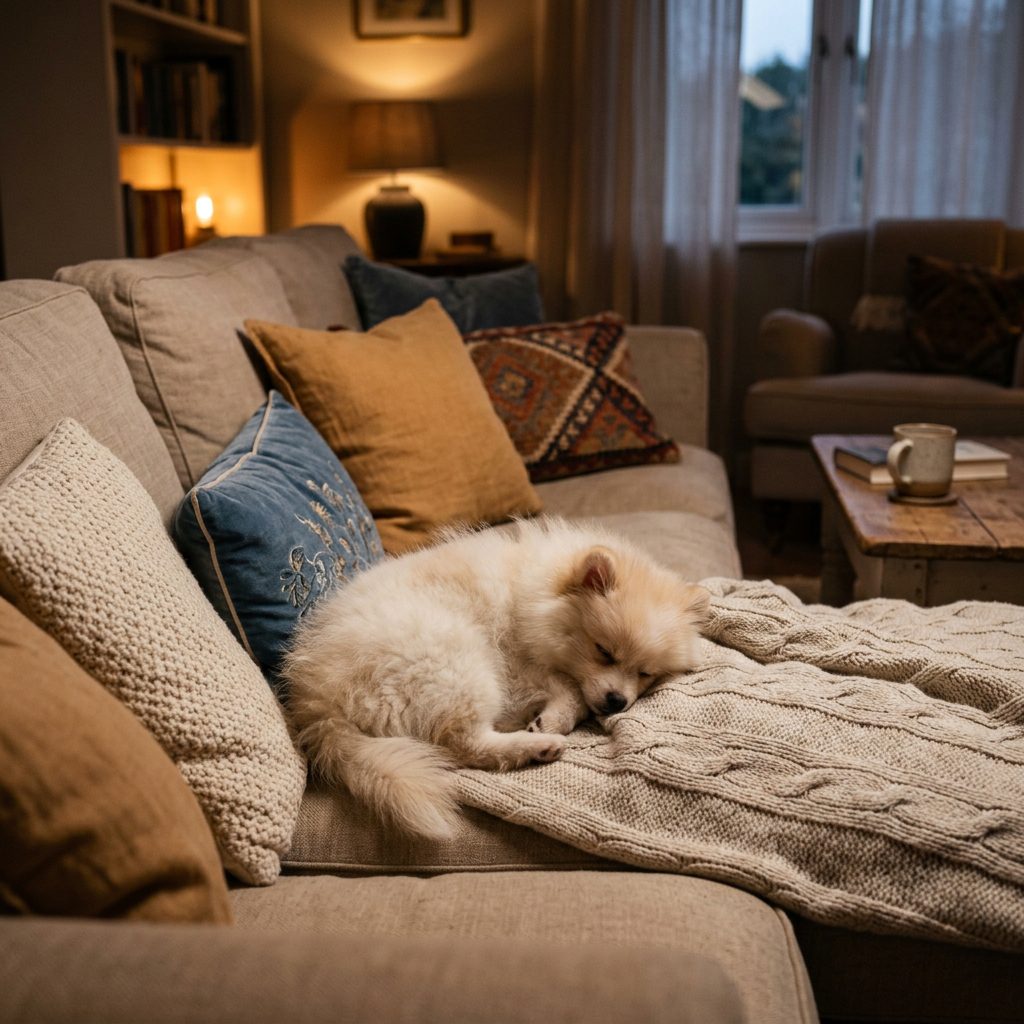
Let us be honest, your couch is comfortable. It is soft, supportive, and much cozier than the hardwood floor. Puppies are naturally drawn to soft surfaces for resting, just like we are. If they do not have a highly desirable alternative, the couch is the logical choice for their next nap.
2. Scent and Bonding
Your couch smells exactly like you. For a puppy, especially one that is still adjusting to their new home and building a bond with you, being surrounded by your scent is incredibly comforting. They jump on the couch because it makes them feel closer to their favorite human.
3. Elevation and Vantage Point
Dogs are observant creatures. Being up high on the couch gives them a better vantage point of the living room. They can see out the window, watch the family move around, and keep an eye on any potential “action.” It is a strategic position that makes them feel involved and secure.
4. Accidental Reinforcement
This is the most common reason puppies continue to jump on the furniture: we accidentally reward them for it. When your puppy jumps up, do you look at them? Do you talk to them, even if it is to say “no”? Do you push them off (which can feel like a fun wrestling game to a puppy)? All of these reactions are forms of attention. To a puppy, negative attention is still attention, and it reinforces the jumping behavior.
Understanding these motivations is the first step in our boundary training journey. Now that we know why they do it, we can implement our four golden rules to change the behavior effectively and positively.
Rule #1: Master the “Place” Command
Give Them an Offer They Cannot Refuse
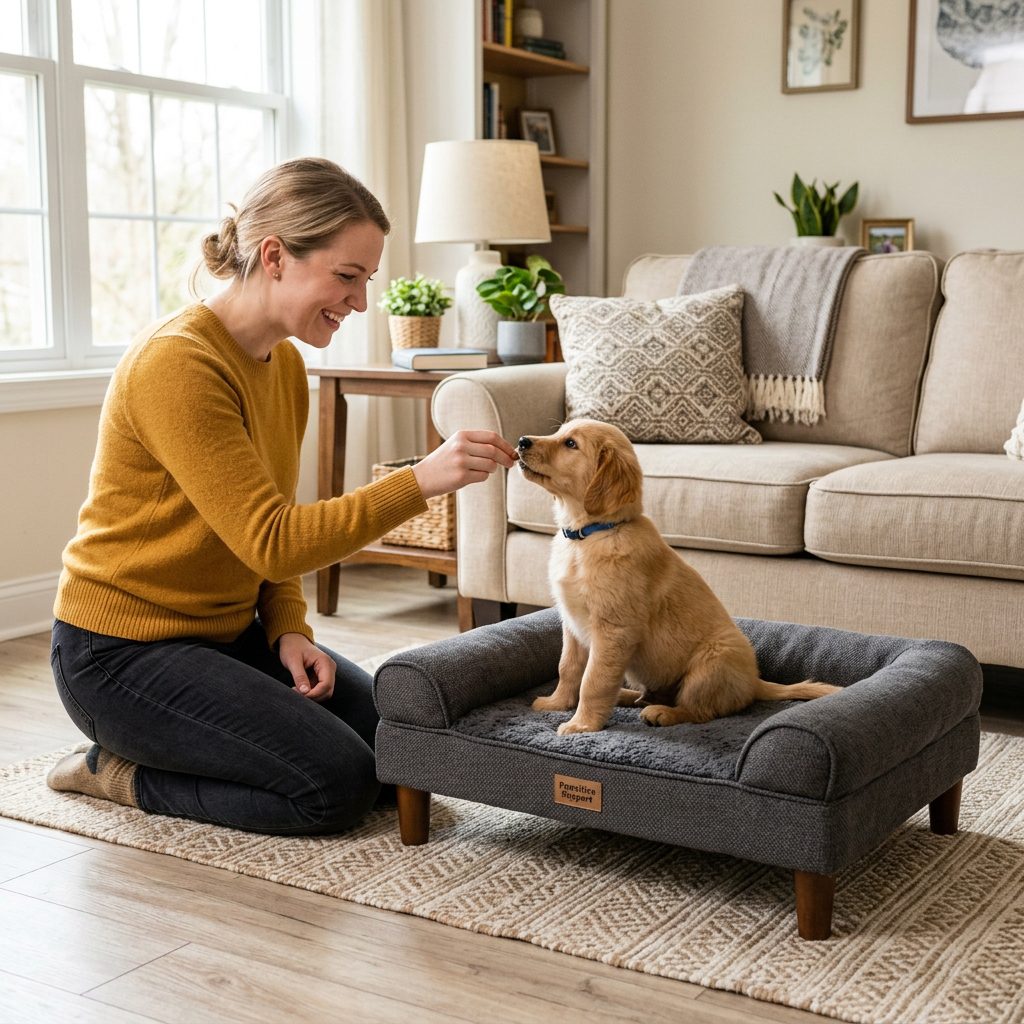
If you want your puppy to stop jumping on the couch, you must give them an alternative that is just as rewarding, if not more so. This is where the magic of the “Place” command comes in. “Place” training teaches your dog to go to a specific designated spot (like a dog bed or a mat) and stay there until released. It is arguably one of the most valuable commands a savvy dog owner can teach.
Choosing the Right “Place”
Not all dog beds are created equal, especially when you are competing with a premium human couch. You need to provide a bed that meets your puppy’s specific comfort needs.
| Bed Type | Best For… | Why It Competes With the Couch |
|---|---|---|
| Orthopedic Memory Foam | Growing puppies, large breeds, or dogs needing joint support. | Offers deep, supportive comfort that mimics the cushion of a high-end sofa. |
| Donut/Bolster Bed | Anxious puppies or those who love to curl up into a ball. | Provides raised edges for head-resting, simulating the armrest of a couch. |
| Elevated Cot | Puppies that run hot or heavy chewers. | Gives them that desired elevation off the floor while keeping them cool. |
Step-by-Step “Place” Training
- Lure and Reward: Start with your puppy on leash. Hold a high-value treat right in front of their nose and slowly lure them onto their new bed. The second all four paws are on the bed, say “Yes!” or click your clicker, and give them the treat.
- Add the Command: Once your puppy is easily following the lure onto the bed, add the verbal cue. Say “Place,” then lure them onto the bed, mark with “Yes!” and reward. Do this 10-15 times per session.
- Build Duration: Now, ask your puppy to go to “Place.” When they get there, reward them. Wait two seconds. If they stay on the bed, reward them again. Slowly increase the time between treats. You are teaching them that staying on the bed is a highly profitable activity.
- The Release: Always use a release word like “Free” or “Break” to let them know they can leave the bed. Toss a treat on the floor to encourage them to get off.
By making their “Place” a zone where amazing things happen (treats, stuffed Kongs, belly rubs), the couch will slowly lose its appeal. Whenever you sit on the couch, cue your puppy to go to their “Place” and reward them heavily for staying there.
Rule #2: Teach a Positive “Off” Command
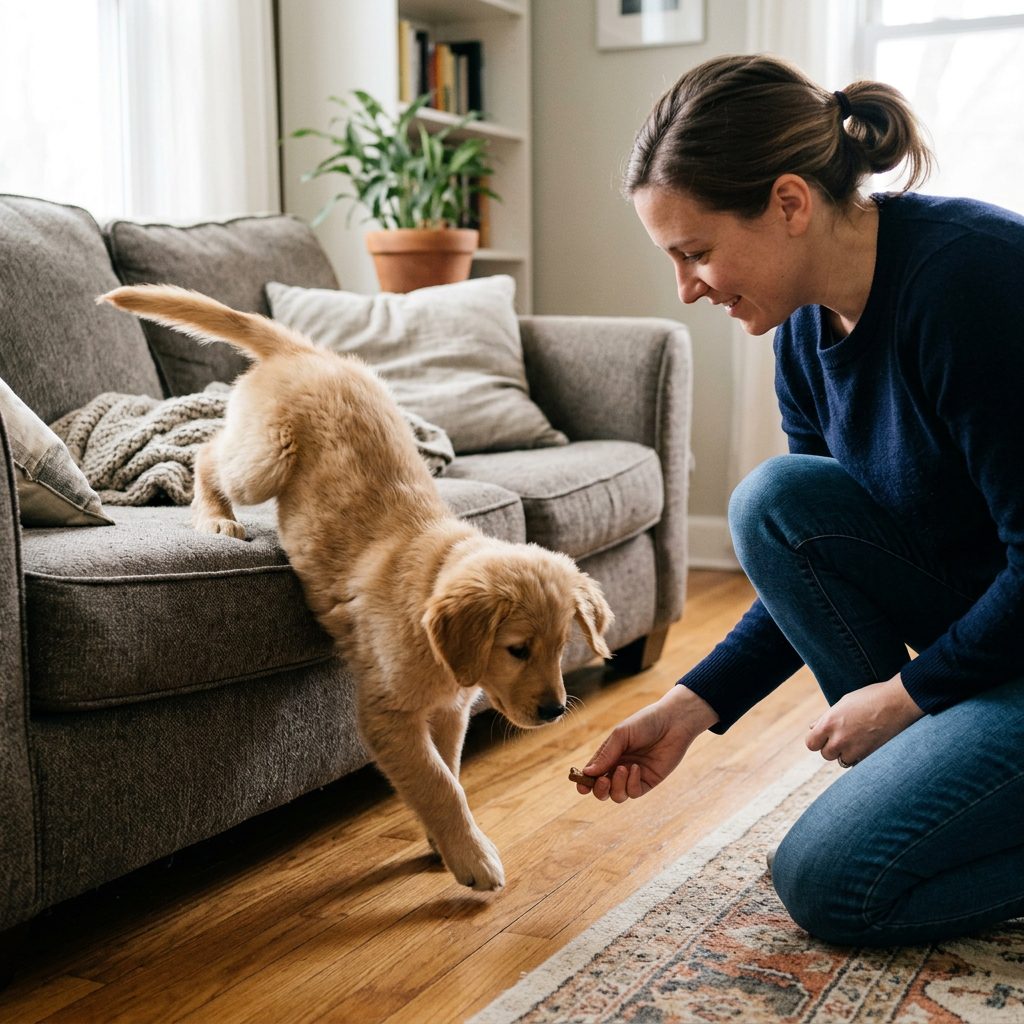
Redirection Without Conflict
Even with the best “Place” training, your puppy is going to test the boundaries and jump on the couch. It is a normal part of the learning process. How you handle these moments will make or break your boundary training. This brings us to Rule #2: Teaching a positive, non-confrontational “Off” command.
Why We Do Not Push or Pull
Many owners instinctively push their dog off the couch or pull them by the collar. Do not do this. Pushing a puppy can activate their opposition reflex, making them push back or view it as a roughhousing game. Pulling their collar can cause negative associations with being handled and can even lead to defensive snapping. We want to teach the puppy to choose to get off the furniture.
The Steps to Teach “Off”
- The Setup: When your puppy jumps on the couch, do not say anything immediately. Do not look angry. Stay calm.
- The Lure: Take a high-value treat (like a small piece of hot dog or cheese) and put it right in front of your puppy’s nose.
- The Movement: Slowly pull the treat away from their nose and toward the floor. As your puppy follows the treat and their paws hit the floor, say “Off” and immediately give them the treat.
- The Redirection: The moment they finish the treat on the floor, immediately redirect them to their “Place” bed and reward them again there. This prevents the “yo-yo effect” where a dog jumps on the couch just so you will tell them “Off” and give them a treat.
Expert Tip: The “Off” command should strictly mean “move your paws off whatever they are currently on.” It is not a punishment word; it is a directional cue. Keep your tone light and encouraging!
Fading the Lure
Once your puppy is reliably following the treat to the floor, start using an empty hand to guide them off. Point to the floor and say “Off.” When they jump down, praise them and give them a treat from your pocket. Eventually, your verbal cue and a simple hand gesture will be enough to get them off the furniture seamlessly.
Rule #3: Environmental Management (Set Them Up For Success)
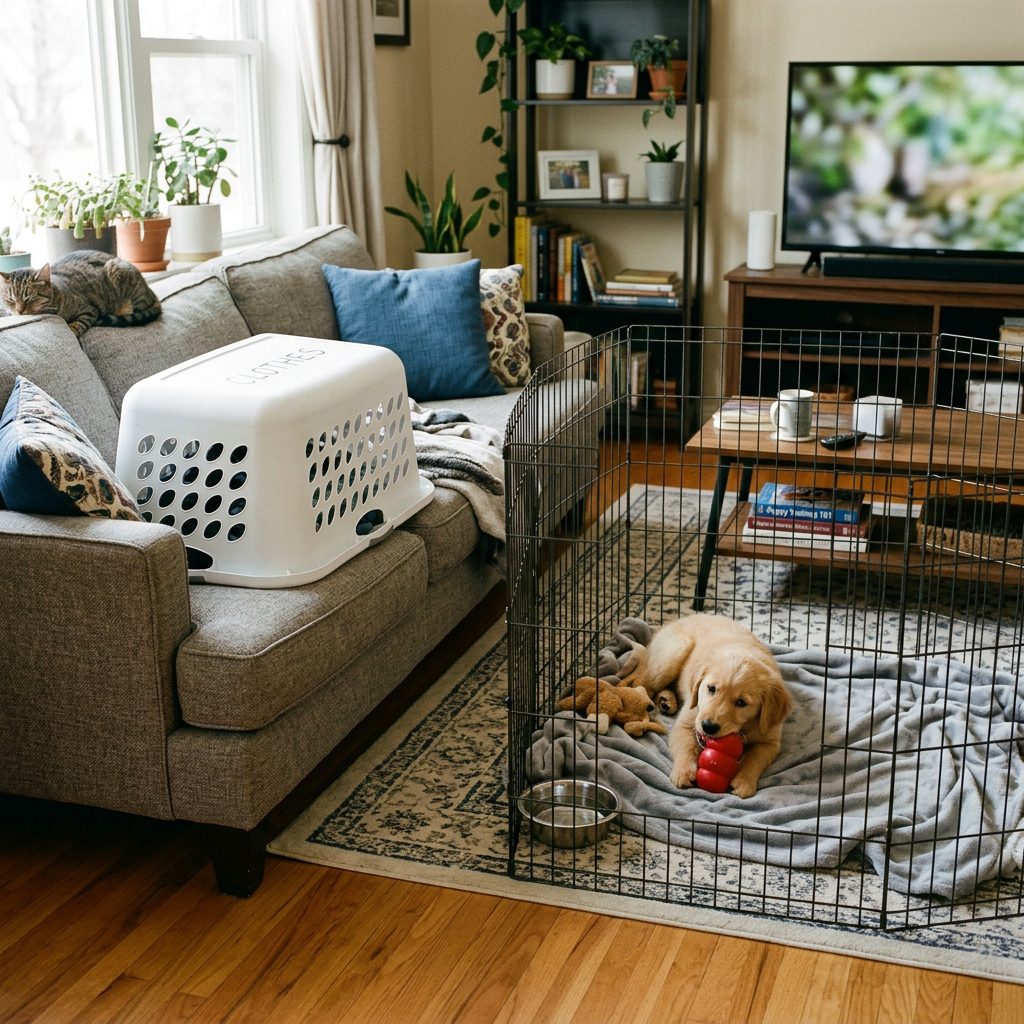
Control the Environment, Control the Behavior
Training takes time, and puppies learn through repetition. If your puppy is allowed to practice jumping on the couch when you are not looking, your training will constantly take two steps forward and one step back. Rule #3 is all about environmental management. As a savvy dog owner, you must set the environment up so that the puppy cannot fail when you are unable to actively supervise them.
The Importance of Management
Every time your puppy jumps on the couch and enjoys a comfortable nap, the behavior is heavily reinforced. If this happens while you are cooking dinner or out running errands, the puppy learns that the rules only apply when you are in the room. Management tools prevent this accidental reinforcement.
Top Management Strategies for Boundary Training
| Management Tool | How to Use It | Best Situation for Use |
|---|---|---|
| The House Leash (Drag Line) | Keep a lightweight, handle-less leash on your puppy while indoors. If they jump up, you can step on the leash or gently guide them away without grabbing them. | When you are in the room relaxing but want an easy way to redirect without physical conflict. |
| Baby Gates / Playpens | Block access to the living room entirely when you cannot supervise. Use an exercise pen to create a safe zone for the puppy. | When you are cooking, working from home, or unable to keep a direct eye on the puppy. |
| Couch Blockers | Place laundry baskets, upside-down chairs, or commercial couch blockers on the cushions when you are not using them. | When you leave the house or go to sleep at night, physically preventing the puppy from getting up. |
| Crate Training | Utilize a comfortable, properly introduced crate for nap times and when you leave the house. | For periods where complete safety and restriction from furniture are necessary. |
Combining Management with Training
Management is not a replacement for training; it is a supplement. Use these tools to prevent bad habits from forming while you actively practice the “Place” and “Off” commands during your dedicated training sessions. Over a few months, as your puppy matures and understands the rules, you can slowly phase out the baby gates and couch blockers.
Rule #4: Reward the Invisible (The Magic of Reinforcement)
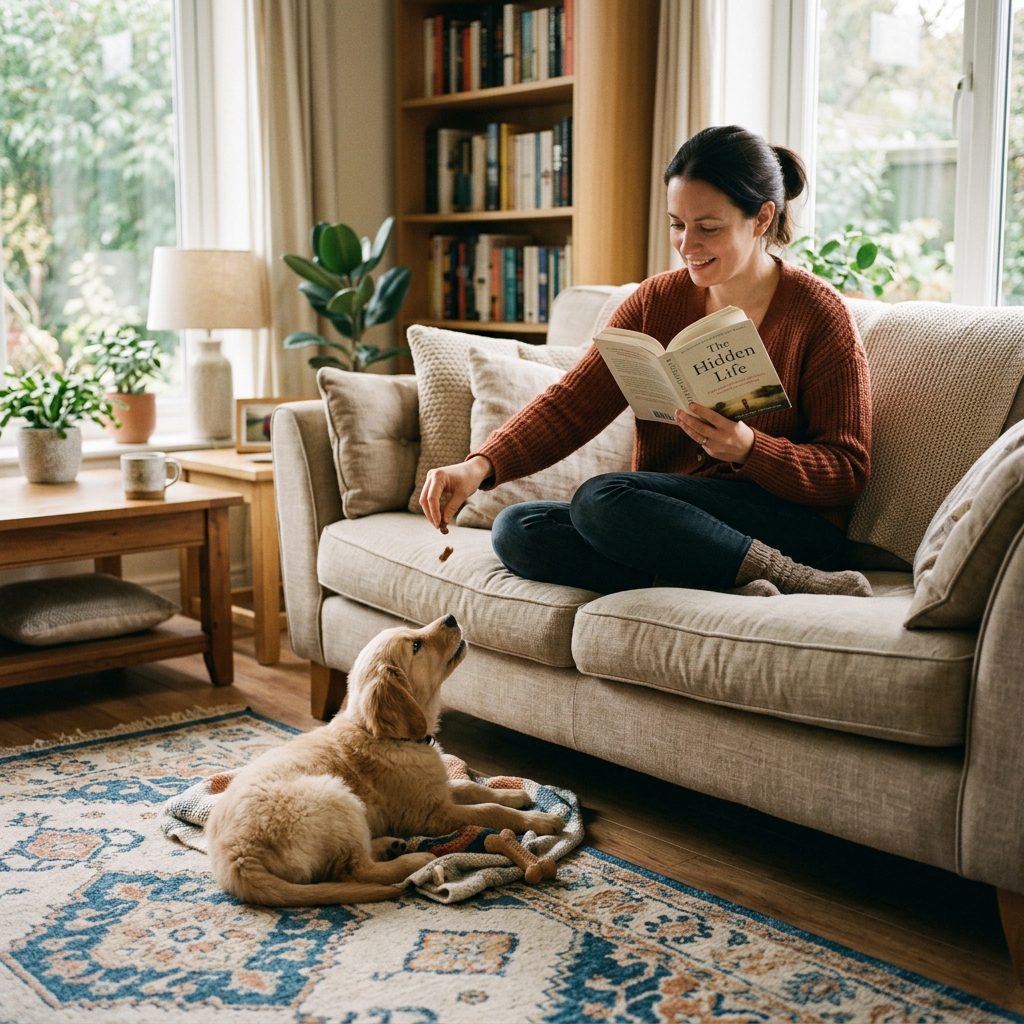
Catch Them Doing Something Right
We often spend so much time telling our dogs what not to do that we completely forget to tell them what we want them to do. Rule #4 is the secret weapon of professional dog trainers: rewarding the invisible. This means capturing and reinforcing your puppy when they are making good choices all on their own, without you asking.
What is “The Invisible”?
The invisible behaviors are the quiet moments. It is when your puppy walks past the couch without jumping on it. It is when they choose to lie down on the rug instead of the cushions. It is when they go to their “Place” bed unprompted to chew on a bone. Because these behaviors are quiet and non-disruptive, owners usually ignore them. However, ignoring good behavior is a massive missed opportunity.
How to Capture Calmness
- Keep Treats Handy: Stash small jars of your puppy’s kibble or low-calorie treats around the living room. You need to be ready to reward at a moment’s notice.
- The Silent Delivery: When you are sitting on the couch and your puppy is lying calmly on the floor or their bed, calmly and quietly drop a treat between their paws. Do not make a big fuss or use an excited voice, as this might cause them to jump up. Just calmly deliver the reward.
- Reinforce Four Paws on the Floor: If your puppy approaches the couch to greet you and keeps all four paws on the floor, immediately praise and reward them. If they jump up, turn your head away and ignore them until those paws hit the floor again.
High-Value vs. Low-Value Rewards
When you are actively teaching a new command like “Place,” use high-value rewards (chicken, cheese, freeze-dried liver). When you are rewarding “the invisible” or capturing calmness throughout the day, you can use lower-value rewards like their daily kibble. You can even measure out a portion of their daily meals specifically to use for rewarding good boundary choices around the house.
By consistently rewarding your puppy for simply existing on the floor, you are changing their internal calculation. They will start to realize, “The couch is boring, but the floor is a magical place where snacks randomly appear!”
Troubleshooting Common Boundary Training Mistakes
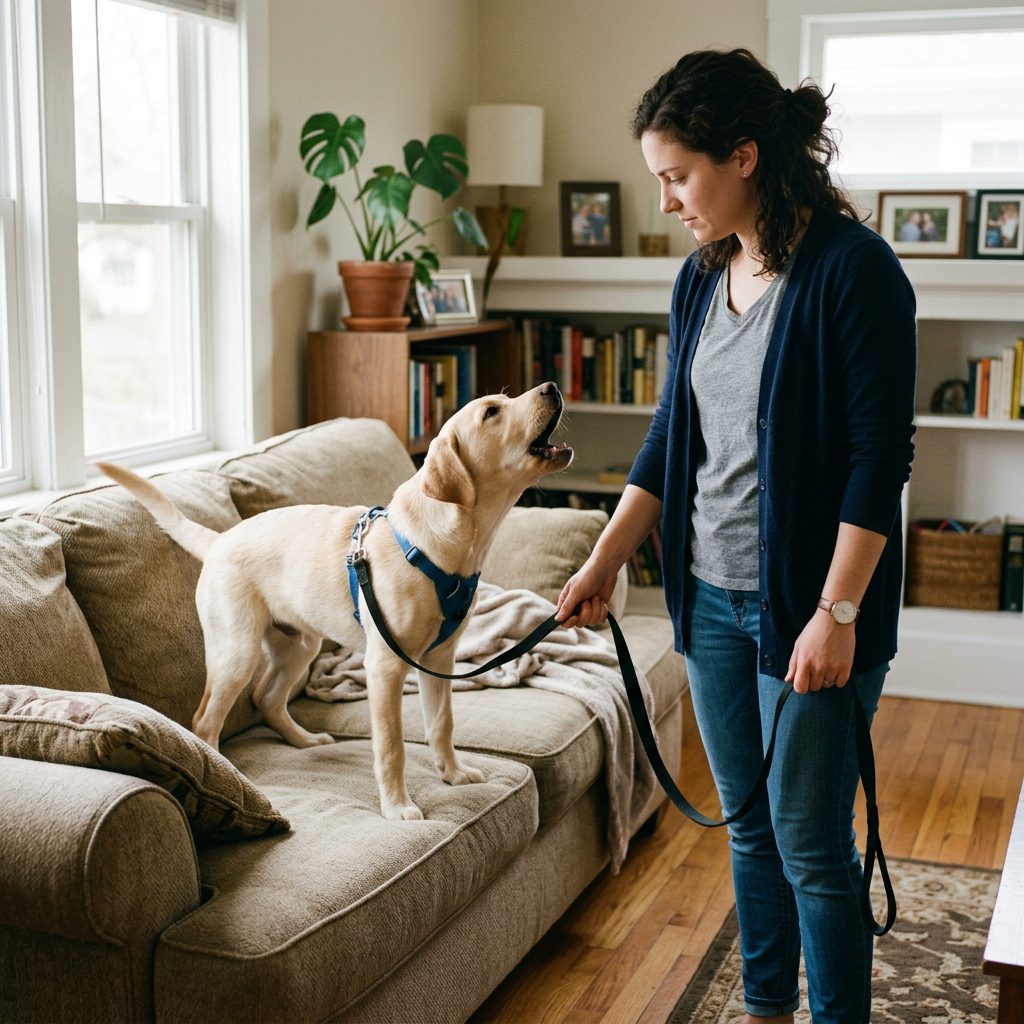
Overcoming the Bumps in the Road
Even with the best intentions and strict adherence to the four golden rules, puppies will test your patience. Boundary training is a marathon, not a sprint. If you are running into issues, you are not alone. Here are some of the most common troubleshooting scenarios savvy dog owners face and how to fix them.
1. The Puppy Barks When Told “Off”
The Problem: You lure the puppy off the couch, but instead of settling, they start demand barking at you or the couch.
The Solution: This usually means the puppy is frustrated or thinks it is a game. Do not yell back; negative attention is still attention. Ensure you are redirecting them to a highly rewarding “Place” bed with a long-lasting chew (like a bully stick or a stuffed Kong) to keep their mouth and brain occupied. If they continue to bark, calmly stand up, walk out of the room, and close the door for 30 seconds. They will quickly learn that barking makes their favorite human disappear.
2. The “Yo-Yo” Jumper
The Problem: The puppy jumps on the couch, you say “Off,” they get off and get a treat, and then they immediately jump right back onto the couch to do it again.
The Solution: You have accidentally created a behavior chain where jumping on the couch is the first step to getting a treat. To break this, stop rewarding the “Off” command with a treat from your hand. Instead, when they get off, guide them to their “Place” bed and reward them only when they are on the bed. Alternatively, use a house leash to gently guide them off without offering a food reward, saving the food only for when they choose the floor independently.
3. They Only Jump Up When You Leave the Room
The Problem: Your puppy is a perfect angel when you are watching, but the second you go to the bathroom, they are on the cushions.
The Solution: This is a classic management failure. Your puppy has learned that the rules only apply when the enforcer (you) is present. Go back to Rule #3. If you leave the room, the puppy must either come with you, be put in their playpen, or the couch must be blocked with laundry baskets. Do not give them the opportunity to be sneaky.
4. Inconsistency Between Family Members
The Problem: You are strictly enforcing the boundary rules, but your partner or children let the puppy on the couch for “cuddles” when you aren’t looking.
The Solution: Dogs are highly contextual, but mixed signals cause massive confusion and slow down training. Hold a family meeting. Explain that for the puppy to succeed, everyone must follow the same rules. If you eventually want the dog on the couch, teach them that it is by “invitation only” (using a specific command like “Up”), but only after they have mastered staying off by default.
Conclusion
Patience, Persistence, and Paws on the Floor
Teaching your puppy to stay off the couch is a fundamental exercise in boundary training that sets the tone for a well-behaved adult dog. By understanding their motivations, providing a comfortable “Place” alternative, utilizing a positive “Off” command, managing the environment, and constantly rewarding the behaviors you want to see, you are equipping your puppy with the skills they need to succeed.
Remember, savvy dog ownership is all about consistency and patience. There will be days when your puppy tests the limits, but if you stick to these four golden rules, the couch will soon become a human-only zone. Celebrate the small victories, keep your training sessions fun and positive, and enjoy the process of building a lifelong, respectful bond with your furry best friend. You’ve got this!